Estimated Reading Time: 18 minutes
Last Updated: August 15, 2026
Before Learning
Before you begin, it helps to have one clear idea for the Pinterest video Pin you want to create. Your Pin can be educational, inspirational, promotional, or adapted from a longer video, article, tutorial, or other original content.
You do not need advanced video-editing skills. AI tools can help you brainstorm ideas, write a short script, prepare visuals, generate narration, create captions, and improve the editing workflow.
For a full-screen vertical video Pin, Pinterest currently recommends a 9:16 aspect ratio at 1080 × 1920 pixels. Pinterest also accepts several other aspect ratios, but 9:16 is a practical format when you want the video to fill a phone screen.
Keep important text, captions, faces, and other key information away from areas that Pinterest may cover with interface elements. Pinterest provides safe-zone guidance for full-screen video Pins so important content remains visible on different devices.
This guide will show you how to move from one simple idea to a finished Pinterest video Pin while keeping your source files, prompts, licences, permissions, clean master export, and publication records organized.
What You’ll Learn
By the end of this guide, you will know how to:
· Choose one clear idea for a Pinterest video Pin.
· Use AI to brainstorm Pin topics and create a simple content plan.
· Write a short, focused script with AI assistance.
· Create or prepare visuals for a vertical 9:16 layout.
· Generate or record narration when needed.
· Add readable captions and on-screen text.
· Choose music and sound effects while checking usage rights.
· Edit the video so the main idea is clear quickly.
· Keep important text, faces, and graphics inside safe viewing areas.
· Export a clean final version with suitable video settings.
· Upload and publish the video Pin on Pinterest.
· Review whether AI-generated content needs additional disclosure or labeling.
· Keep your project files, prompts, licences, permissions, and clean master export for future reuse.
Introduction
Pinterest video Pins are videos that people can discover, save, and revisit while browsing Pinterest. They can use vertical, square, or other supported aspect ratios depending on the format. They can be used for tutorials, tips, demonstrations, product ideas, educational content, before-and-after examples, and many other visual topics.
AI can help with several parts of the video Pin creation process. You can use it to generate ideas, outline the video, draft a short script, create visuals, prepare narration, improve captions, and suggest editing changes.
However, AI should support your work rather than replace your final judgment. Review every script, visual, voice, caption, and factual claim before publishing. Make sure you have appropriate rights or permission for any music, images, video clips, voices, fonts, templates, or other material that you did not create yourself.
A practical beginner workflow is to start with one clear idea, write a short script, prepare vertical visuals, add clear audio and captions, edit the video carefully, and review the final export before uploading it to Pinterest.
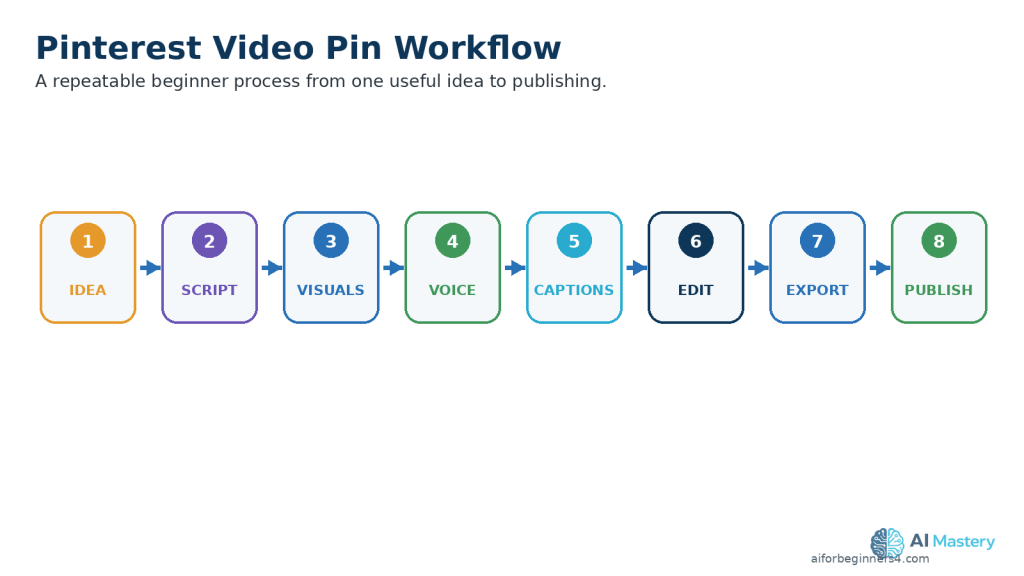
Figure 1. A simple Pinterest video Pin workflow moves from one clear idea through scripting, visuals, audio, editing, export, and publishing.
Explanation: Using the same sequence for each Pin makes the production process easier to repeat, review, and improve.
What Are Pinterest Video Pins?
Pinterest video Pins are Pins that use video instead of a single static image. They can be used for tutorials, demonstrations, ideas, educational content, product examples, and other visual topics that people can discover and save on Pinterest.
Pinterest currently allows video Pins from 4 seconds up to 5 minutes long. Pinterest supports H.264 or H.265 video encoding.
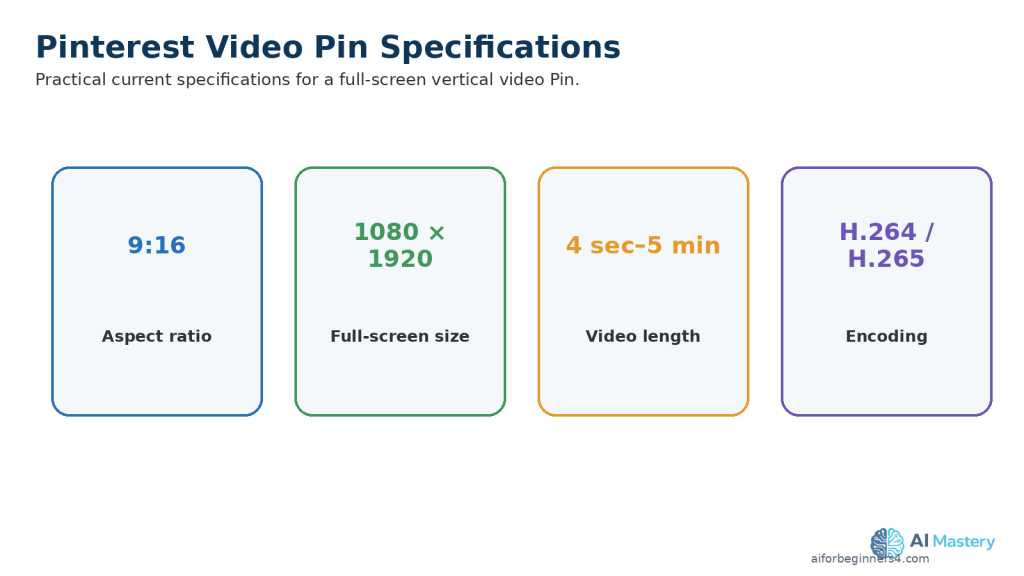
Figure 2. Current Pinterest video Pin specifications include 9:16 full-screen video at 1080 × 1920 pixels, 4 seconds to 5 minutes in length, and H.264 or H.265 encoding.
Explanation: These settings provide a practical technical starting point for beginner full-screen vertical video Pins.
Video Pins can work well for:
· Quick tips.
· Short tutorials.
· Step-by-step demonstrations.
· Before-and-after examples.
· Educational explanations.
· Product demonstrations.
· Lists and recommendations.
· Ideas adapted from longer articles or videos.
Recommended Beginner Format
For a full-screen video Pin, Pinterest recommends:
· Aspect ratio: 9:16
· Resolution: 1080 × 1920 pixels
· Orientation: Vertical
Pinterest also accepts other video aspect ratios, including 1:2, 2:3, 3:4, 4:5, and 1:1. For this beginner workflow, 9:16 is convenient because it fills a vertical phone screen and can also make repurposing easier for other vertical-video platforms.
Keep Important Content Inside the Safe Area
Pinterest provides specific safe-zone guidance for full-screen 9:16 video Pins because interface elements can cover parts of the video.
For a 1080 × 1920 full-screen video, Pinterest currently recommends keeping important content away from approximately:
· Top: 270 pixels
· Left: 65 pixels
· Right: 195 pixels
· Bottom: 790 pixels
Keep important faces, captions, titles, demonstrations, and other key information inside the remaining visible area.
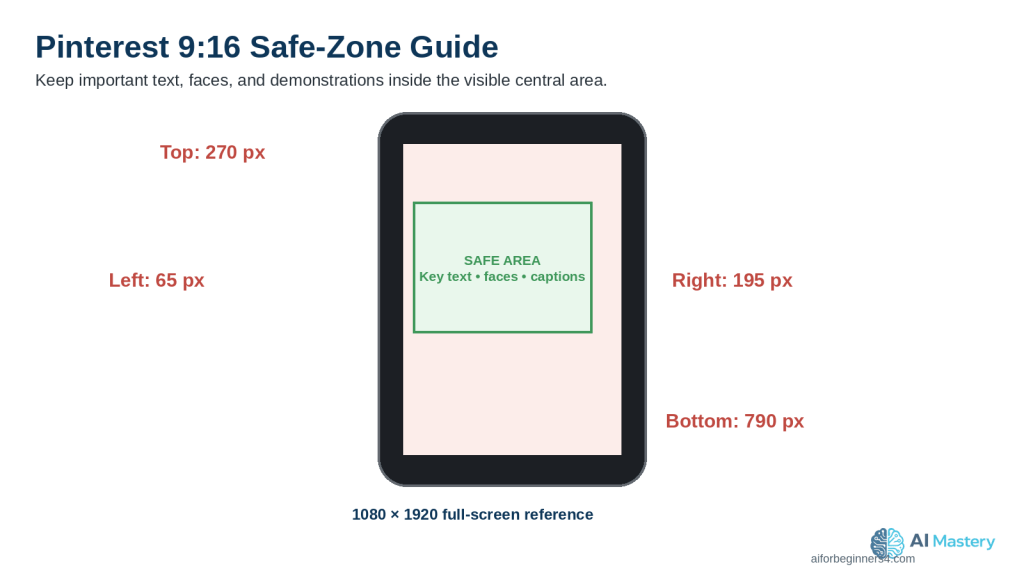
Figure 3. Pinterest’s 9:16 safe-zone guidance keeps key creative elements away from the top, sides, and bottom areas that interface elements may cover.
Explanation: For a 1080 × 1920 full-screen video Pin, Pinterest lists approximate safe-zone margins of 270 px top, 65 px left, 195 px right, and 790 px bottom.
Practical Example
Suppose you want to create a Pinterest video Pin explaining how to summarize a document with AI.
You could create a 1080 × 1920 vertical video, keep the important demonstration near the centre, use large readable captions, and zoom into the part of the screen viewers need to understand.
The video might show the document, the upload step, a short prompt, the AI-generated summary, and a final reminder to verify the result against the original document.
Step 1: Choose One Clear Idea for Your Pinterest Video Pin
A Pinterest video Pin is easier to understand when it focuses on one main idea. Trying to cover too many topics in one video can make the Pin feel rushed or confusing.
Choose a topic that can be explained clearly, such as:
· One beginner AI tip.
· One useful AI tool.
· One common mistake.
· One short tutorial.
· One simple before-and-after example.
· One quick comparison.
· One useful idea from a longer AI Mastery article.
Use AI to Brainstorm Pin Ideas
You can ask an AI assistant to suggest video Pin ideas based on your topic.
Prompt:
“Give me 10 beginner-friendly Pinterest video Pin ideas about using AI for everyday tasks. Keep each idea focused on one clear lesson.”
Review the suggestions carefully and choose an idea that is useful, accurate, and appropriate for your audience.
Keep the Topic Narrow
Instead of creating a video Pin called:
“Everything Beginners Should Know About AI”
choose something more specific, such as:
“3 Ways AI Can Help You Save Time”
or:
“How to Summarize a Long Document with AI”
A narrow topic makes it easier to write a clear script, choose suitable visuals, and keep the video focused.
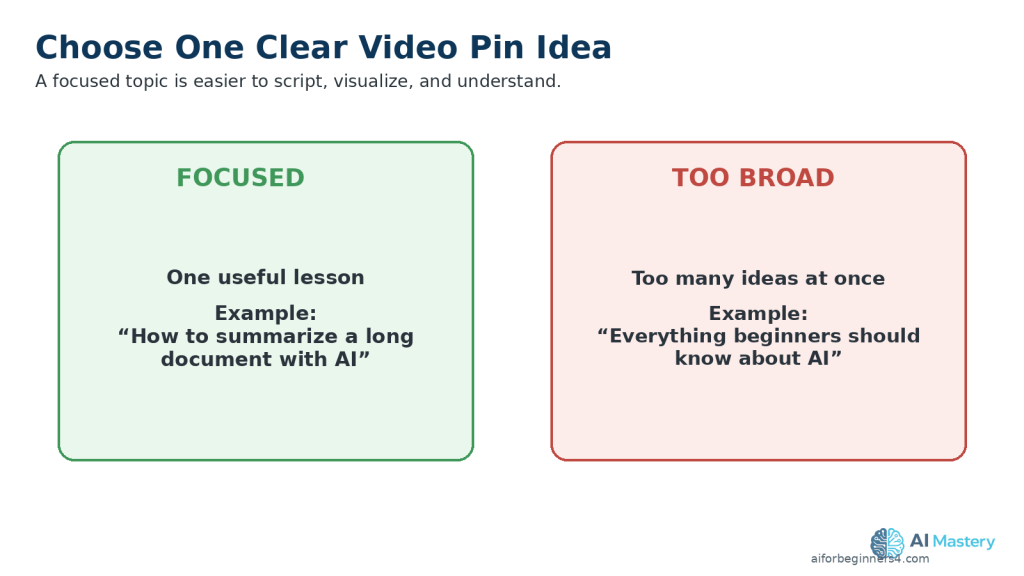
Figure 4. One focused Pinterest video Pin idea is easier to explain than a broad topic containing many unrelated points.
Explanation: A narrow topic helps beginners keep the script, visuals, and editing focused on one useful lesson.
Practical Example
If a longer AI Mastery article explains several document features, you could create one Pinterest video Pin about only document summarization.
The Pin can show the problem, demonstrate the basic process, and finish with one clear reminder to review the AI-generated result against the original document.
Step 2: Write a Short, Focused Pinterest Video Pin Script with AI
A clear script helps keep your Pinterest video Pin organized and easy to follow. Even a short video benefits from having a simple beginning, main point, and ending.
AI can help you turn your idea into a draft script, but you should review and improve the result before using it.
Start with a Clear Prompt
Give the AI assistant enough information about your topic, audience, and goal.
Prompt:
“Write a beginner-friendly Pinterest video Pin script about how AI can help summarize a long document. Keep it clear, practical, and focused on one useful example. Use simple language and avoid hype.”
Use a Simple Script Structure
A practical beginner structure is:
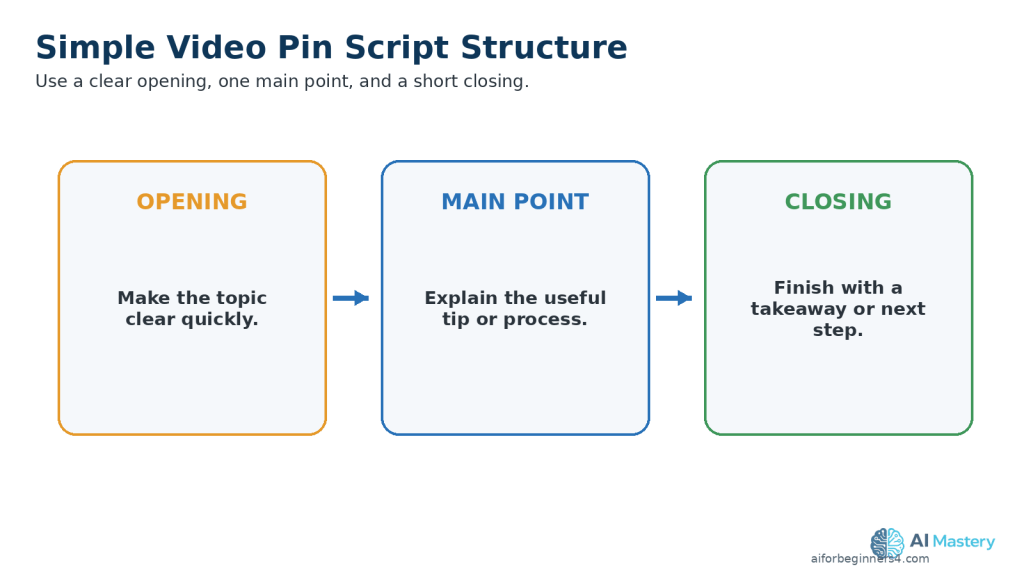
Figure 5. A simple Pinterest video Pin script can use a clear opening, one main point, and a short closing takeaway.
Explanation: This structure helps the video reach the useful information quickly without requiring a long introduction.
1. Opening: Tell viewers quickly what the video is about.
2. Main point: Explain the useful tip, process, or example.
3. Closing: Finish with a short takeaway or next step.
Make the Opening Clear
Avoid spending too much time on a long introduction.
Instead of:
“Hello everyone, welcome back to another video.”
you could begin with:
“Have a long document to read? AI can help you create a short summary.”
This tells viewers what the Pin is about immediately.
Review the AI-Written Script
Check the script for:
· Factual accuracy.
· Clear and simple language.
· Unnecessary repetition.
· Claims that sound exaggerated.
· Instructions that may be outdated.
· Difficult technical terms.
· Information that does not support the video Pin’s main idea.
Do not assume that an AI-generated script is automatically correct.
Practical Example
For a Pinterest video Pin about summarizing a document with AI, the script could follow this simple sequence:
1. Show the long document.
2. Explain that an AI tool can help summarize it.
3. Show the document being uploaded.
4. Show a short summary prompt.
5. Remind viewers to compare the summary with the original document.
This gives viewers one clear lesson without trying to explain every document-analysis feature at once.
Step 3: Create or Prepare Vertical Visuals
Your visuals should support the script and make the Pinterest video Pin easy to understand on a phone screen.
For most beginner projects, use a 9:16 vertical layout at 1080 × 1920 pixels.
Choose Visuals That Match the Script
Depending on your topic, you can use:
· AI-generated images.
· Licensed stock photos or stock video.
· Screen recordings.
· Charts or simple graphics.
· Text-based slides.
· Product or workspace footage.
· Clips from a longer video you created.
Use only visuals that help explain the main point.
Keep Important Content Visible
Keep important elements such as:
· Faces.
· Captions.
· Titles.
· Buttons.
· Screenshots.
· Charts.
· Demonstrations.
away from areas that may be covered by Pinterest interface elements.
For full-screen vertical video Pins, keep the most important information closer to the central viewing area rather than placing it near the extreme edges.
Make Screenshots Easy to Read
If your video Pin includes a computer or phone screenshot, avoid showing the entire screen when the important text becomes too small.
Instead, crop or zoom into the part viewers need to see.
For example, if you are demonstrating an AI prompt, show the prompt box clearly rather than displaying an entire browser window at a very small size.
Review AI-Generated Visuals Carefully
AI-generated images and video clips can contain mistakes such as:
· Distorted hands or objects.
· Misspelled text.
· Duplicate items.
· Inconsistent people or clothing.
· Incorrect interface elements.
· Unrealistic details.
Review every generated visual before adding it to the video Pin.
Check Licences and Permissions
If you use stock footage, photographs, templates, fonts, graphics, or other assets that you did not create yourself, check the licence and commercial-use conditions before publishing.
Do not assume that an image or video is free to reuse simply because it is available online.
Practical Example
For a Pinterest video Pin about summarizing a document with AI, you might use:
1. A visual showing a long document.
2. A screen recording of the document being uploaded.
3. A close-up of the summary prompt.
4. A simple visual showing the shorter AI-generated result.
5. A final reminder to compare the summary with the original document.
This creates a clear visual sequence that follows the script from beginning to end.
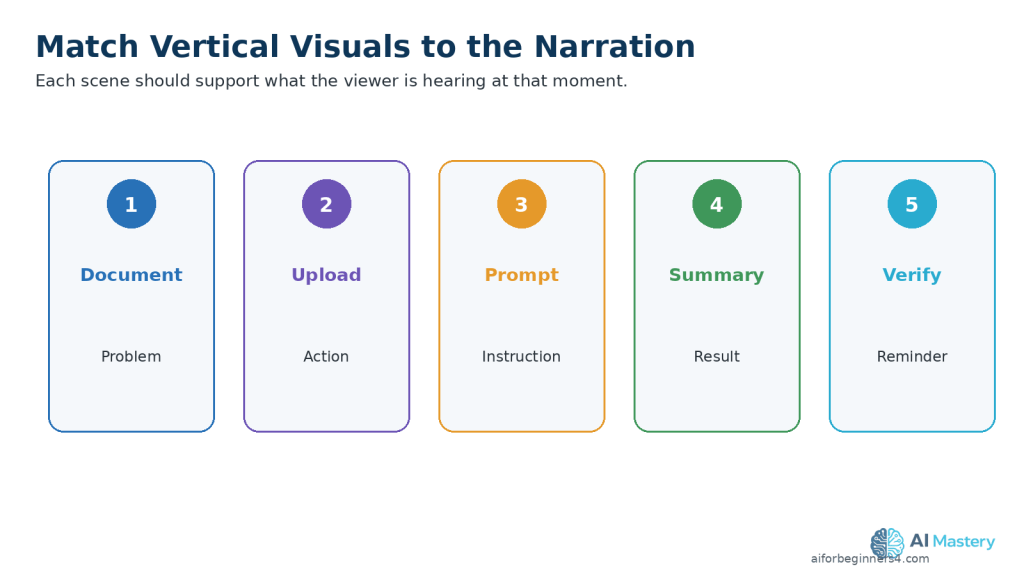
Figure 6. Plan vertical visuals in the same order as the narration so each scene supports the current point.
Explanation: Matching scenes to narration helps viewers follow the demonstration on a small phone screen.
Step 4: Add Narration or an AI Voice
Narration can make a Pinterest video Pin easier to follow, especially when the video explains a process, gives a tip, or demonstrates a task.
You can record your own voice or use an AI-generated voice when the tool and licence allow your intended use.
Choose a Clear Voice
The narration should be easy to understand and should match the pace of the visuals.
A good voice-over should:
· Speak clearly.
· Avoid rushing.
· Use natural pauses.
· Match the tone of the topic.
· Pronounce technical terms correctly.
· Leave enough time for viewers to read important on-screen text.
Review AI-Generated Narration
If you use an AI voice, listen to the entire recording before adding it to the video Pin.
Check for:
· Mispronounced names or technical terms.
· Unnatural pauses.
· Missing words.
· Incorrect emphasis.
· Audio that sounds too fast or too slow.
· Sentences that do not match the visuals.
Correct the script or regenerate the affected section when necessary.
Keep Narration and Visuals Aligned
The visual shown on screen should support what the viewer is hearing.
For example, if the narration says:
“Upload your document to the AI tool.”
the video should show the upload step at approximately the same time.
This makes the Pin easier to understand.
Protect Privacy and Get Permission
Do not clone or imitate a real person’s voice without appropriate permission.
If you use another person’s recording, make sure you have permission to use it and understand any licence or platform conditions that apply.
Avoid using AI voices in ways that could falsely make viewers believe a real person said something they did not say.
Practical Example
For a Pinterest video Pin explaining document summarization, the narration could briefly guide the viewer through uploading a document, asking for a summary, and checking the result.
Each visual can change as the narration moves to the next step, keeping the video clear and easy to follow.
Step 5: Add Captions and On-Screen Text
Captions and on-screen text can make a Pinterest video Pin easier to understand, especially when viewers are watching without sound.
Keep Captions Easy to Read
Use captions that are:
· Large enough to read on a phone.
· Short and easy to scan.
· High contrast against the background.
· Timed closely with the spoken words.
· Positioned away from important faces, demonstrations, and other visual details.
Avoid placing important captions too close to the extreme edges of the frame, where interface elements may cover them.
Use On-Screen Text Carefully
On-screen text can highlight the most important information in the video Pin.
For example, you could show:
“3 Steps to Summarize a Document with AI”
near the beginning.
Later, you could use short labels such as:
· Step 1: Upload
· Step 2: Ask for a Summary
· Step 3: Review the Result
Keep the wording simple. Too much text on screen at the same time can make the video difficult to follow.
Check Spelling and Accuracy
Review every caption and text element before exporting.
Check for:
· Spelling mistakes.
· Missing words.
· Incorrect punctuation.
· Wrong names or technical terms.
· Captions that appear too early or too late.
· Text that does not match the narration.
Accessibility
Captions can help people who are deaf or hard of hearing, viewers watching without sound, and people who find written text easier to follow than narration alone.
Do not rely only on colour to communicate important information. Use clear words, labels, or symbols as well.
Practical Example
If the narrator says:
“Always check the AI-generated summary against the original document.”
you could display:
“Always verify the summary.”
This reinforces the main lesson without overcrowding the screen.
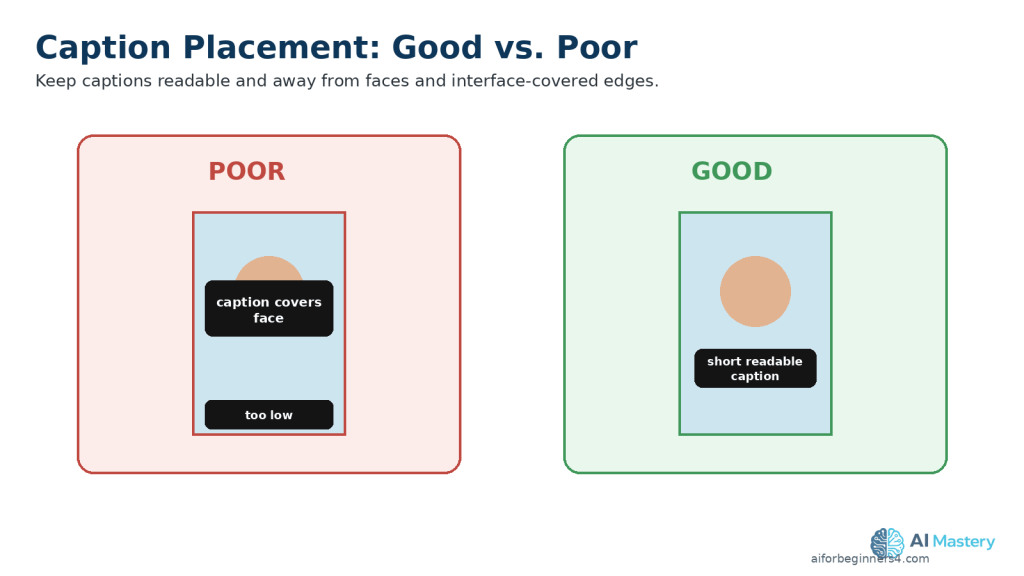
Figure 7. Place captions where they remain readable without covering faces or sitting too close to interface-covered edges.
Explanation: Clear caption placement supports accessibility and keeps important text visible.
Step 6: Add Music and Sound Effects Carefully
Music and sound effects can make a Pinterest video Pin more engaging, but they should support the video rather than distract from the main message.
Choose Music You Are Allowed to Use
Pinterest allows music to be added to Pins, but Pinterest states that all music is subject to licensing requirements regardless of how it is added. If a Pin contains music that you do not have permission to use, Pinterest may mute the audio. This can also apply to music already included in an uploaded video.
Do not assume that a song is safe to use simply because you found it online or because it appeared in a video on another social media platform.
Keep Music Below the Narration
If your video Pin includes spoken narration, keep the background music at a lower volume so the voice remains easy to understand.
Listen to the complete video and check that:
· The narration is clear.
· Music does not cover important words.
· Sound effects are not unexpectedly loud.
· Audio changes are smooth.
· The beginning and ending do not contain sudden volume changes.
Be Careful with Commercial or Promotional Pins
Pinterest states that brands generally cannot promote Pins containing licensed music unless they have permission to use that music for the intended promotional purpose. This is especially important for advertising, sponsorships, paid partnerships, and other commercial uses.
If you plan to promote a video Pin, check the music licence and Pinterest’s current advertising requirements before publishing or promoting it.
Be Careful When Reusing Music from Other Platforms
Music that you are allowed to use on Instagram, Facebook, TikTok, YouTube, or another service is not automatically licensed for Pinterest.
Pinterest specifically notes that imported Instagram content can be muted when it contains music that the creator does not have permission to use on Pinterest.
A safer workflow is to keep a clean master video without platform-specific music and add suitable audio separately for each platform after checking the applicable rights.
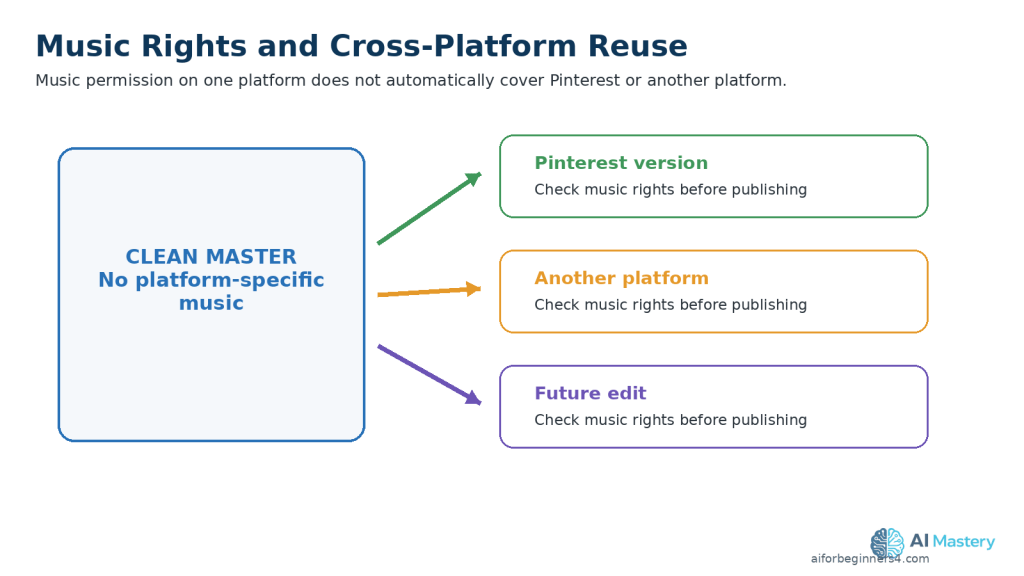
Figure 8. Keep a clean master without platform-specific music and check audio rights separately for Pinterest and every other platform.
Explanation: Music permission or availability on one platform does not automatically give permission to reuse the same track on another platform.
Keep Licensing Records
If you use music or sound effects from outside Pinterest, keep records such as:
· The licence.
· Permission from the rights holder.
· A purchase receipt.
· Attribution requirements.
· A copy of the applicable usage conditions.
Pinterest also advises users to obtain permission from copyright holders when using copyrighted material that they do not own.
Practical Example
Suppose your Pinterest video Pin explains how to summarize a document with AI.
You could use quiet background music beneath the narration while keeping the spoken instructions clearly understandable.
If you later adapt the same video for YouTube Shorts, Instagram Reels, Facebook Reels, or TikTok, return to your clean master and check whether the music licence permits use on that platform before publishing.
Step 7: Edit the Pinterest Video Pin for a Clear, Fast Flow
A Pinterest video Pin should move quickly enough to keep viewers interested without making the information difficult to follow.
Remove Unnecessary Parts
Review the full video and remove:
· Long pauses.
· Repeated explanations.
· Empty frames.
· Slow introductions.
· Unnecessary transitions.
· Visuals that do not support the main point.
The goal is to keep the Pin focused on one useful idea.
Match the Editing to the Script
Change visuals when the narration moves to a new point.
For example:
· Show the problem when the opening introduces it.
· Show the AI tool when the script explains the tool.
· Show the result when the narration describes the result.
· Show the final takeaway at the end.
This helps viewers understand the information without having to guess what each visual means.
Keep Transitions Simple
You do not need complicated effects between every scene.
Simple cuts, gentle zooms, or basic fades are often enough for beginner tutorials.
Too many effects can distract from the content.
Keep Important Content Visible
Check that captions, faces, screenshots, and important text remain clear throughout the video.
If a scene contains small text, zoom into the relevant area instead of showing the entire screen at once.
Keep important information away from the areas that Pinterest may cover with interface elements.
Practical Example
For a Pinterest video Pin about summarizing a document with AI, the editing sequence might be:
1. Show the long document.
2. Show the upload step.
3. Show the summary prompt.
4. Show the shorter result.
5. End with the reminder to verify the summary against the original.
This creates a simple beginning-to-end flow without unnecessary scenes.
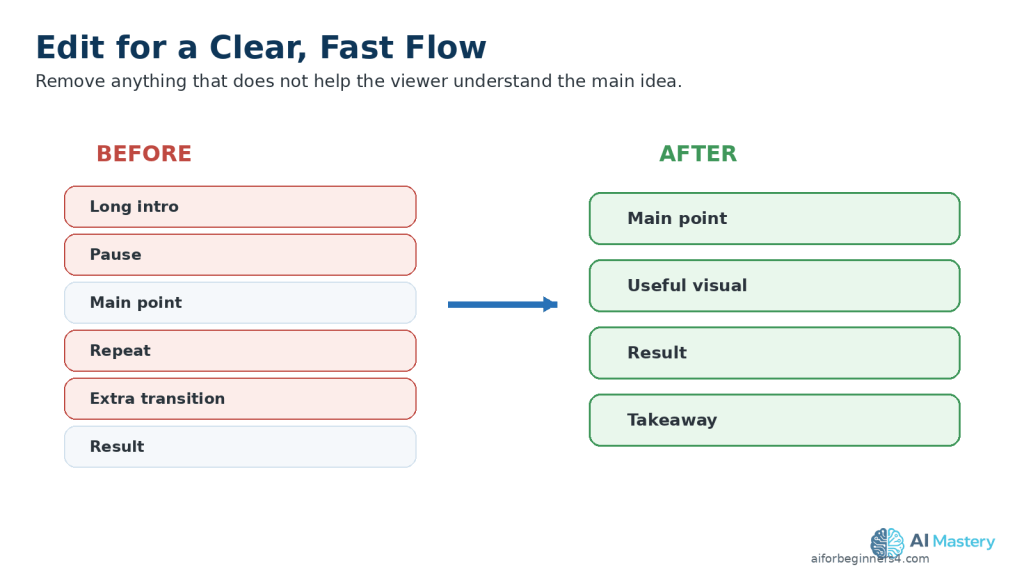
Figure 9. Removing long pauses, repeated information, and distracting effects creates a clearer Pinterest video Pin.
Explanation: Simple editing keeps attention on the lesson rather than on unnecessary production effects.
Step 8: Export and Review the Final Pinterest Video Pin
When editing is complete, export the video as a separate final file. Keep your original editing project and clean master version so you can make corrections or prepare versions for other platforms later.
Choose Practical Export Settings
For a full-screen, phone-friendly Pinterest video Pin, a practical beginner starting point is:
· Aspect ratio: 9:16
· Resolution: 1080 × 1920 pixels
· Orientation: Vertical
· Video encoding: H.264
· File format: MP4
Pinterest currently supports H.264 or H.265 video encoding and recommends 9:16 at 1080 × 1920 pixels for full-screen video Pins. Pinterest allows video Pins from 4 seconds up to 5 minutes long.
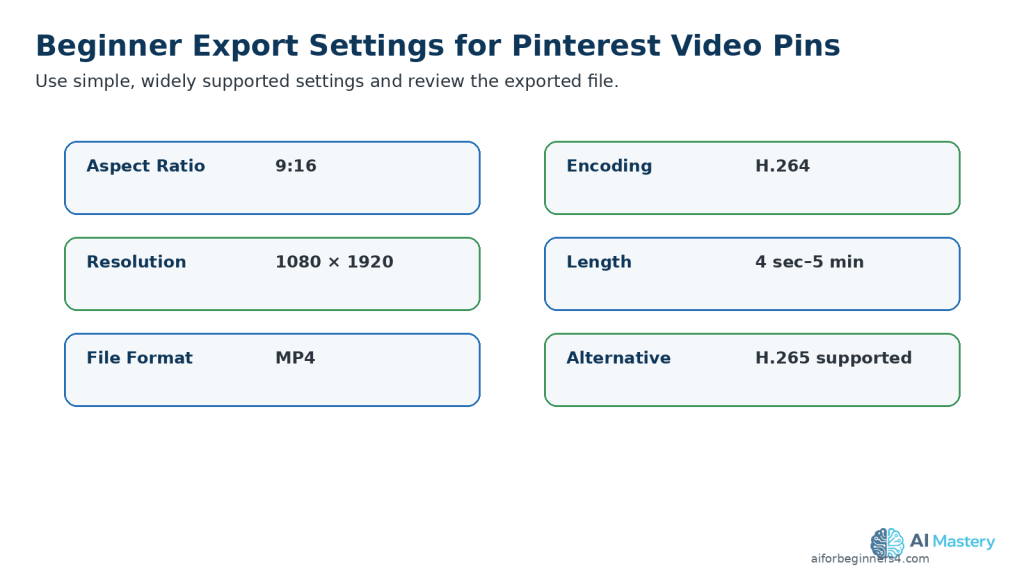
Figure 10. Practical Pinterest video Pin export settings include 9:16, 1080 × 1920, MP4 with H.264 as a simple beginner choice, and a video length within Pinterest’s current limits.
Explanation: Pinterest also supports H.265 encoding; always watch the actual exported file before uploading.
Watch the Exported File Before Uploading
Do not rely only on the preview inside your video editor.
Open the actual exported video and watch it from beginning to end.
Check for:
· Blurry or pixelated video.
· Cropped faces or important objects.
· Captions that are difficult to read.
· Text positioned too close to the edges.
· Music that covers the narration.
· Audio that is too loud or too quiet.
· Missing scenes or blank frames.
· Spelling mistakes.
· Distorted AI-generated images.
· Unwanted logos, watermarks, usernames, or branded endings.
· Private or confidential information.
Check the Vertical Layout
Watch the exported video on a phone if possible.
Make sure that:
· Important faces remain visible.
· Captions are readable.
· Demonstrations are large enough to understand.
· Important text remains inside the safe viewing area.
· The main subject remains clear in the vertical frame.
Pinterest provides safe-zone guidance for 9:16 full-screen video Pins because interface elements can cover parts of the video.
Keep a Clean Master
Save a clean master separately from the Pinterest version.
For example:
· ai-document-summary-master.mp4
· ai-document-summary-pinterest-video-pin-final.mp4
The clean master should avoid unnecessary platform-specific logos, usernames, downloaded watermarks, or platform-specific music when possible.
This makes it easier to create another version later for YouTube Shorts, Instagram Reels, Facebook Reels, TikTok, or another platform.
Practical Example
After exporting your document-summary Pinterest video Pin, watch the final MP4 on your computer and phone.
If the captions are readable, the narration is clear, the important demonstration remains visible, and there are no unwanted watermarks or private details, the video is ready for the publishing step.
Step 9: Upload and Publish the Pinterest Video Pin
When the final video has been reviewed, upload the clean Pinterest version rather than a copy downloaded from another social media platform.
Pinterest’s exact publishing buttons and options can change over time, but the basic workflow is similar.
Upload the Video Pin
A typical beginner workflow is:
1. Open Pinterest.
2. Choose the option to create a new Pin.
3. Upload your final video file.
4. Review the video preview.
5. Add a clear title.
6. Add a helpful description.
7. Choose the most appropriate board.
8. Add a destination link if the Pin should lead to a relevant webpage.
9. Review any available topic, product, partnership, or promotional options that apply.
10. Check the final Pin carefully.
11. Publish when everything is correct.
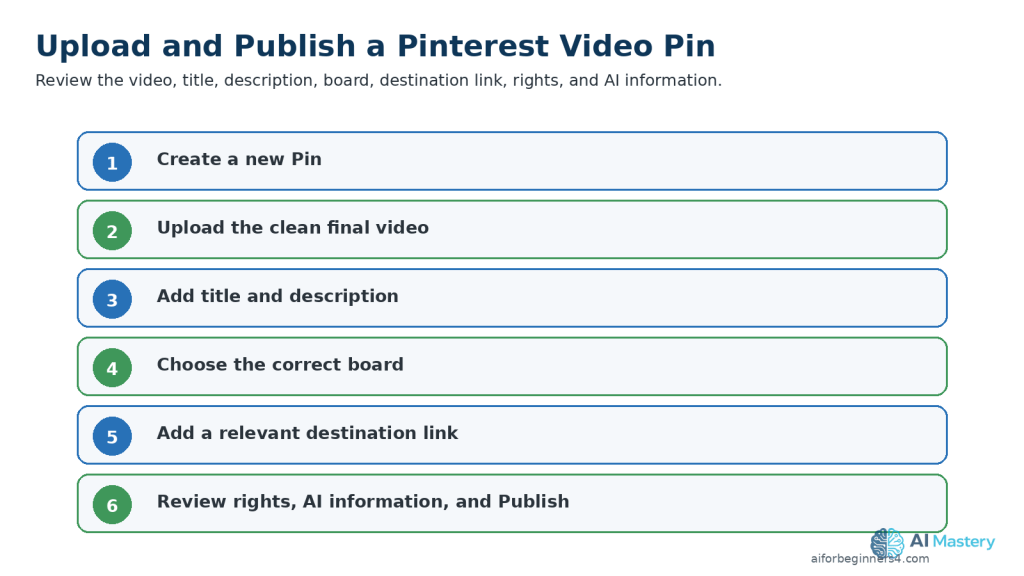
Figure 11. The Pinterest publishing workflow includes creating a Pin, uploading the clean final video, adding a title and description, choosing a board, adding a relevant destination link, and reviewing rights and AI information before publishing.
Explanation: Exact button names can vary by device, account type, and Pinterest interface updates.
The exact button names and available options may vary depending on whether you are using Pinterest on a computer, mobile device, personal account, or business account.
Write a Clear Pin Title
The title should explain what the viewer will learn or see.
For example:
How to Summarize a Long Document with AI
Avoid vague titles that do not explain the Pin’s subject.
Add a Helpful Description
Your description can briefly explain the content and include relevant words that help people understand the Pin.
For example:
Learn a simple way to summarize a long document with AI. Upload the document, ask for a focused summary, and compare important information with the original before using the result.
Write naturally for the reader rather than repeating the same keyword many times.
Choose the Right Board
Save the video Pin to a board that closely matches the topic.
For example, an AI document tutorial could belong on a board such as:
· AI for Beginners.
· AI Productivity Tips.
· ChatGPT Tutorials.
· AI Tools.
· Digital Productivity.
Clear board organization can make your Pinterest content easier to manage and understand.
Add a Relevant Destination Link
If the video Pin supports an article, tutorial, product page, or other useful resource, you can add a relevant destination link when Pinterest provides that option.
The linked page should match what the Pin promises.
For example, a Pin about summarizing documents with AI could link to the complete AI Mastery tutorial about document summarization.
Avoid using misleading links that send people to unrelated content.
Review AI-Generated or AI-Altered Content
Before publishing, review whether the video contains realistic AI-generated or significantly altered material that viewers could mistake for authentic people, places, or events.
Pay particular attention when AI content:
· Realistically represents a real person.
· Alters what a real person appears to say or do.
· Creates a realistic event that did not occur.
· Significantly changes a real photograph or video.
· Could reasonably be mistaken for authentic footage.
Check Pinterest’s current AI-labeling guidance and consider a clear disclosure when this type of synthetic content could be mistaken for authentic footage.
Review Before Publishing
Before publishing the video Pin, check:
· The correct video was selected.
· The video displays properly.
· The title accurately describes the content.
· The description matches the video.
· The correct board was selected.
· The destination link works and is relevant.
· Captions and important text remain readable.
· Narration is clear.
· Music and sound effects have appropriate usage rights.
· Images, clips, fonts, voices, and other assets are properly licensed or permitted.
· No private or confidential information appears.
· No unwanted watermark, username, or platform branding remains.
· Any appropriate AI-content disclosure or transparency option has been reviewed.
Practical Example
Suppose your Pinterest video Pin explains how to summarize a document with AI.
You could title the Pin:
How to Summarize a Document with AI
Add a short description explaining the three basic steps, save it to an appropriate AI tutorial board, and link to the full related AI Mastery article if available.
Before publishing, review the video, captions, narration, music rights, destination link, and any relevant AI-transparency requirements.
Common Mistakes to Avoid When Creating Pinterest Video Pins with AI
Beginners can save time by avoiding several common problems that affect clarity, quality, licensing, privacy, or publishing.
Common mistakes include:
· Trying to explain too many ideas in one video Pin.
· Using a long introduction before reaching the main point.
· Placing captions or important text too close to areas that Pinterest interface elements may cover.
· Shrinking screenshots until the text becomes difficult to read.
· Using music without checking whether the licence allows Pinterest use.
· Letting background music overpower the narration.
· Publishing AI-generated information without checking factual accuracy.
· Using a real person’s voice, image, or likeness without appropriate permission.
· Uploading a downloaded copy from another platform instead of using a clean master export.
· Leaving unwanted watermarks, usernames, logos, or branded endings in the video.
· Using AI-generated visuals without checking for distorted objects, incorrect text, or unrealistic details.
· Adding a destination link that does not match the Pin.
· Saving the Pin to an unrelated board.
· Skipping the final review of the exported file.
· Ignoring relevant AI-content transparency or disclosure requirements when realistic synthetic or altered content is used.
How to Avoid These Mistakes
Keep each video Pin focused on one clear lesson and work from a clean master project.
Before publishing, review the:
· Script.
· Visuals.
· Captions.
· Audio.
· Music rights.
· Asset licences.
· Permissions.
· Pin title.
· Description.
· Board selection.
· Destination link.
· AI-generated content.
· Final export.
· Any applicable AI-content transparency or disclosure requirements.
If something is unclear, incorrect, poorly positioned, misleading, or not properly licensed, correct the project and export a new version before publishing.
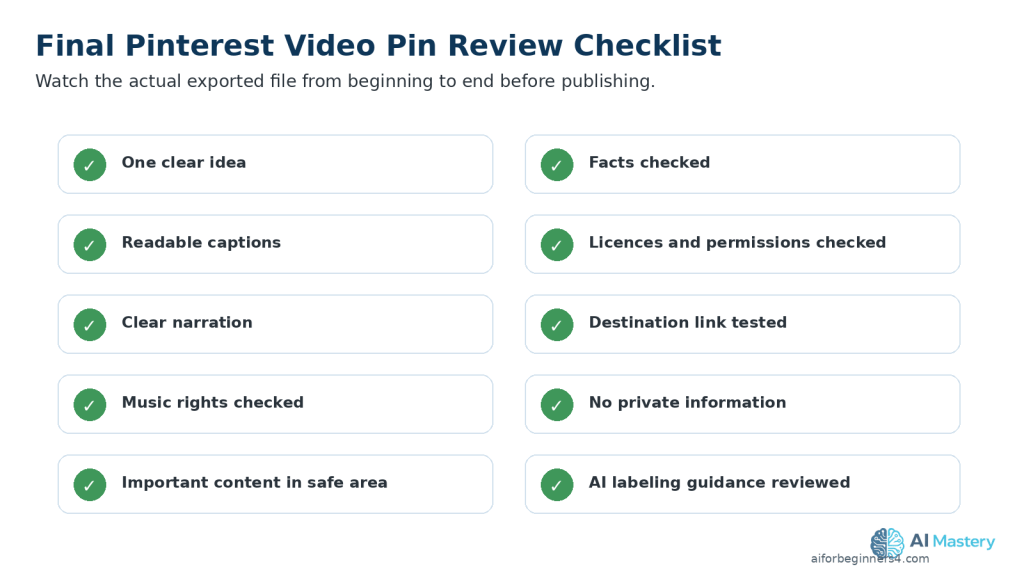
Figure 12. A final checklist helps catch quality, licensing, privacy, linking, branding, and AI-labeling issues before publication.
Explanation: Watching the complete exported video and testing the destination link are important final checks.
Benefits of Creating Pinterest Video Pins with AI
AI can make the Pinterest video Pin workflow easier for beginners by helping with planning, writing, visuals, narration, captions, and editing.
Key benefits include:
· Faster idea generation: AI can suggest focused Pin topics when you are not sure what to create.
· Simpler script writing: AI can turn a basic idea into a short script that you can review and improve.
· Easier visual planning: AI can suggest scenes, image ideas, screen recordings, text overlays, and simple shot sequences.
· More accessible production: AI voices, captions, and editing assistance can help beginners create videos without advanced production skills.
· Better organization: AI can help reduce a broad topic to one clear lesson that fits a video Pin.
· Easier repurposing: A Pinterest video Pin can be adapted from a longer video, article, tutorial, or clean master project.
· More consistent workflow: Using the same planning, scripting, editing, and review process can make future Pins easier to produce.
· Useful learning support: AI can explain unfamiliar editing terms and suggest improvements while you are learning a new tool.
· Cross-platform flexibility: A clean master can be adapted for Instagram Reels, YouTube Shorts, Facebook Reels, TikTok, or other vertical-video platforms after checking each platform’s current requirements.
· Support for evergreen content: Pinterest content can remain useful beyond the day it is published, especially when the Pin answers a practical question or teaches a repeatable skill.
AI is most useful when it supports your decisions rather than replacing them. Review the final script, visuals, audio, captions, facts, licences, permissions, links, and publishing choices before making the video Pin public.
Limitations of Creating Pinterest Video Pins with AI
AI can help with many parts of the Pinterest video Pin workflow, but it does not remove the need for careful human review.
Common limitations include:
· Factual errors: AI-generated scripts can contain incorrect, outdated, or misleading information.
· Generic writing: AI may produce scripts that sound repetitive or similar to other content unless you revise them.
· Visual inconsistencies: AI-generated images or video clips may contain distorted objects, unusual details, inconsistent characters, or misspelled text.
· Voice limitations: AI narration can mispronounce names, sound unnatural, or use incorrect emphasis.
· Licensing differences: AI tools, stock libraries, music services, templates, and fonts can have different rules for commercial use.
· Platform changes: Pinterest video specifications, publishing tools, music options, account features, and disclosure methods can change over time.
· Editing is still required: AI-generated material usually needs trimming, timing adjustments, caption checks, and final quality review.
· Privacy risks: Uploading private documents, photographs, recordings, or personal information to an AI tool can create privacy concerns.
· Link quality matters: AI can help write a Pin description, but it cannot ensure that a destination page is useful, accurate, current, or appropriate for the Pin.
· Disclosure may be necessary: Realistic AI-generated or significantly altered content may require additional transparency depending on how it is presented and Pinterest’s current rules.
· No guarantee of performance: AI can help improve the production workflow, but it cannot guarantee saves, clicks, followers, website traffic, sales, or other results.
How to Reduce These Limitations
Use AI as an assistant rather than treating its output as automatically finished.
Verify important facts, review every generated visual and voice recording, check licences and permissions, protect private information, test destination links, and watch the complete exported video before publishing.
When Pinterest changes a video specification, music option, publishing feature, disclosure method, or other requirement that affects your workflow, check the current official Pinterest guidance before relying on older instructions.
Common Myths About Creating Pinterest Video Pins with AI
Several common myths can make beginners expect too much from AI or create unnecessary publishing problems.
Myth 1: AI Can Create a Perfect Pinterest Video Pin Automatically
Reality: AI can help with ideas, scripts, visuals, narration, captions, and editing suggestions, but the final video still needs human review for accuracy, quality, timing, licensing, privacy, and publishing decisions.
Myth 2: AI-Generated Images and Music Are Automatically Copyright-Free
Reality: Rights and commercial-use conditions depend on the tool, licence, source material, and intended use.
Always check the terms that apply to AI-generated images, music, stock footage, fonts, templates, voices, and other assets before publishing.
Myth 3: More Effects Make a Pinterest Video Pin More Professional
Reality: Too many transitions, animations, text boxes, or sound effects can distract from the main idea.
Clear visuals, readable captions, simple editing, and useful information are usually more important than complicated effects.
Myth 4: Every Pinterest Video Pin Needs an AI Voice
Reality: Narration is optional.
Depending on the topic, you can create an effective video Pin using:
· On-screen text.
· Captions.
· Screen recordings.
· Simple animations.
· Demonstrations.
· Music or sound effects when appropriately licensed.
Use narration only when it genuinely helps explain the content.
Myth 5: The Same Video Can Be Uploaded to Every Platform Without Changes
Reality: You can start from the same clean master video, but each platform can have different requirements for dimensions, safe areas, music rights, captions, links, branding, and disclosure.
Create a separate final version for Pinterest rather than simply downloading a video from another social media platform and uploading it unchanged.
Myth 6: AI Can Guarantee More Saves, Clicks, or Followers
Reality: AI can help improve your planning and production workflow, but it cannot guarantee saves, clicks, followers, website traffic, sales, or other results.
The usefulness of the Pin, visual clarity, topic, title, description, destination link, audience interest, and many other factors can affect performance.
Frequently Asked Questions
How Long Can a Pinterest Video Pin Be?
Pinterest currently allows video Pins from 4 seconds up to 5 minutes long.
For beginner short-form content, use only the length needed to explain the idea clearly.
What Size Should I Use for a Pinterest Video Pin?
For a full-screen vertical video Pin, Pinterest recommends:
· 1080 × 1920 pixels
· 9:16 aspect ratio
· Vertical orientation
Pinterest also accepts other aspect ratios, including 1:2, 2:3, 3:4, 4:5, and 1:1.
What Video Format Does Pinterest Support?
Pinterest currently supports H.264 or H.265 video encoding.
For a simple beginner workflow, an MP4 video using H.264 is a practical choice when your editing program provides it.
Do I Need an Expensive AI Video Tool?
No. Beginners can start with simple tools for writing, editing, captions, narration, and visuals.
Before choosing a free or paid tool, check whether it:
· Adds watermarks.
· Limits video resolution.
· Limits export length.
· Restricts commercial use.
· Places limits on AI voices or generated media.
Can I Create Pinterest Video Pins Without Showing My Face?
Yes.
You can create faceless video Pins using:
· Screen recordings.
· AI-generated visuals.
· Licensed stock footage.
· Text and graphics.
· Charts.
· Product or workspace footage.
· Voice-over narration.
Can I Use an AI Voice?
Yes, when the AI voice tool and its licence allow your intended use.
Review the narration carefully and avoid cloning or impersonating a real person’s voice without appropriate permission.
Should I Add Captions?
Captions are strongly recommended.
They can help viewers understand the video without sound and improve accessibility for people who are deaf or hard of hearing.
Pinterest video Pins can also begin playing while people browse, so clear visual information and captions can help communicate the topic before someone opens the Pin.
Can I Use Any Music I Find Online?
No.
Pinterest states that music is subject to licensing requirements regardless of how it is added. Pins containing music that the creator does not have permission to use may be muted.
Check the music licence and keep appropriate permission or licensing records.
Does Pinterest Label AI-Generated Content?
Pinterest uses generative-AI disclosures for some content. Its current guidance explains that a disclosure may indicate that a Pin was modified with AI, contains an AI-generated person, or may have been modified with AI when Pinterest’s systems detect it.
Review Pinterest’s current AI-labeling guidance before publishing realistic synthetic or significantly altered content.
Can I Reuse the Same Video on Pinterest, Instagram, Facebook, YouTube, or TikTok?
Yes, but start from your clean master video and prepare a separate final version for each platform.
Check:
· Aspect ratio.
· Safe areas.
· Caption placement.
· Music rights.
· Video length.
· Platform branding.
· Destination links.
· AI-disclosure requirements.
Pinterest’s own specifications include particular safe zones for full-screen 9:16 video Pins, so a layout prepared for another platform may need adjustment.
Will AI Guarantee More Saves, Clicks, or Followers?
No.
AI can help with planning, writing, visuals, narration, and editing, but it cannot guarantee saves, clicks, followers, website traffic, sales, or other results.
Key Takeaways
Creating Pinterest video Pins with AI becomes easier when you follow a simple, repeatable workflow.
Remember these main points:
· Start with one clear idea for each video Pin.
· Use AI to help brainstorm, outline, and draft the script, but always review the final wording.
· Keep the script focused and make the topic clear near the beginning.
· Use a 9:16 vertical format at 1080 × 1920 pixels when creating a full-screen, phone-friendly video Pin.
· Keep important captions, faces, titles, and demonstrations inside Pinterest’s safe viewing area.
· Prepare visuals that remain easy to understand on a small screen.
· Use clear narration when it helps explain the content.
· Add readable captions and on-screen text to improve understanding and accessibility.
· Keep background music below the narration and verify that you have appropriate music rights.
· Check licences and permissions for stock footage, images, fonts, templates, voices, music, and other third-party assets.
· Review AI-generated visuals for distorted objects, incorrect text, duplicated items, or unrealistic details.
· Edit out unnecessary pauses, repeated information, and distracting effects.
· Export a clean final version and watch the complete file before uploading it.
· Use an accurate title, description, board, and destination link when publishing.
· Review Pinterest’s current AI-labeling or disclosure guidance when realistic synthetic or significantly altered content is involved.
· Keep your clean master video, project files, prompts, licences, permissions, and final exports for future corrections or repurposing.
AI can help make the production process faster, but the final quality, accuracy, licensing, privacy, accessibility, linking, and publishing decisions still require careful human review.
Final Tip
Keep your first Pinterest video Pins simple.
Choose one useful idea, explain it clearly, use readable visuals and captions, and review the complete exported video before publishing. You do not need complicated effects or advanced editing to create a useful Pin.
As your workflow improves, keep your clean master files, prompts, licences, permissions, destination links, and final exports organized. This makes it easier to correct mistakes, update older Pins, or repurpose successful videos for other platforms later.
Continue Learning
If you want to continue building your AI video skills, these AI Mastery guides are useful next steps:
· How to Repurpose One AI Video for YouTube Shorts, TikTok, Instagram Reels, and Facebook Reels: Beginner Guide (2026) — Learn how to adapt one clean master video for several social media platforms.
· How to Choose AI Video Sizes, Aspect Ratios, and Export Settings: Beginner Guide (2026) — Learn how to choose practical dimensions, frame rates, file formats, and export settings for vertical video.
· How to Create YouTube Shorts with AI: Beginner Step-by-Step Guide (2026) — Learn how to create, edit, export, and publish short-form videos for YouTube.
· How to Create Instagram Reels with AI: Beginner Step-by-Step Guide (2026) — Learn how to prepare and publish vertical AI-assisted videos for Instagram.
· How to Create Facebook Reels with AI: Beginner Step-by-Step Guide (2026) — Learn how to create and publish AI-assisted vertical videos for Facebook.
· How to Edit AI-Generated Videos: Beginner Step-by-Step Guide (2026) — Learn how to trim clips, arrange scenes, improve pacing, and prepare a clean final video.
· How to Add Voice, Music, and Captions to AI Videos: Beginner Step-by-Step Guide (2026) — Learn how to add narration, background music, sound effects, and readable captions.
Sources and References
The following official Pinterest sources were checked for the current video Pin specifications, safe zones, music licensing, copyright, video playback, Pin creation, and generative-AI labeling information used in this guide. Pinterest features and policies can change, so important requirements should be checked again when Pinterest announces an update or when you change your publishing workflow.
· Pinterest Help Center — Review Pin Specs: Pinterest provides current specifications for video Pins, including supported video encoding, video length, recommended full-screen dimensions, aspect ratios, and safe-zone measurements. For full-screen video, Pinterest recommends 9:16 at 1080 × 1920 pixels. Video Pins can currently be 4 seconds to 5 minutes long and use H.264 or H.265 encoding.
· Pinterest Help Center — Using Music in Pins: Pinterest explains that music is subject to licensing requirements regardless of how it is added. Pins containing music that the creator does not have permission to use may be muted, and additional restrictions can apply to commercial or promoted Pins.
· Pinterest Help Center — Gen AI Labels: Pinterest explains how it may add an AI modified label when its systems detect from available information that generative AI was used to create or modify a Pin.
· Pinterest Help Center — AI at Pinterest: Pinterest provides additional information about its use of generative AI and its approach to labeling AI-generated or AI-modified content.
· Pinterest Help Center — Copyright: Pinterest explains basic copyright principles and provides information about reporting material that infringes copyright. Creators should have appropriate rights or permission for copyrighted material they publish.
· Pinterest Help Center — Manage Video Autoplay Settings: Pinterest explains that video Pins can appear in the home feed and search results and may play automatically depending on the viewer’s settings.
· Pinterest Help Center — Design a Pin: Pinterest explains its Pin-creation tools, including options for recording and combining video clips when creating visual content.
· Pinterest Help Center — Content Claiming Portal: Pinterest provides copyright owners with tools for identifying and managing matching images or videos that appear on Pinterest.
• Pinterest Help Center — Create a Pin from an Image or Video: Pinterest explains the current desktop and mobile workflow for creating a Pin from uploaded image or video files.
Important: This guide provides general educational information about AI video creation, copyright, licensing, privacy, disclosure, and publishing. It is not legal advice. Always verify that you have appropriate rights or permission for music, photographs, video clips, voices, fonts, templates, and other material you publish.


Leave a Reply