
Estimated reading time: 23 minutes
Last updated: August 8, 2026
Introduction
A faceless YouTube channel can use AI for research assistance, script planning, narration, images, video clips, editing, captions, thumbnails, and titles. Using AI does not automatically prevent a channel from being monetized.
What matters is how the finished content is created, how original and useful it is, whether it follows YouTube’s monetization policies, and whether required AI disclosures are completed. YouTube’s current monetization policy says monetized content should be original and authentic. It also restricts content that is highly repetitive, generic, template-driven, or mass-produced without enough creative, educational, or entertainment value.
YouTube clarified this area in July 2025 by renaming its previous repetitious-content policy to inauthentic content. The current detailed policy also uses the heading Generic or Repetitive Content. The clarification did not create a blanket ban on AI videos, and YouTube stated that its separate reused-content policy did not change.
Reused content: Generally concerns material that already exists elsewhere and is republished without enough meaningful original contribution.
Inauthentic content: Concerns content that is repetitive, generic, template-based, or mass-produced with too little meaningful variation or creator value.
These ideas are related but not identical. A channel can use licensed material and still have a monetization problem if the finished videos do not add enough original value. A channel can also create every asset itself and still look mass-produced if dozens of videos are nearly interchangeable.
AI disclosure is another separate issue. YouTube requires disclosure for realistic AI-generated or meaningfully altered content in situations such as making a real person appear to say or do something they did not, changing footage of a real event or place, or creating a realistic scene that did not actually occur. Ordinary production assistance such as script help, titles, thumbnails, captions, and minor technical improvements is treated differently under YouTube’s current guidance.
YouTube also states that properly disclosing qualifying AI-generated or altered content does not by itself limit a video’s audience or affect its eligibility to earn money. Disclosure is therefore a transparency step, not an automatic demonetization button.
The goal of this guide is not to teach you how to beat YouTube’s monetization review. It is to help you build a faceless channel that is original, useful, transparent, carefully reviewed, and designed for real viewers rather than mass production.
Core principle: Faceless does not mean effortless, and AI-assisted does not mean automatic. A strong channel still needs human judgment, factual review, responsible AI use, and a clear reason for viewers to watch.
Before Learning
Before learning about reused content, AI disclosure, and monetization, understand that YouTube evaluates more than whether a video was created with AI. For a faceless channel, three separate questions matter:
• Is the content sufficiently original and useful?
• Does the channel follow YouTube monetization policies?
• Does realistic altered or AI-generated content need disclosure?
These questions should not be treated as though they mean the same thing. Copyright permission, monetization originality, and AI disclosure each need their own check.
Faceless Does Not Mean Low Quality
A faceless video does not need to show the creator on camera. You can still create substantial original value through research, original explanations, original scripts, fact-checking, useful examples, narration, thoughtful editing, custom graphics, purposeful stock footage, AI-generated visuals, screen recordings, comparisons, tutorials, and commentary.
AI Is a Tool, Not the Finished Strategy
AI can help with brainstorming, outlining, drafting, image creation, voice generation, editing assistance, captions, titles, and thumbnails. However, simply combining generated pieces does not automatically create a strong video. You still need to decide what the video should teach, who it is for, which facts are correct, which examples are useful, which visuals support the narration, what should be removed, and whether the final video feels repetitive.
Copyright and Monetization Are Different Checks
Copyright review: Do I have the right or permission needed to use the material?
Monetization review: Does the channel meet YouTube’s standards for original, authentic, valuable content?
A video may use correctly licensed music, stock footage, images, and attribution and still not necessarily qualify for monetization. Likewise, an original video can still have a copyright problem if it includes unlicensed material.
Do Not Build the Channel Around Automation Alone
Avoid designing the entire workflow around Prompt → Generate → Upload → Repeat with almost no human review. Before publishing, review script accuracy, originality, narration, visual relevance, factual claims, editing, repetition, AI errors, copyright and licences, required disclosures, and viewer usefulness.
A Simple Beginner Workflow
Use this sequence: Choose Useful Topic → Research → Create Original Script → Review Facts → Create or Licence Visuals → Add Narration → Edit Meaningfully → Check Copyright → Check AI Disclosure → Review Quality → Publish.
What You’ll Learn
By the end of this guide, you should understand how YouTube evaluates faceless and AI-assisted channels for originality, authenticity, disclosure, and monetization. You will learn how to:
• Understand reused content and inauthentic content.
• Recognize the difference between reused material and repetitive or mass-produced content.
• Understand why copyright permission does not automatically guarantee monetization.
• Understand why using AI does not automatically prevent monetization.
• Add meaningful research, explanation, examples, editing, and commentary.
• Avoid creating large numbers of near-duplicate videos from one template.
• Review AI-generated scripts, narration, images, and video for quality and accuracy.
• Understand when realistic altered or synthetic content may require disclosure.
• Recognize ordinary AI assistance that generally does not require altered-content disclosure.
• Understand that proper AI disclosure does not automatically prevent monetization.
• Understand how YouTube reviews a channel as a whole.
• Review your channel before applying to the YouTube Partner Program.
• Keep records showing research, scripts, editing, prompts, sources, licences, and human contributions.
Central idea: Original value matters more than whether your face appears on camera.
What YouTube Means by Reused Content
YouTube uses the term reused content for channels that repurpose content already available on YouTube or another online source without enough original commentary, substantive modification, educational value, or entertainment value. The simplest beginner interpretation is: using someone else’s material is not automatically the problem; the problem is using it without adding enough meaningful original value of your own.
Reused content can involve material from other YouTube videos, social media, television, movies, news footage, podcasts, music, websites, online compilations, and other creators. The practical question is: What did you add that makes the finished video meaningfully different and valuable to viewers?
Permission Does Not Automatically Solve Reused Content
YouTube explicitly separates reused-content review from copyright enforcement. Permission can answer whether you are allowed to use something, but it does not automatically answer whether the finished channel adds enough original value for monetization.
Editing Alone May Not Be Enough
Cropping, resizing, changing playback speed, adding captions, replacing a voice, adding background music, or applying a filter can improve presentation. These changes do not automatically create meaningful original value. The stronger contribution comes from commentary, analysis, teaching, original examples, demonstrations, storytelling, and substantive editing.
Reading an Article With an AI Voice Can Be a Problem
A common weak workflow is: copy an online article, put it into an AI voice generator, add stock footage, and publish. A stronger workflow is to research reliable sources, understand the subject, write your own explanation, add examples, verify facts, create or licence visuals, and edit the video around a clear teaching purpose.
A Good Beginner Test
Ask: If I removed all the borrowed material, what original value would remain? Would the video still contain your explanation, research, examples, teaching, story, commentary, or conclusions? If almost nothing original remains, the video may depend too heavily on reused material.
Also ask: Why should someone watch my version instead of the original? Good answers include: mine explains it for beginners, compares several sources, demonstrates a process, corrects outdated information, adds practical examples, or analyzes strengths and limitations. “Mine has a different AI voice” is a weak answer.
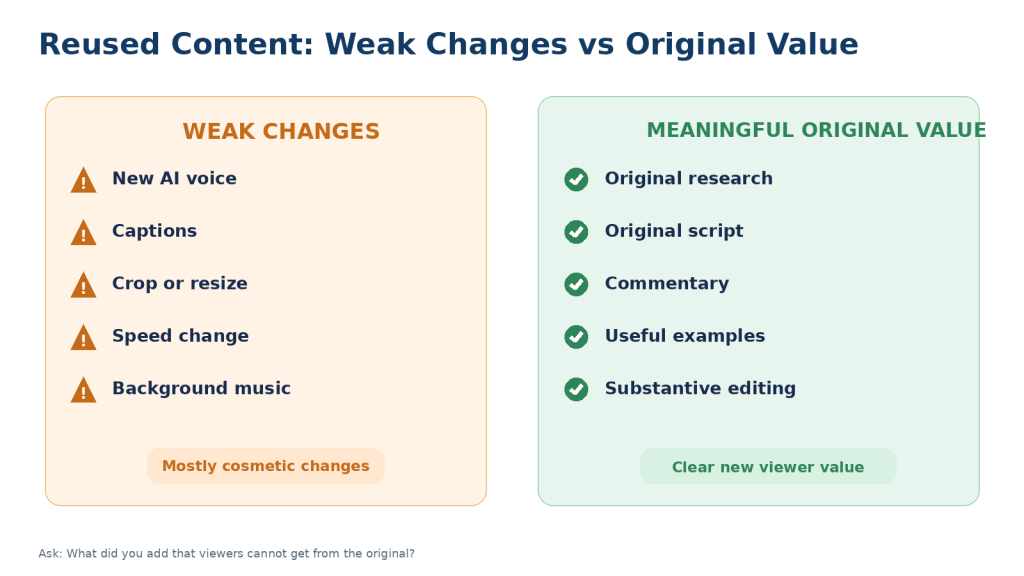
Figure 1. Small technical changes are different from adding meaningful original commentary, education, analysis, or creative value.
Explanation: YouTube’s reused-content review looks beyond simple technical edits. Faceless creators should make their own contribution clear through original writing, explanation, examples, commentary, demonstrations, or substantive creative editing.
What YouTube Means by Inauthentic Content
YouTube renamed its previous repetitious-content policy to inauthentic content in July 2025. Its current monetization page explains that monetized channels should avoid highly repetitive material where videos feel interchangeable, appear to be produced from a template, or fail to deliver meaningful creative, educational, or other value.
This is not the same as saying “AI content is banned.” YouTube’s current policy specifically allows creative tools, including AI, to assist with unique characters, narratives, scripts, and background visuals when the final product demonstrates creative vision and meaningful viewer value. The policy also specifically warns against AI-generated content made from generic or unoriginal templates that gives the impression of mass production without the creator’s authentic insights or perspective.
Similar Formatting Is Allowed
You can keep consistent branding, including an intro, outro, fonts, colour palette, caption style, narrator, and transitions. YouTube’s current examples say the same intro and outro can be used when the bulk of the content is different. A recognizable series format is also acceptable when each video has a distinct focus, concept, or storyline.
Useful distinction: Repeat the branding, not the substance.
A Simple Test for Repetition
Open five videos from your channel and imagine watching them one after another. Could a viewer easily tell why each video deserves to exist separately? Check whether each one has its own purpose, information, examples, demonstrations, analysis, and conclusion. If the videos feel almost interchangeable, the substance needs more variation.
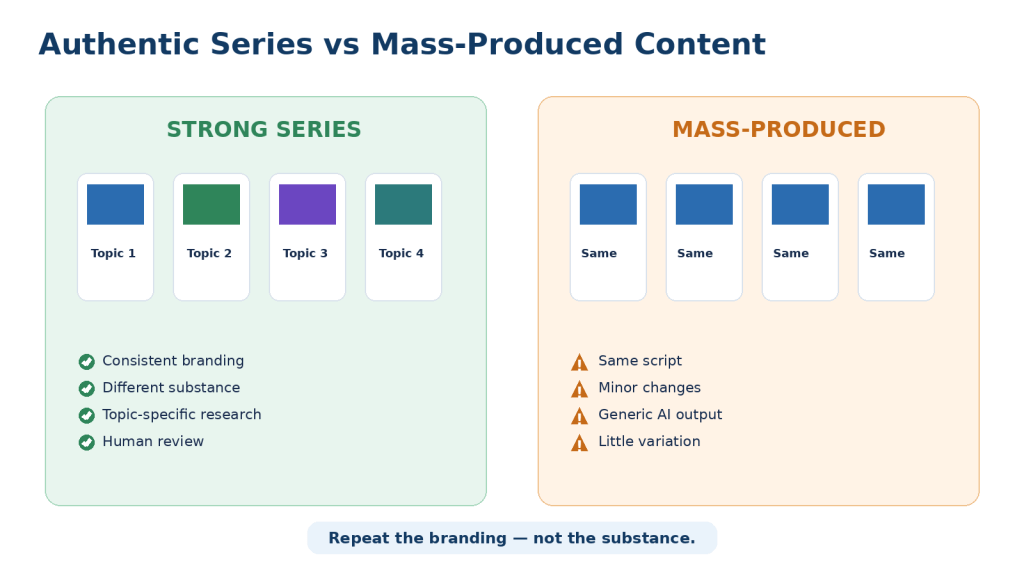
Figure 2. Consistent branding can support a series, while repeated substance with only minor changes can make videos feel mass-produced.
Explanation: YouTube allows similar formats when each video’s substance provides meaningful variation and viewer value. AI-assisted channels should use templates for efficiency without allowing the actual content to become interchangeable.
Reused Content vs Inauthentic Content: What’s the Difference?
Reused content: Focuses on material from other sources and asks what meaningful original value you added.
Inauthentic content: Focuses on repetitive, generic, template-driven, or mass-produced videos and asks whether each upload has meaningful variation and viewer value.
A channel can have reused-content concerns without being mass-produced. For example, five videos built mainly from copied clips with minimal commentary can raise a reused-content issue even though there are only five videos.
A channel can also look inauthentic without reusing other people’s videos. If every script, image, voice, and edit is generated for your channel but the same automated template produces hundreds of interchangeable videos, the channel can still raise repetition and mass-production concerns.
A channel can potentially raise both concerns at once. For example, automatically compiling third-party social clips into dozens of near-identical videos can create both a reused-material problem and a repetitive-production problem.
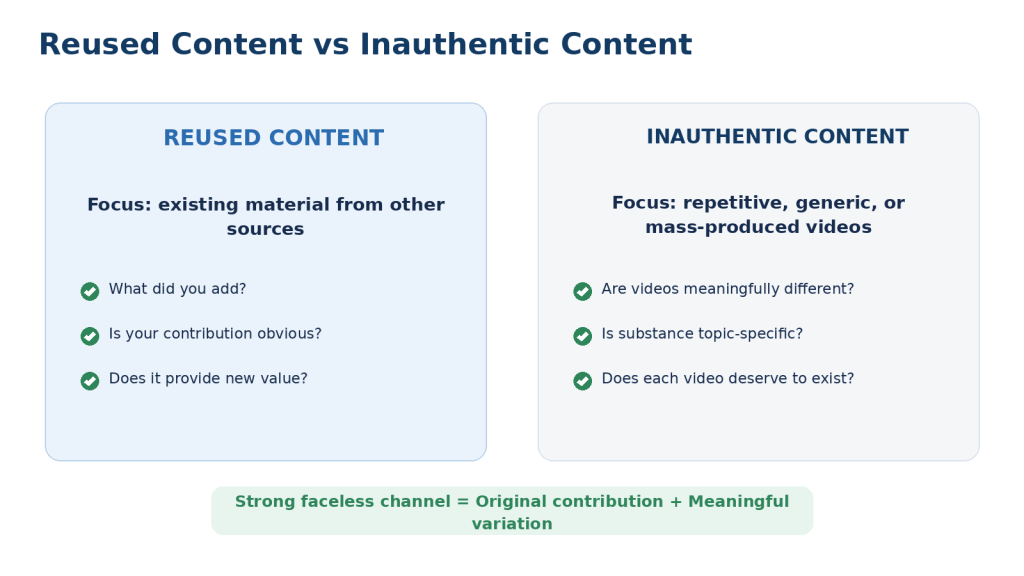
Figure 3. Reused content focuses on insufficient original contribution to existing material, while inauthentic content focuses on repetitive or mass-produced videos with too little meaningful variation.
Explanation: A faceless channel should address both risks. Use third-party material only as support for meaningful original value, and make sure each video contains its own useful substance rather than becoming another version of the same automated template.
Can Faceless YouTube Videos Be Monetized?
Yes. A faceless YouTube channel can potentially qualify for monetization. YouTube’s published monetization policies do not require every creator to show their face on camera. The focus is on whether the channel meets eligibility requirements and follows monetization policies for original, authentic, policy-compliant content.
A faceless channel can use voiceover, screen recordings, stock footage, AI-generated images, AI-generated video, animation, graphics, slides, licensed music, and a synthetic narrator. The important issue is what original value the channel provides and whether the finished content follows the applicable rules.
Current Standard YPP Ad-Revenue Eligibility
As of August 8, 2026, YouTube’s standard ad-revenue route generally requires 1,000 subscribers plus either 4,000 valid public watch hours in the previous 12 months or 10 million valid public Shorts views in the previous 90 days. Other YPP requirements also apply, and the channel still undergoes review. Watch hours from Shorts views in the Shorts Feed do not count toward the 4,000-hour route.
YouTube also has an expanded YPP in eligible regions that can provide earlier access to certain fan-funding and Shopping features at lower thresholds. Those lower thresholds do not automatically unlock full advertising revenue sharing. Because requirements can change, check the current Earn section in YouTube Studio before applying.
Important: Eligibility threshold reached means eligible to apply under the applicable route; it does not mean automatic monetization approval.
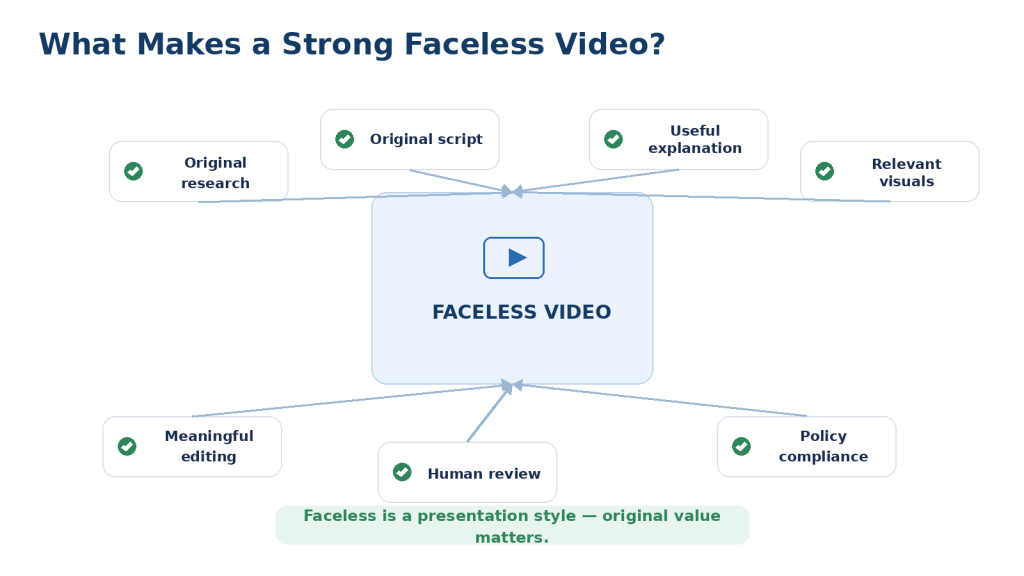
Figure 4. A strong faceless video demonstrates original research, writing, explanation, purposeful visuals, meaningful editing, human review, and policy compliance.
Explanation: Faceless presentation does not determine monetization eligibility by itself. The more important questions are whether the channel meets YouTube’s requirements and consistently creates original, authentic content that provides real value to viewers.
Can AI-Generated and AI-Assisted YouTube Videos Be Monetized?
Yes, potentially. YouTube’s current policy does not contain a blanket ban on AI-assisted creation. Instead, it evaluates whether the final product is original, authentic, satisfying to viewers, and not generic or mass-produced. YouTube’s monetization examples specifically allow creative tools to help with unique characters, narratives, script editing, and original background visuals when the creator’s creative vision remains clear.
There Is No Published “Percentage of AI” Rule
YouTube does not publish a universal percentage such as “50% human” or “30% AI” that guarantees monetization. Trying to calculate an imaginary human-to-AI percentage is less useful than asking whether the finished video shows research, creative direction, meaningful editing, accurate information, and viewer value.
AI Narration Can Be Part of the Workflow
A synthetic voice does not automatically make a channel ineligible. A carefully researched and rewritten tutorial using synthetic narration is very different from an automated system that reads copied web pages across hundreds of near-identical videos.
AI Persona Safety on Sensitive Topics
YouTube’s current monetization policy contains a specific restriction for channels that use AI-generated personas presenting themselves as human experts giving advice on sensitive topics such as health, legal issues, finances, or politics. These channels are not allowed to monetize under the current policy. For educational channels, avoid presenting a synthetic doctor, lawyer, financial adviser, or political expert in a way that viewers could mistake for a real human professional.
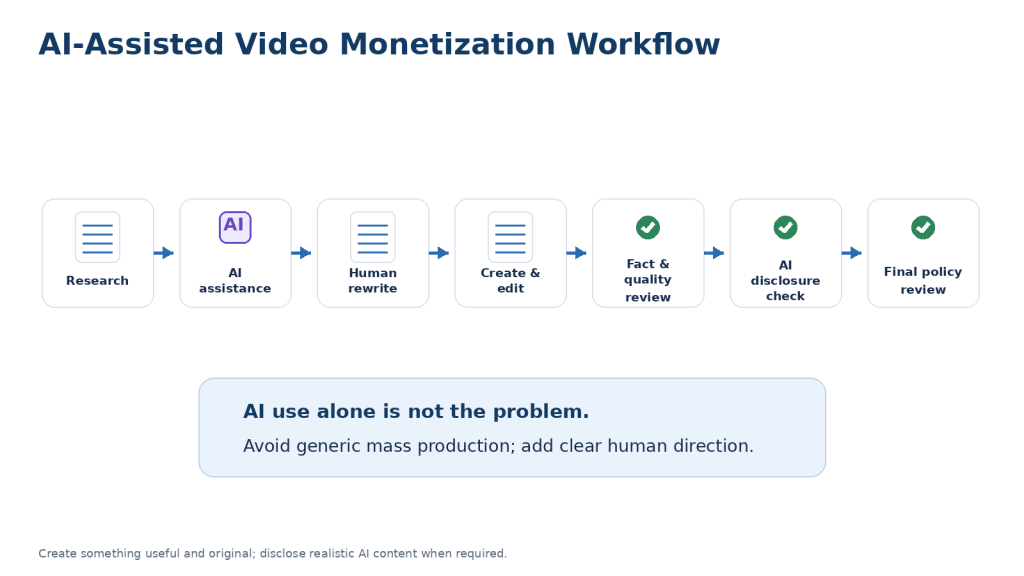
Figure 5. AI can assist with video creation while human research, direction, review, disclosure decisions, and policy compliance remain important.
Explanation: YouTube does not treat every AI-assisted video as ineligible. The stronger approach is to use AI inside a deliberate creative process that produces original value and accurately discloses realistic synthetic content when required.
How to Add Meaningful Human Contribution to AI-Assisted Videos
Human contribution does not require appearing on camera. It can be demonstrated through research, writing, teaching, commentary, fact-checking, original examples, screen demonstrations, visual planning, editing, storytelling, quality control, and final judgment.
Start With a Human-Chosen Purpose
Before opening an AI tool, decide what the viewer should learn, understand, or be able to do after watching. A clear purpose gives the video direction before AI begins generating material.
Research the Topic Yourself
For information that can change, check authoritative sources such as official product documentation, platform help pages, governments, standards organizations, and original research. This is especially important for software features, prices, subscription conditions, policies, copyright, privacy, commercial-use rules, monetization requirements, and AI disclosure requirements.
Use AI Drafts as Starting Points
Review AI drafts for accuracy, repetition, generic wording, missing explanations, unsupported claims, outdated information, awkward examples, and unnecessary sections. Rewrite the material so it reflects your own teaching purpose and audience.
Add Original Examples and Commentary
Examples turn general advice into something beginners can recognize. Commentary should explain, compare, correct, or add context rather than merely restating what viewers can already see.
Make Editing Decisions Yourself
Meaningful editing includes removing unnecessary sections, rearranging scenes, adjusting pacing, replacing weak visuals, highlighting important points, correcting narration, improving captions, adding explanatory graphics, and removing repeated information.
Keep Evidence of Your Work
For important videos, save topic notes, research sources, outlines, prompts, AI drafts, revised scripts, final scripts, screen recordings, graphics, narration, editing projects, licence records, disclosure decisions, and final exports. These records do not guarantee monetization; they support a consistent, accountable production process.
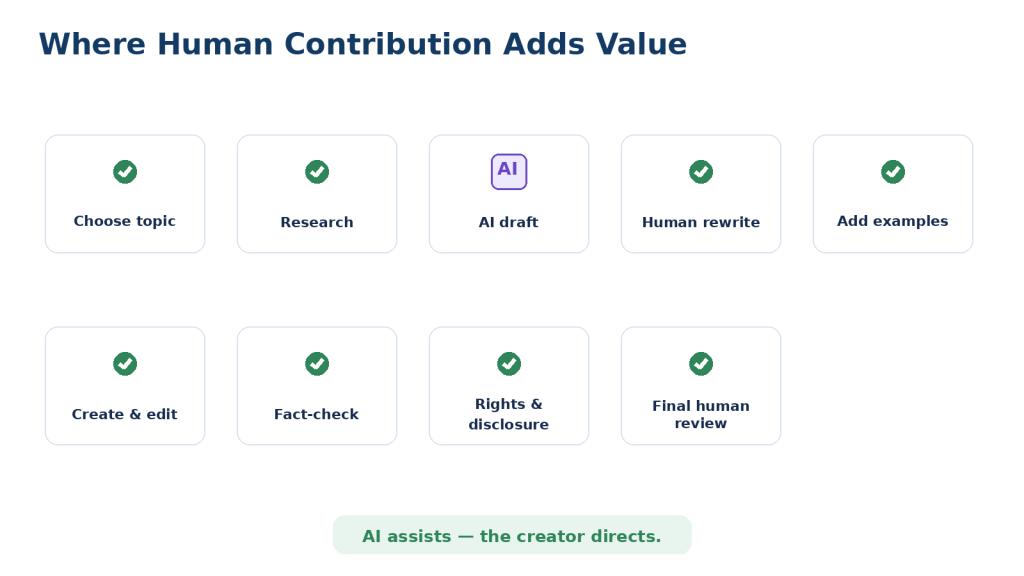
Figure 6. Meaningful human contribution can appear throughout an AI-assisted workflow through research, rewriting, examples, editing, verification, and final judgment.
Explanation: A faceless creator does not need to appear on camera to show meaningful involvement. The finished video should reflect deliberate human decisions rather than being a largely automatic combination of generated assets.
When YouTube Requires AI Disclosure
YouTube requires creators to disclose certain AI-generated or meaningfully AI-altered content when it appears realistic. The purpose is to help viewers understand when something they are watching or hearing may not represent what actually happened.
The three main situations to remember are realistic content that makes a real person appear to say or do something they did not, meaningfully alters footage of a real event or real place, or generates a realistic scene that did not actually occur.
Realistic Synthetic People, Places, and Events
Examples can include a realistic synthetic public figure making a statement they never made, a real event altered to show an incident that did not happen, or realistic AI footage of a disaster approaching a real city when that event did not occur. Realistic AI content is not evidence that an event happened.
AI-Generated Music
YouTube’s current disclosure guidance lists AI-generated music among examples that require disclosure. Disclosure does not replace the need to check the music tool’s licence, commercial-use conditions, and any restrictions on source material or voice imitation.
Voice Cloning
YouTube currently treats cloning your own voice for ordinary voiceovers or dubbing differently from cloning another person’s voice. If synthetic audio makes another real person appear to say something they did not say, disclosure and additional privacy, consent, impersonation, and legal considerations can apply. Disclosure is not permission to imitate someone.
How to Disclose in YouTube Studio
1. Open YouTube Studio and begin uploading the video.
2. Find the current Attributes or AI use area in the upload workflow.
3. Select the appropriate option if the content meets YouTube’s disclosure requirements.
4. Complete the remaining video details and publish when your other checks are finished.
Interface wording and placement can change. Follow the current labels shown in your own YouTube Studio account.
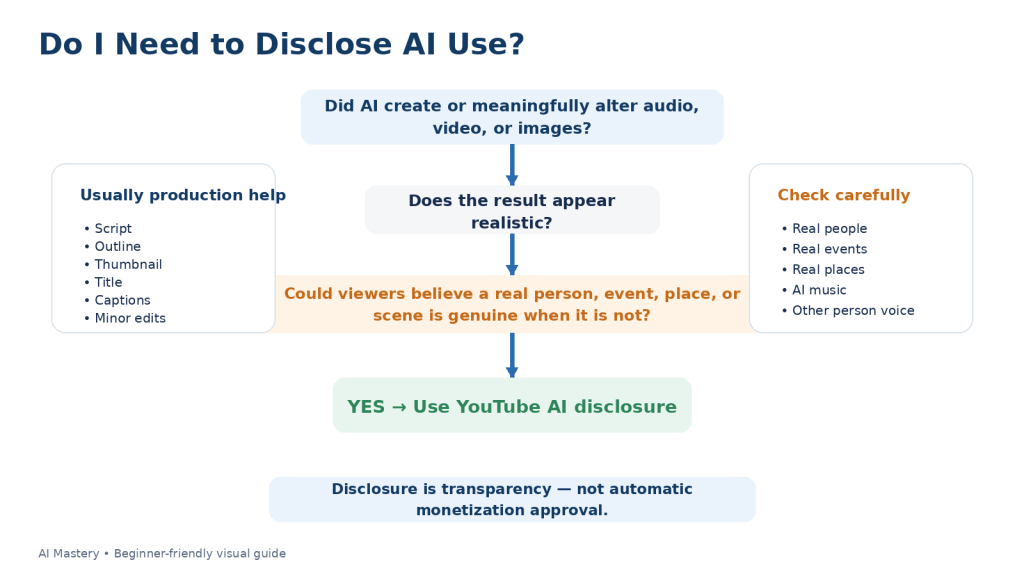
Figure 7. YouTube generally requires disclosure when AI creates or meaningfully alters realistic content that could affect what viewers believe actually happened.
Explanation: Not every use of AI requires disclosure. Ordinary production assistance and minor edits are treated differently from realistic synthetic people, events, places, voices, and other meaningful alterations. Always check current YouTube guidance when your use is unclear.
When YouTube AI Disclosure Is Generally Not Required
YouTube’s current examples distinguish realistic altered or synthetic media from ordinary production assistance and minor edits. Script help, outline creation, title assistance, thumbnail assistance, infographics, caption generation, routine video repair, voice or audio repair, idea generation, and cloning your own voice for ordinary narration are among examples that generally do not require the altered-content disclosure for that reason alone.
Clearly unrealistic synthetic content is also treated differently from photorealistic content that viewers could mistake for reality. A flat-design infographic, cartoon robot, or obviously fictional fantasy scene does not create the same transparency concern as realistic synthetic footage of a real person or event.
Important: The amount of AI used is not the only issue. A short synthetic clip can still require disclosure if it realistically makes a real person appear to do something they did not. Conversely, a fully AI-generated but clearly fictional animation may not require the same disclosure for that reason alone.
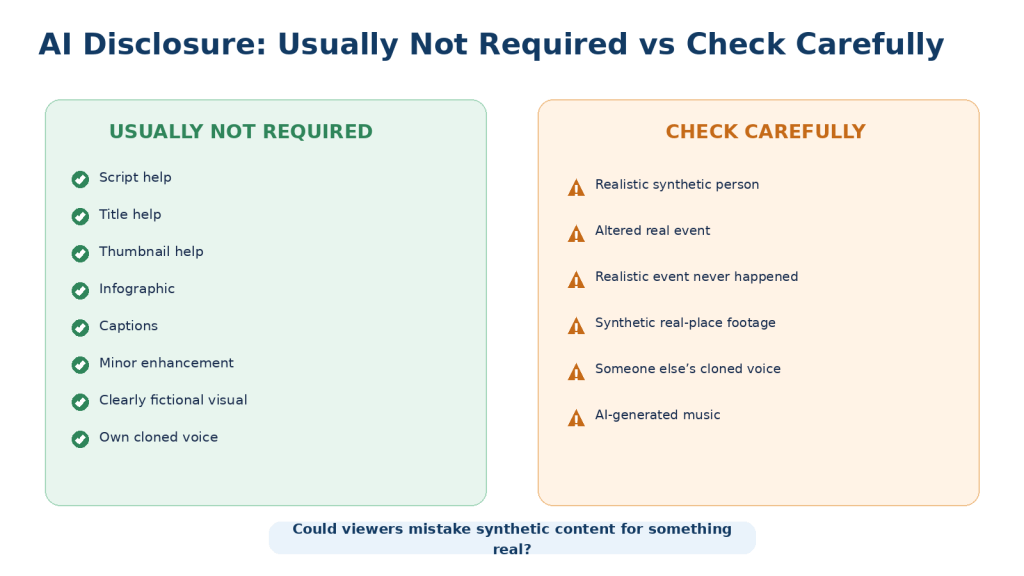
Figure 8. Ordinary AI production assistance is generally treated differently from realistic synthetic people, events, places, voices, and AI-generated music.
Explanation: The disclosure decision should be based on what AI actually created or changed. Faceless creators do not need to label every routine AI-assisted task, but realistic synthetic material should be reviewed carefully against YouTube’s current disclosure rules.
Does AI Disclosure Affect YouTube Monetization?
Using YouTube’s AI disclosure does not automatically prevent a video from earning money. YouTube currently states that disclosing qualifying altered or synthetic content does not by itself limit the video’s audience or affect its eligibility to earn money.
AI disclosure check: Does this realistic altered or synthetic content need transparency disclosure?
Monetization check: Does this video and channel meet YouTube’s broader standards for original, authentic, policy-compliant content?
A disclosed video can still have reused-content or repetition problems. Disclosure does not convert copied material into original content, does not give copyright permission, and does not solve privacy or impersonation issues. It also does not guarantee monetization.
Repeated failure to disclose qualifying realistic synthetic content can create enforcement problems. YouTube’s responsible-AI guidance says consistent failure to disclose can lead to actions that may include content removal or suspension from YPP.
Best approach: Create better content and disclose accurately when required. Do not hide qualifying AI use because you believe the label automatically causes demonetization.
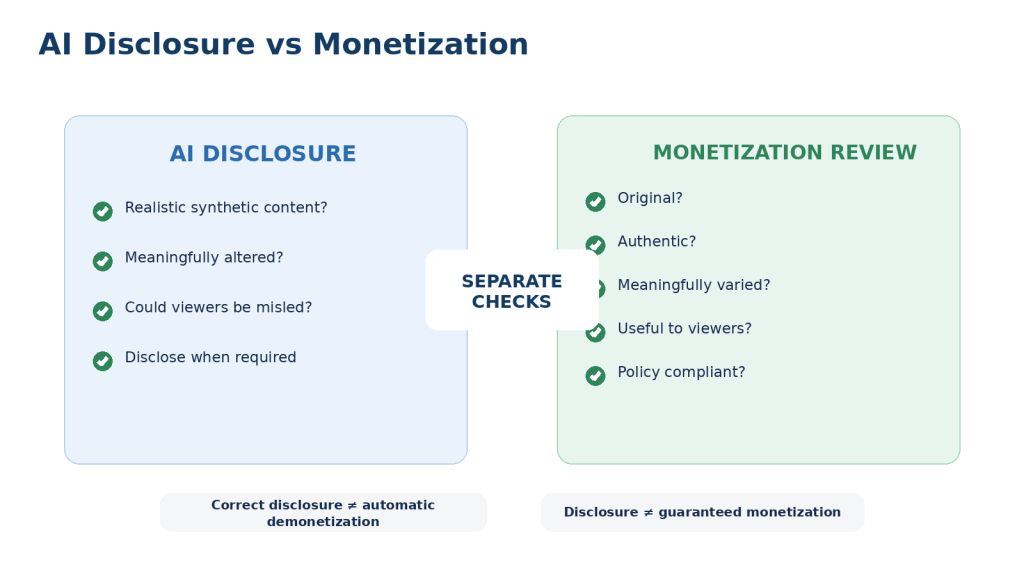
Figure 9. AI disclosure and monetization are separate checks: proper disclosure does not automatically prevent earnings, and disclosure alone does not guarantee monetization.
Explanation: Creators should disclose qualifying realistic synthetic content accurately while separately ensuring that their videos remain original, authentic, useful, properly licensed, and compliant with YouTube’s monetization policies.
How YouTube Reviews a Channel for Monetization
Reaching the YouTube Partner Program eligibility thresholds does not automatically mean a channel will be monetized. YouTube says qualifying channels are reviewed as a whole, using automated systems and human reviewers, to determine whether they follow YPP policies.
YouTube says reviewers may focus on representative areas such as the channel’s main theme, most-viewed videos, newest videos, videos producing a large share of watch time, titles, thumbnails, descriptions, and the About section. Reviewers may also examine other parts of the channel when needed.
Older and Popular Videos Still Matter
Do not assume that only your newest uploads matter. Older high-performing videos can still represent the channel. Review videos that receive many views or generate a large share of watch time for reused material, weak transformation, misleading metadata, licensing issues, or missing AI disclosure.
Titles, Thumbnails, and Descriptions Matter
Metadata should accurately represent the content. Avoid misleading income promises, fake events, fabricated screenshots, or realistic synthetic thumbnails that imply something happened when it did not. Descriptions should clearly summarize the video and include required attribution or useful source information where appropriate.
Passing Review Is Not Permanent Permission to Ignore Policies
YouTube continues checking channels after they enter YPP. Do not build strong original videos for the application and then switch to low-quality automated production afterward. Maintain the same originality, disclosure, copyright, and quality standards after approval.
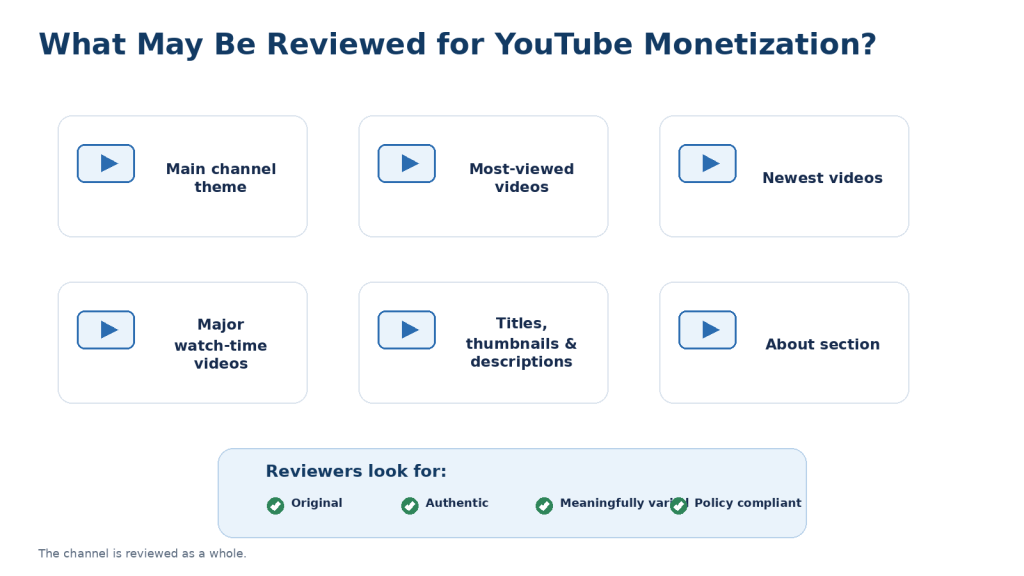
Figure 10. YouTube may examine several representative parts of a channel when evaluating monetization eligibility rather than relying on only one video.
Explanation: Faceless creators should review their complete channel before applying. Most-viewed videos, recent uploads, high-watch-time content, metadata, and the channel’s overall purpose should consistently demonstrate original and authentic work.
How to Prepare a Faceless Channel Before Applying for Monetization
Before applying, review your faceless channel as though you were seeing it for the first time. Reaching the thresholds allows an eligible creator to apply; it does not guarantee acceptance.
1. Check the current Earn section in YouTube Studio for your eligibility and available features.
2. Review the channel’s main purpose and make sure the overall theme is clear.
3. Review your most-viewed videos for originality, rights, disclosure, and quality.
4. Review your newest videos to make sure they represent your current production standard.
5. Review videos generating a major share of watch time.
6. Check third-party material for reused-content concerns and meaningful original contribution.
7. Compare several videos for repetitive, generic, or mass-produced patterns.
8. Identify what AI contributed and what human direction you added.
9. Check realistic AI-generated or altered material for disclosure requirements.
10. Check copyright and licensing for music, stock, images, fonts, templates, clips, and AI assets.
11. Review titles, thumbnails, descriptions, and the About section for accuracy and clarity.
12. Confirm you have not artificially inflated views, subscribers, likes, watch time, or ad impressions.
13. Review Shorts as well as long-form videos.
14. Correct obvious problems before applying instead of relying on cosmetic changes.
15. Create a monetization review record for important videos and save evidence of your production process.
16. Check for active Community Guidelines strikes and follow the current application instructions shown in YouTube Studio.
17. Maintain the same quality standards after approval.
Practical audit idea: If you have many uploads, begin with your three most-viewed videos, three newest videos, high-watch-time videos not already included, and several videos representing the channel’s main theme. This is an internal review method, not an official YouTube formula.
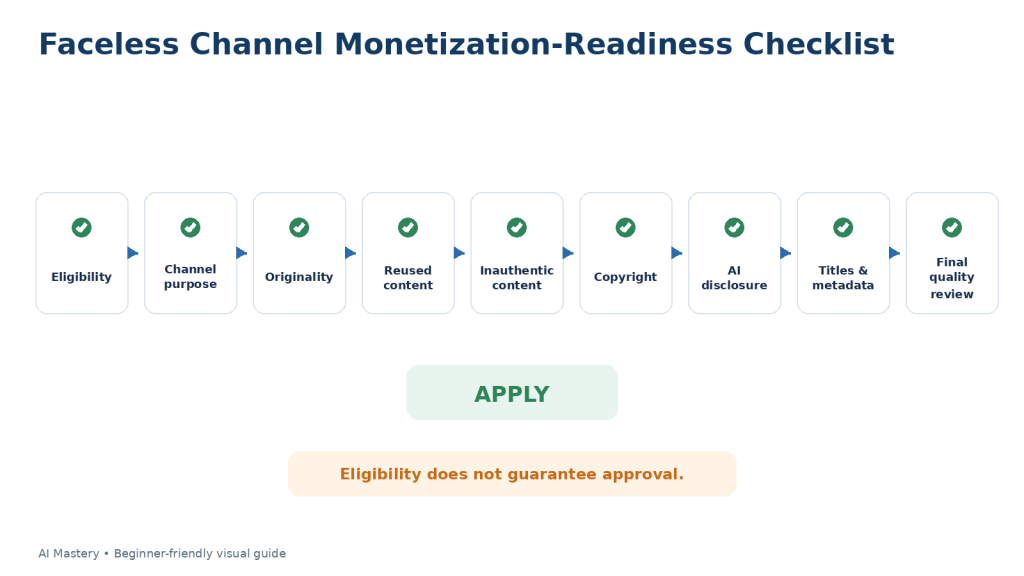
Figure 11. Preparing for YouTube monetization involves reviewing the complete channel, not simply reaching an eligibility number.
Explanation: A faceless creator should check originality, reused and inauthentic content, copyright, AI disclosure, metadata, and overall quality before applying. Reaching YouTube’s eligibility thresholds allows an eligible channel to enter the application process, but approval still depends on policy review.
Common Monetization Mistakes Faceless AI Creators Should Avoid
Mistake 1: Believing faceless channels cannot be monetized
Reality: YouTube’s policies focus on originality, authenticity, and compliance rather than requiring an on-camera creator.
How to Avoid This Mistake: Demonstrate your contribution through original research, scripts, commentary, demonstrations, editing, and fact-checking.
Mistake 2: Believing all AI videos are automatically demonetized
Reality: YouTube does not impose a blanket ban on AI-assisted creation. The larger concern is generic, repetitive, or mass-produced content without enough original value.
How to Avoid This Mistake: Use AI inside a human-directed workflow rather than as an automatic publishing system.
Mistake 3: Mass-producing nearly identical videos
Reality: Different titles do not make near-identical substance meaningfully different.
How to Avoid This Mistake: Give each video topic-specific research, examples, demonstrations, and conclusions.
Mistake 4: Treating an AI draft as a finished script
Reality: AI output can be generic, repetitive, outdated, or inaccurate.
How to Avoid This Mistake: Review and rewrite every important script before recording.
Mistake 5: Reading someone else’s article with an AI voice
Reality: Changing presentation does not automatically make the underlying content original.
How to Avoid This Mistake: Research the topic and write your own explanation with examples and context.
Mistake 6: Adding an AI voice to another creator’s video
Reality: A new narrator alone does not automatically create meaningful original value.
How to Avoid This Mistake: Build the video around your own commentary, analysis, teaching, or story.
Mistake 7: Assuming permission guarantees monetization
Reality: Copyright permission and reused-content monetization review are separate.
How to Avoid This Mistake: Ask both: Do I have permission? and Did I add meaningful original value?
Mistake 8: Assuming licensed stock footage guarantees monetization
Reality: A licence answers usage rights, not whether the finished channel is original and authentic enough for YPP.
How to Avoid This Mistake: Use stock as support for original narration, explanations, examples, and editing.
Mistake 9: Using random AI clips without a clear narrative
Reality: Impressive clips do not automatically create a coherent or useful video.
How to Avoid This Mistake: Plan scenes around the script and use each visual for a reason.
Mistake 10: Thinking AI disclosure automatically causes demonetization
Reality: YouTube says proper disclosure does not by itself affect eligibility to earn money.
How to Avoid This Mistake: Disclose qualifying content accurately and review monetization separately.
Mistake 11: Failing to disclose realistic synthetic content
Reality: Hiding required disclosure can create larger policy problems.
How to Avoid This Mistake: Check realistic people, voices, events, places, and AI-generated music before publishing.
Mistake 12: Thinking disclosure gives permission
Reality: Disclosure is transparency, not copyright permission or consent.
How to Avoid This Mistake: Review privacy, consent, copyright, licensing, and impersonation separately.
Mistake 13: Presenting synthetic footage as real evidence
Reality: Realistic AI footage can be mistaken for genuine evidence even when it depicts an event that never occurred.
How to Avoid This Mistake: Clearly identify synthetic reconstructions when viewers could otherwise be misled.
Mistake 14: Ignoring older videos before applying
Reality: YouTube reviews the channel as a whole and may focus on older high-performing content.
How to Avoid This Mistake: Audit important older videos as well as new uploads.
Mistake 15: Focusing only on subscriber numbers
Reality: YPP thresholds allow an eligible channel to apply, but approval still requires policy review.
How to Avoid This Mistake: Prepare the channel, not just the metrics.
Mistake 16: Buying views, subscribers, or watch time
Reality: YouTube prohibits artificially inflating engagement.
How to Avoid This Mistake: Build genuine audience activity rather than purchasing or manipulating engagement.
Mistake 17: Assuming Shorts are exempt
Reality: Shorts monetization is still subject to channel monetization policies.
How to Avoid This Mistake: Apply originality, copyright, disclosure, and quality checks to Shorts too.
Mistake 18: Using AI only to increase volume
Reality: More uploads do not fix weak originality or mass-production problems.
How to Avoid This Mistake: Use AI to improve research, drafting, accessibility, and editing instead of multiplying low-value videos.
Mistake 19: Assuming YPP approval is permanent
Reality: YouTube continues checking monetized channels for compliance.
How to Avoid This Mistake: Maintain originality, fact-checking, copyright, disclosure, and quality standards after approval.
Mistake 20: Trying to find a shortcut around the rules
Reality: Cosmetic workarounds do not replace genuine viewer value.
How to Avoid This Mistake: Ask how to make the video more useful and original rather than how little you can change.
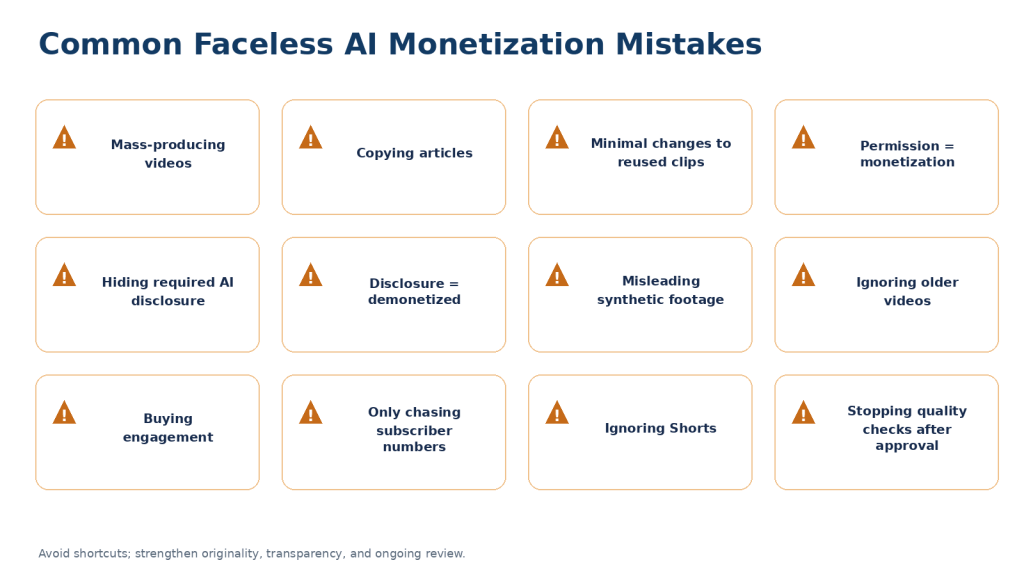
Figure 12. Common monetization mistakes usually come from weak originality, excessive automation, misunderstanding disclosure, or treating eligibility thresholds as guaranteed approval.
Explanation: A safer faceless-video workflow focuses on genuine viewer value, meaningful human contribution, accurate disclosure, proper rights, and consistent quality across the complete channel.
Benefits of a Careful AI-Assisted Monetization Workflow
Clearer original contribution
Research, writing, commentary, examples, demonstrations, editing, and fact-checking make the creator’s role easier to recognize.
Lower reused-content risk
A structured workflow encourages you to ask what meaningful value you are adding to third-party material.
Lower repetition risk
Comparing videos makes it easier to notice when scripts, examples, or visual sequences are becoming interchangeable.
Better AI disclosure decisions
A disclosure checkpoint reduces the chance of forgetting realistic synthetic people, events, places, voices, or AI-generated music.
Better copyright control
Keeping rights review separate from monetization review helps you verify music, stock, images, fonts, templates, and clips before publication.
Stronger fact-checking
A formal review step gives you time to verify names, dates, features, policies, prices, and statistics.
Better viewer trust
Accurate, transparent, clearly explained videos help viewers understand what is real, illustrative, or synthetic.
More consistent quality
A checklist lets you repeat your quality process without repeating the actual substance of every video.
Easier channel audits
Records make it easier to identify videos with missing licences, weak originality, repetitive patterns, or disclosure questions.
More sustainable growth
A workflow built around usefulness, originality, rights, disclosure, and review is more sustainable than simply increasing upload volume.
Important limitation: A careful workflow can reduce avoidable mistakes, but it cannot guarantee YPP acceptance, continued monetization, a particular number of views, or a particular income level.
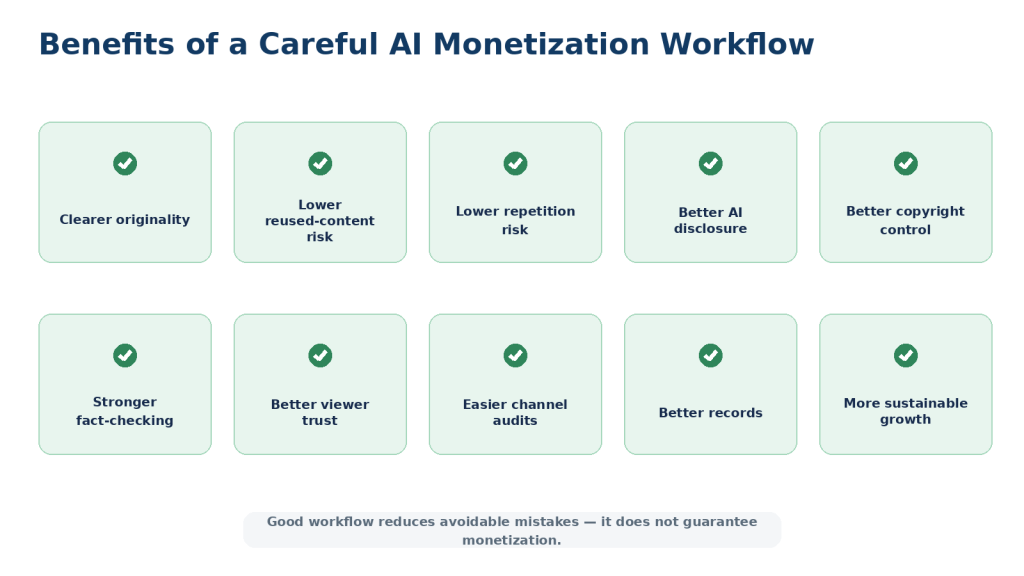
Figure 13. A careful monetization workflow can improve originality, consistency, disclosure, rights management, quality control, and record keeping.
Explanation: The purpose of a structured workflow is to reduce avoidable problems and make high-quality production easier to repeat. It does not guarantee YouTube Partner Program approval or future earnings.
Limitations of AI-Assisted Monetization Checks
Limitation 1: You cannot guarantee YouTube approval
Self-review can prepare a channel but cannot replace YouTube’s actual YPP decision.
How to Reduce This Limitation: Treat your review as preparation, not approval.
Limitation 2: Some policy decisions require judgment
There is no universal formula for exactly how much commentary, editing, or variation is enough.
How to Reduce This Limitation: Make your original research and creative contribution substantial and obvious.
Limitation 3: There is no guaranteed originality percentage
YouTube does not publish a universal percentage of original, reused, human, or AI material that guarantees approval.
How to Reduce This Limitation: Judge the video by its viewer value instead of trying to calculate a percentage.
Limitation 4: AI cannot officially decide monetization
An AI assistant can review scripts and patterns but cannot approve a channel for YPP.
How to Reduce This Limitation: Use AI as a review assistant, not as an official authority.
Limitation 5: One video cannot represent the whole channel
A single excellent video does not prove the entire channel is ready.
How to Reduce This Limitation: Review a representative group of popular, recent, and high-watch-time videos.
Limitation 6: Copyright permission does not predict monetization
A licence can be valid while the finished channel still lacks enough original value.
How to Reduce This Limitation: Perform separate rights and monetization reviews.
Limitation 7: Disclosure does not predict monetization
Correct disclosure is important but does not prove originality or authenticity.
How to Reduce This Limitation: Treat transparency and monetization as separate checks.
Limitation 8: Policies and interfaces can change
Terminology, examples, thresholds, and YouTube Studio controls can evolve.
How to Reduce This Limitation: Check official guidance before applying, after policy notices, when changing workflows, and periodically.
Limitation 9: Good records do not guarantee approval
Records support your process but do not force YouTube to approve a channel.
How to Reduce This Limitation: Use records to improve quality and accountability.
Limitation 10: High views or high production cost do not prove compliance
Popularity and expense do not determine whether a video meets monetization rules.
How to Reduce This Limitation: Audit successful videos just as carefully as other uploads.
Limitation 11: No copyright claim does not prove YPP eligibility
Copyright enforcement and reused-content monetization review are separate systems.
How to Reduce This Limitation: Do not use the absence of a claim as your monetization test.
Limitation 12: Passing review does not end future review
YPP participation remains subject to ongoing policy compliance.
How to Reduce This Limitation: Keep using the same quality-control process after approval.
This article provides general educational information, not legal, financial, or professional advice. Important copyright, licensing, privacy, contractual, or other legal questions may require advice from a qualified professional in the relevant jurisdiction.
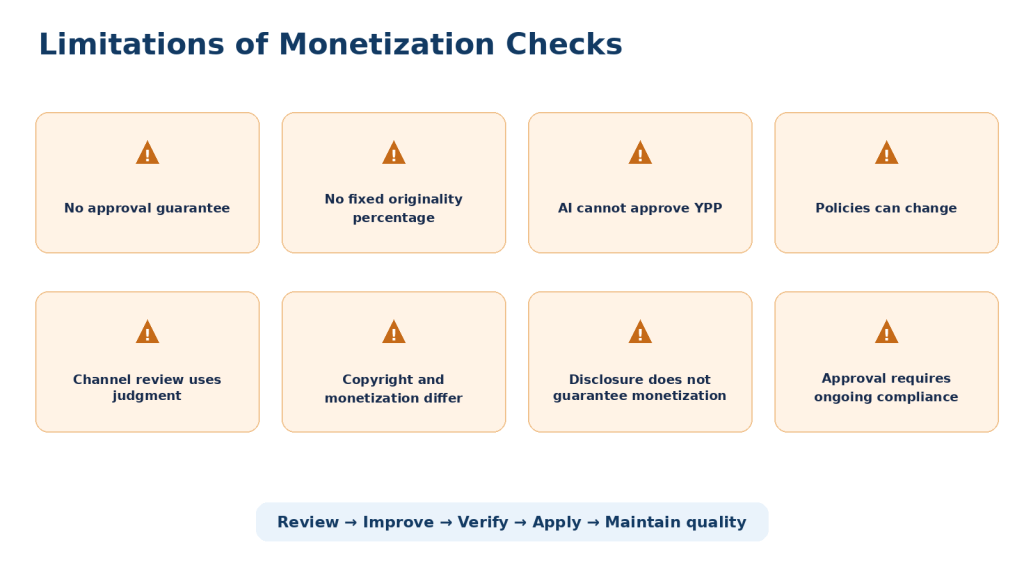
Figure 14. Monetization checks can reduce avoidable mistakes, but they cannot guarantee YouTube Partner Program approval or replace ongoing policy review.
Explanation: Creators control their research, originality, rights checks, disclosure decisions, and production quality. YouTube retains the final monetization decision, and policies can change over time.
Myths About Faceless YouTube, AI, and Monetization
Myth 1: Faceless YouTube channels cannot be monetized
Reality: YouTube’s monetization policies focus on original, authentic, policy-compliant content, not on requiring every creator to appear on camera.
Myth 2: YouTube banned AI videos in 2025
Reality: The July 2025 update clarified and renamed the repetitious-content policy; it did not create a blanket ban on AI videos.
Myth 3: Every AI-generated video is inauthentic content
Reality: AI use by itself is not the test. Generic, repetitive, mass-produced content without enough creator value is the concern.
Myth 4: AI voices automatically prevent monetization
Reality: A synthetic narrator does not by itself determine monetization. The script, explanation, editing, research, and overall channel still matter.
Myth 5: A human voice automatically makes a video original
Reality: Reading someone else’s article or transcript in your own voice may still lack sufficient original value.
Myth 6: Permission from the original creator guarantees monetization
Reality: Permission and reused-content monetization review are separate.
Myth 7: Paying for stock footage guarantees monetization
Reality: A stock licence answers usage rights, not whether the final channel is sufficiently original and authentic.
Myth 8: Reused content simply means copyright infringement
Reality: Reused-content review is a separate monetization concept and can apply even when permission exists.
Myth 9: No copyright claim means the video is safe for monetization
Reality: A channel can have no copyright claim and still raise reused-content or repetition concerns.
Myth 10: Changing the voice makes reused footage original
Reality: Replacing narration is only one change and may not add meaningful original value.
Myth 11: Captions, cropping, and music are enough transformation
Reality: Technical edits do not automatically create substantive commentary, education, or analysis.
Myth 12: Reused content and inauthentic content are the same
Reality: Reused content focuses on insufficient contribution to existing material; inauthentic content focuses on repetitive or mass-produced material.
Myth 13: Using the same template always prevents monetization
Reality: Consistent branding can be acceptable when the main substance of each video is meaningfully different.
Myth 14: Different titles mean different content
Reality: A title change does not create meaningful variation when the underlying videos are nearly identical.
Myth 15: Uploading more videos always improves monetization chances
Reality: High volume can create problems if quality, originality, or meaningful variation declines.
Myth 16: There is a secret allowed percentage of AI content
Reality: YouTube does not publish a universal AI percentage that guarantees approval.
Myth 17: There is a fixed safe percentage of reused footage
Reality: YouTube focuses on meaningful original contribution rather than a universal percentage formula.
Myth 18: Every use of AI must be disclosed
Reality: YouTube distinguishes realistic altered or synthetic content from ordinary production assistance.
Myth 19: AI-assisted scripts always require disclosure
Reality: Script help is generally treated as production assistance rather than realistic altered-content disclosure.
Myth 20: Clearly fictional AI art is treated like a realistic deepfake
Reality: YouTube’s disclosure focus is on realistic synthetic or meaningfully altered content that viewers could mistake for reality.
Myth 21: AI disclosure automatically demonetizes a video
Reality: YouTube says proper disclosure does not by itself affect eligibility to earn money.
Myth 22: AI disclosure guarantees monetization
Reality: Disclosure is transparency; monetization still depends on the broader YPP policies.
Myth 23: Hiding required AI use is safer
Reality: Repeated failure to disclose qualifying content can lead to enforcement consequences.
Myth 24: A disclosure label gives permission to clone anyone’s voice
Reality: Disclosure does not grant consent, privacy rights, licensing rights, or permission to impersonate someone.
Myth 25: Realistic AI footage proves an event happened
Reality: Synthetic media can look convincing. Realistic appearance is not evidence that an event occurred.
Myth 26: Reaching 1,000 subscribers guarantees monetization
Reality: The standard threshold is part of eligibility to apply; the channel still undergoes review.
Myth 27: Watch hours alone guarantee YPP approval
Reality: Metrics and policy approval are separate steps.
Myth 28: YouTube reviews only your newest video
Reality: YouTube reviews the channel as a whole and may focus on representative areas.
Myth 29: Old videos no longer matter
Reality: Older popular or high-watch-time videos can still represent the channel during review.
Myth 30: Shorts do not need originality
Reality: Shorts monetization remains subject to channel monetization policies.
Myth 31: Buying subscribers is simply a shortcut
Reality: Artificially inflating engagement conflicts with YouTube’s creator-integrity requirements.
Myth 32: YPP approval is permanent
Reality: Monetized channels remain subject to ongoing policy compliance.
Myth 33: An AI checker can guarantee YPP approval
Reality: No external AI tool can make YouTube’s official review decision.
Myth 34: Expensive production automatically means original content
Reality: Production cost does not replace meaningful original value.
Myth 35: Professional-looking AI content is automatically high quality
Reality: Polished visuals cannot replace accurate information, original explanation, and coherent structure.
Myth 36: The safest channel is one that never uses AI
Reality: A non-AI channel can still contain reused, repetitive, or misleading content. AI-assisted channels can still be highly original.
Myth 37: The safest channel is fully automated
Reality: YouTube specifically restricts repetitive and mass-produced material. Human direction remains important.
Myth 38: More videos are always better than better videos
Reality: Quality and meaningful variation should not be sacrificed simply to increase upload numbers.
Myth 39: Once a video is published, production records can be deleted
Reality: Records can help verify licences, correct errors, update videos, and remember disclosure decisions.
Myth 40: There is one trick that guarantees faceless monetization
Reality: YouTube does not offer a guaranteed faceless-channel formula. Strong channels combine original value, meaningful variation, appropriate rights, accurate disclosure, and human review.
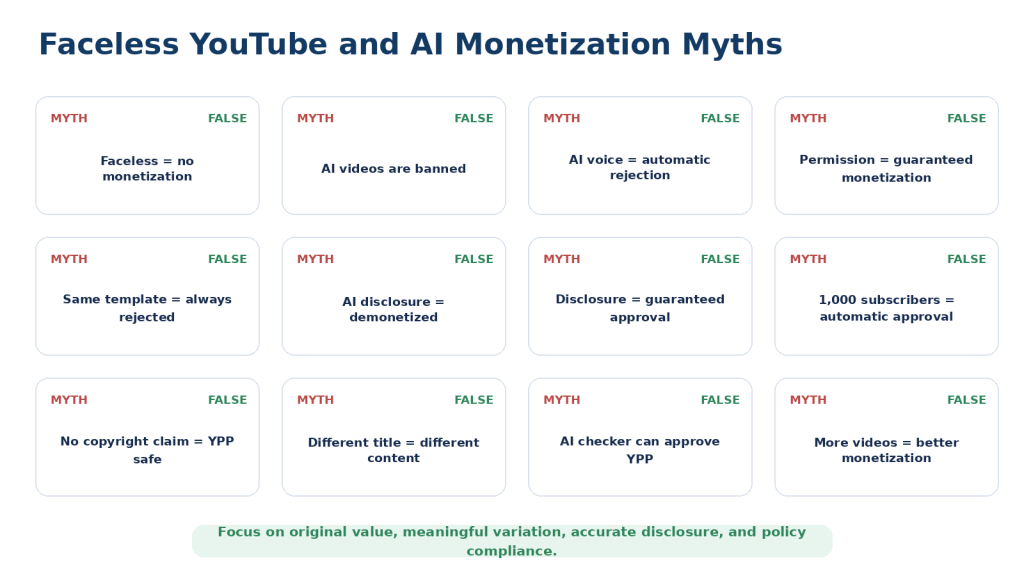
Figure 15. Many common monetization myths confuse AI use, copyright, reused content, disclosure, and YPP eligibility.
Explanation: Faceless creators should rely on current official YouTube guidance rather than shortcuts or fixed formulas. AI use does not determine monetization by itself; the finished channel still needs original value, meaningful variation, appropriate rights, accurate disclosure, and ongoing policy compliance.
Frequently Asked Questions (FAQ)
Can a faceless YouTube channel be monetized?
Yes, potentially. YouTube’s policies do not require you to show your face. The channel still needs to meet eligibility requirements and follow monetization policies.
Does YouTube ban AI-generated videos?
No blanket ban appears in the current monetization policy. AI can assist with creative work, but generic or mass-produced template content can be ineligible.
Can I use an AI voice and still monetize?
Potentially, yes. A synthetic narrator does not automatically determine monetization. Original scripts, useful explanation, editing, and channel quality still matter.
Do I need to show my face to prove the content is mine?
No. Your contribution can be visible through writing, research, demonstrations, commentary, visual design, and editing.
What is reused content?
It is material repurposed from YouTube or another online source without enough significant original commentary, substantive modification, or educational or entertainment value.
What is inauthentic content?
It refers to repetitive, generic, template-driven, or mass-produced content with too little meaningful variation or creator value.
Can I use stock footage?
Yes, when you have appropriate rights and the stock footage supports meaningful original content. Licensing and YPP review remain separate.
Can I copy an article and have an AI voice read it?
This is a weak approach. Research the topic and write your own explanation rather than simply converting someone else’s writing into synthetic narration.
Can I use clips from another YouTube video?
Possibly, but copyright and permission questions must be handled separately, and you still need enough meaningful original contribution for monetization.
If another creator gives me permission, will YouTube monetize the video?
Not automatically. Permission does not guarantee the channel satisfies reused-content or other monetization policies.
Is there a percentage of reused footage YouTube allows?
YouTube does not publish a universal percentage that guarantees approval.
Is there a maximum percentage of AI-generated content?
YouTube does not publish a universal AI percentage that guarantees or prevents monetization.
Can I use the same video template for every upload?
Yes, consistent branding can be acceptable when the substance of each video is materially different.
Can I use the same AI narrator in every video?
Using the same narrator does not automatically make videos repetitive. The information, examples, demonstrations, and conclusions should still be meaningfully different.
Can I upload many AI-generated videos every day?
Upload frequency alone is not the test. The risk increases if the channel becomes generic, interchangeable, or mass-produced.
Does every use of AI need to be disclosed?
No. Ordinary production assistance such as script help, titles, thumbnails, captions, and minor technical enhancements is generally treated differently.
When is AI disclosure required?
YouTube requires disclosure for qualifying realistic AI-generated or meaningfully altered content, including realistic synthetic people, altered real events or places, and realistic scenes that did not occur.
Do AI-generated images always need disclosure?
No. Clearly fictional or non-realistic content is treated differently from photorealistic synthetic content that viewers could mistake for reality.
Does AI-generated music need disclosure?
Under YouTube’s current examples, yes. You should also separately check the music tool’s licence and commercial-use conditions.
Does my own cloned voice need disclosure?
YouTube currently lists cloning your own voice for ordinary voiceovers or dubbing among examples that generally do not require disclosure for that reason alone.
What about cloning another person’s voice?
This requires much more care. Disclosure, consent, privacy, impersonation, licensing, and applicable law can all be relevant.
Will selecting AI disclosure stop monetization?
No, not by itself. YouTube says disclosure does not itself affect eligibility to earn money.
Should I hide AI use to protect monetization?
No. If disclosure is required, provide it accurately.
Can Shorts be monetized if they use AI?
Potentially, yes. Shorts remain subject to YouTube’s channel monetization policies and other applicable rules.
Do Shorts Feed watch hours count toward the 4,000-hour requirement?
No. YouTube states that watch hours from Shorts views in the Shorts Feed do not count toward the 4,000 valid public watch-hour threshold.
What are the current standard YPP thresholds?
As of August 8, 2026, the standard ad-revenue routes are 1,000 subscribers plus 4,000 valid public watch hours in 12 months, or 1,000 subscribers plus 10 million valid public Shorts views in 90 days, with other requirements also applying.
If I reach the YPP numbers, am I automatically accepted?
No. Reaching the thresholds makes an eligible channel able to apply; the channel still goes through review.
Should I review old videos before applying?
Yes, especially popular, high-watch-time, or representative videos.
Can I buy subscribers or watch time to qualify faster?
No. YouTube prohibits artificially inflating engagement.
Can an AI checker tell me whether my channel will be monetized?
It can help identify possible issues, but it cannot make YouTube’s official YPP decision.
If YouTube accepts my channel once, is monetization permanent?
No. YPP channels remain subject to ongoing policy compliance.
What is the safest beginner approach?
Create for viewers first: research reliable sources, write an original script, use AI as assistance, add original examples, edit meaningfully, check facts, rights, and disclosure, compare the video with the rest of the channel, publish, and save records.
Key Takeaways
• Faceless channels can potentially be monetized; showing your face is not the central requirement.
• AI-assisted videos are not automatically disqualified.
• Reused content and inauthentic content are separate monetization concepts.
• Permission and licensing do not automatically guarantee monetization.
• A new voice, captions, cropping, or speed changes do not automatically create meaningful original value.
• Consistent branding is different from repetitive substance.
• Human contribution can be shown through research, writing, teaching, demonstrations, editing, and fact-checking.
• Realistic synthetic content may require disclosure; ordinary production assistance is generally treated differently.
• Proper AI disclosure does not automatically prevent monetization and does not guarantee monetization either.
• Copyright review, AI disclosure, and monetization review should be handled as separate checks.
• YouTube reviews the channel as a whole and may focus on popular, recent, and high-watch-time videos plus metadata.
• Reaching YPP thresholds means eligible to apply, not guaranteed approval.
• Do not buy or artificially inflate engagement.
• Keep rights and production records.
• YouTube policies and AI features can change, so review official guidance when first using a workflow, before applying, after policy notices, and periodically.
• No AI tool, checklist, consultant, or tutorial can guarantee YPP approval.
• Create for viewers first, not for automation.
Practical workflow: Useful Topic → Reliable Research → Original Script → Meaningful Human Contribution → Purposeful Visuals → Careful Editing → Fact-Check → Copyright and Licence Check → AI Disclosure Check → Compare With Other Channel Videos → Final Quality Review → Publish → Save Records.
Final Tip
Do not build your faceless YouTube strategy around the question: “What is the minimum I can do and still get monetized?” That approach can lead to weak reused content, repetitive videos, excessive automation, poor fact-checking, missed disclosure requirements, and low viewer value.
A better question is: “What can I add that makes this video genuinely useful, original, and worth watching?” Focus on reliable research, original writing, clear explanations, topic-specific examples, purposeful visuals, meaningful editing, accurate facts, proper licences and permissions, correct AI disclosure when required, and final human review.
Short check: Original? → Useful? → Accurate? → Properly Licensed? → AI Disclosure Checked? → Meaningfully Different From My Other Videos?
AI can help you create the video, but you remain responsible for what you publish. Create for viewers first. Use AI to support your work, not to replace your judgment.
This article provides general educational information and is not legal, financial, or professional advice. For important copyright, licensing, privacy, contractual, or other legal questions, consider advice from a qualified professional in the relevant jurisdiction.
Continue Learning
YouTube Copyright and Licensing for AI Videos: Beginner Guide (2026)
Use this guide for music, stock footage, Creative Commons, commercial-use rights, attribution, AI-generated assets, Content ID, and licence record keeping.
How to Create YouTube Thumbnails, Titles, and Descriptions with AI: Beginner Guide (2026)
Use this guide to create accurate thumbnails, titles, descriptions, and metadata for your videos.
How to Edit Faceless YouTube Videos and Audio: Beginner Guide (2026)
Use this guide to improve video structure, pacing, audio, narration, captions, transitions, and final quality.
How to Create Visuals for Faceless YouTube Videos with AI Images, Stock Footage, and Screen Recordings: Beginner Guide (2026)
Use this guide to plan and create appropriate visuals for faceless videos.
How to Create Storyboards and Plan Scenes for Faceless YouTube Videos with AI: Beginner Guide (2026)
Use this guide before visual creation to decide what every scene should show.
How to Add Voice, Music, and Captions to AI Videos: Beginner Step-by-Step Guide (2026)
Use this guide for narration, voice, music, sound, and caption basics.
AI Image Generation for Beginners: Complete Guide (2026)
Use this guide for beginner help creating, reviewing, and improving AI-generated images.
How to Use YouTube Studio and YouTube Analytics for Faceless Channels: Beginner Guide (2026)
Use this guide to publish and manage videos in YouTube Studio, understand basic analytics, and improve future videos using performance data.
Recommended learning order: Article 061 → Article 062 → Article 063 → Article 064 → Article 065 → Article 066 → Article 067.
Sources and References
Sources reviewed: August 8, 2026
The following official YouTube sources were used to verify the monetization, reused-content, generic or repetitive content, AI-disclosure, Shorts, privacy, and YouTube Partner Program information in this article. Policies, eligibility requirements, terminology, and interface options can change.
1. YouTube Channel Monetization Policies
Primary source for original and authentic content, generic or repetitive content, reused content, AI-assisted creative examples, AI personas on sensitive topics, creator integrity, and channel-level monetization review.
2. YouTube Partner Program Overview and Eligibility
Official YPP eligibility and application process, including current standard ad-revenue thresholds and channel review.
3. Overview of the Expanded YouTube Partner Program
Official explanation of earlier YPP access for certain fan-funding and Shopping features in eligible regions.
4. Disclosing Use of Generative AI Content
Official guidance on when realistic altered or synthetic content must be disclosed and examples of ordinary production assistance.
5. Understanding ‘How This Content Was Made’ Disclosures
Official explanation of disclosure information such as Made with AI and how content-origin information can appear on YouTube.
6. YouTube Shorts Monetization Policies
Official Shorts monetization rules and the channel monetization policies that apply to Shorts.
7. How to Earn Money on YouTube
Overview of YouTube monetization features and the fact that individual features can have additional eligibility requirements.
8. Protecting Your Identity on YouTube
Privacy guidance relevant to realistic altered or synthetic content involving a person’s likeness.
9. YouTube Impersonation Policy
Official policy covering impersonation, including misleading use of AI-generated likenesses or voices.
10. Response to Creator Questions About YPP Policies (July 2025)
TeamYouTube clarification that the 2025 update did not create a blanket AI ban and did not change the separate reused-content policy.
11. YouTube’s Approach to Responsible AI
YouTube guidance on realistic altered or synthetic content and disclosure enforcement.
Source-Checking Guidance for Beginners
You do not need to reread every policy before publishing every video. Check current official guidance when you first start using AI in YouTube videos, introduce a new type of synthetic media, apply to YPP, change monetization methods, receive a policy-update notice, see a new disclosure option, receive a monetization warning or rejection, and periodically review your channel.
For changing platform rules, prefer official YouTube Help, the current information shown in YouTube Studio, and official YouTube announcements over old screenshots, social-media rumours, unverified monetization tutorials, or services promising guaranteed YPP approval.
Policy note: Article 066 reflects official sources reviewed on August 8, 2026. It does not guarantee YouTube Partner Program approval, continued monetization, advertising revenue, or a particular legal outcome.


Leave a comment