
Estimated reading time: 25 minutes
Last updated: August 6, 2026
Introduction
A faceless YouTube channel can teach, explain, demonstrate, compare, or entertain without showing the creator on camera. The videos may use narration, screen recordings, slides, diagrams, original photographs, licensed stock assets, animation, hands-only demonstrations, or carefully reviewed AI-generated visuals.
Before creating videos, choose a clear niche and prepare a simple channel plan. A niche is the focused combination of subject, audience, problem, and useful result that gives the channel a recognizable direction. Without this direction, beginners often collect unrelated ideas, purchase unnecessary tools, or produce videos that serve different audiences.
AI can help generate ideas, organize research, compare possible niches, draft content pillars, and plan video topics. It cannot prove that a niche will be successful, profitable, or easy to monetize. Important claims about YouTube features, policies, analytics, licensing, and disclosure should be checked against current official guidance.
This article provides general educational information. It does not guarantee views, subscribers, monetization, sponsorships, or income, and it is not legal, financial, medical, or other professional advice.
Before You Begin
Prepare a simple planning folder before making the first video. Save the niche ideas, audience notes, source links, channel-name options, content pillars, topic lists, licence records, permissions, budget, test-video notes, and later analytics in clearly named files.
- A computer, tablet, or suitable smartphone
- A reliable internet connection
- A document or spreadsheet for planning
- An AI assistant for brainstorming and organizing ideas
- Access to current official YouTube help pages
- A realistic monthly budget
- Folders for sources, licences, permissions, images, scripts, audio, videos, thumbnails, and exports
Do not subscribe to several paid services before completing one small test project. Free plans and trials may include watermarks, export limits, lower resolution, restricted commercial use, or limited credits. Review current terms before publishing or monetizing content.
What You’ll Learn
- Define a clear audience and useful channel purpose
- Generate possible niche ideas with AI
- Evaluate each niche for practical fit
- Research repeated viewer questions and content demand
- Choose three to five content pillars
- Select a repeatable faceless-video format
- Plan the channel identity, playlists, and first 20 topics
- Choose a realistic publishing schedule
- Test the niche before making major purchases
- Avoid common planning, copyright, privacy, and disclosure mistakes
What Is a Faceless YouTube Niche?
A faceless YouTube niche is the specific subject, audience, problem, and useful result that a channel focuses on while the creator remains off camera. The niche is broader than one video topic but narrower than a general category such as technology, education, or entertainment.
A useful niche is more than a general subject. It combines the topic, the intended audience, the problem being solved, and the result viewers hope to achieve.
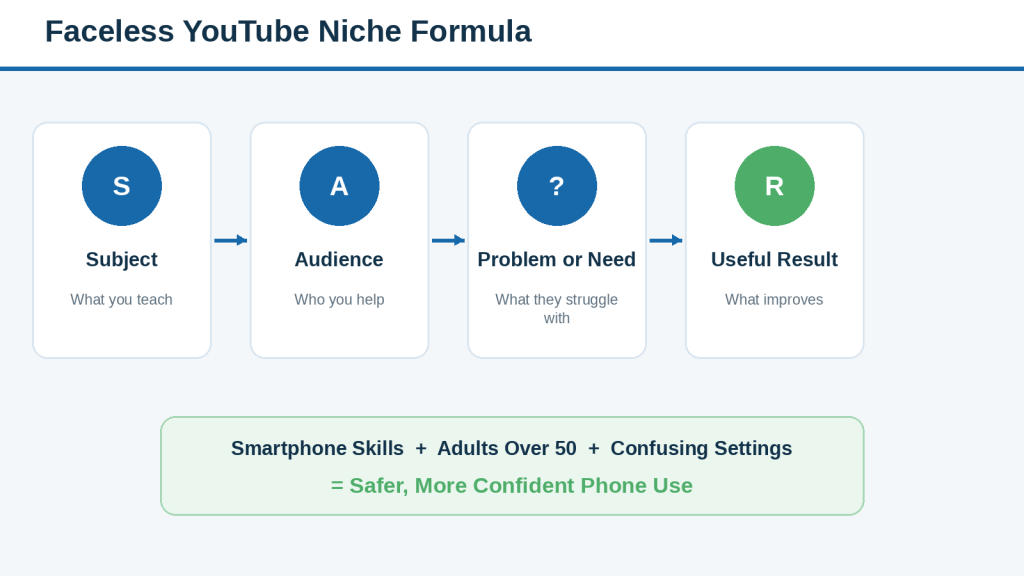
Figure 1. The four parts of a clear faceless YouTube niche.
Explanation: A practical niche combines a subject, a specific audience, a problem or need, and a useful result. Defining all four parts makes it easier to choose video topics and explain the channel to new viewers.
For example, “technology” is broad. “Slow smartphone tutorials for adults over 50” is clearer because it identifies the subject, audience, and teaching approach. A specific niche helps viewers understand the channel and helps the creator decide which ideas belong.
Why Choosing the Right Niche Matters
A clear niche improves decision-making. It helps the creator choose topics, research sources, visuals, narration style, thumbnail design, playlists, and publishing frequency. It can also reduce repeated work because the same research methods, file structure, and production format can be reused.
- Viewers can understand the channel more quickly
- Related videos can support one another
- Playlists become easier to organize
- Research and production systems become more consistent
- Tool and subscription costs become easier to control
- Viewer feedback becomes easier to interpret
A niche does not guarantee success. Its purpose is to create clarity, not certainty.
Step 1: Identify the Audience You Want to Help
Begin with the audience rather than the tool. A useful audience description identifies who the viewers are, what they already understand, which problems they face, and what type of explanation will help them.
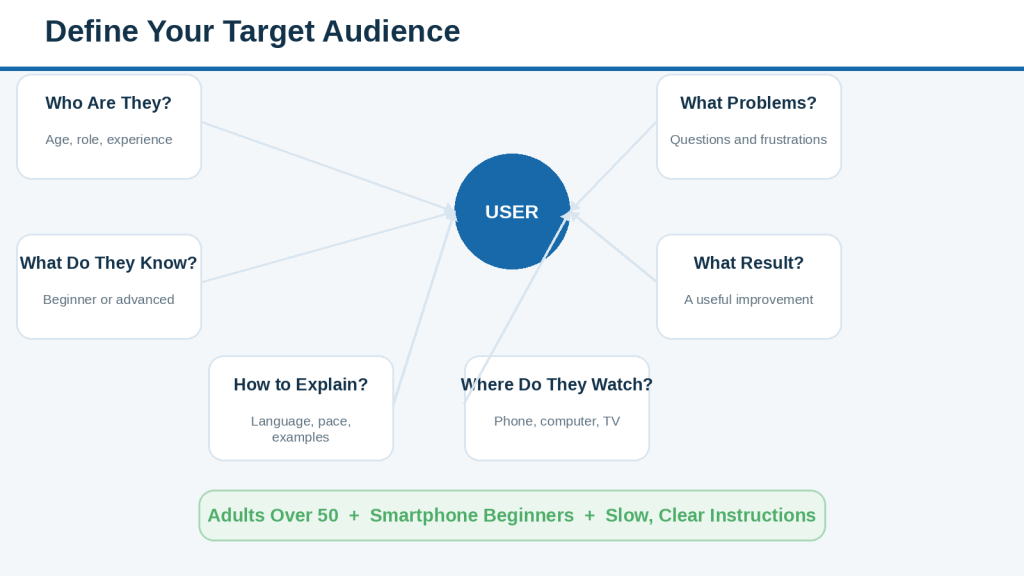
Figure 2. A simple target-audience profile for a faceless YouTube channel.
Explanation: Defining the audience helps the creator choose suitable language, examples, video length, narration speed, text size, and topic difficulty.
Avoid descriptions such as “everyone” or “people who like videos.” A clearer audience might be complete beginners using AI tools, retirees learning smartphone skills, small-business owners creating simple marketing videos, or parents looking for beginner digital-safety guidance.
Complete this sentence:
This channel helps [audience] understand or complete [problem or task] so they can achieve [useful result].
Do not collect unnecessary sensitive information about potential viewers. Public comments, surveys, or community discussions should be used respectfully and without exposing private identities.
Step 2: Generate Possible Niche Ideas with AI
Use AI as a brainstorming assistant. Provide your interests, skills, experience, available tools, budget, preferred video style, and intended audience. Ask for several distinct options rather than one “best niche.”
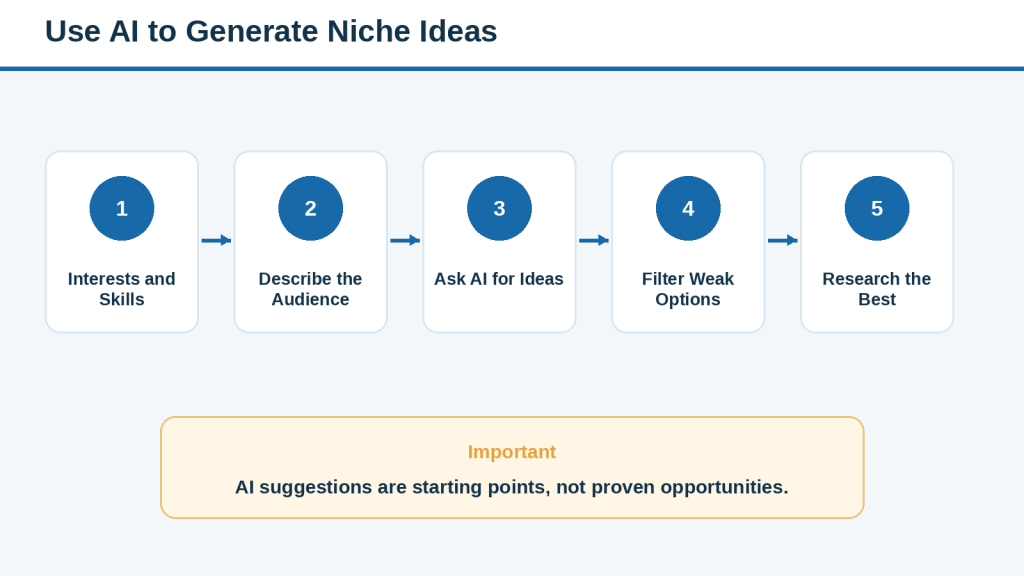
Figure 3. A responsible workflow for generating niche ideas with AI.
Explanation: AI can help generate and organize possible niche ideas, but every suggestion still requires human review and independent research.
Example prompt:
I want to create a beginner-friendly faceless YouTube channel. My interests are [subjects]. My useful experience includes [skills]. I can publish [frequency] and prefer . Generate 15 niche ideas, identify the audience and useful result for each, and note possible research, cost, copyright, privacy, or professional-advice risks. Do not claim that any niche is guaranteed to grow or earn money.
Review every suggestion. AI may invent search volumes, competition levels, advertising rates, or growth predictions. Treat those claims as unverified until confirmed through appropriate current sources.
Step 3: Evaluate Each Niche for Practical Fit
Compare the strongest ideas using the same criteria. This prevents one exciting idea from receiving special treatment while its difficulties are ignored.
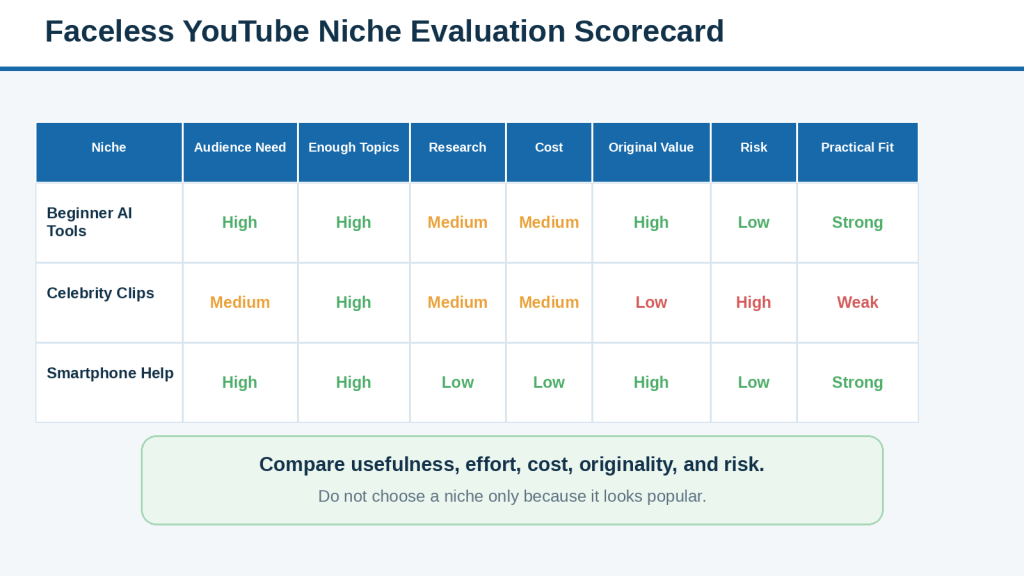
Figure 4. A practical scorecard for comparing possible channel niches.
Explanation: A niche should be evaluated for more than popularity. Compare audience value, topic depth, research difficulty, production cost, originality, safety, and sustainability.
- Clear audience need
- At least 20 to 30 meaningfully different video topics
- Reliable and understandable research sources
- A production format you can repeat
- Affordable tools and assets
- Opportunities for original value
- Manageable copyright, privacy, and safety risks
- Enough personal interest to continue learning
A high-risk niche may still be possible, but it requires stronger evidence, more review, and sometimes qualified professional input. Beginners should be cautious with medical, legal, investing, politics, crime, child safety, and fast-changing news content.
Step 4: Research Viewer Questions and Content Demand
Look for repeated questions rather than one trend or one successful competitor. Useful evidence may come from search suggestions, video comments, official support pages, forums, community discussions, your own experience, and later YouTube Analytics.
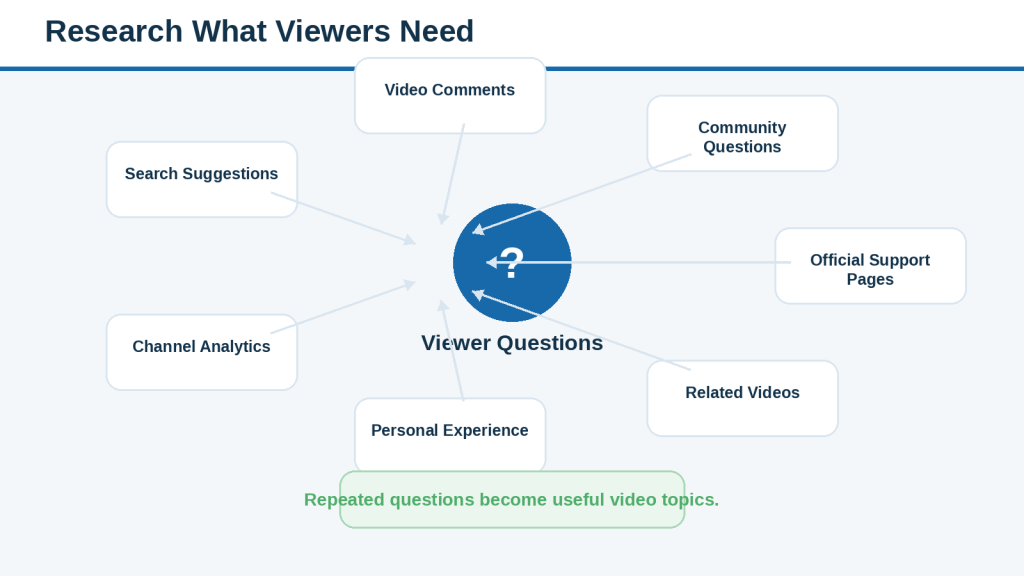
Figure 5. Sources of useful viewer questions and video ideas.
Explanation: Repeated questions from search, comments, support pages, related videos, experience, and analytics can become useful video topics.
Record the exact wording of repeated questions, but do not copy another creator’s script, thumbnail, title pattern, branding, or examples. The purpose of research is to understand the audience, not imitate a channel.
A topic with some competition may still be useful because competition can show that an audience exists. Very low competition can also mean that few people are searching for the subject.
Step 5: Choose the Final Niche
Choose the option that offers the best balance of usefulness, originality, manageable production, acceptable risk, and long-term interest. Write a one-sentence niche statement and a short list of boundaries.
Example niche statement:
This channel helps adults over 50 learn essential smartphone skills so they can complete everyday tasks more safely and confidently through slow screen-recorded tutorials and simple visual explanations.
Also record what the channel will not cover. Boundaries help prevent unrelated trend chasing and reduce the risk of entering subjects that require qualifications or assets you do not have.
Step 6: Choose Three to Five Content Pillars
Content pillars are the main subject areas inside the niche. Each content pillar should serve the same audience and support the same overall channel purpose.
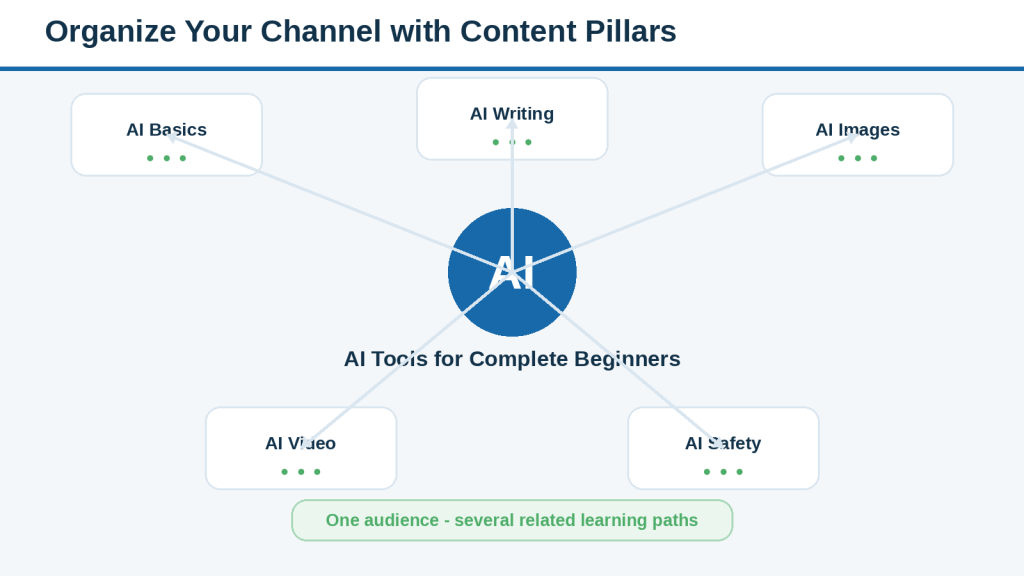
Figure 6. How one channel niche can be organized into content pillars.
Explanation: Content pillars divide the niche into related subject areas. Each pillar can support multiple videos and may later become a playlist.
For an AI-for-beginners channel, the pillars might be AI basics, AI writing, AI images, AI video, and AI safety. For smartphone help, they might be basic settings, communication, photographs and storage, privacy and scam protection, and useful everyday apps.
Combine pillars that overlap. Avoid adding an unrelated pillar simply because it appears popular.
Step 7: Choose the Main Video Formats
Select one practical main format and optional supporting formats. The best choice depends on what viewers need to see, the assets you can create or license, and the amount of editing you can manage.
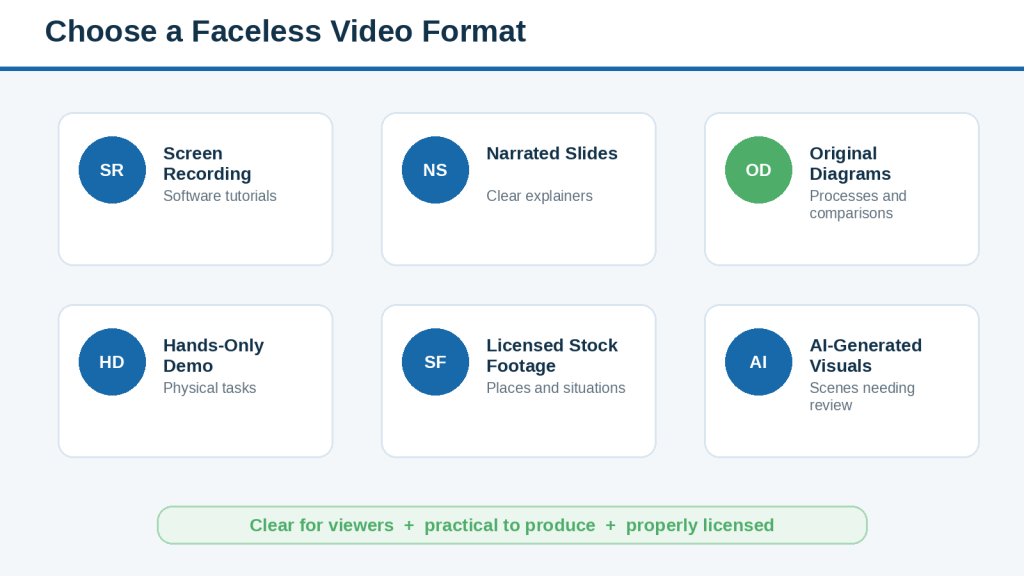
Figure 7. Common faceless YouTube video formats and their main uses.
Explanation: Beginners should choose a main format that is understandable, affordable, accessible, and practical to repeat.
- Screen recordings for software and settings
- Narrated slides for structured explanations
- Original diagrams for workflows and comparisons
- Hands-only demonstrations for physical tasks
- Properly licensed stock footage for general scenes
- Carefully reviewed AI-generated visuals when they add real value
Check every asset licence. “Free” and “royalty-free” do not always mean unrestricted or commercially permitted. Save licences, receipts, permission messages, and the original source files.
Step 8: Plan the Channel Identity
A channel identity includes the name, description, viewer promise, visual style, narration style, thumbnail style, and overall experience viewers receive.
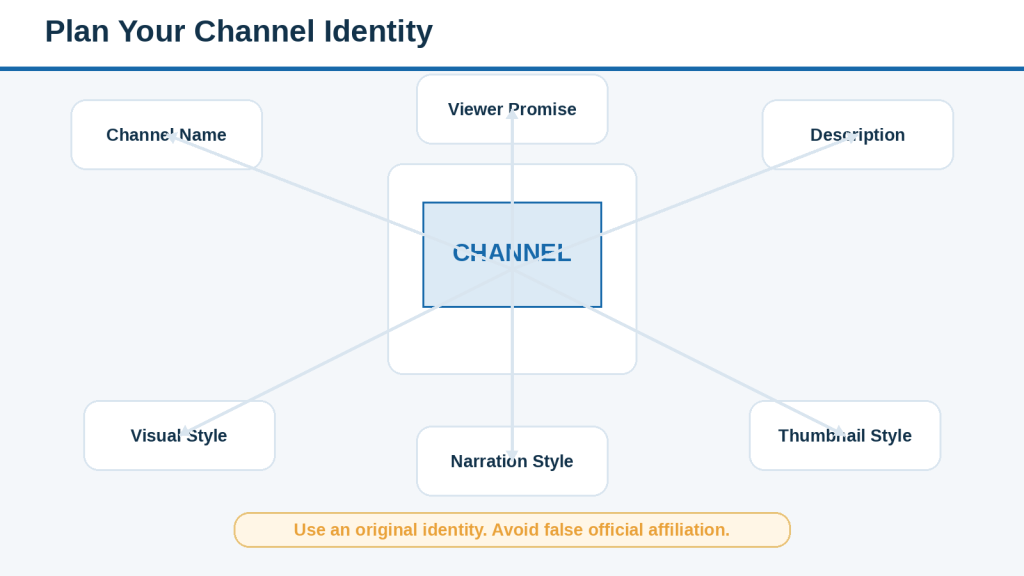
Figure 8. The main parts of a clear and consistent channel identity.
Explanation: A simple channel identity helps viewers recognize the channel and understand its purpose.
Choose a name that is clear, easy to spell, and distinct from existing channels and companies. Do not suggest official affiliation with YouTube, Google, OpenAI, Microsoft, or another organization when no such relationship exists.
The viewer promise should describe the value accurately. Avoid guaranteed outcomes such as “earn money quickly,” “grow instantly,” or “never make another mistake.”
Step 9: Plan Your First 20 Video Topics
Plan approximately 20 initial topics, then select the first five carefully. The first 20 topics should include foundation lessons, practical tutorials, common mistakes, safety guidance, comparisons, and useful projects.
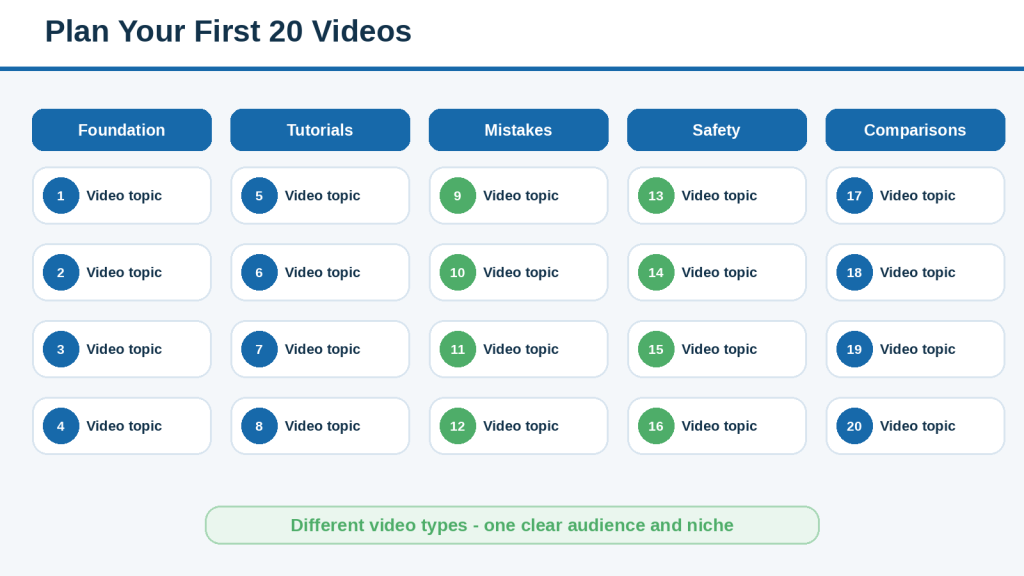
Figure 9. A balanced plan for the first 20 channel videos.
Explanation: A balanced topic list includes foundation lessons, tutorials, mistakes, safety guidance, comparisons, and projects without becoming repetitive.
A balanced list gives beginners a clear starting path while allowing viewers to enter through different questions. Every topic should be meaningfully different and connected to the niche.
Do not create hundreds of titles before producing a test video. Real production experience may change the format, schedule, or topic priorities.
Step 10: Create a Realistic Publishing Schedule
A publishing schedule should reflect the complete workload, not only editing time. Produce one test video, record the actual time required, add a reasonable buffer, and then choose a schedule you can maintain.
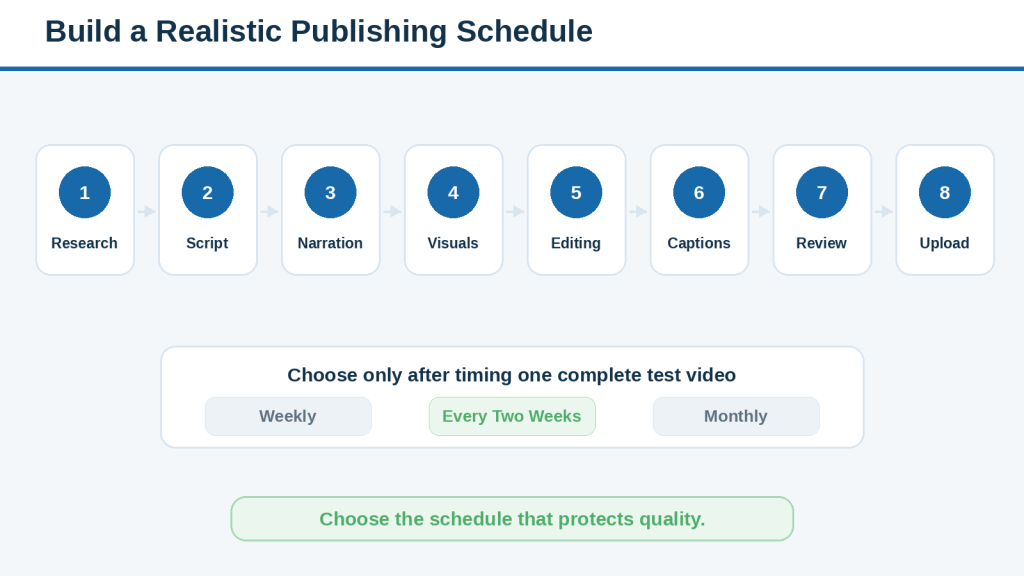
Figure 10. How to calculate a realistic video-publishing schedule.
Explanation: A sustainable schedule should be based on the complete workload, including research, scripting, narration, visuals, editing, captions, review, and uploading.
- Research and source checking
- Outline and script
- Narration recording or authorized AI voice preparation
- Visual creation and licensing checks
- Editing and audio balancing
- Caption correction and accessibility review
- Thumbnail, title, description, upload, and final review
One carefully reviewed video every two weeks may be more sustainable than rushed daily uploads. Quality, accuracy, permissions, captions, and privacy should not be sacrificed to meet an arbitrary frequency.
Step 11: Organize the Channel, Playlists, and Launch Plan
A clear structure helps new visitors understand what the channel teaches, which videos they should watch first, how related topics connect, and what to watch next.
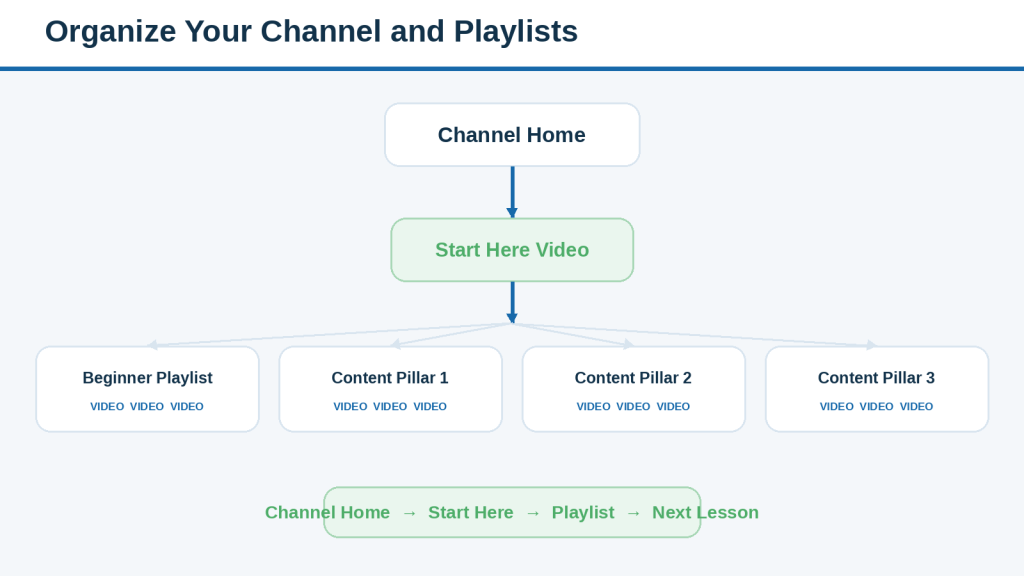
Figure 11. A simple channel structure that guides viewers to the next lesson.
Explanation: A well-organized channel uses a clear starting point, related playlists, and natural next-video recommendations.
Create a simple starting point such as “Start Here” or “Beginner Basics.” Turn established content pillars into playlists after related videos exist. Avoid creating many empty playlists simply to make the channel look larger.
Plan a brief channel trailer, a featured video for returning viewers, a readable banner, a simple profile image, and only relevant public links. Use a dedicated business contact address when appropriate and do not publish personal family details, private phone numbers, financial information, or exact daily routines.
Step 12: Test the Niche Before Fully Committing
Before investing heavily in tools, branding, stock libraries, narration services, or advanced editing, test the niche with a small number of videos.
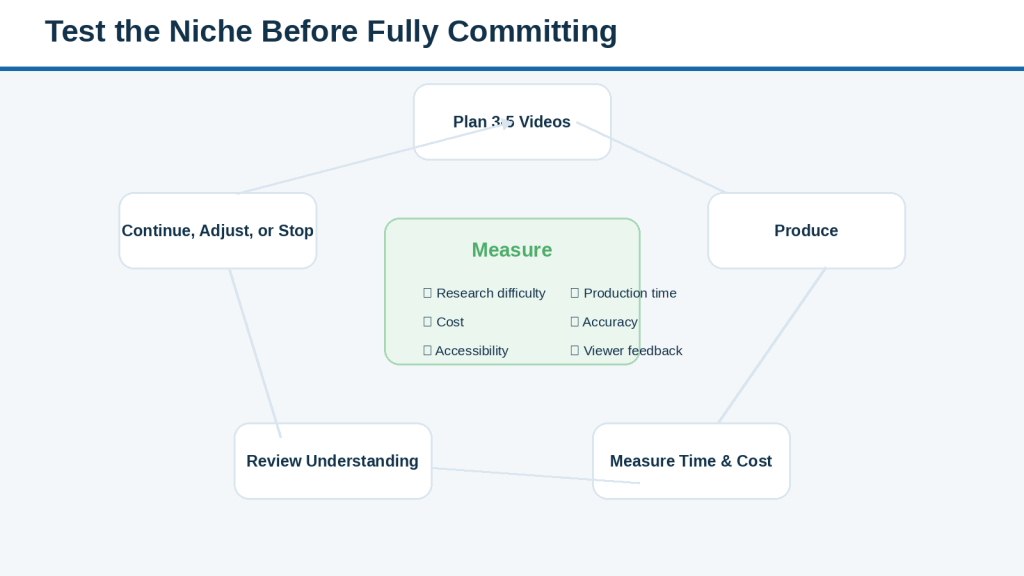
Figure 12. A small test cycle for evaluating a faceless YouTube niche.
Explanation: Testing three to five connected videos helps reveal the actual research difficulty, production time, cost, viewer understanding, and practicality.
Create three to five connected videos. Record research difficulty, production time, cost, narration quality, visual requirements, caption workload, viewer understanding, and your willingness to continue. One completed project provides more useful information than an ambitious unfinished plan.
After the test, choose one of three paths: continue, adjust, or stop. Stopping an unsuitable plan is not failure; it prevents larger losses of time and money.
Benefits of Choosing a Clear Niche and Channel Plan
- Viewers understand the channel more quickly
- Video ideas become easier to generate
- Related videos form a useful learning path
- Production and branding become more consistent
- Research sources and workflows can be reused
- Tool choices and costs become easier to control
- Playlists and internal recommendations become clearer
- Risks can be identified before publication
- A written plan reduces creative stress
The main benefit is clarity. Planning improves decisions and organization, but it does not guarantee views, subscribers, monetization, or income.
Limitations of Niche and Channel Planning
A detailed plan may feel complete even though no video has been produced.
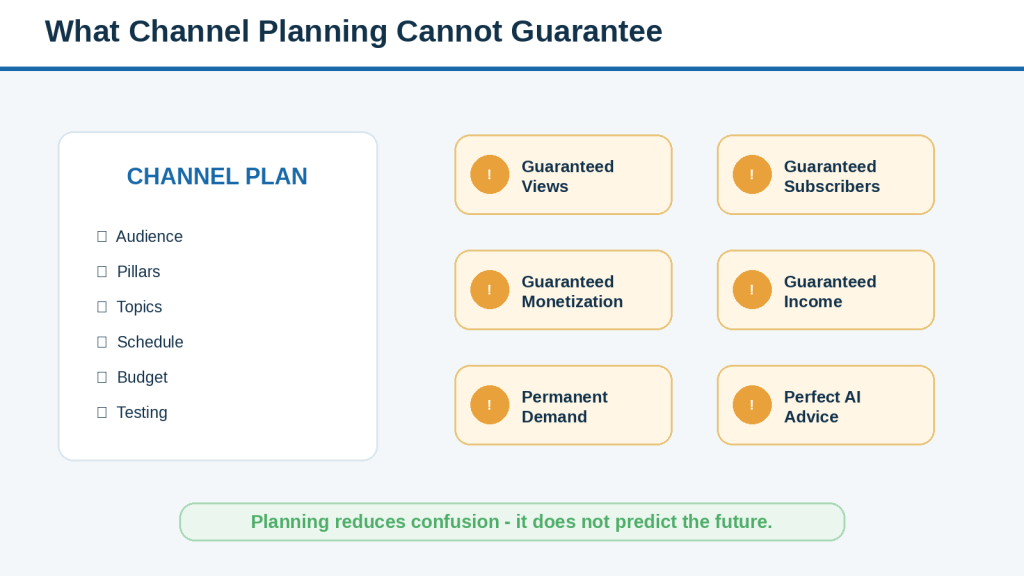
Figure 13. Important limitations of niche and channel planning.
Explanation: Planning improves organization but cannot guarantee views, monetization, income, or long-term demand.
- Planning cannot guarantee views or monetization
- Search interest and competition can change
- AI suggestions may be inaccurate or outdated
- Competitor research cannot reveal every cost or advantage
- A niche may prove too broad, too narrow, or too expensive
- Fast-changing tutorials may become outdated
- New channels may not have enough analytics data
- Too much planning can delay the first useful video
Create a small test series and update the plan using real evidence. Do not change the entire niche after one low-view video, but do not ignore repeated evidence that the plan is impractical.
Common Mistakes
Choosing a niche only because it looks profitable
Compare audience usefulness, production difficulty, cost, risk, and personal interest.
Accepting the first AI recommendation
Generate several options and verify all important claims.
Choosing a topic before defining the audience
Write the audience statement first.
Copying a successful channel
Create original research, wording, examples, branding, and visuals.
Ignoring copyright, privacy, and impersonation risks
Confirm permissions and licences before committing to the niche.
Buying tools before producing a test video
Start with existing or limited tools and upgrade only for a specific need.
Planning an unrealistic publishing schedule
Time one complete video and include a buffer.
Changing direction after one poor result
Review several related videos and repeated patterns.
Waiting for the perfect niche
Choose the strongest practical option and begin a small test.
Common Myths
Myth: You must choose the most profitable niche
Reality: A suitable niche must also be useful, affordable, researchable, and sustainable.
Myth: AI can identify the perfect niche
Reality: AI can brainstorm, but it cannot predict demand, growth, monetization, or income.
Myth: Low competition is always better
Reality: Low competition may mean limited demand or a very narrow topic.
Myth: A broad channel reaches more people
Reality: Unrelated subjects can confuse viewers and weaken the learning path.
Myth: You need expensive tools before launching
Reality: Many ideas can be tested with simple screen recordings, diagrams, slides, and basic editing.
Myth: Daily uploads are necessary
Reality: A sustainable schedule is more valuable than rushed production.
Myth: Faceless means fully automatic
Reality: Human research, review, licensing checks, editing, accessibility, and judgement remain necessary.
Myth: Good planning guarantees monetization
Reality: Planning improves clarity but cannot guarantee approval or income.
Faceless YouTube Niche and Channel Planning Checklist
Complete this checklist before confirming the niche, purchasing several tools, or producing a large batch of videos.
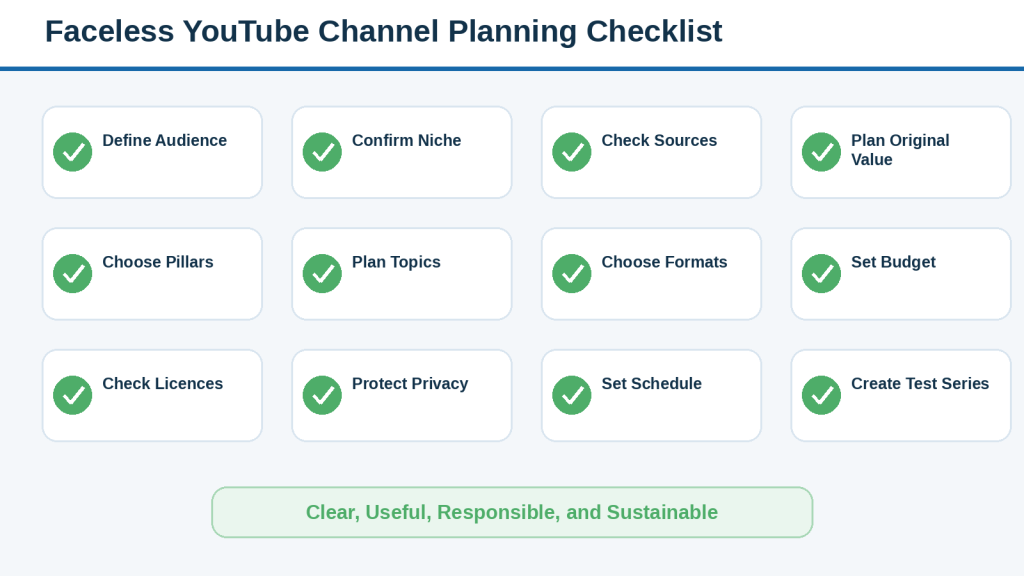
Figure 14. Final checklist for confirming a faceless YouTube niche and channel plan.
Explanation: The checklist brings together the main decisions about audience, niche, pillars, topics, format, budget, licences, privacy, schedule, organization, and testing.
- The audience can be described in one sentence
- The niche combines a subject, audience, problem, and useful result
- At least 20 to 30 distinct video topics are possible
- Reliable sources are available
- Three to five related content pillars are defined
- One repeatable main video format is selected
- The budget is affordable even without channel income
- Copyright, licences, privacy, permission, and disclosure have been considered
- The first five videos form a useful starting path
- One complete test video has been timed
- The publishing schedule includes review and correction time
- Planning records and source files will be preserved
Final planning rule: revise the plan when it depends on uncertain facts, questionable licences, unauthorized real-person content, unaffordable tools, or an unsustainable schedule.
Practical Example: Plan a Faceless YouTube Channel from Start to Finish
This example shows how a broad idea can become a practical channel plan through a defined audience, a clear niche statement, five related content pillars, a repeatable video format, twenty connected topics, a realistic publishing schedule, a small test project, and written safety and update procedures.
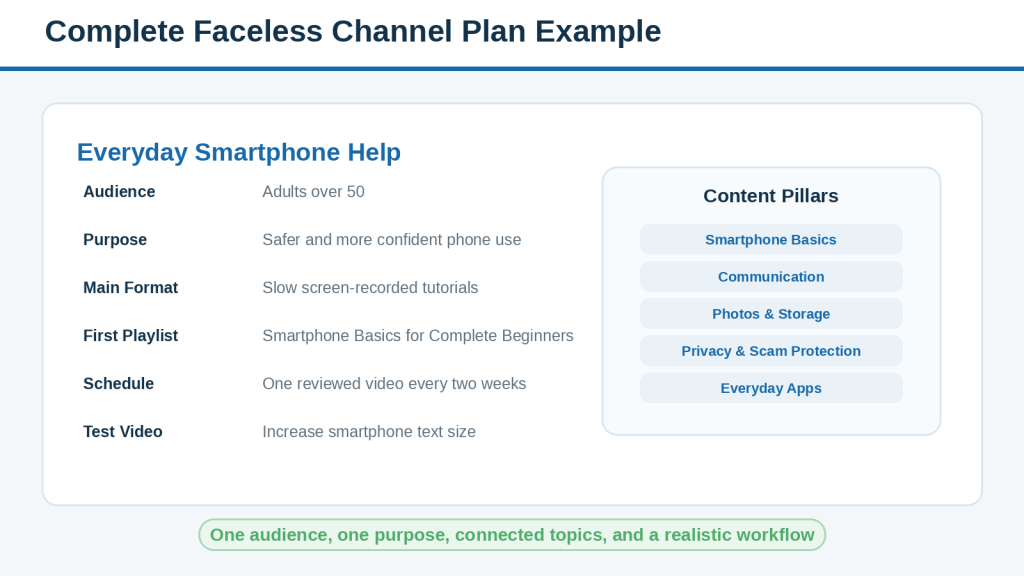
Figure 15. A complete example of a beginner faceless YouTube channel plan.
Explanation: The example shows how one audience, one purpose, five content pillars, a repeatable format, a topic list, and a realistic schedule fit together.
Starting idea: a general technology channel. This is narrowed to adults over 50 who need slow, clear smartphone help. The channel becomes “Everyday Smartphone Help.”
Niche statement: This channel helps adults over 50 learn essential smartphone and digital skills so they can complete everyday tasks more safely and confidently through slow screen-recorded tutorials and simple visual explanations.
Content pillars: smartphone basics, communication, photographs and storage, privacy and scam protection, and useful everyday apps.
First five videos: increase text size, connect to Wi-Fi, add a contact, recognize a suspicious message, and free storage space safely.
After one test video takes approximately 11 hours from research to upload, the creator chooses one carefully reviewed video every two weeks. The test also reveals that pointer movement should be slower, menu names may vary, and thumbnail text must be larger.
Frequently Asked Questions
Is a niche the same as a video topic?
No. The niche is the channel’s overall direction. A video topic is one individual lesson inside that direction.
How many content pillars should a beginner choose?
Three to five related pillars are usually enough at the beginning.
How narrow should the niche be?
It should be clear enough to guide the channel but broad enough to support at least 20 to 30 meaningfully different topics.
Can AI choose the niche for me?
AI can organize and suggest ideas, but the final decision requires research, testing, and human judgement.
Do I need to be an expert?
You need enough knowledge and reliable research to explain the topic accurately. Do not claim qualifications you do not have.
How many videos should I prepare before launching?
One fully reviewed video is enough to begin. Two or three connected videos can create a stronger starting path when the workload is manageable.
How often should a beginner publish?
Choose a frequency after timing one complete test video. Weekly, every two weeks, or monthly can all be reasonable.
Can I change the niche later?
Yes. Make small evidence-based adjustments. A completely unrelated subject may be better on a separate channel.
What should I do when early videos receive few views?
Review titles, thumbnails, openings, usefulness, and viewer paths. Look for patterns across several videos before making a major change.
Can a clear niche guarantee monetization?
No. Planning cannot guarantee views, subscribers, YouTube Partner Program approval, advertising income, or sponsorships.
Key Takeaways
- Define the audience before confirming the niche
- Use AI for brainstorming and organization, not guaranteed predictions
- Evaluate usefulness, topic depth, cost, originality, research, and risk
- Choose three to five related content pillars
- Plan approximately 20 topics and select the first five carefully
- Use one practical main video format
- Measure one complete test video before choosing a schedule
- Organize the channel with a clear starting point and useful playlists
- Preserve sources, licences, permissions, versions, and project records
- Test the niche with three to five connected videos and improve gradually
The best niche is not simply the most popular or profitable-looking subject. It is a clear, useful, responsible, and sustainable channel direction that you can continue developing through original videos over time.
Final Thoughts
Choosing a faceless YouTube niche is not about discovering a secret topic that guarantees success. It is about creating a clear starting direction that serves a real audience and can be produced responsibly with the time, knowledge, tools, and budget available.
Begin with one audience, one clear niche statement, three to five content pillars, approximately 20 useful topics, and one repeatable format. Then create a small test series and improve the plan with real production experience and viewer evidence.
Choose a niche you can explain clearly, research responsibly, afford to produce, and continue developing even when early results are limited.
Continue Learning
- How to Create Faceless YouTube Videos with AI: Complete Beginner Step-by-Step Guide (2026) – Learn the complete faceless-video workflow from topic selection through publishing and improvement.
- How to Create AI Videos with ChatGPT: Beginner Step-by-Step Guide (2026) – Learn how to use ChatGPT for video planning, prompts, scenes, and production instructions.
- Image-to-Video Generation for Beginners – Learn how to turn an authorized image into a short moving clip.
- Text-to-Video for Beginners – Learn how to create short video scenes from written prompts.
- How to Add Voice, Music, and Captions to AI Videos – Learn how to add narration, properly licensed music, sound effects, and accurate captions.
- How to Research and Write Faceless YouTube Video Scripts with AI (2026)
Sources and References
The following official YouTube and Google resources were reviewed for this article on August 6, 2026. Features, menu names, policies, analytics, plan conditions, and disclosure requirements may change.
- Create a YouTube channel – Explains the current process for creating a channel and selecting a profile image, name, and handle.
- Channel customization – Explains the YouTube Studio customization area for the channel Home tab and Profile settings.
- Customize your YouTube channel layout – Explains channel trailers, featured videos, playlists, and channel sections.
- Manage your YouTube channel profile – Explains how to manage the channel name, handle, description, and links.
- Manage your channel branding – Explains profile pictures, channel banners, and video watermarks.
- Get started with YouTube Analytics – Explains YouTube Analytics and the Trends tab for audience searches and content gaps.
- Explore trends on YouTube – Explains how creators can explore audience searches and possible content ideas.
- Understand your YouTube audience – Explains the Audience tab and notes that some information may be limited when there is insufficient data.
- Tips to learn what viewers are watching – Explains how viewing information outside a channel can help with content planning.
- Tips to learn what content to create – Explains how creators can use analytics to identify useful content patterns.
- YouTube channel monetization policies – Explains originality and authenticity requirements, including the inauthentic-content policy for repetitive or mass-produced material.
- Disclosing use of generative AI content – Explains disclosure requirements for realistic altered or synthetic content.
- Understanding how this content was made disclosures – Explains the disclosure information that viewers may see for meaningfully altered or synthetic content.
- Protecting your identity – Explains privacy requests involving realistic altered or synthetic likenesses and voices.
Readers should review the relevant current official guidance when first using a feature, changing tools or plans, receiving a policy-update notice, applying for monetization, publishing realistic altered or synthetic content, and periodically as part of normal channel maintenance.
This article provides general educational information and is not legal, financial, medical, copyright, or other professional advice.


Leave a comment