
Estimated Reading Time: 14 minutes
Last Updated: July 2026
What You’ll Learn
By the end of this guide, you’ll be able to:
· Understand what Generative AI is.
· Learn how Generative AI works in simple language.
· Recognize everyday examples of Generative AI.
· Discover the most popular Generative AI tools.
· Learn the benefits and limitations of Generative AI.
· Understand the difference between Generative AI and traditional AI.
· Build a strong foundation for using Generative AI safely and effectively.
Introduction
Generative AI is one of the fastest-growing areas of Artificial Intelligence (AI). Unlike traditional AI systems that analyze data or make predictions, Generative AI can create entirely new content, including text, images, music, videos, computer code, and more.
Today, millions of people use Generative AI every day to write emails, create artwork, generate ideas, summarize documents, translate languages, and solve problems. Popular tools such as ChatGPT, Google Gemini, Microsoft Copilot, Claude, and image generators have made this technology accessible to beginners as well as professionals.
Although Generative AI may seem complex, the basic idea is surprisingly simple. It learns from large amounts of existing data and uses that knowledge to generate new content that is similar in style and structure but not simply copied from the original information.
If you’re new to Generative AI, this guide is the perfect place to start. It explains the key concepts in simple language, uses real-world examples, and shows how Generative AI is changing the way people learn, work, and create.
Before learning about Generative AI, you may find it helpful to read our What Is Artificial Intelligence? A Beginner’s Guide (2026), What Is Machine Learning? A Beginner’s Guide (2026), and What Is Deep Learning? A Beginner’s Guide (2026). These guides explain the technologies that make Generative AI possible.
What Is Generative AI?
Generative AI is a type of Artificial Intelligence that can create new content instead of simply analyzing existing information. It can generate text, images, music, videos, computer code, and other types of digital content based on the information it has learned during training.
Unlike traditional AI systems, which are mainly designed to classify data, recognize patterns, or make predictions, Generative AI generates new content in response to a user’s request. For example, it can write articles, answer questions, create artwork, summarize documents, translate languages, or generate computer programs.
Generative AI learns by studying enormous amounts of data from multiple sources, which may include publicly available information, licensed material, and content created or reviewed by human trainers.
During training, it identifies patterns, relationships, and structures within the data. When you give it a prompt, it uses those learned patterns to generate new content that is relevant to your request.
Many of today’s most popular AI tools use Generative AI. Examples include ChatGPT for writing and answering questions, Google Gemini for conversation and productivity, Microsoft Copilot for work-related tasks, DALL·E for creating images, and Suno for generating music.
Although Generative AI can produce impressive results, it does not think, understand, or have feelings like humans. Instead, it predicts the most appropriate response based on patterns it learned during training.
One of the biggest advantages of Generative AI is its ability to help people create content quickly. It can save time, improve productivity, and support creativity in education, business, software development, marketing, and many other fields.
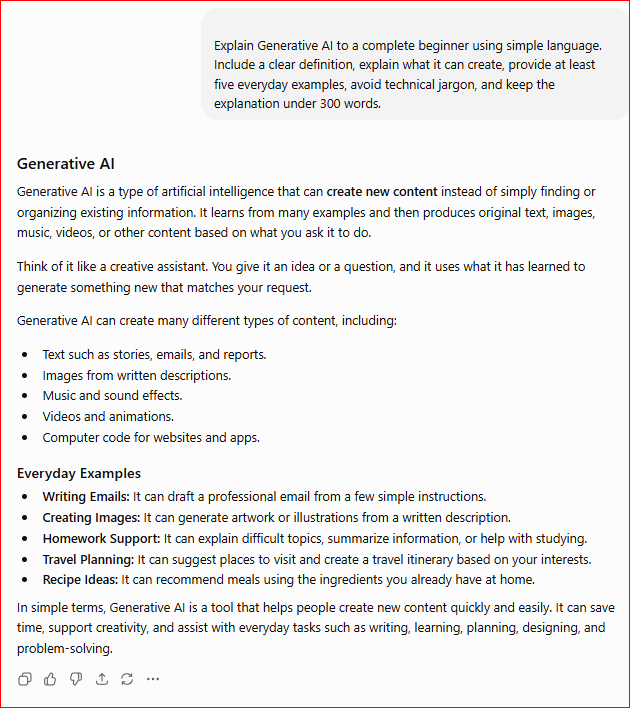
Figure 1. ChatGPT explaining Generative AI in simple language.
This example shows how ChatGPT explains Generative AI using clear language and practical examples. By showing that Generative AI can create text, images, music, and other content, beginners can easily understand how this technology differs from traditional Artificial Intelligence.
How Does Generative AI Work?
Generative AI works by learning from enormous amounts of existing information instead of following only a fixed set of instructions. During training, it analyzes books, articles, websites, images, videos, music, and other types of data to recognize patterns and relationships. Once it has learned those patterns, it can generate new content based on a user’s prompt.
Think of Generative AI as a student who has read millions of books and seen millions of examples. Instead of memorizing every sentence, the student learns writing styles, grammar, facts, and patterns. When asked a new question, the student uses that knowledge to create a new answer instead of copying a page from a book.
For example, when you ask ChatGPT a question, it does not always search the internet like a traditional search engine. Depending on your question and the tools available, it may generate a response using patterns learned during training or search the web for current information. It analyzes your prompt, considers the context and instructions, and generates a response that matches your request.
Generative AI works in a similar way when creating images, music, or computer code. It does not simply copy existing content. Instead, it combines the patterns it has learned to create something new that matches the instructions you provide.
Although Generative AI can produce impressive results, it does not think, understand, or have emotions like humans. It uses mathematical calculations and learned patterns to generate content that appears natural and useful.
One of the greatest strengths of Generative AI is its ability to create content in just a few seconds. Whether writing an article, creating an image, summarizing a document, or generating computer code, it can complete tasks much faster than traditional methods.
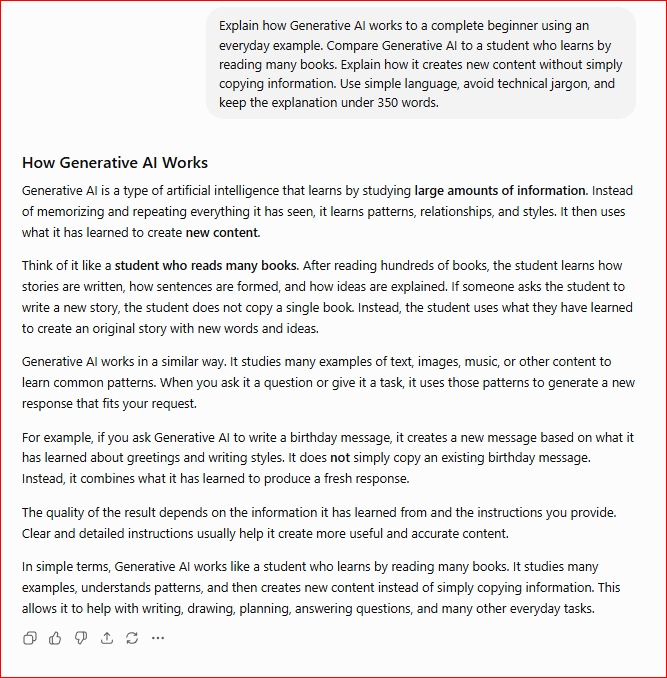
Figure 2. ChatGPT explaining how Generative AI works using an everyday example.
This example shows that Generative AI creates new content by learning patterns from large amounts of information rather than copying existing material. Using a simple everyday comparison helps beginners understand how Generative AI produces text, images, music, and other content in response to a user’s prompt.
Everyday Examples of Generative AI
You may already be using Generative AI every day without realizing it. Many popular apps and online services use Generative AI to create text, images, music, videos, computer code, and other digital content.
Here are some common examples:
· ChatGPT – Writes articles, answers questions, summarizes information, and helps generate ideas.
· Google Gemini – Assists with writing, research, brainstorming, and productivity tasks.
· Microsoft Copilot – Helps create documents, emails, presentations, and computer code.
· DALL·E – Creates new images from text descriptions.
· Adobe Firefly – Generates images and graphic designs for creative projects.
· Canva Magic Studio – Creates presentations, social media posts, and marketing content using AI.
· Suno AI – Generates new songs from text prompts.
· GitHub Copilot – Helps programmers write and improve computer code.
· Grammarly AI – Suggests improvements for writing, grammar, and tone.
· AI-powered customer service chatbots – Answer customer questions and provide support automatically.
These examples show that Generative AI is becoming part of everyday life. Whether you are writing an email, creating artwork, designing a presentation, generating music, or asking an AI assistant for help, Generative AI is making many tasks faster, easier, and more creative.
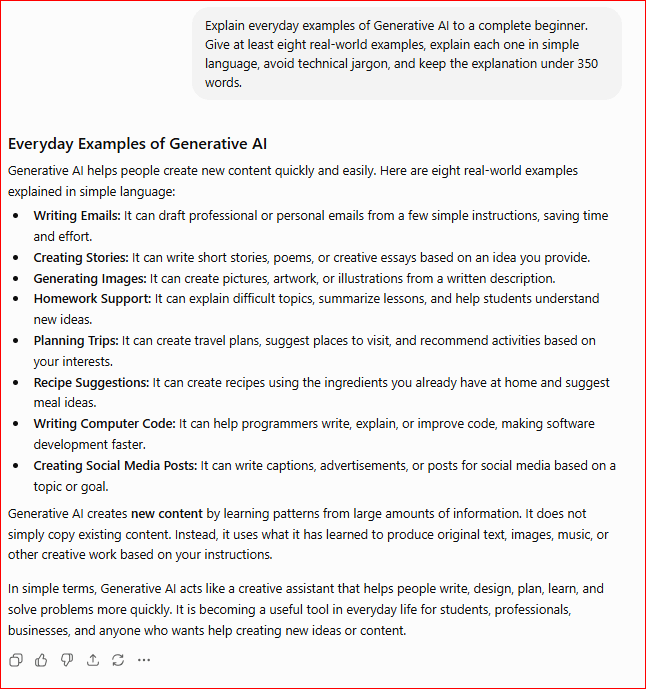
Figure 3. ChatGPT explaining everyday examples of Generative AI.
This example shows how Generative AI is used in many popular applications that people use every day. By connecting Generative AI to familiar tools such as ChatGPT, Google Gemini, Microsoft Copilot, DALL·E, and Canva, beginners can better understand how this technology is improving creativity and productivity across many different fields.
Popular Generative AI Tools
Today, there are many Generative AI tools designed to help people write, create images, generate music, produce videos, write computer code, and improve productivity. Although these tools use similar AI technology, each one is designed for different tasks.
Here are some of the most popular Generative AI tools:
· ChatGPT – Generates text, answers questions, summarizes information, writes emails, creates articles, and helps with brainstorming.
· Google Gemini – Assists with writing, research, coding, and productivity while integrating with Google’s services.
· Microsoft Copilot – Helps create documents, presentations, spreadsheets, emails, and computer code using Microsoft 365 applications.
· Claude – Assists with writing, summarizing long documents, answering questions, and analyzing information.
· DALL·E – Creates original images from text descriptions.
· Adobe Firefly – Generates images, graphic designs, and creative visual content.
· Canva Magic Studio – Uses AI to create presentations, social media posts, logos, and marketing materials.
· GitHub Copilot – Assists programmers by suggesting and generating computer code.
· Suno AI – Creates original songs and music from text prompts.
· Runway – Generates and edits AI-powered videos for creative projects.
Comparison Table
| Tool | Main Purpose | Example Use |
| ChatGPT | Text generation | Writing articles, answering questions |
| Google Gemini | AI assistant | Research, writing, productivity |
| Microsoft Copilot | Office productivity | Documents, emails, presentations |
| Claude | Writing and analysis | Summarizing documents, brainstorming |
| DALL·E | Image generation | Creating artwork from text |
| Adobe Firefly | Graphic design | Marketing images and illustrations |
| Canva Magic Studio | Content creation | Social media posts and presentations |
| GitHub Copilot | Programming | Writing and suggesting code |
| Suno AI | Music generation | Creating original songs |
| Runway | Video generation | AI-powered video creation |
Each tool has its own strengths. Some focus on writing, while others specialize in images, music, videos, or programming. Choosing the right tool depends on the type of content you want to create.
As Generative AI continues to evolve, new tools are being introduced regularly. Learning how these tools differ will help you choose the best one for your personal, educational, or professional needs.
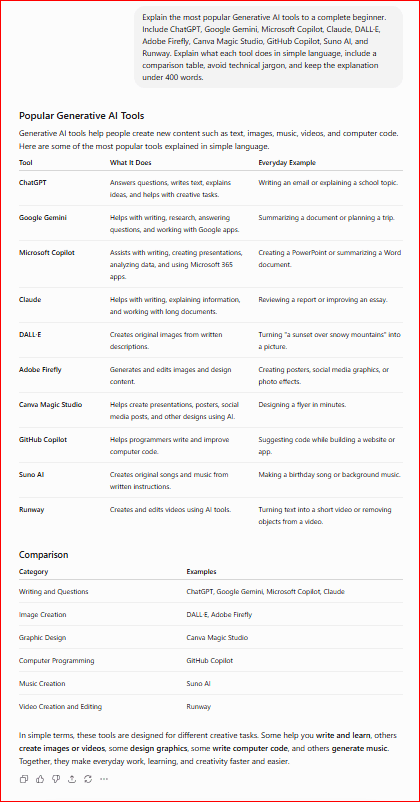
Figure 4. ChatGPT explaining popular Generative AI tools.
This example introduces some of today’s most popular Generative AI tools and explains their primary uses. By comparing them side by side, beginners can quickly understand which tools are best suited for writing, image creation, music generation, programming, productivity, and video creation.
Benefits of Generative AI
As more industries adopt Generative AI, it is becoming an essential tool in education, healthcare, business, software development, marketing, entertainment, and scientific research.
Some of the main benefits of Generative AI include:
· Saves time by creating drafts and summaries quickly.
· Supports creativity by generating ideas and examples.
· Improves writing, grammar, and communication.
· Makes difficult topics easier to understand.
· Helps create images, presentations, music, and videos.
· Assists programmers with writing and explaining code.
· Supports planning, organization, and research.
· Improves productivity by reducing repetitive work.
· Helps businesses create marketing and customer-service content.
· Makes creative tools more accessible to beginners.
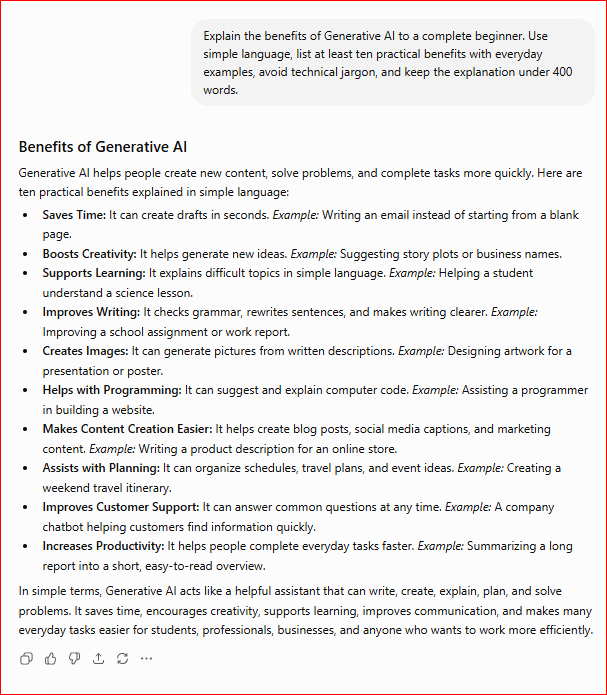
Figure 5. ChatGPT explaining the benefits of Generative AI.
This example shows how Generative AI helps people work more efficiently, express their creativity, and solve problems more quickly. From writing and design to programming and education, Generative AI is becoming an important tool in many areas of everyday life.
Limitations of Generative AI
Although Generative AI is a powerful and useful technology, it is not perfect. Like all Artificial Intelligence systems, it has limitations and can sometimes produce incorrect or misleading results. Understanding these limitations helps people use Generative AI more effectively and responsibly.
Some of the main limitations of Generative AI include:
· Can generate incorrect information, sometimes called “hallucinations,” by producing answers that sound convincing but are inaccurate.
· Depends on the quality of its training data, which means incomplete or biased data can affect the results.
· Does not understand or experience the world in the same way humans do; it relies on learned patterns and may lack human common sense.
· May reflect bias if the data used during training contains unfair or unbalanced information.
· Cannot replace human judgment for important decisions in areas such as healthcare, law, or finance.
· May produce outdated information if it has not been trained on the latest data.
· Raises copyright and privacy concerns when creating or using content.
· Requires careful prompts because unclear instructions may lead to poor or incomplete results.
· Can be misused to create fake images, videos, or misleading information if used irresponsibly.
Although Generative AI can create impressive content in seconds, people should always review and verify the results before using them. Human creativity, critical thinking, and professional expertise remain essential for making important decisions and ensuring information is accurate.
The best way to use Generative AI is as a helpful assistant rather than a replacement for human knowledge. When combined with careful review and responsible use, it can improve productivity while reducing repetitive work.
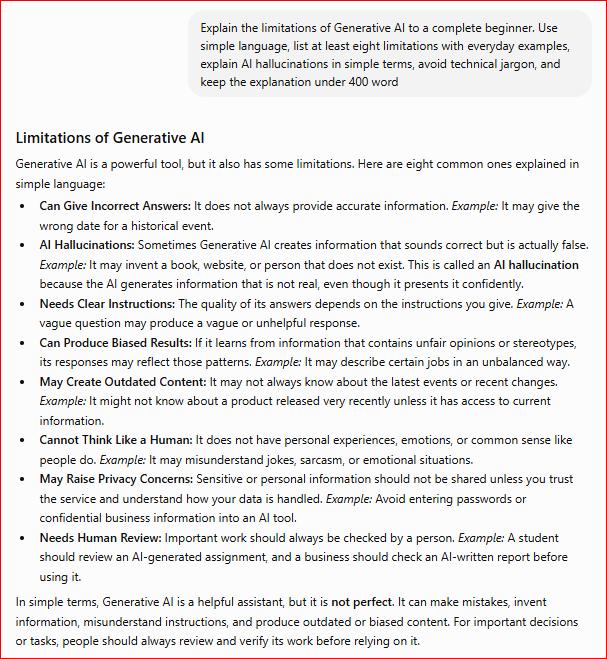
Figure 6. ChatGPT explaining the limitations of Generative AI.
This example shows that although Generative AI is an impressive technology, it still has important limitations. Understanding issues such as inaccurate information, bias, outdated knowledge, and the need for human review helps beginners use Generative AI more safely and effectively.
Generative AI vs. Traditional AI
Many people assume that all Artificial Intelligence works the same way. In reality, there is an important difference between Traditional AI and Generative AI.
Traditional AI is designed to analyze existing information, recognize patterns, make predictions, classify data, or recommend actions. For example, a spam filter identifies unwanted emails, a navigation app suggests the fastest route, and a recommendation system suggests movies or products you might like.
Generative AI goes a step further. Instead of simply analyzing information, it generates new content based on a user’s prompt. It can write articles, generate images, compose music, create videos, produce computer code, and answer questions in natural language.
For example, if you ask a traditional AI system to identify whether an email is spam, it will classify the email as “spam” or “not spam.” If you ask Generative AI to write a professional email, it can create a completely new message based on your instructions.
Both Traditional AI and Generative AI are valuable technologies, but they are designed for different purposes. Traditional AI focuses on analyzing and predicting, while Generative AI focuses on creating new content.
Comparison Table
| Feature | Traditional AI | Generative AI |
| Main Purpose | Analyzes data and makes predictions | Creates new content |
| Primary Function | Classification, recognition, recommendations | Writing, image creation, music, videos, and code |
| Learns from Data | Yes | Yes |
| Generates New Content | No | Yes |
| Everyday Examples | Spam filters, Google Maps, fraud detection | ChatGPT, DALL·E, Suno AI, Microsoft Copilot |
The easiest way to remember the difference is that Traditional AI helps computers understand information, while Generative AI helps computers create new content. Both are important parts of modern Artificial Intelligence and often work together in many applications.
As Generative AI continues to improve, it is becoming an increasingly valuable tool for education, business, creativity, healthcare, and software development. However, both Traditional AI and Generative AI require responsible use and human oversight to achieve the best results.
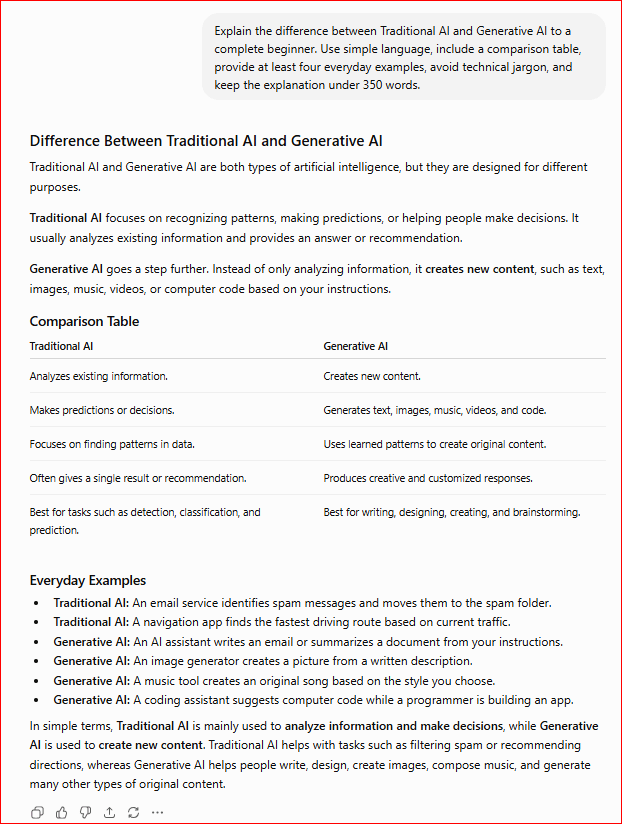
Figure 7. ChatGPT explaining the difference between Traditional AI and Generative AI.
This example shows that Traditional AI and Generative AI have different purposes. Traditional AI analyzes information and makes predictions, while Generative AI creates new content such as text, images, music, videos, and computer code. Understanding this difference helps beginners choose the right AI tool for different tasks.
Common Myths About Generative AI
Generative AI is becoming more popular every day, but many people still have misunderstandings about what it can and cannot do. Learning the facts will help you use Generative AI more effectively and responsibly.
Myth 1: Generative AI thinks like a human.
Reality: Generative AI does not think, understand, or have emotions. It generates content by recognizing patterns in the data it learned during training.
Myth 2: Everything Generative AI creates is always correct.
Reality: Generative AI can make mistakes and sometimes generate inaccurate or misleading information. Always verify important facts using reliable sources.
Myth 3: Generative AI copies everything from the internet.
Reality: Generative AI learns patterns from large amounts of data and generates new responses rather than simply copying one source. However, users should still review AI-generated material for accuracy, originality, and proper source use.AI-generated material for accuracy, originality, and proper source use.
Myth 4: Generative AI will replace all human jobs.
Reality: Generative AI is designed to assist people by automating repetitive tasks and improving productivity. In most cases, human creativity, judgment, and decision-making remain essential.
Myth 5: Only technology experts can use Generative AI.
Reality: Many Generative AI tools are designed for everyone. Students, teachers, writers, artists, business owners, and beginners can all use Generative AI through simple text prompts.
Myth 6: Generative AI is only used to write text.
Reality: Generative AI can create much more than text. It can generate images, music, videos, computer code, presentations, and other types of digital content.
Understanding these myths helps beginners develop realistic expectations about Generative AI. Although it is one of the most exciting technologies available today, it works best when combined with human knowledge, creativity, and careful review.
Frequently Asked Questions
What is Generative AI?
Generative AI is a type of Artificial Intelligence that creates new content such as text, images, music, videos, computer code, and other digital media based on a user’s prompt.
Is Generative AI the same as Artificial Intelligence?
No. Artificial Intelligence is the broader field of creating intelligent computer systems. Generative AI is a specialized type of AI that focuses on creating new content rather than simply analyzing information or making predictions.
What can Generative AI create?
Generative AI can create many types of content, including articles, emails, stories, images, presentations, music, videos, computer code, and translations.
Is Generative AI always accurate?
No. Generative AI can sometimes produce incorrect or outdated information. It is important to review and verify important facts before using the generated content.
Do I need programming skills to use Generative AI?
No. Most Generative AI tools are designed for beginners and can be used simply by typing natural language prompts.
Key Takeaways
Remember these important points:
· Generative AI creates new content instead of only analyzing information.
· It can generate text, images, music, videos, computer code, and other digital content.
· Popular Generative AI tools include ChatGPT, Google Gemini, Microsoft Copilot, Claude, DALL·E, and Canva Magic Studio.
· Generative AI improves creativity, productivity, learning, and problem-solving.
· Although powerful, it can still make mistakes and should always be used responsibly.
· Human judgment remains important when using AI-generated content.
· Learning how to write clear prompts helps you get better results from Generative AI.
What’s Next?
Congratulations! You have completed this beginner’s guide to Generative AI.
You now understand what Generative AI is, how it works, the most popular AI tools available today, its benefits and limitations, and how it differs from Traditional AI.
You have also completed the four core concepts of modern Artificial Intelligence:
· Artificial Intelligence
· Machine Learning
· Deep Learning
· Generative AI
With this foundation, you are ready to begin learning how to use AI tools more effectively in your everyday life.
Final Tip for Beginners
Generative AI is most effective when you give it clear, detailed instructions. The better your prompt, the better the results are likely to be. Keep experimenting with different prompts, ask follow-up questions, and refine your requests. Like any new skill, using Generative AI becomes easier with practice.
Continue Learning
Ready to continue your AI journey?
Explore our beginner-friendly tutorials to learn more about ChatGPT, prompt writing, AI image generation, and other practical AI applications.
Continue Your AI Journey
Explore these beginner-friendly guides to continue building your AI skills:
· What Is Artificial Intelligence? A Beginner’s Guide (2026)
· What Is Machine Learning? A Beginner’s Guide (2026)
· What Is Deep Learning? A Beginner’s Guide (2026)
· Create a ChatGPT Account (Step-by-Step Beginner Guide 2026)
· ChatGPT Basics for Beginners (Complete Guide 2026)
· Best ChatGPT Prompts for Beginners (2026)
· How ChatGPT Works (Explained Simply)
· What Are Large Language Models (LLMs)? A Beginner’s Guide (2026)
· AI Image Generation for Beginners
New beginner-friendly AI tutorials will be added regularly, so be sure to check back for more guides, practical examples, and step-by-step AI tutorials.
Thank you for reading. Keep exploring, keep practicing, and enjoy discovering the exciting possibilities of Generative AI.


Leave a Reply