Tag: ChatGPT file uploads

  • How to Proofread and Edit Documents with ChatGPT: Beginner Guide (2026)

    How to Proofread and Edit Documents with ChatGPT: Beginner Guide (2026)

    Estimated reading time: 20–25 minutes
    Last updated: July 2026

    Before Learning

    Before using ChatGPT to proofread or edit a document, it helps to understand how document uploads, analysis, rewriting, and verification work.

    Review these beginner guides first:

    · ChatGPT Basics for Beginners: Complete Guide (2026)

    · How to Analyze Documents with ChatGPT: Beginner Guide (2026)

    · How to Extract Information from Documents with ChatGPT: Beginner Guide (2026)

    · How to Ask Questions About Documents with ChatGPT: Beginner Guide (2026)

    · How to Summarize Documents with ChatGPT: Beginner Guide (2026)

    · How to Rewrite and Simplify Documents with ChatGPT: Beginner Guide (2026)

    These guides explain how to inspect a document, identify important details, ask focused questions, rewrite unclear text, and compare ChatGPT’s output with the original source.

    Those skills are useful because proofreading and editing should improve spelling, grammar, punctuation, clarity, and consistency without changing the document’s facts or intended meaning.

    For example:

    Original:

    The application may be approved after the supporting documents are reviewed.

    Incorrect edit:

    The application will be approved.

    The incorrect edit removes the review condition and changes a possible result into a guarantee.

    A careful proofreading process should preserve:

    · Names

    · Dates

    · Numbers

    · Responsibilities

    · Deadlines

    · Conditions

    · Warnings

    · Limitations

    · Approval status

    · Uncertainty

    What You’ll Learn

    In this beginner guide, you will learn how to:

    · Upload a document to ChatGPT for proofreading and editing.

    · Choose whether you need proofreading, copy editing, or a broader content review.

    · Check spelling, grammar, punctuation, and capitalization.

    · Find missing words, repeated words, and awkward sentences.

    · Correct inconsistent terminology, headings, and formatting.

    · Review numbered steps, bullet points, tables, captions, and references.

    · Improve sentence clarity without changing the original meaning.

    · Preserve names, dates, numbers, deadlines, warnings, conditions, and uncertainty.

    · Ask ChatGPT to explain each proposed correction.

    · Compare the original and edited versions side by side.

    · Approve or reject individual changes.

    · Proofread long documents one section at a time.

    · Check whether edits introduced unsupported information.

    · Review tone, reading level, and consistency.

    · Protect private and confidential information before uploading.

    · Confirm permission, copyright, licensing, and publication requirements.

    · Understand when professional editing or subject-matter review may be necessary.

    · Save the original document, editing prompts, corrections, and approved final version.

    By the end of this guide, you should be able to use ChatGPT to identify and correct writing problems while keeping the document’s facts, requirements, warnings, and intended meaning accurate.

    Introduction

    A document may contain useful and accurate information but still have writing errors that make it difficult to read.

    Common problems include:

    · Misspelled words

    · Missing words

    · Repeated words

    · Incorrect punctuation

    · Inconsistent capitalization

    · Awkward sentences

    · Grammar mistakes

    · Inconsistent terminology

    · Incorrect heading or list formatting

    · Repeated paragraphs

    · Incorrect figure or table numbers

    Proofreading and editing can help correct these problems before a document is shared, submitted, or published.

    What Is Proofreading?

    Proofreading is the final check for smaller writing and formatting errors.

    It usually focuses on:

    · Spelling

    · Grammar

    · Punctuation

    · Capitalization

    · Missing or repeated words

    · Extra spaces

    · Typing errors

    · Inconsistent formatting

    · Incorrect numbering

    For example:

    Original:

    The employes must submits the report by July 20 2026.

    Proofread version:

    The employees must submit the report by July 20, 2026.

    The corrected version fixes:

    · The spelling of employees

    · The grammar in must submit

    · The missing comma in the date

    The original meaning remains unchanged.

    What Is Editing?

    Editing is a broader process.

    It may improve:

    · Sentence clarity

    · Paragraph organization

    · Tone

    · Word choice

    · Consistency

    · Reading level

    · Document structure

    · Repetition

    · Transitions between ideas

    For example:

    Original:

    Due to the fact that the inspection had not yet been completed, the equipment was not permitted to be returned to active service.

    Edited version:

    The equipment could not return to service because the inspection was incomplete.

    The edited version is shorter and clearer while preserving the original meaning.

    OpenAI describes ChatGPT as useful for drafting, revising, refining, tightening, and adjusting written content for a particular audience. It also recommends providing clear instructions and reviewing the output carefully rather than automatically accepting every suggested change.

    Proofreading Is Not the Same as Rewriting

    Proofreading normally corrects errors without substantially changing the wording.

    Rewriting changes how the information is expressed.

    For example:

    Original:

    Employees must completing the inspection form before each shift.

    Proofread version:

    Employees must complete the inspection form before each shift.

    Rewritten version:

    Before every shift, employees must complete the inspection form.

    Both corrected versions preserve the requirement, but the rewrite changes the sentence structure.

    Use proofreading when you want minimal changes.

    Use editing or rewriting when the wording, organization, tone, or reading level also needs improvement.

    Editing Should Not Change the Facts

    An edit is not correct when it changes important information.

    For example:

    Original:

    The application may be approved after the supporting documents are reviewed.

    Incorrect edit:

    The application will be approved.

    The incorrect edit:

    · Changes may into will

    · Removes the document-review condition

    · Turns a possible result into a guarantee

    A careful edit should preserve:

    · Names

    · Dates

    · Numbers

    · Amounts

    · Measurements

    · Deadlines

    · Responsibilities

    · Required actions

    · Conditions

    · Exceptions

    · Warnings

    · Limitations

    · Approval status

    · Uncertainty

    What ChatGPT Can Help You Check

    You can ask ChatGPT to identify possible:

    · Spelling errors

    · Grammar mistakes

    · Punctuation problems

    · Capitalization inconsistencies

    · Missing or repeated words

    · Awkward sentences

    · Repeated ideas

    · Inconsistent terminology

    · Incorrect list formatting

    · Heading inconsistencies

    · Table and figure-numbering problems

    · Changes in tone

    · Possible changes in meaning

    ChatGPT can also present the original and edited text side by side so that you can review each proposed change.

    However, ChatGPT may:

    · Suggest an unnecessary edit

    · Misunderstand the intended meaning

    · Change a fact

    · Remove an important condition

    · Weaken a warning

    · Replace an approved term

    · Introduce a new error

    For this reason, each important correction should be reviewed before it is accepted.

    Working with Uploaded Documents

    ChatGPT currently supports many commonly used document, text, presentation, and spreadsheet formats, including PDF, DOCX, PPTX, TXT, CSV, TSV, XLS, and XLSX. Google Docs files using the .gdoc format must currently be exported to a supported format before uploading. Supported features and limits may vary by account, plan, workspace, and future update.

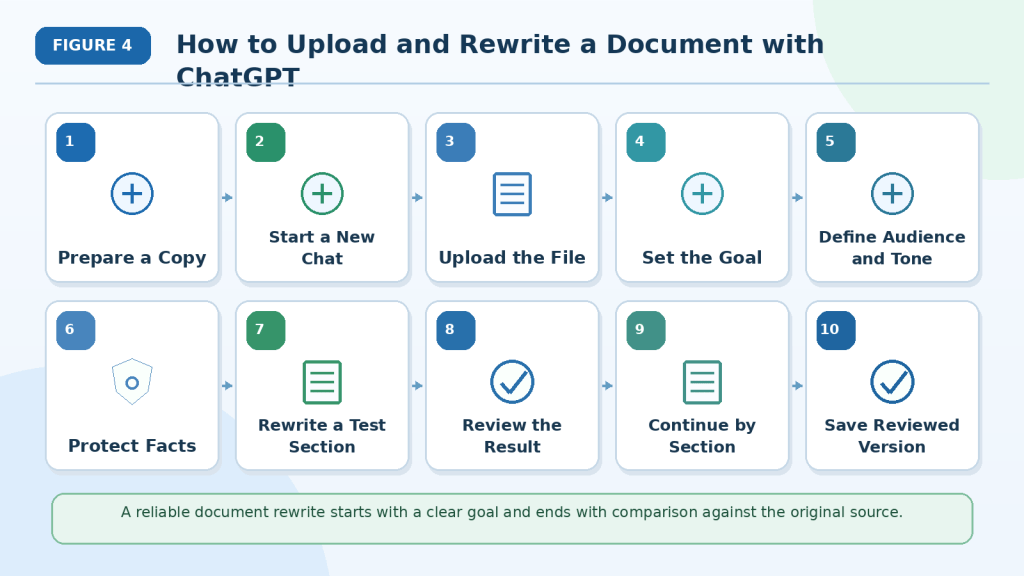
    The basic proofreading and editing process is:

    1. Review the document for private or restricted information.
    2. Upload the correct and readable file.
    3. Choose the type of review required.
    4. Explain what ChatGPT may and may not change.
    5. Proofread one manageable section.
    6. Review every proposed correction.
    7. Accept, reject, or revise each change.
    8. Compare the edited section with the original.
    9. Check formatting, terminology, facts, and references.
    10. Save the reviewed version separately.

    Keep the original document throughout this process.

    ChatGPT can help identify and explain possible problems, but the user remains responsible for deciding which edits are correct.

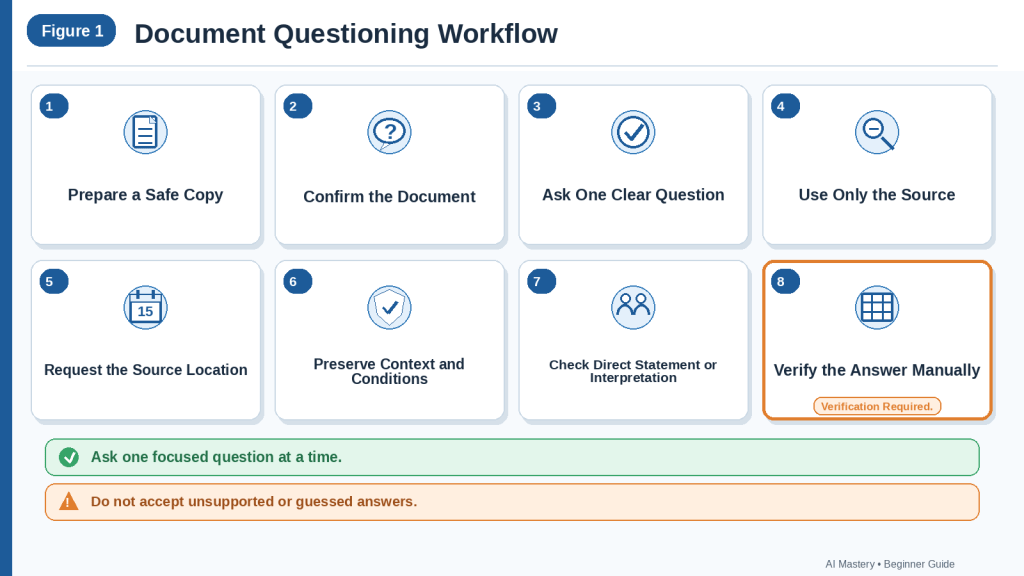
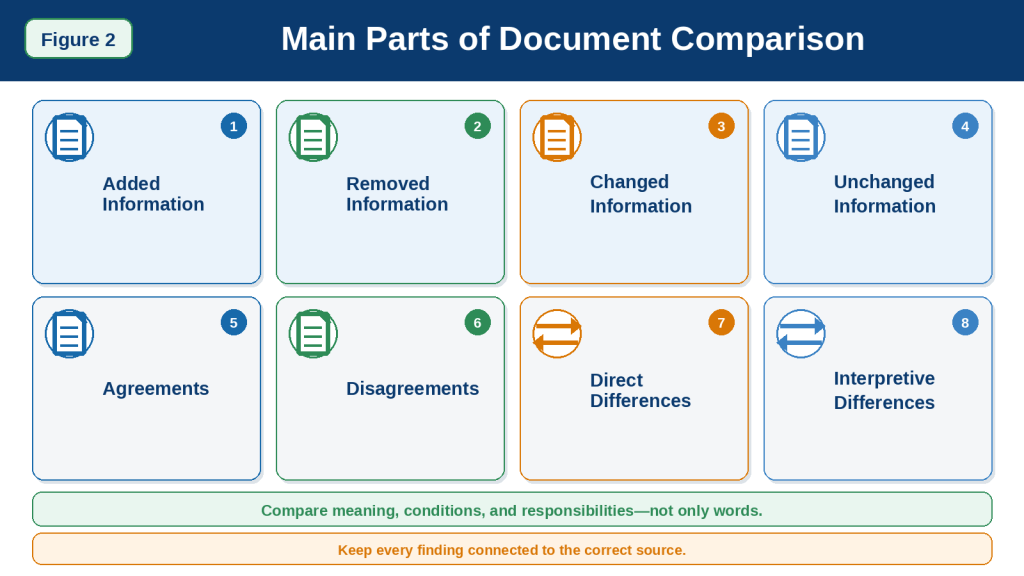
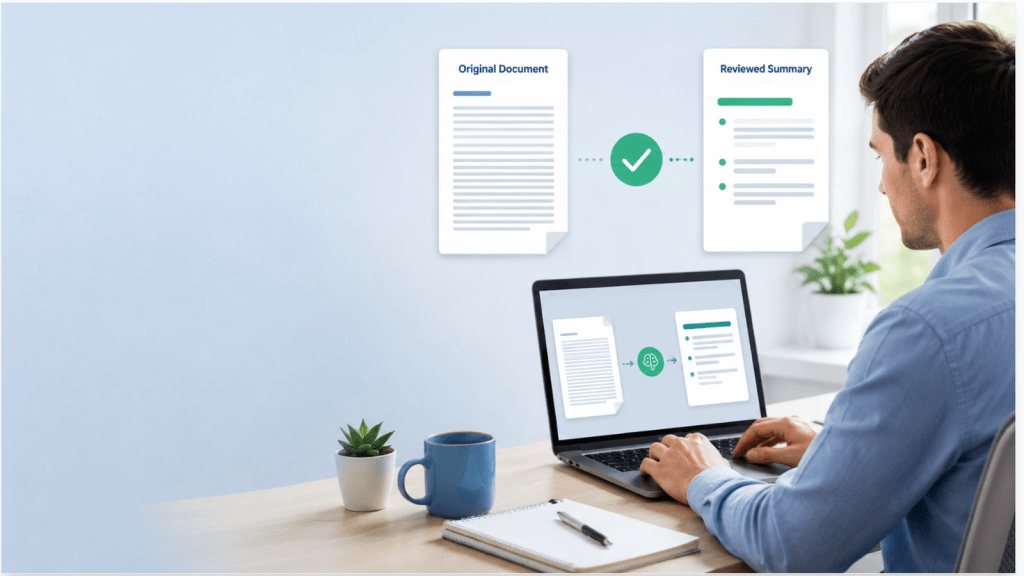
    Figure 1. A careful proofreading and editing process corrects writing problems while preserving the document’s original facts and meaning.

    Proofreading begins with clear instructions about what ChatGPT may change. Each proposed correction should then be reviewed and compared with the original before the edited version is accepted as final.

    Types of Proofreading and Editing You Can Request

    ChatGPT can review a document at different levels.

    The right type of review depends on:

    · The document’s purpose

    · How complete the draft is

    · How much wording may change

    · Whether facts and formatting must remain exactly the same

    · Whether you need only error correction or broader improvement

    Before beginning, tell ChatGPT what kind of review you want.

    Basic Proofreading

    Basic proofreading focuses on small language and typing errors.

    It may check:

    · Spelling

    · Grammar

    · Punctuation

    · Capitalization

    · Missing words

    · Repeated words

    · Extra spaces

    · Typing mistakes

    Example prompt:

    Proofread this section for spelling, grammar, punctuation, capitalization, missing words, repeated words, and typing errors. Make only necessary corrections. Do not rewrite sentences or change the meaning.

    This option is useful when the document is already clear and organized.

    Light Editing

    Light editing corrects errors and improves awkward wording while keeping the original style and structure.

    It may improve:

    · Sentence flow

    · Word choice

    · Repetition

    · Clarity

    · Grammar

    · Punctuation

    Example prompt:

    Lightly edit this section for grammar, clarity, and natural sentence flow. Preserve the original tone, structure, facts, conditions, warnings, and uncertainty. Avoid unnecessary rewriting.

    Light editing allows more change than proofreading but should still stay close to the source.

    Copy Editing

    Copy editing is a more detailed review of language and consistency.

    It may check:

    · Grammar and punctuation

    · Sentence clarity

    · Word choice

    · Tone

    · Terminology

    · Heading style

    · List formatting

    · Capitalization

    · Numbers and dates

    · References

    · Internal consistency

    Example prompt:

    Copy edit this document for clarity, grammar, punctuation, consistency, terminology, headings, lists, and references. Show every suggested change and explain the reason. Do not change facts or add information.

    Copy editing is useful when a document needs careful preparation before publication.

    Grammar and Punctuation Review

    You may request a focused review that changes only grammar and punctuation.

    Example prompt:

    Correct grammar and punctuation only. Do not change vocabulary, sentence order, tone, formatting, or meaning.

    This is useful when the wording has already been approved.

    Spelling and Capitalization Review

    You can ask ChatGPT to check spelling and capitalization without changing sentence structure.

    This may include:

    · Misspelled words

    · Product or department names

    · Job titles

    · Headings

    · Acronyms

    · Proper nouns

    · Regional spelling

    Example prompt:

    Check spelling and capitalization only. Use Canadian English. Keep all approved names, technical terms, dates, numbers, and formatting unchanged.

    Specify the required regional spelling when necessary, such as:

    · Canadian English

    · American English

    · British English

    · Australian English

    Clarity Editing

    Clarity editing improves sentences that are confusing, wordy, or difficult to follow.

    It may:

    · Shorten long sentences

    · Replace unclear wording

    · Remove unnecessary repetition

    · Improve transitions

    · Separate several ideas

    · Make instructions more direct

    Example prompt:

    Edit this section for clarity. Preserve every fact, requirement, deadline, condition, warning, exception, limitation, and uncertain statement. Show the original and edited versions side by side.

    Clarity editing should not become summarization.

    Consistency Editing

    Consistency editing checks whether the same style and terminology are used throughout the document.

    It may review:

    · Repeated terms

    · Job titles

    · Department names

    · Capitalization

    · Date formats

    · Number formats

    · Heading styles

    · Bullet punctuation

    · Figure captions

    · Table labels

    Example prompt:

    Review this document for consistency. Identify variations in terminology, capitalization, date format, heading style, list punctuation, figure captions, and table labels. Do not correct anything until I approve the list.

    This review is especially useful for long documents written over several days or by several people.

    Tone Editing

    Tone editing adjusts how the document sounds.

    Possible tones include:

    · Formal

    · Professional

    · Neutral

    · Friendly

    · Direct

    · Instructional

    · Cautious

    · Reassuring

    Example prompt:

    Edit this customer notice into a friendly but professional tone. Preserve every requirement, deadline, warning, condition, and limitation. Do not make mandatory instructions sound optional.

    Tone editing should not change the strength of the source message.

    Reading-Level Editing

    Reading-level editing adjusts the difficulty of the wording for a specific audience.

    For example:

    · Complete beginners

    · General adult readers

    · Students

    · Customers

    · Employees without technical training

    · Specialists

    Example prompt:

    Edit this guide for adult beginners. Use short sentences, familiar words, clear headings, and one main idea per paragraph. Keep necessary technical terms and explain them simply.

    Simplifying the reading level should not remove essential content.

    Structural Editing

    Structural editing reviews how information is organized.

    It may suggest:

    · New headings

    · Shorter sections

    · Better paragraph order

    · Moving repeated information

    · Separating warnings

    · Reorganizing steps

    · Combining related ideas

    Example prompt:

    Review the document structure and suggest improvements. List all proposed changes before applying them. Do not move warnings, conditions, notes, or definitions away from the content they affect.

    Structural changes require careful review because location can affect meaning.

    Formatting Review

    A formatting review checks whether document elements are used consistently.

    It may review:

    · H1, H2, and H3 headings

    · Numbered lists

    · Bullet lists

    · Tables

    · Captions

    · Figure numbering

    · Bold labels

    · Paragraph spacing

    · References

    · Links

    Example prompt:

    Review the formatting only. Check headings, numbered lists, bullets, tables, captions, figure numbers, bold labels, paragraph spacing, and references. Do not rewrite the text.

    The final formatting should also be checked in the program where the document will be used.

    Fact-Preservation Review

    This review checks whether proposed edits changed factual or conditional information.

    It may focus on:

    · Names

    · Dates

    · Numbers

    · Amounts

    · Measurements

    · Deadlines

    · Responsibilities

    · Warnings

    · Conditions

    · Exceptions

    · Approval status

    · Uncertainty

    Example prompt:

    Compare the edited version with the original and list every changed fact, responsibility, deadline, condition, warning, limitation, or uncertain phrase. Do not make corrections yet.

    This review is important after broader editing.

    Publication-Readiness Review

    A publication-readiness review checks the document as a complete final draft.

    It may include:

    · Language errors

    · Heading consistency

    · Figure and table numbering

    · Caption placement

    · Broken links

    · Repeated sections

    · Missing references

    · Formatting problems

    · Unresolved notes

    · Accessibility concerns

    Example prompt:

    Review this document for publication readiness. Create a checklist of language, structure, formatting, numbering, links, references, captions, accessibility, and unresolved issues. Do not silently rewrite approved text.

    Publication readiness does not guarantee legal, technical, accessibility, or professional approval.

    Choosing the Right Review Type

    Before asking ChatGPT to review the document, decide:

    · Should it correct only errors?

    · May it improve sentence wording?

    · Can it reorganize paragraphs?

    · Must the original tone remain?

    · Which terminology must stay unchanged?

    · Should every proposed change be explained?

    · Are facts, warnings, and conditions especially important?

    · Does the document need professional or subject review?

    You may combine review types.

    For example:

    Proofread and lightly copy edit this article using Canadian English. Correct spelling, grammar, punctuation, awkward wording, terminology inconsistencies, headings, lists, and captions. Preserve all approved facts, examples, dates, warnings, conditions, and uncertainty. Show each proposed change before applying it.

    Reality: Proofreading, copy editing, tone editing, and structural editing are different tasks. Clear instructions help ChatGPT make only the changes you intend.

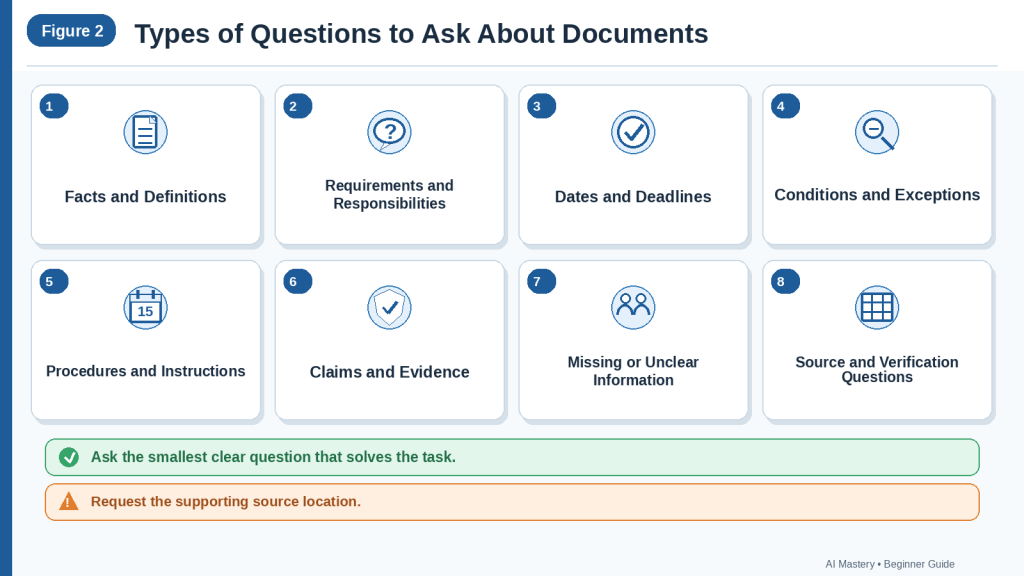
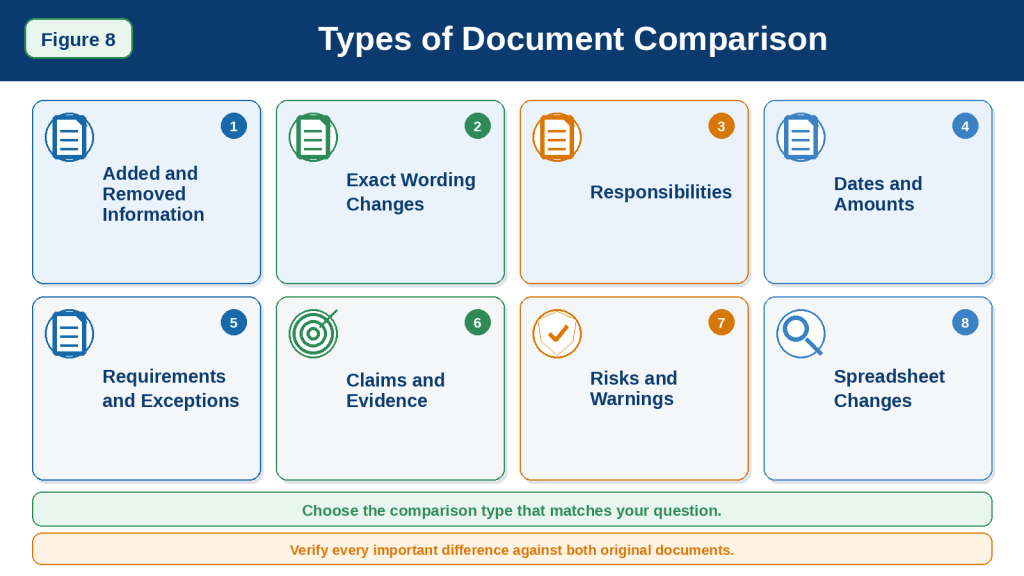
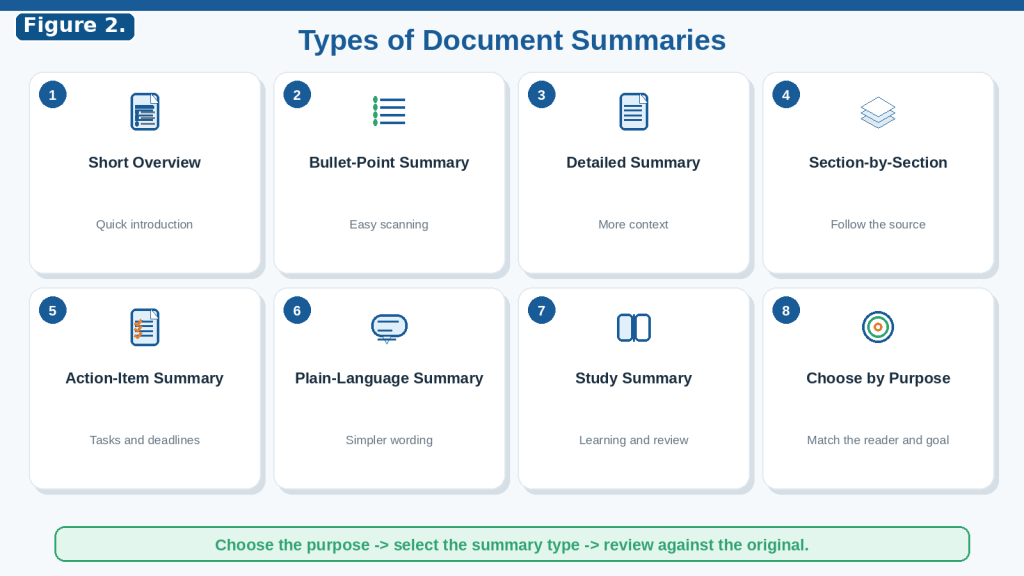
    Figure 2. Different proofreading and editing methods correct different kinds of language, consistency, tone, structure, and publication problems.

    Basic proofreading makes small corrections, while copy editing and structural editing may change more of the document. Choosing the review type first helps protect approved wording and prevents unnecessary changes.

    What You Need Before Proofreading or Editing a Document

    Preparing the document and review instructions before editing can reduce unnecessary changes and make corrections easier to verify.

    A Clear and Readable Document

    Use the clearest available version of the document.

    ChatGPT currently supports common document, spreadsheet, presentation, and text formats, including PDF, DOCX, PPTX, TXT, CSV, TSV, XLS, and XLSX. Available upload features and limits may vary by plan, workspace, and future update.

    The document should have:

    · Readable text

    · Complete pages

    · Correct page order

    · Clear headings

    · Properly arranged tables

    · Legible captions and footnotes

    · No cropped sentences

    · No unexplained blank sections

    Blurred scans, handwriting, text inside images, complicated layouts, and damaged files may be harder to proofread accurately.

    How to Reduce This Limitation: Use a text-based PDF or DOCX file when possible. Mark unreadable wording as [Unclear in the source] rather than allowing ChatGPT to guess.

    The Correct Document Version

    Confirm that you are uploading the intended version.

    You may have:

    · An early draft

    · A corrected draft

    · A manager-reviewed copy

    · A client-approved copy

    · A publication draft

    · Several files with similar names

    Use a clear filename, such as:

    employee-guide-proofreading-copy-july-2026.docx

    Keep the original file unchanged and create a separate copy for editing.

    The Type of Review You Need

    Decide whether you want:

    · Basic proofreading

    · Grammar and punctuation correction

    · Light editing

    · Copy editing

    · Clarity editing

    · Consistency checking

    · Tone editing

    · Formatting review

    · Publication-readiness review

    Do not ask for broad editing when you want only small corrections.

    For example:

    Correct spelling, grammar, punctuation, and capitalization only. Do not rewrite sentences or change the meaning.

    Clear limits help protect approved wording.

    A List of Allowed Changes

    Tell ChatGPT what it may change.

    For example, you may allow it to:

    · Correct spelling

    · Fix grammar

    · Add missing punctuation

    · Correct capitalization

    · Remove repeated words

    · Fix obvious typing errors

    · Improve awkward wording

    · Standardize headings

    Example prompt:

    You may correct spelling, grammar, punctuation, capitalization, missing words, repeated words, and obvious typing errors.

    A List of Prohibited Changes

    Also explain what ChatGPT must not change.

    For example:

    Do not change facts, names, dates, numbers, responsibilities, deadlines, warnings, conditions, limitations, technical terms, quotations, or uncertainty.

    This is especially important when the document has already received approval from an author, manager, client, editor, or subject specialist.

    The Required Language Variation

    Choose the spelling and language style required for the document.

    Examples include:

    · Canadian English

    · American English

    · British English

    · Australian English

    · Canadian French

    Regional differences may affect:

    · Spelling

    · Punctuation

    · Vocabulary

    · Date formats

    · Number formats

    For an AI Mastery article, you might write:

    Proofread this article using Canadian English. Preserve approved capitalization, technical terminology, article numbering, figure numbering, and WordPress formatting.

    A Style and Terminology Guide

    Prepare a list of approved writing rules.

    It may include:

    · Preferred spelling

    · Capitalization

    · Technical terms

    · Product names

    · Job titles

    · Department names

    · Date format

    · Figure-caption format

    · Heading style

    · List punctuation

    · Words to avoid

    For example:

    ItemApproved Style
    ChatGPTUse this capitalization
    AI-generatedInclude the hyphen
    Figure captionUse “Figure 1.”
    Body spellingCanadian English
    DatesWrite the month in words

    A style guide helps prevent inconsistent corrections across a long document.

    Information That Must Remain Accurate

    Identify important information before proofreading begins.

    Check and protect:

    · Personal names

    · Organization names

    · Job titles

    · Dates

    · Times

    · Numbers

    · Currency amounts

    · Measurements

    · Deadlines

    · Responsibilities

    · Conditions

    · Exceptions

    · Warnings

    · Limitations

    · Approval status

    · Uncertainty

    · Source references

    For example:

    Preserve the words “may,” “could,” “expected,” “preliminary,” and “subject to approval.” Do not replace them with definite wording.

    A grammar correction should never change a possible result into a guarantee.

    Approved Quotations and Source Text

    Tell ChatGPT whether quotations may be edited.

    Direct quotations should normally remain exactly as written unless:

    · The source quotation contains an obvious transcription error.

    · The quotation is being paraphrased rather than quoted directly.

    · The original publisher provides a corrected version.

    Example prompt:

    Do not edit text inside quotation marks. List possible errors in quotations separately for review.

    Also preserve:

    · Legal wording

    · Official titles

    · Product-interface labels

    · Source citations

    · Reference numbers

    unless you have confirmed that a correction is appropriate.

    Required Document Structure

    Decide what formatting must remain unchanged.

    This may include:

    · H1, H2, and H3 headings

    · Paragraph order

    · Numbered steps

    · Bullet points

    · Tables

    · Captions

    · Figure numbers

    · Bold labels

    · Notes

    · References

    · Internal and external links

    Example prompt:

    Correct the language without changing the heading levels, list order, tables, captions, figure numbering, links, or reference structure.

    The final formatting should also be checked in the program where the document will be used.

    A Change-Review Format

    Choose how ChatGPT should present proposed corrections.

    Useful formats include:

    · Original text followed by corrected text

    · A side-by-side table

    · A correction list

    · Tracked-change style labels

    · A paragraph-by-paragraph review

    For example:

    Original TextSuggested CorrectionReason
    The employes must submits it.The employees must submit it.Spelling and grammar
    July 20 2026July 20, 2026Date punctuation

    A comparison format allows you to approve or reject changes before replacing the original text.

    A Manageable Test Section

    Begin with one short section.

    Choose a section that includes:

    · Normal paragraphs

    · Typical terminology

    · A heading

    · A list or table when relevant

    · Important facts or dates

    A test section helps you check whether ChatGPT understands:

    · The required editing level

    · The regional spelling

    · The document’s tone

    · Approved terminology

    · What must remain unchanged

    Correct the instructions before proofreading the rest of the document.

    Privacy and Confidentiality Review

    Check the complete file before uploading it.

    Private information may appear in:

    · Main text

    · Tables

    · Headers and footers

    · Comments

    · Tracked changes

    · File names

    · Images

    · Document properties

    Remove unnecessary:

    · Personal details

    · Customer information

    · Employee records

    · Medical information

    · Financial information

    · Account numbers

    · Signatures

    · Confidential business content

    For signed-in ChatGPT accounts, the Improve the model for everyone setting can currently be managed through Profile icon → Settings → Data Controls. Turning it off means new conversations remain in chat history but are not used to improve OpenAI’s models.

    OpenAI also states that Temporary Chats do not appear in history, do not create memories, are not used to improve its models, and are deleted from its systems after 30 days, subject to current safety and retention conditions.

    These controls do not replace permission, confidentiality requirements, or secure workplace procedures.

    Permission to Upload and Edit

    Confirm that you are allowed to:

    · Upload the document

    · Edit its wording

    · Change its structure

    · Share the corrected version

    · Publish it

    · Use it commercially

    Access to a file does not automatically provide permission to edit or distribute it.

    Check:

    · Copyright

    · Licences

    · Workplace policies

    · Client agreements

    · Confidentiality agreements

    · Publisher requirements

    · Approval procedures

    Keep written permission when necessary.

    The Original Document

    Keep the original file available throughout the editing process.

    You will need it to confirm:

    · What wording was changed

    · Whether facts remain accurate

    · Whether approved text was preserved

    · Whether anything was removed

    · Whether unsupported information was added

    · Whether formatting and references remain correct

    Do not overwrite the original source.

    The edited document should be saved as a separate version.

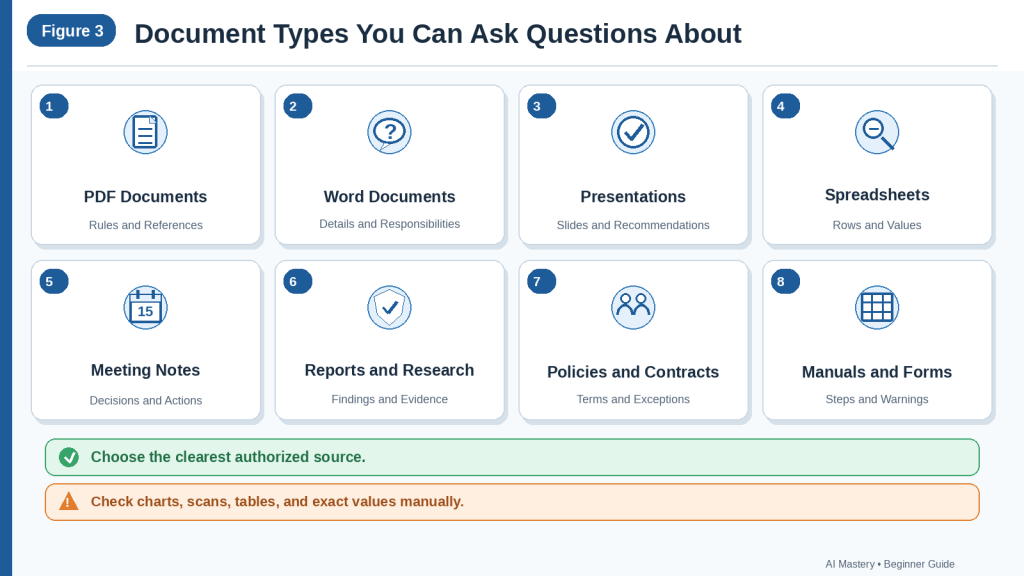
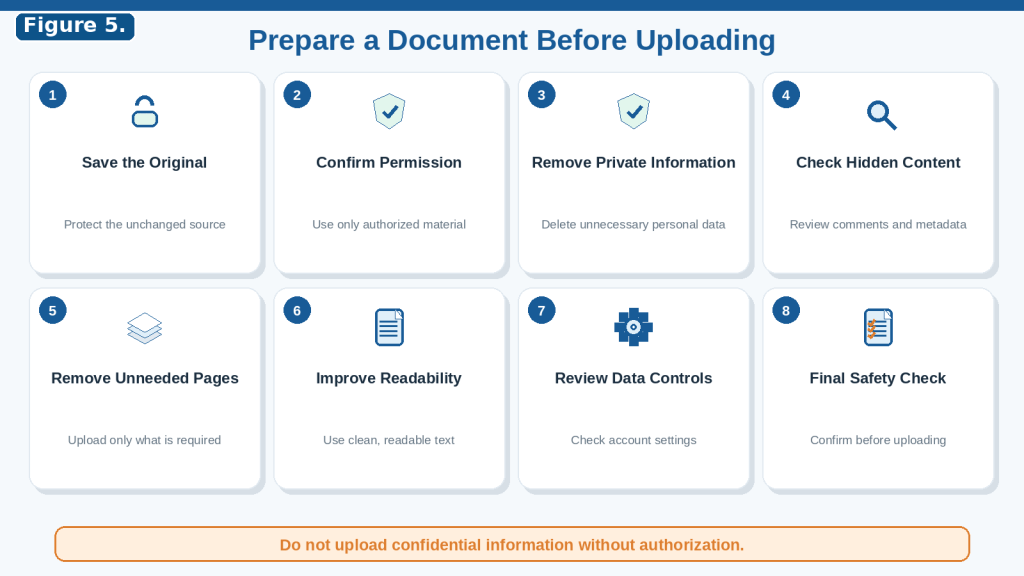
    Figure 3. Preparing the file, review type, style rules, protected information, privacy, and comparison method can improve document proofreading.

    Clear preparation tells ChatGPT which corrections are allowed and which wording must remain unchanged. Keeping the original file and reviewing proposed edits separately make unnecessary or inaccurate changes easier to identify.

    How to Upload and Proofread or Edit a Document with ChatGPT

    You can proofread a short passage by pasting it into the message box. For a longer document, uploading the file is usually easier.

    ChatGPT supports common document formats such as PDF, DOCX, PPTX, and TXT. It also supports common spreadsheet formats. Google Docs files using the .gdoc format must be exported to a supported format before uploading. Available file features and limits may vary by plan, model, workspace, device, and future update.

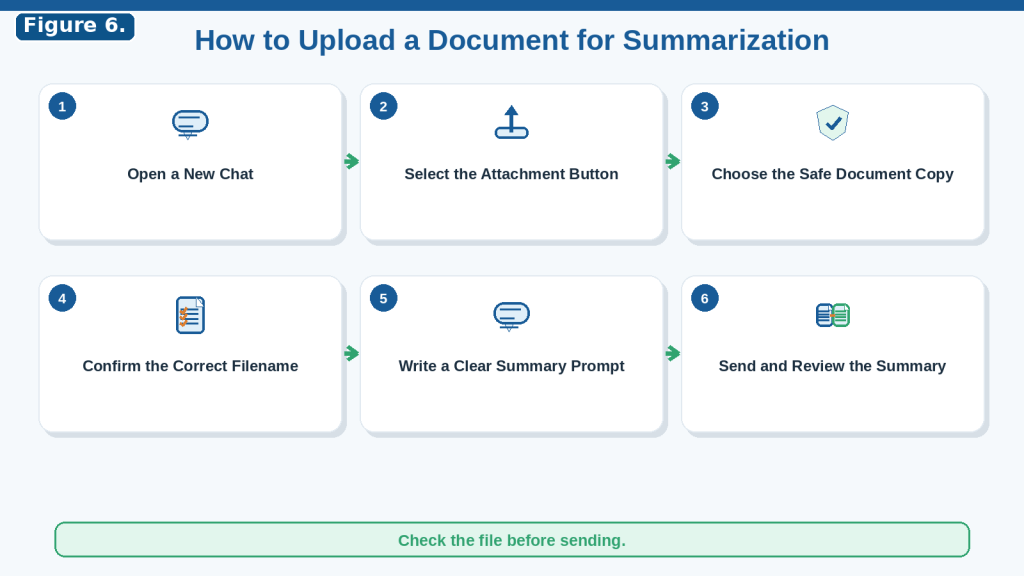
    Step 1: Prepare a Separate Proofreading Copy

    Keep the original document unchanged.

    Create a separate copy with a clear filename, such as:

    article-031-proofreading-copy-july-2026.docx

    Before uploading, check:

    · The file opens correctly.

    · All pages are present.

    · The text is readable.

    · Tables are arranged correctly.

    · Comments and tracked changes have been reviewed.

    · Unnecessary private information has been removed.

    · You have permission to upload and edit the content.

    Do not overwrite the original file with an AI-edited version.

    Step 2: Open the Correct Chat

    Open ChatGPT and begin a new chat for the document.

    Using one chat for one document can make it easier to keep track of:

    · The original instructions

    · Approved terminology

    · Corrections

    · Rejected suggestions

    · Follow-up checks

    · Final versions

    For a long project, use a clear chat title such as:

    Article 031 Proofreading Review

    Step 3: Upload the Document

    Select the file-upload control near the message box. Depending on your device and current interface, it may appear as a plus sign, paperclip, or another attachment option.

    Choose the document from your computer or available file source, and wait until the filename appears in the conversation.

    Confirm that:

    · The correct file was attached.

    · The filename matches the intended version.

    · The upload completed successfully.

    · You did not accidentally attach a private or outdated file.

    Do not begin the review until you have confirmed the document.

    Step 4: Ask ChatGPT to Identify the Document

    Before requesting corrections, ask ChatGPT to confirm what it can access.

    Example prompt:

    Confirm the filename and describe the document’s title, main headings, number of pages or major sections, and general purpose. Do not proofread or edit anything yet.

    Compare the response with the original file.

    Check whether:

    · The correct document was opened.

    · The main sections were recognized.

    · Any pages appear missing.

    · Tables, captions, or footnotes may require separate attention.

    · Some content appears unreadable.

    When information cannot be read, instruct ChatGPT to label it:

    · [Unclear in the source]

    · [Not visible in the uploaded file]

    · [Formatting requires manual review]

    ChatGPT should not invent missing wording.

    Step 5: State the Review Type

    Tell ChatGPT exactly what kind of review you need.

    For basic proofreading:

    Proofread this document for spelling, grammar, punctuation, capitalization, missing words, repeated words, and obvious typing errors. Make only necessary corrections.

    For light editing:

    Proofread and lightly edit this document for grammar, clarity, and natural sentence flow. Keep the wording close to the original.

    For copy editing:

    Copy edit this document for grammar, punctuation, clarity, consistency, terminology, headings, lists, captions, and references. Explain every proposed change.

    OpenAI recommends focused revision instructions and notes that several targeted revision passes may be more useful than requesting a completely new draft.

    Step 6: Define What Must Not Change

    Add clear protection rules to the prompt.

    Example:

    Do not change names, dates, numbers, deadlines, responsibilities, technical terms, quotations, warnings, conditions, exceptions, limitations, approval status, or uncertainty. Preserve the words “may,” “could,” “expected,” “preliminary,” and “subject to approval.”

    Also specify whether ChatGPT must preserve:

    · Heading levels

    · Paragraph order

    · Numbered steps

    · Bullet lists

    · Tables

    · Figure numbers

    · Captions

    · Links

    · References

    · Bold labels

    · Approved terminology

    These instructions reduce the risk of unnecessary rewriting.

    Step 7: Choose the Language and Style Rules

    State the required language variation and style.

    Example:

    Use Canadian English. Preserve the article’s beginner-friendly tone, H1, H2, and H3 structure, figure-caption format, approved terminology, and numbered-step order.

    You can also provide a terminology list:

    Incorrect or Unwanted VariationApproved Term
    Chat GPTChatGPT
    AI generatedAI-generated
    figure 1:Figure 1.
    web sitewebsite

    Ask ChatGPT to follow the approved terms consistently.

    Step 8: Begin with One Test Section

    Do not immediately edit the complete document.

    Ask ChatGPT to review one short section first.

    Example prompt:

    Start with the Introduction only. Do not review the rest of the document yet. Present the proposed corrections in a table with the original wording, corrected wording, correction type, and reason.

    A test section helps you check whether ChatGPT is:

    · Making the correct level of changes

    · Following the required spelling

    · Preserving the original meaning

    · Respecting protected terminology

    · Explaining corrections clearly

    · Avoiding unnecessary rewrites

    Adjust the instructions before continuing.

    Step 9: Request a Correction Table

    Ask ChatGPT to show changes before applying them.

    Use a table such as:

    Original TextSuggested CorrectionCorrection TypeReason
    The employes must submits the form.The employees must submit the form.Spelling and grammarCorrects the spelling and verb form
    Submit it by July 20 2026.Submit it by July 20, 2026.PunctuationAdds the date comma
    Approval may be provided.No changeMeaning protected“May” correctly preserves uncertainty

    This format makes each suggestion easier to review.

    Step 10: Approve or Reject the Changes

    Review every proposed correction.

    You may respond with instructions such as:

    Approve corrections 1, 2, 4, and 5. Reject correction 3 because the original technical term is required.

    You can also ask:

    Explain why you changed this sentence and whether the correction affects its meaning.

    Do not accept a change only because it sounds smoother.

    Check whether it changes:

    · Who performs an action

    · When the action happens

    · Whether the action is required

    · Whether approval is guaranteed

    · Whether an exception applies

    · How serious a warning is

    · Whether a statement is certain or uncertain

    Step 11: Request the Corrected Section

    After approving the changes, ask for a clean version.

    Example prompt:

    Apply only the corrections I approved. Return the complete corrected Introduction. Preserve its headings, paragraphs, lists, links, and formatting. Do not add explanations inside the corrected text.

    Compare the clean version with:

    · The original section

    · The correction table

    · Your approval instructions

    Confirm that rejected changes were not applied.

    Step 12: Continue One Section at a Time

    Repeat the process for each section:

    1. Submit one manageable section.
    2. Request proposed corrections.
    3. Review the correction table.
    4. Approve or reject each change.
    5. Request the corrected section.
    6. Compare it with the original.
    7. Save the approved version.

    Several focused editing passes can help separate grammar correction, clarity improvement, consistency checking, and final proofreading.

    Step 13: Perform a Final Comparison

    After all sections have been reviewed, ask ChatGPT to compare the complete edited document with the original.

    Example prompt:

    Compare the final edited document with the original. List every change involving a name, date, number, deadline, responsibility, warning, condition, exception, limitation, quotation, technical term, approval status, or uncertain phrase. Do not make further edits.

    Review the list manually.

    Also check:

    · Headings

    · Numbered steps

    · Bullet points

    · Tables

    · Captions

    · Figure numbering

    · Links

    · References

    · Page layout

    · Paragraph spacing

    ChatGPT can support drafting, revising, and refining written content, but responsibility for accuracy, attribution, and approval remains with the person reviewing the document.

    Step 14: Save the Reviewed Version Separately

    Use a clear version name, such as:

    article-031-proofread-approved-version-july-2026.docx

    Keep:

    · The original file

    · The proofreading copy

    · The prompts

    · The correction tables

    · Approved and rejected changes

    · Terminology rules

    · Reviewer notes

    · The final approved version

    These records can help explain how the document was edited and which corrections were approved.

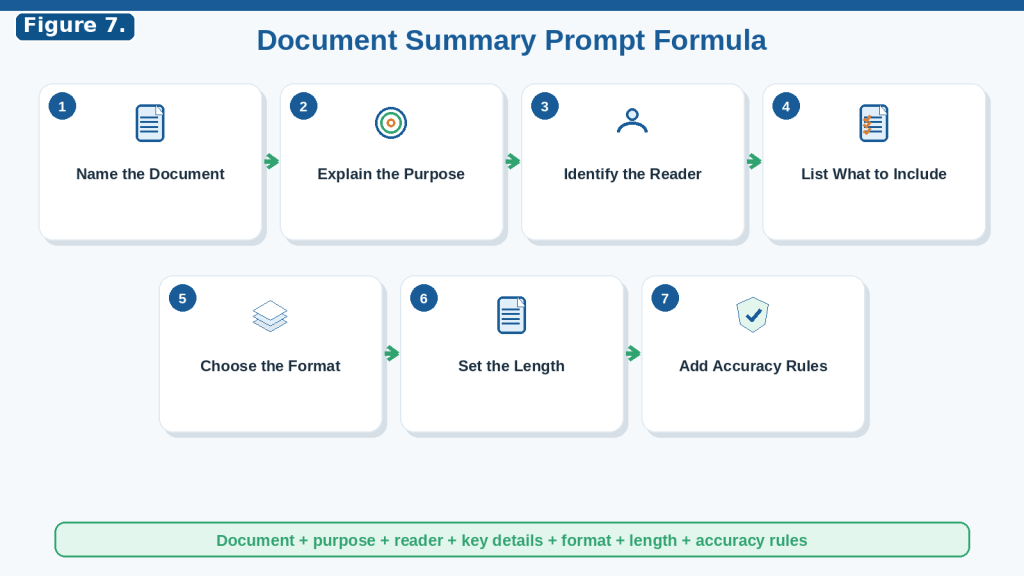
    Complete Beginner Prompt

    Copy and modify this prompt:

    Proofread the uploaded document using Canadian English. Begin with the first main section only and stop after reviewing it. Check spelling, grammar, punctuation, capitalization, missing words, repeated words, awkward sentences, and terminology consistency.

    Do not change names, dates, numbers, deadlines, responsibilities, technical terms, quotations, warnings, conditions, exceptions, limitations, approval status, or uncertainty. Preserve the words “may,” “could,” “expected,” “preliminary,” and “subject to approval.”

    Keep all headings, paragraph order, numbered steps, bullet points, tables, captions, figure numbers, links, and references unchanged.

    Present proposed changes in a table with four columns: Original Text, Suggested Correction, Correction Type, and Reason. Do not apply any correction until I approve it. Label unreadable information as [Unclear in the source] and missing information as [Not stated]. Do not guess or add facts.

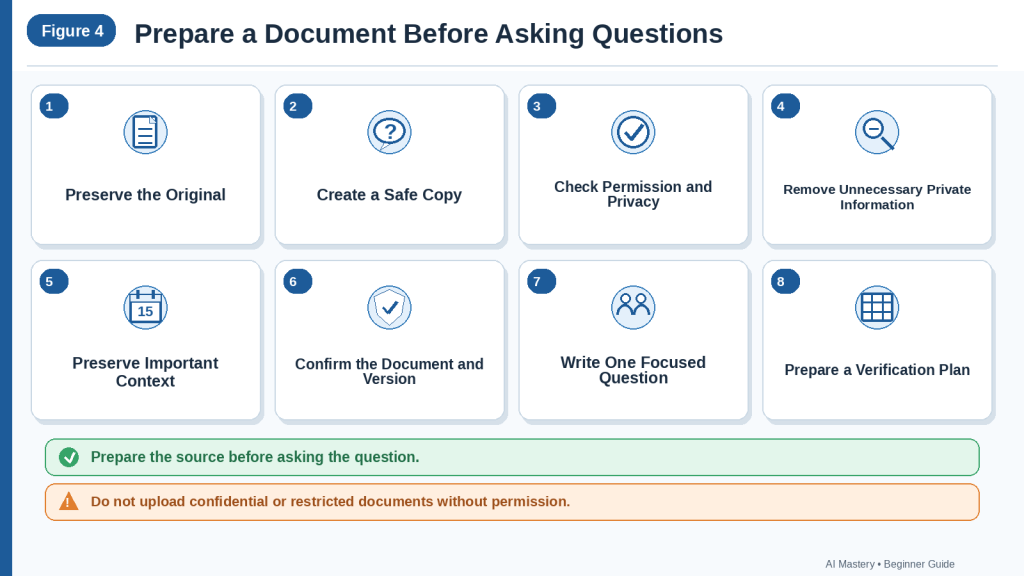
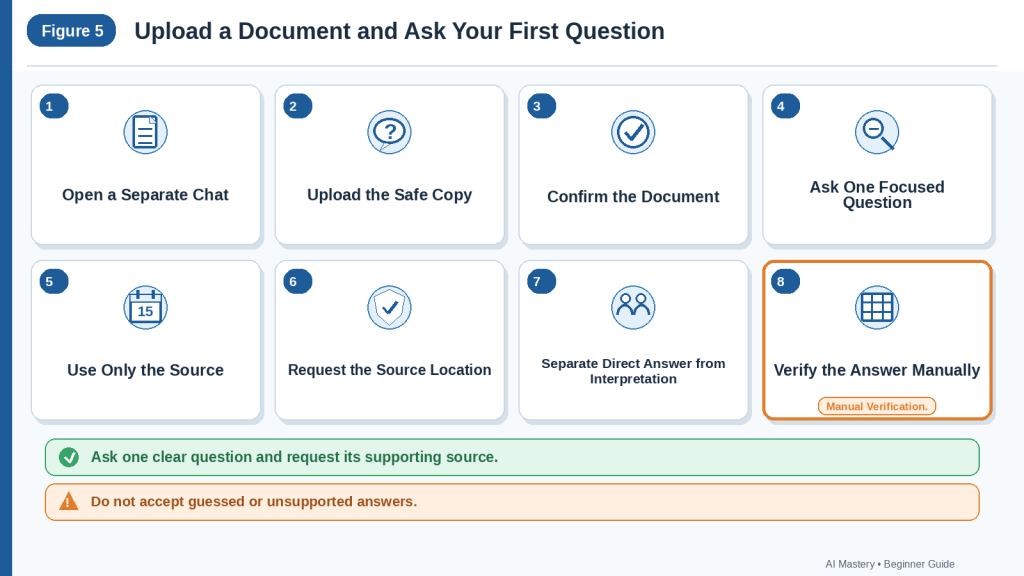
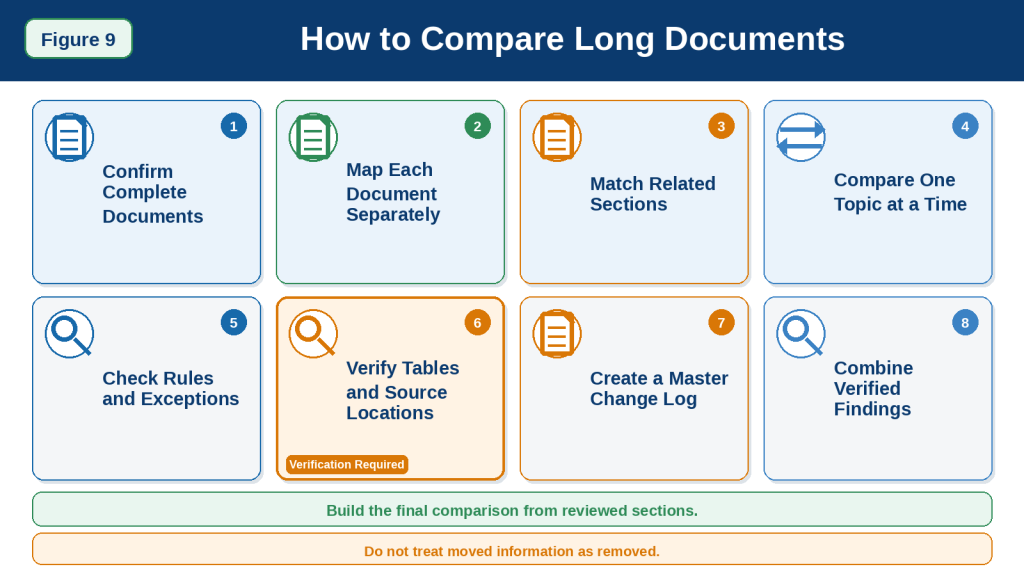
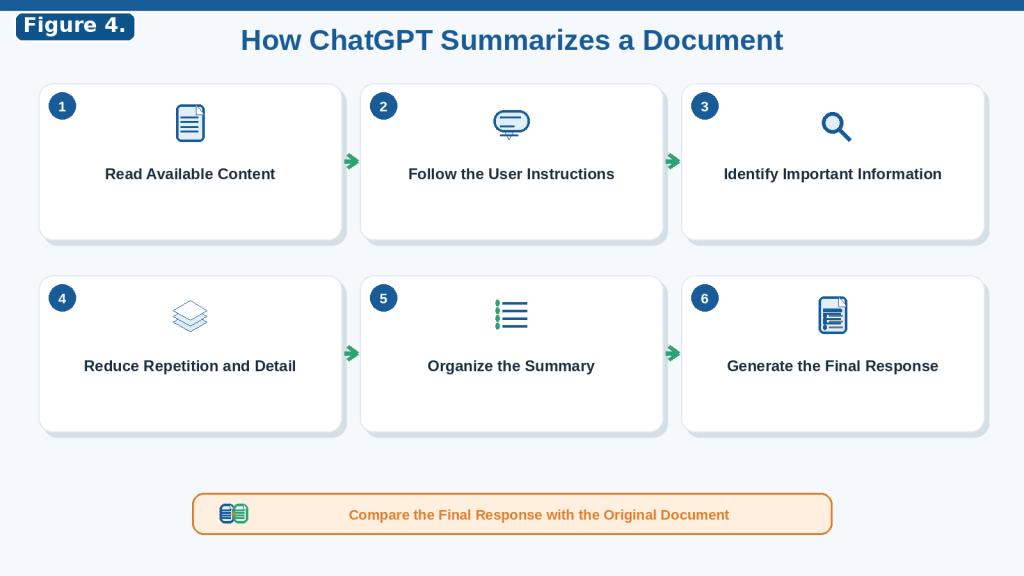
    Figure 4. Proofreading one section at a time makes proposed corrections easier to review, approve, and compare with the original document.

    A controlled proofreading process begins with clear editing limits and a small test section. Showing corrections before applying them helps protect important facts, approved terminology, warnings, conditions, and uncertainty.

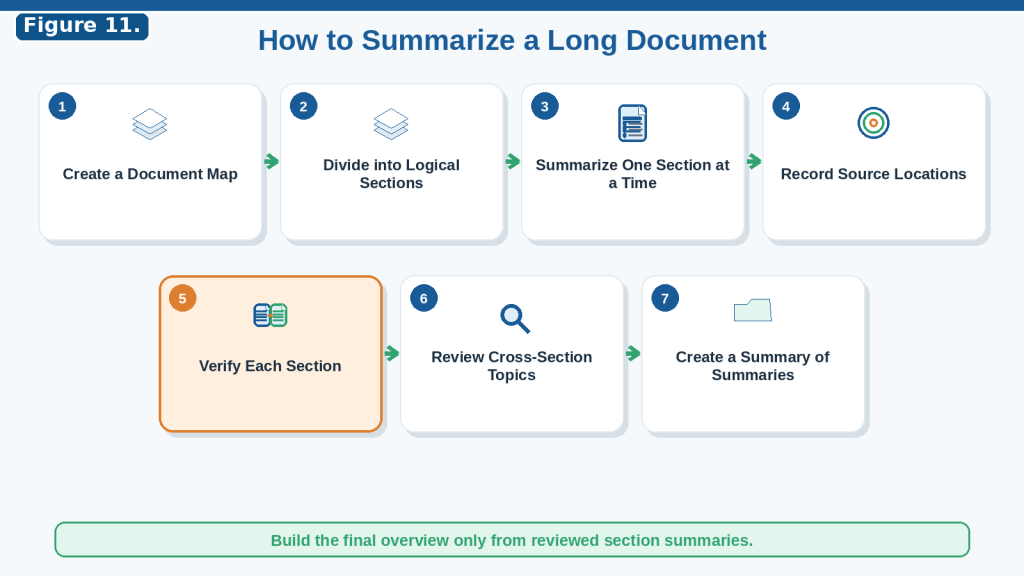
    How to Proofread a Long Document in Sections

    A long document should usually be proofread in smaller sections rather than reviewed all at once.

    Working section by section can make it easier to:

    · Notice individual corrections

    · Protect important facts

    · Keep terminology consistent

    · Review tables and lists carefully

    · Approve or reject each change

    · Prevent missing sections

    · Compare corrected text with the original

    · Manage a large number of suggestions

    It also reduces the risk of receiving a heavily rewritten version that is difficult to verify.

    Step 1: Create a Section List

    Before proofreading begins, identify the document’s structure.

    The list may include:

    1. Title and introductory information
    2. Introduction
    3. Main Section 1
    4. Main Section 2
    5. Examples
    6. Benefits
    7. Limitations
    8. Warnings or safety guidance
    9. Frequently asked questions
    10. References
    11. Appendices

    For an article with figures, also record:

    · Figure numbers

    · Figure captions

    · Placement instructions

    · Tables

    · Internal links

    · External sources

    Example prompt:

    List every H1, H2, and H3 heading in the uploaded document in its current order. Also list all tables, figures, captions, numbered lists, references, and appendices. Do not proofread or edit anything yet.

    Compare this outline with the original document.

    If a section is missing, do not assume that the remaining review is complete.

    Step 2: Number the Review Sections

    Assign a clear number to each section.

    For example:

    · Section 1 — Title and introductory information

    · Section 2 — Before Learning

    · Section 3 — What You’ll Learn

    · Section 4 — Introduction

    · Section 5 — Types of Proofreading and Editing

    · Section 6 — Uploading and Reviewing the Document

    Numbering helps you track:

    · Completed sections

    · Sections awaiting approval

    · Sections needing another review

    · Missing sections

    · Final versions

    Use the same section names throughout the proofreading process.

    Step 3: Create a Proofreading Tracker

    A simple tracker can prevent sections from being overlooked.

    SectionReview StatusCorrections ApprovedFinal ComparisonSaved
    IntroductionReviewedYesCompleteYes
    BenefitsIn progressNot yetNot startedNo
    LimitationsNot startedNoNot startedNo
    ReferencesNot startedNoNot startedNo

    Useful status labels include:

    · Not started

    · In progress

    · Awaiting approval

    · Corrections approved

    · Final comparison complete

    · Saved

    Do not mark a section complete until you have reviewed the corrected version.

    Step 4: Set Rules That Apply to the Complete Document

    Provide the general proofreading rules once at the beginning.

    For example:

    Use Canadian English throughout the document. Correct spelling, grammar, punctuation, capitalization, missing words, repeated words, and obvious typing errors. Preserve all approved facts, names, dates, numbers, deadlines, responsibilities, warnings, conditions, limitations, technical terms, quotations, references, and uncertainty. Do not add new information.

    Also provide the approved style rules.

    For an AI Mastery article, these may include:

    · H1 for the article title

    · H2 for main sections

    · H3 for subsections

    · Numbered lists only for ordered steps

    · Bullets for unordered information

    · A period after the figure number

    · Consistent article numbering

    · Canadian English spelling

    · Beginner-friendly language

    · No horizontal divider lines

    Ask ChatGPT to follow these rules in every section.

    Step 5: Review One Section at a Time

    Ask ChatGPT to proofread only the named section.

    Example:

    Proofread Section 4 — Introduction only. Stop before the next H2 heading. Show proposed corrections in a table. Do not apply them yet.

    This instruction helps prevent ChatGPT from continuing into unapproved sections.

    For each correction, request:

    · Original wording

    · Suggested wording

    · Correction type

    · Reason

    · Possible meaning change

    A useful correction table is:

    OriginalSuggested CorrectionTypeMeaning Risk
    The employes must submits it.The employees must submit it.Spelling and grammarNone
    Approval may follow review.Approval will follow review.Wording changeHigh—changes possibility into certainty

    Reject any correction that changes important meaning.

    Step 6: Review Different Elements Separately

    A section may contain more than normal paragraphs.

    Check each element carefully.

    Headings

    Confirm that headings:

    · Use the correct level

    · Follow consistent capitalization

    · Match the section content

    · Are not duplicated

    · Are not missing

    Numbered Lists

    Confirm that numbered lists:

    · Contain ordered steps

    · Remain in the correct sequence

    · Begin with consistent verb forms

    · Do not omit a required action

    · Use continuous numbering where necessary

    Bullet Lists

    Confirm that bullets:

    · Contain unordered information

    · Follow consistent punctuation

    · Use parallel sentence structure

    · Do not repeat the same point

    · Remain connected to the correct introductory sentence

    Tables

    Confirm that tables preserve:

    · Row and column relationships

    · Headings

    · Dates

    · Amounts

    · Units

    · Labels

    · Notes

    Do not accept a table correction unless the information remains in the correct row and column.

    Figures and Captions

    Confirm that:

    · Figure numbers are continuous

    · The correct caption appears below each figure

    · Caption punctuation is consistent

    · The explanation appears below the caption

    · The figure matches the surrounding text

    · The approved filename is used

    Links and References

    Confirm that:

    · Links point to the intended source

    · The linked text describes the destination

    · Citations remain connected to the correct statement

    · Reference titles are complete

    · Tracking parameters are removed when necessary

    · No source was silently deleted

    These elements may require a separate manual check in the original program.

    Step 7: Approve Changes Before Creating the Clean Version

    Review the suggested corrections for the section.

    Use instructions such as:

    Approve corrections 1 through 6. Reject correction 7 because “may” must remain unchanged. Revise correction 8 so that the approved technical term remains exactly as written.

    After approval, request:

    Apply only the approved corrections to Section 4. Return the complete corrected section with its original heading, paragraphs, lists, tables, captions, links, and references.

    Do not ask for only the changed sentences.

    A complete section is easier to save and compare.

    Step 8: Compare the Corrected Section with the Original

    After receiving the clean section, compare it with the source.

    Check:

    · Opening and closing paragraphs

    · Names

    · Dates

    · Numbers

    · Deadlines

    · Responsibilities

    · Conditions

    · Warnings

    · Exceptions

    · Limitations

    · Quotations

    · Technical terminology

    · Uncertainty

    · Lists

    · Tables

    · Captions

    · Links

    · References

    Ask ChatGPT:

    Compare the corrected Section 4 with the original Section 4. List every change that affects facts, requirements, responsibilities, dates, numbers, warnings, conditions, limitations, quotations, technical terms, references, or uncertainty.

    Do not rely only on the comparison response. Review important information manually.

    Step 9: Save Each Approved Section

    Save the reviewed section before continuing.

    A useful filename may be:

    article-031-section-04-introduction-approved.docx

    You may also keep the sections in one master editing file, but mark each approved section clearly.

    Record:

    · Date reviewed

    · Review type

    · Approved corrections

    · Rejected corrections

    · Remaining questions

    · Reviewer name when applicable

    This creates a clear editing record.

    Step 10: Perform Consistency Passes

    After all sections have been proofread, review the complete document again for consistency.

    Separate passes may check:

    1. Terminology
    2. Headings
    3. Dates and numbers
    4. Lists
    5. Tables
    6. Figure numbering
    7. Captions
    8. Links and references
    9. Tone
    10. Final spelling and punctuation

    Example prompt:

    Review the complete document for terminology consistency only. List every variation of approved terms. Do not change the document.

    A separate request may then check heading consistency.

    Focused passes make problems easier to identify than one broad final request.

    Step 11: Check the Section Boundaries

    Editing sections separately can create problems where one section ends and another begins.

    Check whether:

    · Ideas are repeated across two sections

    · A transition is missing

    · A heading separates related content incorrectly

    · A warning appears too far from the instruction it affects

    · A definition is introduced after it is used

    · Numbering restarts incorrectly

    · The same example appears twice

    Example prompt:

    Review the transition between Section 4 and Section 5. Identify repetition, missing context, abrupt changes, or misplaced warnings. Do not rewrite either section yet.

    Approve any transition change carefully.

    Step 12: Assemble and Review the Complete Document

    After every section is approved:

    1. Place the sections in their original order.
    2. Confirm that no section is missing.
    3. Remove duplicate headings or paragraphs.
    4. Check continuous list and figure numbering.
    5. Confirm that tables and captions remain correctly placed.
    6. Test all links.
    7. Review the references.
    8. Compare the complete edited document with the original.
    9. Perform a final manual read.
    10. Save a new approved version.

    Do not assume that separately correct sections automatically create a correct complete document.

    Prompt for Proofreading One Section

    Copy and modify this prompt:

    Proofread Section [number and title] only. Stop when you reach the next main heading. Use Canadian English. Correct spelling, grammar, punctuation, capitalization, missing words, repeated words, and obvious typing errors. Lightly improve awkward wording only when necessary.

    Preserve every name, date, number, responsibility, deadline, requirement, warning, condition, exception, limitation, technical term, quotation, source reference, and uncertain phrase. Do not add facts or remove approved information.

    Keep the heading level, paragraph order, numbered steps, bullet points, tables, captions, figure numbers, links, and references unchanged.

    Present proposed corrections in a table with five columns: Original Text, Suggested Correction, Correction Type, Reason, and Meaning Risk. Do not apply any change until I approve it.

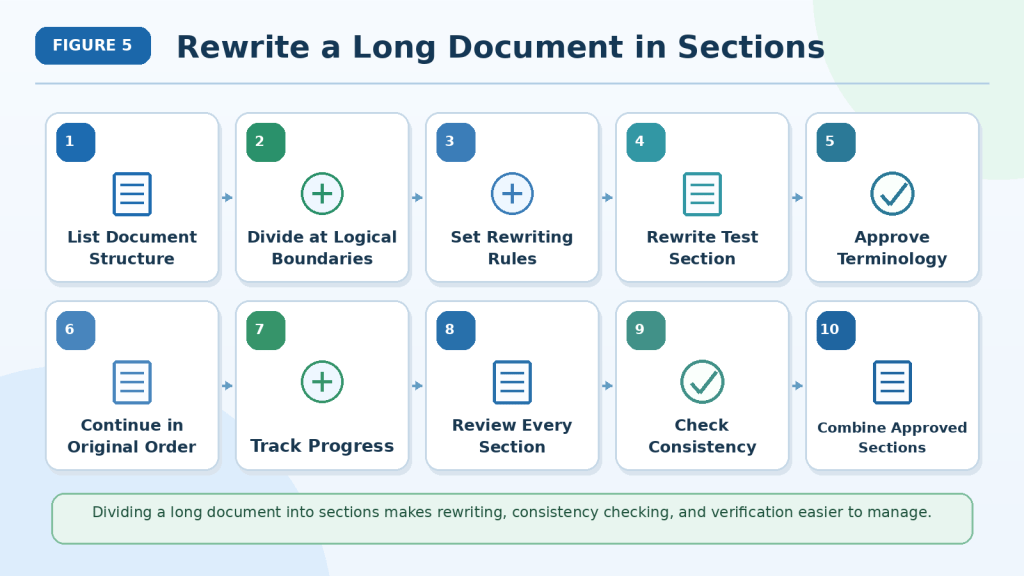
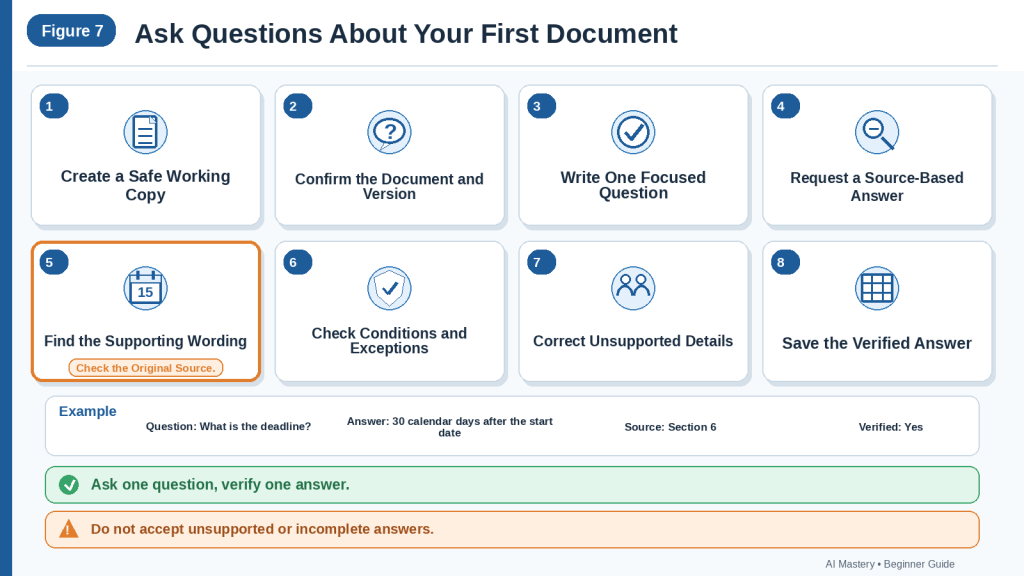
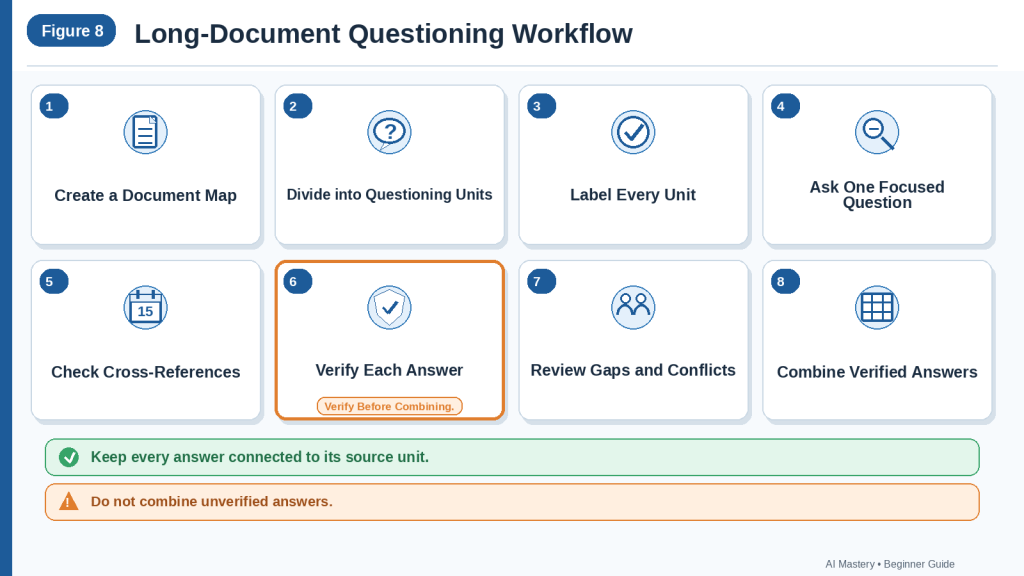
    Figure 5. Dividing a long document into tracked sections makes corrections easier to review, compare, approve, and save.

    Each section should pass through the same controlled process before it is marked complete. A final consistency review is still necessary after the approved sections are assembled into one document.

    How to Review and Correct ChatGPT’s Suggested Edits

    ChatGPT’s suggested corrections should be treated as proposals, not automatic replacements.

    A correction may improve grammar but still:

    · Change the intended meaning

    · Replace an approved term

    · Remove an important condition

    · Weaken a warning

    · Change uncertainty into certainty

    · Alter a date or number

    · Add unsupported information

    · Create a new grammar problem

    · Make the tone unsuitable

    · Damage the document’s formatting

    Review each suggestion before applying it.

    Check Whether a Correction Is Necessary

    Not every sentence needs to be changed.

    ChatGPT may suggest a different sentence simply because another wording is possible.

    For example:

    Original:

    Employees must submit the completed form before leaving the workplace.

    Suggested edit:

    Before departing the workplace, employees are required to submit the finalized form.

    The suggestion is not necessarily wrong, but it changes several words without providing a clear benefit.

    A better instruction may be:

    Keep the original sentence because it is already clear and correct. Make only necessary corrections.

    Avoid changing approved wording only to make it sound different.

    Separate Corrections from Preferences

    A correction fixes an error.

    A preference changes style without fixing an error.

    For example:

    OriginalSuggestionClassification
    The employes must submit it.The employees must submit it.Necessary spelling correction
    Submit the form by July 20 2026.Submit the form by July 20, 2026.Necessary punctuation correction
    Use the form to report damage.Report damage using the form.Optional wording preference

    Ask ChatGPT to label each suggestion as:

    · Necessary correction

    · Clarity improvement

    · Consistency correction

    · Optional style preference

    · Possible meaning change

    · Requires human review

    This helps you decide which changes are worth applying.

    Check the Original Meaning

    Compare each corrected sentence with the original.

    Ask:

    · Is the same person responsible?

    · Is the same action required?

    · Is the deadline unchanged?

    · Is the condition still present?

    · Is the warning equally strong?

    · Is uncertainty still preserved?

    · Is the same exception included?

    · Is the approval status unchanged?

    Example:

    Original:

    The request may be approved after the manager reviews the supporting documents.

    Incorrect edit:

    The manager will approve the request after reviewing the documents.

    The edit changes:

    · May be approved into will approve

    · A general review condition into a promise

    · The sentence’s focus and responsibility

    A safer correction is:

    The request may be approved after the manager reviews the supporting documents.

    No change is needed.

    Protect Mandatory and Optional Language

    Small words can change the strength of an instruction.

    Protect terms such as:

    · Must

    · Must not

    · Required

    · Prohibited

    · May

    · Might

    · Could

    · Should

    · Recommended

    · Expected

    · Subject to approval

    For example:

    Original:

    Employees must not use the equipment until the inspection is complete.

    Incorrect edit:

    Employees should avoid using the equipment until the inspection is complete.

    The edit weakens a prohibition into a recommendation.

    Ask ChatGPT:

    Identify every change involving “must,” “must not,” “may,” “could,” “should,” “required,” “prohibited,” or similar words. Explain whether the strength of the instruction changed.

    Check Names, Dates, Numbers, and Units

    Review every correction involving:

    · Personal names

    · Organization names

    · Job titles

    · Dates

    · Times

    · Phone numbers

    · Reference numbers

    · Prices

    · Percentages

    · Measurements

    · Units

    · Deadlines

    · Version numbers

    Example:

    Original:

    Submit Form A-17 by August 12, 2026.

    Incorrect edit:

    Submit Form A-71 by August 21, 2026.

    Grammar review should not alter the form number or deadline.

    Compare important values character by character when accuracy matters.

    Protect Approved Terminology

    ChatGPT may replace a correct technical or organizational term with a more familiar word.

    For example:

    Approved term:

    preventive maintenance inspection

    Unwanted replacement:

    safety check

    The replacement may sound simpler but could have a different technical meaning.

    Create a terminology table:

    Approved TermDo Not Replace With
    Preventive maintenance inspectionSafety check
    Shift supervisorTeam leader
    Temporary access codePassword
    Two-factor authenticationDouble password

    Ask ChatGPT to flag possible inconsistencies rather than silently replacing approved terms.

    Review Quotations Carefully

    Direct quotations should normally remain unchanged.

    ChatGPT may try to correct grammar inside quoted material, even when the wording must match the original source.

    Example:

    The notice states, “Applications recieved after July 20 will not be reviewed.”

    The quotation contains an apparent spelling error, but changing it may make the quotation inaccurate.

    Possible options include:

    · Preserve the quotation exactly.

    · Confirm the wording with the original source.

    · Use [sic] only when appropriate and understood by the audience.

    · Paraphrase the statement without quotation marks.

    · Ask the source owner for a corrected version.

    Do not silently correct quoted text.

    Check Whether Information Was Added

    ChatGPT may add an explanation, example, recommendation, or conclusion that was not in the source.

    For example:

    Original:

    Staff must report equipment damage to the shift supervisor.

    Unsupported addition:

    Staff must report equipment damage to the shift supervisor, who will arrange an inspection within 24 hours.

    The 24-hour requirement was not stated in the original.

    Ask ChatGPT:

    List every word, sentence, example, requirement, explanation, or conclusion added during editing that was not supported by the original document.

    Remove unsupported additions or label them clearly as separate suggestions.

    Check Whether Information Was Removed

    An edited sentence may be smoother because an important detail was deleted.

    For example:

    Original:

    Employees must submit the form before the end of the current shift unless the supervisor provides written permission for a later submission.

    Incomplete edit:

    Employees must submit the form before the end of the current shift.

    The edit removes the exception.

    Check for missing:

    · Conditions

    · Exceptions

    · Warnings

    · Limitations

    · Examples

    · Definitions

    · References

    · Required steps

    · Uncertain language

    Ask ChatGPT to list every deleted phrase separately.

    Review Grammar Changes in Context

    A sentence may look correct by itself but be wrong in the full paragraph.

    Check whether pronouns still refer to the correct person or object.

    For example:

    Maria gave the report to Fatima after she completed the inspection.

    The word she may be unclear.

    A possible correction is:

    After Maria completed the inspection, she gave the report to Fatima.

    However, this correction is only accurate if Maria performed the inspection.

    When the source does not clarify the meaning, label it:

    [Needs author clarification: Who completed the inspection?]

    Do not guess.

    Check Tone and Audience

    A grammatically correct edit may use the wrong tone.

    For example:

    Original customer notice:

    Please submit the missing document by July 20 so that we can continue reviewing your application.

    Unnecessarily harsh edit:

    You failed to provide the required document and must submit it immediately.

    The new version changes the tone and may add an unsupported accusation.

    Check whether the edited document should remain:

    · Professional

    · Neutral

    · Friendly

    · Formal

    · Cautious

    · Instructional

    · Reassuring

    · Direct

    Preserve the intended relationship with the reader.

    Review Headings and Lists

    When ChatGPT edits a heading or list, confirm that:

    · The heading still describes the section.

    · The heading level remains correct.

    · Ordered steps stay in the correct sequence.

    · Unordered information remains in bullets.

    · No step is combined or removed.

    · List introductions still match the items.

    · Punctuation remains consistent.

    · Parallel wording is preserved.

    For example, a step beginning with Check should not be changed into an unrelated noun phrase when the other steps begin with action verbs.

    Review Tables and Captions

    Check that editing did not move information into the wrong table cell.

    Confirm:

    · Column headings

    · Row labels

    · Dates

    · Numbers

    · Units

    · Notes

    · Source labels

    For figures, confirm:

    · Correct figure number

    · Approved caption wording

    · Period after the figure number

    · Explanation placed below the caption

    · Correct connection to the surrounding paragraph

    Complex tables and layouts should also be checked manually in the final document program.

    Ask ChatGPT to Explain Unclear Changes

    When you do not understand a correction, ask for an explanation.

    Example:

    Explain why you changed “may be required” to “is required.” Does this change possibility into certainty?

    Another useful prompt is:

    Identify the exact grammar rule behind this correction. Also explain whether the original sentence was incorrect or whether your suggestion is only a style preference.

    A clear explanation can help you reject unnecessary or risky edits.

    Ask for Safer Alternatives

    A suggested correction may identify a real problem but solve it poorly.

    For example:

    Original:

    The equipment should not be operated where damage is suspected.

    The wording may be unclear because should not might mean advice rather than prohibition.

    Instead of guessing, ask:

    Provide three possible corrections. Keep the level of obligation unchanged and explain how each version could be interpreted.

    Then confirm the intended requirement with the document owner or subject specialist.

    Use an Approval Table

    Record your decisions in a structured table.

    CorrectionDecisionReasonFinal Wording
    Correct “employes”ApproveSpelling erroremployees
    Change “may” to “will”RejectChanges uncertaintymay
    Replace approved job titleRejectTerminology must remainshift supervisor
    Add missing commaApprovePunctuation correctionJuly 20, 2026
    Add 24-hour deadlineRemoveUnsupported informationNot included

    This record is useful when several people review the document.

    Request a Revised Correction List

    After rejecting or changing suggestions, ask ChatGPT to produce an updated list.

    Example prompt:

    Remove all rejected suggestions. Revise the approved corrections according to my instructions. Return an updated correction table only. Do not produce the clean document yet.

    Review the revised list before requesting the final corrected section.

    Request a Clean Version with Approved Changes Only

    Use a precise instruction:

    Apply only the corrections marked Approved in the final correction table. Preserve all other wording exactly. Return the complete section without comments, explanations, labels, or additional rewriting.

    Then compare the clean section with:

    · The original

    · The final correction table

    · Your approval decisions

    Confirm that no unapproved change was applied.

    Perform a Meaning-Risk Review

    Before accepting the corrected section, request one more check:

    Review the corrected section for meaning risk. List any change that may affect a fact, responsibility, deadline, requirement, warning, condition, exception, limitation, technical term, quotation, approval status, or uncertainty.

    Treat this as an additional check, not proof that the document is correct.

    When to Ask a Human Reviewer

    Human review may be necessary when the document contains:

    · Legal obligations

    · Medical instructions

    · Financial information

    · Safety procedures

    · Employment requirements

    · Technical specifications

    · Accessibility requirements

    · Contracts

    · Regulatory information

    · Sensitive public statements

    Use a qualified editor, subject specialist, legal professional, medical professional, financial professional, accessibility specialist, or other appropriate reviewer when needed.

    ChatGPT can help identify possible writing problems, but it cannot replace required professional judgment or organizational approval.

    Prompt for Reviewing Suggested Edits

    Copy and modify this prompt:

    Review the proposed edits against the original document. Classify every suggestion as Necessary Correction, Clarity Improvement, Consistency Correction, Optional Style Preference, Possible Meaning Change, or Requires Human Review.

    Identify any change involving names, dates, numbers, units, deadlines, responsibilities, requirements, warnings, conditions, exceptions, limitations, technical terms, quotations, references, approval status, or uncertainty.

    List any unsupported addition, deleted information, weakened instruction, stronger claim, changed tone, or altered terminology. Do not apply further edits. Present the findings in a table with the columns: Original Text, Proposed Edit, Classification, Meaning Risk, Recommended Decision, and Reason.

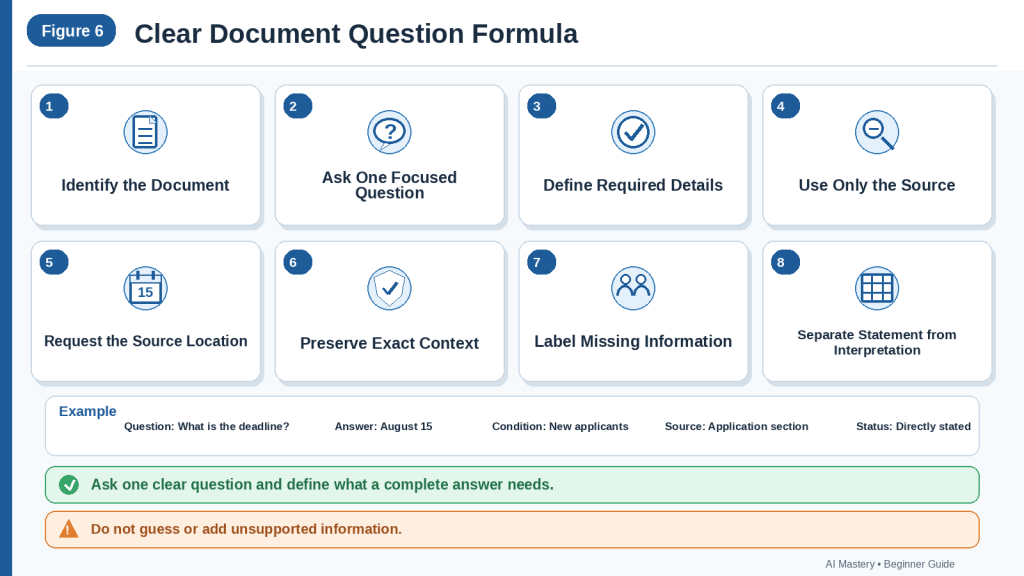
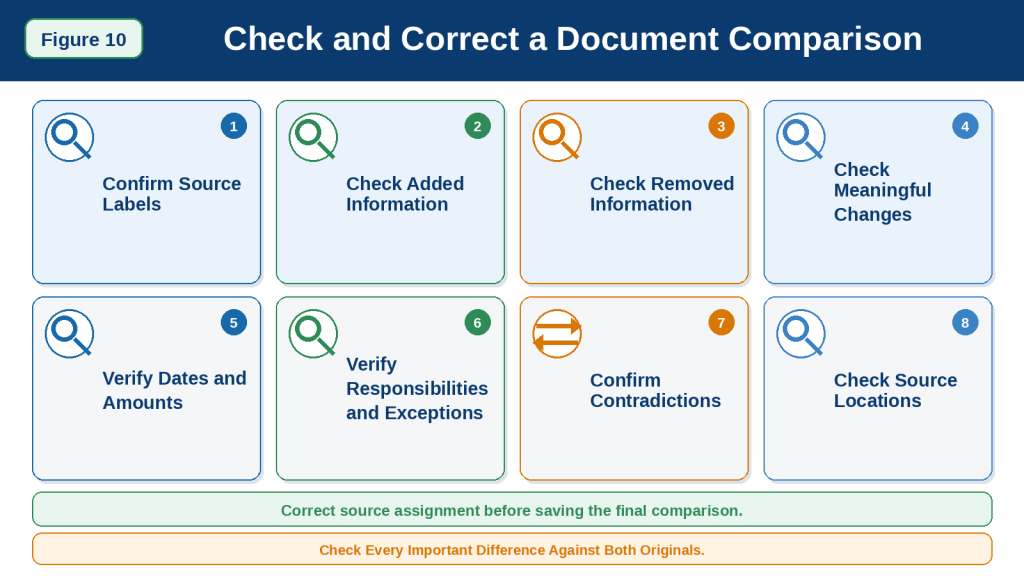
    Figure 6. Suggested edits should be classified, checked for meaning risk, and approved or rejected before they are added to the document.

    A correct proofreading decision considers more than grammar. It also protects facts, responsibilities, warnings, conditions, approved terminology, uncertainty, and the document’s intended tone.

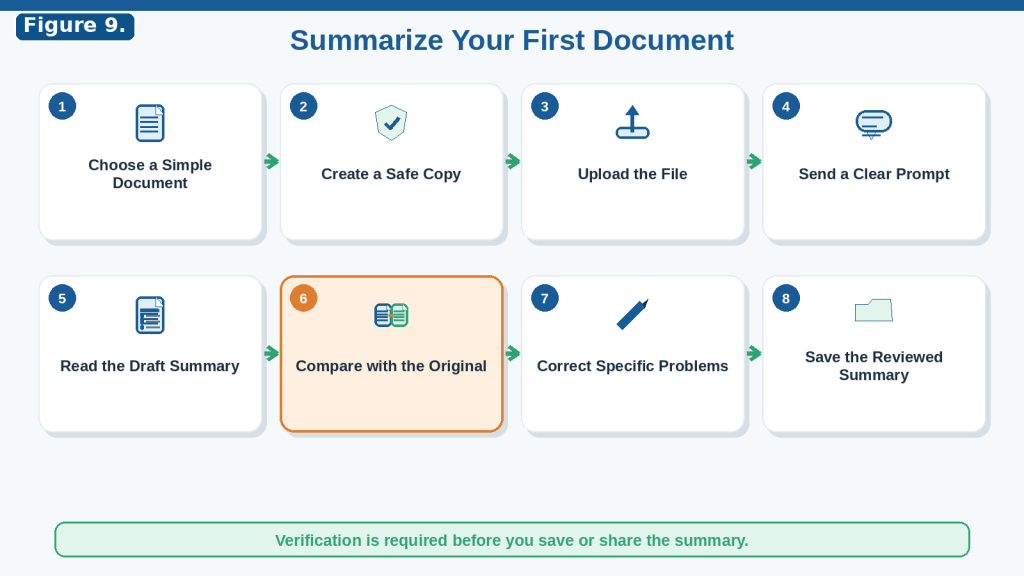
    How to Verify a Proofread or Edited Document

    Proofreading is not complete when ChatGPT produces a cleaner version.

    The final document must be compared with the original to confirm that:

    · Every approved correction was applied

    · Rejected suggestions were not applied

    · No facts were changed

    · No required information was removed

    · No unsupported information was added

    · The original structure and formatting were preserved

    · The document still communicates the intended meaning

    Verification is especially important after clarity editing, tone editing, structural editing, or several separate proofreading passes.

    Keep Three Versions Available

    Before verification, keep these versions open:

    1. Original document — the unchanged source file
    2. Approved correction record — the final correction table or review notes
    3. Edited document — the version containing approved changes

    These three records help you determine whether a difference was:

    · Present in the original

    · Proposed during proofreading

    · Approved by you

    · Added without approval

    · Accidentally removed

    Do not verify the edited document from memory.

    Confirm That Only Approved Changes Were Applied

    Compare the edited document with the final correction record.

    Check that:

    · Every approved correction appears

    · Every rejected correction is absent

    · Revised suggestions use the wording you approved

    · Optional suggestions were not applied automatically

    · No extra rewriting was added

    Example:

    Proposed ChangeDecisionFinal Document
    Correct “employes” to “employees”ApprovedCorrect
    Change “may” to “will”RejectedMust remain “may”
    Add a 24-hour deadlineRejectedMust not appear
    Add comma to July 20, 2026ApprovedCorrect

    When an unapproved change appears, restore the original wording or apply the approved version.

    Compare Facts Character by Character

    Review information that must remain exact.

    This includes:

    · Names

    · Organization names

    · Job titles

    · Dates

    · Times

    · Numbers

    · Amounts

    · Percentages

    · Measurements

    · Units

    · Reference numbers

    · Form numbers

    · Version numbers

    · Contact details

    · Deadlines

    For example:

    Original:

    Submit Form A-17 by August 12, 2026.

    Incorrect edited version:

    Submit Form A-71 by August 21, 2026.

    Both sentences are grammatically correct, but the edited version contains two serious factual errors.

    Do not rely on grammar tools to verify factual values.

    Check Responsibilities and Required Actions

    Confirm that the same person or group remains responsible for each action.

    Ask:

    · Who must perform the action?

    · Who receives the document?

    · Who reviews it?

    · Who provides approval?

    · Who records the result?

    · Who may make an exception?

    Example:

    Original:

    The employee submits the form to the supervisor, who sends it to maintenance.

    Incorrect edit:

    The supervisor submits the form to the employee before sending it to maintenance.

    The edit reverses the responsibility and direction of the document.

    Verify every sentence containing:

    · Must

    · Must not

    · Is responsible for

    · Submits

    · Reviews

    · Approves

    · Reports

    · Notifies

    · Authorizes

    Verify Conditions and Exceptions

    An edit may be incomplete when it removes a condition or exception.

    Original:

    The equipment may return to service after maintenance completes the inspection and the manager provides written approval.

    Incomplete edit:

    The equipment may return to service after the inspection.

    The edited version removes:

    · Who performs the inspection

    · The written-approval requirement

    · The manager’s responsibility

    Check for words and phrases such as:

    · If

    · Unless

    · Except

    · After

    · Before

    · Only when

    · Provided that

    · Subject to

    · With approval

    · In certain cases

    These details may control when a rule applies.

    Protect Warnings and Prohibitions

    Warnings should not become weaker during editing.

    Original:

    Do not operate the equipment while the safety guard is missing.

    Unsafe edit:

    Avoid operating the equipment while the safety guard is missing.

    The edit changes a direct prohibition into softer advice.

    Confirm that:

    · Must not was not changed to should not

    · Do not was not changed to try not to

    · Required was not changed to recommended

    · Prohibited was not changed to discouraged

    · Important warning details were not shortened or removed

    Safety-related wording may require review by a qualified specialist.

    Preserve Uncertainty

    Proofreading should not make uncertain information sound definite.

    Protect words such as:

    · May

    · Might

    · Could

    · Possible

    · Expected

    · Estimated

    · Preliminary

    · Generally

    · Usually

    · Subject to approval

    · Not yet confirmed

    Example:

    Original:

    The project is expected to begin in September 2026.

    Incorrect edit:

    The project will begin in September 2026.

    The edited version changes an expectation into a definite commitment.

    Ask ChatGPT:

    Compare the original and edited documents and list every uncertain word that was removed, replaced, or strengthened.

    Review the results manually.

    Check for Unsupported Additions

    Look for information that did not appear in the source or approved correction record.

    Unsupported additions may include:

    · New facts

    · New deadlines

    · New requirements

    · New examples

    · New warnings

    · New explanations

    · New conclusions

    · New recommendations

    · New qualifications

    For example:

    Original:

    Submit the request to the department manager.

    Unsupported addition:

    Submit the request to the department manager, who will respond within five business days.

    The response time was invented.

    Remove unsupported additions unless they have been separately researched, approved, and clearly identified as new content.

    Check for Missing Information

    Compare the beginning, middle, and end of every section.

    Look for missing:

    · Sentences

    · Paragraphs

    · List items

    · Conditions

    · Exceptions

    · Warnings

    · Definitions

    · Notes

    · Citations

    · Links

    · Table rows

    · Captions

    · References

    Ask ChatGPT:

    Compare the original and edited versions section by section. List every sentence, phrase, list item, table entry, caption, citation, or reference that appears in the original but not in the edited version.

    Do not assume that an empty result proves nothing is missing.

    Review Headings and Document Structure

    Confirm that:

    · The H1 title appears once

    · H2 and H3 levels remain correct

    · No headings were duplicated

    · No section was moved without approval

    · No section was omitted

    · Paragraphs remain under the correct headings

    · Warnings remain close to the instructions they affect

    · Definitions appear before or near their first use

    Structural changes can affect meaning even when the wording remains correct.

    Verify Numbered and Bulleted Lists

    For numbered lists, confirm:

    · All steps remain present

    · The order is correct

    · Numbering is continuous

    · Required actions were not combined

    · No optional point was turned into a required step

    For bullet lists, confirm:

    · Every item belongs in the list

    · No bullet was duplicated

    · Punctuation is consistent

    · The introduction matches the list

    · Similar items use parallel wording

    Example:

    Incorrect mixed structure:

    1. Upload the document.
    2. Privacy considerations
    3. Review the corrections.

    A more consistent ordered list is:

    1. Upload the document.
    2. Review the privacy settings.
    3. Review the corrections.

    Verify Tables

    Check tables directly against the original.

    Confirm:

    · Correct column headings

    · Correct row labels

    · Correct data placement

    · Correct dates and numbers

    · Correct units

    · Correct notes

    · No missing rows or columns

    · No merged information that changes meaning

    A correct value in the wrong row or column is still an error.

    Complex tables should be checked manually in the original document program.

    Verify Figures, Captions, and Explanations

    For each figure, confirm:

    · The correct image is present

    · The filename matches the approved figure

    · Figure numbering is continuous

    · The caption begins with Figure X.

    · The approved caption is unchanged

    · The explanation appears immediately below the caption

    · The figure remains near the correct paragraph

    · Alt text accurately describes the image

    · Visible text in the image is correctly spelled

    Also check that no figure was duplicated or omitted.

    Verify Links and References

    Test every link manually.

    Confirm that:

    · The link opens

    · It leads to the intended destination

    · The linked text is descriptive

    · The correct statement is connected to the source

    · No internal link points to a WordPress editing page

    · Tracking parameters have been removed when appropriate

    · Reference titles remain complete

    · Citations were not separated from the statements they support

    A grammatically correct citation may still point to the wrong source.

    Check Formatting in the Final Program

    ChatGPT may help identify formatting inconsistencies, but the final document should be reviewed in the program where it will be used.

    For example:

    · SoftMaker TextMaker

    · Microsoft Word

    · Google Docs

    · WordPress

    · A PDF viewer

    Check:

    · Font and size

    · Heading styles

    · Paragraph spacing

    · Indentation

    · Page breaks

    · Bullets

    · Numbering

    · Table width

    · Image placement

    · Captions

    · Headers and footers

    · Hyperlinks

    For AI Mastery DOCX files, confirm that body text uses Arial 12-point and that the document displays correctly in SoftMaker TextMaker 2021.

    Read the Document Aloud

    Reading aloud can help reveal:

    · Missing words

    · Repeated words

    · Awkward sentences

    · Sudden tone changes

    · Overly long sentences

    · Incorrect punctuation

    · Repeated ideas

    · Unclear transitions

    You may read it yourself or use an available text-to-speech tool.

    Do not use smooth audio delivery as proof that the information is accurate.

    Perform Separate Final Passes

    One final review may miss problems.

    Use separate passes for:

    1. Spelling and grammar
    2. Names, dates, and numbers
    3. Responsibilities and deadlines
    4. Conditions, exceptions, and warnings
    5. Terminology consistency
    6. Headings and lists
    7. Tables
    8. Figures and captions
    9. Links and references
    10. Formatting and layout

    Focused reviews make specific errors easier to notice.

    Request a Final Verification Report

    You can ask ChatGPT to produce a structured verification report.

    Example prompt:

    Compare the final edited document with the original and the approved correction table. Do not edit anything. Report:

    1. Approved corrections that were applied
    2. Approved corrections that are missing
    3. Rejected corrections that were applied
    4. Unapproved wording changes
    5. Changed names, dates, numbers, responsibilities, deadlines, warnings, conditions, exceptions, limitations, quotations, technical terms, references, or uncertainty
    6. Added or deleted information
    7. Heading, list, table, figure, caption, link, reference, or formatting problems
    8. Items requiring human review

    For each finding, quote a short identifying phrase from the original and edited versions and explain the risk. Do not guess when the source is unclear.

    Use this report as an additional review aid, not as proof that the document is error-free.

    Save the Verified Version

    After completing the review, save a separate final file.

    Example filename:

    article-031-proofread-verified-version-july-2026.docx

    Keep:

    · The original document

    · The proofreading copy

    · Correction tables

    · Approved and rejected decisions

    · Verification reports

    · Style and terminology rules

    · Reviewer comments

    · The final verified version

    · Publication records when applicable

    Reality: A document that looks cleaner may still contain changed facts, missing conditions, weakened warnings, unsupported additions, or formatting problems. Verification requires comparing the edited version with the original and the approved correction record.

    Figure 7. Final verification compares the original document, approved corrections, and edited version to identify unauthorized or inaccurate changes.

    Grammar and clarity are only part of the final review. Facts, responsibilities, conditions, warnings, uncertainty, structure, references, and formatting must also remain accurate before the document is approved.

    Practical Example: Proofreading a Workplace Notice

    This example shows how ChatGPT can help identify language errors while preserving a workplace notice’s facts, deadline, responsibilities, and conditions.

    Original Notice

    All employee’s must submits there completed safety forms to the shift supervisor by July 31 2026. The supervisor review each form and send any incomplete form’s back to the employee. A form may be accepted after the missing information is provided. Employee’s must not return damaged equipment to service unless the maintenance manager provide written approval.

    The notice contains several writing problems:

    · Incorrect apostrophes

    · Incorrect verb forms

    · Confusion between there and their

    · Missing punctuation

    · Inconsistent singular and plural forms

    · A missing comma in the date

    However, the important meaning must remain unchanged.

    Important Information to Protect

    Before proofreading, identify the facts and requirements that must remain accurate:

    · All employees must submit the forms.

    · The forms are safety forms.

    · The forms must be completed.

    · The recipient is the shift supervisor.

    · The deadline is July 31, 2026.

    · The supervisor reviews each form.

    · Incomplete forms are returned to the employee.

    · A form may be accepted after missing information is provided.

    · Damaged equipment must not return to service without written approval.

    · The maintenance manager provides the approval.

    These details should not be shortened, strengthened, weakened, or reassigned.

    Proofreading Prompt

    Proofread the workplace notice for spelling, grammar, punctuation, capitalization, apostrophes, missing words, and incorrect word forms.

    Make only necessary corrections. Preserve every responsibility, deadline, condition, warning, and uncertain statement. Keep “may” unchanged. Do not add new requirements, explanations, deadlines, or consequences.

    Present the proposed corrections in a table before creating the corrected notice.

    Proposed Correction Table

    Original TextSuggested CorrectionCorrection TypeReason
    All employee’sAll employeesApostropheA plural noun does not require an apostrophe
    must submitsmust submitGrammarA modal verb is followed by the base verb
    there completed safety formstheir completed safety formsWord choiceTheir shows possession
    July 31 2026July 31, 2026PunctuationAdds the comma used in this date format
    The supervisor reviewThe supervisor reviewsSubject–verb agreementSingular subject requires reviews
    send any incomplete form’ssends any incomplete formsGrammar and apostropheCorrects the verb and plural noun
    Employee’s must notEmployees must notApostropheA plural noun does not require an apostrophe
    manager providemanager providesSubject–verb agreementSingular subject requires provides

    The sentence containing may be accepted does not require a change because may preserves uncertainty.

    Corrected Notice

    All employees must submit their completed safety forms to the shift supervisor by July 31, 2026. The supervisor reviews each form and sends any incomplete forms back to the employee. A form may be accepted after the missing information is provided. Employees must not return damaged equipment to service unless the maintenance manager provides written approval.

    What Was Corrected

    The proofreading corrected:

    · Plural nouns

    · Apostrophes

    · Verb forms

    · Subject–verb agreement

    · A commonly confused word

    · Date punctuation

    What Was Preserved

    The corrected version preserves:

    · The employees’ responsibility

    · The shift supervisor’s responsibility

    · The maintenance manager’s authority

    · The July 31, 2026 deadline

    · The requirement to complete the form

    · The process for incomplete forms

    · The word may

    · The condition for accepting a form

    · The prohibition against returning damaged equipment to service

    · The written-approval requirement

    Incorrect Edits to Reject

    Changed Deadline

    Incorrect edit:

    All employees must submit their completed safety forms by July 30, 2026.

    Why it should be rejected: The original deadline was July 31, 2026.

    Weakened Safety Instruction

    Incorrect edit:

    Employees should avoid returning damaged equipment to service.

    Why it should be rejected: The original uses must not, which is a direct prohibition. Should avoid weakens the instruction.

    Changed Approval Responsibility

    Incorrect edit:

    Employees may return damaged equipment to service after receiving approval from the shift supervisor.

    Why it should be rejected: The original requires written approval from the maintenance manager.

    Changed Uncertainty

    Incorrect edit:

    A form will be accepted after the missing information is provided.

    Why it should be rejected: The original says may be accepted, not will be accepted.

    Unsupported Addition

    Incorrect edit:

    Incomplete forms must be corrected within 24 hours.

    Why it should be rejected: The original notice does not include a 24-hour deadline.

    Verification Table

    After proofreading, compare the corrected notice with the original.

    Verification ItemOriginal MeaningCorrected VersionResult
    Who submits the forms?All employeesAll employeesPreserved
    What is submitted?Completed safety formsCompleted safety formsPreserved
    Who receives them?Shift supervisorShift supervisorPreserved
    What is the deadline?July 31, 2026July 31, 2026Preserved
    Who reviews the forms?Shift supervisorShift supervisorPreserved
    What happens to incomplete forms?Returned to the employeeReturned to the employeePreserved
    Is acceptance guaranteed?No—form may be acceptedNo—form may be acceptedPreserved
    Can damaged equipment return automatically?NoNoPreserved
    Who authorizes its return?Maintenance managerMaintenance managerPreserved
    Is written approval required?YesYesPreserved

    Final Review

    The corrected notice is grammatically cleaner, but its operational meaning remains the same.

    Before using it, a final reviewer should still confirm:

    · The deadline

    · The job titles

    · The approval process

    · The safety instruction

    · The form name

    · The intended workplace procedure

    Reality: A workplace notice is not correctly proofread when its grammar improves but its deadline, responsibility, condition, or warning changes.

    Figure 8. Proofreading corrects language errors while preserving the notice’s deadline, responsibilities, conditions, and safety requirements.

    A side-by-side review helps separate necessary grammar corrections from edits that would change workplace rules. Important words such as may, must not, and written approval should remain unchanged unless the document owner approves a revision.

    Practical Example: Editing a Technical Explanation for Beginners

    This example shows how ChatGPT can help improve clarity and consistency in a technical explanation without removing essential facts or creating unsupported claims.

    Original Technical Explanation

    Two factor authentication is a security process were a user must provide two types of verification before they can access there account. The first factor is usually there password and the second factor could be a code that is send to there phone. This makes the account completely secure because a hacker cannot get in without both factors. Users should always turn it on because it prevents all unauthorized access.

    The paragraph contains:

    · Spelling and grammar errors

    · Missing hyphens

    · Confusion between were, where, their, and there

    · An incorrect verb form

    · Repeated wording

    · An unsupported claim of complete security

    · An unsupported statement that it prevents all unauthorized access

    · Limited examples of possible second verification methods

    Important Information to Protect

    Before editing, identify the accurate meaning that should remain:

    · Two-factor authentication requires two different verification methods.

    · A password is commonly the first method.

    · A temporary code may be used as the second method.

    · Two-factor authentication can make unauthorized access more difficult.

    · It does not remove every security risk.

    The editor should not promise complete protection.

    Editing Prompt

    Proofread and lightly edit this technical explanation for complete beginners. Correct spelling, grammar, punctuation, hyphenation, word choice, and awkward sentences.

    Preserve the explanation that two-factor authentication uses two different verification methods. Keep a password as the usual first method and a temporary code as one possible second method.

    Remove or correct unsupported claims that it makes an account completely secure or prevents all unauthorized access. Use cautious, accurate language. Do not add technical claims that are not supported by the source. Present proposed changes before creating the corrected paragraph.

    Proposed Correction Table

    Original TextSuggested CorrectionCorrection TypeReason
    Two factor authenticationTwo-factor authenticationHyphenationThe words work together as a compound term
    were a userwhere a userWord choiceWhere refers to the situation being described
    access there accountaccess their accountWord choiceTheir shows possession
    there passwordtheir passwordWord choiceCorrect possessive form
    could be a code that is sendcould be a code that is sentGrammarCorrects the passive verb form
    send to there phonesent to their phoneGrammar and word choiceCorrects the verb and possessive form
    completely securemore difficult for someone else to accessAccuracyRemoves an unsupported guarantee
    prevents all unauthorized accessadds protection but does not remove every riskAccuracyPreserves the benefit without claiming complete protection

    Corrected Explanation

    Two-factor authentication is a security process in which a user provides two different verification methods before accessing an account. The first method is usually a password. The second method could be a temporary code sent to the user’s phone. Two-factor authentication can make it more difficult for someone else to access the account, but it does not remove every security risk.

    What Was Corrected

    The edited version corrects:

    · Grammar

    · Spelling

    · Hyphenation

    · Possessive words

    · Verb forms

    · Sentence structure

    · Repetition

    · Unsupported security claims

    What Was Preserved

    The corrected explanation preserves:

    · The full term two-factor authentication

    · The requirement for two different verification methods

    · A password as the usual first method

    · A temporary code as a possible second method

    · The security benefit

    · The limitation that protection is not complete

    Optional Expansion for Beginners

    After the original meaning has been verified, a separate approved explanation could add other common examples.

    For example:

    The second method may also use an authentication app, security key, or biometric method such as a fingerprint, depending on the service.

    This information should be added only after it has been checked and approved. It should not be presented as part of the original source when the source mentioned only a temporary code.

    Incorrect Edits to Reject

    Complete-Security Promise

    Incorrect edit:

    Two-factor authentication makes an account completely secure.

    Why it should be rejected: No security method removes every possible risk.

    Guaranteed Prevention

    Incorrect edit:

    Two-factor authentication prevents hackers from accessing an account.

    Why it should be rejected: It can make unauthorized access more difficult, but it cannot guarantee prevention.

    Changed Technical Meaning

    Incorrect edit:

    Two-factor authentication requires users to enter their password twice.

    Why it should be rejected: Two-factor authentication uses two different verification methods, not two entries of the same password.

    Unsupported Requirement

    Incorrect edit:

    Every website requires users to enable two-factor authentication.

    Why it should be rejected: The original does not state this, and availability or requirements may vary by service.

    Removed Limitation

    Incorrect edit:

    Two-factor authentication protects the account from unauthorized access.

    Why it should be rejected: The sentence removes the limitation and may sound like a guarantee.

    Verification Table

    Verification ItemOriginal Intended MeaningCorrected VersionResult
    What is the security process called?Two-factor authenticationTwo-factor authenticationPreserved
    How many verification methods are used?TwoTwoPreserved
    Are the methods different?YesYesClarified
    What is usually the first method?PasswordPasswordPreserved
    What may be the second method?Temporary codeTemporary codePreserved
    Is complete security promised?Original incorrectly says yesNoCorrected
    Is every unauthorized attempt prevented?Original incorrectly says yesNoCorrected
    Is the security benefit explained?YesYesPreserved accurately
    Is a limitation included?MissingYesAdded to correct the unsupported claim

    Why Accuracy Editing Was Necessary

    A basic grammar check would not have been enough for this paragraph.

    The original contained statements that were grammatically understandable but factually too strong:

    · Completely secure

    · Prevents all unauthorized access

    These claims required accuracy editing, not only proofreading.

    When technical content contains guarantees, absolute claims, or safety statements, ask whether the wording is:

    · Supported

    · Current

    · Complete

    · Properly qualified

    · Suitable for the intended audience

    The final explanation should be easy to understand without becoming misleading.

    Reality: Clearer technical writing must remain accurate. Removing complexity should not create guarantees, change definitions, or hide important limitations.

    Figure 9. Editing can make a technical explanation easier for beginners while preserving its definition, benefit, examples, and limitations.

    Technical editing requires more than correcting grammar. Claims of complete protection should be removed or qualified, and important technical meanings should remain accurate.

    Benefits of Proofreading and Editing Documents with ChatGPT

    ChatGPT can support several stages of proofreading and editing when the user provides clear instructions and reviews the suggested changes carefully.

    Finds Common Writing Errors

    ChatGPT can help identify:

    · Misspelled words

    · Grammar mistakes

    · Missing punctuation

    · Incorrect capitalization

    · Repeated words

    · Missing words

    · Awkward sentence construction

    · Inconsistent verb forms

    This can make an early review faster, especially when a document contains many pages.

    Explains Why a Correction Is Suggested

    Instead of providing only a corrected sentence, ChatGPT can explain:

    · Which grammar rule applies

    · Whether the change is necessary

    · Whether it is a style preference

    · Whether the original wording is unclear

    · Whether the correction may affect meaning

    Example prompt:

    Explain each correction in simple language. Label it as necessary, optional, or meaning-sensitive.

    This can help beginners understand their writing mistakes and improve future drafts.

    Supports Different Review Levels

    You can request:

    · Basic proofreading

    · Grammar-only correction

    · Light editing

    · Copy editing

    · Clarity editing

    · Tone editing

    · Consistency checking

    · Publication-readiness review

    Choosing the correct review level helps prevent unnecessary rewriting.

    Helps Maintain Consistent Terminology

    Long documents may use several versions of the same term.

    For example:

    · AI generated

    · AI-generated

    · artificial intelligence-generated

    ChatGPT can list these variations and help you apply one approved form consistently.

    This can also help with:

    · Job titles

    · Department names

    · Product names

    · Technical terms

    · Heading capitalization

    · Date formats

    · Figure-caption styles

    Reviews One Section at a Time

    A section-by-section process makes it easier to:

    · Review each suggested change

    · Protect important facts

    · Track completed sections

    · Approve or reject corrections

    · Prevent missing content

    · Save reviewed versions

    This is especially useful for long articles, reports, guides, manuals, and workplace documents.

    Compares Original and Edited Text

    ChatGPT can organize corrections in a comparison table.

    For example:

    OriginalSuggested CorrectionReason
    The employes submits it.The employees submit it.Spelling and grammar
    Approval may follow review.No changePreserves uncertainty

    A comparison table makes it easier to see what changed before accepting the final version.

    Helps Protect Important Meaning

    Clear instructions can direct ChatGPT to preserve:

    · Names

    · Dates

    · Numbers

    · Responsibilities

    · Deadlines

    · Conditions

    · Warnings

    · Exceptions

    · Limitations

    · Technical terms

    · Uncertainty

    This does not remove the need for verification, but it creates a more controlled editing process.

    Identifies Possible Meaning Changes

    ChatGPT can help flag risky edits involving words such as:

    · Must

    · Must not

    · May

    · Could

    · Should

    · Required

    · Recommended

    · Expected

    · Subject to approval

    For example, it can identify that changing may be approved to will be approved changes uncertainty into certainty.

    Supports Different Audiences

    You can ask ChatGPT to adjust the clarity or tone for:

    · Complete beginners

    · Customers

    · Employees

    · Students

    · General adult readers

    · Technical specialists

    The user should still confirm that the edited version remains accurate and appropriate for the intended audience.

    Helps Review Document Structure

    ChatGPT can identify possible problems involving:

    · Repeated sections

    · Missing headings

    · Inconsistent heading levels

    · Disorganized paragraphs

    · Incorrect list use

    · Abrupt transitions

    · Duplicate examples

    · Misplaced warnings

    Structural suggestions should be reviewed carefully before they are applied.

    Assists with Final Consistency Checks

    After individual sections are approved, ChatGPT can perform focused final checks for:

    · Terminology

    · Spelling variation

    · Heading style

    · List punctuation

    · Date formatting

    · Figure numbering

    · Captions

    · References

    · Repeated content

    Focused checks are often easier to verify than one broad final editing request.

    Supports Learning and Skill Development

    Beginners can ask ChatGPT to explain:

    · Why a word is incorrect

    · Why punctuation is needed

    · Why a sentence is unclear

    · Why a suggestion changes meaning

    · How two possible corrections differ

    This can turn proofreading into a learning activity instead of simply replacing the original text.

    Helps Create an Editing Record

    ChatGPT can organize:

    · Proposed corrections

    · Approved changes

    · Rejected suggestions

    · Terminology rules

    · Meaning-risk notes

    · Final verification findings

    These records may help when:

    · Several people review the document

    · A manager or client must approve changes

    · The writer needs to explain a correction

    · The original and edited versions must be preserved

    Improves Efficiency Without Removing Human Review

    ChatGPT can reduce some repetitive work by identifying likely errors and organizing suggestions.

    However, the user still needs to:

    · Review every important change

    · Check facts manually

    · Confirm required terminology

    · Test links

    · Review tables and formatting

    · Obtain professional approval when necessary

    Reality: ChatGPT can make proofreading and editing more organized and efficient, but it does not guarantee that every correction is accurate or appropriate.

    Figure 10. ChatGPT can help organize proofreading, explain corrections, compare versions, and improve consistency when the user reviews each suggestion.

    The main benefit is a more structured editing process. Human review remains necessary to confirm facts, meaning, formatting, terminology, and professional requirements.

    Limitations of Proofreading and Editing Documents with ChatGPT

    ChatGPT can help find writing problems, but it should not be trusted to approve a document automatically.

    Its suggestions may be useful, unnecessary, incomplete, or incorrect. Important changes must always be compared with the original document.

    It May Change the Meaning

    A small wording change can alter an important fact, condition, responsibility, or level of certainty.

    Original:

    The application may be approved after review.

    Incorrect edit:

    The application will be approved after review.

    Changing may to will turns a possible outcome into a guarantee.

    How to Reduce This Limitation: Tell ChatGPT to preserve words such as may, could, must, must not, expected, and subject to approval. Check every meaning-sensitive change manually.

    It May Make Unnecessary Changes

    ChatGPT may rewrite sentences that are already correct.

    Original:

    Employees must submit the form before leaving.

    Unnecessary edit:

    Employees are required to submit the form before departing.

    The new version is different, but it is not clearly better.

    How to Reduce This Limitation: Ask ChatGPT to make only necessary corrections and list optional style changes separately.

    It May Add Information That Was Not in the Source

    ChatGPT may invent a deadline, requirement, explanation, example, or conclusion.

    Original:

    Send the report to the supervisor.

    Unsupported addition:

    Send the report to the supervisor within 24 hours.

    The original did not include a 24-hour deadline.

    How to Reduce This Limitation: Ask ChatGPT to identify every added detail. Remove anything that cannot be confirmed from the original document or another approved source.

    It May Remove Important Details

    A shorter sentence may accidentally leave out a condition, exception, warning, or required step.

    Original:

    The equipment may return to service after inspection and written approval.

    Incomplete edit:

    The equipment may return to service after inspection.

    The written-approval condition has disappeared.

    How to Reduce This Limitation: Compare the original and edited versions section by section and check for deleted sentences, list items, warnings, conditions, references, and captions.

    It May Weaken Requirements or Warnings

    Some words communicate different levels of obligation.

    Original:

    Employees must not operate damaged equipment.

    Unsafe edit:

    Employees should avoid operating damaged equipment.

    Must not is a prohibition. Should avoid sounds like advice.

    How to Reduce This Limitation: Request a separate check of every change involving mandatory, optional, conditional, or uncertain wording.

    It May Guess When the Source Is Unclear

    Some sentences have more than one possible meaning.

    For example:

    Maria gave the report to Fatima after she completed the inspection.

    The sentence does not clearly identify who completed the inspection.

    ChatGPT may choose one meaning and rewrite the sentence confidently.

    How to Reduce This Limitation: Instruct ChatGPT to use [Needs author clarification] when the intended meaning cannot be confirmed.

    It Cannot Verify Every Fact

    A sentence can be grammatically correct but factually wrong.

    For example:

    Submit Form A-71 by August 21, 2026.

    The original document may actually require Form A-17 by August 12, 2026.

    How to Reduce This Limitation: Check names, dates, numbers, amounts, units, deadlines, job titles, and reference codes against the original source.

    It May Replace Approved Terminology

    ChatGPT may replace an official or technical term with a simpler phrase.

    Approved term:

    Preventive maintenance inspection

    Possible replacement:

    Safety check

    These terms may not mean the same thing.

    How to Reduce This Limitation: Provide a list of approved terms and instruct ChatGPT not to replace them.

    It May Miss Errors or Create New Ones

    ChatGPT may fail to notice:

    · A misspelled name

    · An incorrect date

    · A repeated paragraph

    · A missing step

    · A broken reference

    · An incorrect figure number

    · Information in the wrong table cell

    It may also introduce a new grammar, punctuation, or consistency problem.

    How to Reduce This Limitation: Use several focused review passes and proofread the edited version again.

    Long Documents May Be Reviewed Inconsistently

    During a long review, ChatGPT may:

    · Forget earlier instructions

    · Use different terminology

    · Miss a section

    · Repeat content

    · Change formatting

    · Restart numbering

    How to Reduce This Limitation: Review one section at a time, use a progress tracker, and complete a final consistency check after assembling the document.

    Complex Layouts May Not Be Preserved Correctly

    Tables, columns, text boxes, footnotes, scans, and text inside images may be difficult to interpret.

    A value may be correct but appear under the wrong heading or in the wrong table row.

    How to Reduce This Limitation: Check all tables, figures, captions, page layouts, headers, footers, and visual relationships in the original file and final document program.

    It Cannot Guarantee Accessibility

    Clear language is only one part of accessibility.

    A document may also require:

    · Correct heading structure

    · Descriptive links

    · Alt text

    · Accessible tables

    · Logical reading order

    · Colour contrast

    · Captions or transcripts

    · Keyboard accessibility

    How to Reduce This Limitation: Review the final document with appropriate accessibility tools and qualified guidance when required.

    It Cannot Replace Professional Review

    Extra review may be necessary for:

    · Legal documents

    · Medical instructions

    · Financial information

    · Safety procedures

    · Employment policies

    · Technical specifications

    · Contracts

    · Regulatory information

    A sentence can be well written and still be professionally inaccurate or unsafe.

    How to Reduce This Limitation: Use a qualified editor, subject specialist, legal professional, medical professional, financial professional, accessibility specialist, or other appropriate reviewer when needed.

    Privacy and Permission Risks Remain

    Privacy controls do not automatically give permission to upload or edit a document.

    The file may still be protected by:

    · Confidentiality rules

    · Copyright

    · Client agreements

    · Workplace policies

    · Personal-information laws

    · Publication restrictions

    How to Reduce This Limitation: Remove unnecessary private information, confirm permission, review current privacy settings, and follow the document owner’s approved procedures.

    Features and Policies May Change

    File support, upload limits, privacy settings, retention rules, and interface controls may change.

    Readers should check current official information:

    · When first using a feature

    · After changing plans or workspaces

    · After receiving a policy-update notice

    · Before handling sensitive documents

    · Periodically

    Reality: ChatGPT can support proofreading and editing, but it cannot guarantee that a document is accurate, complete, accessible, professionally approved, or ready to publish.

    Figure 11. ChatGPT may change meaning, add unsupported information, miss errors, or misunderstand complex document content.

    Careful instructions and comparison checks can reduce these risks, but they cannot remove them completely. Important documents may still require manual or professional review.

    Common Proofreading and Editing Mistakes

    Even when ChatGPT identifies useful corrections, the review process can fail if the user gives unclear instructions or accepts changes too quickly.

    Asking for a Complete Rewrite Instead of Proofreading

    A broad request such as:

    Improve this document.

    may cause ChatGPT to change:

    · Sentence structure

    · Tone

    · Paragraph order

    · Terminology

    · Examples

    · Important conditions

    This is risky when the document needs only spelling, grammar, or punctuation corrections.

    How to Avoid This Mistake: State the exact review level.

    For example:

    Proofread for spelling, grammar, punctuation, capitalization, missing words, and repeated words only. Do not rewrite sentences unless they contain a clear error.

    Accepting Every Suggestion Automatically

    A suggested change may sound smoother but still be:

    · Unnecessary

    · Factually incorrect

    · Too formal

    · Too informal

    · Different from the approved meaning

    · Inconsistent with the document’s terminology

    How to Avoid This Mistake: Review each proposed correction and approve or reject it before requesting a clean version.

    Failing to Protect Important Words

    Words such as must, must not, may, could, should, and subject to approval can change the meaning of a rule.

    Original:

    The refund may be approved after review.

    Incorrect edit:

    The refund will be approved after review.

    How to Avoid This Mistake: Include protected words in the proofreading prompt and ask ChatGPT to report every proposed change involving obligation, permission, prohibition, or uncertainty.

    Proofreading Without the Original Document

    It is difficult to identify missing, changed, or unsupported information when only the edited version is available.

    How to Avoid This Mistake: Keep the original document, correction record, and edited version available throughout the review.

    Editing the Entire Long Document at Once

    A single large request may result in:

    · Missed sections

    · Inconsistent terminology

    · Repeated content

    · Changed formatting

    · Unclear correction records

    · Too many suggestions to review carefully

    How to Avoid This Mistake: Divide the document into named sections and complete one section before continuing.

    Using Unclear Instructions

    A request such as:

    Make it better and professional.

    does not explain:

    · What may change

    · What must remain unchanged

    · Which spelling variation to use

    · Whether the tone may change

    · Whether explanations are required

    · Whether restructuring is allowed

    How to Avoid This Mistake: Define the review type, language style, protected information, formatting rules, and correction format.

    Failing to Test the Instructions

    ChatGPT may misunderstand the requested editing level.

    How to Avoid This Mistake: Begin with one representative section. Review the corrections and adjust the instructions before processing the remaining document.

    Confusing Proofreading with Rewriting

    Proofreading corrects smaller language errors. Rewriting changes how the message is expressed.

    A user who asks for proofreading but expects a complete restructuring may receive unsuitable results.

    How to Avoid This Mistake: Decide whether the document needs:

    · Proofreading

    · Light editing

    · Copy editing

    · Clarity editing

    · Structural editing

    · Rewriting

    Request each task separately when possible.

    Focusing Only on Grammar

    A grammatically correct sentence may still contain:

    · A wrong date

    · An incorrect name

    · A changed deadline

    · A missing condition

    · A weakened warning

    · An unsupported claim

    · An incorrect table value

    How to Avoid This Mistake: Complete separate checks for facts, responsibilities, conditions, warnings, terminology, tables, figures, links, and references.

    Allowing ChatGPT to Guess

    Unclear sentences, blurred scans, missing pages, and confusing pronouns may have several possible meanings.

    How to Avoid This Mistake: Use labels such as:

    · [Needs author clarification]

    · [Unclear in the source]

    · [Not stated]

    · [Formatting requires manual review]

    Do not allow unsupported guesses to become part of the corrected text.

    Ignoring Approved Terminology

    Replacing an official term with a familiar synonym may change its technical or organizational meaning.

    How to Avoid This Mistake: Provide an approved terminology list and ask ChatGPT to flag variations rather than replacing them automatically.

    Editing Direct Quotations

    Correcting a quotation without checking the source can make it inaccurate.

    How to Avoid This Mistake: Tell ChatGPT not to edit text inside quotation marks. Review possible quotation errors separately.

    Failing to Check Deleted Information

    Users often focus on changed words but overlook sentences, conditions, list items, or references that disappeared.

    How to Avoid This Mistake: Ask for a deletion report comparing the original and edited versions.

    For example:

    List every sentence, phrase, bullet, table entry, caption, link, and reference that appears in the original but not in the edited version.

    Failing to Check Added Information

    ChatGPT may introduce a new deadline, example, recommendation, or explanation.

    How to Avoid This Mistake: Request a separate list of unsupported additions and remove anything that has not been verified and approved.

    Ignoring Tables and Visual Structure

    A document’s text may look correct while:

    · A value appears in the wrong table row

    · A heading level changes

    · A caption moves

    · A list restarts incorrectly

    · A warning becomes separated from its instruction

    · A figure number is duplicated

    How to Avoid This Mistake: Review the final document in its original editing or publishing program, not only inside ChatGPT.

    Overwriting the Original File

    Saving the edited version over the source removes an important comparison record.

    How to Avoid This Mistake: Keep separate files for:

    · Original document

    · Proofreading copy

    · Approved corrections

    · Edited version

    · Verified final version

    Skipping the Final Manual Read

    An automated review may still miss obvious or context-specific problems.

    How to Avoid This Mistake: Read the complete final document from beginning to end. Reading aloud can help reveal missing words, repetition, awkward sentences, and abrupt transitions.

    Treating AI Review as Professional Approval

    A polished document is not automatically:

    · Legally approved

    · Medically accurate

    · Financially reliable

    · Technically correct

    · Accessible

    · Safe to publish

    · Approved by an employer, client, or regulator

    How to Avoid This Mistake: Obtain the appropriate human, professional, technical, legal, safety, accessibility, or organizational review when required.

    Reality: Most proofreading problems occur when the user gives broad instructions, accepts changes automatically, or fails to compare the result with the original document.

    Figure 12. Common proofreading mistakes include vague instructions, automatic acceptance, missing comparisons, and failure to protect important information.

    A controlled review process helps prevent unnecessary rewriting, unsupported additions, deleted conditions, changed facts, and lost original files.

    Common Myths About Proofreading and Editing with ChatGPT

    ChatGPT can help review a document, but it does not replace careful judgment. These common myths can lead beginners to accept unsuitable changes or overlook important checks.

    Myth 1: Proofreading Fixes Everything

    Proofreading mainly corrects smaller language problems, such as:

    · Spelling

    · Grammar

    · Punctuation

    · Capitalization

    · Missing or repeated words

    It does not automatically correct weak organization, unclear explanations, factual mistakes, or accessibility problems.

    Reality: Choose the correct task. A document may need proofreading, editing, fact-checking, formatting review, or professional review.

    Myth 2: Editing and Rewriting Are the Same

    Editing may improve clarity, tone, consistency, and sentence flow while staying close to the original.

    Rewriting may change the sentence structure, paragraph organization, and way the message is expressed.

    Reality: Ask for editing when you want controlled improvements. Ask for rewriting only when broader wording changes are acceptable.

    Myth 3: Every Correction Should Be Accepted

    ChatGPT may suggest a change because another wording is possible, not because the original is wrong.

    Original:

    Employees must submit the form before leaving.

    Optional suggestion:

    Employees are required to submit the form before departing.

    The original sentence is already clear.

    Reality: Accept corrections that fix an error or provide a clear benefit. Reject unnecessary style changes.

    Myth 4: Correct Grammar Means Correct Information

    A grammatically correct sentence may still contain the wrong:

    · Name

    · Date

    · Number

    · Deadline

    · Job title

    · Form number

    · Technical fact

    For example:

    Submit Form A-71 by August 21, 2026.

    The sentence is grammatically correct, but the approved information may be Form A-17 by August 12, 2026.

    Reality: Proofreading checks language. Important facts must be checked against the original document or another reliable source.

    Myth 5: Clearer Wording Cannot Change the Meaning

    A small edit may change a requirement, warning, condition, or uncertain statement.

    Original:

    The application may be approved after review.

    Incorrect edit:

    The application will be approved after review.

    The second sentence creates a guarantee.

    Reality: Check words such as must, must not, may, could, should, expected, and subject to approval after editing.

    Myth 6: Shorter Is Always Better

    Shorter writing can improve readability, but it may also remove important information.

    Original:

    The equipment may return to service after inspection and written approval.

    Incomplete edit:

    The equipment may return to service after inspection.

    The shorter version removes the written-approval condition.

    Reality: Remove unnecessary words, not necessary facts, conditions, exceptions, warnings, or limitations.

    Myth 7: ChatGPT Knows the Correct Terminology

    ChatGPT may replace an approved term with a familiar synonym.

    Approved term:

    Preventive maintenance inspection

    Possible replacement:

    Safety check

    The terms may not have the same technical meaning.

    Reality: Provide a list of approved terms and ask ChatGPT to flag variations instead of replacing them automatically.

    Myth 8: One Proofreading Pass Is Enough

    A single review may miss:

    · An incorrect date

    · A repeated paragraph

    · A missing step

    · Inconsistent terminology

    · Broken links

    · Incorrect figure numbering

    · Table-placement errors

    · Formatting problems

    Reality: Use separate checks for language, facts, meaning, terminology, structure, tables, figures, links, and formatting.

    Myth 9: ChatGPT Can Fully Review the Final Layout

    ChatGPT may review extracted text, but it may not correctly interpret every:

    · Table

    · Column

    · Text box

    · Header

    · Footer

    · Footnote

    · Image

    · Caption

    · Page break

    Reality: Review the final layout in the program where the document will be used, such as TextMaker, WordPress, or a PDF viewer.

    Myth 10: A Polished Document Is Ready to Publish

    A document can look professional while still containing:

    · Incorrect facts

    · Missing permission

    · Privacy problems

    · Accessibility barriers

    · Unsupported claims

    · Broken references

    · Unapproved wording

    Reality: Complete the required fact, privacy, permission, accessibility, source, and publication checks before publishing.

    Myth 11: AI Proofreading Replaces Human Review

    ChatGPT does not know every:

    · Author intention

    · Workplace rule

    · Client requirement

    · Technical standard

    · Legal obligation

    · Safety procedure

    · Publication condition

    Reality: The document owner remains responsible for the final version. Important documents may also require review by a qualified editor, subject specialist, legal professional, medical professional, financial professional, safety professional, or accessibility specialist.

    Reality: ChatGPT is a proofreading assistant, not a final approver. Use it to identify possible problems, then compare, verify, approve, and save the reviewed document.

    Figure 13. Proofreading myths can cause users to accept unnecessary edits, overlook factual problems, or publish without completing important checks.

    ChatGPT can assist with language review, but the user must still protect meaning, verify facts, check the final layout, and approve the finished document.

    Privacy, Permission, Accessibility, and Responsible Use

    Proofreading may appear to be a simple language task, but an uploaded document can contain private information, confidential material, copyrighted text, or instructions that affect important decisions.

    Review these issues before uploading, editing, sharing, or publishing a document.

    Protect Personal and Confidential Information

    Documents may contain private information in places that are easy to overlook.

    Check:

    · Main paragraphs

    · Tables

    · Forms

    · Headers and footers

    · Comments

    · Tracked changes

    · Images

    · Screenshots

    · File names

    · Document properties

    · Signatures

    · References and appendices

    Remove information that ChatGPT does not need, such as:

    · Home addresses

    · Personal phone numbers

    · Private email addresses

    · Account numbers

    · Identification numbers

    · Medical information

    · Financial details

    · Employee records

    · Customer information

    · Passwords

    · Signatures

    · Confidential business information

    The Office of the Privacy Commissioner of Canada recommends limiting the information shared with AI tools, reviewing privacy settings, and avoiding the sharing of another person’s personal information or photographs without an appropriate reason and authority.

    How to Reduce This Risk: Create a separate proofreading copy and replace unnecessary identifying information with neutral labels such as:

    · [Employee name removed]

    · [Customer number removed]

    · [Address removed]

    · [Confidential amount removed]

    Keep the original information in a secure location outside the proofreading conversation.

    Review ChatGPT Data Controls

    For personal ChatGPT accounts, available Data Controls can affect whether new conversations are used to improve OpenAI’s models.

    OpenAI currently explains that users can manage this setting through Settings → Data Controls. Turning off Improve the model for everyone prevents new conversations from being used to improve OpenAI’s models, although those conversations may remain in chat history.

    The wording or location of these controls may vary by device, account, workspace, and future interface update.

    Review the current settings before working with sensitive documents.

    Understand Temporary Chat

    OpenAI currently states that Temporary Chats:

    · Do not appear in chat history

    · Do not use or create memories

    · Are not used to improve its models

    · Are deleted from its systems within 30 days, subject to current safety and retention practices

    Temporary Chat can reduce some data-retention concerns, but it does not make every document appropriate to upload.

    It does not replace:

    · Permission

    · Confidentiality agreements

    · Workplace security policies

    · Client restrictions

    · Legal obligations

    · Secure document handling

    Check File Storage and Retention

    Uploaded files may be connected to chats, projects, or ChatGPT’s file-storage features.

    OpenAI’s current retention guidance explains that files connected to a conversation generally follow the retention of that conversation. Temporary Chat files are scheduled for deletion with the Temporary Chat, and deleted projects and their associated files are removed from OpenAI’s systems within 30 days, subject to stated exceptions.

    Before uploading, determine:

    · Where the file will be stored

    · Who may have access to the workspace

    · How long the chat or project will remain

    · How the file can be deleted

    · Whether organizational retention rules apply

    Features and retention conditions may change. Check current official guidance when first using a feature, changing account plans or workspaces, receiving a policy-update notice, or handling sensitive documents.

    Confirm Permission to Upload and Edit

    Possessing or receiving a document does not automatically give you permission to upload, modify, or publish it.

    Before proofreading, confirm that you may:

    · Upload the document to an AI service

    · Correct its language

    · Change its tone or structure

    · Share the edited version

    · Publish it

    · Use it for business purposes

    Check:

    · Copyright ownership

    · Licences

    · Client agreements

    · Employment policies

    · Confidentiality agreements

    · Publisher requirements

    · School or institutional rules

    · Approval procedures

    Canadian copyright generally protects original works automatically when they are created. Copyright ownership, licences, and moral rights may affect whether and how another person’s work can be copied or changed.

    This article provides general educational information and is not legal advice. Ask an appropriate legal or copyright professional when permission or ownership is uncertain.

    Preserve the Author’s Meaning

    Proofreading should not silently change what the author intended to communicate.

    Protect:

    · Facts

    · Opinions

    · Tone

    · Responsibilities

    · Requirements

    · Warnings

    · Conditions

    · Exceptions

    · Limitations

    · Uncertainty

    · Technical terminology

    · Direct quotations

    When the meaning is unclear, use:

    [Needs author clarification]

    Do not choose an interpretation merely because it produces a smoother sentence.

    Separate Corrections from New Content

    A proofreading correction fixes an error in the existing text.

    New content may include:

    · An additional fact

    · A new example

    · A recommendation

    · A deadline

    · A warning

    · A conclusion

    · An explanation

    Do not present new content as though it appeared in the original document.

    Use a label such as:

    Editor suggestion—not contained in the original document

    Then verify and approve the addition separately.

    Do Not Hide Important Limitations

    Editing should not remove language that tells readers about uncertainty or risk.

    Preserve phrases such as:

    · May

    · Might

    · Could

    · Usually

    · Generally

    · Estimated

    · Preliminary

    · Not guaranteed

    · Subject to approval

    · Results may vary

    A polished document can become misleading when limitations are removed.

    Use Extra Care with Important Documents

    Language changes may have serious effects in:

    · Legal documents

    · Medical instructions

    · Financial information

    · Employment policies

    · Safety procedures

    · Contracts

    · Technical specifications

    · Regulatory material

    · Accessibility statements

    · Public announcements

    ChatGPT can help identify possible writing problems, but it cannot provide legal, medical, financial, technical, safety, accessibility-compliance, or other professional approval.

    Use an appropriately qualified reviewer when a document affects rights, health, safety, employment, money, compliance, or important decisions.

    Make the Final Document Accessible

    Correct spelling and clearer sentences can improve readability, but they do not automatically make a document accessible.

    Check:

    · Logical H1, H2, and H3 heading structure

    · Descriptive headings

    · Short, understandable paragraphs

    · Descriptive link text

    · Correctly structured lists

    · Clear table headings

    · Logical reading order

    · Descriptive alt text

    · Captions and transcripts where needed

    · Sufficient colour contrast

    · Readable text size

    · Keyboard access where applicable

    W3C guidance explains that headings communicate content organization and support navigation, meaningful link text helps users understand link destinations, and informative images need suitable text alternatives.

    W3C also recommends checking contrast, headings, alternative text, tables, and other page features as part of an accessibility review.

    Accessibility requirements may vary by document type, audience, organization, and applicable law. Use suitable testing tools and qualified guidance when formal accessibility requirements apply.

    Review Tables Separately

    A grammar correction does not confirm that a table is accessible or accurate.

    Check:

    · Clear column headings

    · Clear row labels

    · Correct data relationships

    · Units and dates

    · Reading order

    · Abbreviations

    · Notes

    · Colour-dependent meaning

    · Complex merged cells

    Do not use colour alone to communicate whether an item is approved, rejected, safe, or unsafe.

    Include words, symbols, or labels as well.

    Use Descriptive Links

    Avoid link text such as:

    · Click here

    · Read more

    · Website

    · This page

    Use text that describes the destination.

    For example:

    Review the ChatGPT Data Controls FAQ.

    Descriptive links help readers decide whether the destination is relevant and can improve navigation for people using assistive technology.

    Review AI-Generated Corrections for Bias or Harm

    An edit may unintentionally introduce:

    · Stereotypes

    · Disrespectful wording

    · Unnecessary assumptions

    · Gendered language

    · Cultural inaccuracies

    · Exclusionary examples

    · Blame or accusations

    · Claims about a person that the source does not support

    Check whether the edited version remains:

    · Respectful

    · Neutral when appropriate

    · Accurate

    · Relevant

    · Suitable for the audience

    · Consistent with the author’s intended tone

    Do not allow an editing suggestion to add unsupported personal characteristics, motives, diagnoses, or accusations.

    Disclose AI Assistance When Appropriate

    Disclosure may be appropriate when:

    · An employer, school, client, publisher, or platform requires it

    · AI made substantial wording or structural changes

    · Readers could reasonably expect human-only editing

    · The document affects an important decision

    · Transparency would help readers understand the creation process

    A simple disclosure may state:

    ChatGPT assisted with proofreading and language editing. The author reviewed and approved the final document.

    Disclosure does not remove responsibility for errors.

    Keep Editing Records

    Save:

    · The original document

    · The proofreading copy

    · Prompts

    · Approved terminology

    · Correction tables

    · Accepted changes

    · Rejected changes

    · Author clarifications

    · Permission records

    · Licence information

    · Verification notes

    · Accessibility review results

    · The final approved version

    · Publication records

    Clear records can help explain which changes were made and who approved them.

    Responsible-Use Checklist

    Before accepting the final document, confirm:

    · Unnecessary personal information was removed.

    · Permission to upload and edit was confirmed.

    · Current privacy and retention controls were reviewed.

    · The original file was preserved.

    · Facts, warnings, conditions, and uncertainty remain accurate.

    · Unsupported additions were removed or clearly labelled.

    · Quotations and approved terminology were preserved.

    · Tables, headings, links, images, and reading order were checked.

    · Accessibility received a separate review.

    · AI assistance was disclosed when appropriate.

    · Required human or professional approval was obtained.

    · The verified final version and editing records were saved.

    Reality: Responsible proofreading protects more than grammar. It also protects privacy, permission, authorship, factual meaning, accessibility, transparency, and the people affected by the document.

    Figure 14. Responsible proofreading includes privacy, permission, copyright, factual accuracy, accessibility, disclosure, and secure record keeping.

    Correct grammar is only one part of document review. The final version should also protect confidential information, preserve the author’s meaning, meet applicable accessibility needs, and receive the necessary human approval.

    Frequently Asked Questions

    Can ChatGPT proofread an entire document?

    Yes, ChatGPT can help review a complete document, but long files are usually easier to manage one section at a time.

    A section-by-section process makes it easier to:

    · Review each correction

    · Preserve approved terminology

    · Protect facts and warnings

    · Track completed sections

    · Compare the edited version with the original

    After every section is approved, complete a final consistency and formatting review of the entire document.

    What is the difference between proofreading and editing?

    Proofreading focuses mainly on smaller errors, such as:

    · Spelling

    · Grammar

    · Punctuation

    · Capitalization

    · Missing or repeated words

    · Typing mistakes

    Editing may also improve:

    · Clarity

    · Tone

    · Word choice

    · Sentence flow

    · Paragraph organization

    · Terminology consistency

    Ask for proofreading when you want minimal changes. Ask for editing when broader improvements are acceptable.

    Can I ask ChatGPT to correct grammar only?

    Yes.

    Use a focused prompt such as:

    Correct grammar only. Do not change spelling variation, vocabulary, sentence order, tone, formatting, facts, names, dates, numbers, warnings, conditions, or uncertainty.

    Review every correction before applying it.

    Can ChatGPT use Canadian English?

    Yes. State the required language variation in your prompt.

    For example:

    Proofread this document using Canadian English. Preserve all approved terminology, capitalization, dates, headings, and formatting.

    You may also provide a list of preferred spellings and style rules.

    Should I allow ChatGPT to rewrite unclear sentences?

    Only when rewriting is appropriate.

    A safer approach is to ask ChatGPT to:

    1. Identify the unclear sentence.
    2. Explain why it is unclear.
    3. Provide possible alternatives.
    4. Wait for your approval.

    When the meaning cannot be confirmed, use:

    [Needs author clarification]

    Do not allow ChatGPT to guess.

    How can I stop ChatGPT from making too many changes?

    Give narrow instructions.

    For example:

    Make only necessary spelling, grammar, punctuation, and capitalization corrections. List optional style suggestions separately. Do not rewrite correct sentences.

    Begin with one short section to test whether the instructions are being followed.

    Can ChatGPT explain every correction?

    Yes.

    Ask for a table containing:

    · Original wording

    · Suggested correction

    · Correction type

    · Reason

    · Possible meaning risk

    This can help you understand whether a change is necessary, optional, or potentially inaccurate.

    Should I accept every correction ChatGPT suggests?

    No.

    A suggestion may:

    · Be unnecessary

    · Change the meaning

    · Replace an approved term

    · Alter the tone

    · Add unsupported information

    · Remove a condition

    · Introduce a new error

    Approve or reject each important change before requesting a clean edited version.

    How do I protect important words such as “may” and “must”?

    List them in the prompt.

    For example:

    Preserve the words “must,” “must not,” “may,” “could,” “expected,” “preliminary,” and “subject to approval.” Report every suggested change involving obligation, permission, prohibition, or uncertainty.

    Check these words again during final verification.

    Can ChatGPT check names, dates, and numbers?

    ChatGPT can compare them with the original document, but it cannot independently guarantee that they are correct.

    Verify important details against an approved source, including:

    · Names

    · Dates

    · Times

    · Amounts

    · Measurements

    · Deadlines

    · Form numbers

    · Reference codes

    · Version numbers

    Can ChatGPT fact-check while proofreading?

    It may identify claims that appear unclear, inconsistent, or too strong, but proofreading is not the same as fact-checking.

    For factual verification, provide reliable sources and ask for a separate fact-checking review.

    Clearly separate:

    · Language corrections

    · Factual concerns

    · New researched information

    · Editor suggestions

    Can ChatGPT proofread quotations?

    It can identify possible issues, but direct quotations should normally remain exactly as written.

    Use a prompt such as:

    Do not edit text inside quotation marks. List possible quotation errors separately.

    Confirm quotations against the original source.

    Can ChatGPT review tables?

    It can help identify language and consistency problems in tables, but complex layouts require manual review.

    Check:

    · Column headings

    · Row labels

    · Values

    · Units

    · Dates

    · Notes

    · Reading order

    · Merged cells

    A correct value in the wrong row or column is still incorrect.

    Can ChatGPT check formatting?

    ChatGPT can help review:

    · Heading levels

    · Lists

    · Captions

    · Figure numbering

    · Terminology

    · References

    · Basic consistency

    However, final formatting should be checked in the program where the document will be used, such as SoftMaker TextMaker, Microsoft Word, WordPress, or a PDF viewer.

    Can ChatGPT make a document accessible?

    It can suggest improvements, but it cannot guarantee accessibility.

    A separate review may need to check:

    · Heading structure

    · Link wording

    · Alt text

    · Table structure

    · Reading order

    · Colour contrast

    · Captions

    · Keyboard access

    Use appropriate testing tools and qualified guidance when accessibility requirements apply.

    Is it safe to upload a confidential document?

    Not every confidential document should be uploaded.

    Before uploading:

    · Confirm permission

    · Remove unnecessary private information

    · Review current Data Controls

    · Check storage and retention conditions

    · Follow workplace or client policies

    · Consider whether the document requires a secure approved system

    Privacy settings do not replace permission or confidentiality obligations.

    Should I use Temporary Chat for proofreading?

    Temporary Chat may reduce some history and retention concerns under OpenAI’s current conditions, but it does not automatically make sensitive content safe to upload.

    You must still consider:

    · Permission

    · Confidentiality

    · Copyright

    · Workplace rules

    · Client restrictions

    · Applicable privacy requirements

    Can I publish a document after ChatGPT proofreads it?

    Not automatically.

    Before publishing, review:

    · Facts

    · Names, dates, and numbers

    · Permissions

    · Copyright and licences

    · Sources and references

    · Accessibility

    · Formatting

    · Links

    · Tables

    · Figures and captions

    · Required professional approval

    The document owner remains responsible for the final published version.

    Do I need to disclose that ChatGPT helped with proofreading?

    Disclosure may be appropriate when required by an employer, school, client, publisher, platform, or professional standard.

    A simple statement may be:

    ChatGPT assisted with proofreading and language editing. The author reviewed and approved the final document.

    Disclosure does not remove responsibility for accuracy.

    When is professional review necessary?

    Professional or specialist review may be needed for documents involving:

    · Legal rights

    · Medical instructions

    · Financial decisions

    · Workplace safety

    · Employment rules

    · Technical specifications

    · Contracts

    · Regulatory requirements

    · Accessibility compliance

    ChatGPT can support the language review, but it cannot provide required professional approval.

    What should I save after proofreading?

    Keep:

    · The original document

    · The proofreading copy

    · Your prompts

    · Approved terminology

    · Correction tables

    · Accepted changes

    · Rejected changes

    · Author clarifications

    · Verification notes

    · Permission and licence records

    · The final approved version

    Key Takeaways

    · Proofreading focuses mainly on spelling, grammar, punctuation, capitalization, missing words, repeated words, and typing errors.

    · Editing may also improve clarity, tone, word choice, consistency, organization, and sentence flow.

    · Choose the review type before asking ChatGPT to work on the document.

    · Use a clear and readable file, confirm the correct version, and keep the original document unchanged.

    · Tell ChatGPT exactly what it may correct and what must remain unchanged.

    · Protect names, dates, numbers, deadlines, responsibilities, warnings, conditions, exceptions, technical terms, quotations, and uncertainty.

    · Use approved terminology and specify the required language variation, such as Canadian English.

    · Begin with one short test section before reviewing a long document.

    · Ask ChatGPT to show proposed corrections before applying them.

    · Classify suggestions as necessary corrections, clarity improvements, consistency corrections, optional preferences, possible meaning changes, or items requiring human review.

    · Do not accept a change only because it sounds smoother.

    · Compare every corrected section with the original and the approved correction record.

    · Check for unsupported additions, deleted information, weakened warnings, changed facts, and altered responsibilities.

    · Review headings, lists, tables, captions, links, references, and formatting separately.

    · Verify the final layout in the program where the document will be used.

    · Remove unnecessary private information and confirm permission before uploading.

    · Review current Data Controls, file-retention conditions, workplace rules, confidentiality requirements, copyright, and licences.

    · Complete a separate accessibility review when accessibility requirements apply.

    · Keep the original file, prompts, correction tables, reviewer decisions, permissions, verification notes, and final approved version.

    · Use qualified professional or subject-matter review when the document affects legal rights, health, safety, money, employment, technical decisions, or regulatory requirements.

    · ChatGPT can support proofreading and editing, but the responsible person must make the final decision.

    Final Tip

    Use ChatGPT as a careful second reader, not as the final authority.

    The safest proofreading process is:

    1. Keep the original document.
    2. Set narrow editing rules.
    3. Review one section at a time.
    4. Ask for proposed changes before applying them.
    5. Approve or reject each important correction.
    6. Compare the edited version with the original.
    7. Check facts, warnings, conditions, terminology, tables, links, and formatting separately.
    8. Complete a final manual or professional review when necessary.
    9. Save the verified version and editing records.

    A useful final prompt is:

    Review this document one last time without rewriting it. Identify possible spelling, grammar, punctuation, consistency, factual, meaning, formatting, link, table, figure, caption, reference, privacy, permission, and accessibility concerns. Separate confirmed language errors from items that require human judgment. Do not make changes automatically.

    A polished document is not complete until the responsible person has verified and approved it.

    Continue Learning

    Continue building your document skills with these beginner guides:

    · ChatGPT Basics for Beginners: Complete Guide (2026)

    · How to Analyze Documents with ChatGPT: Beginner Guide (2026)

    · How to Compare Documents with ChatGPT: Beginner Guide (2026)

    · How to Extract Information from Documents with ChatGPT: Beginner Guide (2026)

    · How to Ask Questions About Documents with ChatGPT: Beginner Guide (2026)

    · How to Create Tables and Charts from Documents with ChatGPT: Beginner Guide (2026)

    · How to Summarize Documents with ChatGPT: Beginner Guide (2026)

    · How to Translate Documents with ChatGPT: Beginner Guide (2026)

    · How to Rewrite and Simplify Documents with ChatGPT: Beginner Guide (2026)

    These guides explain how to inspect, compare, extract, question, organize, summarize, translate, rewrite, simplify, proofread, and verify information from uploaded documents.

    Add each internal link only after the related article is published and its public URL has been tested.

    Sources and References

    The following official sources were reviewed for this article.

    Source review date: July 29, 2026

    OpenAI Writing and Document Guidance

    OpenAI Academy — K–12: Writing and Editing with ChatGPT Edu
    Explains how ChatGPT can support generating, revising, refining, and editing written content. It also demonstrates how writing tools such as Canvas can support planning, feedback, and revision. This is the closest verified official OpenAI Academy source to the originally listed title, “Writing with ChatGPT.”

    OpenAI Academy — Draft and Revise Academic Documents in ChatGPT
    Recommends beginning with one section, summary, or type of revision and deciding which changes to keep before continuing. It emphasizes that users remain responsible for accuracy, attribution, confidentiality, and final decisions.

    OpenAI Academy — Improve Your Papers Without Losing Your Voice
    Explains how ChatGPT can identify unclear, repetitive, or weakly organized writing and suggest revised versions. It presents ChatGPT as a tool that supports revision and learning rather than replacing the writer’s ideas, judgment, or authorship.

    OpenAI File Uploads, Privacy, and Retention

    OpenAI Help Center — What Types of Files Are Supported?
    Lists commonly supported document, spreadsheet, presentation, and text formats, including DOCX, PDF, PPTX, TXT, XLSX, XLS, CSV, and TSV. It also states that .gdoc files are not currently supported and should be exported to another supported format before uploading.

    OpenAI Help Center — Data Controls FAQ
    Explains how users can manage whether their conversations help improve OpenAI’s models. On the web, signed-in users can open Settings → Data Controls and turn off Improve the model for everyone. It also provides information about data export, account deletion, and related controls.

    OpenAI Help Center — Chat and File Retention Policies in ChatGPT
    Explains how chats and uploaded files are stored, retained, managed, and deleted. It also provides current information about Temporary Chats, Library files, and files associated with Projects and custom GPTs. Chats and files saved in Library are managed separately, so deleting a chat may not delete a separately stored Library file.

    OpenAI features, controls, limits, interface wording, and retention conditions may change. Check current official guidance when first using a feature, changing plans or workspaces, receiving a policy-update notice, handling sensitive material, and periodically.

    Canadian Privacy and Copyright Guidance

    Office of the Privacy Commissioner of Canada — Principles for Responsible, Trustworthy and Privacy-Protective Generative AI Technologies
    Provides privacy principles for organizations that develop, provide, or use generative AI systems. These principles address accountability, appropriate purposes, legal authority, limiting unnecessary personal information, transparency, accuracy, security safeguards, and human oversight.

    Canadian Intellectual Property Office — A Guide to Copyright
    Explains basic Canadian copyright concepts, including protected works, ownership, registration, rights, assignments, licences, and terms of protection. The guide is an introduction and recommends obtaining appropriate legal advice for specific situations.

    Canadian Intellectual Property Office — What You Should Know About Copyright
    Explains economic rights and moral rights in Canada. These rights may affect whether and how another person’s work can be copied, modified, attributed, licensed, published, or distributed.

    Copyright, confidentiality, privacy, and permission requirements depend on the document and its intended use. This article provides general educational information and is not legal advice.

    Web Accessibility Guidance

    W3C Web Accessibility Initiative — Headings Tutorial
    Explains how headings communicate page organization and help readers and assistive technologies navigate content. Headings should be descriptive and nested logically according to the relationship between sections.

    W3C Web Accessibility Initiative — Understanding Link Purpose in Context
    Explains that users should be able to understand the purpose of a link from its linked text alone or from the linked text together with its surrounding context.

    W3C Web Accessibility Initiative — Images Tutorial
    Explains that meaningful images require appropriate text alternatives based on their purpose and the information they communicate. Decorative images normally use an empty alternative-text value.

    W3C Web Accessibility Initiative — Tables Tutorial
    Provides guidance for creating accessible data tables with meaningful relationships between row or column headings and their associated data cells.

    Web Content Accessibility Guidelines 2.2
    Provides internationally recognized recommendations for making websites and digital content more accessible to people with disabilities.

    Proofreading can improve readability, but it does not by itself confirm accessibility. Documents and WordPress posts may require separate testing, appropriate accessibility tools, and qualified guidance.
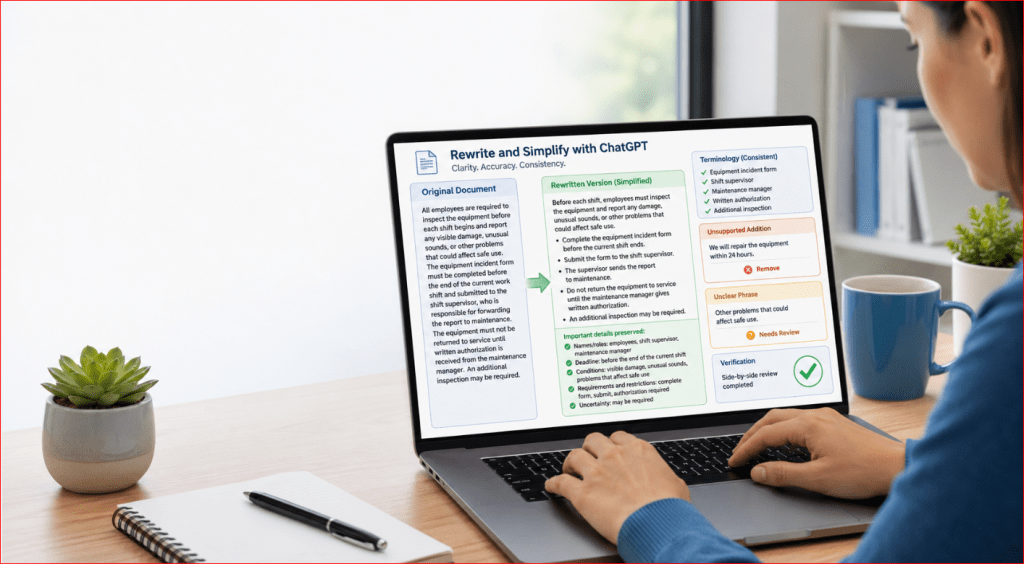
  • How to Rewrite and Simplify Documents with ChatGPT: Beginner Guide (2026)

    How to Rewrite and Simplify Documents with ChatGPT: Beginner Guide (2026)

    Estimated reading time: 20–25 minutes
    Last updated: July 2026

    Before Learning

    Before using ChatGPT to rewrite or simplify a document, it helps to understand how document uploads, analysis, extraction, summarization, translation, and verification work.

    Review these beginner guides first:

    · ChatGPT Basics for Beginners: Complete Guide (2026)

    · How to Analyze Documents with ChatGPT: Beginner Guide (2026)

    · How to Extract Information from Documents with ChatGPT: Beginner Guide (2026)

    · How to Ask Questions About Documents with ChatGPT: Beginner Guide (2026)

    · How to Summarize Documents with ChatGPT: Beginner Guide (2026)

    · How to Translate Documents with ChatGPT: Beginner Guide (2026)

    These guides explain how to inspect a document, identify important details, ask focused questions, create summaries, translate content, and compare ChatGPT’s output with the original source.

    Those skills are important because rewriting and simplifying should improve clarity without changing the document’s facts, instructions, warnings, conditions, limitations, or uncertainty.

    For example:

    Original: The application may be approved after the required documents have been reviewed.

    Incorrect rewrite: The application will be approved.

    The incorrect version changes a possible outcome into a guarantee and removes the review condition.

    What You’ll Learn

    In this beginner guide, you will learn how to:

    · Upload a document to ChatGPT for rewriting or simplification.

    · Identify which sections need clearer wording.

    · Choose the intended audience and reading level.

    · Rewrite difficult text without changing its meaning.

    · Simplify technical terms and long sentences.

    · Change the tone to formal, friendly, neutral, professional, or instructional.

    · Shorten wordy sections while preserving important details.

    · Expand brief sections without adding unsupported facts.

    · Preserve names, dates, numbers, warnings, conditions, limitations, and uncertainty.

    · Keep headings, lists, tables, captions, and document structure organized.

    · Rewrite one section at a time when working with long documents.

    · Compare the rewritten version with the original source.

    · Identify missing information, unsupported additions, and changes in meaning.

    · Correct inaccurate or misleading rewrites.

    · Protect private and confidential information before uploading.

    · Check permission, copyright, licensing, and publication conditions.

    · Make rewritten content clearer and more accessible.

    · Understand when professional, legal, medical, financial, technical, or accessibility review may be necessary.

    · Save the original document, prompts, drafts, corrections, and approved version.

    By the end of this guide, you should be able to create clearer document text while keeping the original facts, requirements, warnings, conditions, and uncertainty accurate.

    Introduction

    A document may contain accurate information but still be difficult to understand.

    It may use:

    · Long sentences

    · Technical terms

    · Repeated ideas

    · Unclear instructions

    · Complicated tables

    · Formal or outdated wording

    · Paragraphs that are too long

    · Language that does not suit the intended reader

    Rewriting and simplifying can make this content clearer without changing its essential meaning.

    What Does Rewriting Mean?

    Rewriting means expressing existing information in a different way.

    You may rewrite a document to:

    · Improve clarity

    · Change the tone

    · Remove repetition

    · Shorten wordy sentences

    · Improve paragraph organization

    · Match a particular audience

    · Make instructions easier to follow

    OpenAI describes rewriting, tightening, adjusting tone, and adapting writing for a specific audience as common ways ChatGPT can assist with writing. Clear constraints—such as the audience, reading level, tone, and required content—can help guide the result.

    For example:

    Original:

    All employees are hereby advised that completion of the attached equipment inspection documentation is required prior to the commencement of each individual work shift.

    Clear rewrite:

    Employees must complete the attached equipment inspection form before each shift.

    The rewritten sentence is shorter, but it preserves:

    · Who must act

    · What they must complete

    · When they must complete it

    · That the action is required

    What Does Simplifying Mean?

    Simplifying means making difficult content easier to understand.

    This may involve:

    · Using shorter sentences

    · Replacing unnecessary jargon

    · Explaining essential technical terms

    · Dividing long paragraphs

    · Organizing information into lists

    · Using familiar words

    · Making the reading level more suitable for beginners

    For example:

    Original:

    Applicants who fail to provide the requisite supporting documentation within the prescribed period may be subject to administrative delay.

    Simplified version:

    Your application may be delayed if you do not provide the required documents by the deadline.

    The simpler version preserves the condition and the uncertain word may.

    Rewriting Is Not the Same as Summarizing

    A rewrite normally keeps the complete message while changing how it is expressed.

    A summary shortens the source by selecting its most important points.

    For example:

    Original:

    Employees must inspect the equipment before every shift, record any visible damage, and submit the completed checklist to the supervisor.

    Rewrite:

    Before each shift, employees must check the equipment, record visible damage, and give the completed checklist to their supervisor.

    Summary:

    Employees must complete a pre-shift equipment check.

    The summary is shorter, but it leaves out the requirements to record damage and submit the checklist.

    Choose rewriting when those details must remain.

    Rewriting Should Not Change the Facts

    A clearer sentence is not an improvement when it changes the source meaning.

    Important details may include:

    · Names

    · Dates

    · Numbers

    · Amounts

    · Measurements

    · Responsibilities

    · Deadlines

    · Conditions

    · Exceptions

    · Warnings

    · Limitations

    · Approval status

    · Uncertainty

    For example:

    Original:

    The revised schedule may be approved after the safety review is completed.

    Incorrect rewrite:

    The revised schedule will be approved.

    The incorrect version:

    · Changes may to will

    · Removes the safety-review condition

    · Turns a possible outcome into a guarantee

    A reliable rewrite would say:

    The revised schedule may be approved after completion of the safety review.

    What ChatGPT Can Help You Do

    You can ask ChatGPT to:

    · Rewrite a complete document

    · Improve one selected section

    · Simplify technical wording

    · Change the tone

    · Adjust the reading level

    · Shorten repetitive text

    · Expand brief notes into clear paragraphs

    · Turn paragraphs into lists

    · Preserve headings and tables

    · Compare the rewrite with the original

    · Identify possible changes in meaning

    ChatGPT supports common writing tasks such as drafting, rewriting, tightening, and adjusting text for a particular audience. It can also work with uploaded files, and OpenAI currently lists common supported formats such as PDF, DOCX, PPTX, TXT, CSV, TSV, XLS, and XLSX. Features and available file options may vary by account, plan, workspace, device, and future update.

    A Careful Rewriting Process

    A reliable document-rewriting process includes:

    1st Review the document for private or restricted information.

    2nd Upload the correct and readable file.

    3rd Identify the intended audience.

    4th Choose the required tone and reading level.

    5th Explain what information must remain unchanged.

    6th Rewrite one manageable section.

    7th Compare the rewritten text with the original.

    8th Correct missing, changed, or unsupported information.

    9th Review the document’s structure and accessibility.

    10th Save only the reviewed version as final.

    The original document should remain available throughout this process.

    ChatGPT can assist with the wording, but the user is responsible for confirming that the rewritten document remains accurate and suitable for its purpose.

    Figure 1. A careful rewriting process improves clarity while preserving the original document’s facts, conditions, warnings, and uncertainty.

    Rewriting should begin with clear instructions about the audience, tone, reading level, and information that must remain unchanged. The rewritten section should then be compared with the original and corrected before it is accepted as final.

    Types of Rewriting and Simplification You Can Request

    ChatGPT can rewrite the same document in different ways.

    The best approach depends on:

    · The document’s purpose

    · The intended reader

    · The required tone

    · The reading level

    · The amount of detail to preserve

    · Whether the structure should remain unchanged

    Before asking ChatGPT to rewrite a document, decide what kind of improvement you need.

    Clearer Rewriting

    A clearer rewrite improves confusing or wordy sentences without changing the original meaning.

    It may:

    · Shorten long sentences

    · Remove unnecessary words

    · Improve paragraph flow

    · Make instructions more direct

    · Replace unclear wording

    · Reduce repetition

    Example prompt:

    Rewrite this section for clarity. Preserve every fact, name, date, number, condition, warning, limitation, and uncertain statement. Do not summarize or add new information.

    For example:

    Original:

    All staff members are required to ensure that the completion of the inspection form has occurred prior to the start of their scheduled work period.

    Clear rewrite:

    All staff must complete the inspection form before their scheduled work period begins.

    The second version is shorter, but the requirement and timing remain unchanged.

    Plain-Language Simplification

    Plain language makes difficult information easier to understand.

    It may use:

    · Familiar words

    · Shorter sentences

    · Clear headings

    · Direct instructions

    · Simple explanations of technical terms

    · Lists instead of dense paragraphs

    Example prompt:

    Simplify this document into plain English for adult beginners. Preserve all instructions, facts, conditions, warnings, exceptions, and uncertainty.

    Plain language should make the content easier to read without removing essential details.

    Reading-Level Adjustment

    You can ask ChatGPT to adjust the text for a particular reading level.

    For example:

    · Complete beginners

    · Younger readers

    · General adult readers

    · Customers

    · Employees without technical training

    · Specialist readers

    Example prompt:

    Rewrite this guide for adult beginners with no technical background. Use short sentences and explain necessary technical terms. Do not remove important limitations or warnings.

    Reading-level adjustment should not make the content less accurate.

    Formal Rewriting

    A formal rewrite uses professional, respectful, and structured language.

    It may be suitable for:

    · Business reports

    · Policies

    · Workplace notices

    · Proposals

    · Professional letters

    · Official communications

    Example prompt:

    Rewrite this document in formal professional language. Preserve the original meaning, structure, facts, requirements, warnings, and approval conditions.

    Formal wording should not make the document sound more official or legally binding than the source.

    Friendly Rewriting

    A friendly rewrite makes the wording more welcoming and approachable.

    It may be useful for:

    · Customer messages

    · Community notices

    · Website content

    · Beginner guides

    · Internal reminders

    Example prompt:

    Rewrite this notice in a friendly but professional tone. Keep all requirements, deadlines, warnings, and conditions unchanged.

    Friendly wording should not weaken an instruction or warning.

    Neutral Rewriting

    A neutral rewrite removes emotional, promotional, exaggerated, or biased wording.

    It may help with:

    · Reports

    · Research summaries

    · Workplace documents

    · Public information

    · Factual explanations

    Example prompt:

    Rewrite this section in a neutral and factual tone. Remove promotional wording, but preserve every supported fact, condition, limitation, and source reference.

    A neutral rewrite should not remove necessary context or turn an opinion into a fact.

    Concise Rewriting

    A concise rewrite removes unnecessary repetition and wordiness.

    It may:

    · Combine repeated ideas

    · Shorten introductions

    · Remove filler words

    · Tighten long explanations

    · Keep only necessary wording

    Example prompt:

    Make this section more concise without summarizing away any required action, deadline, warning, condition, exception, or limitation.

    Concise rewriting should not remove information simply to make the section shorter.

    Expanded Rewriting

    An expanded rewrite develops brief or incomplete notes into clearer paragraphs.

    It may add:

    · Definitions

    · Transitions

    · Step explanations

    · Examples

    · Context already supported by the source

    · Clearer organization

    Example prompt:

    Expand these notes into a clear beginner-friendly section. Use only the information provided. Do not invent facts, examples, dates, causes, or conclusions.

    Expansion can improve readability, but it creates a higher risk of unsupported additions.

    Ask ChatGPT to identify any point that needs more source information instead of guessing.

    Instructional Rewriting

    An instructional rewrite turns information into clear actions.

    It may convert a paragraph into:

    · Numbered steps

    · A checklist

    · A procedure

    · A decision guide

    · A preparation list

    Example prompt:

    Rewrite this procedure as numbered steps in the correct order. Preserve every requirement, condition, warning, and exception. Do not create additional steps.

    Use numbered lists only when the order matters.

    Structural Rewriting

    Structural rewriting reorganizes the document while preserving the original content.

    It may involve:

    · Dividing long sections

    · Adding descriptive headings

    · Grouping related ideas

    · Moving background information

    · Separating warnings from instructions

    · Turning repeated paragraphs into one organized section

    Example prompt:

    Reorganize this document using clear headings and shorter paragraphs. Preserve every original fact and requirement. List any proposed movement of content before rewriting.

    Structural changes should be checked carefully because moving a sentence can separate it from an important condition or warning.

    Audience-Specific Rewriting

    The same information may need different wording for different readers.

    Possible audiences include:

    · Complete beginners

    · Employees

    · Managers

    · Customers

    · Students

    · Parents

    · Community members

    · Technical specialists

    · Website visitors

    Example prompt:

    Rewrite this policy explanation for new employees. Use clear everyday language, but preserve all responsibilities, restrictions, deadlines, approval requirements, and warnings.

    Audience adaptation should improve understanding without changing the source message.

    Rewriting with Preserved Formatting

    You can ask ChatGPT to keep the original structure.

    This may include:

    · Titles

    · H1, H2, and H3 headings

    · Paragraph order

    · Numbered steps

    · Bullet points

    · Tables

    · Captions

    · Notes

    · Bold labels

    · References

    Example prompt:

    Rewrite this document for clarity while preserving all headings, paragraph order, numbered steps, bullet points, tables, captions, and references.

    The final layout may still need manual adjustment after the rewritten text is placed into the document.

    Rewriting with Required Terminology

    Some documents contain terms that must remain unchanged or use approved alternatives.

    These may include:

    · Technical terms

    · Job titles

    · Department names

    · Product names

    · Legal terms

    · Defined terms

    · Abbreviations

    · Status labels

    You can provide a terminology table.

    Original TermRequired WordingInstruction
    Required ActionRequired ActionKeep unchanged
    Final ApprovalFinal ApprovalDo not shorten
    Responsible PersonAssigned PersonUse this wording consistently

    Example prompt:

    Use the terminology table for every repeated term. Do not replace approved wording with alternatives.

    Rewriting with Change Tracking

    You can ask ChatGPT to show what changed.

    Useful formats include:

    · Original and rewritten text side by side

    · Sentence-by-sentence comparison

    · A change table

    · Added and removed wording

    · Reasons for each change

    Example prompt:

    Show the original and rewritten versions side by side. Add a third column explaining each change. Mark any sentence where meaning may have changed.

    Change tracking makes review easier and helps you identify unnecessary edits.

    Choosing the Right Rewrite Type

    Before rewriting, ask:

    · Who will read the document?

    · What makes the current wording difficult?

    · Should the text be shorter, simpler, more formal, or more direct?

    · Must the complete message remain?

    · Should technical terms be explained or preserved?

    · Can the structure change?

    · Are there warnings, conditions, or uncertainty that must remain visible?

    · Should every change be shown for review?

    You may combine several approaches.

    For example:

    Rewrite this employee guide in plain, professional language for complete beginners. Shorten wordy sentences, preserve all headings and numbered steps, explain necessary technical terms, keep all warnings and conditions, and show the original and rewritten versions side by side.

    Reality: Rewriting and simplifying are not single fixed tasks. The correct approach depends on the document, audience, purpose, and information that must remain unchanged.

    Figure 2. Different rewriting methods can improve clarity, tone, structure, length, and reading level while preserving the original meaning.

    The best rewriting method depends on what the reader needs and what information must remain unchanged. Clear instructions help ChatGPT improve the wording without removing facts, conditions, warnings, limitations, or uncertainty.

    What You Need Before Rewriting or Simplifying a Document

    Good preparation helps ChatGPT improve the wording without removing important information or changing the original meaning.

    Before beginning, prepare the document, audience instructions, rewriting goals, and verification method.

    A Clear and Readable Source Document

    Use the clearest available version of the document.

    ChatGPT currently supports many common file types, including PDF, DOCX, PPTX, TXT, CSV, TSV, XLS, and XLSX. Available upload features and limits may vary by plan, workspace, and future update.

    The document should have:

    · Readable text

    · Correct page order

    · Complete paragraphs

    · Clear headings

    · Properly organized tables

    · Legible notes and footnotes

    · No missing or cropped pages

    Scanned pages, handwriting, blurred photographs, unusual layouts, and text inside images may be harder to process accurately.

    How to Reduce This Limitation: Use a text-based PDF or DOCX file when possible. If part of the document is unreadable, tell ChatGPT to mark it as [Unclear in the source] rather than guessing.

    The Correct Document Version

    Confirm that you are uploading the intended version.

    A folder may contain:

    · An early draft

    · A corrected draft

    · A manager-reviewed copy

    · An approved version

    · Several files with similar names

    Use a clear filename.

    For example:

    employee-procedure-original-july-2026.docx

    is easier to identify than:

    new-final-document-3.docx

    Keep the original document unchanged and create a separate working copy for rewriting.

    A Clear Rewriting Goal

    Decide what needs improvement before writing the prompt.

    You may want to:

    · Make the wording clearer

    · Simplify technical language

    · Shorten repeated content

    · Change the tone

    · Adjust the reading level

    · Organize instructions into steps

    · Divide long paragraphs

    · Improve headings

    · Expand brief notes

    · Preserve the wording while improving grammar

    Avoid asking ChatGPT to perform several conflicting tasks without explaining which goal is most important.

    For example:

    Simplify the wording for complete beginners, but do not shorten the document or remove examples.

    The Intended Audience

    Tell ChatGPT who will read the rewritten document.

    Possible audiences include:

    · Complete beginners

    · Employees

    · Customers

    · Students

    · Parents

    · Managers

    · Community members

    · Technical specialists

    · Website visitors

    Example prompt:

    Rewrite this section for adult beginners who have no technical background. Use familiar words and explain necessary technical terms.

    The reader’s needs affect vocabulary, sentence length, explanations, and tone.

    The Required Reading Level

    A reading level describes how difficult the wording is to understand.

    Instead of requesting only “simple language,” explain what simple means for your audience.

    For example:

    Use short sentences, familiar words, clear headings, and one idea per paragraph. Explain technical terms when they first appear.

    Do not request a lower reading level if simplifying the wording would remove essential technical or safety information.

    The Required Tone

    Choose the tone that suits the document.

    Possible tones include:

    · Formal

    · Professional

    · Neutral

    · Friendly

    · Instructional

    · Cautious

    · Technical

    · Reassuring

    · Direct

    Example prompt:

    Rewrite this customer notice in a friendly but professional tone. Keep every deadline, requirement, warning, and condition unchanged.

    A tone change should not make a requirement optional or make an uncertain outcome sound guaranteed.

    A List of Information That Must Remain Unchanged

    Identify the details ChatGPT must preserve.

    These may include:

    · Names

    · Dates

    · Times

    · Numbers

    · Currency amounts

    · Measurements

    · Deadlines

    · Responsibilities

    · Conditions

    · Exceptions

    · Warnings

    · Limitations

    · Approval status

    · Uncertainty

    · Source references

    · Technical definitions

    Example prompt:

    Preserve every name, date, number, deadline, warning, condition, limitation, and uncertain phrase. Do not add or remove requirements.

    This instruction is especially important when the document affects decisions, safety, money, employment, or official procedures.

    Approved Terminology

    Prepare a terminology list when certain words must remain unchanged or use approved alternatives.

    For example:

    Original TermRequired WordingInstruction
    Final ApprovalFinal ApprovalKeep unchanged
    Responsible PersonAssigned PersonUse consistently
    Required ActionRequired ActionDo not shorten

    A terminology list can reduce inconsistent wording across several sections.

    Formatting Instructions

    Decide which parts of the structure should remain.

    You may need to preserve:

    · H1, H2, and H3 headings

    · Paragraph order

    · Numbered steps

    · Bullet points

    · Tables

    · Labels

    · Captions

    · Figure numbers

    · Bold terms

    · Notes

    · References

    Example prompt:

    Rewrite the wording for clarity while preserving all headings, numbered steps, bullet points, tables, captions, and references.

    The final document may still require manual formatting after the rewrite.

    Instructions for Technical Terms

    Not every technical term should be removed.

    Some terms may be necessary because they:

    · Have a precise meaning

    · Appear in a policy or law

    · Are used by professionals

    · Match a product or system

    · Are needed for further learning

    You may ask ChatGPT to keep and explain them.

    For example:

    Keep the term “two-factor authentication,” but explain it in simple language the first time it appears.

    This is often safer than replacing an exact term with a less accurate general word.

    Instructions for Missing or Unclear Information

    ChatGPT should not invent content to make a document appear complete.

    Tell it how to handle:

    · Missing dates

    · Incomplete notes

    · Unclear handwriting

    · Undefined abbreviations

    · Broken sentences

    · Empty table fields

    · Unsupported conclusions

    Example prompt:

    Mark missing information as “[Not stated]” and unreadable wording as “[Unclear in the source].” Do not estimate, assume, or invent details.

    A Comparison Format

    Choose how you will review the rewrite.

    Useful formats include:

    · Original paragraph followed by rewritten paragraph

    · Side-by-side table

    · Sentence-by-sentence comparison

    · Change summary

    · Verification checklist

    Example prompt:

    Show the original and rewritten versions side by side. Add a third column explaining each change and flag anything that may have changed the meaning.

    A comparison format makes unnecessary edits easier to find.

    Privacy and Permission

    Review the complete document before uploading it.

    Remove unnecessary:

    · Personal information

    · Customer records

    · Employee details

    · Medical information

    · Financial information

    · Account numbers

    · Signatures

    · Confidential business content

    · Hidden comments or tracked changes

    OpenAI states that users can manage whether new conversations help improve its models through Settings → Data Controls → Improve the model for everyone. Uploaded files are handled according to the account, chat, Library, Project, retention rules, and current Data Controls.

    Confirm that you have permission to upload, rewrite, reproduce, and publish the document.

    Having access to a file does not automatically give permission to change or distribute it.

    The Original Document for Verification

    Keep the original file available throughout the rewriting process.

    You will need it to confirm:

    · Complete sections

    · Accurate facts

    · Correct requirements

    · Preserved warnings

    · Unchanged conditions

    · Consistent terminology

    · Accurate tables

    · Preserved uncertainty

    · No unsupported additions

    Do not overwrite the source file.

    The rewritten document is a new version, not a replacement for the original evidence.

    Figure 3. Preparing the source file, audience, tone, terminology, formatting, privacy, and verification method can improve document rewriting.

    A reliable rewrite begins with clear instructions about what should change and what must remain unchanged. Keeping the original document available makes it easier to check that the revised wording remains complete and accurate.

    How to Upload and Rewrite a Document with ChatGPT

    After preparing the source document and rewriting instructions, you can upload the file and begin with one manageable section.

    The exact buttons and menu wording may vary by device, account, workspace, and future ChatGPT updates.

    Step 1: Start a New Chat

    Open ChatGPT and begin a new conversation.

    Using a separate chat can help keep the following materials together:

    · The source document

    · Rewriting instructions

    · Approved terminology

    · Original and rewritten sections

    · Corrections

    · Verification records

    Use a clear chat name when the option is available.

    For example:

    Employee Guide Plain-Language Rewrite

    Step 2: Add the Document

    Look beside the message box for the attachment or add button.

    Depending on the interface, you may be able to:

    · Upload a file from your computer

    · Select a recently used file

    · Add a saved file from Library

    · Drag a file into the conversation

    · Choose a file from an available connected source

    OpenAI currently explains that a file saved in Library can be added by opening the attachment or add menu, choosing Add from library, and selecting the file. Library availability and menu options can vary by account or workspace.

    Step 3: Select the Correct File

    Choose the document you prepared for rewriting.

    ChatGPT currently supports common document, text, presentation, and spreadsheet formats, including PDF, DOCX, PPTX, TXT, CSV, TSV, XLS, and XLSX. The .gdoc format is not supported directly and should be exported to a supported format first.

    Before continuing, confirm that:

    · The filename is correct.

    · The intended version was selected.

    · All required pages are included.

    · The text is readable.

    · Pages appear in the correct order.

    · Unnecessary private information was removed.

    · Hidden comments or tracked changes were reviewed.

    Do not upload the only copy of the original document. Keep an unchanged source version separately.

    Step 4: Wait for the Upload to Finish

    Wait until the file appears in the conversation before sending the rewriting request.

    When an upload fails, check:

    · The internet connection

    · The file format

    · The file size

    · Whether the file is damaged

    · Whether the account has reached an upload or storage limit

    OpenAI currently applies file-size, document-token, and account-storage limits. These limits may change, so check the current File Uploads FAQ when a large file cannot be uploaded.

    Step 5: Ask ChatGPT to Review the Document First

    Do not begin rewriting immediately.

    First, ask ChatGPT to describe what it can access.

    Example prompt:

    Review the uploaded document without rewriting it. Tell me:

    · The document title

    · The visible headings and sections

    · The approximate number of readable pages or sections

    · Whether it contains tables, lists, notes, footnotes, or images

    · Whether any text appears missing, unclear, scanned, or unreadable

    Do not summarize, rewrite, or add information yet.

    Compare the response with the source document.

    This preliminary review may reveal:

    · Missing pages

    · Unreadable scans

    · Incorrect heading order

    · Text inside images

    · Incomplete tables

    · Sections that require separate treatment

    A successful upload does not prove that every part of the document was read correctly.

    Step 6: Identify the Section to Rewrite

    Begin with one complete section rather than the entire document.

    Choose a section that:

    · Has a clear beginning and ending

    · Contains enough context

    · Is short enough to compare carefully

    · Represents the document’s normal writing style

    · Includes any terminology that will appear repeatedly

    For example:

    Work only with the section titled “Equipment Inspection Procedure.” Do not rewrite any other section yet.

    Avoid dividing:

    · A sentence

    · A warning

    · A numbered procedure

    · A table

    · A definition

    · A condition and its related instruction

    Keeping connected information together reduces the risk of changing its meaning.

    Step 7: Explain the Rewriting Goal

    Tell ChatGPT exactly what should improve.

    Possible goals include:

    · Clearer wording

    · Plain language

    · Shorter sentences

    · Less repetition

    · A different tone

    · A lower reading level

    · Better paragraph organization

    · Clearer numbered instructions

    Example:

    Rewrite this section in plain English for adult beginners. Use short sentences, familiar words, clear headings, and one main idea per paragraph.

    Avoid vague instructions such as:

    Make this better.

    The word better does not explain whether you want simpler, shorter, more formal, friendlier, or more detailed wording.

    Step 8: State What Must Remain Unchanged

    List the information that ChatGPT must preserve.

    Example prompt:

    Preserve every:

    · Name and job title

    · Date and deadline

    · Number and measurement

    · Required action

    · Responsible person

    · Condition and exception

    · Warning and restriction

    · Limitation

    · Approval status

    · Uncertain phrase such as “may,” “could,” or “expected”

    Do not add facts, examples, recommendations, or conclusions that are not supported by the source.

    This step is especially important when the document affects safety, money, employment, legal rights, medical care, or official procedures.

    Step 9: Explain the Required Structure

    Tell ChatGPT what formatting to preserve or change.

    For example:

    Preserve the original heading order, numbered steps, bullet points, table structure, captions, and notes. You may divide long paragraphs, but do not move a condition or warning away from the instruction it affects.

    When converting paragraphs into steps, specify that ChatGPT must not invent additional actions.

    Example:

    Convert the procedure into numbered steps using only the actions stated in the source. Do not create missing steps.

    Step 10: Request a Side-by-Side Rewrite

    For the first section, request a comparison format.

    Example prompt:

    Create a table with these columns:

    · Original Text

    · Rewritten Text

    · Reason for Change

    · Meaning Preserved?

    Rewrite one paragraph at a time. Clearly flag any sentence where the meaning may have changed or the source is unclear.

    A side-by-side format makes it easier to identify:

    · Missing details

    · Unsupported additions

    · Changed requirements

    · Weakened warnings

    · Lost uncertainty

    · Unnecessary edits

    Step 11: Review the Test Rewrite

    Compare the rewritten section with the source before continuing.

    Check whether ChatGPT preserved:

    · Every required action

    · The correct responsible person

    · Dates and deadlines

    · Numbers and measurements

    · Conditions and exceptions

    · Warnings

    · Limitations

    · Uncertainty

    · Technical terms

    · Section order

    Also check whether the rewrite:

    · Uses the requested reading level

    · Matches the required tone

    · Removes unnecessary repetition

    · Uses clear sentence structure

    · Keeps important context

    · Avoids unsupported information

    Do not approve the rewrite only because it sounds smoother.

    Step 12: Correct the Instructions When Needed

    When the test result has a problem, correct the instruction before rewriting more sections.

    For example:

    The rewrite changed “may be approved” to “will be approved.” Restore the uncertainty and keep the approval condition. Do not change any other sentence.

    or:

    The rewrite is too short and removes two safety warnings. Restore both warnings and simplify their wording without reducing their importance.

    Focused correction requests reduce unnecessary changes.

    Step 13: Continue One Section at a Time

    After approving the test section, continue with the next complete section.

    Example prompt:

    Continue with the section titled “Reporting Damaged Equipment.” Apply the approved tone, reading level, terminology, and formatting rules. Preserve every warning, condition, deadline, and uncertain statement. Stop after this section.

    Review each section before moving forward.

    For a long document, keep a progress table.

    SectionRewrite StatusReview StatusCorrections Needed
    IntroductionRewrittenApprovedNone
    Equipment InspectionRewrittenApprovedWarning restored
    Reporting DamageRewrittenPendingNot reviewed
    AppendixNot startedNot started

    Step 14: Request a Final Comparison

    After all sections are rewritten, compare the complete revised document with the source.

    Example prompt:

    Compare the complete rewritten document with the original. Identify:

    · Missing or duplicated sections

    · Changed facts

    · Added information

    · Removed requirements

    · Weakened warnings

    · Lost conditions or exceptions

    · Changed uncertainty

    · Inconsistent terminology

    · Incorrect tables or references

    Create a verification table and clearly mark anything requiring human review.

    ChatGPT’s comparison can help identify possible problems, but it should not be the only review.

    Reusable Document-Rewriting Prompt

    Rewrite the uploaded document from [original style] into [required style] for [intended audience].

    The goal is to [make it clearer, simplify it, shorten wordy sentences, change the tone, improve organization, or another specific goal].

    Preserve:

    · All facts

    · Names and titles

    · Dates and deadlines

    · Numbers, amounts, and measurements

    · Responsibilities and required actions

    · Conditions and exceptions

    · Warnings and restrictions

    · Limitations

    · Approval status

    · Uncertainty words such as “may,” “could,” “expected,” and “preliminary”

    · Headings, lists, tables, captions, notes, and references

    Use the approved terminology list consistently.

    Mark missing information as [Not stated] and unreadable wording as [Unclear in the source]. Do not guess, summarize, add unsupported information, or change a possible result into a guarantee.

    Rewrite one complete section at a time. Show the original and rewritten text side by side and wait for my approval before continuing.

    Reality: Uploading a document and requesting simpler wording does not guarantee an accurate rewrite. The revised text must be compared with the original before it is accepted, shared, or published.

    Figure 4. A reliable document rewrite starts with a clear goal and ends with comparison against the original source.

    Rewriting one section at a time makes changes in meaning, missing details, and unsupported additions easier to identify. The rewritten text should be approved only after its facts, conditions, warnings, terminology, and uncertainty have been checked against the original.

    How to Rewrite a Long Document in Sections

    Long documents are usually easier to rewrite when they are divided into manageable sections.

    Trying to rewrite an entire report, guide, policy, manual, or proposal in one request may lead to:

    · Missing paragraphs

    · Repeated content

    · Inconsistent tone

    · Changed terminology

    · Shortened explanations

    · Lost warnings or conditions

    · Forgotten instructions

    · Incomplete tables

    · Different reading levels between sections

    A section-by-section process makes the work easier to review and reduces the risk of important details being removed.

    Step 1: Ask ChatGPT to List the Document Structure

    Before rewriting, ask ChatGPT to identify the complete document organization.

    Example prompt:

    Review the uploaded document and list every heading, subsection, table, appendix, note, and warning in the original order. Do not rewrite or summarize anything yet.

    Compare the list with the source document.

    Check that it includes:

    · Title page

    · Introduction

    · Main sections

    · Subsections

    · Numbered procedures

    · Tables

    · Captions

    · Warnings

    · Notes

    · Appendices

    · References

    Add any missing section before rewriting begins.

    Step 2: Divide the Document at Logical Boundaries

    Each rewriting part should contain a complete idea.

    A manageable part may be:

    · One main section

    · One or two short subsections

    · A complete numbered procedure

    · One table and its explanation

    · A group of related paragraphs

    · One appendix

    Do not divide:

    · A sentence

    · A warning from its instruction

    · A condition from the action it affects

    · A table between two requests

    · A definition from the term it explains

    · A numbered procedure in the middle of a step

    For example:

    Rewrite the complete section titled “Equipment Safety,” including its introduction, warnings, numbered steps, and final note.

    Keeping connected information together helps preserve context.

    Step 3: Set the Rewriting Rules

    Before rewriting the first section, provide the rules that should apply throughout the document.

    Include:

    · Intended audience

    · Required tone

    · Reading level

    · Rewriting goal

    · Terminology rules

    · Formatting rules

    · Facts that must remain unchanged

    · Instructions for missing or unclear content

    Example prompt:

    Apply these rules to every section:

    · Use plain professional language for adult beginners.

    · Use short sentences and clear headings.

    · Preserve every fact, name, date, number, warning, condition, limitation, and uncertain statement.

    · Use the approved terminology consistently.

    · Do not summarize, invent information, or remove necessary detail.

    · Mark missing information as “[Not stated]” and unclear wording as “[Unclear in the source].”

    Repeat the most important rules when working with high-risk sections.

    Step 4: Rewrite a Representative Test Section

    Choose a short section that reflects the document’s normal writing style.

    Example prompt:

    Rewrite only the introduction using the approved rules. Show the original and rewritten versions side by side. Stop after this section.

    Review whether the test section has the correct:

    · Tone

    · Reading level

    · Sentence length

    · Level of detail

    · Terminology

    · Structure

    · Treatment of warnings and uncertainty

    Adjust the instructions before continuing.

    Step 5: Approve Important Terminology

    Record approved wording for repeated terms.

    For example:

    Original TermApproved WordingInstruction
    Final ApprovalFinal ApprovalKeep unchanged
    Responsible PersonAssigned PersonUse consistently
    Required ActionRequired ActionDo not shorten
    Subject to ReviewSubject to ReviewPreserve condition

    Update the terminology list whenever a new important term appears.

    This reduces inconsistency between sections.

    Step 6: Continue in the Original Order

    Rewrite sections in the same order as the source document unless there is a clear reason to reorganize them.

    Example prompt:

    Continue with the next section, “Employee Responsibilities.” Apply all approved rewriting and terminology rules. Preserve the heading, bullet points, deadlines, conditions, and warnings. Stop after this section.

    Working in order helps you:

    · Track progress

    · Preserve context

    · Identify missing sections

    · Compare versions

    · Assemble the final document correctly

    Step 7: Keep a Progress Record

    Use a simple tracking table.

    SectionRewrite StatusReview StatusCorrections Needed
    IntroductionRewrittenApprovedNone
    Employee ResponsibilitiesRewrittenApprovedOne term corrected
    Safety ProcedureRewrittenPendingNot reviewed
    Appendix ANot startedNot started

    A progress table helps prevent:

    · Skipped sections

    · Duplicate rewriting

    · Unreviewed content

    · Confusion between draft and approved versions

    Step 8: Review Every Section Before Continuing

    Compare each rewritten section with the source.

    Check that it:

    · Includes every important idea

    · Preserves names and facts

    · Keeps dates and numbers accurate

    · Retains warnings and conditions

    · Preserves uncertainty

    · Uses approved terminology

    · Matches the required tone

    · Uses the requested reading level

    · Avoids unsupported additions

    · Keeps related information together

    Do not approve a section only because it sounds clearer.

    Step 9: Check Consistency Across Sections

    After several sections have been rewritten, compare them with one another.

    Confirm that:

    · The same tone is used throughout.

    · The reading level remains consistent.

    · Repeated terms use the same wording.

    · Headings follow the same style.

    · Similar instructions use similar structure.

    · Warnings remain equally visible.

    · Defined terms keep the same meaning.

    · Cross-references still point to the correct section.

    A section may be accurate by itself but inconsistent with the rest of the document.

    Step 10: Combine Only Approved Sections

    After every section has been rewritten and reviewed, combine the approved versions.

    Do not combine:

    · Unreviewed drafts

    · Duplicate versions

    · Sections with unresolved questions

    · Content from different source-document versions

    · Text containing unapproved terminology

    Keep the original section order unless an approved reorganization plan says otherwise.

    Use a clear filename, such as:

    employee-guide-plain-language-reviewed-july-2026.docx

    Step 11: Review the Complete Rewritten Document

    Read the combined version from beginning to end.

    Check for:

    · Missing sections

    · Repeated paragraphs

    · Sudden tone changes

    · Inconsistent terminology

    · Uneven reading levels

    · Broken tables

    · Incorrect headings

    · Moved warnings

    · Missing conditions

    · Unresolved notes

    · Formatting problems

    Some problems become visible only after the complete document is assembled.

    Reusable Prompt for Long Documents

    Rewrite this document one complete section at a time for [intended audience] using [required tone and reading level].

    First, list all headings and sections in the original order. Do not rewrite anything yet.

    For each approved section:

    · Preserve every fact, name, date, number, amount, measurement, deadline, responsibility, warning, condition, exception, limitation, and uncertain statement.

    · Use the approved terminology consistently.

    · Keep the heading and section order.

    · Use clear sentences and organized paragraphs.

    · Do not summarize, invent, or remove necessary information.

    · Mark missing information as [Not stated].

    · Mark unreadable wording as [Unclear in the source].

    · Show the original and rewritten text side by side.

    Stop after each section and wait for approval before continuing.

    Reality: Rewriting a long document in sections does not automatically make the result accurate. It makes missing content, inconsistent terminology, tone changes, and meaning errors easier to identify and correct.

    Figure 5. Dividing a long document into sections makes rewriting, consistency checking, and verification easier to manage.

    Each section should be rewritten, compared with the source, corrected, and approved before the next section begins. A progress record and terminology list help prevent skipped content, duplicate sections, and inconsistent wording.

    How to Improve and Correct a Rewritten Document

    The first rewrite should usually be treated as a draft.

    Clearer wording does not always mean the meaning was preserved. A rewritten section may contain:

    · Missing facts

    · Unsupported additions

    · Changed requirements

    · Weakened warnings

    · Removed conditions

    · Lost uncertainty

    · Inconsistent terminology

    · An unsuitable tone

    · Oversimplified technical information

    · Formatting changes

    Compare the rewritten text directly with the original before approving it.

    Step 1: Identify the Problem

    Decide what needs correction before asking ChatGPT to revise the text again.

    Common rewriting problems include:

    · Meaning error: The rewritten sentence communicates a different idea.

    · Omission: Important information was removed.

    · Addition: New information was introduced without support.

    · Fact error: A name, date, number, amount, or deadline changed.

    · Condition error: A requirement or exception was removed.

    · Warning error: A warning became weaker or disappeared.

    · Uncertainty error: A possible result became definite.

    · Terminology error: An approved term was replaced or used inconsistently.

    · Tone error: The rewrite became too casual, emotional, promotional, or authoritative.

    · Reading-level error: The wording remains too difficult or becomes overly simplified.

    · Structure error: A heading, list, table, note, or reference changed incorrectly.

    Naming the problem helps ChatGPT make a focused correction.

    Step 2: Show the Original and Rewritten Text Together

    Provide both versions when requesting a correction.

    For example:

    Original: The equipment may be used after written approval is received from the maintenance department.

    Rewrite: The equipment can be used after inspection.

    Compare these sentences and identify every change in meaning. Do not correct the rewrite yet.

    The rewrite changed several important details:

    · May be used became can be used.

    · The requirement for written approval was removed.

    · The maintenance department was removed.

    · Inspection was added even though the source did not mention it.

    Showing both versions makes these changes easier to identify.

    Step 3: Ask for a Meaning-Comparison Table

    A comparison table can organize the review.

    Example prompt:

    Compare the original and rewritten text sentence by sentence. Create a table with these columns:

    · Original Meaning

    · Rewritten Meaning

    · Problem Found

    · Correction Needed

    Check for missing information, unsupported additions, changed facts, removed conditions, weakened warnings, and lost uncertainty.

    For example:

    Original MeaningRewritten MeaningProblem FoundCorrection Needed
    Written approval is requiredApproval was removedCondition missingRestore approval requirement
    Maintenance department gives approvalDepartment not identifiedResponsible party missingRestore department
    Equipment may be usedEquipment can be usedMeaning changedPreserve cautious wording

    Review the table before requesting corrections.

    Step 4: Correct One Problem at a Time

    Avoid asking ChatGPT to rewrite the entire section again when only one sentence is incorrect.

    Instead of writing:

    Rewrite this again.

    Use a focused instruction:

    Restore the written-approval condition and the maintenance department. Keep all other accurate wording unchanged.

    Focused corrections reduce the chance of creating new problems.

    Step 5: Restore Missing Information

    Compare the source and rewrite paragraph by paragraph.

    Check whether every important:

    · Fact

    · Instruction

    · Responsibility

    · Date

    · Deadline

    · Condition

    · Exception

    · Warning

    · Limitation

    · Example

    · Note

    · Reference

    remains included.

    Example prompt:

    List every important detail from the original paragraph that is missing from the rewrite. Do not invent or restore anything that is not supported by the source.

    Restore only information found in the original document.

    Step 6: Remove Unsupported Additions

    ChatGPT may add examples, explanations, recommendations, or conclusions to make the text appear clearer.

    These additions should not silently become part of the rewritten document.

    Example prompt:

    Identify every sentence or phrase in the rewrite that is not supported by the original source. Remove those additions while preserving all accurate rewritten wording.

    When additional explanation is useful, keep it separate.

    For example:

    Additional Explanation: This note was added for beginners and is not part of the original document.

    Step 7: Preserve Facts and Responsibilities

    Check every:

    · Personal name

    · Job title

    · Organization name

    · Date

    · Time

    · Number

    · Currency amount

    · Measurement

    · Deadline

    · Reference number

    · Assigned responsibility

    For example:

    Original: Sarah must submit the report by July 22, 2026.

    Incorrect rewrite: The team should submit the report in late July.

    The rewrite changes:

    · The responsible person

    · The requirement

    · The exact deadline

    Example prompt:

    Compare every name, role, date, number, amount, measurement, deadline, and responsibility with the source. List all differences before correcting them.

    Step 8: Restore Conditions, Warnings, and Uncertainty

    Pay special attention to phrases such as:

    · If

    · Unless

    · Only after

    · Subject to approval

    · Must

    · Must not

    · May

    · Might

    · Could

    · Expected

    · Proposed

    · Preliminary

    · Not confirmed

    · Under review

    For example:

    Original: The schedule may be revised after the safety review.

    Incorrect rewrite: The schedule will be revised.

    The rewrite removes the review condition and changes a possibility into a guarantee.

    Example prompt:

    Restore every condition, warning, restriction, exception, and uncertain statement from the source. Do not make the wording weaker, stronger, or more definite.

    Step 9: Check the Reading Level

    A simplified rewrite should be easier to understand, but it should not become incomplete or childish.

    Check whether the text uses:

    · Short, complete sentences

    · Familiar words

    · One main idea per paragraph

    · Clear headings

    · Direct instructions

    · Necessary explanations of technical terms

    Avoid removing an exact term when the reader needs to recognize it later.

    For example:

    Keep the term “two-factor authentication,” but explain it in simple language the first time it appears.

    Example prompt:

    Simplify the wording for adult beginners without removing necessary technical terms, facts, warnings, conditions, or limitations.

    Step 10: Check the Tone

    Confirm that the rewrite matches the intended tone.

    A document may need to remain:

    · Formal

    · Professional

    · Neutral

    · Friendly

    · Instructional

    · Technical

    · Cautious

    · Direct

    A friendly rewrite should not weaken a requirement.

    For example:

    Original: Employees must report damaged equipment immediately.

    Weak rewrite: It would be helpful to mention damaged equipment when convenient.

    Example prompt:

    Make the wording friendly but preserve the original requirement and urgency. Do not make mandatory actions sound optional.

    Step 11: Review Terminology

    Compare the rewrite with the approved terminology list.

    Check whether:

    · Required terms remain unchanged.

    · Approved alternatives are used consistently.

    · Similar terms are not confused.

    · Abbreviations are explained correctly.

    · Technical definitions remain accurate.

    Example prompt:

    Review the rewritten section against the terminology table. List every inconsistent or incorrect term before making changes.

    Step 12: Check the Structure and Formatting

    Confirm that the rewrite preserves the required:

    · Heading levels

    · Section order

    · Paragraph breaks

    · Numbered steps

    · Bullet points

    · Tables

    · Captions

    · Notes

    · Bold labels

    · References

    Example prompt:

    Restore the original document structure without changing the approved rewritten wording. Preserve every heading, list, table, caption, note, and reference.

    Do not convert an unordered list into numbered steps unless the items must be completed in order.

    Step 13: Request a Final Comparison

    After corrections are complete, compare the revised version with the original again.

    Example prompt:

    Perform a final comparison between the original section and the corrected rewrite.

    Check:

    · Complete meaning

    · Facts and responsibilities

    · Dates and numbers

    · Conditions and exceptions

    · Warnings and limitations

    · Uncertainty

    · Terminology

    · Tone and reading level

    · Structure and formatting

    · Missing or unsupported information

    Create a verification table and clearly identify anything that still requires human review.

    Do not mark the rewrite as verified unless it was checked against the source.

    Save the Corrected Version Separately

    Do not overwrite the original document or first rewrite.

    Use filenames such as:

    · employee-guide-original.docx

    · employee-guide-first-rewrite.docx

    · employee-guide-corrected-rewrite.docx

    · employee-guide-reviewed-final.docx

    Keep:

    · The original document

    · The rewriting prompt

    · The terminology list

    · The first rewrite

    · Correction prompts

    · Comparison tables

    · The corrected version

    · Human-review notes

    · Final approval records

    Reusable Rewrite-Correction Prompt

    Compare the rewritten section with the original source sentence by sentence.

    Check for:

    · Changed meaning

    · Missing information

    · Unsupported additions

    · Incorrect facts

    · Changed responsibilities

    · Removed conditions or exceptions

    · Weakened warnings

    · Lost uncertainty

    · Inconsistent terminology

    · Unsuitable tone

    · Incorrect reading level

    · Structure or formatting changes

    First, list every possible problem in a comparison table. Do not correct the text yet.

    After I approve the findings, correct only the identified problems. Preserve all accurate rewritten wording and do not introduce new information.

    Reality: A rewrite is successful only when it is clearer for the intended reader and remains faithful to the original document.

    Figure 6. A rewritten document should be corrected by comparing it with the original and restoring any missing facts, conditions, warnings, or uncertainty.

    Focused corrections are safer than repeatedly rewriting the entire section. Each change should improve clarity while preserving the original meaning, responsibilities, terminology, tone, and document structure.

    How to Verify a Rewritten or Simplified Document

    Verification means comparing the rewritten version with the original document before it is used, shared, submitted, or published.

    A rewrite may be easier to read but still contain:

    · Missing information

    · Changed facts

    · Weakened requirements

    · Removed conditions

    · Lost warnings

    · Unsupported additions

    · Inconsistent terminology

    · An unsuitable tone

    · Oversimplified technical content

    The purpose of verification is to confirm that the wording became clearer without changing the original message.

    Step 1: Check That Nothing Is Missing

    Compare the complete structure of both documents.

    Confirm that the rewrite includes every required:

    · Title

    · Heading

    · Subheading

    · Paragraph

    · Numbered step

    · Bullet point

    · Table

    · Note

    · Warning

    · Caption

    · Appendix

    · Reference

    Look for sections that are missing, repeated, incomplete, or placed in the wrong location.

    Example prompt:

    Compare the original document with the rewritten version. List any missing, repeated, incomplete, or incorrectly placed content. Do not correct it yet.

    Step 2: Compare One Section at a Time

    Review each rewritten section beside the matching section in the original.

    Check whether:

    · Every important idea remains.

    · The meaning is unchanged.

    · Necessary details were not removed.

    · New facts or examples were not added.

    · Related instructions and conditions remain together.

    · The requested tone and reading level were applied.

    Keep the original document open during the review.

    Step 3: Verify Facts and Responsibilities

    Check every:

    · Name

    · Job title

    · Organization

    · Date

    · Time

    · Number

    · Amount

    · Measurement

    · Deadline

    · Reference code

    · Responsible person

    For example:

    Original: Ahmed must submit the checklist by July 20, 2026.

    Incorrect rewrite: The team should submit the checklist in late July.

    The rewrite changes the responsible person, the requirement, and the exact deadline.

    Example prompt:

    Compare every name, role, date, number, amount, measurement, deadline, and responsibility with the original. List all differences before correcting them.

    Step 4: Verify Required Actions

    Confirm that the rewrite preserves:

    · Who must act

    · What action is required

    · When it must happen

    · Who receives the result

    · Who provides approval

    · What happens if the action is not completed

    Pay attention to words such as:

    · Must

    · Must not

    · Required

    · Prohibited

    · Submit

    · Approve

    · Responsible

    For example:

    Original: Employees must report damaged equipment immediately.

    Incorrect rewrite: Employees can mention damaged equipment when convenient.

    The rewrite changes a required action into an optional one.

    Step 5: Verify Conditions and Exceptions

    Conditions can completely change the meaning of a sentence.

    Look for phrases such as:

    · If

    · Unless

    · Only after

    · Provided that

    · Subject to approval

    · Except when

    · After confirmation

    For example:

    Original: The equipment may be used only after written approval is received.

    Incorrect rewrite: The equipment may be used.

    The approval condition was removed.

    Example prompt:

    Identify every condition, exception, restriction, and approval requirement in the original. Confirm that each one remains connected to the correct action in the rewrite.

    Step 6: Verify Warnings, Limitations, and Uncertainty

    Check that the rewrite preserves all:

    · Safety warnings

    · Risks

    · Prohibited actions

    · Required precautions

    · Known limitations

    · Negative findings

    · Approval conditions

    · Uncertain outcomes

    Pay special attention to words such as:

    · May

    · Might

    · Could

    · Expected

    · Estimated

    · Proposed

    · Preliminary

    · Under review

    · Not confirmed

    For example:

    Original: The project is expected to finish in August.

    Incorrect rewrite: The project will finish in August.

    The rewrite changes an expected result into a guarantee.

    Example prompt:

    Compare every warning, limitation, condition, and uncertain statement. Identify anything that became weaker, stronger, or more definite than the original.

    Step 7: Check for Missing and Added Information

    Ask two separate questions:

    1st What important information from the original is missing?

    2nd What information in the rewrite is not supported by the original?

    Look for missing:

    · Instructions

    · Examples

    · Definitions

    · Conditions

    · Warnings

    · Limitations

    · Notes

    · References

    Look for unsupported:

    · Facts

    · Causes

    · Recommendations

    · Conclusions

    · Dates

    · Examples

    Example prompt:

    Create two lists. First, list important source information missing from the rewrite. Second, list anything in the rewrite that is not supported by the source. Do not correct the text yet.

    Step 8: Verify Terminology

    Compare the rewrite with the approved terminology list.

    Confirm that:

    · Required terms remain unchanged.

    · Approved alternatives are used consistently.

    · Similar terms are not confused.

    · Abbreviations are explained correctly.

    · Technical definitions remain accurate.

    For example, approval, permission, and confirmation may not have the same meaning.

    Do not replace them with one general word unless the source supports that change.

    Step 9: Review Tone and Reading Level

    The rewrite should be easier for the intended reader without becoming inaccurate or childish.

    Check for:

    · Short, complete sentences

    · Familiar words

    · One main idea per paragraph

    · Clear headings

    · Direct instructions

    · Necessary explanations of technical terms

    Also confirm that the tone remains suitable.

    For example:

    · Policies may require formal and neutral wording.

    · Beginner guides may need clear and welcoming language.

    · Safety instructions may need direct and cautious wording.

    · Customer notices may need friendly but professional language.

    A tone change should not make a requirement optional or a warning less serious.

    Step 10: Verify Lists, Tables, and References

    For numbered steps, confirm that:

    · The order remains correct.

    · No action was removed.

    · No action was added.

    · Conditions remain attached to the correct step.

    · Numbering is used only when sequence matters.

    For tables, confirm that:

    · Headings remain correct.

    · Values stay in the correct rows and columns.

    · Names remain connected to the correct records.

    · Blank fields remain blank.

    · Not stated is not replaced with invented information.

    · Dates, numbers, conditions, and statuses remain accurate.

    Also check every:

    · Page reference

    · Section reference

    · Figure number

    · Table number

    · Footnote

    · Citation

    · Internal link

    · External link

    Reorganizing a document may make old references incorrect.

    Step 11: Ask a Suitable Human Reviewer

    When possible, ask someone familiar with the subject and intended audience to review the rewritten document.

    A reviewer may identify:

    · Missing context

    · Unclear wording

    · Unsuitable tone

    · Oversimplified explanations

    · Incorrect specialist terminology

    · Accessibility problems

    · Instructions that may be misunderstood

    Legal, medical, financial, technical, safety, or accessibility documents may require professional review.

    Step 12: Create a Verification Record

    Record what was checked, corrected, and left unresolved.

    For example:

    Item CheckedResultCorrection RequiredStatus
    Headings and sectionsCompleteNoneVerified
    Names and datesOne date changedOriginal date restoredVerified
    Warning languageOne warning weakenedRequirement restoredVerified
    Uncertainty“May” changed to “will”Uncertainty restoredVerified
    Technical termsTwo terms unclearSpecialist review neededPending

    Do not mark an item as verified unless it was compared with the original document.

    Reusable Rewrite-Verification Prompt

    Compare the rewritten document with the original source.

    Check:

    · Titles, headings, and section order

    · Missing, repeated, or incomplete content

    · Names, roles, dates, numbers, and deadlines

    · Responsibilities and required actions

    · Conditions and exceptions

    · Warnings and limitations

    · Uncertainty and approval status

    · Terminology and definitions

    · Lists, tables, notes, and references

    · Unsupported additions

    · Tone and reading level

    Create a verification table with these columns:

    · Item Checked

    · Original Source

    · Rewritten Result

    · Correction Needed

    · Status

    Do not mark anything as verified unless it is supported by the original document. Clearly identify anything that still requires human or professional review.

    Reality: A rewritten document is reliable only when it is easier to understand and still preserves the original facts, requirements, warnings, conditions, limitations, and uncertainty.

    Figure 7. A rewritten document should be checked against the original for structure, facts, actions, conditions, warnings, uncertainty, terminology, and missing information.

    Verification confirms that the revised wording is clearer without changing the original message. Missing, unsupported, uncertain, or professionally important content should be corrected or clearly marked for further review.

    Practical Example: Simplifying a Workplace Procedure

    Imagine that a company has written an equipment-reporting procedure for employees.

    The original document is accurate, but it uses long sentences and formal wording that may be difficult for new employees to understand.

    The goal is to make the procedure clearer without changing:

    · Who must act

    · What employees must do

    · When they must act

    · Which equipment must not be used

    · Who must receive the report

    · What approval is required

    · What remains uncertain

    Original Procedure

    All employees who identify visible damage, unusual operating sounds, or other indications of possible equipment malfunction are required to discontinue use of the affected equipment immediately and complete the equipment incident form before the conclusion of the current work shift.

    The completed form must be submitted to the shift supervisor, who will forward the report to the maintenance department for review.

    The equipment must not be returned to service unless written authorization has been provided by the maintenance manager.

    Depending on the nature of the reported issue, additional inspection may be required before authorization is granted.

    Step 1: Identify the Intended Reader

    The rewritten procedure is intended for new employees who may not have experience with workplace equipment policies.

    The document should use:

    · Plain professional language

    · Short sentences

    · Direct instructions

    · Familiar words

    · Clear numbered steps

    · Clearly visible warnings

    Technical or required terms should remain when they have a precise meaning.

    Step 2: Identify What Must Remain Unchanged

    Before rewriting, list the essential information.

    For this procedure:

    · Employees must stop using damaged or possibly faulty equipment immediately.

    · Employees must complete the equipment incident form.

    · The form must be completed before the current shift ends.

    · The completed form must be submitted to the shift supervisor.

    · The supervisor sends the form to the maintenance department.

    · The equipment must not return to service without written authorization.

    · The maintenance manager provides the authorization.

    · Additional inspection may be required.

    · Additional inspection is possible, not guaranteed.

    These details should not be removed or weakened.

    Step 3: Use a Detailed Rewriting Prompt

    Example prompt:

    Rewrite this equipment-reporting procedure in plain professional language for new employees.

    Use short sentences and numbered steps.

    Preserve:

    · The requirement to stop using the equipment immediately

    · Visible damage, unusual sounds, and possible malfunction

    · The equipment incident form

    · The end-of-shift deadline

    · The shift supervisor’s responsibility

    · Review by the maintenance department

    · Written authorization from the maintenance manager

    · The rule that the equipment must not return to service before authorization

    · The uncertainty in “additional inspection may be required”

    Do not remove requirements, add new actions, or make an uncertain outcome definite.

    Step 4: Review the First Rewrite

    Suppose ChatGPT produces this version:

    1st Stop using damaged equipment.

    2nd Complete an incident form.

    3rd Give the form to your supervisor.

    4th Wait until maintenance says the equipment is safe.

    This version is easier to read, but it removes several important details.

    It does not clearly preserve:

    · Unusual operating sounds

    · Other signs of possible malfunction

    · The end-of-shift deadline

    · The supervisor’s responsibility to forward the report

    · Written authorization

    · The maintenance manager’s role

    · The possibility of an additional inspection

    The sentence “maintenance says the equipment is safe” also changes the original wording.

    The source requires written authorization from the maintenance manager. It does not say that maintenance certifies the equipment as completely safe.

    Step 5: Request Focused Corrections

    Use a correction prompt such as:

    Restore the missing signs of possible equipment problems, the end-of-shift deadline, the supervisor’s forwarding responsibility, the requirement for written authorization from the maintenance manager, and the possibility of additional inspection.

    Keep the numbered-step format and plain language. Do not add a statement saying that the equipment is guaranteed to be safe.

    Step 6: Prepare the Corrected Rewrite

    A clearer version may say:

    Reporting Damaged or Faulty Equipment

    1st Stop using the equipment immediately if you notice visible damage, unusual operating sounds, or another sign of possible malfunction.

    2nd Complete the equipment incident form before your current work shift ends.

    3rd Give the completed form to your shift supervisor.

    4th The shift supervisor will send the report to the maintenance department for review.

    5th Do not return the equipment to service until the maintenance manager provides written authorization.

    6th An additional inspection may be required, depending on the reported problem.

    This rewrite uses shorter sentences and numbered steps while preserving the original instructions.

    Step 7: Compare the Two Versions

    Use a verification table.

    Information CheckedOriginal RequirementCorrected RewriteStatus
    Stop using equipmentImmediatelyPreservedVerified
    Reasons to stopDamage, unusual sounds, or possible malfunctionPreservedVerified
    Required formEquipment incident formPreservedVerified
    DeadlineBefore the current shift endsPreservedVerified
    First recipientShift supervisorPreservedVerified
    Supervisor’s actionSend report to maintenancePreservedVerified
    Return to serviceOnly after written authorizationPreservedVerified
    Authorizing personMaintenance managerPreservedVerified
    Additional inspectionMay be requiredPreservedVerified
    Unsupported additionsNone allowedNone foundVerified

    Only mark an item as verified after comparing it with the source.

    Step 8: Review the Numbered Steps

    Turning a paragraph into numbered steps can improve readability, but the order must remain accurate.

    Confirm that:

    · Employees stop using the equipment before completing the form.

    · The form is completed before the shift ends.

    · The employee submits it to the shift supervisor.

    · The supervisor forwards it to maintenance.

    · The equipment remains out of service until written authorization is received.

    · The possible inspection remains connected to the reported issue.

    Do not create extra steps that are not supported by the original procedure.

    Step 9: Check the Warning Language

    The source says the equipment must not return to service without written authorization.

    The rewrite should not weaken this into wording such as:

    · Try not to use the equipment.

    · Avoid using it when possible.

    · Wait until someone checks it.

    · Use it carefully until maintenance responds.

    These alternatives change a mandatory restriction into advice.

    The corrected version keeps the direct instruction:

    Do not return the equipment to service until the maintenance manager provides written authorization.

    Step 10: Confirm the Uncertainty

    The source says:

    Additional inspection may be required.

    This means an inspection is possible but not required in every case.

    The rewrite should not say:

    · An inspection will be required.

    · Every report requires an inspection.

    · No further inspection is necessary.

    The corrected wording preserves the uncertainty:

    An additional inspection may be required, depending on the reported problem.

    What This Example Shows

    Simplifying a workplace procedure involves more than shortening sentences.

    The rewrite must preserve:

    · The complete sequence of actions

    · Mandatory wording

    · Responsibilities

    · Deadlines

    · Approval requirements

    · Warnings

    · Conditions

    · Uncertainty

    A shorter version is not better when it removes information employees need to follow the procedure correctly.

    Figure 8. A simplified workplace procedure should use clearer steps while preserving deadlines, responsibilities, warnings, approval requirements, and uncertainty.

    Converting a dense paragraph into numbered steps can improve understanding, but every important instruction must remain. The simplified version should not weaken mandatory wording, remove responsible people, or turn a possible requirement into a guaranteed one.

    Practical Example: Simplifying a Technical Explanation

    Imagine that a software guide contains a technical explanation of two-factor authentication.

    The information is accurate, but the wording may be difficult for complete beginners.

    The goal is to simplify the explanation while preserving:

    · The correct technical term

    · The purpose of the security feature

    · The two verification steps

    · The warning that no security method removes every risk

    · The difference between a password and a second verification method

    Original Technical Explanation

    Two-factor authentication is an account-security mechanism that requires users to provide two distinct forms of verification before access is granted. The first factor is generally a password, while the second factor may consist of a temporary verification code, authentication application, security key, or biometric identifier. Although this process can reduce the likelihood of unauthorized access, it does not eliminate all account-security risks.

    Step 1: Identify the Rewriting Goal

    The rewritten version should:

    · Use beginner-friendly language

    · Use shorter sentences

    · Explain the technical term

    · Preserve the examples

    · Keep the limitation

    · Avoid making a security guarantee

    The term two-factor authentication should remain because readers may see it in account settings and security instructions.

    Step 2: Use a Detailed Prompt

    Example prompt:

    Rewrite this explanation for complete beginners.

    Keep the term “two-factor authentication” and explain it simply.

    Preserve:

    · The requirement for two forms of verification

    · The password as the usual first step

    · The possible second methods

    · The benefit of reducing unauthorized access

    · The limitation that it does not remove every security risk

    Use short sentences and familiar words. Do not claim that two-factor authentication guarantees account security.

    Step 3: Review an Oversimplified Rewrite

    Suppose ChatGPT produces:

    Two-factor authentication keeps your account safe by asking for a password and a code.

    This sentence is easier to read, but it creates several problems.

    It:

    · Suggests that the account is completely safe.

    · Mentions only a code as the second method.

    · Removes authentication apps, security keys, and biometric methods.

    · Removes the limitation that risks still remain.

    · Does not explain that two different forms of verification are required.

    The wording is simpler, but the meaning is incomplete.

    Step 4: Request Focused Corrections

    Use a correction prompt such as:

    Keep the explanation simple, but restore the meaning that two different forms of verification are required. Include the possible second methods and the limitation that this feature reduces risk but does not remove every security threat. Do not say that it guarantees account safety.

    Step 5: Prepare the Corrected Rewrite

    A clearer version may say:

    Two-factor authentication is an extra account-security step.

    It asks you to prove your identity in two different ways before you can sign in.

    The first step is usually your password.

    The second step may use:

    · A temporary verification code

    · An authentication app

    · A security key

    · A fingerprint or another biometric method

    Two-factor authentication can make unauthorized access more difficult, but it does not remove every account-security risk.

    This version uses shorter sentences while preserving the original meaning.

    Step 6: Verify the Important Details

    Use a verification table.

    Information CheckedOriginal MeaningCorrected RewriteStatus
    Technical termTwo-factor authenticationPreservedVerified
    Main purposeAdditional account securityPreservedVerified
    Number of factorsTwo different formsPreservedVerified
    First factorUsually a passwordPreservedVerified
    Second-factor optionsCode, app, security key, or biometric methodPreservedVerified
    Security benefitCan reduce unauthorized accessPreservedVerified
    LimitationDoes not remove every riskPreservedVerified
    Security guaranteeNoneNone addedVerified

    Only mark an item as verified after comparing it with the source.

    Step 7: Check the Technical Term

    Removing every technical term may make a document less useful.

    Readers may need to recognize two-factor authentication when they see it in:

    · Account settings

    · Security instructions

    · Login screens

    · Help articles

    · Workplace policies

    A useful beginner rewrite keeps the correct term and explains it in familiar language.

    Step 8: Check the List

    Turning the second-factor examples into bullets improves readability because the items are alternatives rather than ordered steps.

    A numbered list would be inappropriate because users do not normally complete all four methods in sequence.

    This shows why numbered lists should be used only when order matters.

    Step 9: Check the Limitation

    The original explanation says that two-factor authentication can reduce the chance of unauthorized access.

    It does not say that the feature:

    · Prevents every attack

    · Makes an account completely safe

    · Replaces a strong password

    · Removes the need for careful account use

    The rewritten version preserves this limitation:

    Two-factor authentication can make unauthorized access more difficult, but it does not remove every account-security risk.

    What This Example Shows

    Simplifying technical content does not mean removing every technical term or important limitation.

    A useful beginner rewrite should:

    · Keep necessary terminology

    · Explain the term simply

    · Preserve accurate examples

    · Organize information clearly

    · Avoid unsupported guarantees

    · Keep important limitations visible

    The best simplified explanation is easier to understand while remaining technically accurate.

    Figure 9. Simplifying a technical explanation should improve readability while preserving the correct term, examples, purpose, and limitations.

    Technical terms should not always be removed. Keeping the correct term and explaining it clearly helps beginners understand the idea and recognize the wording when they encounter it in real account settings or instructions.

    Benefits of Rewriting and Simplifying Documents with ChatGPT

    ChatGPT can help turn difficult, wordy, or poorly organized text into content that is easier to understand and use.

    Its main benefit is not simply making a document shorter. A careful rewrite can improve clarity while preserving the original facts, instructions, warnings, conditions, and limitations.

    Makes Difficult Wording Easier to Understand

    ChatGPT can replace unnecessary complexity with clearer language.

    It may help by:

    · Shortening long sentences

    · Replacing uncommon words

    · Removing repeated phrases

    · Explaining necessary technical terms

    · Dividing dense paragraphs

    · Making instructions more direct

    For example:

    Original:

    Applicants are required to provide the necessary documentation prior to the expiration of the stated submission period.

    Clear rewrite:

    Applicants must provide the required documents before the submission deadline.

    The rewritten sentence is easier to read while preserving the requirement and deadline.

    Helps Match the Intended Audience

    The same information may need different wording for different readers.

    ChatGPT can help rewrite content for:

    · Complete beginners

    · Employees

    · Customers

    · Students

    · Parents

    · Managers

    · Community members

    · Technical specialists

    · Website visitors

    For example, a technical policy may need precise professional language, while a beginner guide may need short sentences and simple explanations.

    Audience adaptation can improve understanding without changing the original facts.

    Supports Different Tones

    You can ask ChatGPT to make a document:

    · Formal

    · Professional

    · Neutral

    · Friendly

    · Instructional

    · Direct

    · Cautious

    · Beginner-friendly

    This can help the wording better suit the document’s purpose.

    For example, a customer notice may need a friendly but professional tone, while a safety procedure should remain direct and serious.

    A tone change should not weaken requirements or warnings.

    Makes Long Documents Easier to Manage

    A long report, guide, policy, or manual can be rewritten one section at a time.

    This allows you to:

    1st Rewrite a manageable section.

    2nd Compare it with the original.

    3rd Correct meaning changes.

    4th Approve the section.

    5th Continue with the next part.

    This method makes missing details, inconsistent tone, and terminology problems easier to identify.

    Helps Preserve Important Terminology

    ChatGPT can follow a terminology list containing words that must remain unchanged or use approved alternatives.

    This is useful for:

    · Technical terms

    · Job titles

    · Department names

    · Product names

    · Defined terms

    · Status labels

    · Abbreviations

    Consistent wording makes the rewritten document easier to understand and compare with the source.

    Can Improve Document Organization

    ChatGPT can help reorganize content into:

    · Clear headings

    · Shorter paragraphs

    · Numbered procedures

    · Bullet lists

    · Checklists

    · Tables

    · Separate warning boxes

    · Clearly labelled notes

    This can make important information easier to find.

    However, moving content must be done carefully so that a condition, warning, or explanation does not become separated from the instruction it affects.

    Makes Changes Easier to Review

    You can ask ChatGPT to display the original and rewritten text together.

    Useful formats include:

    · Original paragraph followed by the rewrite

    · Side-by-side comparison

    · Sentence-by-sentence review

    · Change tables

    · Verification checklists

    These formats can help reveal:

    · Missing information

    · Unsupported additions

    · Changed facts

    · Weakened warnings

    · Removed conditions

    · Lost uncertainty

    The original document should remain the main source for verification.

    Helps Identify Unclear Source Text

    Some documents contain:

    · Incomplete sentences

    · Undefined abbreviations

    · Contradictory wording

    · Blurred text

    · Missing dates

    · Empty table fields

    · Unclear instructions

    You can tell ChatGPT to mark these areas instead of guessing.

    For example:

    Mark missing information as “[Not stated]” and unclear wording as “[Unclear in the source].” Do not invent details.

    This makes unresolved content easier to find and review.

    Supports Accessibility Improvements

    Clearer writing can help more readers understand a document.

    ChatGPT can assist with:

    · Descriptive headings

    · Short paragraphs

    · Direct instructions

    · Familiar words

    · Clearly explained technical terms

    · Logical lists

    · Accessible table wording

    · Helpful image descriptions

    Simplified wording alone does not make a document fully accessible.

    The final version should still be reviewed for heading structure, colour contrast, readable fonts, meaningful alternative text, links, tables, and keyboard or screen-reader use when relevant.

    Helps Keep Rewriting Records Organized

    ChatGPT can help prepare:

    · Rewriting instructions

    · Terminology lists

    · Section progress tables

    · Original-and-rewrite comparisons

    · Correction records

    · Verification checklists

    · Human-review notes

    · Final approval records

    These records make it easier to identify which sections were rewritten, corrected, reviewed, and approved.

    Important Limitation

    These benefits do not mean that every rewritten document is automatically:

    · Accurate

    · Complete

    · Suitable for publication

    · Legally reliable

    · Technically correct

    · Accessible

    · Professionally approved

    Important documents may still require review by:

    · A subject specialist

    · A legal professional

    · A medical professional

    · A financial professional

    · A technical reviewer

    · An accessibility specialist

    · The organization responsible for the document

    Reality: ChatGPT can make documents clearer, better organized, and easier to read, but the rewritten version must still be checked carefully against the original source.

    Figure 10. ChatGPT can support clearer wording, audience adaptation, consistent terminology, better organization, and easier document review.

    These benefits can make rewriting more manageable for beginners and long documents. The revised version should still be compared carefully with the source to confirm that no facts, requirements, warnings, conditions, or limitations were changed.

    Limitations of Rewriting and Simplifying Documents with ChatGPT

    ChatGPT can make writing clearer, but it may also change, remove, or add information.

    Understanding these limitations helps you decide what to verify and when human or professional review is necessary.

    Meaning May Change

    A rewritten sentence may sound clearer while communicating a different message.

    This often happens when the source contains:

    · Long sentences

    · Several conditions

    · Uncertainty

    · Technical wording

    · Exceptions

    · Implied context

    For example:

    Original: The request may be approved after the required documents are reviewed.

    Incorrect rewrite: The request will be approved.

    The rewrite removes the review condition and changes a possible result into a guarantee.

    How to Reduce This Limitation: Compare the original and rewritten text sentence by sentence. Check conditions, exceptions, warnings, and uncertainty carefully.

    Important Information May Be Removed

    When asked to simplify or shorten text, ChatGPT may remove details it considers less important.

    Missing information may include:

    · Deadlines

    · Responsible people

    · Examples

    · Warnings

    · Exceptions

    · Limitations

    · Footnotes

    · Source references

    A shorter document is not automatically clearer when readers lose information they need.

    How to Reduce This Limitation: List the details that must remain and instruct ChatGPT not to summarize or remove them.

    Unsupported Information May Be Added

    ChatGPT may add explanations, examples, causes, recommendations, or conclusions to make a section appear complete.

    For example, brief notes may be expanded with a date or reason that was not provided in the source.

    How to Reduce This Limitation: Tell ChatGPT to use only information from the document. Mark missing information as [Not stated] and keep additional explanations clearly labelled.

    Requirements May Become Weaker

    Mandatory words may be changed during friendly or plain-language rewriting.

    For example:

    Original: Employees must report damaged equipment immediately.

    Weak rewrite: Employees should mention damaged equipment when possible.

    The rewrite changes a requirement into a suggestion.

    How to Reduce This Limitation: Check every use of must, must not, required, prohibited, and similar wording against the original.

    Warnings May Lose Their Importance

    A warning may be shortened, moved, or rewritten in softer language.

    This can happen when ChatGPT tries to make the tone more welcoming or concise.

    How to Reduce This Limitation: Ask ChatGPT to preserve every warning and keep it close to the instruction or risk it affects.

    Uncertainty May Become Certainty

    Words such as these can be lost during rewriting:

    · May

    · Might

    · Could

    · Expected

    · Estimated

    · Proposed

    · Preliminary

    · Under review

    · Subject to approval

    For example:

    Original: The project is expected to finish in August.

    Incorrect rewrite: The project will finish in August.

    How to Reduce This Limitation: Ask ChatGPT to identify every uncertain or conditional statement before rewriting and confirm that each one remains afterward.

    Technical Meaning May Be Oversimplified

    Some technical terms have precise meanings that cannot be replaced safely with a general word.

    This is especially important in:

    · Legal documents

    · Medical information

    · Financial reports

    · Engineering instructions

    · Scientific materials

    · Safety procedures

    · Software documentation

    For example, authorization, approval, and confirmation may not mean the same thing.

    How to Reduce This Limitation: Keep necessary technical terms and explain them simply instead of replacing them. Ask a subject specialist to review important documents.

    Tone May Change Incorrectly

    A rewrite may become:

    · Too casual

    · Too formal

    · Too emotional

    · Too promotional

    · Too reassuring

    · More authoritative than the source

    A neutral report should not become persuasive, and a safety instruction should not sound optional.

    How to Reduce This Limitation: State the required tone clearly and compare it with the original after rewriting.

    Reading-Level Requests Are Not Exact

    Terms such as beginner-friendly, simple, or grade-level writing can be interpreted differently.

    ChatGPT may still use difficult words or simplify the material too much.

    How to Reduce This Limitation: Describe the writing features you want, such as short sentences, familiar words, one idea per paragraph, and explanations of essential technical terms.

    Long Documents May Become Inconsistent

    When rewriting a long document, ChatGPT may:

    · Change the tone between sections

    · Use different terms for the same idea

    · Forget earlier instructions

    · Repeat information

    · Remove later details

    · Produce incomplete output

    How to Reduce This Limitation: Rewrite one section at a time, maintain a terminology list, keep a progress record, and combine only reviewed sections.

    Tables and Lists May Be Changed Incorrectly

    ChatGPT may:

    · Move a value into the wrong table cell

    · Change the order of steps

    · Combine separate items

    · Create new actions

    · Turn unordered information into numbered steps

    These changes can affect responsibilities, deadlines, or instructions.

    How to Reduce This Limitation: Compare every table row, column, label, and list item with the source. Use numbered lists only when sequence matters.

    Document Structure May Not Be Preserved Perfectly

    Rewritten text may affect:

    · Page breaks

    · Table widths

    · Captions

    · Text boxes

    · Image placement

    · Heading levels

    · Footnotes

    · Page references

    A general structure may be preserved without reproducing the original layout exactly.

    How to Reduce This Limitation: Review the final document in the program where it will be published or distributed and correct the layout manually.

    Unclear Source Text Cannot Be Rewritten Reliably

    Blurred scans, incomplete notes, handwriting, missing pages, or ambiguous sentences may not provide enough information for an accurate rewrite.

    ChatGPT may still produce confident wording based on an incorrect interpretation.

    How to Reduce This Limitation: Use a clear source file and instruct ChatGPT to mark unreadable content as [Unclear in the source] instead of guessing.

    Privacy and Permission Risks Remain

    Documents may contain:

    · Personal information

    · Customer records

    · Employee details

    · Medical information

    · Financial information

    · Confidential business material

    · Copyrighted content

    Access to a document does not automatically give permission to upload, rewrite, reproduce, or publish it.

    How to Reduce This Limitation: Remove unnecessary private information, confirm permission, and review current privacy, workplace, contractual, copyright, and licence conditions.

    Professional Requirements May Still Apply

    Some documents require specialist review because rewriting errors could affect:

    · Legal rights

    · Medical care

    · Financial decisions

    · Employment conditions

    · Public safety

    · Contractual obligations

    · Accessibility compliance

    · Government submissions

    How to Reduce This Limitation: Use an appropriate legal, medical, financial, technical, safety, accessibility, or other professional reviewer when required.

    Verification Cannot Guarantee Perfection

    Comparison and human review can reduce errors, but they may not find every problem.

    Important documents may require several review stages, including:

    · Source comparison

    · Subject review

    · Language review

    · Accessibility review

    · Final formatting review

    · Organizational approval

    Reality: ChatGPT can support clearer writing, but it cannot guarantee that a rewritten document is complete, accurate, accessible, professionally approved, or suitable for every use.

    Figure 11. Rewriting with ChatGPT may introduce meaning changes, missing details, weaker requirements, inconsistent terminology, and unsupported information.

    These limitations show why the original document must remain available throughout the rewriting process. Clear instructions, section-by-section work, careful comparison, and appropriate human review can reduce errors but cannot guarantee a perfect result.

    Common Mistakes When Rewriting and Simplifying Documents with ChatGPT

    Rewriting problems often happen when the instructions are too general or the revised text is accepted without comparison to the original.

    Avoiding these common mistakes can help preserve the document’s meaning while improving its clarity.

    Mistake 1: Asking ChatGPT to “Make It Better”

    A request such as:

    Make this document better.

    does not explain what should improve.

    ChatGPT may:

    · Shorten the content

    · Change the tone

    · Remove examples

    · Reorganize sections

    · Add explanations

    · Replace technical terms

    · Simplify important warnings

    How to Avoid This Mistake: State the specific goal, audience, tone, reading level, and details that must remain unchanged.

    For example:

    Rewrite this section in plain professional language for adult beginners. Use shorter sentences, but preserve all facts, names, dates, requirements, conditions, warnings, limitations, and uncertainty.

    Mistake 2: Rewriting the Entire Document at Once

    A long document may contain different topics, tables, warnings, definitions, and repeated terms.

    Rewriting everything in one request can lead to:

    · Missing sections

    · Repeated paragraphs

    · Inconsistent tone

    · Changed terminology

    · Shortened explanations

    · Incomplete output

    How to Avoid This Mistake: Rewrite one complete section at a time. Review and approve each section before continuing.

    Mistake 3: Accepting the First Rewrite

    Clear and polished wording may still contain meaning errors.

    For example:

    Original: The request may be approved after the safety review.

    Incorrect rewrite: The request will be approved.

    The rewrite removes the review condition and changes a possibility into a guarantee.

    How to Avoid This Mistake: Treat the first rewrite as a draft and compare it directly with the original source.

    Mistake 4: Simplifying Too Much

    Simplification may remove information that readers still need.

    Important details may include:

    · Names

    · Dates

    · Deadlines

    · Required actions

    · Responsible people

    · Conditions

    · Warnings

    · Exceptions

    · Limitations

    · Technical terms

    How to Avoid This Mistake: Tell ChatGPT which details must remain. Simplify the wording rather than the meaning.

    Mistake 5: Removing Necessary Technical Terms

    Replacing every technical term with a general word may make the document less accurate.

    Readers may also need to recognize the official term later.

    For example, replacing two-factor authentication with extra security removes a useful and precise term.

    How to Avoid This Mistake: Keep necessary technical terms and explain them simply when they first appear.

    Mistake 6: Changing Requirements into Suggestions

    Mandatory instructions can become weaker during friendly or plain-language rewriting.

    For example:

    Original: Employees must report damaged equipment immediately.

    Incorrect rewrite: Employees should mention damaged equipment when possible.

    The rewrite changes a requirement into a suggestion.

    How to Avoid This Mistake: Check every use of words such as must, must not, required, prohibited, and only after.

    Mistake 7: Losing Conditions or Exceptions

    A shorter rewrite may remove wording that controls when an action is allowed.

    For example:

    Original: The equipment may be used only after written approval is received.

    Incorrect rewrite: The equipment may be used.

    The approval condition is missing.

    How to Avoid This Mistake: Identify conditions and exceptions before rewriting and confirm that they remain connected to the correct instruction.

    Mistake 8: Turning Uncertainty into Certainty

    ChatGPT may remove cautious wording to make a sentence sound more direct.

    Pay attention to:

    · May

    · Might

    · Could

    · Expected

    · Estimated

    · Proposed

    · Preliminary

    · Under review

    · Subject to approval

    Changing may into will can create an unsupported guarantee.

    How to Avoid This Mistake: Ask ChatGPT to preserve every uncertain or conditional statement in meaning.

    Mistake 9: Adding Unsupported Information

    ChatGPT may add:

    · Examples

    · Causes

    · Dates

    · Recommendations

    · Explanations

    · Conclusions

    · Missing steps

    These additions may sound helpful but may not be supported by the source document.

    How to Avoid This Mistake: Instruct ChatGPT to use only the information provided. Keep added explanations separate and clearly labelled.

    Mistake 10: Changing the Tone Too Much

    A tone adjustment can change how readers understand the document.

    For example:

    · A warning may become too friendly.

    · A neutral report may become promotional.

    · A cautious statement may become confident.

    · A professional notice may become too casual.

    How to Avoid This Mistake: Describe the required tone clearly and confirm that it does not change the strength or meaning of the original wording.

    Mistake 11: Using Numbered Lists When Order Does Not Matter

    ChatGPT may convert every group of items into numbered steps.

    Numbering can incorrectly suggest that items must be completed in sequence.

    How to Avoid This Mistake: Use numbered lists only for ordered actions. Use bullets for examples, options, features, or other unordered information.

    Mistake 12: Reorganizing Without Checking Context

    Moving paragraphs may separate:

    · A warning from its related risk

    · A condition from its instruction

    · A definition from its technical term

    · A note from its table

    · An exception from the rule it modifies

    How to Avoid This Mistake: Ask ChatGPT to propose structural changes before applying them. Review every moved section against the original context.

    Mistake 13: Ignoring Tables and References

    A rewrite may change:

    · Table headings

    · Row or column positions

    · Figure numbers

    · Section references

    · Page references

    · Footnotes

    · Internal or external links

    A value placed in the wrong table cell can change a responsibility, deadline, or status.

    How to Avoid This Mistake: Compare every table, caption, reference, and link with the source after rewriting.

    Mistake 14: Allowing ChatGPT to Guess Unclear Content

    Scanned pages, incomplete notes, blurred text, or undefined abbreviations may not provide enough information for an accurate rewrite.

    How to Avoid This Mistake: Ask ChatGPT to mark missing information as [Not stated] and unreadable wording as [Unclear in the source].

    Do not allow it to complete missing details without evidence.

    Mistake 15: Ignoring Privacy and Permission

    Documents may contain personal, confidential, copyrighted, medical, financial, customer, employee, or business information.

    Having access to a document does not automatically give permission to upload, rewrite, reproduce, or publish it.

    How to Avoid This Mistake: Remove unnecessary private information, confirm permission, and review applicable privacy, workplace, contractual, copyright, and licence conditions.

    Mistake 16: Overwriting the Original File

    Replacing the source document removes the most important comparison record.

    It also makes it harder to identify errors or return to an earlier version.

    How to Avoid This Mistake: Save separate copies of:

    · The original document

    · The first rewrite

    · The corrected rewrite

    · The reviewed final version

    · Terminology lists

    · Comparison tables

    · Human-review notes

    Reality: Most rewriting mistakes can be reduced by giving precise instructions, working in manageable sections, preserving the source document, and verifying every important change before the revised version is used.

    Figure 12. Common rewriting mistakes include vague instructions, oversimplification, weakened requirements, lost conditions, and unsupported additions.

    These mistakes are easier to prevent when the rewriting goal is specific and every revised section is compared with the original. Clearer language should improve understanding without changing facts, responsibilities, warnings, limitations, or uncertainty.

    Common Myths About Rewriting and Simplifying Documents with ChatGPT

    Several common beliefs can cause users to trust a rewritten document too quickly or simplify it in a way that changes the original meaning.

    Understanding these myths can help you use ChatGPT more carefully.

    Myth 1: Clearer Wording Is Always More Accurate

    A sentence can be easier to read while communicating a different message.

    For example:

    Original: The application may be approved after the required documents are reviewed.

    Incorrect rewrite: The application will be approved.

    The second sentence is simpler, but it removes the review condition and changes a possibility into a guarantee.

    Reality: Clarity is useful only when the original meaning remains accurate.

    Myth 2: Simplifying Means Making the Document as Short as Possible

    A shorter document may remove information readers still need.

    Important details can include:

    · Deadlines

    · Responsible people

    · Conditions

    · Exceptions

    · Warnings

    · Limitations

    · Examples

    · Technical definitions

    Reality: Simplifying improves understanding. It does not automatically mean removing detail.

    Myth 3: ChatGPT Automatically Knows What Must Remain Unchanged

    ChatGPT may not know which details are essential unless you explain them.

    It may shorten or change:

    · Names

    · Dates

    · Numbers

    · Requirements

    · Warnings

    · Approval conditions

    · Uncertainty

    · Technical terminology

    Reality: Tell ChatGPT exactly what information must be preserved.

    Myth 4: A Professional-Sounding Rewrite Must Be Correct

    Formal or polished wording can still contain:

    · Missing facts

    · Changed responsibilities

    · Unsupported conclusions

    · Removed conditions

    · Incorrect terminology

    · Weakened warnings

    Reality: Professional tone does not prove factual accuracy. Compare the rewrite with the source.

    Myth 5: Plain Language Removes the Need for Technical Terms

    Some technical terms are necessary because they have precise meanings or appear in real systems, policies, instructions, or professional documents.

    For example, replacing two-factor authentication with extra security may make the wording less precise.

    Reality: Keep necessary technical terms and explain them in simple language.

    Myth 6: Friendly Wording Should Make Instructions Softer

    A friendly tone should not make requirements optional.

    For example:

    Original: Employees must report damaged equipment immediately.

    Incorrect friendly rewrite: Employees may wish to mention damaged equipment when convenient.

    The rewrite changes a mandatory action into a suggestion.

    Reality: Tone can become friendlier while the strength of requirements and warnings remains unchanged.

    Myth 7: ChatGPT Will Always Preserve Conditions and Uncertainty

    Words such as these may disappear during rewriting:

    · May

    · Might

    · Could

    · Expected

    · Proposed

    · Preliminary

    · Subject to approval

    · Only after

    · Unless

    Removing them can change the meaning significantly.

    Reality: Conditions and uncertainty should be identified before rewriting and checked afterward.

    Myth 8: Expanding Short Notes Is Safe Because ChatGPT Is Only Adding Detail

    ChatGPT may add unsupported:

    · Dates

    · Causes

    · Examples

    · Recommendations

    · Explanations

    · Conclusions

    · Missing steps

    These additions may sound reasonable but may not be supported by the source.

    Reality: Expanded text should use only the information provided. Missing details should remain marked as missing.

    Myth 9: Reorganizing a Document Cannot Change Its Meaning

    Moving content may separate:

    · A warning from its related risk

    · A condition from an instruction

    · A definition from its technical term

    · A note from its table

    · An exception from the rule it modifies

    Reality: Structural changes require careful review because location and context can affect meaning.

    Myth 10: If the Rewrite Passes a Grammar Check, It Is Ready

    Grammar tools can identify some language problems, but they do not confirm:

    · Factual accuracy

    · Complete meaning

    · Correct responsibilities

    · Preserved deadlines

    · Accurate conditions

    · Consistent terminology

    · Suitable accessibility

    Reality: Grammar checking is only one part of verification.

    Myth 11: A Lower Reading Level Is Always Better

    A document can become too simple for its purpose.

    Excessive simplification may:

    · Remove necessary detail

    · Replace precise terms

    · Weaken safety information

    · Make professional content sound childish

    · Create ambiguity

    Reality: The reading level should match the intended audience while preserving accuracy and necessary detail.

    Myth 12: Rewriting Automatically Makes a Document Accessible

    Clearer language can improve accessibility, but it does not address every need.

    A document may still require:

    · Logical heading structure

    · Readable font sizes

    · Sufficient colour contrast

    · Accessible tables

    · Descriptive link text

    · Alternative text for images

    · Keyboard-friendly navigation

    · Screen-reader testing

    Reality: Plain language supports accessibility, but a complete accessibility review may still be necessary.

    Myth 13: Anyone Can Approve Any Rewritten Document

    A general reader may notice unclear wording but may not identify errors in specialized content.

    Documents involving law, medicine, finance, engineering, safety, or accessibility may require subject expertise.

    Reality: Important documents should be reviewed by someone who understands both the audience and the subject.

    Myth 14: Rewriting Removes Copyright or Permission Requirements

    Changing the wording does not automatically remove:

    · Copyright

    · Licence restrictions

    · Confidentiality

    · Contractual obligations

    · Attribution requirements

    · Publication restrictions

    Reality: Confirm permission before uploading, rewriting, distributing, or publishing someone else’s material.

    Myth 15: ChatGPT Can Replace Professional Editing and Review

    ChatGPT can help with:

    · Draft rewriting

    · Plain-language suggestions

    · Tone adjustment

    · Structural ideas

    · Comparisons

    · Correction tables

    However, professional editors and subject specialists may provide:

    · Context-sensitive judgment

    · Audience expertise

    · Specialist knowledge

    · Legal or technical review

    · Accessibility review

    · Accountability

    · Final approval

    Reality: ChatGPT is a rewriting assistant. It does not replace qualified professional review when accuracy, safety, compliance, or official use is important.

    Figure 13. Common rewriting myths can lead users to confuse clearer wording, shorter text, or polished grammar with complete accuracy.

    A successful rewrite must remain faithful to the source while improving clarity for the intended reader. Important documents may still require source comparison, accessibility checks, subject expertise, permission, and professional review.

    Privacy, Permission, Accessibility, and Responsible Use

    Rewriting a document can affect the people, information, rights, and decisions connected to it.

    Before uploading, rewriting, sharing, or publishing a document, consider:

    · Privacy

    · Permission

    · Copyright and licensing

    · Accuracy

    · Accessibility

    · Transparency

    · Professional requirements

    · Record keeping

    Protect Private Information

    Review the complete document before uploading it.

    Private or confidential information may appear in:

    · Paragraphs

    · Tables

    · Headers and footers

    · Comments

    · Tracked changes

    · File names

    · Images

    · Signatures

    · Hidden document properties

    Look for information such as:

    · Full names

    · Home addresses

    · Telephone numbers

    · Email addresses

    · Identification numbers

    · Account details

    · Customer records

    · Employee information

    · Medical information

    · Financial information

    · Confidential business material

    Remove information that ChatGPT does not need for the rewriting task.

    For example, replace unnecessary details with labels such as:

    · [Employee Name]

    · [Customer Number]

    · [Home Address]

    · [Account Reference]

    Removing a name may not be enough. A combination of a job title, location, date, event, or reference number may still identify someone.

    Canadian privacy regulators recommend limiting personal information used with generative AI, using appropriate safeguards, and remaining accountable for how personal information is collected, used, and disclosed.

    Review ChatGPT Data Controls

    For personal ChatGPT accounts, users can manage whether new conversations may be used to improve OpenAI’s models through:

    Profile icon → Settings → Data Controls → Improve the model for everyone

    When this setting is turned off, new conversations are not used to train OpenAI’s models. The setting applies across the user’s account, although menu wording and placement may change.

    Review this setting:

    · Before uploading documents for the first time

    · After changing plans or workspaces

    · Before handling sensitive material

    · After receiving a privacy-policy notice

    · Periodically as part of normal account review

    Turning off model training does not automatically make every document appropriate to upload. Permission, confidentiality, workplace rules, and secure-handling requirements still apply.

    Understand Temporary Chat

    Temporary Chat may be useful when you do not want a conversation to appear in your history or use memory.

    OpenAI currently states that Temporary Chats:

    · Do not appear in chat history

    · Do not create or use memories

    · Are not used to improve its models

    · May be retained for up to 30 days for safety purposes

    Temporary Chat does not remove the need to:

    · Delete unnecessary private information

    · Confirm permission to upload the document

    · Follow workplace or organizational policies

    · Use an approved secure system when required

    · Avoid uploading highly sensitive information unnecessarily

    Understand File Storage and Retention

    Files uploaded to ChatGPT may be stored according to the conversation, Library, Project, workspace, and applicable retention rules.

    OpenAI states that files attached to ordinary conversations generally follow the retention period of the related chat. Files saved in Library or stored in Projects may follow different retention rules.

    Before uploading, consider:

    · Where the document will be stored

    · Whether it will be saved in Library

    · Whether it is part of a Project

    · Who can access the workspace

    · Whether the file should be deleted afterward

    · Whether your organization has required retention rules

    Check current official information when handling important documents because features and retention policies may change.

    Confirm Permission to Upload and Rewrite

    Having access to a document does not automatically mean you are permitted to:

    · Upload it to an AI service

    · Rewrite it

    · Adapt its content

    · Remove or change sections

    · Share the revised version

    · Publish it

    · Use it commercially

    Permission may depend on:

    · Copyright ownership

    · A licence

    · A workplace policy

    · A confidentiality agreement

    · A customer agreement

    · A publishing contract

    · The intended use

    · The country where the document will be used

    Canadian copyright guidance explains that copyright protects original works and that copying or using protected material without permission may infringe the owner’s rights unless an applicable exception or licence permits the use.

    Before rewriting someone else’s document:

    1st Identify the copyright owner or authorized publisher.

    2nd Review the licence or terms of use.

    3rd Confirm whether adaptation or rewriting is allowed.

    4th Request written permission when necessary.

    5th Follow attribution and distribution requirements.

    6th Save the permission or licence record.

    Copyright rules vary by country and situation. This article provides general education, not legal advice.

    Protect People Mentioned in the Document

    A rewrite should not expose, misrepresent, or unfairly describe people mentioned in the source.

    Be especially careful with:

    · Workplace complaints

    · Medical histories

    · Legal disputes

    · Financial difficulties

    · Student records

    · Customer complaints

    · Private correspondence

    · Performance reviews

    · Incident reports

    Do not add:

    · Accusations

    · Motives

    · Diagnoses

    · Conclusions

    · Personal characteristics

    · Identifying details

    unless they are clearly supported by the source and appropriate to include.

    When rewriting sensitive material, preserve neutral wording and clearly mark missing or uncertain information.

    Preserve Facts and Context

    Responsible rewriting should preserve:

    · Names

    · Dates

    · Numbers

    · Responsibilities

    · Deadlines

    · Conditions

    · Exceptions

    · Warnings

    · Limitations

    · Negative findings

    · Approval status

    · Uncertainty

    · Source references

    Do not make the rewritten document sound more certain, official, positive, negative, persuasive, or authoritative than the original.

    For example:

    Original: The proposal remains under review and may require additional information.

    Misleading rewrite: The proposal is expected to be approved.

    The rewrite creates an expectation that the source does not support.

    Separate Rewriting from Added Content

    ChatGPT may suggest explanations, examples, headings, transitions, or recommendations.

    These additions may improve understanding, but readers should be able to distinguish them from the original content.

    Use labels such as:

    Additional Explanation: This paragraph was added for beginner readers and was not included in the original document.

    Editor’s Note: This term is not defined in the source.

    Information Needed: The source does not provide a completion date.

    Do not silently insert new facts, examples, or conclusions into the rewritten document.

    Disclose AI Assistance When Appropriate

    Consider disclosing AI assistance when:

    · A workplace, school, publisher, customer, or platform requires it.

    · Readers may reasonably assume the document was rewritten entirely by a person.

    · The document affects important decisions.

    · The rewritten version is published publicly.

    · No qualified reviewer has checked the result.

    · Transparency would help readers evaluate the document.

    A simple disclosure may say:

    This document was rewritten with AI assistance and reviewed against the original source.

    Do not claim that the rewritten document received legal, medical, technical, accessibility, professional, or organizational approval unless that review actually occurred.

    Improve Accessibility Carefully

    Clear language can make a document easier for many people to understand, including some readers with cognitive or learning disabilities. W3C guidance recommends clear words, understandable content, and concise text where appropriate.

    However, plain language alone does not make a document fully accessible.

    The final version should also use:

    · Logical heading levels

    · Short, focused paragraphs

    · Proper numbered and bulleted lists

    · Descriptive link text

    · Readable font sizes

    · Sufficient colour contrast

    · Simple table structures

    · Properly identified table headings

    · Alternative text for meaningful images

    · Text explanations for complex diagrams

    W3C explains that headings help communicate document structure, tables need correctly identified header and data cells, and meaningful or complex images require suitable text alternatives or longer explanations.

    When possible, ask people with relevant accessibility needs to review the final document.

    Avoid Oversimplifying Important Information

    Some content should not be simplified without specialist review.

    Examples include:

    · Legal rights

    · Medical instructions

    · Financial obligations

    · Safety procedures

    · Technical requirements

    · Employment conditions

    · Accessibility requirements

    · Contractual responsibilities

    Removing precise terminology or detailed conditions may make the document easier to read but less accurate.

    Keep necessary technical terms and explain them clearly instead of replacing them with vague wording.

    Preserve Rewriting Records

    Save records showing how the document was rewritten and reviewed.

    Keep:

    · The original document

    · The version uploaded

    · Rewriting instructions

    · Approved terminology

    · First drafts

    · Correction prompts

    · Comparison tables

    · Added explanations

    · Permission and licence records

    · Privacy decisions

    · Accessibility-review notes

    · Human-review information

    · AI-disclosure wording

    · The final approved version

    · Publication or distribution records

    Use clear filenames, such as:

    · employee-guide-original.docx

    · employee-guide-ai-rewrite-draft.docx

    · employee-guide-corrected.docx

    · employee-guide-human-reviewed-final.docx

    Do not use words such as approved, compliant, verified, or professionally reviewed unless that status is accurate.

    Know When Professional Review Is Needed

    Do not rely only on an AI rewrite when an error could affect:

    · Legal rights

    · Medical care

    · Financial decisions

    · Employment conditions

    · Public safety

    · Contractual obligations

    · Government submissions

    · Accessibility compliance

    · Official policies

    Use an appropriate legal, medical, financial, technical, safety, accessibility, editing, or other professional reviewer when necessary.

    Responsible Use: ChatGPT can help make a document clearer, but the user remains responsible for protecting private information, confirming permission, preserving the original meaning, checking accessibility, disclosing AI assistance when appropriate, and obtaining qualified review when required.

    Figure 14. Responsible document rewriting requires privacy protection, permission, accurate meaning, accessibility, transparency, and complete records.

    Rewriting is not only a writing task. Before sharing the revised document, confirm that the source was handled properly, important information was preserved, new content was labelled, accessibility was considered, and appropriate human or professional review was completed.

    Frequently Asked Questions

    Can ChatGPT rewrite an entire document?

    Yes. ChatGPT can rewrite supported documents, but long files are usually easier to manage one section at a time.

    Section-by-section rewriting makes it easier to:

    · Preserve important details

    · Keep terminology consistent

    · Check warnings and conditions

    · Review tables and lists

    · Correct meaning changes

    · Track progress

    Always compare the rewritten text with the original document.

    Which document formats can ChatGPT work with?

    ChatGPT can currently work with many common file types, including:

    · PDF

    · DOCX

    · PPTX

    · TXT

    · CSV

    · TSV

    · XLS

    · XLSX

    Supported formats, upload limits, and document features may vary by account, plan, workspace, device, and future update.

    Google Docs files using the .gdoc format should be exported to a supported format, such as PDF or DOCX, before uploading.

    What is the difference between rewriting and simplifying?

    Rewriting changes how information is expressed.

    It may improve:

    · Clarity

    · Tone

    · Organization

    · Sentence flow

    · Conciseness

    · Audience suitability

    Simplifying makes difficult content easier to understand.

    It may use:

    · Shorter sentences

    · Familiar words

    · Clear headings

    · Direct instructions

    · Explanations of necessary technical terms

    Both methods should preserve the source meaning.

    Is rewriting the same as summarizing?

    No.

    A rewrite normally keeps the complete message while changing the wording or organization.

    A summary shortens the source by selecting the main points.

    For example:

    Original:

    Employees must inspect the equipment before each shift, record visible damage, and submit the completed form to their supervisor.

    Rewrite:

    Before each shift, employees must inspect the equipment, note any visible damage, and give the completed form to their supervisor.

    Summary:

    Employees must complete a pre-shift inspection.

    The summary removes some details, while the rewrite preserves them.

    Can ChatGPT make a document shorter without losing information?

    It can help reduce repetition and wordiness, but shortening always creates some risk of removing important details.

    Tell ChatGPT what must remain, including:

    · Facts

    · Names

    · Dates

    · Deadlines

    · Instructions

    · Conditions

    · Warnings

    · Limitations

    · Uncertainty

    Review the shorter version against the original before approving it.

    Can ChatGPT change the tone of a document?

    Yes. You can request tones such as:

    · Formal

    · Professional

    · Neutral

    · Friendly

    · Direct

    · Instructional

    · Cautious

    · Beginner-friendly

    A tone change should not alter the strength of requirements, warnings, or uncertainty.

    For example, must should not become should simply because you requested a friendlier tone.

    Can ChatGPT adjust the reading level?

    Yes. You can ask ChatGPT to make the text easier for a particular audience.

    Instead of requesting only “simple language,” describe the features you need.

    For example:

    Rewrite this section for adult beginners. Use short sentences, familiar words, clear headings, and one main idea per paragraph. Explain necessary technical terms.

    Reading-level adjustment is not exact, so the final version should still be reviewed by someone familiar with the intended audience.

    Should technical terms be removed?

    Not always.

    Some technical terms are necessary because readers may see them in:

    · Software settings

    · Policies

    · Workplace procedures

    · Professional documents

    · Product instructions

    · Further learning materials

    A better approach is often to keep the correct term and explain it simply.

    For example:

    Keep the term “two-factor authentication” and explain it in plain language the first time it appears.

    Can ChatGPT turn paragraphs into numbered steps?

    Yes, but numbered lists should be used only when the actions must happen in order.

    Ask ChatGPT to preserve:

    · The original sequence

    · Every required action

    · Conditions

    · Warnings

    · Exceptions

    · Responsible people

    Do not allow it to invent extra steps.

    Use bullets when the items are examples, features, options, or other unordered information.

    Can ChatGPT rewrite tables?

    Yes, but tables require careful review.

    Check that:

    · Column headings remain correct.

    · Values stay in the correct rows and columns.

    · Names remain connected to the correct records.

    · Dates and statuses remain accurate.

    · Blank fields remain blank.

    · Not stated is not replaced with invented information.

    A table may look organized while still containing misplaced information.

    What should I do when the source text is unclear?

    Tell ChatGPT not to guess.

    Use labels such as:

    · [Unclear in the source]

    · [Not stated]

    · [Missing from source]

    · [Requires human review]

    Example prompt:

    Mark unreadable or ambiguous wording as “[Unclear in the source].” Do not invent missing text or complete unfinished sentences.

    Can ChatGPT expand short notes into paragraphs?

    Yes, but expansion creates a higher risk of unsupported additions.

    Tell ChatGPT to use only the information provided.

    For example:

    Expand these notes into a clear paragraph using only the stated facts. Do not invent dates, causes, examples, recommendations, or conclusions.

    When information is missing, keep it marked as missing.

    How can I tell whether the rewrite changed the meaning?

    Compare the original and rewritten versions directly.

    Check:

    · Facts

    · Names

    · Dates

    · Numbers

    · Responsibilities

    · Required actions

    · Conditions

    · Exceptions

    · Warnings

    · Limitations

    · Uncertainty

    · Terminology

    A side-by-side table can make changes easier to identify.

    Can ChatGPT verify its own rewrite?

    ChatGPT can compare the rewrite with the source and identify possible problems.

    However, its review may also contain mistakes.

    Use its comparison as one part of the process, not as proof that the rewrite is correct.

    Important documents may also require a human or professional reviewer.

    Is a simpler document automatically more accessible?

    No.

    Plain language can improve accessibility, but a document may also need:

    · Logical heading levels

    · Readable font sizes

    · Sufficient colour contrast

    · Accessible tables

    · Descriptive link text

    · Alternative text for images

    · Clear keyboard navigation

    · Screen-reader testing

    Accessibility should be reviewed separately when it is important.

    Can I rewrite legal, medical, financial, or technical documents?

    ChatGPT can help create a clearer draft, but high-stakes documents may require professional review.

    Errors could affect:

    · Legal rights

    · Medical treatment

    · Financial decisions

    · Employment conditions

    · Safety

    · Contracts

    · Government submissions

    · Accessibility obligations

    Do not rely only on an AI rewrite when precision or professional approval is required.

    Can I publish a rewritten version of someone else’s document?

    Possibly, but rewriting does not remove copyright, licence, confidentiality, or permission requirements.

    Before publishing, confirm that you are permitted to:

    · Upload the source

    · Rewrite or adapt it

    · Reproduce the content

    · Share it

    · Publish it publicly

    · Use it commercially

    Keep written permission or licence records when necessary.

    Should I disclose that ChatGPT helped rewrite the document?

    Disclosure may be appropriate when:

    · A workplace, school, publisher, customer, or platform requires it.

    · Readers may assume the document was rewritten entirely by a person.

    · The document affects important decisions.

    · No qualified reviewer checked the result.

    · Transparency would help readers evaluate the content.

    Example disclosure:

    This document was rewritten with AI assistance and reviewed against the original source.

    Do not claim professional, legal, technical, accessibility, or organizational approval unless that review actually occurred.

    Is it safe to upload a private document?

    No upload should be considered automatically safe.

    Before uploading:

    · Remove unnecessary private information.

    · Confirm permission.

    · Review ChatGPT Data Controls.

    · Check file-storage and retention information.

    · Follow workplace or organizational rules.

    · Use an approved secure system when required.

    · Avoid uploading highly sensitive information unnecessarily.

    Do I need to check ChatGPT policies every time?

    You do not need to reread every policy before every rewriting task.

    Check current official information:

    · When first using document uploads

    · After changing your plan or workspace

    · When handling sensitive material

    · After receiving a policy-update notice

    · Before an important or unusual use

    · Periodically as part of normal account review

    Features, limits, privacy settings, and retention rules may change.

    Key Takeaways

    · ChatGPT can help rewrite and simplify documents, but the revised version should still be treated as a draft until it is checked.

    · Rewriting changes how information is expressed, while summarizing reduces the amount of information.

    · Clear instructions should identify the audience, tone, reading level, rewriting goal, formatting, and terminology requirements.

    · Important facts, names, dates, numbers, responsibilities, deadlines, warnings, conditions, exceptions, limitations, and uncertainty must remain accurate.

    · Long documents are usually easier to rewrite one complete section at a time.

    · A terminology list can help keep technical terms, job titles, labels, abbreviations, and repeated wording consistent.

    · Necessary technical terms should usually be explained clearly rather than removed.

    · Words such as must, must not, may, could, expected, and subject to approval should not be weakened or changed into guarantees.

    · Missing information should remain labelled as [Not stated].

    · Unreadable or ambiguous content should be marked as [Unclear in the source] instead of guessed.

    · Added explanations, editor notes, or examples should be clearly separated from the original rewritten content.

    · Numbered lists should be used only when the actions must happen in order.

    · Tables require careful review to confirm that information remains in the correct row and column.

    · The rewritten version should be compared directly with the original document before it is used, submitted, shared, or published.

    · Clearer wording does not automatically prove factual accuracy, accessibility, legal reliability, or professional approval.

    · Private and confidential information should be removed when it is unnecessary for the rewriting task.

    · Permission, copyright, licence, workplace, and publication requirements should be checked before uploading or distributing someone else’s document.

    · AI assistance should be disclosed when required or when readers could reasonably misunderstand how the document was prepared.

    · Important legal, medical, financial, technical, safety, employment, or accessibility documents may require qualified professional review.

    · Save the original source, prompts, terminology list, drafts, corrections, comparison tables, permission records, and final approved version.

    Final Tip

    When rewriting or simplifying a document, improve one thing at a time.

    Begin with meaning and accuracy before changing tone, structure, or reading level.

    Use this review order:

    1st Confirm that every important fact and instruction is present.

    2nd Check names, dates, numbers, responsibilities, and deadlines.

    3rd Verify conditions, warnings, limitations, and uncertainty.

    4th Confirm that necessary technical terms remain accurate.

    5th Review the tone and reading level.

    6th Check headings, lists, tables, notes, and references.

    7th Compare the final rewrite with the original document.

    8th Ask an appropriate human reviewer to check important content.

    A rewrite should be easier to understand without becoming less complete, less precise, or more certain than the original.

    Continue Learning

    Continue building your document skills with these AI Mastery guides:

    · How to Analyze Documents with ChatGPT: Beginner Guide (2026)

    · How to Compare Documents with ChatGPT: Beginner Guide (2026)

    · How to Extract Information from Documents with ChatGPT: Beginner Guide (2026)

    · How to Ask Questions About Documents with ChatGPT: Beginner Guide (2026)

    · How to Create Tables and Charts from Documents with ChatGPT: Beginner Guide (2026)

    · How to Summarize Documents with ChatGPT: Beginner Guide (2026)

    · How to Translate Documents with ChatGPT: Beginner Guide (2026)

    These guides explain how to inspect documents, compare versions, extract structured information, ask focused questions, create tables and charts, prepare summaries, and translate content.

    Together, they provide a practical beginner workflow for understanding, organizing, transforming, and reviewing documents with ChatGPT.

    Sources and References

    The following official sources support the writing, file-upload, privacy, copyright, and accessibility guidance in this article.

    OpenAI Academy — Improve Your Papers Without Losing Your Voice
    This official OpenAI guide explains how ChatGPT can help revise writing for clarity, structure, flow, and conciseness while preserving the writer’s ideas and voice. It recommends reviewing and refining the output rather than treating the first response as final.

    OpenAI Help Center — What Types of Files Are Supported?
    This page lists commonly supported document, spreadsheet, presentation, and text formats, including PDF, DOCX, PPTX, TXT, CSV, TSV, XLS, and XLSX. It explains that .gdoc files should be exported to a supported format before uploading.

    OpenAI Help Center — File Uploads FAQ
    This page explains ChatGPT file-upload capabilities, file-size restrictions, storage limits, usage caps, supported document tasks, and file-retention considerations. These limits can vary by plan or workspace and may change over time.

    OpenAI Help Center — File Storage and Library in ChatGPT
    This page explains how uploaded and generated files may be saved in Library, found later, downloaded, deleted, and added to another conversation through the attachment menu. It also explains current storage limits and how Library files are handled.

    OpenAI Help Center — Data Controls FAQ
    This page explains how signed-in users can manage whether new conversations help improve OpenAI’s models through Settings → Data Controls → Improve the model for everyone. It also summarizes other account data controls.

    OpenAI Help Center — Temporary Chat FAQ
    This page explains that Temporary Chats do not appear in normal chat history, do not create memories, and are not used to improve OpenAI’s models. Temporary Chats are automatically deleted from OpenAI’s systems within 30 days, subject to applicable safety, security, or legal requirements.

    OpenAI Help Center — Chat and File Retention Policies in ChatGPT
    This page explains how chats and uploaded files may be stored, retained, managed, and deleted. It also explains that conversations and files saved in Library are managed separately, so deleting a chat may not delete a file stored in Library.

    OpenAI Help Center — Projects in ChatGPT
    This page explains how chats, uploaded files, and project instructions can be used together inside a ChatGPT Project. It also provides information about Project sharing, workspace controls, file limits, and data handling.

    Office of the Privacy Commissioner of Canada — Principles for Responsible, Trustworthy and Privacy-Protective Generative AI Technologies
    This official Canadian guidance explains that organizations using generative AI remain responsible for protecting personal information and complying with applicable privacy laws. It discusses accountability, legal authority, consent, safeguards, transparency, accuracy, oversight, and limiting unnecessary personal information.

    Canadian Intellectual Property Office — A Guide to Copyright
    This official Canadian guide explains basic copyright protection and the rights associated with original works. Copyright ownership, licences, confidentiality, adaptation rights, and publication conditions should be reviewed before rewriting or distributing someone else’s material.

    W3C Web Accessibility Initiative — Writing for Web Accessibility
    This guidance recommends clear and concise writing, meaningful headings, descriptive link text, understandable instructions, and useful text alternatives for images.

    W3C Web Accessibility Initiative — Headings
    This tutorial explains that headings communicate the organization of content and help readers, browsers, and assistive technologies navigate a page.

    W3C Web Accessibility Initiative — Tables Tutorial
    This tutorial explains how to structure data tables so that headings and data cells have clear relationships. It also recommends using tables for data rather than visual page layout.

    W3C Web Accessibility Initiative — Images Tutorial
    This tutorial explains how to provide text alternatives based on an image’s purpose. Informative images need descriptions of their essential meaning, while purely decorative images normally use an empty alternative-text value.

    W3C Web Accessibility Initiative — Complex Images
    This tutorial explains that charts, workflows, diagrams, and other complex images may require a short text alternative together with a longer explanation of the important information.

    Source Review Note

    These sources were reviewed on July 29, 2026.

    ChatGPT features, supported formats, file limits, privacy controls, retention rules, and accessibility guidance may change.

    Readers should check current official information when first using document uploads, after changing plans or workspaces, after receiving a product or policy update, before an important use, and periodically.

    This article provides general educational information. It is not legal, privacy, medical, financial, technical, accessibility-compliance, editing, or other professional advice.

  • How to Ask Questions About Documents with ChatGPT: Beginner Guide (2026)

    How to Ask Questions About Documents with ChatGPT: Beginner Guide (2026)

    Estimated reading time: 75–100 minutes

    Last updated: July 28, 2026

    Before Learning

    Before starting Article 026, you should understand the basic ChatGPT interface and know how to upload documents safely.

    These AI Mastery articles provide useful preparation:

    · ChatGPT Basics for Beginners: Complete Guide (2026)

    · Best ChatGPT Prompts for Beginners (2026)

    · Prompt Engineering for Beginners: Complete Guide (2026)

    · How to Summarize Documents with ChatGPT: Beginner Guide (2026)

    · How to Analyze Documents with ChatGPT: Beginner Guide (2026)

    · How to Compare Documents with ChatGPT: Beginner Guide (2026)

    · How to Extract Information from Documents with ChatGPT: Beginner Guide (2026)

    You do not need programming or advanced technical knowledge. This guide explains how to ask clear questions about uploaded documents and how to check whether the answers are supported by the source.

    What Asking Questions About Documents Means

    Asking questions about documents means uploading or attaching a document and requesting answers based on its content.

    For example, you might ask:

    What is the application deadline stated in this document?

    Who is responsible for approving the request?

    What documents must an applicant provide?

    Does the policy include any exceptions?

    Where does the report explain its main limitation?

    Which section describes the cancellation process?

    These questions focus on specific information in the document.

    How This Differs from Information Extraction

    Information extraction usually collects several related details into a list or table.

    For example:

    Extract every deadline, required action, responsible person, condition, and source location.

    Document questioning may focus on one question at a time:

    What is the deadline for submitting the supporting documents?

    Both methods are useful.

    Questioning is often better when:

    · You need one clear answer

    · You are exploring an unfamiliar document

    · You need clarification about a section

    · You want to check a particular rule or claim

    · You need a source location for one detail

    Extraction is often better when you need many similar records.

    Choose a Suitable Practice Document

    Begin with a short document that you created, own, or have permission to use.

    Suitable practice documents include:

    · Meeting notes

    · A public report

    · A training guide

    · A short policy

    · A product manual

    · A public article

    · A document you created yourself

    Avoid beginning with:

    · Confidential contracts

    · Medical records

    · Financial statements

    · Employee or customer records

    · Legal documents containing private information

    · Poor-quality scans

    · Documents with complicated charts or tables

    A short, clearly structured document is easier to question and verify.

    Prepare a Safe Working Copy

    Keep the original document unchanged.

    Create a separate working copy and remove unnecessary:

    · Personal names

    · Email addresses

    · Telephone numbers

    · Home addresses

    · Account numbers

    · Identification numbers

    · Signatures

    · Customer details

    · Employee information

    · Confidential comments

    · Tracked changes

    · Hidden metadata

    Do not remove headings, definitions, conditions, exceptions, table labels, or other context needed to understand the answer correctly.

    Confirm Permission and Privacy

    Before uploading the document, confirm that:

    · You own it or have permission to use it.

    · Uploading it does not violate workplace or organizational rules.

    · Confidential or restricted information has been removed.

    · The document may be processed by an external service.

    · Copyright or licensing conditions allow the intended use.

    Removing names does not automatically make every document safe to upload.

    A document may still contain confidential business information, restricted procedures, private project details, or licensed material.

    Decide What You Need to Know

    Before uploading the document, write one or two clear questions.

    For example:

    · What is the main requirement?

    · Who does this rule apply to?

    · What is the exact deadline?

    · Is there an exception?

    · What happens if the requirement is not completed?

    · Which section supports the answer?

    · What information is missing or unclear?

    Avoid beginning with:

    Tell me everything about this document.

    A focused question is easier to answer and verify.

    Understand the Limits

    ChatGPT may:

    · Answer from the wrong section

    · Miss an exception

    · Misread a date or number

    · Combine separate rules

    · Provide an unsupported answer

    · Give an incorrect page or section reference

    · Interpret unclear wording too confidently

    · Use information that is not stated in the document

    The original document remains the main source.

    Every important answer should be checked against the source before it is used for legal, medical, financial, safety, employment, government, technical, or other high-risk decisions.

    What You’ll Learn

    By the end of this guide, you will understand how to:

    · Prepare a document safely before uploading it

    · Choose clear questions that match your purpose

    · Ask factual questions about names, dates, amounts, requirements, and responsibilities

    · Ask explanation questions about difficult wording or sections

    · Ask follow-up questions without losing the original context

    · Request page numbers, headings, tables, clauses, worksheets, or other source locations

    · Ask ChatGPT to quote or paraphrase a specific part of a document

    · Distinguish answers stated directly in the document from interpretation

    · Ask ChatGPT to identify missing, unclear, or unsupported information

    · Check whether an answer preserves conditions, exceptions, units, and obligation words

    · Ask questions about reports, policies, contracts, manuals, meeting notes, presentations, and spreadsheets

    · Work through long documents one section or question at a time

    · Check answers involving dates, numbers, percentages, currencies, measurements, and deadlines

    · Review answers taken from tables, charts, diagrams, scanned pages, footnotes, or appendices

    · Correct unsupported, incomplete, or inaccurate answers

    · Avoid common document-questioning mistakes and myths

    · Protect privacy, permissions, confidentiality, and document ownership

    · Decide when legal, medical, financial, technical, or other professional review is necessary

    You will also receive practical question templates that you can copy and adapt for different documents and goals.

    Introduction

    Documents often contain answers that are difficult to find quickly.

    A policy, report, contract, manual, presentation, spreadsheet, or meeting record may contain:

    · Important dates

    · Requirements

    · Responsibilities

    · Fees

    · Definitions

    · Warnings

    · Exceptions

    · Decisions

    · Instructions

    · Supporting evidence

    ChatGPT can help you ask focused questions about an uploaded document and locate possible answers. However, the answer must still be checked against the original source.

    Document Questions Can Be Simple or Detailed

    A simple question may ask for one fact:

    What is the application deadline?

    A more detailed question may ask:

    What is the application deadline, who must meet it, which documents must be submitted, and does the document state any exceptions?

    The second question asks ChatGPT to preserve more of the surrounding context.

    Start with One Clear Question

    Beginners often begin with a broad request such as:

    Explain this document.

    This may produce a general summary instead of the specific answer needed.

    A focused question is more useful:

    According to the document, what identification must a new applicant provide?

    Or:

    Which section explains how to cancel the service?

    Or:

    What action was assigned to Daniel, and what deadline was stated?

    One clear question is easier to answer and easier to verify.

    Ask Questions Based Only on the Document

    Tell ChatGPT to use the uploaded document as the source.

    For example:

    Answer using only the attached document. Do not add outside information.

    This helps separate the document’s content from general knowledge.

    However, the instruction does not guarantee that every answer will be accurate. ChatGPT may still misunderstand the document or provide unsupported details.

    Ask for the Source Location

    A useful document answer should show where the information appears.

    Ask for:

    · Page number

    · Section heading

    · Clause

    · Paragraph

    · Table name

    · Appendix

    · Worksheet

    · Row

    · Column

    For example:

    What is the cancellation deadline? Include the exact section heading and page number.

    A source location makes the answer easier to check.

    Page numbers and section references can still be wrong, so open the document and confirm them manually.

    Preserve the Exact Meaning

    An answer should keep important words and conditions from the source.

    For example, the document may state:

    Applicants may submit supporting documents within ten business days after receiving a written request.

    An incomplete answer may say:

    Applicants must submit documents within ten days.

    This changes several important details:

    · May became must.

    · Supporting documents became documents.

    · Business days became days.

    · The starting event was removed.

    · The written-request condition was removed.

    Ask ChatGPT to preserve exact:

    · Obligation words

    · Dates

    · Time periods

    · Units

    · Currencies

    · Conditions

    · Exceptions

    · Responsible people or groups

    Ask Whether the Answer Is Directly Stated

    Some answers appear clearly in the document.

    Others require interpretation.

    For example:

    Directly stated:

    The policy states that applications close on August 15.

    Interpretation:

    This may mean applications submitted on August 16 will not be reviewed.

    The first answer reports the source.

    The second explains a possible meaning.

    Use a prompt such as:

    State whether the answer is directly stated in the document or is an interpretation.

    This helps prevent interpretation from being presented as confirmed fact.

    Ask ChatGPT to Admit When the Answer Is Missing

    A document may not answer your question.

    For example, meeting notes may list an action item without stating:

    · Who is responsible

    · When it is due

    · Whether it was approved

    · Whether it has been completed

    ChatGPT should not fill the gap.

    Use:

    When the document does not answer the question, write “Not stated in the document.” Do not guess.

    For unclear source text, use:

    Write “Could not be read confidently” when the relevant text is unclear.

    One Question May Require Several Parts

    A useful answer may need more than one fact.

    For example:

    What is the refund policy?

    This question may require:

    · Refund amount

    · Eligibility

    · Deadline

    · Required action

    · Exclusions

    · Processing method

    · Source section

    A more precise version is:

    According to the document, who is eligible for a refund, what amount may be refunded, what deadline applies, what exclusions are stated, and where does this information appear?

    This reduces the risk of receiving an incomplete answer.

    Follow-Up Questions Should Preserve Context

    After receiving an answer, you may ask a follow-up question.

    For example:

    Does that deadline apply to all applicants?

    Or:

    Is there an exception elsewhere in the document?

    Or:

    Which sentence supports that answer?

    Follow-up questions are useful, but they should refer clearly to the earlier topic.

    Avoid unclear follow-ups such as:

    What about the other one?

    A clearer question is:

    What deadline applies to applicants who receive an approved extension?

    Different Questions Serve Different Purposes

    You may ask:

    Factual Questions

    These locate specific details.

    Examples:

    What date does the policy become effective?

    Who approves the request?

    What fee is stated?

    Explanation Questions

    These ask ChatGPT to explain difficult wording.

    Example:

    Explain this cancellation clause in simple language without changing its meaning.

    Source Questions

    These ask where information appears.

    Example:

    Which page and section describe the appeal process?

    Completeness Questions

    These ask whether related information may be missing.

    Example:

    Does the document mention any exception to this requirement?

    Relationship Questions

    These connect information from different parts of the document.

    Example:

    How does the definition in Section 2 affect the deadline in Section 6?

    Verification Questions

    These test an earlier answer.

    Example:

    Show the exact sentence that supports your answer and state whether any nearby text changes it.

    Avoid Asking for a Conclusion the Document Cannot Support

    A document may provide information without answering a broader question.

    For example, a product guide may list technical specifications but not prove that the product is suitable for your needs.

    A report may contain a claim but not prove that the claim is correct.

    A contract may contain a clause but not explain its full legal effect.

    When the source does not support the requested conclusion, the answer should say so.

    For example:

    The document lists the product’s dimensions and supported formats, but it does not state whether the product is suitable for your specific project.

    Document Answers Are Not Automatically Current

    A document may be outdated.

    Check:

    · Publication date

    · Effective date

    · Version number

    · Revision date

    · Approval status

    · Replacement notice

    · Official source

    ChatGPT may answer accurately from an old document while the information is no longer current.

    For important tasks, confirm that you are using the latest authorized version.

    Document Answers Are Not Automatically True

    ChatGPT may accurately report what a document says without confirming that the statement is correct.

    For example:

    The report states that costs decreased by 20%.

    This does not prove:

    · The calculation is correct

    · The evidence is reliable

    · The method is appropriate

    · The information is current

    · Outside sources agree

    Questioning the document and fact-checking the document are separate tasks.

    High-Risk Questions Need Extra Review

    Take additional care when asking questions about:

    · Contracts

    · Legal notices

    · Medical instructions

    · Financial records

    · Safety procedures

    · Employment policies

    · Government applications

    · Technical operations

    · Deadlines affecting rights or payments

    For these tasks:

    1st Check the exact answer against the original.

    2nd Confirm the source location.

    3rd Preserve all conditions and exceptions.

    4th Verify that the document is current.

    5th Obtain qualified professional assistance when necessary.

    A Reliable Document-Questioning Workflow

    A careful process follows these stages:

    1st Prepare a safe working copy.

    2nd Confirm the document is complete and readable.

    3rd Identify the title, date, and version.

    4th Ask one clear question.

    5th Tell ChatGPT to use only the document.

    6th Request the source location.

    7th Ask whether the answer is directly stated or interpreted.

    8th Preserve exact dates, numbers, conditions, and obligation words.

    9th Check the answer against the original source.

    10th Correct or reject unsupported answers.

    ChatGPT can help you navigate a document, but the original source and careful human review remain essential.

    Figure 1. A reliable document-questioning workflow uses a safe source, one focused question, source-based answers, exact context, and manual verification.

    Figure 1 shows the main stages for asking questions about a document with ChatGPT. Beginners should ask one clear question at a time, request the supporting source location, and verify every important answer against the original document.

    What Types of Questions Can You Ask About Documents?

    You can ask many kinds of questions about an uploaded document.

    The best question depends on what you need to understand, confirm, locate, or review.

    A useful question should be:

    · Specific

    · Based on the document

    · Easy to verify

    · Clear about the required answer

    · Clear about missing or uncertain information

    Factual Questions

    Factual questions ask for a specific detail stated in the document.

    Examples include:

    What is the application deadline?

    Who signed the agreement?

    What fee is listed?

    When does the policy become effective?

    Which department is responsible for approval?

    Factual questions may focus on:

    · Names

    · Dates

    · Deadlines

    · Amounts

    · Contact information

    · Responsibilities

    · Locations

    · Product specifications

    · Reference numbers

    A stronger factual question includes the source location:

    What is the application deadline? Include the page number and section heading.

    Definition Questions

    Definition questions ask what a term means according to the document.

    Examples include:

    How does this document define “eligible applicant”?

    What does “business day” mean in this policy?

    Which section defines “confidential information”?

    Definitions can affect the meaning of later rules.

    For example, a contract may define business day differently from ordinary everyday use.

    Ask ChatGPT to preserve the document’s wording and source location:

    According to the document, how is “business day” defined? Quote the exact definition and include the clause number.

    Requirement Questions

    Requirement questions ask what a person or group must do.

    Examples include:

    What documents must a new applicant submit?

    What training is required for employees?

    What steps must be completed before approval?

    Which requirements apply to contractors?

    A complete answer may need:

    · Person or group affected

    · Required action

    · Deadline

    · Condition

    · Exception

    · Consequence

    · Source location

    A useful prompt is:

    What requirements apply to new applicants? Include the required action, deadline, condition, exception, and source location.

    Responsibility Questions

    Responsibility questions ask who must perform an action.

    Examples include:

    Who must approve the request?

    Which department maintains the records?

    Who is responsible for contacting the supplier?

    Which person must submit the final report?

    Do not assume that a person mentioned near an action is responsible for it.

    Ask ChatGPT to answer only when the responsibility is directly stated or clearly assigned.

    Use:

    Who is responsible for this action? Provide the exact supporting sentence and write “Not stated in the document” when no responsibility is assigned.

    Deadline and Timing Questions

    Timing questions ask when something must happen.

    Examples include:

    What is the deadline?

    How much notice is required?

    When does the renewal period begin?

    How many days are allowed for an appeal?

    A complete answer should preserve:

    · Exact date

    · Time

    · Time zone

    · Business or calendar days

    · Starting event

    · Before or after wording

    · Condition

    · Source location

    For example:

    What is the appeal deadline? Preserve whether the document uses business days or calendar days and identify when the time period begins.

    Amount and Payment Questions

    Payment questions may ask about:

    · Price

    · Fee

    · Deposit

    · Refund

    · Penalty

    · Tax

    · Percentage

    · Payment date

    · Payment condition

    · Currency

    Examples include:

    What application fee is stated?

    Is the deposit refundable?

    When is payment due?

    What penalty applies to late payment?

    A complete question may be:

    What fee must be paid, in which currency, when is it due, is it refundable, and which section supports the answer?

    Verify every important financial amount manually.

    Condition Questions

    Condition questions ask when a rule applies.

    Examples include:

    Under what condition is the additional form required?

    When does the cancellation fee apply?

    Which applicants must provide supporting records?

    Conditions often contain words such as:

    · If

    · When

    · Unless

    · Only when

    · Subject to

    · Provided that

    Use:

    What condition must be met before this requirement applies? Include the exact supporting wording and source location.

    Exception Questions

    Exception questions ask whether a general rule has an exception.

    Examples include:

    Does the document provide any exception to the online-submission rule?

    Are any applicants exempt from the fee?

    Is there an exception to the deadline?

    Does another section change this requirement?

    Exceptions may appear in:

    · A later section

    · An appendix

    · A footnote

    · A table note

    · A definition

    Use:

    Search the complete document for any exception that changes or limits this rule. Include the source location and do not assume that no exception exists after reviewing only one paragraph.

    Consequence Questions

    Consequence questions ask what may happen when a requirement is not followed.

    Examples include:

    What happens if the form is submitted late?

    What consequence is stated for missing the payment deadline?

    Does the document state that access may be suspended?

    A complete answer should preserve whether the consequence is:

    · Automatic

    · Possible

    · Discretionary

    · Recommended

    · Conditional

    · Not stated

    For example:

    What consequence does the document state for late submission? Preserve whether the wording says “may,” “will,” or “must.”

    Procedure Questions

    Procedure questions ask how to complete a task.

    Examples include:

    How does the document say to submit an application?

    What steps are required to request a refund?

    How should an appeal be filed?

    What process must be followed to cancel the service?

    Ask ChatGPT to preserve the original order:

    List the required steps in the order stated in the document. Include any forms, deadlines, approvals, conditions, and warnings.

    Do not allow ChatGPT to add steps that are not stated.

    Location Questions

    Location questions ask where information appears.

    Examples include:

    Which section explains the refund policy?

    Where does the document define the cancellation period?

    Which table contains the fee amounts?

    Which worksheet contains overdue tasks?

    A source-location answer may include:

    · Page

    · Section

    · Clause

    · Table

    · Appendix

    · Worksheet

    · Row

    · Column

    Check the stated location manually.

    Explanation Questions

    Explanation questions ask ChatGPT to restate difficult wording in simpler language.

    Examples include:

    Explain this paragraph in plain language.

    What does this clause mean for a beginner?

    Explain the difference between these two requirements.

    A safe explanation prompt is:

    Explain this section in simple language without adding information, changing obligation words, or removing conditions and exceptions. Then show the original source location.

    Simple language should not change the legal, technical, or procedural meaning.

    Example Questions

    Example questions ask ChatGPT to show how a rule might work in a simple situation.

    For example:

    Give one simple example showing how this deadline works.

    The example should be clearly labelled as an illustration, not as part of the source.

    Use:

    Give one fictional example based on the rule. Clearly label it “Example created for explanation” and do not present it as text from the document.

    Do not use invented examples when they could create confusion in legal, medical, financial, or safety situations.

    Comparison Questions Within One Document

    A document may contain two rules, plans, groups, or procedures.

    You may ask:

    What is the difference between the standard application process and the expedited process?

    How do the responsibilities of managers differ from those of employees?

    What is different between the initial review and the appeal stage?

    Ask ChatGPT to preserve the source sections:

    Compare these two procedures using only the document. Include the source location for each difference.

    Relationship Questions

    Relationship questions ask how two parts of the document connect.

    Examples include:

    How does the definition in Section 2 affect the requirement in Section 7?

    Which exception modifies the general rule?

    How does the fee schedule relate to the application instructions?

    These questions are useful when information is spread across several sections.

    Use:

    Explain how these two sections are connected. Separate what is directly stated from what must be inferred.

    Completeness Questions

    Completeness questions ask whether related details may be missing.

    Examples include:

    Does the document state who is responsible?

    Is a deadline provided?

    Does the document explain what happens after submission?

    Are any required documents missing from the list?

    A safe prompt is:

    Does the document answer this question completely? List what is stated, what is missing, and what remains unclear. Do not fill the gaps.

    Evidence Questions

    Evidence questions ask what support the document provides for a claim.

    Examples include:

    What evidence supports the report’s main conclusion?

    Which statistics support this recommendation?

    Does the document cite a study for this claim?

    What limitation does the document state about the evidence?

    A complete answer may include:

    · Claim

    · Supporting evidence

    · Sample

    · Date range

    · Method

    · Limitation

    · Source location

    Extraction of evidence does not prove that the evidence is reliable.

    Claim Questions

    Claim questions ask what the document says about a topic.

    Examples include:

    What does the report claim about customer satisfaction?

    What outcome does the proposal predict?

    What benefit does the product guide describe?

    A safer question is:

    What does the document claim about this topic? Use wording such as “The document states” and do not present the claim as independently verified fact.

    Limitation Questions

    Limitation questions ask what restrictions, uncertainties, or weaknesses the document identifies.

    Examples include:

    What limitations does the report state?

    Which situations are not covered by the policy?

    What restrictions apply to this feature?

    What does the manual warn the user not to do?

    These questions can help prevent overconfident conclusions.

    Contradiction Questions

    Contradiction questions ask whether two parts of a document appear inconsistent.

    Examples include:

    Does the deadline in the main section match the deadline in the appendix?

    Do these two sections assign responsibility to different departments?

    Does the summary conflict with the detailed table?

    Use:

    Identify possible inconsistencies between these sections. Quote or paraphrase each relevant statement, include the source locations, and do not decide which one is correct unless the document explains the difference.

    A difference may be intentional rather than contradictory.

    Missing-Information Questions

    Missing-information questions ask what the document does not state.

    Examples include:

    Does the document identify a responsible person?

    Is a payment deadline stated?

    Does the policy explain how to appeal?

    Is the product version identified?

    ChatGPT should answer:

    · Stated

    · Not stated

    · Unclear

    · Could not be read confidently

    It should not invent the missing detail.

    Verification Questions

    Verification questions test an earlier answer.

    Examples include:

    Which exact sentence supports your answer?

    Does any nearby text limit or change this answer?

    Is the answer directly stated or inferred?

    Did the document use “must,” “may,” or “should”?

    Does another section provide an exception?

    These questions are especially useful before relying on an important answer.

    Question Chains

    A question chain is a sequence of related questions.

    For example:

    1st What is the application deadline?

    2nd Who must meet it?

    3rd Are any exceptions stated?

    4th What happens if it is missed?

    5th Which sections support each answer?

    Question chains can help explore a topic carefully without requesting everything at once.

    Keep each question focused and verify each answer before continuing.

    Questions About Tables

    For a table, ask:

    What value appears in the row labelled “Application Fee” and the column labelled “2026”? Include the table title, page number, currency, and any related footnote.

    Check:

    · Row

    · Column

    · Unit

    · Currency

    · Footnote

    · Date range

    · Table title

    Do not ask only:

    What does this table say?

    unless you need a broad explanation.

    Questions About Spreadsheets

    For a spreadsheet, ask:

    Which rows have a Status of “Overdue”? Include the worksheet name, row number, task, responsible person, due date, and notes.

    Check:

    · Worksheet

    · Filter

    · Hidden rows

    · Column headings

    · Formula results

    · Blank-cell meaning

    · Currency

    · Date format

    Questions About Charts and Diagrams

    For a chart, ask:

    What does the chart show about the change from January to June? Include the chart title, axis labels, units, legend, and any limitation stated in the caption or footnote.

    Charts can be misread when they use:

    · Similar colours

    · Small labels

    · Unclear scales

    · Missing units

    · Truncated axes

    · Multiple data series

    Verify visual answers manually.

    Questions About Scanned Pages

    For scanned documents, ask:

    Answer only when the relevant text can be read confidently. Identify the page and state “Could not be read confidently” when the text is unclear.

    Do not treat a confident answer as proof that the scan was read correctly.

    Questions Requiring Professional Review

    Some questions should not be answered only through ChatGPT.

    Examples include:

    · What legal rights do I have under this contract?

    · Is this dosage safe for me?

    · Should I make this investment?

    · Is this procedure safe to perform?

    · Does this document satisfy a government requirement?

    · Can my employer legally enforce this rule?

    ChatGPT may help locate and organize the relevant text, but qualified professional guidance may still be necessary.

    Choose the Smallest Useful Question

    Do not ask ten questions when one clear question will solve the task.

    A useful sequence is:

    1st Ask for the direct answer.

    2nd Request the source location.

    3rd Ask about conditions or exceptions.

    4th Ask whether the answer is directly stated.

    5th Verify it against the original.

    Choosing the correct question type helps ChatGPT provide an answer that is more focused, easier to check, and better connected to the document.

    Figure 2. Document questions may ask about facts, definitions, requirements, responsibilities, deadlines, conditions, exceptions, evidence, or missing information.

    Figure 2 shows common question types beginners can use with uploaded documents. A focused question should identify the needed answer, preserve important context, and request a source location for verification.

    What Types of Documents Can You Ask Questions About?

    ChatGPT can answer questions about many common document, presentation, spreadsheet, and text-file formats.

    OpenAI currently lists support for common formats including:

    · PDF

    · DOCX

    · PPTX

    · XLS

    · XLSX

    · CSV

    · TSV

    · TXT

    Google Docs files using the .gdoc format are not directly supported. Export the document as PDF, DOCX, or another supported format before uploading it. Supported formats and features may change, so check current official guidance when beginning an important workflow.

    The document type affects:

    · Which questions are useful

    · How information is organized

    · Which source locations should be requested

    · Which details require extra checking

    · Whether charts, images, formulas, or scans may affect the answer

    PDF Documents

    PDF files may contain:

    · Reports

    · Policies

    · Contracts

    · Manuals

    · Research papers

    · Government publications

    · Application instructions

    · Product guides

    · Scanned pages

    You may ask:

    What is the main purpose of this document?

    Which section explains the application requirements?

    What deadline applies, and are any exceptions stated?

    What warnings appear in the document?

    Where does the report explain its limitations?

    A useful PDF question should request:

    · Page number

    · Section heading

    · Table or appendix name

    · Exact supporting wording

    · Any related condition or exception

    Example:

    According to this PDF, what documents must a new applicant submit? Include the page number, section heading, deadline, and any exception.

    A text-based PDF is generally easier to question than a blurred scan.

    You can test whether a PDF contains selectable text by trying to highlight a sentence with your mouse.

    PDF Files Containing Images and Charts

    Some PDFs contain important information mainly in:

    · Charts

    · Diagrams

    · Photographs

    · Maps

    · Scanned forms

    · Screenshots

    · Infographics

    OpenAI’s current guidance explains that the ability to interpret embedded PDF visuals depends on the available feature, plan, and upload context. Visual information should therefore be checked manually instead of assuming every chart, diagram, or image was interpreted correctly.

    Use a question such as:

    Does the answer depend on a chart, image, diagram, or scanned page? Identify the visual element and state anything you cannot read confidently.

    When asking about a chart, request:

    · Chart title

    · Axis labels

    · Units

    · Legend

    · Date range

    · Footnotes

    · Source page

    For example:

    According to the chart on page 12, what changed between January and June? Preserve the axis units and identify any limitation stated in the caption or footnote.

    Microsoft Word Documents

    Word documents may include:

    · Reports

    · Policies

    · Meeting notes

    · Procedures

    · Proposals

    · Articles

    · Training materials

    · Agreements

    You may ask:

    What action items appear in this document?

    Who is responsible for approving the request?

    Which paragraph explains the exception?

    What changes are required before the proposal can be approved?

    Before uploading a Word document, check the safe working copy for:

    · Comments

    · Tracked changes

    · Headers and footers

    · Personal information

    · Hidden text

    · Document properties

    · Embedded files

    Do not assume that deleting visible information removes every private detail.

    Presentation Files

    Presentation files may contain information in:

    · Slide titles

    · Bullet points

    · Tables

    · Charts

    · Diagrams

    · Timelines

    · Recommendations

    · Speaker notes

    You may ask:

    What is the main message of slide 5?

    Which slides contain recommendations?

    What evidence supports the conclusion?

    What action is requested in the final slide?

    Which deadlines appear in the presentation?

    A useful presentation question is:

    According to the presentation, what recommendation appears on each slide? Include the slide number and identify any information that appears mainly in a chart, diagram, or speaker note.

    Check the original slides because important meaning may depend on:

    · Visual layout

    · Arrows

    · Colours

    · Charts

    · Images

    · Speaker notes

    · Animation order

    Spreadsheet Files

    Spreadsheet files may contain:

    · Project trackers

    · Budgets

    · Expense records

    · Schedules

    · Inventory

    · Survey results

    · Sales information

    · Task lists

    · Customer or employee records

    You may ask:

    Which tasks are overdue?

    What amount appears for March?

    Which rows have a status of “Pending”?

    Which worksheet contains the annual total?

    Are any required fields blank?

    A strong spreadsheet question identifies:

    · Worksheet

    · Column

    · Row condition

    · Date range

    · Currency

    · Unit

    · Required output fields

    Example:

    In the worksheet named “Outstanding Tasks,” which rows have a Status of “Overdue”? Include the row number, task ID, responsible person, due date, and notes.

    Before relying on the answer, check:

    · Hidden rows

    · Hidden columns

    · Filters

    · Formulas

    · Merged cells

    · Blank cells

    · Date formats

    · Currency

    · Units

    · Duplicate records

    A blank cell does not automatically mean zero.

    CSV and TSV Files

    CSV and TSV files contain structured information in rows and columns.

    They may be exported from:

    · Spreadsheets

    · Databases

    · Surveys

    · Website systems

    · Accounting software

    · Inventory platforms

    · Customer-management systems

    You may ask:

    Which records have a Country value of “Canada” and a Status value of “Pending”?

    How many records are missing a completion date?

    Which entries contain duplicate reference numbers?

    A useful question is:

    Which rows have “Pending” in the Status column? Include the record ID, date, assigned person, amount, and original row number.

    Check whether:

    · Column headings were interpreted correctly

    · Commas or tabs separated fields properly

    · Dates use one consistent format

    · Blank fields remained blank

    · Quotation marks affected the columns

    · Duplicate records exist

    Do not upload private customer, employee, payment, or account information without authorization and appropriate privacy protection.

    Plain-Text Files

    Plain-text files may contain:

    · Notes

    · Transcripts

    · Instructions

    · Logs

    · Drafts

    · Exported conversations

    · Simple reports

    You may ask:

    What decisions appear in these notes?

    Which speaker raised the concern?

    What instructions are listed?

    Does the file state a deadline?

    Plain-text files usually contain fewer visual structure clues.

    They may not clearly show:

    · Heading levels

    · Tables

    · Page boundaries

    · Text boxes

    · Colour coding

    · Column relationships

    Use labels inside the file when possible:

    · Meeting Date:

    · Participants:

    · Decisions:

    · Action Items:

    · Deadlines:

    · Unresolved Questions:

    These labels make focused questions easier to answer.

    Meeting Notes and Minutes

    Meeting records may contain:

    · Participants

    · Discussion topics

    · Suggestions

    · Decisions

    · Action items

    · Responsible people

    · Deadlines

    · Follow-up questions

    Useful questions include:

    What decisions were confirmed?

    Which ideas were only discussed?

    Who agreed to contact the supplier?

    What deadline was assigned?

    Which questions remain unresolved?

    Ask ChatGPT to keep these categories separate:

    · Discussion

    · Proposal

    · Confirmed decision

    · Action item

    · Deferred matter

    · Unresolved question

    For example:

    What confirmed decisions appear in the meeting record? Keep suggestions, proposals, and discussion separate, and include the supporting section for each answer.

    Reports

    Reports may contain:

    · Purpose

    · Findings

    · Statistics

    · Evidence

    · Risks

    · Limitations

    · Recommendations

    · Conclusions

    Useful questions include:

    What is the report’s main finding?

    Which statistics support that finding?

    What limitations does the report identify?

    Who is expected to act on the recommendations?

    What date range does the evidence cover?

    A strong report question is:

    What does the report claim about customer waiting times? Include the supporting evidence, measurement period, stated limitation, and source location.

    Remember that accurately reporting a claim does not prove that the claim is true.

    Research Papers

    Research papers commonly include:

    · Research question

    · Sample

    · Participants

    · Method

    · Measurements

    · Results

    · Limitations

    · Conclusions

    · References

    You may ask:

    What research question does the paper examine?

    How many participants were included?

    What method was used?

    What result was reported?

    What limitations did the authors identify?

    Preserve cautious research language such as:

    · May

    · Suggests

    · Appears

    · Could

    · Was associated with

    Do not turn an association into proof of cause.

    For example:

    According to the paper, what relationship was found between the two variables? Preserve the authors’ level of certainty and include the results section.

    Policies and Procedures

    Policies may contain:

    · Purpose

    · Scope

    · Eligibility

    · Responsibilities

    · Requirements

    · Restrictions

    · Deadlines

    · Exceptions

    · Penalties

    · Appeals

    Useful questions include:

    Who does this policy apply to?

    What action is required?

    Is there an exception?

    What happens if the rule is not followed?

    How can a decision be appealed?

    A complete policy question may be:

    According to the policy, what requirement applies to new applicants, what deadline must they meet, what exception is stated, and what consequence may apply?

    Do not read only the main rule. Search for related:

    · Definitions

    · Exceptions

    · Footnotes

    · Appendices

    · Appeal sections

    Contracts and Agreements

    Contracts may include:

    · Parties

    · Services

    · Responsibilities

    · Payments

    · Renewal

    · Cancellation

    · Notice periods

    · Confidentiality

    · Restrictions

    · Penalties

    · Dispute procedures

    You may ask:

    What payment deadline does the agreement state?

    What notice is required for cancellation?

    Does the agreement renew automatically?

    What responsibilities are assigned to each party?

    Which clause describes dispute resolution?

    Use:

    Answer using only the agreement. Preserve exact obligation words, dates, notice periods, conditions, exceptions, and clause references.

    ChatGPT may help locate and organize contract wording, but it does not determine the full legal meaning or replace qualified legal advice.

    Manuals and Instruction Guides

    Manuals may contain:

    · Required tools

    · Preparation steps

    · Ordered instructions

    · Measurements

    · Settings

    · Warnings

    · Maintenance requirements

    · Troubleshooting guidance

    · Model-specific directions

    Useful questions include:

    What must be completed before starting?

    Which setting does the manual recommend?

    What warning applies to this step?

    Which model does this instruction apply to?

    What should be checked when the device does not start?

    Ask ChatGPT to preserve the order of the instructions.

    For example:

    According to the manual, what steps must be followed before operating the equipment? Preserve the original order, warnings, measurements, and model references.

    Do not rely only on ChatGPT for dangerous activities involving:

    · Electricity

    · Chemicals

    · Vehicles

    · Medical devices

    · Heavy equipment

    · Safety systems

    Use the current official manual and qualified assistance where necessary.

    Forms and Applications

    Forms may contain:

    · Required fields

    · Eligibility questions

    · Supporting documents

    · Signatures

    · Submission instructions

    · Deadlines

    · Contact information

    Useful questions include:

    Which fields are required?

    What supporting documents must be included?

    Where must the form be submitted?

    Is a signature required?

    What is the submission deadline?

    A blank field in a completed form may mean that information is missing. It should not be treated as confirmed information.

    Letters and Official Notices

    Official notices may contain:

    · Sender

    · Recipient

    · Purpose

    · Required action

    · Deadline

    · Reference number

    · Contact details

    · Consequence

    · Appeal information

    Useful questions include:

    What action does this notice require?

    What is the exact deadline?

    Which documents must be provided?

    What consequence is stated?

    Does the notice explain how to appeal?

    Verify deadlines and required actions directly before responding to an official notice.

    Invoices and Receipts

    Invoices and receipts may contain:

    · Seller

    · Customer

    · Invoice number

    · Date

    · Products or services

    · Quantity

    · Price

    · Tax

    · Total

    · Payment status

    · Due date

    Useful questions include:

    What is the total amount due?

    Which currency is used?

    When is payment due?

    Which line item includes the additional charge?

    Does the invoice show that payment was received?

    Financial documents often contain private information.

    Confirm permission and remove unnecessary customer, payment, account, or identification details before uploading.

    Verify every amount and calculation manually.

    Transcripts

    Transcripts may come from:

    · Meetings

    · Interviews

    · Lectures

    · Videos

    · Podcasts

    · Customer calls

    · Speeches

    Useful questions include:

    Who made this statement?

    What decision was confirmed?

    Which topics were discussed?

    What disagreement appears in the conversation?

    What follow-up action was assigned?

    Do not assign a statement to a person unless the transcript clearly identifies the speaker.

    Check important quotations against the original recording when it is available and you have permission to use it.

    Documents Containing Several Related Files

    Sometimes one question requires information from several documents.

    For example:

    · A policy contains the general rule.

    · An appendix contains the exception.

    · A fee schedule contains the amount.

    · An application form contains the required fields.

    Use clear source labels:

    · Document A — Main Policy

    · Document B — Application Form

    · Document C — Fee Schedule

    Ask:

    Which document answers each part of the question? Include the document label and source location for every answer.

    For important work, question each document separately before combining the answers.

    Choose the Clearest Authorized Source

    When the same information is available in several formats, use the clearest authorized version.

    A practical order may be:

    1st Original structured spreadsheet for numerical records

    2nd Original text-based document

    3rd Text-based PDF

    4th High-quality scan

    5th Photograph of a page

    The clearest source usually makes document questions easier to answer and verify.

    Choosing the correct document type helps you ask better questions, request useful source locations, and identify which parts of the answer require additional checking.

    Figure 3. ChatGPT can help answer focused questions about documents, presentations, spreadsheets, reports, policies, meeting notes, manuals, forms, and other readable sources.

    Figure 3 shows common document types that beginners may question. The question, requested source location, and verification method should match the document’s structure and the type of information it contains.

    How to Prepare a Document Before Asking Questions

    Careful preparation helps ChatGPT answer questions more accurately and reduces privacy, permission, version, and source-confusion risks.

    Keep the original document unchanged and prepare a separate working copy before uploading it.

    Step 1: Define Why You Are Reading the Document

    Decide what you need to learn from the document.

    For example, you may need to understand:

    · An application requirement

    · A payment deadline

    · A cancellation process

    · An assigned responsibility

    · A product limitation

    · A report finding

    · A safety warning

    · A contract clause

    · A spreadsheet value

    A clear purpose helps you choose focused questions.

    Avoid beginning with:

    Tell me everything about this document.

    A more useful purpose is:

    I need to understand the application requirements, deadline, exceptions, and submission process.

    Step 2: Write Your Main Question Before Uploading

    Write one clear question in advance.

    For example:

    What supporting documents must a new applicant provide?

    Or:

    What deadline applies to cancelling the service?

    Or:

    Who is responsible for approving the request?

    Starting with one question helps prevent the conversation from becoming unfocused.

    You can ask related follow-up questions after checking the first answer.

    Step 3: Identify the Information Needed for a Complete Answer

    One question may require several connected details.

    For example, the question:

    What is the application deadline?

    may also require:

    · Who the deadline applies to

    · What must be submitted

    · The exact date or time period

    · Whether business days or calendar days are used

    · Any condition or exception

    · The consequence of missing it

    · The source location

    Write these supporting fields before uploading the document.

    This reduces the chance of receiving an incomplete answer.

    Step 4: Keep the Original Document Unchanged

    Store the original file safely.

    Do not:

    · Delete pages from the original

    · Remove comments from the only copy

    · Replace original wording

    · Change official dates

    · Overwrite the original filename

    · Depend on ChatGPT as the only remaining copy

    The original may be needed to verify:

    · Exact wording

    · Page order

    · Tables

    · Signatures

    · Definitions

    · Conditions

    · Exceptions

    · Version information

    Step 5: Create a Safe Working Copy

    Duplicate the original document.

    Use a descriptive filename such as:

    employee-policy-safe-question-copy.docx

    or:

    application-guide-safe-question-copy.pdf

    A clear filename should show:

    · Document topic

    · That it is a working copy

    · Its date or version when relevant

    Avoid unclear filenames such as:

    · document.pdf

    · latest-copy.docx

    · new-file-2.pdf

    · final-final.docx

    Step 6: Confirm Permission to Use the Document

    Before uploading the working copy, confirm that:

    · You own the document or have permission to use it.

    · Workplace or organizational rules allow external processing.

    · A confidentiality agreement does not prohibit uploading it.

    · Privacy requirements are being followed.

    · Copyright or licence conditions allow the intended use.

    · The document is not restricted or classified.

    A document may still be unsuitable for uploading after names are removed.

    It may contain:

    · Confidential business methods

    · Internal procedures

    · Trade information

    · Protected customer records

    · Private legal information

    · Restricted project details

    · Licensed material with limited-use conditions

    When permission is unclear, do not upload the document until the responsible person or organization confirms that the use is permitted.

    Step 7: Remove Unnecessary Private Information

    Review the working copy and remove private information that is not needed to answer the question.

    This may include:

    · Full names

    · Email addresses

    · Telephone numbers

    · Home addresses

    · Dates of birth

    · Account numbers

    · Identification numbers

    · Signatures

    · Customer records

    · Employee numbers

    · Medical details

    · Financial details

    · Login information

    When identity is unnecessary, replace names with neutral labels such as:

    · Applicant A

    · Employee B

    · Customer 1

    · Department Manager

    · Service Provider

    Do not remove a name when the question genuinely depends on identifying responsibility. In that situation, confirm that processing the information is allowed.

    Step 8: Check Hidden and Embedded Information

    Private information may remain outside the visible body text.

    Check for:

    · Comments

    · Tracked changes

    · Document properties

    · Headers and footers

    · Speaker notes

    · Hidden spreadsheet rows

    · Hidden columns

    · Hidden worksheets

    · Embedded files

    · Image metadata

    · Previous revision details

    Deleting visible text may not remove all private information.

    Use your document program’s inspection, properties, or document-review tools when available. Exact menu names may vary by program and version.

    Step 9: Preserve the Context Needed to Answer Correctly

    Removing too much context can make an answer misleading.

    Keep:

    · Section headings

    · Definitions

    · Person or group affected

    · Required action

    · Dates

    · Units

    · Conditions

    · Exceptions

    · Consequences

    · Table headings

    · Footnotes

    · Related clauses

    For example, do not preserve only:

    Within 30 days.

    Keep the complete meaning:

    The customer must submit the cancellation request within 30 calendar days after the purchase date.

    The person, action, time period, type of day, and starting event are all necessary.

    Step 10: Confirm That the Document Is Complete

    Check that the working copy contains every relevant:

    · Page

    · Section

    · Table

    · Chart

    · Footnote

    · Appendix

    · Attachment

    · Definition

    · Signature page

    · Reference

    Compare the file with:

    · Table of contents

    · Page numbers

    · Section numbering

    · Appendix list

    · Original document

    A missing page may cause ChatGPT to say that an answer is absent when the information was simply not uploaded.

    Step 11: Check the Document’s Readability

    Open the complete working copy and inspect it.

    Look for:

    · Blurred text

    · Cropped pages

    · Skewed scans

    · Faded characters

    · Small print

    · Overlapping text

    · Multiple-column layouts

    · Handwriting

    · Missing labels

    · Incorrect page order

    · Unclear tables

    Use a clean text-based file when possible.

    For scanned documents, consider preparing clearer page images or smaller page groups for difficult sections.

    Step 12: Identify the Document Clearly

    Record the document’s:

    · Visible title

    · Filename

    · Date

    · Version number

    · Effective date

    · Draft or approved status

    · Issuing organization

    · Replacement or revision notice

    For example:

    Document title: Employee Training Policy
    Version: 2.0
    Effective date: July 2026
    Status: Approved
    Main question: What training must new employees complete?

    This identification note helps prevent answers from being based on the wrong version.

    Step 13: Confirm That the Document Is Current

    An old document may contain outdated:

    · Requirements

    · Fees

    · Dates

    · Procedures

    · Contact information

    · Product features

    · Policy terms

    · Forms

    Check whether the document includes:

    · Revision date

    · Effective date

    · Expiration date

    · Version number

    · Superseded notice

    · Official publication source

    ChatGPT may answer correctly from an outdated document while the information is no longer valid.

    For important decisions, confirm that you have the latest authorized version.

    Step 14: Review Definitions Before Asking Detailed Questions

    Definitions may affect the meaning of later rules.

    For example, the document may define:

    · Applicant

    · Business day

    · Eligible expense

    · Confidential information

    · Service period

    · Written notice

    · Authorized representative

    A question about a deadline may be answered incorrectly when a related definition is overlooked.

    Prepare a definition question when necessary:

    How does the document define “business day,” and how does that definition affect the deadline in Section 6?

    Step 15: Identify Related Sections

    The answer may be spread across several parts of the document.

    For example:

    · Main rule in Section 4

    · Definition in Section 2

    · Exception in Section 8

    · Fee in Appendix A

    · Deadline in a separate table

    Identify likely related sections before asking the final question.

    You may first ask for a document map:

    List the main headings, tables, appendices, and definitions in the order they appear. Do not answer my main question yet.

    Compare the map with the original source.

    Step 16: Prepare Source-Location Requirements

    Decide which source details should appear with the answer.

    Possible locations include:

    · Page number

    · Section heading

    · Clause

    · Paragraph

    · Table title

    · Appendix

    · Slide number

    · Worksheet

    · Row

    · Column

    · Cell

    For example:

    Include the page number, section heading, and exact supporting sentence.

    Source locations make checking easier, but they must still be verified manually.

    Step 17: Decide Whether You Need Exact Wording or Plain Language

    Choose the type of answer you need.

    You may request:

    Exact wording

    Quote the exact sentence that states the cancellation deadline.

    Plain-language explanation

    Explain the cancellation deadline in simple language without changing its meaning.

    Both

    Quote the exact wording first, then explain it in simple language.

    Exact wording is useful when obligation words, dates, and conditions matter.

    Plain language is useful for understanding difficult text.

    The explanation should not replace the original wording in high-risk situations.

    Step 18: Define Missing-Information Rules

    Tell ChatGPT what to say when the document does not answer the question.

    Use labels such as:

    · Not stated in the document

    · Could not be read confidently

    · Requires verification

    · Source location not confirmed

    · Document version unclear

    For example:

    When the document does not answer the question, write “Not stated in the document.” Do not guess or use outside information.

    This prevents a complete-looking but unsupported answer.

    Step 19: Define Direct-Statement and Interpretation Rules

    Ask ChatGPT to separate what the source states from what it infers.

    Use:

    Label the answer as “Directly stated” when the document answers the question clearly. Label it “Interpretation” when reasoning is required. Explain what wording supports the interpretation.

    For important tasks, request three sections:

    · Directly Stated

    · Interpretation

    · Not Stated or Unclear

    This makes uncertainty visible.

    Step 20: Prepare Exact-Detail Rules

    When the question involves precise information, tell ChatGPT what must remain unchanged.

    Ask it to preserve:

    · Names

    · Dates

    · Times

    · Time zones

    · Business or calendar days

    · Amounts

    · Currency

    · Percentages

    · Measurements

    · Units

    · Model numbers

    · Obligation words

    · Conditions

    · Exceptions

    For example:

    Preserve whether the document uses “must,” “may,” or “should.” Preserve the exact time period, starting event, and any exception.

    Step 21: Decide Whether Outside Information Is Allowed

    For source-based document questions, begin with:

    Answer using only the uploaded document.

    This keeps the first answer grounded in the source.

    When outside research is required, make it a separate step.

    For example:

    1st Ask what the document states.

    2nd Verify the source-based answer.

    3rd Ask whether current official information differs.

    4th Clearly separate the document answer from outside research.

    Do not mix source content and outside information without clear labels.

    Step 22: Prepare Follow-Up Questions

    Write one or two possible follow-ups.

    For example:

    · Does another section provide an exception?

    · Which sentence supports the answer?

    · Is this directly stated or inferred?

    · Does the rule apply to every applicant?

    · What information is missing?

    · Does a definition change the meaning?

    · Is the date confirmed or proposed?

    These questions can test the completeness of the first answer.

    Step 23: Create a Verification Plan

    Decide how the answer will be checked.

    A simple verification plan may include:

    1st Open the stated page or section.

    2nd Find the exact supporting wording.

    3rd Check nearby conditions and exceptions.

    4th Confirm names, dates, numbers, and obligation words.

    5th Confirm the document version.

    6th Record any correction.

    7th Reject the answer when no supporting source exists.

    For high-risk questions, verify every part of the answer.

    Step 24: Use a Question Review Table

    A review table can help track several questions.

    QuestionChatGPT AnswerSource LocationDirectly Stated or InterpretedVerifiedCorrection Needed
    What is the deadline?August 15Page 4, ApplicationsDirectly statedYesNo
    Is there an exception?Approved extensionsPage 6, ExceptionsDirectly statedYesClarify affected group
    Who approves the request?Department managerPage 7InterpretationNoRequires verification

    Use Verified: Yes only after checking the source.

    Step 25: Prepare a Complete Question Prompt

    A strong beginner prompt may be:

    Review Document A — Employee Training Policy, Version 2.0, July 2026.

    Question: What training must new employees complete?

    Answer using only the document.

    Include:

    · Required training

    · Person or group affected

    · Completion deadline

    · Responsible department

    · Condition

    · Exception

    · Consequence

    · Page number and section heading

    Preserve exact dates, time periods, obligation words, conditions, and exceptions.

    Label the answer as Directly stated or Interpretation.

    Write “Not stated in the document” when information is missing.

    Write “Could not be read confidently” when the source is unclear.

    Do not guess or add outside information.

    Document-Preparation Checklist

    Before uploading, confirm:

    · The purpose of the document review is clear.

    · One main question has been written.

    · Supporting answer fields have been identified.

    · The original document remains unchanged.

    · A safe working copy was created.

    · Permission and confidentiality were checked.

    · Unnecessary private information was removed.

    · Hidden and embedded content was reviewed.

    · Necessary context was preserved.

    · The document is complete and readable.

    · The title, date, version, and status were identified.

    · The latest authorized version was confirmed.

    · Related definitions and sections were considered.

    · Source-location requirements were selected.

    · Exact wording or plain language was chosen.

    · Missing-information rules were defined.

    · Direct statements and interpretations will be separated.

    · Exact dates, numbers, units, and obligation words will be preserved.

    · Outside information will remain separate.

    · Follow-up questions are ready.

    · A verification plan has been prepared.

    Careful document preparation makes questions easier to answer, helps preserve important context, and reduces unsupported, incomplete, outdated, or privacy-sensitive responses.

    Figure 4. A document should be copied safely, checked for permission and privacy, preserved with necessary context, and paired with one focused question and a verification plan.

    Figure 4 shows how to prepare a document before asking questions. A safe working copy should protect privacy without removing the definitions, conditions, exceptions, headings, or labels needed to understand the answer.

    How to Upload a Document and Ask Your First Question

    After preparing a safe working copy, upload it in a separate ChatGPT conversation and begin with one focused question.

    ChatGPT currently supports common document, presentation, spreadsheet, and text formats, including PDF, DOCX, PPTX, XLS, XLSX, CSV, TSV, and TXT. Google Docs files using the .gdoc format should be exported to a supported format before uploading.

    The exact buttons and menu wording may vary by device, account, workspace, plan, and future update.

    Step 1: Open a Separate Conversation

    Start a new ChatGPT conversation for the document-questioning task.

    A separate conversation helps you:

    · Keep the source and questions together

    · Avoid mixing information from unrelated files

    · Track follow-up questions

    · Record corrections

    · Find the conversation later

    · Preserve a clearer review history

    Use a descriptive conversation title when that option is available.

    For example:

    Questions About Employee Training Policy

    Avoid continuing a conversation that already contains several unrelated documents, topics, or instructions.

    Step 2: Select the Attachment Control

    Look near the ChatGPT message box for the attachment control.

    Depending on the interface, it may appear as:

    · A plus sign

    · A paperclip

    · Add files

    · Upload files

    · Add photos and files

    OpenAI’s current interface guidance commonly refers to selecting the attachment button, shown as a plus sign, to add a relevant file or image.

    Select the control and choose the safe working copy from your computer or device.

    Step 3: Confirm That You Selected the Correct File

    Before sending the message, read the complete filename.

    For example:

    employee-policy-safe-question-copy.docx

    Confirm that:

    · The correct document is attached.

    · It is the safe working copy.

    · It is the correct version.

    · The confidential original was not selected.

    · The file is complete.

    · The file is not password-protected.

    · The filename is understandable.

    Do not rely only on a small preview or thumbnail.

    Step 4: Wait for the Attachment to Appear

    Wait until the filename, file card, or attachment preview appears in the conversation.

    Do not send your question while the file is still uploading.

    A successful attachment means the file was added to the conversation. It does not prove that every page, table, chart, image, footnote, or scanned section was interpreted correctly.

    Step 5: Identify the Document

    Before asking the main question, give the document a clear source label.

    For example:

    Use this source label throughout the conversation:

    Document A — Employee Training Policy, Version 2.0, July 2026

    Also provide any relevant information such as:

    · Visible document title

    · Date

    · Version number

    · Effective date

    · Draft or approved status

    · Issuing organization

    · Main review purpose

    For example:

    Main purpose: I need to understand which training requirements apply to new employees.

    Clear identification reduces the risk of using the wrong file or version.

    Step 6: Ask ChatGPT to Confirm the Source

    Before asking the main question, ask ChatGPT to confirm what it received.

    Use:

    Confirm the filename, visible document title, date, version, status, and main headings. Identify anything you cannot read confidently. Do not answer my main question yet.

    Compare the response with the original document.

    Check whether ChatGPT correctly identified:

    · Filename

    · Title

    · Date

    · Version

    · Effective date

    · Main headings

    · Tables

    · Appendices

    · Worksheets

    · Major visual elements

    Correct any source-identification problem before continuing.

    Step 7: Request a Document Map When Necessary

    A document map shows the source’s organization.

    It may list:

    · Main headings

    · Subsections

    · Definitions

    · Tables

    · Charts

    · Appendices

    · Worksheets

    · Major topics

    Use:

    Create a document map showing the main headings, subsections, definitions, tables, charts, appendices, and major topics in the order they appear. Identify anything you cannot read confidently. Do not answer my main question yet.

    A document map is especially useful for:

    · Long reports

    · Policies

    · Contracts

    · Manuals

    · Research papers

    · Presentations

    · Multi-worksheet spreadsheets

    Compare the map with the original source.

    A missing section in the map may indicate that part of the document needs closer review.

    Step 8: Ask One Focused Question

    Begin with one question that has a clear purpose.

    For example:

    According to Document A, what training must new employees complete?

    Avoid beginning with:

    Tell me everything about this document.

    A broad request may produce a summary rather than the specific answer you need.

    Step 9: Tell ChatGPT to Use Only the Document

    Add a source rule:

    Answer using only Document A. Do not add outside information.

    This helps keep the answer connected to the uploaded source.

    However, this instruction does not guarantee accuracy. The answer must still be checked manually.

    Step 10: Request the Parts Needed for a Complete Answer

    A simple-looking question may require several connected details.

    For example:

    What training must new employees complete?

    A complete answer may need:

    · Training name

    · Person or group affected

    · Required action

    · Completion deadline

    · Responsible department

    · Condition

    · Exception

    · Consequence

    · Source location

    Use:

    Include the required training, affected group, deadline, responsible department, condition, exception, consequence, and source location.

    This reduces the risk of receiving an incomplete answer.

    Step 11: Request a Source Location

    Ask ChatGPT to identify where the answer appears.

    For example:

    Include the page number, section heading, clause, table, appendix, worksheet, row, or other source location when available.

    A source location helps you find the supporting wording.

    Do not assume the location is correct merely because it looks precise.

    Open the stated location and verify it manually.

    Step 12: Ask Whether the Answer Is Directly Stated

    Use:

    Label the answer as Directly stated, Interpretation, or Not stated in the document.

    These labels help distinguish:

    · Information clearly provided by the source

    · A conclusion that requires reasoning

    · Information the source does not provide

    For example:

    Directly stated

    New employees must complete workplace safety training within 30 calendar days.

    Interpretation

    This appears to mean that employees who begin on July 1 should complete the training by July 31.

    The interpretation may be reasonable, but it is not the same as the original wording.

    Step 13: Define Missing-Information Rules

    Tell ChatGPT what to do when the document does not provide the answer.

    Use:

    Write “Not stated in the document” when the requested information is missing.

    For unclear text:

    Write “Could not be read confidently” when the relevant text is unclear.

    For an uncertain source location:

    Write “Source location requires verification” when the location cannot be confirmed.

    Do not permit ChatGPT to guess:

    · A deadline

    · A responsible person

    · A fee

    · An approval status

    · A consequence

    · A missing requirement

    Step 14: Preserve Exact Wording When It Matters

    Ask ChatGPT to preserve important details such as:

    · Must

    · May

    · Should

    · Recommended

    · Optional

    · Business days

    · Calendar days

    · Before

    · After

    · Within

    · At least

    · No later than

    · Exact currency

    · Percentage

    · Measurement

    · Model number

    Use:

    Preserve exact dates, numbers, currencies, units, obligation words, conditions, and exceptions.

    For example:

    Applicants may submit the form within five business days after receiving written approval.

    must not become:

    Applicants must submit the form within five days.

    Step 15: Use a Complete Beginner Question Prompt

    Copy and adapt this prompt:

    Review Document A — [document title, date, and version].

    Question: [write one focused question]

    Answer using only Document A.

    Include:

    · Direct answer

    · Person or group affected

    · Required action

    · Date or deadline

    · Condition

    · Exception

    · Stated consequence

    · Page number and section heading

    Preserve exact names, dates, time periods, currencies, percentages, measurements, units, obligation words, conditions, and exceptions.

    Label the answer as:

    · Directly stated

    · Interpretation

    · Not stated in the document

    Write “Could not be read confidently” when the relevant source text is unclear.

    Do not guess, estimate, complete missing information, or add outside information.

    Step 16: Read the Entire Answer

    Do not copy or use the answer immediately.

    Read the complete response and ask:

    · Did ChatGPT answer the correct question?

    · Did it use the correct document?

    · Is the answer complete?

    · Is any part unsupported?

    · Are conditions and exceptions included?

    · Are exact dates and numbers preserved?

    · Is the answer labelled correctly?

    · Is the source location provided?

    · Did outside information appear?

    · Did ChatGPT sound more certain than the document?

    Treat the first response as a draft.

    Step 17: Find the Supporting Text

    Open the original document and locate the stated source.

    Check:

    · Exact sentence

    · Surrounding paragraph

    · Section heading

    · Related definition

    · Nearby condition

    · Later exception

    · Table note

    · Appendix reference

    Do not verify only the sentence that seems to support the answer.

    Nearby wording may change its meaning.

    Step 18: Ask for the Exact Supporting Wording

    Use:

    Show the exact sentence or shortest necessary passage that supports the answer. Include the source location and do not combine wording from different sections.

    Then compare the quotation with the original source.

    Use exact quotations only when necessary and within applicable copyright and permission limits.

    Step 19: Ask Whether Nearby Text Changes the Answer

    A correct sentence may still be incomplete when nearby information adds a condition or exception.

    Ask:

    Does any nearby paragraph, definition, footnote, table note, appendix, or later section change, limit, or create an exception to this answer?

    Verify every identified section manually.

    Step 20: Ask a Focused Follow-Up Question

    After checking the first answer, ask one related follow-up.

    For example:

    Does this requirement apply to temporary employees?

    Is an extension permitted?

    What happens if the deadline is missed?

    Which department approves an exception?

    Is this directly stated or inferred?

    Avoid unclear follow-ups such as:

    What about the other one?

    A clearer follow-up preserves the topic:

    What deadline applies to employees who receive an approved extension?

    Step 21: Use a Question Chain

    A question chain explores one topic in manageable stages.

    For example:

    1st What is the general requirement?

    2nd Who does it apply to?

    3rd What deadline applies?

    4th Is an exception stated?

    5th What consequence may apply?

    6th Which sections support each answer?

    Verify each answer before moving to the next question.

    This is usually easier to check than one very large prompt.

    Step 22: Ask ChatGPT to Identify Uncertainty

    Use:

    List every part of your answer that depends on unclear wording, inference, missing information, a visual element, or an unconfirmed source location.

    A useful response may separate:

    · Confirmed from source

    · Unclear

    · Inferred

    · Missing

    · Requires manual verification

    Do not allow uncertainty to disappear inside a confident paragraph.

    Step 23: Correct One Problem at a Time

    Use focused correction prompts.

    For example:

    Review only the deadline. Preserve whether it uses business days or calendar days.

    Review only the responsible person. Remove the assignment unless the document states it directly.

    Search only for exceptions to this requirement.

    Correct only the source location.

    Remove any information that came from outside the document.

    Focused corrections are easier to verify than asking ChatGPT to rewrite the entire answer.

    Step 24: Record the Question and Answer

    Save:

    · Source filename

    · Source title and version

    · Question

    · Initial answer

    · Supporting source location

    · Correction prompts

    · Corrected answer

    · Verification date

    · Unresolved information

    A simple review table may contain:

    QuestionAnswerSource LocationAnswer TypeVerifiedCorrection
    What training is required?Workplace safety trainingSection 4, page 6Directly statedYesNone
    What is the deadline?Within 30 calendar daysSection 4, page 6Directly statedYes“Business days” corrected to “calendar days”
    Is an extension allowed?Not stated in the documentNot availableNot statedYesNone

    Step 25: Use High-Risk Answers Carefully

    Take extra care when the answer affects:

    · Legal rights

    · Medical treatment

    · Financial payments

    · Safety

    · Employment

    · Government applications

    · Contract obligations

    · Technical operations

    · Access to services

    For high-risk questions:

    1st Verify every part of the answer.

    2nd Confirm the document is current.

    3rd Check related definitions and exceptions.

    4th Preserve the exact wording.

    5th Obtain qualified professional review when necessary.

    First-Question Checklist

    Before accepting the answer, confirm:

    · A separate conversation was used.

    · The safe working copy was uploaded.

    · The correct filename and version were confirmed.

    · A document map was reviewed when necessary.

    · One focused question was asked.

    · ChatGPT was told to use only the document.

    · The required answer fields were listed.

    · Missing-information rules were included.

    · Exact dates, numbers, units, and obligation words were preserved.

    · A source location was requested.

    · Direct statements and interpretations were separated.

    · The supporting wording was checked.

    · Nearby conditions and exceptions were reviewed.

    · Uncertainty was made visible.

    · Corrections were recorded.

    · High-risk information received appropriate review.

    Uploading a document does not make its answers automatically reliable. A focused question, clear source rules, visible uncertainty, and manual verification are what make the response useful.

    Figure 5. A reliable first document question identifies the safe source, asks one focused question, requests the source location, separates fact from interpretation, and ends with manual verification.

    Figure 5 shows a careful first-question workflow. Upload a safe copy, confirm the source, ask one focused question, request the source location, and compare the answer with the original before relying on it.

    How to Write Clear Questions About Documents

    A clear document question tells ChatGPT:

    · Which document to use

    · What you need to know

    · Which details the answer must include

    · Whether exact wording or plain language is required

    · Where the supporting information appears

    · How missing or unclear information should be handled

    · Whether interpretation is allowed

    · What must be verified manually

    A vague question such as:

    What does this document say?

    may produce a broad summary rather than the specific answer you need.

    A clearer question is:

    According to Document A, what deadline applies to new applicants, what must they submit, which exceptions are stated, and where does this information appear?

    Use an Eight-Part Document-Question Formula

    A useful document question can include eight parts:

    1st Identify the document.

    2nd State one focused question.

    3rd Define the required answer details.

    4th Limit the answer to the source.

    5th Request the source location.

    6th Preserve exact meaning and context.

    7th Define missing and unclear information.

    8th Separate direct statements from interpretation.

    You may not need every part for a simple question, but important questions usually benefit from clear instructions.

    Part 1: Identify the Document

    Use a clear source label.

    For example:

    Review Document A — Employee Training Policy, Version 2.0, July 2026.

    When several files are attached, label each one:

    · Document A — Main Policy

    · Document B — Application Form

    · Document C — Fee Schedule

    Avoid unclear references such as:

    · The first file

    · The new version

    · The other attachment

    · The latest document

    Clear labels reduce the risk of receiving an answer from the wrong file.

    Part 2: Ask One Focused Question

    Ask one question that has a clear purpose.

    For example:

    What training must new employees complete?

    What deadline applies to cancellation requests?

    Who approves an exception?

    What evidence supports the report’s main recommendation?

    Avoid combining many unrelated questions in one message.

    An overloaded question may ask about:

    · Deadlines

    · Fees

    · Responsibilities

    · Definitions

    · Warnings

    · Claims

    · Recommendations

    · Contact information

    A smaller question is easier to answer and verify.

    Part 3: Define the Required Answer Details

    A short question may still require several connected details.

    For example:

    What is the application deadline?

    A complete answer may need:

    · Exact date or time period

    · Person or group affected

    · Required action

    · Starting event

    · Condition

    · Exception

    · Consequence

    · Source location

    Add those fields directly:

    What is the application deadline? Include who must meet it, what must be submitted, when the time period begins, any condition or exception, and the source location.

    This reduces incomplete answers.

    Part 4: Limit the Answer to the Source

    Tell ChatGPT to use only the uploaded document.

    Use:

    Answer using only Document A.

    Do not add general knowledge or outside information.

    When the document does not answer the question, state that clearly.

    This is especially important when asking about:

    · Policies

    · Contracts

    · Reports

    · Manuals

    · Official notices

    · Product documents

    Outside information can be researched later as a separate task.

    Part 5: Request the Source Location

    Ask where the answer appears.

    Possible source locations include:

    · Page number

    · Section heading

    · Clause

    · Paragraph

    · Table title

    · Appendix

    · Slide number

    · Worksheet

    · Row

    · Column

    · Cell

    For example:

    Include the page number, section heading, and shortest supporting passage.

    A source location makes the answer easier to check.

    It must still be verified manually.

    Part 6: Preserve Exact Meaning and Context

    Tell ChatGPT not to change important wording.

    Ask it to preserve:

    · Names

    · Dates

    · Time periods

    · Time zones

    · Amounts

    · Currency

    · Percentages

    · Measurements

    · Units

    · Obligation words

    · Conditions

    · Exceptions

    · Consequences

    For example:

    Preserve whether the document says “must,” “may,” “should,” or “recommended.”

    Preserve whether the deadline uses business days or calendar days.

    Keep every exception connected to the rule it changes.

    This helps prevent small wording changes from changing the meaning.

    Part 7: Define Missing and Unclear Information

    Tell ChatGPT what to write when the answer is absent or unreadable.

    Use labels such as:

    · Not stated in the document

    · Could not be read confidently

    · Source location requires verification

    · Document version unclear

    For example:

    Write “Not stated in the document” when the source does not provide the answer. Do not guess or fill the gap.

    This is safer than allowing ChatGPT to produce a complete-looking but unsupported response.

    Part 8: Separate Direct Statements from Interpretation

    Ask ChatGPT to label the answer.

    Useful labels include:

    · Directly stated

    · Interpretation

    · Not stated

    · Unclear

    · Requires verification

    For example:

    State whether each part of the answer is directly stated or interpreted.

    A direct statement reports what the document says.

    An interpretation explains what the wording may mean.

    The two should not be mixed.

    Complete Beginner Question Template

    Copy and adapt this prompt:

    Review Document A — [document title, date, and version].

    Question: [write one focused question]

    Answer using only Document A.

    Include:

    · Direct answer

    · Person or group affected

    · Required action

    · Date or deadline

    · Condition

    · Exception

    · Stated consequence

    · Source location

    Preserve exact names, dates, time periods, currencies, percentages, measurements, units, obligation words, conditions, and exceptions.

    Label each part of the answer as:

    · Directly stated

    · Interpretation

    · Not stated in the document

    · Requires verification

    Write “Could not be read confidently” when the relevant text is unclear.

    Do not guess, estimate, complete missing information, or add outside information.

    Question Template for Requirements

    According to Document A, what requirements apply to [person or group]?

    Include:

    · Required action

    · Required document or qualification

    · Deadline

    · Condition

    · Exception

    · Consequence

    · Source location

    Preserve the original obligation words and do not convert optional guidance into a requirement.

    Question Template for Dates and Deadlines

    What deadline applies to [action or requirement]?

    Include:

    · Exact date or time period

    · Person or group affected

    · Required action

    · Starting event

    · Business or calendar days

    · Condition

    · Exception

    · Source location

    State whether the deadline is confirmed, proposed, estimated, or not stated.

    Question Template for Responsibilities

    Who is responsible for [specific action]?

    Include:

    · Person, role, or department

    · Exact assigned action

    · Deadline

    · Condition

    · Source location

    Do not assign responsibility based only on a nearby name or discussion.

    Question Template for Conditions and Exceptions

    Does the document state any condition or exception related to [rule or requirement]?

    Search the complete document, including definitions, footnotes, tables, appendices, and related sections.

    Connect every exception to the rule it changes and include the source location.

    Question Template for Procedures

    According to Document A, what steps must be followed to [complete the task]?

    Present the steps in the original order.

    Include:

    · Required forms or documents

    · Responsible person or group

    · Deadline

    · Approval

    · Warning

    · Condition

    · Exception

    · Source location

    Do not add steps that are not stated in the document.

    Question Template for Fees and Payments

    What payment requirement applies to [person, service, or transaction]?

    Include:

    · Payment type

    · Exact amount

    · Currency

    · Due date

    · Refund condition

    · Penalty

    · Applicable person or group

    · Source location

    Do not calculate or estimate missing amounts.

    Question Template for Reports and Evidence

    What does the report claim about [topic]?

    Include:

    · Main claim

    · Supporting evidence

    · Statistic or example

    · Measurement period

    · Sample or data source

    · Stated limitation

    · Source location

    Use wording such as “The report states” and do not present the claim as independently verified fact.

    Question Template for Contracts

    According to the agreement, what does the clause about [topic] state?

    Include:

    · Exact obligation

    · Responsible party

    · Date or notice period

    · Condition

    · Exception

    · Stated consequence

    · Clause and page location

    Preserve exact obligation words.

    Separate the clause wording from any interpretation.

    Do not provide a final legal conclusion.

    Question Template for Spreadsheets

    In the worksheet named [worksheet name], which records meet this condition: [condition]?

    Include:

    · Worksheet name

    · Row number

    · Record ID

    · Relevant fields

    · Date

    · Amount

    · Currency or unit

    · Status

    · Notes

    Do not treat blank cells as zero unless the spreadsheet defines them that way.

    Identify any hidden, filtered, formula-based, or unclear data that may affect the answer.

    Question Template for Tables

    In [table title], what value appears in the row [row label] and column [column label]?

    Include:

    · Exact value

    · Unit or currency

    · Table title

    · Row label

    · Column heading

    · Footnote

    · Page number

    State when the table structure cannot be read confidently.

    Question Template for Scanned Pages or Images

    Answer only when the relevant text or visual can be read confidently.

    Identify:

    · Page or image

    · Visible answer

    · Supporting label or caption

    · Any uncertainty

    Write “Could not be read confidently” instead of guessing.

    Ask for the Shortest Necessary Answer

    A long answer may hide the main point.

    Use:

    Give the direct answer first in one or two sentences. Then provide the supporting details and source location.

    This structure helps beginners find the answer quickly while preserving the evidence.

    Ask for Exact Wording and Plain Language Separately

    When wording matters, request both.

    For example:

    First, provide the exact sentence that answers the question.

    Second, explain it in simple language without changing its meaning.

    Third, identify any condition, exception, or uncertainty.

    This is useful for:

    · Policies

    · Contracts

    · Official notices

    · Technical instructions

    · Procedures

    The plain-language explanation should not replace the original wording when exact meaning matters.

    Ask ChatGPT to Show What Is Missing

    A document may answer only part of the question.

    Use:

    Separate the response into:

    · What the document states

    · What the document does not state

    · What remains unclear

    · What requires verification

    This prevents missing information from being hidden.

    Ask ChatGPT to Challenge Its First Answer

    After receiving an answer, ask:

    Search the document again for any definition, condition, exception, footnote, table note, appendix, or later section that could change the answer.

    Then verify every new source location manually.

    Use Focused Follow-Up Questions

    Good follow-up questions include:

    Which exact sentence supports the answer?

    Does this apply to every applicant?

    Is an extension stated?

    Does another section provide an exception?

    Is this directly stated or inferred?

    What information remains missing?

    Does the document use “must,” “may,” or “should”?

    Avoid unclear follow-ups such as:

    Explain more.

    What about that?

    Is there anything else?

    State the exact topic you want reviewed.

    Avoid Leading Questions

    A leading question suggests the answer.

    For example:

    Does this policy clearly prove that the employee must pay the fee?

    This wording may encourage an overly confident response.

    A more neutral question is:

    What does the policy state about payment responsibility? Preserve the exact obligation words and include the source location.

    Neutral questions reduce confirmation bias.

    Avoid Questions That Require Unsupported Conclusions

    A document may not support questions such as:

    Is this contract fair?

    Is this product the best choice?

    Is this medical treatment safe for me?

    Will this investment make money?

    ChatGPT can help identify the relevant document wording, but the final conclusion may require:

    · More evidence

    · Current outside information

    · Personal circumstances

    · Qualified professional review

    A safer question is:

    What risks, limitations, fees, conditions, and warnings does the document state?

    Improve the Question After the First Answer

    The first response may show that the question needs refinement.

    Use a correction such as:

    Review only the deadline and preserve the exact starting event.

    Review only the responsible department.

    Search the complete document only for exceptions.

    Remove information not supported by Document A.

    Separate direct statements from interpretation.

    Focused corrections are easier to verify than requesting a full rewrite.

    Final Question Check

    Before sending the question, confirm that it includes:

    · A clear document label

    · One focused question

    · The required answer details

    · A source-only instruction

    · Source-location requirements

    · Exact-context instructions

    · Missing-information rules

    · Direct-statement and interpretation labels

    · A no-guess instruction

    · A manual-verification requirement

    A well-written document question helps ChatGPT produce an answer that is more focused, traceable, and easier to verify against the original source.

    Figure 6. A clear document question identifies the source, asks one focused question, defines the required details, preserves exact context, labels missing information, and requests a source location.

    Figure 6 shows the parts of a strong document question. Clear instructions reduce incomplete answers by defining the source, required fields, context, missing-information label, and verification location.

    Step-by-Step: Ask Questions About Your First Document

    This section shows a complete beginner workflow for asking focused questions about one short document.

    For practice, use a document that you created, own, or have permission to process.

    A short policy, meeting record, training guide, public report, application guide, or product manual is a suitable starting point.

    Practice Example

    Imagine that you have a short employee training policy.

    You want to answer these questions:

    · What training must new employees complete?

    · When must they complete it?

    · Which department manages the training?

    · Does the document state an exception?

    · What happens if the requirement is not completed?

    · Where does each answer appear?

    The goal is not to summarize the complete policy. The goal is to answer one focused question at a time and verify each answer against the original document.

    Step 1: Save the Original Document

    Keep the original file unchanged.

    Use a clear filename such as:

    employee-training-policy-original.docx

    Do not:

    · Delete pages from the original

    · Change official wording

    · Remove comments from the only copy

    · Replace dates

    · Overwrite the original filename

    · Depend on ChatGPT as the only stored copy

    You may need the original later to check exact wording, page order, definitions, conditions, exceptions, and version information.

    Step 2: Create a Safe Working Copy

    Duplicate the original file.

    Rename the copy:

    employee-training-policy-safe-question-copy.docx

    Review the working copy and remove unnecessary:

    · Personal contact information

    · Employee identification numbers

    · Signatures

    · Account details

    · Confidential notes

    · Hidden comments

    · Tracked changes

    · Restricted information

    Keep the sections needed to understand:

    · Who the policy applies to

    · What training is required

    · When it must be completed

    · Who manages it

    · Which exceptions apply

    · What consequence is stated

    Step 3: Confirm Permission and Privacy

    Before uploading the working copy, confirm that:

    · You own the document or have permission to use it.

    · External processing is allowed.

    · Workplace or organizational rules permit the upload.

    · Confidential information has been removed.

    · Licence and copyright conditions permit the intended use.

    · The document does not contain restricted personal information.

    When permission is uncertain, do not upload the file until the responsible person or organization confirms that it is allowed.

    Step 4: Check the Document Version

    Confirm the document’s:

    · Title

    · Version number

    · Effective date

    · Revision date

    · Approved or draft status

    · Issuing organization

    For example:

    Employee Training Policy
    Version 2.0
    Effective July 2026
    Approved document

    An accurate answer from an outdated policy may still be unsuitable for a current decision.

    Step 5: Confirm That the File Is Complete

    Check that the working copy contains every relevant:

    · Page

    · Heading

    · Definition

    · Table

    · Footnote

    · Appendix

    · Exception section

    · Signature or approval page

    Compare the file with its table of contents or section numbering.

    A missing page may cause ChatGPT to report that an answer is not stated when the information was simply omitted from the uploaded copy.

    Step 6: Check Readability

    Open the complete working copy and inspect it.

    Look for:

    · Blurred text

    · Cropped pages

    · Faded print

    · Skewed scans

    · Small footnotes

    · Unclear tables

    · Multiple-column layouts

    · Incorrect page order

    · Missing headings

    When part of the document is unclear, prepare a cleaner copy before asking important questions.

    Step 7: Write One Main Question

    Begin with one clear question:

    What training must new employees complete?

    Do not begin with several unrelated questions such as:

    What training is required, who approves expenses, what happens during an appeal, and which benefits are available?

    One focused question is easier to answer and verify.

    Step 8: Identify the Supporting Details

    Decide what a complete answer should include.

    For the training question, request:

    · Training name

    · Person or group affected

    · Completion deadline

    · Responsible department

    · Condition

    · Exception

    · Consequence

    · Source location

    Without these fields, ChatGPT may provide only the training name and omit important limitations.

    Step 9: Open a Separate Chat

    Start a new ChatGPT conversation.

    Use a descriptive title when that option is available:

    Questions About Employee Training Policy

    A separate conversation helps keep:

    · The document

    · Questions

    · Answers

    · Corrections

    · Source references

    · Verification notes

    together.

    Step 10: Upload the Safe Working Copy

    Select the attachment control near the message box.

    Choose:

    employee-training-policy-safe-question-copy.docx

    Wait until the filename or attachment card appears.

    Confirm that you did not upload:

    · The confidential original

    · An older version

    · An incomplete copy

    · An unrelated document

    Step 11: Identify the Source

    Send:

    Use this source label throughout the conversation:

    Document A — Employee Training Policy, Version 2.0, July 2026

    Add the main review purpose:

    I need to understand the training requirements for new employees.

    This reduces confusion when other files are added later.

    Step 12: Ask ChatGPT to Confirm the Document

    Send:

    Confirm the filename, visible title, version, effective date, approval status, main headings, definitions, tables, and appendices. Identify anything you cannot read confidently. Do not answer my training question yet.

    Compare the response with the original document.

    Correct any mistake before continuing.

    Step 13: Request a Short Document Map

    Send:

    Create a short document map showing the main sections, definitions, requirements, exceptions, consequences, tables, and appendices in the order they appear. Do not answer my main question yet.

    The map may show that the answer depends on several sections.

    For example:

    · Section 2 — Definitions

    · Section 4 — Required Training

    · Section 6 — Completion Deadlines

    · Section 8 — Exceptions

    · Appendix A — Training List

    Check the map against the original document.

    Step 14: Ask the First Question

    Use this prompt:

    Review Document A — Employee Training Policy, Version 2.0, July 2026.

    Question: What training must new employees complete?

    Answer using only Document A.

    Include:

    · Required training

    · Person or group affected

    · Completion deadline

    · Responsible department

    · Condition

    · Exception

    · Stated consequence

    · Page number and section heading

    Preserve exact dates, time periods, obligation words, conditions, and exceptions.

    Label each part as:

    · Directly stated

    · Interpretation

    · Not stated in the document

    · Requires verification

    Write “Could not be read confidently” when the source is unclear.

    Do not guess, estimate, complete missing information, or add outside information.

    Step 15: Read the Complete Answer

    Do not use the answer immediately.

    Check whether ChatGPT:

    · Used the correct document

    · Answered the correct question

    · Identified the affected group

    · Preserved the obligation word

    · Included the deadline

    · Included related conditions

    · Searched for exceptions

    · Identified the responsible department

    · Provided source locations

    · Added unsupported information

    · Separated direct statements from interpretation

    Treat the first answer as a draft.

    Step 16: Find the Supporting Wording

    Open the original document and locate the stated page and section.

    Find the exact wording supporting:

    · Required training

    · Affected employees

    · Deadline

    · Responsible department

    · Condition

    · Exception

    · Consequence

    Read the sentences before and after the supporting text.

    Nearby wording may change or limit the answer.

    Step 17: Check the Obligation Word

    Suppose the source states:

    New employees must complete workplace safety training.

    The answer should preserve must.

    If the source states:

    New employees should complete optional orientation training.

    the answer should not change should into must.

    Use this correction prompt when necessary:

    Review the obligation wording. Preserve exactly whether the document says “must,” “may,” “should,” “recommended,” or “optional.”

    Step 18: Check the Deadline

    Suppose the source states:

    Training must be completed within 30 calendar days after the employee’s start date.

    The answer must preserve:

    · 30

    · Calendar days

    · After

    · Employee’s start date

    It should not become:

    Training is due in one month.

    Use:

    Review only the deadline. Preserve the exact time period, type of day, starting event, and source location.

    Step 19: Ask About Exceptions

    The main training section may not contain every exception.

    Ask:

    Search the complete document for any definition, condition, exception, footnote, appendix, or later section that changes the training requirement or deadline.

    Verify every identified exception manually.

    For example, the policy may state:

    Employees on approved leave must complete the training within 15 calendar days after returning to work.

    This exception should remain connected to the affected group and revised deadline.

    Step 20: Ask for the Exact Supporting Passage

    Send:

    Show the shortest exact passage that supports each part of the answer. Do not combine sentences from unrelated sections. Include the page and section location.

    Compare every quotation with the original document.

    Do not rely on the quotation without checking it manually.

    Step 21: Ask Whether the Answer Is Complete

    Use:

    Does Document A answer this question completely?

    Separate the response into:

    · What is directly stated

    · What is interpreted

    · What is not stated

    · What remains unclear

    · What requires manual verification

    This may reveal that the document states the training and deadline but does not state a consequence.

    Step 22: Ask a Focused Follow-Up Question

    After verifying the first answer, ask one related question.

    For example:

    Which department records completion of the training?

    Or:

    What exception applies to employees on approved leave?

    Or:

    What consequence does the document state when training is not completed by the deadline?

    Do not ask:

    What else?

    State the exact topic.

    Step 23: Build a Question Chain

    A useful question chain for the policy is:

    1st What training is required?

    2nd Who must complete it?

    3rd What deadline applies?

    4th Which department manages it?

    5th Is an exception stated?

    6th What consequence may apply?

    7th Which sections support each answer?

    Verify each answer before continuing.

    Step 24: Correct One Problem at a Time

    When the answer contains an error, use a focused correction.

    Examples:

    Review only the affected employee group.

    Review only the deadline and starting event.

    Search only for exceptions.

    Correct only the responsible department.

    Remove information not supported by Document A.

    Correct only the page and section references.

    Focused corrections are easier to check than a complete rewrite.

    Step 25: Record Corrections

    Use a question-review table:

    QuestionInitial AnswerCorrected AnswerSource LocationAnswer TypeVerified
    What training is required?Safety orientationWorkplace safety trainingSection 4, page 5Directly statedYes
    What is the deadline?Within 30 daysWithin 30 calendar days after the start dateSection 6, page 7Directly statedYes
    Is an exception stated?NoApproved-leave exception appliesSection 8, page 10Directly statedYes

    Keep the initial answer so the correction history remains visible.

    Step 26: Request a Clean Reviewed Answer

    After completing the corrections, send:

    Create a clean final answer using only the reviewed corrections.

    Preserve:

    · Exact obligation words

    · Exact deadline wording

    · Conditions

    · Exceptions

    · Source locations

    · Missing-information labels

    Do not add new information.

    Compare the clean answer with the correction table and original source.

    Step 27: Save the Questioning Record

    Save:

    · Original document

    · Safe working copy

    · Document label

    · First question

    · Initial answer

    · Supporting passages

    · Follow-up questions

    · Correction prompts

    · Correction table

    · Final verified answer

    · Review date

    · Unresolved information

    Suggested filename:

    employee-training-policy-reviewed-questions-and-answers.docx

    Step 28: Use the Answer According to Its Risk

    Low-risk uses may include:

    · Personal study

    · Draft notes

    · Internal reminders

    · Preparing questions for a meeting

    Higher-risk uses may include:

    · Legal deadlines

    · Medical instructions

    · Financial payments

    · Safety procedures

    · Employment decisions

    · Government applications

    · Contract obligations

    For higher-risk uses:

    · Verify every detail directly.

    · Confirm that the document is current.

    · Preserve exact wording.

    · Review all conditions and exceptions.

    · Obtain qualified professional guidance when appropriate.

    Complete First-Document Prompt

    Copy and adapt this prompt:

    Review Document A — [document title, date, and version].

    Question: [write one focused question]

    Answer using only Document A.

    Give the direct answer first.

    Then include:

    · Person or group affected

    · Required action

    · Date or deadline

    · Starting event

    · Condition

    · Exception

    · Stated consequence

    · Source location

    Preserve exact names, dates, time periods, currencies, percentages, measurements, units, obligation words, conditions, and exceptions.

    Label every part as:

    · Directly stated

    · Interpretation

    · Not stated in the document

    · Requires verification

    Write “Could not be read confidently” when the relevant text is unclear.

    Do not guess, estimate, complete missing information, or add outside information.

    Identify any nearby definition, footnote, table note, appendix, or later section that could change the answer.

    This step-by-step method helps beginners ask focused document questions, identify the supporting evidence, preserve important context, correct errors, and save a verified answer.

    Figure 7. A beginner can ask reliable document questions by preparing a safe source, asking one focused question, finding the supporting wording, checking conditions and exceptions, and saving the verified answer.

    Figure 7 shows a beginner-friendly method for questioning a first document. The answer remains a draft until its supporting wording, conditions, exceptions, and source location have been checked.

    How to Ask Questions About Long Documents

    Long documents can contain hundreds of pages, repeated topics, several appendices, complex tables, and information spread across different sections.

    Examples include:

    · Contracts

    · Policies

    · Technical manuals

    · Government reports

    · Research papers

    · Business plans

    · Training guides

    · Multi-worksheet spreadsheets

    Asking many broad questions about the complete document at once can lead to:

    · Incomplete answers

    · Incorrect source references

    · Mixed information from different sections

    · Missed conditions or exceptions

    · Repeated answers

    · Confusion between versions

    · Overly long responses

    · Unsupported conclusions

    A safer approach is to map the document, divide it into manageable parts, and ask one focused question at a time.

    Begin with a Document Map

    Before asking detailed questions, ask ChatGPT to identify the document’s structure.

    Use:

    Create a document map showing the main headings, subsections, definitions, tables, charts, appendices, and major topics in the order they appear. Identify anything you cannot read confidently. Do not answer my detailed questions yet.

    Compare the map with the original document’s:

    · Table of contents

    · Page numbers

    · Section numbering

    · Appendix list

    · Worksheet names

    · Table titles

    · Visible headings

    Correct any missing or incorrect section before continuing.

    Divide the Document into Questioning Units

    A questioning unit is a manageable part of the document that can be reviewed separately.

    Possible units include:

    · One chapter

    · One policy section

    · A page range

    · One appendix

    · One table

    · One worksheet

    · One topic

    · One question category

    For example:

    · Unit 1 — Definitions

    · Unit 2 — Eligibility

    · Unit 3 — Application Requirements

    · Unit 4 — Fees and Payments

    · Unit 5 — Exceptions and Appeals

    Do not separate a rule from the definition, condition, or exception needed to understand it.

    Label Every Unit Clearly

    Use clear labels throughout the conversation.

    For example:

    · Unit 1 — Pages 1–15: Definitions and Scope

    · Unit 2 — Pages 16–30: Requirements

    · Unit 3 — Appendix A: Fee Schedule

    Avoid unclear instructions such as:

    · Continue

    · Do the next part

    · Review the rest

    · Check the other section

    Clear labels make source tracking easier.

    Ask One Question About One Unit

    A focused prompt may be:

    Review only Unit 2 — Requirements.

    What documents must a new applicant submit?

    Answer using only this unit.

    Include the affected group, deadline, condition, exception, and source location.

    Write “Not stated in this unit” when information is missing.

    Identify any cross-reference to another section.

    This reduces the risk of mixing information from unrelated parts of the document.

    Preserve Cross-References

    Long documents often contain references such as:

    · See Section 8

    · Subject to Appendix B

    · As defined in Section 2

    · Except as stated in Table 4

    · According to the fee schedule

    · Unless otherwise approved

    These references may change the answer.

    Ask ChatGPT to include:

    · Referenced section

    · Reason it matters

    · Whether it changes or limits the answer

    · Source location

    Use:

    Identify every cross-reference that may affect the answer. Do not assume the answer is complete until the referenced section has been reviewed.

    Review Definitions Separately

    Definitions can affect many later questions.

    For example, a document may define:

    · Applicant

    · Business day

    · Eligible expense

    · Written notice

    · Service period

    · Authorized person

    A question about a deadline may be wrong when the definition of business day is overlooked.

    Use:

    Identify every defined term that affects this question. Include the exact definition and source location.

    Check Footnotes, Tables, and Appendices

    Important information may appear outside the main paragraphs.

    Review:

    · Footnotes

    · Endnotes

    · Table notes

    · Appendices

    · Figure captions

    · Small-print conditions

    · Revision notes

    Ask:

    Does any footnote, table note, appendix, or later section change, limit, or create an exception to the answer?

    Verify each identified source manually.

    Use a Question Log

    A question log helps track progress.

    Question IDUnitQuestionAnsweredVerifiedFollow-Up Needed
    Q-001Unit 1How is “business day” defined?YesYesNo
    Q-002Unit 2What is the submission deadline?YesNoCheck Section 8
    Q-003Appendix AWhat fee applies?NoNoNot started

    This prevents questions from being repeated or skipped.

    Use Consistent Answer Fields

    For related questions, keep the answer structure consistent.

    For example:

    · Direct answer

    · Person or group affected

    · Required action

    · Date or deadline

    · Condition

    · Exception

    · Consequence

    · Source location

    · Answer type

    · Verification status

    Consistent fields make it easier to compare answers from different sections.

    Ask Category-Based Questions When Needed

    Some information appears throughout the document.

    You may ask category-based questions such as:

    · Where are all deadlines discussed?

    · Which sections contain exceptions?

    · Where are responsibilities assigned?

    · Which tables contain fees?

    · Where does the document describe appeals?

    Use a two-stage process:

    1st Ask ChatGPT to identify possible source locations.

    2nd Review each location separately with focused questions.

    Do not ask ChatGPT to provide a final answer from the complete document until the relevant sections have been checked.

    Ask for a Section-Based Answer

    A useful prompt is:

    Work only with Unit 3 — Fees and Payments.

    Question: What payment obligations are stated?

    Include:

    · Payment type

    · Amount

    · Currency

    · Due date

    · Refund condition

    · Penalty

    · Person or group affected

    · Source location

    Preserve exact numbers and obligation words.

    Identify any cross-reference to another unit.

    Do not use information from outside Unit 3 unless you clearly label the related source.

    Track Unanswered Questions

    Long documents often leave some questions unanswered.

    Create a separate list for:

    · Not stated

    · Unclear

    · Could not be read

    · Requires another section

    · Requires outside information

    · Requires professional review

    For example:

    QuestionStatusReason
    Who approves an exception?Not statedNo responsible role identified
    What happens after an appeal?Requires another sectionCross-reference to Section 12
    Is the fee refundable?UnclearTable note is difficult to read

    Do not allow unanswered questions to disappear when later answers are combined.

    Verify Each Unit Before Moving On

    For each answer:

    1st Open the stated source location.

    2nd Find the exact supporting wording.

    3rd Check nearby definitions and conditions.

    4th Search for related exceptions.

    5th Confirm dates, amounts, and obligation words.

    6th Record corrections.

    7th Mark the answer as verified.

    Do not combine unverified answers into a final document.

    Search for Missed Information

    After completing a unit, ask:

    Search this unit again for any information related to the question that was not included in the answer. Do not repeat information already listed.

    Then verify each additional result manually.

    Check for Conflicting Answers

    Two sections may appear to provide different answers.

    For example:

    · Main section: Submit within 30 days

    · Appendix: Submit within 20 business days

    · Revision note: New deadline applies from September 1

    Do not ask ChatGPT to choose one automatically.

    Use:

    Show each relevant statement separately with its source location. Explain whether the document identifies which statement controls. When it does not, label the issue “Possible inconsistency requiring review.”

    A difference may reflect:

    · Different groups

    · Different versions

    · Different conditions

    · A later revision

    · A genuine contradiction

    Combine Only Verified Answers

    After every relevant unit has been reviewed, ask:

    Combine only the answers marked as verified.

    Preserve:

    · Question ID

    · Unit label

    · Direct answer

    · Conditions and exceptions

    · Source location

    · Answer type

    · Verification status

    Do not add new conclusions.

    Compare the combined answer set with the question log.

    Perform a Completeness Check

    Ask:

    Compare the reviewed questions and answers with the document map. Identify any section, appendix, table, or related topic that may not have been reviewed. Do not invent missing answers.

    Then inspect the identified areas manually.

    Perform a Consistency Check

    Ask ChatGPT to identify inconsistent:

    · Dates

    · Names

    · Responsibilities

    · Units

    · Currencies

    · Obligation words

    · Section labels

    · Answer types

    Use:

    Identify possible inconsistencies in the verified answer set. Show the related question IDs and source locations. Do not change anything automatically.

    Start a New Conversation When Necessary

    A new conversation may help when:

    · Too many files are attached

    · Questions from different topics become mixed

    · Source labels are unclear

    · Corrections are difficult to trace

    · The final answer-combining stage begins

    In the new conversation, provide:

    · Document title and version

    · Document map

    · Unit labels

    · Question log

    · Verified answers

    · Missing-information rules

    · Source-location requirements

    Do not rely on unexplained references to an earlier chat.

    Save the Questioning Record

    Keep:

    · Original document

    · Safe working copy

    · Document map

    · Unit labels

    · Question log

    · Initial answers

    · Supporting passages

    · Correction notes

    · Verified answers

    · Unresolved questions

    · Review date

    Suggested filename:

    long-document-reviewed-questions-and-answers.docx

    Long-Document Questioning Checklist

    Before finishing, confirm:

    · The document map was checked.

    · The source was divided into clear units.

    · Every unit has a label.

    · One focused question was asked at a time.

    · Cross-references were preserved.

    · Definitions affecting answers were reviewed.

    · Footnotes, tables, and appendices were checked.

    · Answer fields remained consistent.

    · Every important answer was verified.

    · Unanswered and unclear questions remained visible.

    · Conflicting answers were reviewed separately.

    · Only verified answers were combined.

    · Completeness and consistency checks were completed.

    · Questions, corrections, and source locations were saved.

    Asking questions about a long document is more reliable when the source is divided into labelled units, each answer is checked separately, and only verified answers are combined.

    Figure 8. Long-document questioning works best when the source is mapped, divided into labelled units, reviewed one question at a time, and verified before answers are combined.

    Figure 8 shows how to question a long document without losing source context. Label each unit, verify each answer separately, and combine only answers that remain traceable to their original sections.

    How to Check and Correct Answers About Documents

    ChatGPT’s first answer should be treated as a draft.

    An answer may sound clear and confident while still containing:

    · Unsupported information

    · Missing conditions

    · Incorrect dates

    · Changed numbers

    · Mixed responsibilities

    · Misread obligation words

    · Incorrect source locations

    · Interpretation presented as fact

    · Information from the wrong section

    · Details that are not stated in the document

    The original document remains the main source.

    Every important answer should be checked against the document before it is shared, published, entered into another system, or used for a decision.

    Begin with the Exact Question

    Before reviewing the answer, confirm what you actually asked.

    For example:

    What deadline applies to new applicants?

    Do not review the answer as though the question were:

    What deadlines appear anywhere in the document?

    Small differences in the question can change which source text is relevant.

    Record:

    · The exact question

    · The document label

    · The document version

    · The date asked

    · The answer received

    Confirm That the Correct Document Was Used

    When several documents are attached, ChatGPT may answer from the wrong file or combine information from several sources.

    Check whether the answer identifies:

    · Correct document title

    · Correct version

    · Correct date

    · Correct source label

    · Correct section

    Use:

    State which document and version support this answer. Do not use information from another attachment.

    When the source cannot be confirmed, mark the answer:

    Source requires verification

    Find the Supporting Passage

    Ask ChatGPT to identify the shortest source passage that supports the answer.

    Use:

    Show the shortest exact passage that supports this answer. Include the page number, section heading, clause, table, appendix, worksheet, or other source location.

    Then open the original document and locate that passage manually.

    Check whether:

    · The wording appears exactly as shown

    · The location is correct

    · The passage answers the question

    · Nearby wording changes its meaning

    · A definition or exception applies

    Do not accept a quotation or source reference without comparing it with the original.

    Check Whether the Answer Is Directly Stated

    An answer may be:

    · Directly stated

    · Partly stated

    · Interpreted

    · Not stated

    · Unclear

    · Unsupported

    Ask:

    Label each part of the answer as directly stated, interpreted, not stated, unclear, or unsupported.

    For example:

    Directly stated

    The application deadline is August 15.

    Interpretation

    Applications received after August 15 may not be reviewed.

    The first statement may come directly from the source.

    The second statement should not be treated as confirmed unless the document says it.

    Check the Complete Context

    The supporting sentence may not contain the complete answer.

    Read:

    · The paragraph before it

    · The paragraph after it

    · Related definitions

    · Footnotes

    · Table notes

    · Cross-referenced sections

    · Appendices

    · Revision notes

    For example:

    Applications must be submitted by August 15.

    A later section may state:

    Applicants with an approved extension may submit supporting documents by September 1.

    The first sentence alone does not provide the complete rule.

    Use:

    Search the document for any condition, exception, definition, footnote, appendix, or later section that changes or limits the answer.

    Check Names and Responsibilities

    ChatGPT may assign an action to the wrong person when several names appear close together.

    Example source:

    Maria explained the delay. Daniel agreed to contact the supplier.

    Incorrect answer:

    Maria is responsible for contacting the supplier.

    Correct answer:

    Daniel agreed to contact the supplier.

    Use:

    Review the responsibility assignment. Keep it only when the document directly states or clearly records who must act.

    Check:

    · Person

    · Role

    · Department

    · Assigned action

    · Approval responsibility

    · Recipient of the action

    Check Dates and Time Periods

    Verify every:

    · Day

    · Month

    · Year

    · Time

    · Time zone

    · Notice period

    · Renewal period

    · Starting event

    · Business-day or calendar-day wording

    · Before or after wording

    · Confirmed or proposed status

    For example:

    Within 10 business days after written approval

    must not become:

    Within 10 days.

    Use:

    Review only the date or deadline. Preserve the exact time period, starting event, type of day, and related condition.

    Check Numbers, Amounts, and Units

    Small errors can change an answer significantly.

    Verify:

    · Digits

    · Decimal places

    · Percentages

    · Currency

    · Measurements

    · Units

    · Quantities

    · Rates

    · Totals

    · Tax

    · Formula results

    Examples:

    · $75 is not $750.

    · 1.5% is not 15%.

    · 30 days is not 30 weeks.

    · 12 kilograms is not 12 pounds.

    Use:

    Review every number against the source. Preserve exact digits, decimal places, currencies, percentages, measurements, units, and related conditions.

    Check Obligation Words

    Words such as must, may, should, and recommended are not interchangeable.

    Example source:

    Employees may attend the optional session.

    Incorrect answer:

    Employees must attend the session.

    Use:

    Preserve the exact obligation word used in the document. Do not change optional guidance into a requirement.

    Check:

    · Must

    · Shall

    · Required

    · May

    · Can

    · Should

    · Recommended

    · Optional

    Check Conditions and Exceptions

    A rule may apply only to a particular person, group, situation, date, plan, or product version.

    Example source:

    The additional form is required only when an applicant requests financial assistance.

    Incomplete answer:

    The additional form is required.

    The condition has been removed.

    Use:

    Review the answer for any missing condition or exception. Connect each condition and exception to the rule it changes.

    Check Consequences Carefully

    A document may describe a consequence as:

    · Automatic

    · Possible

    · Discretionary

    · Conditional

    · Recommended

    · Not stated

    Example source:

    Late applications may be rejected.

    Incorrect answer:

    Late applications will be rejected.

    Use:

    Preserve whether the document says the consequence may occur, will occur, can occur, or is not stated.

    Check Whether the Answer Uses Outside Information

    A source-based question should not silently include general knowledge.

    For example, the document may state:

    Submit the form to the program office.

    ChatGPT should not add:

    You can probably submit it online.

    unless the document says so.

    Use:

    Identify every part of the answer that does not come directly from Document A. Remove unsupported outside information.

    Outside research may be useful later, but it should be clearly separated from the document-based answer.

    Check Source Locations

    A source location may look precise while still being incorrect.

    Verify every:

    · Page number

    · Section heading

    · Clause

    · Paragraph

    · Table

    · Appendix

    · Slide

    · Worksheet

    · Row

    · Column

    · Cell

    When the location is wrong:

    1st Find the correct source.

    2nd Replace the incorrect location.

    3rd Record the correction.

    4th Recheck the answer itself.

    Use:

    Review only the source location. Do not change the answer unless the source requires a correction.

    Check Tables Separately

    When the answer comes from a table, confirm:

    · Table title

    · Row label

    · Column heading

    · Unit

    · Currency

    · Footnote

    · Date range

    · Page number

    · Blank-cell meaning

    A value may be assigned to the wrong row or column.

    Use:

    Show the table title, row label, column heading, unit, footnote, and page supporting this answer.

    Check Spreadsheets Separately

    For spreadsheet answers, verify:

    · Worksheet

    · Row

    · Column

    · Filter

    · Hidden rows

    · Hidden columns

    · Formula

    · Date format

    · Currency

    · Unit

    · Blank-cell meaning

    · Duplicate records

    Use:

    Review this answer against the original worksheet, row, column, formula, filter, date format, and unit.

    Do not treat a blank cell as zero unless the spreadsheet defines it that way.

    Check Charts, Diagrams, and Images

    Visual answers may be affected by:

    · Axis labels

    · Scale

    · Legend

    · Colour categories

    · Units

    · Date range

    · Arrows

    · Captions

    · Small text

    · Image quality

    Ask:

    Identify every part of the answer that depends on a chart, diagram, image, or scanned page. Mark it for manual verification.

    Do not rely on colour alone to understand a visual.

    Check Whether the Answer Is Complete

    An answer may be correct but incomplete.

    For example, ChatGPT may correctly state the deadline but omit:

    · Affected group

    · Required action

    · Exception

    · Consequence

    · Starting event

    · Source location

    Ask:

    Does the document answer this question completely? Separate what is stated, missing, unclear, and interpreted.

    Compare the result with the fields you originally requested.

    Search for Missed Information

    After checking the first answer, ask:

    Search the complete document again for any additional information related to this question. Do not repeat the current answer. Include every new source location.

    Then verify each new result manually.

    This may identify information in:

    · Definitions

    · Footnotes

    · Tables

    · Appendices

    · Later sections

    · Revision notes

    Check for Contradictory Information

    Different sections may provide different answers.

    For example:

    · Section 4 states August 15.

    · Appendix B states September 1.

    · A revision note states that a new date applies after July 1.

    Ask:

    Show every statement related to this question separately. Include the source location and do not decide which statement controls unless the document explains it.

    Label unresolved differences:

    Possible inconsistency requiring review

    Correct One Problem at a Time

    Do not ask only:

    Fix the answer.

    Use focused corrections such as:

    Correct only the deadline.

    Review only the responsible department.

    Search only for exceptions.

    Remove outside information.

    Correct only the source location.

    Separate direct statements from interpretation.

    Focused corrections are easier to check.

    Use a Correction Log

    Record what changed.

    Question IDInitial AnswerCorrected AnswerReasonCorrect SourceVerified
    Q-001Deadline is August 5Deadline is August 15Date misreadPage 4, ApplicationsYes
    Q-002Manager approves requestApproval role not statedUnsupported responsibilitySection 6Yes
    Q-003Fee is refundableFee is non-refundableCondition omittedAppendix BYes

    A correction log preserves the review history.

    Keep the Initial Answer

    Do not overwrite the only copy of the first answer.

    Save:

    · Original question

    · Initial answer

    · Supporting passage

    · Correction prompts

    · Correction log

    · Revised answer

    · Final verified answer

    This helps explain how the final response was produced.

    Request a Clean Revised Answer

    After completing the corrections, use:

    Create a clean final answer using only the reviewed corrections.

    Preserve:

    · Exact wording

    · Dates

    · Numbers

    · Units

    · Obligation words

    · Conditions

    · Exceptions

    · Source locations

    · Missing-information labels

    · Verification status

    Do not add new information.

    Compare the clean answer with the correction log and original document.

    Check the Revised Answer Again

    A revised response may accidentally:

    · Restore an earlier error

    · Remove a verified detail

    · Change a date

    · Lose an exception

    · Add unsupported information

    · Replace a source location

    · Remove an uncertainty label

    Do not assume the newest version is automatically the most accurate.

    Use a Question Verification Table

    A final review table may contain:

    QuestionFinal AnswerSource LocationAnswer TypeVerifiedProfessional Review Needed
    What is the deadline?August 15Page 4, ApplicationsDirectly statedYesNo
    Is an extension allowed?Approved extensions are permittedPage 6, ExceptionsDirectly statedYesNo
    What legal effect does the clause have?Not determined by document review aloneClause 8InterpretationYesYes

    This keeps direct answers and professional questions separate.

    Perform a High-Risk Review

    Use extra care when the answer affects:

    · Legal rights

    · Medical treatment

    · Financial payments

    · Safety

    · Employment

    · Government applications

    · Contract obligations

    · Technical operations

    · Access to services

    For high-risk questions:

    1st Verify every part of the answer.

    2nd Confirm that the document is current.

    3rd Check related definitions and exceptions.

    4th Preserve exact wording.

    5th Confirm source locations.

    6th Obtain qualified professional review when necessary.

    Final Answer-Review Checklist

    Before using the answer, confirm:

    · The exact question was preserved.

    · The correct document and version were used.

    · The supporting passage exists.

    · The source location is accurate.

    · Direct statements and interpretation are separated.

    · Names and responsibilities are correct.

    · Dates and time periods are exact.

    · Numbers, currencies, percentages, and units are correct.

    · Obligation words remain unchanged.

    · Conditions and exceptions are included.

    · Consequences are not overstated.

    · Outside information is clearly separated or removed.

    · Tables, spreadsheets, charts, and scans were checked manually.

    · Missing and unclear information remains visible.

    · Possible contradictions were reviewed.

    · Corrections were recorded.

    · The clean final answer was checked again.

    · High-risk information received appropriate professional review.

    A reliable document answer is not simply a confident response. It is an answer supported by the correct source, checked in context, corrected when necessary, and clearly separated from interpretation.

    Figure 9. Document answers should be checked against the original source, corrected when necessary, and saved with their supporting locations and verification status.

    Figure 9 shows how to review and correct a document answer. Check the exact question, source version, supporting passage, context, values, and exceptions before saving the final verified answer.

    How to Check and Correct Answers About Documents

    ChatGPT’s first answer should be treated as a draft.

    An answer may sound clear and confident while still containing:

    · Unsupported information

    · Missing conditions

    · Incorrect dates

    · Changed numbers

    · Mixed responsibilities

    · Misread obligation words

    · Incorrect source locations

    · Interpretation presented as fact

    · Information from the wrong section

    · Details that are not stated in the document

    The original document remains the main source.

    Every important answer should be checked against the document before it is shared, published, entered into another system, or used for a decision.

    Begin with the Exact Question

    Before reviewing the answer, confirm what you actually asked.

    For example:

    What deadline applies to new applicants?

    Do not review the answer as though the question were:

    What deadlines appear anywhere in the document?

    Small differences in the question can change which source text is relevant.

    Record:

    · The exact question

    · The document label

    · The document version

    · The date asked

    · The answer received

    Confirm That the Correct Document Was Used

    When several documents are attached, ChatGPT may answer from the wrong file or combine information from several sources.

    Check whether the answer identifies:

    · Correct document title

    · Correct version

    · Correct date

    · Correct source label

    · Correct section

    Use:

    State which document and version support this answer. Do not use information from another attachment.

    When the source cannot be confirmed, mark the answer:

    Source requires verification

    Find the Supporting Passage

    Ask ChatGPT to identify the shortest source passage that supports the answer.

    Use:

    Show the shortest exact passage that supports this answer. Include the page number, section heading, clause, table, appendix, worksheet, or other source location.

    Then open the original document and locate that passage manually.

    Check whether:

    · The wording appears exactly as shown

    · The location is correct

    · The passage answers the question

    · Nearby wording changes its meaning

    · A definition or exception applies

    Do not accept a quotation or source reference without comparing it with the original.

    Check Whether the Answer Is Directly Stated

    An answer may be:

    · Directly stated

    · Partly stated

    · Interpreted

    · Not stated

    · Unclear

    · Unsupported

    Ask:

    Label each part of the answer as directly stated, interpreted, not stated, unclear, or unsupported.

    For example:

    Directly stated

    The application deadline is August 15.

    Interpretation

    Applications received after August 15 may not be reviewed.

    The first statement may come directly from the source.

    The second statement should not be treated as confirmed unless the document says it.

    Check the Complete Context

    The supporting sentence may not contain the complete answer.

    Read:

    · The paragraph before it

    · The paragraph after it

    · Related definitions

    · Footnotes

    · Table notes

    · Cross-referenced sections

    · Appendices

    · Revision notes

    For example:

    Applications must be submitted by August 15.

    A later section may state:

    Applicants with an approved extension may submit supporting documents by September 1.

    The first sentence alone does not provide the complete rule.

    Use:

    Search the document for any condition, exception, definition, footnote, appendix, or later section that changes or limits the answer.

    Check Names and Responsibilities

    ChatGPT may assign an action to the wrong person when several names appear close together.

    Example source:

    Maria explained the delay. Daniel agreed to contact the supplier.

    Incorrect answer:

    Maria is responsible for contacting the supplier.

    Correct answer:

    Daniel agreed to contact the supplier.

    Use:

    Review the responsibility assignment. Keep it only when the document directly states or clearly records who must act.

    Check:

    · Person

    · Role

    · Department

    · Assigned action

    · Approval responsibility

    · Recipient of the action

    Check Dates and Time Periods

    Verify every:

    · Day

    · Month

    · Year

    · Time

    · Time zone

    · Notice period

    · Renewal period

    · Starting event

    · Business-day or calendar-day wording

    · Before or after wording

    · Confirmed or proposed status

    For example:

    Within 10 business days after written approval

    must not become:

    Within 10 days.

    Use:

    Review only the date or deadline. Preserve the exact time period, starting event, type of day, and related condition.

    Check Numbers, Amounts, and Units

    Small errors can change an answer significantly.

    Verify:

    · Digits

    · Decimal places

    · Percentages

    · Currency

    · Measurements

    · Units

    · Quantities

    · Rates

    · Totals

    · Tax

    · Formula results

    Examples:

    · $75 is not $750.

    · 1.5% is not 15%.

    · 30 days is not 30 weeks.

    · 12 kilograms is not 12 pounds.

    Use:

    Review every number against the source. Preserve exact digits, decimal places, currencies, percentages, measurements, units, and related conditions.

    Check Obligation Words

    Words such as must, may, should, and recommended are not interchangeable.

    Example source:

    Employees may attend the optional session.

    Incorrect answer:

    Employees must attend the session.

    Use:

    Preserve the exact obligation word used in the document. Do not change optional guidance into a requirement.

    Check:

    · Must

    · Shall

    · Required

    · May

    · Can

    · Should

    · Recommended

    · Optional

    Check Conditions and Exceptions

    A rule may apply only to a particular person, group, situation, date, plan, or product version.

    Example source:

    The additional form is required only when an applicant requests financial assistance.

    Incomplete answer:

    The additional form is required.

    The condition has been removed.

    Use:

    Review the answer for any missing condition or exception. Connect each condition and exception to the rule it changes.

    Check Consequences Carefully

    A document may describe a consequence as:

    · Automatic

    · Possible

    · Discretionary

    · Conditional

    · Recommended

    · Not stated

    Example source:

    Late applications may be rejected.

    Incorrect answer:

    Late applications will be rejected.

    Use:

    Preserve whether the document says the consequence may occur, will occur, can occur, or is not stated.

    Check Whether the Answer Uses Outside Information

    A source-based question should not silently include general knowledge.

    For example, the document may state:

    Submit the form to the program office.

    ChatGPT should not add:

    You can probably submit it online.

    unless the document says so.

    Use:

    Identify every part of the answer that does not come directly from Document A. Remove unsupported outside information.

    Outside research may be useful later, but it should be clearly separated from the document-based answer.

    Check Source Locations

    A source location may look precise while still being incorrect.

    Verify every:

    · Page number

    · Section heading

    · Clause

    · Paragraph

    · Table

    · Appendix

    · Slide

    · Worksheet

    · Row

    · Column

    · Cell

    When the location is wrong:

    1st Find the correct source.

    2nd Replace the incorrect location.

    3rd Record the correction.

    4th Recheck the answer itself.

    Use:

    Review only the source location. Do not change the answer unless the source requires a correction.

    Check Tables Separately

    When the answer comes from a table, confirm:

    · Table title

    · Row label

    · Column heading

    · Unit

    · Currency

    · Footnote

    · Date range

    · Page number

    · Blank-cell meaning

    A value may be assigned to the wrong row or column.

    Use:

    Show the table title, row label, column heading, unit, footnote, and page supporting this answer.

    Check Spreadsheets Separately

    For spreadsheet answers, verify:

    · Worksheet

    · Row

    · Column

    · Filter

    · Hidden rows

    · Hidden columns

    · Formula

    · Date format

    · Currency

    · Unit

    · Blank-cell meaning

    · Duplicate records

    Use:

    Review this answer against the original worksheet, row, column, formula, filter, date format, and unit.

    Do not treat a blank cell as zero unless the spreadsheet defines it that way.

    Check Charts, Diagrams, and Images

    Visual answers may be affected by:

    · Axis labels

    · Scale

    · Legend

    · Colour categories

    · Units

    · Date range

    · Arrows

    · Captions

    · Small text

    · Image quality

    Ask:

    Identify every part of the answer that depends on a chart, diagram, image, or scanned page. Mark it for manual verification.

    Do not rely on colour alone to understand a visual.

    Check Whether the Answer Is Complete

    An answer may be correct but incomplete.

    For example, ChatGPT may correctly state the deadline but omit:

    · Affected group

    · Required action

    · Exception

    · Consequence

    · Starting event

    · Source location

    Ask:

    Does the document answer this question completely? Separate what is stated, missing, unclear, and interpreted.

    Compare the result with the fields you originally requested.

    Search for Missed Information

    After checking the first answer, ask:

    Search the complete document again for any additional information related to this question. Do not repeat the current answer. Include every new source location.

    Then verify each new result manually.

    This may identify information in:

    · Definitions

    · Footnotes

    · Tables

    · Appendices

    · Later sections

    · Revision notes

    Check for Contradictory Information

    Different sections may provide different answers.

    For example:

    · Section 4 states August 15.

    · Appendix B states September 1.

    · A revision note states that a new date applies after July 1.

    Ask:

    Show every statement related to this question separately. Include the source location and do not decide which statement controls unless the document explains it.

    Label unresolved differences:

    Possible inconsistency requiring review

    Correct One Problem at a Time

    Do not ask only:

    Fix the answer.

    Use focused corrections such as:

    Correct only the deadline.

    Review only the responsible department.

    Search only for exceptions.

    Remove outside information.

    Correct only the source location.

    Separate direct statements from interpretation.

    Focused corrections are easier to check.

    Use a Correction Log

    Record what changed.

    Question IDInitial AnswerCorrected AnswerReasonCorrect SourceVerified
    Q-001Deadline is August 5Deadline is August 15Date misreadPage 4, ApplicationsYes
    Q-002Manager approves requestApproval role not statedUnsupported responsibilitySection 6Yes
    Q-003Fee is refundableFee is non-refundableCondition omittedAppendix BYes

    A correction log preserves the review history.

    Keep the Initial Answer

    Do not overwrite the only copy of the first answer.

    Save:

    · Original question

    · Initial answer

    · Supporting passage

    · Correction prompts

    · Correction log

    · Revised answer

    · Final verified answer

    This helps explain how the final response was produced.

    Request a Clean Revised Answer

    After completing the corrections, use:

    Create a clean final answer using only the reviewed corrections.

    Preserve:

    · Exact wording

    · Dates

    · Numbers

    · Units

    · Obligation words

    · Conditions

    · Exceptions

    · Source locations

    · Missing-information labels

    · Verification status

    Do not add new information.

    Compare the clean answer with the correction log and original document.

    Check the Revised Answer Again

    A revised response may accidentally:

    · Restore an earlier error

    · Remove a verified detail

    · Change a date

    · Lose an exception

    · Add unsupported information

    · Replace a source location

    · Remove an uncertainty label

    Do not assume the newest version is automatically the most accurate.

    Use a Question Verification Table

    A final review table may contain:

    QuestionFinal AnswerSource LocationAnswer TypeVerifiedProfessional Review Needed
    What is the deadline?August 15Page 4, ApplicationsDirectly statedYesNo
    Is an extension allowed?Approved extensions are permittedPage 6, ExceptionsDirectly statedYesNo
    What legal effect does the clause have?Not determined by document review aloneClause 8InterpretationYesYes

    This keeps direct answers and professional questions separate.

    Perform a High-Risk Review

    Use extra care when the answer affects:

    · Legal rights

    · Medical treatment

    · Financial payments

    · Safety

    · Employment

    · Government applications

    · Contract obligations

    · Technical operations

    · Access to services

    For high-risk questions:

    1st Verify every part of the answer.

    2nd Confirm that the document is current.

    3rd Check related definitions and exceptions.

    4th Preserve exact wording.

    5th Confirm source locations.

    6th Obtain qualified professional review when necessary.

    Final Answer-Review Checklist

    Before using the answer, confirm:

    · The exact question was preserved.

    · The correct document and version were used.

    · The supporting passage exists.

    · The source location is accurate.

    · Direct statements and interpretation are separated.

    · Names and responsibilities are correct.

    · Dates and time periods are exact.

    · Numbers, currencies, percentages, and units are correct.

    · Obligation words remain unchanged.

    · Conditions and exceptions are included.

    · Consequences are not overstated.

    · Outside information is clearly separated or removed.

    · Tables, spreadsheets, charts, and scans were checked manually.

    · Missing and unclear information remains visible.

    · Possible contradictions were reviewed.

    · Corrections were recorded.

    · The clean final answer was checked again.

    · High-risk information received appropriate professional review.

    A reliable document answer is not simply a confident response. It is an answer supported by the correct source, checked in context, corrected when necessary, and clearly separated from interpretation.

    Benefits of Asking Questions About Documents with ChatGPT

    ChatGPT can make documents easier to explore when the user asks focused questions and checks the answers against the original source.

    It is most useful as a document-navigation and review assistant. It should not replace careful reading, professional judgement, or source verification.

    Helps Find Specific Answers Faster

    A long document may contain one important answer hidden among many pages.

    For example, you may need to know:

    · The application deadline

    · The required documents

    · The cancellation notice period

    · The responsible department

    · The stated fee

    · The location of a particular rule

    Instead of reading the complete document several times, you may ask:

    According to Document A, what is the cancellation notice period? Include the exact clause and page number.

    ChatGPT may help identify the relevant section more quickly.

    The answer and source location must still be checked manually.

    Makes Unfamiliar Documents Easier to Explore

    Beginners may find policies, manuals, reports, contracts, or spreadsheets difficult to navigate.

    Focused questions can provide a starting point.

    For example:

    What is the purpose of this policy?

    Which section explains eligibility?

    Where are the exceptions listed?

    Which table contains the fees?

    These questions can help the user understand the document’s structure before examining the details.

    Allows One Topic to Be Explored Step by Step

    A complicated topic can be divided into a question chain.

    For example:

    1st What is the general requirement?

    2nd Who does it apply to?

    3rd What deadline applies?

    4th Is an exception stated?

    5th What consequence may apply?

    6th Which sections support the answers?

    This approach is easier to review than asking ChatGPT to explain the entire document at once.

    Each answer can be checked before continuing.

    Helps Locate Supporting Evidence

    A useful answer should include the source location.

    ChatGPT may help identify:

    · Page number

    · Section heading

    · Clause

    · Table

    · Appendix

    · Slide

    · Worksheet

    · Row

    · Column

    For example:

    QuestionAnswerSource Location
    What is the application deadline?August 15Page 4, Application Process
    Is an extension allowed?Yes, when approvedPage 6, Exceptions
    What fee applies?$50Appendix B, Fee Schedule

    This can reduce the time spent searching for supporting wording.

    The stated source locations must still be verified against the original file.

    Helps Explain Difficult Wording

    Some documents use technical, formal, legal, or administrative language.

    ChatGPT can help restate a difficult section in simpler language.

    For example:

    Quote the exact wording first. Then explain it in simple language without changing the obligation, condition, exception, or deadline.

    This can help beginners understand:

    · Policies

    · Procedures

    · Product manuals

    · Research papers

    · Official notices

    · Contract clauses

    The plain-language explanation should not replace the original wording when exact meaning matters.

    Helps Separate Direct Statements from Interpretation

    ChatGPT can organize a response under clear labels.

    For example:

    Directly stated

    The policy requires applications to be submitted by August 15.

    Interpretation

    Applications received later may not be considered.

    Not stated in the document

    The policy does not state whether late applications can be accepted without an approved extension.

    This structure helps prevent interpretation from being mistaken for source-supported fact.

    Makes Missing Information Visible

    A document may answer only part of a question.

    For example, it may identify:

    · The required action

    · The deadline

    but not state:

    · Who is responsible

    · What consequence applies

    · Whether an exception is available

    ChatGPT can organize the answer as:

    Requested DetailDocument Answer
    Required actionSubmit the completed form
    DeadlineAugust 15
    Responsible personNot stated in the document
    ExceptionApproved extensions
    ConsequenceNot stated in the document

    This makes incomplete information easier to identify.

    Missing details should not be filled with guesses.

    Helps Identify Conditions and Exceptions

    A main rule may not provide the complete answer.

    For example:

    Applications must be submitted online.

    A later section may state:

    Applicants with an approved accessibility accommodation may submit a paper application.

    A focused follow-up question can help locate the exception:

    Does any definition, footnote, appendix, or later section create an exception to the online-submission rule?

    This encourages a more complete review.

    Every exception should still be checked manually and connected to the rule it changes.

    Helps Distinguish Decisions from Discussion

    Meeting notes may mix:

    · Discussion

    · Suggestions

    · Proposals

    · Confirmed decisions

    · Deferred matters

    · Action items

    A focused question can help separate these categories.

    For example:

    What decisions were confirmed? Keep proposals, suggestions, and unresolved discussion separate.

    This reduces the risk of presenting a suggestion as an approved decision.

    Supports Follow-Up Questions

    After receiving one answer, the user can ask a focused follow-up.

    For example:

    Does that deadline apply to all applicants?

    Which exact sentence supports the answer?

    Is there an exception?

    What information is missing?

    Is the answer directly stated or inferred?

    Follow-up questions help test the completeness of the first response.

    They should remain clear and connected to the original topic.

    Helps Review Reports and Research

    Users may ask questions such as:

    What is the report’s main finding?

    What evidence supports it?

    What limitation does the report state?

    What date range does the data cover?

    How large was the sample?

    ChatGPT can help connect:

    · Claim

    · Evidence

    · Method

    · Date range

    · Sample

    · Limitation

    · Source location

    This can make report review more organized.

    However, locating evidence does not prove that the evidence is reliable or that the conclusion is correct.

    Helps Navigate Policies and Procedures

    A policy may contain:

    · General rules

    · Definitions

    · Responsibilities

    · Exceptions

    · Deadlines

    · Appeals

    · Penalties

    Focused questions can help identify how these parts connect.

    For example:

    What rule applies to new applicants, what exception is stated, and which section explains the appeal process?

    This can help the user navigate the policy more efficiently.

    Important requirements should still be read directly.

    Helps Review Contracts and Agreements

    ChatGPT can help locate:

    · Payment terms

    · Notice periods

    · Renewal conditions

    · Cancellation clauses

    · Responsibilities

    · Restrictions

    · Dispute procedures

    For example:

    Which clause explains cancellation, and what notice period does it state?

    This can support an initial document review.

    It does not determine the final legal meaning of a clause or replace qualified legal advice.

    Helps Review Manuals and Instructions

    Users may ask:

    What steps must be completed before operating the equipment?

    Which warning applies to this procedure?

    What setting does the manual recommend?

    Which model does this instruction apply to?

    ChatGPT can help locate ordered steps and related warnings.

    This can make long manuals easier to navigate.

    For safety-critical work, use the current official manual and qualified assistance.

    Helps Explore Spreadsheets

    Focused spreadsheet questions may include:

    Which tasks are overdue?

    Which rows contain missing values?

    What amount appears in the March column?

    Which worksheet contains the annual total?

    A well-written question can request:

    · Worksheet

    · Row

    · Column

    · Record ID

    · Date

    · Amount

    · Currency

    · Status

    · Notes

    This can reduce repetitive searching.

    Filters, formulas, hidden data, and exact values still require manual review.

    Helps Organize Questions and Answers

    A question log can turn an informal conversation into a structured review record.

    For example:

    Question IDQuestionAnswerSourceVerified
    Q-001What is the deadline?August 15Page 4Yes
    Q-002Is an extension allowed?Yes, when approvedPage 6Yes
    Q-003Who approves it?Not statedNot availableYes

    This can help users:

    · Track what has been answered

    · Identify unanswered questions

    · Record corrections

    · Prepare for a meeting

    · Review updated document versions

    Supports Long-Document Review in Smaller Units

    Long documents can be divided into:

    · Sections

    · Chapters

    · Page ranges

    · Appendices

    · Tables

    · Worksheets

    · Topics

    The user can ask one question about one unit at a time.

    This reduces:

    · Source confusion

    · Missing context

    · Overly long responses

    · Mixed answers

    · Lost exceptions

    · Incorrect references

    Verified answers can be combined later.

    Supports Accessibility and Different Learning Needs

    Some users find dense documents difficult to read or navigate.

    Question-based review can provide:

    · Short answers

    · Clear labels

    · Plain-language explanations

    · Step-by-step exploration

    · Source references

    · Visible missing information

    The final content should still use:

    · Clear headings

    · Simple tables

    · Descriptive labels

    · Readable font sizes

    · Logical reading order

    · Text-based status indicators

    Do not rely only on colour to show meaning.

    Can Reduce Repetitive Searching

    Some review tasks require searching repeatedly for:

    · Dates

    · Definitions

    · Responsibilities

    · Fees

    · Exceptions

    · Contact details

    · Warnings

    · Source sections

    ChatGPT can help locate possible answers and organize them for review.

    The time saved should partly be used to check the answers against the source.

    Helps Prepare Better Questions for a Professional

    ChatGPT may help a user identify which parts of a document remain unclear.

    For example:

    · The cancellation clause does not state whether notice must be written.

    · Two sections appear to show different deadlines.

    · The responsible department is not identified.

    · A medical instruction contains an unclear dosage condition.

    · A financial table does not explain a fee.

    The user can then prepare focused questions for:

    · A lawyer

    · A healthcare professional

    · An accountant

    · A financial adviser

    · A technician

    · A government office

    · A workplace representative

    This can make professional discussions more efficient.

    Creates a Traceable Review Record

    A careful workflow can preserve:

    · Document title and version

    · Original question

    · Initial answer

    · Source location

    · Supporting passage

    · Follow-up questions

    · Correction log

    · Verification status

    · Final reviewed answer

    This record can help when:

    · The document changes

    · Another person reviews the answer

    · A correction must be explained

    · The same question is asked later

    · Several documents are involved

    Supports Human Judgement Rather Than Replacing It

    The strongest benefit is not automatic correctness.

    ChatGPT can help the user:

    · Navigate the source

    · Locate possible answers

    · Ask better follow-up questions

    · Identify missing information

    · Organize supporting evidence

    · Prepare a verification record

    The user remains responsible for deciding whether the answer is accurate, complete, current, and suitable for the intended use.

    Example: Reviewing an Application Guide

    Imagine that an application guide contains:

    · An August 15 deadline

    · A list of required documents

    · A $50 application fee

    · An approved-extension process

    · An appeal section

    · No stated contact person for exceptions

    A focused question-and-answer review may produce:

    QuestionAnswerSource LocationStatus
    What is the deadline?August 15Application ProcessDirectly stated
    What documents are required?Identification and completed formRequired DocumentsDirectly stated
    What fee applies?$50Fee ScheduleDirectly stated
    Is an extension available?Yes, when approvedExceptionsDirectly stated
    Who approves the extension?Not stated in the documentNot availableMissing information

    This structure provides useful answers without inventing the missing approval role.

    Use the Benefits Responsibly

    The benefits are strongest when the user:

    · Starts with a clear and authorized source

    · Confirms the correct version

    · Asks one focused question

    · Requests complete answer details

    · Preserves exact wording and context

    · Makes missing information visible

    · Requests source locations

    · Separates direct statements from interpretation

    · Checks the answer manually

    · Saves corrections and verification records

    ChatGPT can make documents easier to explore, but the usefulness of each answer depends on the question, source quality, context, and verification process.

    Figure 10. Asking focused questions can help users find answers, locate supporting sections, understand difficult wording, identify missing information, and create a traceable document-review record.

    Figure 10 shows the main benefits of asking questions about documents with ChatGPT. The tool can make sources easier to navigate, but every important answer should remain connected to the original wording and be checked by a human reviewer.

    Limitations of Asking Questions About Documents with ChatGPT

    ChatGPT can help locate and explain information in a document, but it does not guarantee that every answer is correct, complete, current, or supported by the source.

    An answer may sound confident while still containing:

    · Missing information

    · Incorrect dates or amounts

    · Lost conditions or exceptions

    · Unsupported assumptions

    · Information from the wrong section

    · Incorrect source locations

    · Interpretation presented as fact

    · Details taken from another uploaded file

    Understanding these limitations helps beginners ask safer questions and check answers more carefully.

    It May Give an Answer That Is Not in the Document

    When the document does not answer a question, ChatGPT may sometimes produce a plausible response instead of clearly stating that the information is missing.

    For example, meeting notes may include an action item but no deadline.

    An unsupported answer may say:

    The task is due at the end of the month.

    even though the notes do not state a deadline.

    How to Reduce This Limitation

    Add:

    When the document does not answer the question, write “Not stated in the document.” Do not guess or add outside information.

    Then search the source manually before accepting the answer.

    It May Answer from the Wrong Document

    When several files are attached, ChatGPT may confuse:

    · Document titles

    · Versions

    · Dates

    · Requirements

    · Tables

    · Source locations

    This risk is higher when filenames are similar.

    For example:

    · employee-policy-final.docx

    · employee-policy-final-revised.docx

    · employee-policy-final-revised-2.docx

    How to Reduce This Limitation

    Use clear labels:

    · Document A — Employee Policy, Version 2.0

    · Document B — Employee Policy, Version 3.0

    Ask ChatGPT to identify the source label and version in every answer.

    It May Use the Wrong Version

    ChatGPT may accurately answer from an outdated document.

    An older version may contain different:

    · Deadlines

    · Fees

    · Responsibilities

    · Contact information

    · Procedures

    · Product specifications

    · Policy terms

    How to Reduce This Limitation

    Confirm:

    · Document title

    · Version number

    · Effective date

    · Revision date

    · Approval status

    · Official source

    Before asking detailed questions, use:

    Confirm the document version and effective date. Identify any indication that the document has been replaced or superseded.

    It May Miss Information Elsewhere in the Document

    The first section containing an answer may not provide the complete rule.

    Related information may appear in:

    · Definitions

    · Footnotes

    · Appendices

    · Tables

    · Exceptions

    · Revision notes

    · Later sections

    For example, the main section may state:

    Applications must be submitted online.

    An appendix may allow another method for applicants with an approved accommodation.

    How to Reduce This Limitation

    Ask:

    Search the complete document for any definition, condition, exception, footnote, appendix, table note, or later section that changes or limits the answer.

    Verify every related section manually.

    It May Misread Dates and Deadlines

    Dates may be confused because of:

    · Similar numbers

    · Different date formats

    · Poor scans

    · Several related deadlines

    · Proposed and confirmed dates

    · Business-day and calendar-day wording

    For example:

    · August 15 may become August 5.

    · Five business days may become five calendar days.

    · A proposed date may be presented as final.

    How to Reduce This Limitation

    Ask ChatGPT to preserve:

    · Exact date

    · Original date format

    · Type of day

    · Starting event

    · Before or after wording

    · Confirmed, proposed, or estimated status

    · Source location

    Check every important deadline directly.

    It May Change Numbers, Amounts, or Units

    Small numerical errors may have serious consequences.

    Examples include:

    · $50 becoming $500

    · 1.5% becoming 15%

    · 12 months becoming 12 weeks

    · 30 kilograms becoming 30 pounds

    How to Reduce This Limitation

    Use:

    Preserve exact digits, decimal places, currencies, percentages, measurements, units, and connected conditions.

    Verify important values against the original table or paragraph.

    It May Change Obligation Words

    Words such as must, may, should, and recommended have different meanings.

    For example:

    Employees may attend the optional session.

    must not become:

    Employees must attend the session.

    How to Reduce This Limitation

    Ask:

    Preserve the exact obligation word used in the document. Do not change optional guidance into a requirement.

    Check the original wording manually.

    It May Assign Responsibility to the Wrong Person

    A person mentioned near a task may not be responsible for completing it.

    Example source:

    Maria explained the delay. Daniel agreed to contact the supplier.

    Incorrect answer:

    Maria must contact the supplier.

    How to Reduce This Limitation

    Use:

    Assign responsibility only when the document directly states or clearly records who must act.

    Verify every person, role, and department against the source.

    It May Remove Conditions

    A requirement may apply only in a specific situation.

    Example source:

    The additional form is required only when an applicant requests financial assistance.

    Incomplete answer:

    The additional form is required.

    The condition has been removed.

    How to Reduce This Limitation

    Ask ChatGPT to include:

    · Person or group affected

    · Condition

    · Required action

    · Exception

    · Source location

    Do not accept a rule that has been separated from the condition that controls it.

    It May Omit Exceptions

    Exceptions may appear far from the general rule.

    For example:

    All applications must be submitted online.

    A later section may state:

    Applicants with an approved accessibility accommodation may submit a paper application.

    How to Reduce This Limitation

    Ask:

    Search the complete document for every exception related to this rule. Connect each exception to the rule it changes.

    Review footnotes, appendices, and related sections separately.

    It May Overstate Consequences

    A document may use cautious wording such as:

    · May be rejected

    · Could result in suspension

    · May require additional review

    · Is subject to approval

    ChatGPT may turn a possible consequence into a guaranteed result.

    For example:

    Late applications may be rejected.

    may become:

    Late applications will be rejected.

    How to Reduce This Limitation

    Use:

    Preserve whether the consequence is possible, automatic, discretionary, conditional, or not stated.

    It May Present Interpretation as a Direct Answer

    ChatGPT may explain what a clause appears to mean without clearly identifying the explanation as interpretation.

    For example:

    Document wording:

    The agreement may renew automatically for one additional year.

    Interpretation:

    The customer may need to cancel before the renewal date to avoid another term.

    The interpretation may be reasonable, but it is not the same as the source wording.

    How to Reduce This Limitation

    Request separate labels:

    · Directly stated

    · Interpretation

    · Not stated

    · Requires verification

    Do not accept an interpretation as extracted fact.

    It May Provide an Incorrect Source Location

    ChatGPT may provide:

    · The wrong page

    · The wrong section

    · The wrong clause

    · The wrong table

    · The wrong worksheet

    · A location that does not contain the answer

    A precise-looking source reference is not automatically reliable.

    How to Reduce This Limitation

    Open every important source location and confirm that the answer appears there.

    When the location is wrong, correct both the source reference and the answer if necessary.

    It May Misread Tables

    Tables may contain:

    · Merged cells

    · Multi-level headings

    · Footnotes

    · Repeated labels

    · Blank cells

    · Small text

    · Split pages

    · Colour-based categories

    ChatGPT may connect a value to the wrong row or column.

    How to Reduce This Limitation

    Ask:

    Identify the table title, row label, column heading, unit, footnote, and page supporting the answer.

    Check the original table manually.

    It May Misread Spreadsheet Data

    Spreadsheet answers may be affected by:

    · Hidden rows

    · Hidden columns

    · Filters

    · Formulas

    · Multiple worksheets

    · Blank cells

    · Inconsistent dates

    · Mixed currencies

    · Duplicate records

    A blank cell may mean missing, unknown, pending, or not applicable. It does not automatically mean zero.

    How to Reduce This Limitation

    Request:

    · Worksheet name

    · Row number

    · Column name

    · Formula status

    · Filter status

    · Currency or unit

    · Blank-cell meaning

    Verify important records in the original spreadsheet.

    It May Misread Charts, Diagrams, or Images

    Visual content may depend on:

    · Axis labels

    · Scale

    · Legend

    · Colour

    · Arrows

    · Captions

    · Units

    · Date range

    · Small print

    ChatGPT may misunderstand the relationship shown or read the wrong value.

    How to Reduce This Limitation

    Ask:

    Identify every part of the answer that depends on a chart, diagram, image, or scanned page. Mark it for manual verification.

    Review the visual source directly.

    It May Struggle with Scanned Documents

    Scans may contain:

    · Blurred text

    · Shadows

    · Skewed pages

    · Handwriting

    · Faded characters

    · Cropped edges

    · Small print

    · Multiple columns

    ChatGPT may miss or misread important wording.

    How to Reduce This Limitation

    Use a clear text-based version when possible.

    When only a scan is available:

    · Improve the image quality.

    · Upload smaller page groups.

    · Identify unclear pages.

    · Ask ChatGPT to state what it cannot read confidently.

    · Check all important answers manually.

    It May Give an Incomplete Answer

    An answer may be correct but omit:

    · Who the rule applies to

    · Required action

    · Starting event

    · Condition

    · Exception

    · Consequence

    · Source location

    For example:

    The deadline is August 15.

    may be incomplete when the source states:

    New applicants must submit the completed form by August 15 unless an approved extension has been granted.

    How to Reduce This Limitation

    Define what a complete answer must include before asking the question.

    It May Mix Separate Rules

    ChatGPT may combine information that applies to different:

    · People

    · Plans

    · Products

    · Locations

    · Dates

    · Document sections

    For example:

    Employees must complete training. Managers must submit completion records.

    may become:

    Managers must complete training and submit records.

    How to Reduce This Limitation

    Ask:

    Keep separate rules in separate answer sections when they involve different people, actions, dates, conditions, or sources.

    It May Confuse a Proposal with a Decision

    Meeting notes may include:

    · Discussion

    · Suggestion

    · Proposal

    · Approval

    · Deferred matter

    · Final decision

    A proposal may be presented as confirmed.

    How to Reduce This Limitation

    Request separate categories:

    · Confirmed decision

    · Proposal

    · Suggestion

    · Deferred decision

    · Unresolved question

    Check the exact wording.

    It May Add Outside Information

    Even when the question is based on one document, ChatGPT may add general knowledge or assumptions.

    For example, a document may say:

    Contact the program office.

    ChatGPT may add an email address from outside the file or suggest a process not stated in the source.

    How to Reduce This Limitation

    Use:

    Answer using only Document A. Clearly label any outside information separately, and do not include it unless requested.

    It Does Not Prove That the Document Is Correct

    ChatGPT may accurately answer what a document says without proving that the content is true.

    For example:

    The report states that productivity increased by 25%.

    This does not confirm:

    · The calculation

    · The evidence

    · The sample

    · The method

    · The current relevance

    · Independent verification

    How to Reduce This Limitation

    Separate:

    · What the document states

    · What the evidence supports

    · What outside sources confirm

    · What remains uncertain

    Document questioning and fact-checking are different tasks.

    It Cannot Determine Every Legal or Professional Meaning

    ChatGPT may help locate:

    · Contract clauses

    · Medical instructions

    · Financial conditions

    · Safety warnings

    · Employment requirements

    However, it may not correctly determine their full legal, medical, financial, technical, or professional meaning.

    How to Reduce This Limitation

    Use ChatGPT to identify and organize the relevant wording.

    Obtain qualified professional guidance when an incorrect answer could cause harm, financial loss, missed rights, or legal consequences.

    Privacy Settings Do Not Create Permission

    Changing ChatGPT settings does not create permission to upload:

    · Confidential workplace files

    · Medical records

    · Customer information

    · Employee records

    · Financial statements

    · Private communications

    · Restricted documents

    · Licensed materials

    How to Reduce This Limitation

    Confirm:

    · Ownership

    · Permission

    · Workplace policy

    · Confidentiality rules

    · Privacy obligations

    · Licensing conditions

    · Retention requirements

    Prepare a safe working copy and remove unnecessary private information.

    Removing Names May Not Protect All Privacy

    A person may still be identifiable through:

    · Job title

    · Location

    · Project name

    · Dates

    · Unique events

    · Small group membership

    · Medical details

    · Financial details

    How to Reduce This Limitation

    Review the complete document for indirect identifying information.

    Do not assume that removing names makes every document anonymous.

    Long Conversations Can Cause Source Confusion

    A long conversation may contain:

    · Several documents

    · Many questions

    · Revised answers

    · Conflicting corrections

    · Different versions

    ChatGPT may lose track of which source or correction should control.

    How to Reduce This Limitation

    Use:

    · Clear document labels

    · Question IDs

    · Separate conversations for unrelated topics

    · A correction log

    · Saved verified answers

    Start a new conversation when the source history becomes difficult to follow.

    Corrections Can Introduce New Errors

    After correcting an answer, ChatGPT may:

    · Restore an earlier mistake

    · Remove a verified detail

    · Change a date

    · Lose an exception

    · Replace a source location

    · Add new unsupported information

    How to Reduce This Limitation

    Keep:

    · Initial answer

    · Correction prompt

    · Correction log

    · Revised answer

    · Final verified answer

    Compare the final version with the original source and correction history.

    The Most Recent Answer Is Not Automatically the Best

    A later answer may be more polished but less accurate.

    It may simplify wording, remove uncertainty, or combine information incorrectly.

    How to Reduce This Limitation

    Choose the version that is best supported by the source, not simply the newest or longest response.

    Limitation Example

    Imagine a policy states:

    New applicants must submit identification by August 15. Applicants with an approved accessibility accommodation may submit the identification by mail. Late applications may be rejected. The application fee is $50 and is non-refundable.

    An incorrect answer may say:

    All applicants must upload identification online by August 5. Late applications will be rejected. The refundable fee is $500.

    This answer contains several errors:

    · New applicants became all applicants.

    · The approved mail exception was removed.

    · August 15 became August 5.

    · May be rejected became will be rejected.

    · $50 became $500.

    · Non-refundable became refundable.

    A reliable answer must preserve:

    · Affected group

    · Required action

    · Deadline

    · Exception

    · Level of consequence

    · Exact fee

    · Refund condition

    · Source location

    How to Work Within These Limitations

    A safer document-questioning process is:

    1st Use the correct authorized document and version.

    2nd Ask one focused question.

    3rd Define what a complete answer must include.

    4th Limit the answer to the source.

    5th Request the supporting location.

    6th Preserve exact wording and context.

    7th Make missing and unclear information visible.

    8th Separate direct statements from interpretation.

    9th Verify every important answer manually.

    10th Obtain professional review when necessary.

    ChatGPT can help users navigate documents, but reliable answers depend on source quality, clear questions, preserved context, visible uncertainty, and responsible human verification.

    Figure 11. Document answers may contain unsupported information, incorrect values, lost conditions, wrong responsibilities, misread visuals, or inaccurate source locations.

    Figure 11 shows common limitations of asking questions about documents with ChatGPT. Beginners should treat each answer as a draft, preserve uncertainty, and verify important details against the correct document and version.

    Common Mistakes When Asking Questions About Documents with ChatGPT

    Document questions can produce unreliable answers when the source is poorly prepared, the question is vague, or the response is accepted without checking.

    The following mistakes are common among beginners.

    Mistake 1: Asking a Question That Is Too Broad

    A question such as:

    What does this document say?

    may produce a general summary rather than the specific information you need.

    ChatGPT may focus on:

    · Main themes

    · General conclusions

    · Frequently repeated topics

    · Broad explanations

    How to Avoid This Mistake

    Ask one focused question.

    For example:

    According to Document A, what deadline applies to new applicants, and which section supports the answer?

    Mistake 2: Asking Several Unrelated Questions at Once

    A single prompt may ask about:

    · Deadlines

    · Fees

    · Responsibilities

    · Definitions

    · Warnings

    · Recommendations

    · Appeals

    · Contact information

    This can produce a long response with missing or mixed details.

    How to Avoid This Mistake

    Ask one topic at a time.

    A useful sequence is:

    1st Ask about the requirement.

    2nd Verify the answer.

    3rd Ask about the deadline.

    4th Verify the answer.

    5th Ask about exceptions.

    6th Verify the answer.

    7th Combine only the checked answers.

    Mistake 3: Uploading the Confidential Original

    The original file may contain information that is not needed for the question.

    Examples include:

    · Personal information

    · Signatures

    · Comments

    · Tracked changes

    · Hidden worksheets

    · Account numbers

    · Confidential notes

    · Embedded files

    How to Avoid This Mistake

    Keep the original unchanged.

    Create a safe working copy and remove unnecessary private or restricted information before uploading it.

    Confirm that you have permission to process the document.

    Mistake 4: Removing Too Much Context

    Removing names or private details can protect privacy, but deleting too much information may change the meaning.

    For example, preserving only:

    Submit within 30 days.

    does not explain:

    · Who must submit

    · What must be submitted

    · When the period begins

    · Whether business or calendar days apply

    · Whether an exception exists

    How to Avoid This Mistake

    Preserve:

    · Roles

    · Actions

    · Dates

    · Units

    · Conditions

    · Exceptions

    · Definitions

    · Source headings

    Use neutral labels such as Applicant A or Department Manager when identity is unnecessary.

    Mistake 5: Failing to Confirm the Document Version

    An outdated document may contain old:

    · Deadlines

    · Fees

    · Procedures

    · Contact information

    · Product specifications

    · Policy terms

    · Responsibilities

    ChatGPT may answer accurately from the old version while the information is no longer current.

    How to Avoid This Mistake

    Confirm:

    · Title

    · Version number

    · Effective date

    · Revision date

    · Approval status

    · Official source

    · Superseded-document notice

    Mistake 6: Using Unclear Document Labels

    When several files are attached, references such as:

    · First file

    · New version

    · Other document

    · Latest copy

    can cause source confusion.

    How to Avoid This Mistake

    Use clear labels such as:

    · Document A — Employee Policy, Version 2.0

    · Document B — Employee Policy, Version 3.0

    · Document C — Fee Schedule

    Ask ChatGPT to identify the source label in every answer.

    Mistake 7: Asking the Main Question Before Confirming the File

    The wrong file, incomplete copy, or outdated version may have been uploaded.

    How to Avoid This Mistake

    First ask ChatGPT to confirm:

    · Filename

    · Visible title

    · Date

    · Version

    · Main headings

    · Tables

    · Appendices

    · Anything unreadable

    Compare the confirmation with the original document before asking detailed questions.

    Mistake 8: Assuming a Successful Upload Means Everything Was Read Correctly

    A document may upload successfully while some content remains difficult to interpret.

    This may affect:

    · Scanned pages

    · Small print

    · Charts

    · Tables

    · Diagrams

    · Footnotes

    · Multiple-column layouts

    · Handwriting

    How to Avoid This Mistake

    Ask:

    Identify every page, table, chart, image, appendix, or section that you could not read confidently.

    Check important visual or scanned content manually.

    Mistake 9: Not Limiting the Answer to the Document

    ChatGPT may include outside knowledge, assumptions, or general advice.

    For example, a document may state:

    Contact the program office.

    ChatGPT may add a contact method that does not appear in the source.

    How to Avoid This Mistake

    Use:

    Answer using only Document A. Do not add outside information.

    Request outside research separately when needed.

    Mistake 10: Asking a Leading Question

    A leading question suggests the answer.

    For example:

    Does this policy clearly prove that the employee must pay the fee?

    This wording may encourage an overly confident response.

    How to Avoid This Mistake

    Use neutral wording:

    What does the policy state about payment responsibility? Preserve the exact obligation words and include the source location.

    Mistake 11: Not Defining What a Complete Answer Requires

    A question such as:

    What is the deadline?

    may produce only a date.

    The complete answer may also need:

    · Person or group affected

    · Required action

    · Starting event

    · Business or calendar days

    · Condition

    · Exception

    · Consequence

    · Source location

    How to Avoid This Mistake

    List the supporting details you need.

    For example:

    What deadline applies, who must meet it, what action is required, when does the time period begin, and are any exceptions stated?

    Mistake 12: Allowing Missing Information to Be Guessed

    When the source does not provide an answer, ChatGPT may produce a plausible detail.

    For example, it may assign a deadline or responsible person that is not stated.

    How to Avoid This Mistake

    Use:

    Write “Not stated in the document” when the answer is missing. Do not guess, estimate, or fill the gap.

    Missing information is often an important finding.

    Mistake 13: Failing to Ask for the Source Location

    An answer without a supporting location is harder to verify.

    How to Avoid This Mistake

    Ask for:

    · Page number

    · Section heading

    · Clause

    · Table

    · Appendix

    · Slide

    · Worksheet

    · Row

    · Column

    For example:

    Include the page number, section heading, and shortest supporting passage.

    Mistake 14: Trusting Source Locations Automatically

    A precise-looking reference may still be incorrect.

    ChatGPT may provide:

    · The wrong page

    · A related section

    · The wrong table

    · The wrong worksheet

    · A location that does not contain the answer

    How to Avoid This Mistake

    Open every important source location and confirm that the supporting information appears there.

    Correct the source reference manually when necessary.

    Mistake 15: Ignoring Nearby Context

    The supporting sentence may not contain the complete rule.

    A nearby paragraph, definition, footnote, or appendix may change the answer.

    How to Avoid This Mistake

    Read:

    · The paragraph before

    · The paragraph after

    · Related definitions

    · Footnotes

    · Table notes

    · Cross-referenced sections

    · Appendices

    Ask ChatGPT to search for information that changes or limits the answer.

    Mistake 16: Changing Obligation Words

    Words such as must, may, should, and recommended are not interchangeable.

    For example:

    Employees may attend the optional session.

    must not become:

    Employees must attend the session.

    How to Avoid This Mistake

    Use:

    Preserve the exact obligation word used in the document.

    Check the wording directly against the source.

    Mistake 17: Losing Conditions or Exceptions

    A rule may apply only in a particular situation.

    For example:

    The additional form is required only when the applicant requests financial assistance.

    An incomplete answer may say:

    The additional form is required.

    How to Avoid This Mistake

    Request separate details for:

    · Person or group affected

    · Condition

    · Required action

    · Exception

    · Source location

    Search the complete document for related exceptions.

    Mistake 18: Assigning Responsibility Based on Nearby Names

    A person may discuss an issue without being responsible for the action.

    For example:

    Maria explained the delay. Daniel agreed to contact the supplier.

    The responsibility belongs to Daniel.

    How to Avoid This Mistake

    Use:

    Assign responsibility only when the document directly states or clearly records who must act.

    Verify every name, role, and department manually.

    Mistake 19: Treating a Proposal as a Confirmed Decision

    Meeting records may mix:

    · Discussion

    · Suggestions

    · Proposals

    · Approvals

    · Deferred matters

    · Final decisions

    A topic being discussed does not mean it was approved.

    How to Avoid This Mistake

    Ask for separate categories:

    · Confirmed decision

    · Proposal

    · Suggestion

    · Deferred matter

    · Unresolved question

    Mistake 20: Accepting an Interpretation as a Direct Answer

    ChatGPT may explain what wording appears to mean without clearly identifying the explanation as interpretation.

    How to Avoid This Mistake

    Request labels:

    · Directly stated

    · Interpretation

    · Not stated

    · Unclear

    · Requires verification

    Do not present interpretation as source-supported fact.

    Mistake 21: Ignoring Definitions

    A definition may affect the answer.

    For example, a document may define business day as excluding weekends and official holidays.

    That definition affects any deadline using the term.

    How to Avoid This Mistake

    Ask:

    Which defined terms affect this answer? Include the exact definition and source location.

    Mistake 22: Ignoring Footnotes, Tables, and Appendices

    Important conditions may appear outside the main body text.

    Examples include:

    · Footnotes

    · Table notes

    · Appendix rules

    · Small-print warnings

    · Revision notes

    · Figure captions

    How to Avoid This Mistake

    Ask ChatGPT to search these areas separately.

    Verify them manually because small text and complex layouts may be misread.

    Mistake 23: Asking “Is This Correct?” Without Identifying the Claim

    A broad verification question may produce another broad answer.

    How to Avoid This Mistake

    State the exact claim:

    The answer says the deadline is August 15. Which exact sentence supports that date, and does any other section provide a different deadline?

    Mistake 24: Asking “Explain More” as a Follow-Up

    An unclear follow-up may cause ChatGPT to discuss a different part of the document.

    How to Avoid This Mistake

    Name the exact topic:

    Explain how the approved-extension rule changes the August 15 deadline.

    Mistake 25: Asking ChatGPT to Decide Which Conflicting Statement Is Correct

    Two sections may contain different wording.

    The difference may result from:

    · Different groups

    · Different dates

    · Different conditions

    · A revision

    · A genuine contradiction

    How to Avoid This Mistake

    Ask:

    Show each statement separately with its source location. Explain whether the document identifies which one controls. Do not choose automatically.

    Mistake 26: Misreading a Table Answer

    A table value may be connected to the wrong:

    · Row

    · Column

    · Unit

    · Currency

    · Date range

    · Footnote

    How to Avoid This Mistake

    Ask for:

    · Table title

    · Row label

    · Column heading

    · Exact value

    · Unit or currency

    · Footnote

    · Page number

    Then inspect the original table.

    Mistake 27: Treating Blank Spreadsheet Cells as Zero

    A blank cell may mean:

    · Missing

    · Unknown

    · Pending

    · Not applicable

    · Not entered

    It does not automatically mean zero.

    How to Avoid This Mistake

    Use:

    Label blank cells as “Blank in source” unless the spreadsheet defines another meaning.

    Mistake 28: Ignoring Spreadsheet Filters and Hidden Data

    A spreadsheet may contain:

    · Hidden rows

    · Hidden columns

    · Hidden worksheets

    · Active filters

    · Formulas

    · Merged cells

    The answer may not represent the complete file.

    How to Avoid This Mistake

    Review the spreadsheet structure before asking the question.

    Request the worksheet, row, column, formula, filter status, currency, and unit.

    Mistake 29: Trusting Answers Taken from Charts or Scans

    Charts, diagrams, and scans may contain:

    · Small labels

    · Unclear scales

    · Similar colours

    · Missing units

    · Cropped text

    · Blurred values

    How to Avoid This Mistake

    Ask ChatGPT to identify every part of the answer that depends on a visual element.

    Mark those details for manual verification.

    Mistake 30: Asking Everything About a Long Document at Once

    A large request may cause:

    · Missing sections

    · Mixed answers

    · Incorrect source references

    · Repeated information

    · Truncated responses

    · Lost conditions

    How to Avoid This Mistake

    Create a document map and divide the source into labelled units.

    Ask one question about one unit at a time.

    Verify every answer before combining the results.

    Mistake 31: Mixing Document Questioning with Fact-Checking

    A source-based question asks what the document says.

    Fact-checking asks whether the statement is true.

    These are different tasks.

    How to Avoid This Mistake

    Use separate stages:

    1st Ask what the document states.

    2nd Verify the source-based answer.

    3rd Research current outside information separately.

    4th Clearly label outside verification.

    Mistake 32: Assuming an Answer Is Current Because It Is Accurate to the File

    ChatGPT may correctly report an outdated document.

    How to Avoid This Mistake

    Confirm the latest authorized version through the official source before using the answer for an important decision.

    Mistake 33: Using a Document Answer Without Professional Review

    Some answers can affect:

    · Legal rights

    · Medical treatment

    · Financial decisions

    · Safety

    · Employment

    · Government applications

    · Contract obligations

    · Technical operations

    How to Avoid This Mistake

    Use ChatGPT to locate and organize the relevant wording.

    Obtain qualified professional guidance when an incorrect answer could cause serious harm, loss, or missed rights.

    Mistake 34: Assuming Privacy Settings Create Permission

    Changing privacy or data settings does not create the right to upload confidential information.

    How to Avoid This Mistake

    Check:

    · Ownership

    · Permission

    · Workplace rules

    · Confidentiality obligations

    · Privacy requirements

    · Licence conditions

    · Retention requirements

    Mistake 35: Failing to Save the Question and Correction History

    Overwriting the first answer removes the record of what changed.

    How to Avoid This Mistake

    Save:

    · Exact question

    · Initial answer

    · Supporting passage

    · Follow-up questions

    · Correction prompts

    · Correction log

    · Final verified answer

    · Source title and version

    · Review date

    Mistake 36: Failing to Check the Final Revised Answer

    A correction may introduce another mistake.

    ChatGPT may:

    · Restore an earlier error

    · Remove a verified detail

    · Change a date

    · Lose an exception

    · Add unsupported wording

    · Replace a source location

    How to Avoid This Mistake

    Compare the clean final answer with:

    · Original document

    · Correction log

    · Last verified answer

    Do not assume the newest response is automatically the most accurate.

    Common-Mistake Checklist

    Before using a document answer, confirm that you did not:

    · Ask a vague or overloaded question

    · Upload the confidential original

    · Remove necessary context

    · Use the wrong file or version

    · Begin before confirming the source

    · Allow outside information to enter unnoticed

    · Accept guessed missing details

    · Skip source-location requests

    · Trust source references automatically

    · Ignore definitions, conditions, or exceptions

    · Change obligation words

    · Assign responsibility incorrectly

    · Treat discussion as a decision

    · Present interpretation as fact

    · Misread a table, spreadsheet, chart, or scan

    · Combine conflicting answers automatically

    · Treat document content as independently verified truth

    · Use high-risk information without appropriate review

    · Lose the correction history

    · Skip the final verification

    Avoiding these mistakes helps keep document answers focused, source-supported, traceable, and suitable for careful human review.

    Figure 12. Common document-questioning mistakes include vague questions, unsafe uploads, wrong versions, guessed answers, missing context, unverified source locations, and skipped final review.

    Figure 12 shows mistakes that can make answers about documents incomplete or misleading. Beginners should ask one focused question, preserve exact context, make uncertainty visible, and verify every important answer against the original source.

    Common Myths About Asking Questions About Documents with ChatGPT

    Beginners may assume that uploading a document allows ChatGPT to answer every question automatically and accurately.

    These myths can lead to unsupported answers, missed exceptions, privacy problems, and incorrect decisions.

    Myth 1: ChatGPT Always Finds the Correct Answer

    A document may contain several statements about the same topic.

    The correct answer may depend on:

    · A definition

    · A condition

    · An exception

    · A later revision

    · A footnote

    · An appendix

    · A table note

    ChatGPT may find one relevant sentence while missing another section that changes its meaning.

    Reality

    Treat the first answer as a draft.

    Ask ChatGPT to search for related definitions, conditions, exceptions, footnotes, tables, and appendices. Then verify the answer manually.

    Myth 2: A Confident Answer Must Be Correct

    ChatGPT may present an answer in clear and confident language.

    For example:

    The application deadline is August 15.

    The answer may still contain:

    · The wrong date

    · The wrong applicant group

    · A missing extension

    · An incorrect source location

    · Information from another document version

    Reality

    Confidence and clear formatting do not prove accuracy.

    Check every important answer against the original document.

    Myth 3: Uploading a Document Means Every Part Was Read Correctly

    A successful upload confirms that the file was attached.

    It does not prove that ChatGPT correctly interpreted:

    · Every page

    · Every table

    · Every footnote

    · Every chart

    · Every scanned section

    · Every hidden spreadsheet row

    · Every appendix

    Reality

    Ask ChatGPT to identify content it could not read confidently.

    Review visual, scanned, small, hidden, or complicated information manually.

    Myth 4: ChatGPT Will Say When the Answer Is Missing

    Users may expect ChatGPT to respond:

    Not stated in the document.

    However, it may sometimes infer or generate a plausible answer.

    For example, it may assign a deadline to an action item even though the source does not state one.

    Reality

    Include a clear instruction:

    Write “Not stated in the document” when the answer is missing. Do not guess or complete the gap.

    Myth 5: Asking “What Does This Document Say?” Is Specific Enough

    This question may produce:

    · A summary

    · A general explanation

    · A list of main topics

    · An overview that does not answer the user’s real concern

    Reality

    Ask one focused question.

    For example:

    What deadline applies to new applicants, what must they submit, and which section supports the answer?

    Myth 6: One Large Question Is More Efficient

    A user may ask about:

    · Requirements

    · Deadlines

    · Fees

    · Responsibilities

    · Exceptions

    · Warnings

    · Appeals

    · Contact details

    in one prompt.

    This may produce a long response that is difficult to verify.

    Reality

    A sequence of smaller questions is often safer:

    1st Ask about the requirement.

    2nd Verify it.

    3rd Ask about the deadline.

    4th Verify it.

    5th Ask about exceptions.

    6th Verify them.

    Myth 7: ChatGPT Automatically Uses Only the Uploaded Document

    ChatGPT may add:

    · General knowledge

    · Assumptions

    · Common procedures

    · Information from another uploaded file

    · Outside explanations

    without clearly separating them from the document answer.

    Reality

    Use:

    Answer using only Document A. Do not add outside information.

    Then check whether every part of the answer is supported by the source.

    Myth 8: Source Locations Are Always Correct

    An answer may include a precise-looking reference such as:

    Page 7, Section 3.2

    That location may still be incorrect.

    ChatGPT may identify:

    · The wrong page

    · A nearby section

    · A summary instead of the original rule

    · The wrong table

    · The wrong worksheet or row

    Reality

    Open every important source location and confirm that it contains the supporting information.

    Myth 9: The First Relevant Sentence Gives the Complete Answer

    A sentence may answer part of the question while leaving out:

    · A definition

    · A condition

    · An exception

    · A consequence

    · A later revision

    · A cross-reference

    For example:

    Applications must be submitted online.

    may be limited by a later accessibility exception.

    Reality

    Read the surrounding paragraphs and search related sections before accepting the answer.

    Myth 10: ChatGPT Automatically Preserves Exact Wording

    ChatGPT may simplify wording in a way that changes the meaning.

    Examples include:

    · May becoming must

    · Business days becoming days

    · May be rejected becoming will be rejected

    · Recommended becoming required

    Reality

    Ask ChatGPT to preserve exact:

    · Obligation words

    · Dates

    · Time periods

    · Conditions

    · Exceptions

    · Consequences

    Check the original wording manually.

    Myth 11: Dates and Numbers Are Easy to Answer Correctly

    Small mistakes can produce major differences.

    Examples include:

    · August 15 becoming August 5

    · $50 becoming $500

    · 1.5% becoming 15%

    · 12 months becoming 12 weeks

    · Five business days becoming five calendar days

    Reality

    Every important date, amount, percentage, measurement, and unit requires direct source checking.

    Myth 12: ChatGPT Can Reliably Identify Who Is Responsible

    A name appearing near an action does not necessarily identify the responsible person.

    For example:

    Maria explained the delay. Daniel agreed to contact the supplier.

    ChatGPT may incorrectly assign the task to Maria.

    Reality

    Responsibility should be accepted only when the document states or clearly records the assignment.

    Myth 13: Conditions and Exceptions Will Be Included Automatically

    A document may state:

    The additional form is required only when the applicant requests financial assistance.

    An incomplete answer may say:

    The additional form is required.

    Reality

    Ask specifically for:

    · Affected group

    · Condition

    · Exception

    · Related rule

    · Source location

    Conditions and exceptions must remain connected to the main answer.

    Myth 14: ChatGPT Can Always Distinguish a Decision from a Proposal

    Meeting records may contain:

    · Discussion

    · Suggestions

    · Proposals

    · Deferred decisions

    · Final approvals

    · Action items

    ChatGPT may present a discussed idea as a confirmed decision.

    Reality

    Request separate categories for confirmed decisions, proposals, suggestions, deferred matters, and unresolved questions.

    Myth 15: An Explanation Is the Same as the Document’s Answer

    ChatGPT may explain what a clause appears to mean.

    That explanation may include interpretation.

    For example:

    Document wording:

    The agreement may renew automatically for one additional year.

    Interpretation:

    The customer may need to cancel before renewal to avoid another term.

    Reality

    Ask ChatGPT to separate:

    · Directly stated

    · Interpretation

    · Not stated

    · Requires verification

    Myth 16: ChatGPT Can Resolve Every Contradiction

    Two sections may state different:

    · Dates

    · Responsibilities

    · Requirements

    · Fees

    · Procedures

    ChatGPT may choose one answer without enough support.

    Reality

    Ask it to show each statement separately with its source location.

    When the document does not explain which statement controls, label the issue:

    Possible inconsistency requiring review

    Myth 17: A Document Answer Proves That the Document Is Correct

    ChatGPT may accurately report:

    The report states that productivity increased by 25%.

    This does not prove:

    · The calculation is correct

    · The data is reliable

    · The method is appropriate

    · The claim is current

    · Independent evidence agrees

    Reality

    Document questioning identifies what the source says.

    Fact-checking and evidence evaluation are separate tasks.

    Myth 18: The Uploaded Document Must Be the Latest Version

    A file may be outdated even when its title looks current.

    It may contain old:

    · Deadlines

    · Fees

    · Procedures

    · Contact information

    · Product specifications

    · Policy terms

    Reality

    Check:

    · Version number

    · Effective date

    · Revision date

    · Approval status

    · Official publication source

    · Superseded-document notice

    Myth 19: Removing Names Protects All Privacy

    A person may remain identifiable through:

    · Job title

    · Location

    · Project name

    · Dates

    · Unique events

    · Small-group information

    · Medical or financial details

    Reality

    Removing names does not automatically anonymize a document.

    Review all direct and indirect identifying details before uploading.

    Myth 20: Privacy Settings Make Every Document Safe to Upload

    Changing ChatGPT settings does not remove:

    · Confidentiality obligations

    · Workplace restrictions

    · Privacy responsibilities

    · Copyright conditions

    · Licence limits

    · Permission requirements

    Reality

    The user must confirm that uploading and processing the document is permitted.

    Myth 21: ChatGPT Can See Every Hidden Spreadsheet Detail

    A spreadsheet may contain:

    · Hidden rows

    · Hidden columns

    · Hidden worksheets

    · Active filters

    · Formulas

    · Protected cells

    · Merged cells

    The answer may not represent the complete file.

    Reality

    Inspect the spreadsheet structure manually and request the worksheet, row, column, filter, formula, currency, and unit.

    Myth 22: Blank Cells Mean Zero

    A blank spreadsheet cell may mean:

    · Missing

    · Unknown

    · Pending

    · Not applicable

    · Not entered

    Reality

    Do not treat a blank cell as zero unless the document clearly defines it that way.

    Use:

    Label blank cells as “Blank in source.”

    Myth 23: Charts and Scans Are as Reliable as Clear Text

    Charts, diagrams, images, and scanned pages may contain:

    · Tiny labels

    · Poor contrast

    · Similar colours

    · Unclear scales

    · Cropped wording

    · Blurred values

    · Handwriting

    Reality

    Answers based on visual or scanned content require additional manual checking.

    Myth 24: ChatGPT Can Answer an Entire Long Document Reliably in One Conversation

    Long conversations may contain:

    · Several files

    · Many questions

    · Multiple corrections

    · Different versions

    · Conflicting answers

    Source confusion may increase over time.

    Reality

    Divide long documents into labelled units and keep a question log.

    Start a new conversation when the source history becomes difficult to follow.

    Myth 25: The Newest Answer Must Be the Best Answer

    A revised answer may accidentally:

    · Restore an earlier mistake

    · Remove a verified detail

    · Change a date

    · Lose an exception

    · Replace a source location

    · Add unsupported wording

    Reality

    The best answer is the one most strongly supported by the source, not necessarily the newest or longest response.

    Myth 26: Professional Review Is Needed Only for Contracts

    Errors can also have serious consequences in:

    · Medical instructions

    · Financial records

    · Safety procedures

    · Employment documents

    · Government applications

    · Technical manuals

    · Official notices

    Reality

    The level of review should match the possible harm caused by an incorrect answer.

    Myth 27: Verification Removes the Benefit of Using ChatGPT

    Some users may believe that manually checking answers means ChatGPT did not save time.

    Reality

    ChatGPT may still reduce time spent:

    · Navigating the document

    · Locating possible source sections

    · Organizing questions

    · Creating review tables

    · Identifying missing information

    · Preparing follow-up questions

    Part of the saved time should be used for verification.

    Myth 28: ChatGPT Should Silently Correct Errors in the Source

    The document itself may contain:

    · A typographical error

    · An inconsistent date

    · Conflicting requirements

    · An incorrect total

    · Missing information

    ChatGPT may normalize the wording without explaining that the source was changed.

    Reality

    Ask ChatGPT to preserve what the document states and identify possible source errors separately.

    Use:

    Do not silently correct the document. Flag possible errors or inconsistencies for review.

    Myth 29: A Complete-Looking Answer Is a Complete Answer

    An answer may contain several detailed paragraphs while still omitting:

    · Affected group

    · Starting event

    · Condition

    · Exception

    · Source location

    · Missing information

    Reality

    Define the required answer fields before asking the question.

    Completeness should be checked against those fields, not against the answer’s length.

    Myth 30: Human Review Is Optional for Important Answers

    An answer may affect:

    · A legal deadline

    · A financial payment

    · A medical instruction

    · A safety procedure

    · Employment status

    · Government eligibility

    · Contract obligations

    Reality

    Important answers require manual source verification and, when appropriate, qualified professional review.

    Myths-and-Reality Checklist

    Before accepting an answer, remember:

    · A successful upload does not prove complete reading.

    · A confident answer is not proof of accuracy.

    · Missing information may be guessed unless you prohibit it.

    · Source locations must be checked.

    · Conditions and exceptions may appear elsewhere.

    · Exact wording can change during explanation.

    · Document content is not automatically true or current.

    · Privacy settings do not replace permission.

    · Revisions can introduce new errors.

    · High-risk answers require stronger human review.

    Understanding these realities helps beginners use ChatGPT as a document-questioning assistant without treating it as an automatic or authoritative source.

    Figure 13. Common myths can make document questioning appear more automatic, complete, accurate, and authoritative than it really is.

    Figure 13 compares common document-questioning myths with safer realities. ChatGPT can help locate and explain information, but users must define the question, preserve context, verify the source, and make uncertainty visible.

    Frequently Asked Questions About Asking Questions About Documents with ChatGPT

    Can ChatGPT Answer Questions About a PDF?

    Yes. ChatGPT can help answer focused questions about readable PDF documents.

    For example:

    What is the application deadline?

    Which section explains the cancellation process?

    What limitations does the report identify?

    Does the policy include an exception?

    Text-based PDFs are generally easier to review than poor-quality scans.

    Check important answers involving:

    · Tables

    · Charts

    · Diagrams

    · Scanned pages

    · Footnotes

    · Appendices

    · Small print

    Ask ChatGPT to identify any content it could not read confidently.

    Can ChatGPT Answer Questions About a Word Document?

    Yes. ChatGPT can help answer questions about supported Word documents.

    Before uploading, create a safe working copy and check for:

    · Comments

    · Tracked changes

    · Personal information

    · Hidden text

    · Headers and footers

    · Document properties

    · Embedded files

    Do not upload a confidential original without permission.

    Can ChatGPT Answer Questions About a Spreadsheet?

    Yes. You can ask focused questions about spreadsheet records, values, dates, amounts, formulas, and status fields.

    For example:

    Which rows have a Status of “Overdue”?

    What amount appears in the March column?

    Which worksheet contains the annual total?

    Which records have a missing completion date?

    Include:

    · Worksheet name

    · Row number

    · Column heading

    · Record ID

    · Date

    · Currency or unit

    · Filter condition

    Check hidden rows, hidden columns, formulas, filters, and blank-cell meanings manually.

    Can ChatGPT Answer Questions About a Scanned Document?

    It may be able to answer some questions, but the result depends on scan quality.

    Problems may include:

    · Blurred wording

    · Cropped pages

    · Shadows

    · Skewed text

    · Handwriting

    · Small print

    · Faded characters

    · Multiple-column layouts

    Use:

    Answer only when the relevant text can be read confidently. Otherwise, write “Could not be read confidently.”

    Verify every important answer against the scanned page.

    Can ChatGPT Answer Questions About Charts or Images Inside a Document?

    It may help interpret visible information in charts, diagrams, screenshots, forms, and other images.

    However, visual answers may be affected by:

    · Small labels

    · Similar colours

    · Unclear scales

    · Missing units

    · Cropped content

    · Low image quality

    · Complicated legends

    Ask ChatGPT to identify:

    · Chart or image title

    · Axis labels

    · Units

    · Legend

    · Date range

    · Caption

    · Source page

    · Any uncertainty

    Review the visual manually before relying on the answer.

    Should I Ask One Question or Several Questions?

    Begin with one focused question.

    For example:

    What deadline applies to new applicants?

    After checking the answer, ask related follow-up questions:

    1st What must they submit?

    2nd Are any exceptions stated?

    3rd What consequence may apply?

    4th Which sections support the answers?

    One focused question at a time is usually easier to verify than one large request.

    How Specific Should My Question Be?

    Your question should identify:

    · The document

    · The topic

    · The answer details required

    · The source location needed

    · How missing information should be handled

    · Whether interpretation is allowed

    For example:

    According to Document A, what cancellation deadline applies, who must act, when does the time period begin, are any exceptions stated, and which section supports the answer?

    Should I Tell ChatGPT to Use Only the Document?

    Yes, when you want a source-based answer.

    Use:

    Answer using only Document A. Do not add outside information.

    This helps keep the response connected to the uploaded source.

    You must still verify the answer because ChatGPT may misunderstand or misread the document.

    What Should ChatGPT Say When the Answer Is Missing?

    Ask it to use a clear label:

    · Not stated in the document

    · Could not be read confidently

    · Source location requires verification

    · Document version unclear

    For example:

    Write “Not stated in the document” when the answer is missing. Do not guess or complete the gap.

    Can ChatGPT Provide Page Numbers and Section Headings?

    It may provide:

    · Page numbers

    · Headings

    · Clauses

    · Tables

    · Appendices

    · Slides

    · Worksheets

    · Rows

    · Columns

    These locations can make checking easier.

    However, they may be inaccurate.

    Open every important source location and confirm that it contains the supporting information.

    Should I Ask for the Exact Supporting Sentence?

    Yes, when exact wording matters.

    Use:

    Show the shortest exact passage that supports the answer. Include the page and section location.

    Check the passage directly against the original source.

    Keep quotations short and respect copyright, permission, and publication requirements.

    Can ChatGPT Explain Difficult Wording in Simple Language?

    Yes.

    Use:

    Quote the exact wording first. Then explain it in simple language without changing the obligation, deadline, condition, exception, or consequence.

    The plain-language explanation should not replace the original wording when legal, medical, financial, safety, or technical meaning matters.

    How Do I Know Whether an Answer Is Directly Stated?

    Ask ChatGPT to label each part of the response as:

    · Directly stated

    · Interpretation

    · Not stated

    · Unclear

    · Requires verification

    A directly stated answer appears clearly in the document.

    An interpretation requires reasoning beyond the exact wording.

    Can ChatGPT Find Conditions and Exceptions?

    It may find them when you request them clearly.

    Use:

    Search the complete document for any definition, condition, exception, footnote, appendix, table note, or later section that changes or limits the answer.

    Verify each related source manually.

    Can ChatGPT Identify Who Is Responsible for an Action?

    It can help, but responsibility may be assigned incorrectly.

    For example:

    Maria explained the delay. Daniel agreed to contact the supplier.

    The responsibility belongs to Daniel.

    Use:

    Identify the responsible person only when the document directly states or clearly records the assignment.

    Can ChatGPT Find Dates and Deadlines Accurately?

    It can help locate them, but errors are possible.

    Check:

    · Exact date

    · Time

    · Time zone

    · Business or calendar days

    · Starting event

    · Before or after wording

    · Confirmed or proposed status

    · Conditions and exceptions

    For example:

    Within five business days after approval

    must not become:

    Within five days.

    Can ChatGPT Answer Questions About Fees and Payments?

    Yes. You may ask about:

    · Prices

    · Fees

    · Deposits

    · Refunds

    · Penalties

    · Taxes

    · Percentages

    · Payment dates

    · Payment conditions

    Ask ChatGPT to preserve:

    · Exact amount

    · Currency

    · Decimal places

    · Due date

    · Refund condition

    · Applicable person or group

    · Source location

    Verify every important financial amount manually.

    Can ChatGPT Distinguish a Decision from a Proposal?

    It may help, but the distinction can be missed.

    Request separate categories:

    · Confirmed decision

    · Proposal

    · Suggestion

    · Deferred matter

    · Unresolved question

    Do not accept a discussion or proposal as a final decision without source support.

    Can ChatGPT Answer Questions About Several Documents?

    Yes, but source confusion can occur.

    Use clear labels:

    · Document A — Main Policy

    · Document B — Application Form

    · Document C — Fee Schedule

    Ask ChatGPT to include the document label and source location with every answer.

    For complicated work, question each document separately before combining the verified answers.

    Can I Ask Follow-Up Questions?

    Yes.

    Useful follow-up questions include:

    Which exact sentence supports that answer?

    Does this apply to every applicant?

    Is an exception stated elsewhere?

    What information remains missing?

    Is this directly stated or interpreted?

    Does a definition change the answer?

    Avoid unclear follow-ups such as:

    What about the other one?

    State the exact topic.

    Can ChatGPT Remember Earlier Answers in a Long Conversation?

    It may continue using earlier context, but long conversations can become difficult to manage.

    Problems may include:

    · Mixed documents

    · Conflicting corrections

    · Wrong versions

    · Lost source labels

    · Reintroduced errors

    Use:

    · Clear document labels

    · Question IDs

    · A correction log

    · Separate conversations for unrelated topics

    · Saved verified answers

    Start a new conversation when the source history becomes unclear.

    Can ChatGPT Answer Every Question About a Long Document at Once?

    It may attempt to, but the result may be incomplete or difficult to verify.

    A safer method is:

    1st Create a document map.

    2nd Divide the source into labelled units.

    3rd Ask one question about one unit.

    4th Verify the answer.

    5th Record unresolved questions.

    6th Combine only verified answers.

    Can ChatGPT Resolve Conflicting Statements?

    It can help locate and organize the conflicting statements.

    For example:

    Show every statement related to the deadline separately. Include each source location and explain whether the document identifies which statement controls.

    Do not ask ChatGPT to choose automatically when the source does not explain the difference.

    Label the issue:

    Possible inconsistency requiring review

    Does an Answer Prove That the Document Is Correct?

    No.

    ChatGPT may accurately report:

    The report states that costs decreased by 25%.

    This does not prove that:

    · The calculation is correct

    · The evidence is reliable

    · The method is appropriate

    · The result is current

    · Independent sources agree

    Document questioning and fact-checking are separate tasks.

    Is Asking Questions the Same as Summarizing a Document?

    No.

    A summary explains the document’s main content in a shorter form.

    A question asks for a particular answer.

    For example:

    Summary request:

    Summarize this application guide.

    Document question:

    What supporting documents must a new applicant provide?

    Is Asking Questions the Same as Extracting Information?

    Not exactly.

    A question may request one answer:

    What is the deadline?

    Information extraction usually collects several related records:

    Extract every deadline, required action, responsible person, condition, and source location.

    Use questioning for focused exploration and extraction for structured collections of similar information.

    Is Asking Questions the Same as Document Analysis?

    No.

    Questioning usually asks what the document says.

    Analysis examines:

    · Meaning

    · Evidence

    · Strengths

    · Weaknesses

    · Risks

    · Contradictions

    · Missing information

    Verify the source-based answers before requesting analysis.

    Can ChatGPT Answer Legal Questions About a Contract?

    It can help locate and organize relevant clauses, including:

    · Responsibilities

    · Payment terms

    · Notice periods

    · Renewal

    · Cancellation

    · Restrictions

    · Dispute procedures

    It does not determine the full legal effect of a clause or replace qualified legal advice.

    A safer question is:

    What does the cancellation clause state? Preserve the exact wording, notice period, condition, exception, and source location.

    Can ChatGPT Answer Medical Questions from a Document?

    It may help locate information, but medical answers require extra care.

    Possible risks include:

    · Misread dosage

    · Incorrect unit

    · Missing warning

    · Wrong patient information

    · Lost condition

    · Outdated instruction

    Do not rely only on ChatGPT for treatment decisions or medical instructions.

    Check the original source and consult a qualified healthcare professional when appropriate.

    Can ChatGPT Answer Financial Questions from a Document?

    It may help identify:

    · Amounts

    · Fees

    · Dates

    · Interest rates

    · Percentages

    · Payment conditions

    · Totals

    Errors involving currency, decimal places, percentages, taxes, or deadlines can cause financial loss.

    Verify the source and seek qualified financial or accounting guidance when needed.

    Is It Safe to Upload Private Documents?

    Not every private document is suitable for uploading.

    Before uploading, confirm:

    · Ownership

    · Permission

    · Workplace rules

    · Confidentiality requirements

    · Privacy obligations

    · Licence conditions

    · Retention requirements

    Create a safe working copy and remove unnecessary private information.

    Is Removing Names Enough to Protect Privacy?

    No.

    A person may remain identifiable through:

    · Job title

    · Location

    · Project name

    · Dates

    · Unique events

    · Small group

    · Medical information

    · Financial information

    Review the complete document for direct and indirect identifying details.

    Should I Upload the Original Document?

    Usually, keep the original unchanged and upload a safe working copy.

    The working copy should remove unnecessary private information while preserving the context required to answer the question correctly.

    Should I Save My Questions and Answers?

    Yes.

    Save:

    · Document title

    · Filename

    · Version

    · Exact question

    · Initial answer

    · Supporting passage

    · Follow-up questions

    · Correction prompts

    · Correction log

    · Final verified answer

    · Review date

    · Unresolved information

    This creates a traceable review record.

    What Should I Do When the Answer Is Wrong?

    Do not ask only:

    Fix it.

    Use a focused correction:

    Review only the deadline. Preserve the exact date, starting event, and business-day or calendar-day wording.

    Or:

    Review only the responsible person. Remove any assignment not directly supported by the document.

    Record the correction and verify the revised answer.

    Can a Corrected Answer Become Wrong Again?

    Yes.

    A later revision may:

    · Restore an earlier error

    · Change a date

    · Remove a condition

    · Lose an exception

    · Replace a source location

    · Add unsupported wording

    Compare the final answer with:

    · Original document

    · Correction log

    · Last verified answer

    How Do I Know When an Answer Is Complete?

    Compare the response with the fields required by your question.

    For example:

    · Direct answer

    · Person or group affected

    · Required action

    · Date or deadline

    · Starting event

    · Condition

    · Exception

    · Consequence

    · Source location

    · Answer type

    · Verification status

    A long answer is not necessarily a complete answer.

    When Is Professional Review Necessary?

    Professional review may be necessary when an answer affects:

    · Legal rights

    · Contracts

    · Medical treatment

    · Financial decisions

    · Safety

    · Employment

    · Government applications

    · Technical operations

    · Regulatory requirements

    The more serious the consequence of an error, the stronger the review should be.

    What Is a Safe General Document-Question Prompt?

    Use this template:

    Review Document A — [document title, date, and version].

    Question: [write one focused question]

    Answer using only Document A.

    Give the direct answer first.

    Then include:

    · Person or group affected

    · Required action

    · Date or deadline

    · Starting event

    · Condition

    · Exception

    · Stated consequence

    · Source location

    Preserve exact names, dates, amounts, currencies, percentages, measurements, units, obligation words, conditions, and exceptions.

    Label each part as:

    · Directly stated

    · Interpretation

    · Not stated in the document

    · Requires verification

    Write “Could not be read confidently” when the source is unclear.

    Do not guess, complete missing information, or add outside information.

    Identify any definition, footnote, table note, appendix, or later section that could change the answer.

    The safest document-questioning process combines one focused question, a readable authorized source, exact-context instructions, visible uncertainty, source locations, and careful human verification.

    Figure 14. Common questions about document questioning focus on supported sources, clear prompts, source locations, missing information, verification, privacy, and professional review.

    Figure 14 summarizes the main questions beginners should consider before accepting an answer about a document. Reliable answers depend on a focused question, a safe source, preserved context, visible uncertainty, and careful verification.

    Key Takeaways

    ChatGPT can help beginners ask focused questions about documents, but reliable answers require a clear source, careful prompting, and manual verification.

    Remember these main points:

    · Begin with a document that you own or have permission to use.

    · Keep the original file unchanged.

    · Create a safe working copy before uploading.

    · Remove unnecessary private or confidential information.

    · Preserve headings, definitions, conditions, exceptions, dates, units, and other context needed to understand the answer.

    · Confirm the document title, version, effective date, and approval status.

    · Use the latest authorized document when current information matters.

    · Label each uploaded file clearly when several documents are involved.

    · Ask ChatGPT to confirm the filename, title, version, and main sections before asking detailed questions.

    · Begin with one focused question instead of asking for everything at once.

    · Explain what information a complete answer must include.

    · Tell ChatGPT to answer using only the specified document.

    · Request the page number, section heading, clause, table, appendix, slide, worksheet, row, or other source location.

    · Ask ChatGPT to preserve exact names, dates, amounts, currencies, percentages, measurements, units, and time periods.

    · Preserve obligation words such as must, may, should, recommended, and optional.

    · Keep every condition and exception connected to the rule it changes.

    · Ask ChatGPT to write Not stated in the document when the answer is missing.

    · Use Could not be read confidently when the relevant text or visual is unclear.

    · Separate Directly stated information from Interpretation.

    · Do not accept a confident answer as proof of accuracy.

    · Open the original document and check the supporting passage manually.

    · Read nearby paragraphs, definitions, footnotes, tables, appendices, and cross-references.

    · Verify every important name, responsibility, date, number, amount, currency, and unit.

    · Check tables, charts, diagrams, scans, and spreadsheet records separately.

    · Do not treat blank spreadsheet cells as zero unless the source defines them that way.

    · Divide long documents into clearly labelled units.

    · Ask one question about one section or topic at a time.

    · Keep a question log and correction record.

    · Correct one problem at a time instead of requesting a complete rewrite.

    · Recheck the final revised answer because corrections can introduce new errors.

    · Remember that answering what a document says is different from fact-checking whether the document is correct.

    · Keep outside research separate from the source-based answer.

    · Obtain qualified professional review when an answer affects legal rights, medical treatment, financial decisions, safety, employment, government applications, contracts, or technical operations.

    · Save the source version, question, initial answer, supporting passage, corrections, final verified answer, and review date.

    A reliable document answer is not simply a quick or polished response. It is a source-supported answer that preserves the document’s exact context, shows uncertainty clearly, and has been checked by a human reviewer.

    Figure 15. Reliable document questioning requires a safe source, one focused question, preserved context, visible uncertainty, source locations, manual verification, and responsible human review.

    Figure 15 summarizes the most important lessons from this guide. Beginners should use ChatGPT to help locate and explain information while keeping the original document, verification process, and final decisions under human control.

    Final Tip

    Use ChatGPT to help you locate, organize, and explain information, but keep the original document in control of the answer.

    For every important question, follow this simple rule:

    1 Ask one focused question.

    2 Request the supporting source location.

    3 Check the exact wording in the original document.

    4 Review nearby conditions, exceptions, definitions, and footnotes.

    5 Correct unsupported or incomplete details.

    6 Save the verified answer and review record.

    A useful final prompt is:

    Review Document A — [document title, date, and version].

    Question: [write one focused question]

    Answer using only Document A.

    Give the direct answer first, followed by the person or group affected, required action, date or deadline, condition, exception, consequence, and source location.

    Preserve exact names, dates, amounts, currencies, percentages, measurements, units, obligation words, conditions, and exceptions.

    Label each part as Directly stated, Interpretation, Not stated in the document, or Requires verification.

    Write Could not be read confidently when the relevant text or visual is unclear.

    Do not guess, complete missing information, or add outside information.

    The safest habit is simple: ask clearly, verify carefully, and save the evidence.

    Continue Learning

    Continue building your document skills with these related AI Mastery guides:

    · How to Summarize Documents with ChatGPT: Beginner Guide (2026)

    · How to Analyze Documents with ChatGPT: Beginner Guide (2026).

    · How to Compare Documents with ChatGPT: Beginner Guide (2026)

    · How to Extract Information from Documents with ChatGPT: Beginner Guide (2026)

    · Best ChatGPT Prompts for Beginners: Complete Guide (2026)

    · Prompt Engineering for Beginners: Complete Guide (2026)

    These guides work together. Summarizing provides an overview, questioning finds specific answers, extracting collects structured details, comparing identifies differences, and analysis examines meaning and evidence.

    Conclusion

    Asking questions about documents with ChatGPT can help beginners find specific information, understand difficult wording, locate supporting sections, identify missing details, and organize follow-up questions.

    The quality of the answer depends on the quality of the process.

    Use a readable and authorized document. Confirm the correct version. Ask one focused question. Define what a complete answer must include. Request the source location. Preserve exact dates, numbers, units, obligation words, conditions, and exceptions. Make missing or unclear information visible. Separate direct statements from interpretation. Then verify every important answer against the original source.

    ChatGPT should support document review rather than replace it. It may help you navigate a long or complex file, but it can still miss information, confuse versions, misread tables, change wording, provide an incorrect source location, or add unsupported details.

    For important decisions, the safest approach is to combine ChatGPT assistance with careful human review and qualified professional guidance when appropriate.

    By following a clear question-and-verification workflow, beginners can use ChatGPT more responsibly while keeping the original document, supporting evidence, and final judgement under human control.

    Sources and References


    The following official OpenAI sources were reviewed on July 29, 2026. ChatGPT features, file limits, storage rules, plan availability, interface wording, and privacy controls may change. Readers should check the current official guidance when first using document uploads, after changing a plan or workspace, when a feature behaves differently, after receiving a policy-update notice, and periodically.

    OpenAI Help Center — What Types of Files Are Supported?
    OpenAI currently lists common supported formats including XLSX, XLS, CSV, TSV, DOCX, PPTX, PDF, and TXT. Google Docs files using the .gdoc format must be exported to a supported format such as PDF or DOCX before uploading.

    OpenAI Help Center — File Uploads FAQ
    This source explains file-upload limits, usage caps, file retention, deletion, and differences between text-based and visual processing. It also states that availability and processing can depend on the plan and file type.

    OpenAI Help Center — Visual Retrieval with PDFs FAQ
    OpenAI currently documents visual retrieval for embedded PDF images, graphs, and diagrams as an Enterprise capability. Other users should not assume that every visual inside a PDF will be processed in the same way.

    OpenAI Help Center — Images Embedded in Documents and Presentations
    OpenAI currently states that document and presentation files generally use text-based retrieval and that embedded images may be discarded. Important screenshots, charts, diagrams, or photographed text may therefore need to be uploaded separately or checked manually.

    OpenAI Help Center — Data Analysis with ChatGPT
    This source explains that ChatGPT can answer questions about uploaded data and create tables, charts, calculations, and structured analyses. It recommends clear column headings and one record per row, and warns that exact values may not be extracted reliably from scanned files, image-based tables, or complex visual layouts. Available capabilities can vary by model, plan, workspace settings, and account.

    OpenAI Help Center — Data Controls FAQ
    Data Controls allow users to manage whether conversations help improve OpenAI’s models. Turning off Improve the model for everyone applies across the account, but privacy settings do not create permission to upload confidential, restricted, copyrighted, workplace, medical, financial, or personal documents.

    OpenAI Help Center — File Storage and Library in ChatGPT
    OpenAI explains that uploaded and created files may be saved in Library for later access and reuse. Library availability, storage allowances, and workspace handling depend on the account or workspace. Deleting a chat does not necessarily delete a file stored separately in Library, so users should review and manage both areas when removing sensitive material.

    OpenAI Help Center — Chat and File Retention Policies in ChatGPT
    This source explains how chats and files are stored, retained, archived, and deleted. Files stored in Library can be managed separately from their original chats, and workspace retention policies may apply to Enterprise, Edu, and Healthcare accounts.

    This article provides general educational guidance. It does not provide legal, medical, financial, safety, employment, regulatory, or other professional advice. Important answers should be checked against the original, current, authorized document and reviewed by a qualified professional when an error could cause harm, financial loss, missed rights, or an unsafe decision.
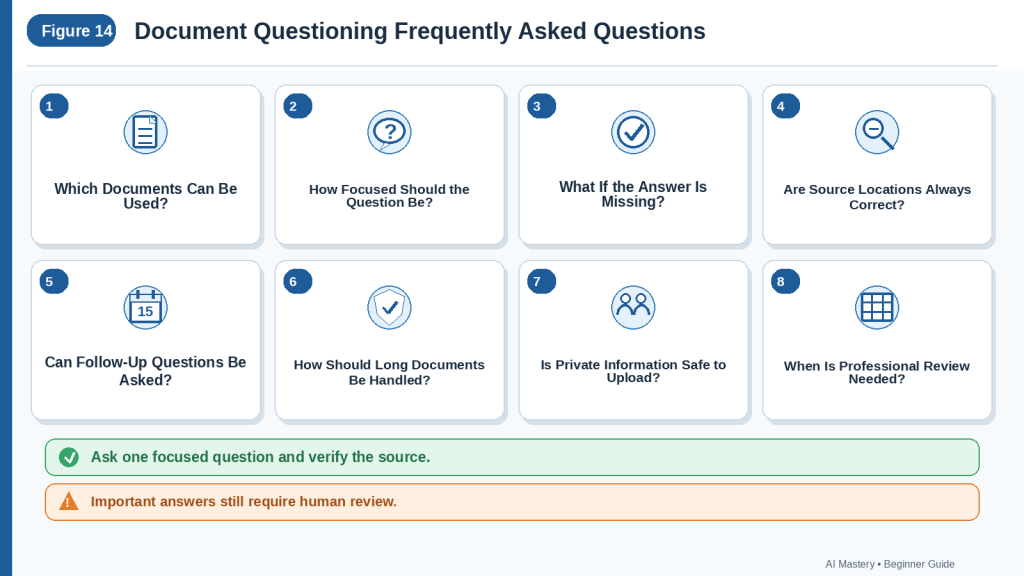
  • How to Compare Documents with ChatGPT: Beginner Guide (2026)

    How to Compare Documents with ChatGPT: Beginner Guide (2026)

    Estimated reading time: 90–120 minutes

    Last updated: July 28, 2026

    Before Learning

    Before starting this guide, you should understand the basic ChatGPT interface and know how to upload a document.

    These AI Mastery articles provide useful preparation:

    · ChatGPT Basics for Beginners: Complete Guide (2026)

    · Best ChatGPT Prompts for Beginners (2026)

    · Prompt Engineering for Beginners: Complete Guide (2026)

    · How to Summarize Documents with ChatGPT: Beginner Guide (2026)

    · How to Analyze Documents with ChatGPT: Beginner Guide (2026) — link after Article 023 is published

    You do not need advanced technical knowledge. This guide explains each step using simple language and practical examples.

    What Document Comparison Means

    Document comparison means examining two or more documents to identify:

    · Information that appears in both documents

    · Important differences

    · Changed dates, prices, responsibilities, or requirements

    · Added or removed sections

    · Conflicting statements

    · Missing information

    · Changes in tone, purpose, or intended audience

    · New risks, restrictions, or conditions

    For example, you may want to compare:

    · An old policy with a revised policy

    · Two versions of a contract

    · Two research reports

    · Two product descriptions

    · Meeting notes from different dates

    · Two business proposals

    · Two spreadsheets

    · A draft document with its final version

    ChatGPT can help organize these differences, but its comparison must still be checked against the original documents.

    Documents You Can Use for Practice

    Begin with two short and simple documents that you are allowed to use.

    Suitable practice examples include:

    · Two versions of a document you created

    · Two public articles covering the same subject

    · Two product information sheets

    · Two short meeting records

    · An original paragraph and a revised paragraph

    · Two public policies

    · Two small spreadsheets with similar columns

    Avoid beginning with:

    · Confidential contracts

    · Medical records

    · Financial statements

    · Employee or customer files

    · Legal documents containing private information

    · Large documents with hundreds of pages

    · Poor-quality scanned files

    Short documents make it easier to check whether ChatGPT identified the differences correctly.

    Prepare Safe Copies

    Keep the original documents unchanged.

    Create separate working copies and remove unnecessary:

    · Names

    · Addresses

    · Email addresses

    · Telephone numbers

    · Account numbers

    · Signatures

    · Identification numbers

    · Customer information

    · Employee information

    · Confidential comments

    · Tracked changes

    · Hidden metadata

    Use clear filenames so the documents cannot be confused.

    For example:

    · policy-version-a-safe-copy.docx

    · policy-version-b-safe-copy.docx

    Avoid filenames such as:

    · document1.docx

    · document2.docx

    · new-final-last-copy.docx

    Clear filenames help ChatGPT and the user keep every finding connected to the correct source.

    Confirm Permission and Privacy

    Before uploading the documents, confirm that:

    · You own the documents or have permission to use them.

    · Uploading them does not violate workplace or organizational rules.

    · Private information has been removed when possible.

    · Confidential or restricted material is not included.

    · The documents do not contain information that should remain offline.

    Removing names does not automatically make a document safe to upload. Business methods, customer information, internal policies, copyrighted material, and restricted project information may still require permission.

    Decide What You Need to Compare

    Do not begin with only:

    Compare these documents.

    Choose a specific comparison goal.

    For example:

    · Identify every changed date and deadline.

    · Compare responsibilities assigned to each department.

    · Find sections added or removed from the revised policy.

    · Compare the main arguments and supporting evidence.

    · Identify differences in prices, fees, or payment conditions.

    · Compare risks, limitations, and warnings.

    · Find conflicting statements.

    · Compare spreadsheet totals and trends.

    A clear goal makes the comparison more focused and easier to verify.

    Understand the Limits

    ChatGPT may:

    · Miss a difference

    · Report a difference that is not real

    · Combine information from the wrong document

    · Misread dates, numbers, tables, or charts

    · Ignore an exception or condition

    · Present interpretation as fact

    · Confuse an updated rule with a contradiction

    The original documents remain the main sources.

    · Every important difference should be checked manually before it is copied, shared, published, or used for a decision.

    What You’ll Learn

    By the end of this guide, you will understand how to:

    · Prepare two or more documents safely before uploading them

    · Give each document a clear name or label

    · Decide what information you need to compare

    · Ask ChatGPT to compare documents accurately

    · Compare two versions of the same document

    · Identify information that was added, removed, or changed

    · Compare dates, deadlines, prices, responsibilities, and requirements

    · Compare arguments, claims, evidence, and conclusions

    · Compare policies, contracts, reports, meeting notes, presentations, and spreadsheets

    · Find possible contradictions and inconsistencies

    · Separate genuine differences from changes that apply to different groups or conditions

    · Create side-by-side comparison tables

    · Compare long documents one section at a time

    · Check whether ChatGPT assigned information to the correct source

    · Verify important findings against the original documents

    · Protect privacy, confidentiality, permissions, and document ownership

    · Correct comparison errors before sharing or using the results

    · Recognize the benefits and limitations of AI-assisted document comparison

    · Avoid common comparison mistakes and myths

    · Decide when professional review is necessary

    You will also receive practical comparison prompts that you can copy and adapt for different types of documents.

    Introduction

    Comparing documents means examining two or more sources to find what is the same, what is different, and what may have changed.

    People often compare documents when they need to understand:

    · Whether a policy has been updated

    · Whether a contract contains new conditions

    · Whether a report reaches a different conclusion

    · Whether meeting responsibilities or deadlines have changed

    · Whether a product description includes different features

    · Whether spreadsheet values increased, decreased, or disappeared

    · Whether important information was added or removed

    For example, imagine that an organization publishes a revised policy.

    The original version says:

    Employees must submit requests at least 14 days before the planned absence.

    The revised version says:

    Employees must submit requests at least 21 days before the planned absence.

    A useful comparison should identify:

    · The original requirement

    · The revised requirement

    · The exact difference

    · Who the change applies to

    · Where the change appears

    · Whether any exceptions also changed

    It should not simply say:

    The policy was updated.

    That statement is too general to be useful.

    How ChatGPT Can Help

    ChatGPT can help organize a document comparison by:

    · Reading the main text

    · Identifying matching topics

    · Listing similarities

    · Highlighting differences

    · Finding added or removed information

    · Creating comparison tables

    · Separating findings by document

    · Locating possible contradictions

    · Explaining changes in simpler language

    · Preparing questions for further review

    For example, you can ask:

    Compare Document A and Document B. Identify every changed deadline, responsibility, requirement, exception, and penalty. Keep each finding connected to the correct document and include the source section when available.

    A focused prompt usually produces a more useful result than:

    What changed?

    Comparison Is Different from Summarization

    A summary explains the main information in one document.

    A comparison examines the relationship between two or more documents.

    For example:

    Summary of Document A:
    The policy explains employee leave requirements.

    Summary of Document B:
    The revised policy explains updated employee leave requirements.

    Comparison:
    Document B increases the advance-notice requirement from 14 days to 21 days and adds a new approval condition for requests submitted during peak periods.

    The comparison provides information that the two separate summaries may not show clearly.

    Comparison Is Different from Analysis

    Document analysis examines one source more deeply.

    It may identify:

    · Purpose

    · Main claims

    · Supporting evidence

    · Assumptions

    · Strengths

    · Weaknesses

    · Risks

    · Limitations

    · Missing information

    Document comparison examines how two or more sources relate to each other.

    It may identify:

    · Agreements

    · Differences

    · Added information

    · Removed information

    · Changed wording

    · Changed responsibilities

    · Changed dates or amounts

    · Conflicting statements

    · Different conclusions

    · Different levels of evidence

    Analysis and comparison can also be combined.

    For example:

    Analyze each report separately. Then compare their main claims, evidence, limitations, and conclusions.

    Each document should be understood separately before the findings are combined.

    Comparison Does Not Automatically Prove Which Document Is Correct

    ChatGPT may identify that two documents disagree.

    For example:

    · Document A lists a deadline of September 15.

    · Document B lists a deadline of September 30.

    This does not automatically show which date is correct.

    Possible explanations include:

    · One document is newer.

    · The dates apply to different groups.

    · One is a draft.

    · One contains an error.

    · One deadline applies to online submissions.

    · The other applies to mailed submissions.

    A careful comparison should identify the difference without guessing the explanation.

    Use wording such as:

    The documents list different deadlines. The sources do not clearly explain whether the dates apply to different groups or whether one version replaces the other.

    Keep Every Finding Connected to Its Source

    One of the biggest risks in document comparison is mixing information from different files.

    A comparison should clearly identify:

    · Document A

    · Document B

    · The relevant section

    · The exact difference

    · Any uncertainty

    · What requires verification

    A useful comparison table may look like this:

    TopicDocument ADocument BImportant DifferenceVerification Needed
    Application deadlineSeptember 15September 30Dates differ by 15 daysConfirm which version is current
    Approval responsibilityDepartment managerHuman ResourcesResponsibility changedCheck revised procedure
    Required formForm AForm BNew form namedConfirm where Form B is available

    Clear labels reduce the risk of assigning information to the wrong source.

    Compare Important Details, Not Only Wording

    Two documents may use different wording but communicate the same meaning.

    For example:

    Document A:
    Applicants must provide proof of identification.

    Document B:
    Applicants are required to submit an accepted identification document.

    The wording is different, but the requirement may be substantially the same.

    The opposite can also happen. Two sentences may appear similar but contain an important change.

    Document A:
    Applicants may submit the form electronically.

    Document B:
    Applicants must submit the form electronically.

    The change from may to must changes an optional action into a requirement.

    A useful comparison should examine meaning, conditions, exceptions, and level of certainty—not only matching words.

    A Reliable Comparison Uses a Staged Process

    A careful comparison normally follows these stages:

    1st Prepare safe copies.

    2nd Give each document a clear label.

    3rd Confirm the title, date, and version.

    4th Map or summarize each document separately.

    5th Choose one comparison goal.

    6th Request a focused comparison.

    7th Keep findings connected to the correct source.

    8th Check important differences manually.

    9th Correct errors or unsupported conclusions.

    10th Save the reviewed comparison.

    This process is especially important when the documents affect:

    · Legal rights

    · Employment

    · Insurance

    · Health

    · Safety

    · Money

    · Taxes

    · Contracts

    · Eligibility

    · Technical procedures

    ChatGPT can support the comparison, but the user remains responsible for checking the original documents and deciding how the findings should be used.

    Figure 1. A reliable document comparison begins with safe preparation, separate review, focused comparison, source checking, correction, and final verification.

    Figure 1 shows the main workflow for comparing documents with ChatGPT. Each source should be identified and reviewed separately before ChatGPT combines the findings into a comparison.

    What Is Document Comparison?

    Document comparison is the process of examining two or more documents to identify how they are similar, how they differ, and whether important information has changed.

    A comparison may examine:

    · Words and sentences

    · Main ideas

    · Dates and deadlines

    · Names and responsibilities

    · Prices, fees, and amounts

    · Rules and requirements

    · Conditions and exceptions

    · Claims and supporting evidence

    · Risks and warnings

    · Conclusions and recommendations

    · Tables, charts, and numerical data

    · Information that was added or removed

    The purpose is not only to find different words. A useful comparison explains whether those differences change the meaning.

    A Simple Document-Comparison Example

    Imagine that you have two versions of a workplace procedure.

    Document A:

    Employees may submit the request by email or through the online portal.

    Document B:

    Employees must submit the request through the online portal.

    A basic word comparison may notice that the sentences are different.

    A meaningful comparison should explain that:

    · Email submission was allowed in Document A.

    · Document B removes the email option.

    · The word may changes to must.

    · Online submission becomes a requirement.

    · Employees may need to change how they submit requests.

    The important finding is not only that the wording changed. The available submission method and level of obligation also changed.

    Document Comparison Can Examine Different Levels

    A comparison can focus on several levels of detail.

    Word-Level Comparison

    This identifies changes to individual words or short phrases.

    For example:

    · May changed to must

    · 14 days changed to 21 days

    · Manager changed to Human Resources

    · Optional changed to required

    Word-level comparison is useful when exact wording matters.

    However, a changed word does not always change the meaning significantly.

    Sentence-Level Comparison

    This examines complete sentences to identify:

    · Reworded instructions

    · Added conditions

    · Removed exceptions

    · Changed responsibilities

    · Stronger or weaker language

    For example:

    Document A:

    The manager should review the request.

    Document B:

    Human Resources must approve the request before processing begins.

    The second sentence changes both the responsible party and the required action.

    Section-Level Comparison

    This compares complete sections or topics.

    It can identify:

    · New sections

    · Deleted sections

    · Combined sections

    · Reorganized information

    · Changed headings

    · Additional examples

    · New warnings or procedures

    This is useful when comparing policies, reports, manuals, contracts, and long documents.

    Document-Level Comparison

    This examines the documents as complete sources.

    It may compare:

    · Purpose

    · Intended audience

    · Structure

    · Main argument

    · Evidence

    · Tone

    · Conclusions

    · Recommendations

    · Overall responsibilities

    · Major risks

    Document-level comparison helps explain whether the complete direction or purpose has changed.

    Similar Wording Can Have Different Meanings

    Two sentences may look similar while creating different requirements.

    Document A:

    Customers should contact support within 30 days.

    Document B:

    Customers must contact support within 30 calendar days to remain eligible.

    Document B adds:

    · A required action

    · A specific type of day

    · An eligibility condition

    · A possible consequence for missing the deadline

    A useful comparison should preserve these details.

    Different Wording Can Have the Same Meaning

    Two documents may use different words without changing the practical meaning.

    Document A:

    Submit proof of identity.

    Document B:

    Provide an accepted identification document.

    These sentences may express the same basic requirement.

    ChatGPT should not report every reworded sentence as a major policy change.

    A careful prompt can include:

    Separate wording changes from changes that affect meaning, responsibilities, conditions, deadlines, or required actions.

    Added Information

    A revised document may contain information that did not appear in the earlier version.

    Added information may include:

    · A new deadline

    · A new responsibility

    · An additional fee

    · A new exception

    · A new warning

    · A new eligibility rule

    · A new form

    · A new approval step

    · A new contact method

    · An additional source or reference

    Use this prompt:

    Identify information that appears in Document B but not in Document A. Explain whether each addition changes a requirement, responsibility, condition, risk, or recommendation.

    Check that the information is genuinely new and was not simply moved to another section.

    Removed Information

    Important information may also be removed.

    Removed content may include:

    · An option

    · A benefit

    · A responsibility

    · A condition

    · An exception

    · A deadline

    · A warning

    · A procedure

    · A contact person

    · A supporting explanation

    Use this prompt:

    Identify information that appears in Document A but not in Document B. Check whether the information was removed completely, rewritten, or moved to another section.

    Do not assume that missing information was intentionally cancelled. It may appear elsewhere in the revised document.

    Changed Information

    Changed information appears in both documents but differs in an important way.

    Examples include:

    · A deadline changed from 14 days to 21 days.

    · A payment changed from $50 to $75.

    · Responsibility moved from a manager to Human Resources.

    · An optional action became mandatory.

    · An approval step was added.

    · A recommendation became a formal requirement.

    · A warning became more specific.

    A useful comparison should show:

    · The original information

    · The revised information

    · The practical difference

    · The source location

    · Any question requiring verification

    Unchanged Information

    A comparison should also identify important information that remains the same.

    This may include:

    · Purpose

    · Eligibility rules

    · Main responsibilities

    · Payment method

    · Required documents

    · Cancellation conditions

    · Safety warnings

    · Contact information

    Confirming unchanged information can be valuable when only a few parts of a long document were revised.

    Use this prompt:

    Identify the important requirements and conditions that remain unchanged between the two documents.

    Agreements and Disagreements

    When comparing separate reports, articles, or research papers, the documents may agree or disagree.

    They may agree about:

    · A problem

    · A trend

    · A definition

    · A recommended action

    · A risk

    · A conclusion

    They may disagree about:

    · Causes

    · Evidence

    · Importance

    · Recommended solutions

    · Predicted results

    · Limitations

    · Priorities

    A comparison should not combine disagreement into one artificial conclusion.

    For example:

    Document A concludes that cost is the main barrier. Document B concludes that lack of training is the main barrier. The documents identify different primary causes.

    This is more accurate than saying:

    The main barriers are cost and training.

    The combined statement may hide the disagreement.

    Direct Differences and Interpretive Differences

    Some differences are directly stated and easy to verify.

    Examples include:

    · Different dates

    · Different prices

    · Different names

    · Added sections

    · Removed paragraphs

    Other differences require interpretation.

    Examples include:

    · A stronger tone

    · A narrower audience

    · Greater emphasis on risk

    · A weaker conclusion

    · A more persuasive approach

    A comparison should separate these categories.

    A useful structure is:

    Directly Verified Differences

    · Exact wording changes

    · Dates

    · Amounts

    · Added or removed requirements

    Possible Interpretive Differences

    · Tone

    · Emphasis

    · Intended audience

    · Strength of argument

    · Possible implications

    Interpretive differences should be connected to specific examples and clearly labelled.

    Source Labels Are Essential

    Before comparing documents, assign a clear label to each source.

    For example:

    · Document A — Original Policy, March 2026

    · Document B — Revised Policy, July 2026

    Do not use unclear labels such as:

    · First file

    · Other document

    · New one

    · Old copy

    · Latest version

    Clear labels reduce the risk of mixing findings.

    Source Locations Improve Verification

    Ask ChatGPT to include source locations when available.

    A source location may be:

    · Page number

    · Section heading

    · Paragraph

    · Table name

    · Chart title

    · Appendix

    · Worksheet

    · Row or column

    For example:

    TopicDocument ADocument BDifferenceSource Location
    Notice period14 days21 daysIncreased by 7 daysSection 4
    ApprovalManager reviewHR approvalResponsibility changedSection 6
    Submission methodEmail or portalPortal onlyEmail removedSection 3

    Verify important locations manually because page numbers and extracted sections may be incorrect.

    Comparison Does Not Replace Verification

    A ChatGPT comparison may miss a difference or report one incorrectly.

    Possible causes include:

    · Different document layouts

    · Scanned pages

    · Similar section names

    · Moved information

    · Tables or charts

    · Long documents

    · Unclear filenames

    · Missing context

    · Different dates or groups

    The original documents remain the final references.

    A reliable comparison explains what appears to be the same or different while clearly identifying what still requires checking.

    Figure 2. Document comparison examines added, removed, changed, and unchanged information while keeping every finding connected to the correct source.

    Figure 2 shows the main categories used when comparing documents. It also separates direct differences, such as dates and amounts, from interpretive differences, such as tone or emphasis.

    What Types of Documents Can You Compare with ChatGPT?

    ChatGPT can support comparisons involving many types of written and structured documents, provided the content is readable and you are allowed to use it.

    The comparison method should match the document type. A contract comparison requires different questions from a report, spreadsheet, meeting record, or product description.

    Different Versions of the Same Document

    One of the most useful comparison tasks is checking an original document against a revised version.

    Examples include:

    · Draft and final documents

    · Old and updated policies

    · Original and revised contracts

    · Earlier and later reports

    · First and corrected procedures

    · Previous and current application instructions

    · Original and edited articles

    A version comparison may identify:

    · Added wording

    · Removed wording

    · Changed responsibilities

    · New deadlines

    · Revised amounts

    · Added conditions

    · Removed exceptions

    · New warnings

    · Reorganized sections

    Example prompt:

    Compare the original version with the revised version. Identify information that was added, removed, changed, or moved. Separate wording changes from changes that affect meaning, responsibilities, deadlines, conditions, or required actions.

    Confirm which document is older and which is newer before starting.

    Policies and Procedures

    Policies and procedures may contain:

    · Eligibility rules

    · Responsibilities

    · Required actions

    · Deadlines

    · Restrictions

    · Exceptions

    · Penalties

    · Approval processes

    · Complaint procedures

    When comparing two policies, focus on whether the revised version changes:

    · Who the policy applies to

    · What people must do

    · Who approves an action

    · Which documents are required

    · When actions must be completed

    · Which exceptions remain available

    · What happens when requirements are not followed

    Example prompt:

    Compare Policy A and Policy B. Identify changes to scope, eligibility, responsibilities, required actions, deadlines, exceptions, restrictions, penalties, and appeal procedures. Keep every finding connected to the correct policy.

    A policy difference does not automatically mean that one document is wrong. One may apply to a different date, department, location, or group.

    Contracts and Agreements

    Contracts may contain important differences involving:

    · Parties

    · Services

    · Payments

    · Fees

    · Responsibilities

    · Renewal

    · Cancellation

    · Notice periods

    · Warranties

    · Confidentiality

    · Penalties

    · Dispute procedures

    Example prompt:

    Compare Agreement A and Agreement B. Identify changes to the parties, services, responsibilities, payment terms, dates, renewal, cancellation, notice requirements, restrictions, penalties, and dispute procedures. Include the source section for each difference.

    A changed word can have an important effect.

    For example:

    · May can become must.

    · 30 days can become 60 days.

    · Refundable can become non-refundable.

    · Either party can become the customer only.

    ChatGPT can help organize an initial comparison, but it cannot confirm legal meaning or determine which agreement should be accepted.

    Reports

    Reports may be compared to identify differences in:

    · Purpose

    · Methods

    · Data

    · Findings

    · Risks

    · Limitations

    · Recommendations

    · Conclusions

    For example, two reports may study the same problem but use different methods or reach different conclusions.

    Example prompt:

    Compare Report A and Report B. Identify agreements and differences in purpose, methods, evidence, findings, limitations, recommendations, and conclusions. Do not combine disagreements into one conclusion.

    Check whether the reports:

    · Cover the same date range

    · Study the same population

    · Use the same definitions

    · Use comparable methods

    · Rely on the same data

    · Address the same question

    Two different findings may result from different methods rather than a direct contradiction.

    Research Papers

    Research papers may be compared by examining:

    · Research questions

    · Participants or data

    · Methods

    · Measurements

    · Results

    · Limitations

    · Conclusions

    · Suggested future research

    Example prompt:

    Compare the two research papers. Create separate sections for research question, method, sample or data, main findings, limitations, and conclusions. Identify where the papers agree, disagree, or examine different conditions.

    Do not assume that one paper disproves another simply because the results differ.

    The papers may involve:

    · Different samples

    · Different locations

    · Different time periods

    · Different measurements

    · Different study designs

    · Different definitions

    Articles and Opinion Pieces

    Articles may be compared to examine:

    · Main message

    · Claims

    · Evidence

    · Sources

    · Tone

    · Intended audience

    · Opinions

    · Assumptions

    · Conclusions

    · Calls to action

    Example prompt:

    Compare Article A and Article B. Identify their main positions, supporting evidence, assumptions, tone, intended audience, areas of agreement, and areas of disagreement. Clearly label interpretations.

    A comparison can show that two writers use the same facts differently.

    For example:

    · One writer may emphasize benefits.

    · Another may emphasize risks.

    · One may use research evidence.

    · Another may rely mainly on personal examples.

    Meeting Notes

    Meeting notes from different dates can be compared to track:

    · Decisions

    · Proposals

    · Action items

    · Responsible people

    · Deadlines

    · Completed tasks

    · Delayed tasks

    · Unresolved questions

    · Changes in project direction

    Example prompt:

    Compare the meeting notes from May and June. Identify new decisions, changed responsibilities, completed action items, missed deadlines, unresolved questions, and items that no longer appear.

    Be careful not to treat a discussion or suggestion as an approved decision.

    Proposals and Business Plans

    Proposals may differ in:

    · Goals

    · Target audience

    · Budget

    · Timeline

    · Resources

    · Responsibilities

    · Risks

    · Expected results

    · Marketing approach

    · Implementation plan

    Example prompt:

    Compare Proposal A and Proposal B. Identify differences in goals, audience, budget, timeline, resources, risks, responsibilities, and expected results. Show which details appear in only one proposal.

    Check whether both proposals use the same assumptions and time period.

    Product or Service Information

    Product and service documents may be compared by examining:

    · Features

    · Specifications

    · Requirements

    · Compatibility

    · Included items

    · Limitations

    · Warranties

    · Support

    · Cancellation rules

    · Delivery conditions

    Example prompt:

    Compare the two product information documents. Identify similarities and differences in features, requirements, limitations, included services, warranty conditions, and support.

    Do not assume that a missing feature is unavailable. It may simply be omitted from one description.

    Confirm important details using the current official product source before buying or recommending something.

    Manuals and Instructions

    Manuals may be compared to find changes in:

    · Preparation

    · Tools

    · Steps

    · Measurements

    · Settings

    · Warnings

    · Maintenance

    · Troubleshooting

    · Model-specific instructions

    Example prompt:

    Compare Manual A and Manual B. Identify changed steps, settings, measurements, warnings, required tools, and troubleshooting instructions. Preserve the original order and identify which model or version each instruction applies to.

    Do not combine instructions for different models unless the manuals confirm they are interchangeable.

    When safety is involved, use the current official manual rather than relying only on an AI comparison.

    Letters and Official Notices

    Official notices may be compared to identify changed:

    · Dates

    · Required actions

    · Required documents

    · Contact information

    · Eligibility conditions

    · Consequences

    · Appeal procedures

    · Reference numbers

    Example prompt:

    Compare Notice A and Notice B. Identify changes to the required action, deadline, documents, contact information, consequences, and appeal options. Do not guess why the information changed.

    Verify important instructions directly from the issuing organization.

    Presentations

    Presentations may be compared by examining:

    · Main message

    · Slide order

    · Evidence

    · Charts

    · Recommendations

    · Intended audience

    · Added or removed slides

    · Changed conclusions

    Example prompt:

    Compare Presentation A and Presentation B. Identify added, removed, or revised slides and explain whether the main message, evidence, recommendations, or intended audience changed.

    Speaker notes may contain important information that does not appear on the slides.

    Spreadsheets

    Spreadsheets may be compared to identify:

    · Added or removed rows

    · Added or removed columns

    · Changed values

    · Changed formulas

    · Missing entries

    · Different totals

    · Duplicate records

    · Changed date ranges

    · Changed categories

    · Different worksheet names

    Example prompt:

    Compare Spreadsheet A and Spreadsheet B. Identify changed rows, columns, values, formulas, totals, missing entries, and duplicate records. Show the worksheet and cell or row location for each important difference.

    Check carefully whether:

    · Blank cells were treated as zeros

    · Dates use the same format

    · Units and currencies match

    · Hidden rows or filters affect the comparison

    · Formulas changed

    · Totals use the same data range

    Transcripts

    Transcripts may be compared to examine:

    · Topics discussed

    · Speaker statements

    · Changed opinions

    · New claims

    · Decisions

    · Disagreements

    · Action items

    · Repeated concerns

    Example prompt:

    Compare Transcript A and Transcript B. Identify repeated topics, changed positions, new claims, disagreements, decisions, and action items. Do not assign a statement to a person unless the transcript clearly identifies the speaker.

    Check important quotations against the original recording when available and when you have permission.

    Documents from Different Organizations

    Two organizations may publish documents about the same topic.

    A comparison may examine:

    · Definitions

    · Requirements

    · Advice

    · Evidence

    · Priorities

    · Risks

    · Responsibilities

    · Recommendations

    Example prompt:

    Compare the two organizations’ documents. Identify similarities and differences in definitions, requirements, recommendations, evidence, and warnings. Keep every finding connected to its organization.

    Do not combine the documents into one set of rules unless they clearly apply to the same situation.

    Choose Documents That Can Be Compared Meaningfully

    Two documents are easier to compare when they share:

    · A similar purpose

    · A similar topic

    · Comparable sections

    · The same type of information

    · Similar date ranges

    · Similar audiences

    · Related definitions or categories

    Documents may be difficult to compare when they:

    · Address unrelated questions

    · Use different definitions

    · Cover different time periods

    · Apply to different groups

    · Use incompatible measurements

    · Have very different purposes

    Before comparing, ask:

    Are these documents similar enough for the comparison question I am asking?

    Choosing the correct document pair and comparison goal helps prevent misleading conclusions.

    Figure 3. Different document types require different comparison priorities, including requirements, evidence, decisions, deadlines, procedures, features, and numerical changes.

    Figure 3 shows common document types that beginners may compare with ChatGPT. The comparison questions should match the type and purpose of each source.

    How to Prepare Documents Before Comparing Them

    Good preparation helps ChatGPT keep the documents separate and identify meaningful differences more accurately.

    Before uploading anything, prepare each file carefully.

    Keep the Original Documents Unchanged

    Do not edit, rename, or overwrite the only copy of an important document.

    Keep the originals in a separate folder and create working copies for comparison.

    For example:

    · employee-policy-original-march-2026.docx

    · employee-policy-revised-july-2026.docx

    The original files should remain available in case you need to confirm:

    · Exact wording

    · Page layout

    · Dates

    · Signatures

    · Version numbers

    · Tables

    · Comments

    · Official formatting

    Create Safe Working Copies

    Make a duplicate of each document before removing private or unnecessary information.

    Example working filenames:

    · document-a-policy-safe-copy.docx

    · document-b-policy-safe-copy.docx

    Review each copy for:

    · Personal names

    · Email addresses

    · Telephone numbers

    · Home addresses

    · Account numbers

    · Identification numbers

    · Signatures

    · Customer information

    · Employee information

    · Confidential notes

    · Internal comments

    · Tracked changes

    · Hidden metadata

    Remove only information that is unnecessary for the comparison.

    Do not remove definitions, conditions, exceptions, headings, table labels, or other context needed to understand the documents correctly.

    Confirm That You Have Permission

    Before uploading the documents, confirm that:

    · You own the files or have permission to use them.

    · The documents are not prohibited from being uploaded to an external service.

    · Workplace or organizational rules allow the comparison.

    · Confidentiality agreements do not restrict the files.

    · Copyright or licensing conditions permit the intended use.

    Removing names does not automatically make every document safe to upload.

    The file may still contain protected business methods, private project information, customer records, or restricted internal material.

    Give Each Document a Clear Label

    Clear labels help prevent information from being assigned to the wrong source.

    Use labels such as:

    · Document A — Original Policy, March 2026

    · Document B — Revised Policy, July 2026

    For three documents:

    · Document A — Draft Version

    · Document B — Manager Review Version

    · Document C — Final Approved Version

    Avoid labels such as:

    · First file

    · Second file

    · New document

    · Other version

    · Final copy

    · Latest file

    These labels may become confusing during a long conversation.

    Use Descriptive Filenames

    A good filename should identify:

    · The document topic

    · The version

    · The date

    · Whether it is an original or safe copy

    For example:

    leave-policy-original-2026-03-safe-copy.docx

    leave-policy-revised-2026-07-safe-copy.docx

    Avoid filenames such as:

    · document.docx

    · final.docx

    · new-final.docx

    · final-last-version-2.docx

    Clear filenames help both the user and ChatGPT distinguish the sources.

    Confirm the Date and Version

    A comparison can be misleading when the documents are not arranged in the correct order.

    Check:

    · Creation date

    · Revision date

    · Publication date

    · Effective date

    · Version number

    · Approval status

    · Draft or final status

    For example:

    · Version 1.0 — March 2026

    · Version 1.1 — May 2026

    · Version 2.0 — July 2026

    Do not assume that the file with the newest upload date is the newest document version.

    A recently downloaded copy may contain older content.

    Check Whether the Documents Are Complete

    Confirm that each file includes all required:

    · Pages

    · Sections

    · Tables

    · Charts

    · Footnotes

    · Appendices

    · Attachments

    · References

    · Signature pages

    A missing page may create a false difference.

    For example, ChatGPT may report that Document B removed a cancellation clause when the page containing that clause was simply missing from the uploaded copy.

    Check Readability

    Use documents with clear, selectable text whenever possible.

    Review each file for:

    · Blurred text

    · Cropped pages

    · Skewed scans

    · Small print

    · Faded characters

    · Handwriting

    · Multiple columns

    · Overlapping text

    · Unreadable tables

    · Missing page numbers

    When one document is clear and the other is difficult to read, the comparison may be uneven.

    Create a clearer copy or upload important pages separately when necessary.

    Keep the Same File Type When Practical

    Comparing two files is usually easier when they use similar formats.

    For example:

    · DOCX compared with DOCX

    · PDF compared with PDF

    · XLSX compared with XLSX

    · TXT compared with TXT

    Different formats can still be compared, but the layout and extracted content may not match in the same way.

    For example, comparing a PDF with copied plain text may make page references difficult to verify.

    Check Headings and Section Names

    Similar documents may use different section names.

    For example:

    Document A

    · Employee Responsibilities

    · Request Procedure

    · Approval Process

    Document B

    · Staff Duties

    · Submission Steps

    · Authorization Process

    These sections may discuss similar topics even though the headings are different.

    Create a simple section map when necessary:

    Document ADocument B
    Employee ResponsibilitiesStaff Duties
    Request ProcedureSubmission Steps
    Approval ProcessAuthorization Process

    This helps ChatGPT compare matching topics rather than only matching headings.

    Identify the Comparison Baseline

    Decide which document will be treated as the starting point.

    For example:

    · Document A is the original.

    · Document B is the revised version.

    The comparison can then identify what changed from Document A to Document B.

    For separate documents, the baseline may be:

    · A current policy compared with a proposed policy

    · A company report compared with an industry report

    · A draft compared with a final version

    · Last year’s data compared with this year’s data

    State the baseline clearly in the prompt.

    Decide Which Differences Matter

    Not every change is equally important.

    You may want ChatGPT to separate:

    Meaningful changes

    · New requirements

    · Removed options

    · Changed responsibilities

    · Revised deadlines

    · Different amounts

    · Added risks

    · Changed exceptions

    · New penalties

    Minor wording or formatting changes

    · Punctuation

    · Spelling corrections

    · Reworded sentences with the same meaning

    · Heading style

    · Paragraph order

    · Font or layout changes

    Example instruction:

    Separate changes that affect meaning from minor wording, spelling, punctuation, or formatting changes.

    Create a Comparison Question List

    Before uploading the documents, write the questions you need answered.

    For example:

    · What information was added?

    · What information was removed?

    · Which deadlines changed?

    · Did any responsibility move to another person or department?

    · Were new conditions or exceptions added?

    · Did any amount, percentage, or fee change?

    · Did the conclusion become stronger or weaker?

    · Are there any conflicting statements?

    · Which sections appear unchanged?

    · Which differences require confirmation?

    A question list helps prevent the comparison from becoming too broad.

    Prepare Tables and Spreadsheets Carefully

    Before comparing spreadsheets, check:

    · Worksheet names

    · Column headers

    · Row labels

    · Date formats

    · Currency

    · Units

    · Formulas

    · Filters

    · Hidden rows or columns

    · Blank cells

    · Duplicate records

    Confirm that both spreadsheets use compatible categories.

    For example, one file may report monthly totals while the other reports quarterly totals.

    These values should not be compared directly without adjustment or explanation.

    Prepare Scanned Documents Carefully

    When comparing scanned documents:

    · Use the clearest available copies.

    · Confirm that all pages are upright.

    · Remove blank or duplicated pages.

    · Check cropped edges.

    · Confirm that page numbers are visible.

    · Review handwritten notes separately.

    · Upload unclear pages individually when necessary.

    Do not ask ChatGPT to guess unreadable content.

    Create a Preparation Checklist

    Before uploading, confirm:

    · The original documents are saved separately.

    · Safe working copies were created.

    · Private and restricted information was reviewed.

    · Permission to upload was confirmed.

    · Each document has a clear filename.

    · Each source has a clear label.

    · Dates and version numbers were checked.

    · Every page and appendix is included.

    · Text and tables are readable.

    · The comparison baseline is clear.

    · The comparison questions are ready.

    · Meaningful changes will be separated from minor wording changes.

    Careful preparation reduces the risk of mixed sources, false differences, missing context, and incorrect conclusions.

    Figure 4. Documents should be copied safely, labelled clearly, checked for completeness, and organized by date and version before comparison begins.

    Figure 4 shows the main preparation steps for document comparison. Clear filenames, readable content, complete pages, and a defined comparison goal help keep findings connected to the correct source.

    How to Upload and Label Documents for Comparison

    After preparing safe copies, upload the documents in a way that keeps each source clearly identified.

    OpenAI lists comparing and contrasting two documents as a supported use of ChatGPT file uploads. Common supported formats include PDF, DOCX, PPTX, XLS, XLSX, CSV, TSV, and TXT. Google Docs files should normally be exported to a supported format before uploading.

    The exact button names and screen layout may vary by device, plan, workspace, and future ChatGPT update.

    Step 1: Start a Separate Conversation

    Open a new ChatGPT conversation for the comparison.

    A separate conversation helps you:

    · Keep the documents and prompts together

    · Avoid mixing the comparison with unrelated work

    · Find the results later

    · Track corrections

    · Preserve clear source labels

    Use a descriptive conversation name when that option is available.

    For example:

    Comparison of Original and Revised Leave Policies

    Avoid continuing an unrelated conversation that already contains other documents. Earlier files and instructions may create confusion about which sources should be compared.

    Step 2: Confirm the Documents Before Uploading

    Before selecting the files, check:

    · Both documents are safe working copies.

    · The originals are stored separately.

    · Private or restricted information has been reviewed.

    · The filenames are clear.

    · The dates and versions are correct.

    · All required pages are included.

    · The documents are readable.

    · You have permission to upload them.

    Do not rely only on the order in which files appear in a folder. Read each complete filename before selecting it.

    Step 3: Upload the First Document

    Select the attachment or add-files control near the message box.

    Choose the first safe working copy.

    The wording may appear as Add files, Upload files, Add photos and files, an attachment symbol, or another similar label depending on the interface.

    Wait until the filename or attachment preview appears.

    Confirm that the correct first document is attached.

    For example:

    leave-policy-original-2026-03-safe-copy.docx

    Do not send the comparison prompt yet.

    Step 4: Upload the Second Document

    Use the attachment control again and choose the second safe working copy.

    For example:

    leave-policy-revised-2026-07-safe-copy.docx

    Confirm that both filenames appear before continuing.

    ChatGPT supports common text, document, presentation, and spreadsheet formats, but readability and comparison quality still depend on the file structure and content.

    Step 5: Assign a Clear Label to Each Document

    Do not depend only on attachment order.

    In your first message, state exactly how each file should be identified.

    For example:

    Use these source labels throughout the comparison:

    Document A — Original Leave Policy, March 2026

    Document B — Revised Leave Policy, July 2026

    Do not refer to them only as “the first document” and “the second document.”

    Clear labels help prevent ChatGPT from:

    · Assigning a rule to the wrong source

    · Reversing the old and new versions

    · Combining both documents

    · Referring to an unclear “new file”

    · Losing track of the comparison baseline

    Use the same labels in every follow-up prompt.

    Step 6: Ask ChatGPT to Confirm the Files

    Before requesting the comparison, ask ChatGPT to identify each source.

    Use this prompt:

    Before comparing the files, confirm the filename, title, date, version, and main headings of Document A and Document B. Keep the information for each document separate. Identify anything you cannot read confidently.

    Compare the response with the original documents.

    Check whether ChatGPT correctly identified:

    · The filename

    · Document title

    · Publication or revision date

    · Version number

    · Draft or final status

    · Main headings

    · Number of pages when clearly available

    Do not continue when the documents appear to have been reversed or misidentified.

    Step 7: Request a Separate Document Map

    Ask ChatGPT to map each document before comparing them.

    Use this prompt:

    Create a separate document map for Document A and Document B. For each source, list the main headings, subsections, tables, charts, appendices, and major topics in the order they appear. Do not compare the documents yet.

    This helps you check whether:

    · Both documents were recognized

    · Major sections are present

    · One file has additional sections

    · A table or appendix may require separate review

    · Similar topics use different headings

    · Important content could not be read

    A document map is especially useful when comparing long policies, reports, manuals, presentations, or contracts.

    Step 8: Check Whether Matching Sections Have Different Names

    The same topic may appear under different headings.

    For example:

    Document ADocument B
    Employee ResponsibilitiesStaff Duties
    Request ProcedureSubmission Process
    Manager ApprovalAuthorization Requirements
    ExceptionsSpecial Circumstances

    Ask ChatGPT:

    Identify sections in Document A and Document B that appear to cover the same topic even when their headings are different. Clearly label this as a proposed section match for manual review.

    Check every proposed match yourself.

    Similar headings do not always contain equivalent information, and different headings may still discuss the same requirement.

    Step 9: Confirm the Comparison Direction

    State which document is the baseline.

    For example:

    Treat Document A as the original version and Document B as the revised version. Describe changes from Document A to Document B.

    This direction matters.

    Without it, ChatGPT might say:

    The notice period changed from 21 days to 14 days.

    when the actual revision changed it from 14 days to 21 days.

    For separate sources that are not versions, use neutral wording:

    Treat Document A and Document B as separate reports. Do not assume that either document replaces the other.

    Step 10: Ask for a Basic Summary of Each Document

    Before comparing, request a short separate summary.

    Use this prompt:

    Summarize Document A and Document B separately. For each document, identify its purpose, intended audience, main requirements, important findings, recommendations, limitations, and conclusion. Do not combine the summaries.

    Review both summaries against the originals.

    Correct mistakes before requesting the comparison.

    A comparison built from incorrect summaries may produce additional errors.

    Step 11: Choose One Comparison Goal

    Do not begin by asking for every possible difference.

    Choose one focused goal, such as:

    · Added and removed information

    · Changed deadlines

    · Changed responsibilities

    · Different prices or fees

    · New requirements

    · Changed conditions or exceptions

    · Different claims and evidence

    · Different findings and conclusions

    · Spreadsheet value changes

    Example:

    Compare only the deadlines, required actions, responsible departments, and exceptions. Do not analyze tone or writing style yet.

    You can request another comparison type after verifying the first result.

    Step 12: Send the First Comparison Prompt

    A useful beginner prompt is:

    Compare Document A — Original Leave Policy, March 2026, with Document B — Revised Leave Policy, July 2026.

    Identify:

    · Information added in Document B

    · Information removed from Document A

    · Requirements that changed

    · Deadlines that changed

    · Responsibilities that changed

    · Conditions or exceptions that changed

    · Important information that remained unchanged

    Separate meaningful changes from minor wording, spelling, punctuation, or formatting changes.

    For every finding, show the information from Document A, the information from Document B, the practical difference, and the source section when available.

    Do not guess why a change was made. Write “Requires verification” when the documents do not provide enough information.

    ChatGPT file uploads can be used to compare documents and extract information from them, but the findings still require review against the original sources.

    Step 13: Check That the Documents Remained Separate

    Review the response for source confusion.

    Ask:

    · Is every statement assigned to Document A or Document B?

    · Was the comparison direction preserved?

    · Were original and revised details reversed?

    · Did ChatGPT combine rules from both documents?

    · Are source locations connected to the correct file?

    · Were differences reported when information was only moved?

    · Were similar meanings treated as major changes?

    Use this correction prompt when necessary:

    Review the comparison and check that every statement is assigned to the correct document. Do not combine information from Document A and Document B. Correct any reversed or unsupported findings.

    Step 14: Upload Unclear Pages Separately When Necessary

    A comparison may fail when one document contains:

    · A blurred scan

    · A complicated table

    · A chart

    · Small text

    · Multiple columns

    · Handwriting

    · A cropped page

    · An unclear appendix

    When an important page is unreadable:

    1st Locate the page in the original file.

    2nd Create a clear copy or image.

    3rd Remove unnecessary private information.

    4th Upload it in the same conversation.

    5th Identify the source and page clearly.

    6th Ask one focused question.

    For example:

    This is page 12 from Document B. Review only the deadline table and compare it with the corresponding table on page 9 of Document A. Identify any values you cannot read confidently.

    Do not ask ChatGPT to guess missing or unreadable content.

    Step 15: Avoid Uploading Unnecessary Files

    Do not add unrelated documents to the same comparison conversation.

    Extra files may make it harder to determine:

    · Which source contains a finding

    · Which version is current

    · Which documents should be compared

    · Whether a statement came from an unrelated attachment

    Upload only the sources required for the current task.

    When several versions are necessary, label each one clearly:

    · Document A — Original Draft

    · Document B — First Revision

    · Document C — Approved Version

    Step 16: Save the Source List

    Record the comparison sources in your working notes.

    For example:

    Comparison sources

    · Document A — Original Leave Policy, March 2026

    · Filename: leave-policy-original-2026-03-safe-copy.docx

    · Status: Original approved version

    · Document B — Revised Leave Policy, July 2026

    · Filename: leave-policy-revised-2026-07-safe-copy.docx

    · Status: Revised version requiring confirmation

    Also record:

    · Upload date

    · Comparison goal

    · Original prompt

    · Corrections

    · Final review date

    This record helps prevent confusion when the documents are reviewed later.

    Upload and Labelling Checklist

    Before requesting the comparison, confirm:

    · A separate conversation was opened.

    · Only the required files were attached.

    · The correct safe copies were selected.

    · Every filename is clear.

    · Each source has a permanent label.

    · Dates and version numbers were checked.

    · ChatGPT confirmed the document identities.

    · Separate document maps were reviewed.

    · Matching sections were identified carefully.

    · The comparison direction is clear.

    · Each document was summarized separately.

    · One focused comparison goal was chosen.

    · Unreadable content was identified.

    · The original files remain available.

    Uploading the correct files is only the first step. Clear source labels and separate document checks are essential for preventing mixed, reversed, or unsupported comparison findings.

    Figure 5. Documents should be uploaded, labelled, mapped, summarized, and confirmed separately before ChatGPT begins the comparison.

    Figure 5 shows how clear source labels help prevent Document A and Document B from becoming mixed or reversed. Beginners should confirm the identity and structure of both files before requesting differences.

    How to Write a Clear Document-Comparison Prompt

    A clear comparison prompt tells ChatGPT:

    · Which documents to compare

    · How each document should be labelled

    · Which document is the baseline

    · What information to examine

    · How the results should be organized

    · Which details must remain separate

    · What ChatGPT should do when information is missing or unclear

    A vague prompt such as:

    Compare these two documents.

    may produce a general response that misses important changes or mixes the sources.

    A clearer prompt may say:

    Compare Document A — Original Policy, March 2026, with Document B — Revised Policy, July 2026. Identify added, removed, changed, and unchanged requirements. Separate meaningful changes from minor wording changes. Include the source section for every important finding and write “Requires verification” when the documents do not provide enough information.

    Use a Clear Comparison Formula

    A useful document-comparison prompt can include eight parts:

    1st Name and label the documents.

    2nd State the comparison direction.

    3rd Explain the comparison goal.

    4th List the topics to compare.

    5th Choose the output format.

    6th Request source locations.

    7th Separate direct findings from interpretation.

    8th Add accuracy and uncertainty rules.

    You do not need to use every part in every prompt, but including the most relevant parts usually improves the result.

    Part 1: Name and Label the Documents

    Identify each file clearly.

    For example:

    Document A — Original Employee Policy, March 2026
    Document B — Revised Employee Policy, July 2026

    Use the same labels throughout the conversation.

    Avoid changing from:

    · Document A

    · Old file

    · First policy

    · Original document

    These may all refer to the same source, but changing the label can create confusion.

    Part 2: State the Comparison Direction

    When one document is a revision of another, explain which version is the starting point.

    For example:

    Treat Document A as the original version and Document B as the revised version. Describe changes from Document A to Document B.

    This helps prevent reversed findings.

    Without a clear direction, ChatGPT may incorrectly report:

    The deadline changed from 21 days to 14 days.

    when the revised document actually increased the deadline from 14 days to 21 days.

    When comparing separate sources rather than versions, use neutral wording:

    Treat Document A and Document B as separate reports. Do not assume that either document replaces the other.

    Part 3: Explain the Comparison Goal

    State why you are comparing the documents.

    Possible goals include:

    · Finding all important revisions

    · Checking changed responsibilities

    · Comparing arguments and evidence

    · Identifying different conclusions

    · Finding changed fees or deadlines

    · Comparing risks and limitations

    · Checking whether requirements were removed

    · Comparing spreadsheet values

    Example:

    The goal is to identify changes that affect employee responsibilities, deadlines, approval requirements, and available exceptions.

    A clear goal helps ChatGPT focus on useful differences.

    Part 4: List the Topics to Compare

    Do not assume that ChatGPT will know which details matter most.

    List the categories you want reviewed.

    For a policy comparison, you may request:

    · Purpose

    · Scope

    · Eligibility

    · Responsibilities

    · Required actions

    · Deadlines

    · Conditions

    · Exceptions

    · Penalties

    · Appeal process

    For a report comparison, you may request:

    · Research question

    · Method

    · Data

    · Main findings

    · Evidence

    · Limitations

    · Recommendations

    · Conclusion

    For a spreadsheet comparison, you may request:

    · Worksheets

    · Added or removed rows

    · Changed columns

    · Updated values

    · Formulas

    · Totals

    · Missing entries

    · Date ranges

    Example:

    Compare the two policies only for eligibility, required documents, deadlines, responsibilities, exceptions, and penalties.

    This focused request is easier to verify than asking for every possible difference at once.

    Part 5: Choose the Output Format

    Tell ChatGPT how to organize the results.

    Useful formats include:

    · Side-by-side table

    · Added, Removed, Changed, and Unchanged sections

    · Topic-by-topic comparison

    · Section-by-section comparison

    · Change log

    · Checklist

    · Summary followed by detailed findings

    A side-by-side table may use these columns:

    · Topic

    · Document A

    · Document B

    · Important difference

    · Practical effect

    · Source location

    · Verification required

    Example prompt:

    Present the results in a table with the columns Topic, Document A, Document B, Important Difference, Practical Effect, Source Location, and Verification Required.

    Tables are useful for short, specific findings.

    For long explanations, headings and paragraphs may be easier to read.

    Part 6: Request Source Locations

    Ask ChatGPT to show where each finding appears.

    A source location may include:

    · Page number

    · Section heading

    · Paragraph

    · Table name

    · Chart title

    · Appendix

    · Worksheet

    · Row or column

    Example:

    Include the page number, section heading, table name, worksheet, or other source location for every important difference when available.

    Source locations make review easier, but they must still be checked manually.

    Page numbers may be inaccurate when:

    · Printed and digital page numbers differ

    · The file was scanned

    · Similar headings appear more than once

    · Text was copied instead of uploaded

    · Tables were extracted incorrectly

    Part 7: Separate Direct Findings from Interpretation

    Some differences are directly visible.

    Examples include:

    · A changed date

    · A removed paragraph

    · A new fee

    · A different responsible department

    Other differences require interpretation.

    Examples include:

    · A stronger tone

    · A narrower audience

    · Greater emphasis on risk

    · A more cautious conclusion

    · A possible change in purpose

    Use this instruction:

    Separate directly verified differences from interpretive differences. Clearly label tone, emphasis, audience, and possible implications as interpretation.

    This reduces the risk of presenting judgement as fact.

    Part 8: Add Accuracy and Uncertainty Rules

    Tell ChatGPT what to do when information is missing, unclear, or inconsistent.

    Useful instructions include:

    Do not guess why a change was made.

    Write “Not stated in the document” when information is missing.

    Write “Requires verification” when the source is unclear.

    Do not combine information from the two documents.

    Do not treat moved information as removed until the complete document has been checked.

    Preserve conditions, exceptions, dates, amounts, and uncertainty.

    These rules help make the comparison easier to review.

    Beginner Document-Comparison Prompt

    Copy and adapt this prompt:

    Compare the following documents:

    Document A — [name, date, and version]

    Document B — [name, date, and version]

    Treat Document A as the baseline and describe changes from Document A to Document B.

    Compare:

    · Added information

    · Removed information

    · Changed requirements

    · Changed responsibilities

    · Changed dates or deadlines

    · Changed amounts or fees

    · Changed conditions or exceptions

    · Important information that remained unchanged

    Separate meaningful changes from minor wording, spelling, punctuation, or formatting changes.

    Present the results in a table with the columns Topic, Document A, Document B, Important Difference, Practical Effect, Source Location, and Verification Required.

    Keep every finding connected to the correct document. Do not guess why a change was made. Write “Not stated in the document” when information is missing and “Requires verification” when the source is unclear.

    Prompt for Added and Removed Information

    Use this when you mainly need to identify new and deleted content:

    Compare Document A with Document B. Identify information added in Document B and information removed from Document A. Check whether apparently removed information was moved or rewritten elsewhere before classifying it as removed.

    This last instruction is important because content may have changed location without being deleted.

    Prompt for Meaningful Changes Only

    Use this when you do not want a long list of minor edits:

    Compare the documents and report only changes that affect meaning, responsibilities, deadlines, amounts, requirements, risks, conditions, exceptions, or required actions. Ignore spelling, punctuation, formatting, and rewording that does not change the meaning.

    This prompt is useful when the revised document contains many editorial changes.

    Prompt for Exact Wording Changes

    Use this when exact wording matters:

    Compare the documents sentence by sentence. Show the original wording, revised wording, changed words, possible change in meaning, and source location. Preserve words such as may, must, should, can, cannot, before, after, and only.

    This can be useful for policies, procedures, contracts, and official instructions.

    It does not replace legal or professional review.

    Prompt for Comparing Claims and Evidence

    Use this for reports, articles, and research papers:

    Compare Document A and Document B. For each source, identify the main claims, supporting evidence, limitations, and conclusion. Show where the documents agree, disagree, or examine different conditions. Do not combine disagreements into one conclusion.

    A useful table may contain:

    · Topic

    · Claim in Document A

    · Evidence in Document A

    · Claim in Document B

    · Evidence in Document B

    · Agreement or disagreement

    · Important limitation

    · Source location

    Prompt for Comparing Policies

    Compare Policy A and Policy B. Identify differences in scope, eligibility, responsibilities, required actions, deadlines, conditions, exceptions, restrictions, penalties, and appeal procedures. Explain whether each change affects what a person must do. Keep every finding connected to the correct policy.

    Prompt for Comparing Contracts

    Create an initial plain-language comparison of Agreement A and Agreement B. Identify changes to the parties, responsibilities, services, payments, fees, dates, renewal, cancellation, notice requirements, restrictions, penalties, confidentiality, and dispute procedures. Preserve exact conditions and source sections. Clearly label possible legal implications as interpretation and do not provide legal advice.

    Prompt for Comparing Meeting Notes

    Compare the meeting notes from [date] and [date]. Identify new decisions, changed responsibilities, completed action items, missed deadlines, unresolved questions, and topics that no longer appear. Do not treat a suggestion or discussion as a confirmed decision.

    Prompt for Comparing Spreadsheets

    Compare Spreadsheet A and Spreadsheet B. Identify changed worksheets, rows, columns, values, formulas, totals, missing entries, duplicate records, and date ranges. Show the exact worksheet, row, column, or cell used for each finding. Do not treat blank cells as zeros unless the spreadsheet clearly does so.

    Prompt for Comparing Long Documents

    Do not request one complete comparison immediately.

    Begin with:

    These are long documents. Do not compare them yet. First create a separate document map for Document A and Document B. List all main headings, subsections, tables, charts, appendices, and major topics. Identify matching sections and anything you could not read confidently.

    After reviewing the maps, compare one section at a time.

    For example:

    Compare only the sections titled “Eligibility Requirements” in Document A and “Who Can Apply” in Document B. Identify matching information, added requirements, removed conditions, changed deadlines, and unclear differences.

    Avoid Overloaded Comparison Prompts

    Do not ask ChatGPT to:

    · Compare every detail

    · Summarize both files

    · Fact-check all claims

    · Provide legal advice

    · Recommend a decision

    · Rewrite the documents

    · Create a presentation

    · Produce a final report

    all in one prompt.

    A better sequence is:

    1st Confirm the documents.

    2nd Map each source.

    3rd Summarize each source.

    4th Compare one category.

    5th Verify the findings.

    6th Compare another category.

    7th Create the final reviewed comparison.

    Improve the Prompt After the First Response

    The first result may be too broad or may miss an important category.

    Use a focused follow-up prompt.

    For example:

    Repeat the comparison, but include only deadlines, responsible people, required actions, and exceptions.

    Or:

    Review the comparison and separate changes in wording from changes in meaning.

    Or:

    Add source locations for every changed date and amount.

    Or:

    Check whether the information classified as removed was moved to another section.

    These follow-up instructions are easier to verify than requesting a complete rewrite.

    Final Prompt Check

    Before sending the prompt, confirm that it includes:

    · Clear source labels

    · The comparison direction

    · One main goal

    · The topics to compare

    · The preferred output format

    · Source-location instructions

    · Direct versus interpretive findings

    · Rules for missing or unclear information

    A well-structured prompt helps ChatGPT produce a comparison that is clearer, more focused, and easier to check against the original documents.

    Figure 6. A clear document-comparison prompt identifies the sources, comparison direction, goal, topics, output format, source locations, interpretation rules, and accuracy requirements.

    Figure 6 shows the main parts of a useful document-comparison prompt. Clear labels and verification rules help prevent reversed findings, mixed sources, and unsupported conclusions.

    Step-by-Step: Compare Your First Two Documents with ChatGPT

    This beginner exercise uses two short documents that discuss the same topic.

    Choose documents that:

    · Are safe to upload

    · Contain readable text

    · Have clear titles or filenames

    · Are similar enough to compare

    · Do not contain unnecessary private or confidential information

    · Are short enough to check manually

    Suitable practice documents include:

    · An original paragraph and a revised paragraph

    · Two versions of a simple policy

    · Two product information sheets

    · Two short public articles

    · Meeting notes from two different dates

    · Two small spreadsheets with similar columns

    Avoid beginning with a complicated contract, medical record, financial statement, or very long scanned document.

    Step 1: Choose Two Related Documents

    Select two documents that have a clear relationship.

    For example:

    · Document A — Original Procedure

    · Document B — Revised Procedure

    The documents should discuss similar topics, such as:

    · Requirements

    · Responsibilities

    · Deadlines

    · Features

    · Findings

    · Recommendations

    · Prices

    · Risks

    · Action items

    Documents that discuss unrelated subjects will not produce a meaningful comparison.

    Step 2: Keep the Originals and Create Safe Copies

    Do not edit or upload the only copies of the documents.

    Create duplicates and give them clear filenames.

    For example:

    · document-a-original-policy-safe-copy.docx

    · document-b-revised-policy-safe-copy.docx

    Review both copies and remove unnecessary:

    · Personal names

    · Addresses

    · Email addresses

    · Telephone numbers

    · Account numbers

    · Signatures

    · Identification numbers

    · Customer information

    · Employee information

    · Confidential notes

    · Tracked changes

    · Hidden metadata

    Keep the definitions, headings, conditions, exceptions, tables, and other information needed for an accurate comparison.

    Step 3: Confirm the Dates and Versions

    Check the document titles and version information.

    Record:

    · Document name

    · Publication date

    · Revision date

    · Effective date

    · Version number

    · Draft or approved status

    For example:

    Document A — Original Leave Policy

    · Version: 1.0

    · Date: March 2026

    · Status: Approved original

    Document B — Revised Leave Policy

    · Version: 2.0

    · Date: July 2026

    · Status: Revised version

    Do not assume that the most recently downloaded file contains the newest information.

    Step 4: Decide What You Want to Compare

    Choose one focused comparison goal.

    For this exercise, use:

    Identify information that was added, removed, changed, or left unchanged.

    You can also focus on:

    · Deadlines

    · Responsibilities

    · Requirements

    · Amounts

    · Conditions

    · Exceptions

    · Risks

    · Findings

    · Recommendations

    Do not begin by requesting every possible comparison.

    Step 5: Open a Separate Chat

    Start a new ChatGPT conversation.

    A separate chat helps you:

    · Keep both documents together

    · Preserve clear source labels

    · Avoid mixing the comparison with unrelated files

    · Save corrections and follow-up prompts

    · Find the comparison later

    Give the conversation a descriptive name when that option is available.

    For example:

    Practice Policy Comparison

    Step 6: Upload Document A

    Select the attachment or add-files control near the message box.

    Choose the safe copy of Document A.

    Wait until the filename appears.

    Confirm that:

    · The correct file is attached.

    · The filename is complete.

    · The file is readable.

    · The document is not password-protected.

    · The original confidential file was not selected.

    Do not send the comparison prompt yet.

    Step 7: Upload Document B

    Use the attachment control again.

    Choose the safe copy of Document B.

    Confirm that both filenames appear before continuing.

    Check that you did not accidentally upload:

    · The same document twice

    · Two copies of the original

    · Two copies of the revision

    · An unrelated file

    · An unfinished draft

    Step 8: Assign Permanent Source Labels

    Send this message first:

    Use these labels throughout this conversation:

    Document A — Original Policy, March 2026

    Document B — Revised Policy, July 2026

    Treat Document A as the original version and Document B as the revised version. Do not reverse or combine the sources.

    Use the same labels in every later prompt.

    Step 9: Ask ChatGPT to Confirm the Documents

    Before requesting a comparison, ask ChatGPT to identify both sources.

    Use this prompt:

    Confirm the filename, title, date, version, and main headings of Document A and Document B. Keep the information separate and identify anything you cannot read confidently.

    Compare the response with the original documents.

    Check whether ChatGPT correctly identified:

    · Both filenames

    · The title of each document

    · The dates

    · The versions

    · The main headings

    · The original and revised order

    Correct any problem before continuing.

    Step 10: Request Separate Document Maps

    Use this prompt:

    Create a separate document map for Document A and Document B. List the headings, subsections, tables, charts, appendices, and main topics in the order they appear. Do not compare the documents yet.

    Compare both maps with the originals.

    Check whether:

    · Major sections were recognized.

    · One document contains additional sections.

    · A section was moved.

    · Similar topics use different headings.

    · Tables or appendices require separate review.

    · Any content could not be read.

    Step 11: Request Separate Summaries

    Ask for a short summary of each document.

    Use this prompt:

    Summarize Document A and Document B separately. For each document, identify its purpose, main requirements, responsibilities, deadlines, conditions, exceptions, and conclusion. Do not combine the summaries.

    Review both summaries against the originals.

    Correct inaccurate details before requesting the comparison.

    Step 12: Send the First Comparison Prompt

    Use this beginner-friendly prompt:

    Compare Document A — Original Policy, March 2026, with Document B — Revised Policy, July 2026.

    Identify:

    · Information added in Document B

    · Information removed from Document A

    · Information that changed

    · Important information that remained unchanged

    · Changed responsibilities

    · Changed deadlines

    · Changed conditions or exceptions

    Separate meaningful changes from minor wording, spelling, punctuation, or formatting changes.

    Present the results in a table with the columns Topic, Document A, Document B, Important Difference, Practical Effect, Source Location, and Verification Required.

    Keep every finding connected to the correct document. Do not guess why a change was made. Write “Not stated in the document” when information is missing and “Requires verification” when the source is unclear.

    Step 13: Read the Complete Comparison

    Read the entire response before requesting corrections.

    Ask:

    · Did ChatGPT compare the correct documents?

    · Was the original and revised direction preserved?

    · Are the source labels correct?

    · Were important additions identified?

    · Were removed items checked for relocation?

    · Were minor wording changes separated from meaningful changes?

    · Were responsibilities and deadlines reported accurately?

    · Are source locations included?

    · Did ChatGPT add information not found in either document?

    Treat the first comparison as a draft.

    Step 14: Check Added Information

    Review every item listed as new.

    For each addition, ask:

    · Does it appear in Document B?

    · Is it absent from Document A?

    · Was it truly added?

    · Did it appear in another section of Document A?

    · Does the addition change a requirement or responsibility?

    Use this prompt:

    Review every item classified as added. Check the complete Document A to confirm that the information did not already appear under another heading.

    Step 15: Check Removed Information

    Review every item listed as removed.

    Ask:

    · Did the information appear in Document A?

    · Is it truly absent from Document B?

    · Was it rewritten?

    · Was it moved to another section?

    · Was it replaced by a different rule?

    Use this prompt:

    Review every item classified as removed. Check whether it was moved, shortened, combined, or rewritten elsewhere in Document B before confirming that it was removed.

    Step 16: Check Changed Information

    For each changed item, compare the original and revised wording directly.

    Pay close attention to words such as:

    · May

    · Must

    · Should

    · Can

    · Cannot

    · Before

    · After

    · Only

    · Except

    · Unless

    · At least

    · No more than

    Also verify:

    · Dates

    · Deadlines

    · Amounts

    · Percentages

    · Names

    · Departments

    · Responsibilities

    · Conditions

    · Exceptions

    · Penalties

    A small wording change may create an important practical difference.

    Step 17: Check Unchanged Information

    Ask ChatGPT to identify important information that remains the same.

    Use this prompt:

    List the main requirements, responsibilities, deadlines, conditions, and exceptions that remain unchanged between Document A and Document B. Include source locations.

    Confirm the findings manually.

    This helps prevent the comparison from focusing only on differences while ignoring important continuity.

    Step 18: Separate Wording Changes from Meaning Changes

    Use this follow-up prompt:

    Divide the differences into two groups:

    1st Changes That Affect Meaning or Action

    2nd Minor Wording, Spelling, Punctuation, or Formatting Changes

    Explain why each item belongs in its group.

    Check that a reworded sentence was not incorrectly treated as a new rule.

    Also check that a small but important word change was not dismissed as minor.

    Step 19: Verify Source Locations

    Open both original documents and check each important reference.

    Confirm:

    · Page numbers

    · Section headings

    · Table names

    · Appendix labels

    · Paragraph locations

    · Worksheet names

    · Row or cell references

    When a source location is incorrect, correct it or mark it:

    Source location requires manual confirmation.

    Do not keep an incorrect reference simply because it looks precise.

    Step 20: Correct One Problem at a Time

    Use specific correction prompts.

    For example:

    The deadline in Document A is 14 calendar days, not 14 working days. Correct only that row.

    Or:

    The approval responsibility did not change. Both documents assign approval to Human Resources. Rewrite that finding.

    Or:

    The cancellation condition was moved to Section 8 in Document B. It was not removed. Correct the comparison.

    Or:

    This is only a wording change and does not affect the requirement. Move it to the minor-changes section.

    Specific corrections are easier to verify than requesting a complete rewrite.

    Step 21: Request a Final Reviewed Comparison

    After checking and correcting the findings, use this prompt:

    Create a final reviewed comparison using only the findings we have verified.

    Organize it under:

    · Added Information

    · Removed Information

    · Changed Information

    · Unchanged Information

    · Changed Responsibilities

    · Changed Dates and Amounts

    · Changed Conditions and Exceptions

    · Information Requiring Verification

    Do not reintroduce any finding that was removed or corrected. Keep every statement connected to Document A or Document B.

    Review the final result against your correction notes.

    Step 22: Save the Comparison Records

    Save these files together when appropriate:

    · Original Document A

    · Safe copy of Document A

    · Original Document B

    · Safe copy of Document B

    · Separate document maps

    · Separate summaries

    · First comparison

    · Correction notes

    · Final reviewed comparison

    · Original prompts

    · Source references

    · Review date

    Use a clear filename such as:

    leave-policy-final-reviewed-comparison.docx

    Complete Beginner Comparison Prompt

    Copy and adapt this prompt:

    Compare:

    Document A — [title, date, and version]

    Document B — [title, date, and version]

    Treat Document A as the baseline and describe changes from Document A to Document B.

    Identify:

    · Added information

    · Removed information

    · Changed information

    · Important unchanged information

    · Changed responsibilities

    · Changed dates, deadlines, amounts, or percentages

    · Changed requirements, conditions, and exceptions

    Separate changes that affect meaning or action from minor wording, spelling, punctuation, or formatting changes.

    Use a table with the columns Topic, Document A, Document B, Important Difference, Practical Effect, Source Location, and Verification Required.

    Keep every finding connected to the correct source. Do not guess why a difference exists. Write “Not stated in the document” when information is missing and “Requires verification” when the source is unclear.

    A reliable first comparison requires separate document review, focused comparison, manual checking, correction, and final verification—not only uploading two files and accepting the first response.

    Figure 7. A reliable first document comparison includes separate source confirmation, document mapping, focused comparison, verification, correction, and record keeping.

    Figure 7 shows the complete beginner workflow for comparing two documents with ChatGPT. Each source must remain clearly labelled, and every important difference should be checked manually before the final comparison is saved or shared.

    How to Request Different Types of Document Comparisons

    The same two documents can be compared in several different ways.

    The best comparison type depends on what you need to understand.

    For example, you may want to compare:

    · Added and removed information

    · Exact wording changes

    · Responsibilities

    · Dates and deadlines

    · Prices or amounts

    · Rules and exceptions

    · Arguments and evidence

    · Risks and warnings

    · Tone and audience

    · Tables and numerical data

    A broad instruction such as:

    Compare these documents.

    may produce a general response.

    A focused comparison prompt usually produces results that are easier to check.

    Added, Removed, Changed, and Unchanged Comparison

    This is one of the most useful comparison types for revised documents.

    It identifies:

    · Information added to the new version

    · Information removed from the old version

    · Information that changed

    · Important information that stayed the same

    Example prompt:

    Compare Document A with Document B. Organize the findings under Added Information, Removed Information, Changed Information, and Important Unchanged Information. Check whether information that appears removed was moved or rewritten elsewhere.

    This method works well for:

    · Policies

    · Procedures

    · Contracts

    · Manuals

    · Reports

    · Drafts and revisions

    Exact Wording Comparison

    Exact wording comparison focuses on changed words, phrases, and sentences.

    It is useful when small words may change the meaning.

    Pay special attention to words such as:

    · May

    · Must

    · Should

    · Can

    · Cannot

    · Only

    · Unless

    · Before

    · After

    · At least

    · No more than

    Example prompt:

    Compare the documents sentence by sentence. Show the original wording, revised wording, changed words, possible effect on meaning, and source location.

    For example:

    Document A:
    Employees may submit the form electronically.

    Document B:
    Employees must submit the form electronically.

    The change from may to must changes an optional action into a requirement.

    Exact wording comparison does not replace legal or professional review.

    Meaningful-Change Comparison

    This type ignores minor editing changes and focuses only on changes that affect meaning or action.

    Example prompt:

    Report only changes that affect requirements, responsibilities, dates, amounts, conditions, exceptions, risks, or required actions. Ignore punctuation, spelling, formatting, and rewording that does not change the meaning.

    This is useful when the revised document contains many small editorial changes.

    Responsibility Comparison

    Responsibility comparison identifies who must complete, approve, review, pay for, or manage an action.

    It may compare:

    · People

    · Departments

    · Organizations

    · Managers

    · Customers

    · Contractors

    · Service providers

    Example prompt:

    Compare responsibilities in Document A and Document B. Identify every task that was added, removed, reassigned, or left unchanged. Show the responsible person or department and the source location.

    A responsibility table may include:

    TaskDocument ADocument BChangeVerification Needed
    Approve requestManagerHuman ResourcesResponsibility reassignedConfirm effective date
    Submit formEmployeeEmployeeNo changeNo
    Keep recordsNot statedDepartment managerNew responsibilityConfirm scope

    Check that a discussion or suggestion was not treated as an official responsibility.

    Dates and Deadline Comparison

    This comparison focuses on:

    · Submission deadlines

    · Notice periods

    · Effective dates

    · Renewal dates

    · Payment dates

    · Review dates

    · Completion dates

    Example prompt:

    Compare every date and deadline in Document A and Document B. Show what each date applies to, who is responsible, whether the date changed, and the source location.

    Check whether dates apply to:

    · Different groups

    · Different submission methods

    · Different plans

    · Different locations

    · Different stages of a process

    Two different dates are not automatically contradictory.

    Price, Fee, and Amount Comparison

    This comparison examines:

    · Prices

    · Fees

    · Deposits

    · Refunds

    · Penalties

    · Discounts

    · Percentages

    · Payment schedules

    · Spending limits

    Example prompt:

    Compare all prices, fees, deposits, penalties, percentages, and payment conditions. Preserve the currency, units, dates, and conditions connected to each amount.

    A useful table may include:

    TopicDocument ADocument BDifferenceCondition
    Application fee$50$75Increased by $25Paid at submission
    Refund period30 days14 daysReduced by 16 daysApplies to unused service

    Verify every amount and calculation manually.

    Requirement and Eligibility Comparison

    This comparison is useful for:

    · Applications

    · Benefits

    · Programs

    · Policies

    · Services

    · Memberships

    · Employment procedures

    It may examine:

    · Who is eligible

    · Required documents

    · Required qualifications

    · Minimum or maximum limits

    · Exclusions

    · Conditions

    · Approval requirements

    Example prompt:

    Compare eligibility rules and requirements in the two documents. Identify added, removed, changed, and unchanged conditions. Keep different applicant groups separate.

    Do not combine requirements that apply to different categories of people.

    Condition and Exception Comparison

    A general rule may be changed by a condition or exception.

    For example:

    General rule:
    Applications must be submitted online.

    Exception:
    Paper applications are allowed when an accessibility accommodation has been approved.

    A comparison that reports only the general rule may be misleading.

    Example prompt:

    Compare all conditions and exceptions. For each general rule, identify any exception, who it applies to, and whether it changed between the documents.

    This is especially important for:

    · Policies

    · Contracts

    · Insurance documents

    · Benefits

    · Employment rules

    · Application instructions

    Risk and Warning Comparison

    This comparison examines whether the documents contain different:

    · Warnings

    · Restrictions

    · Penalties

    · Consequences

    · Safety instructions

    · Privacy risks

    · Financial risks

    · Technical limitations

    Example prompt:

    Compare the risks, warnings, restrictions, penalties, and possible consequences in both documents. Identify which risks are new, removed, changed, or unchanged.

    Check whether a warning applies to:

    · Every user

    · One product

    · One stage

    · One location

    · One group

    · One condition

    Claim-and-Evidence Comparison

    This comparison is useful for reports, articles, proposals, and research papers.

    It examines:

    · Main claims

    · Supporting evidence

    · Data

    · Examples

    · Sources

    · Limitations

    · Conclusions

    Example prompt:

    Compare the main claims and supporting evidence in Document A and Document B. Show where the documents agree, disagree, or use different evidence. Do not combine conflicting conclusions.

    A useful table may include:

    TopicClaim in Document AEvidence in Document AClaim in Document BEvidence in Document BAgreement or Difference

    This helps show whether two documents reach different conclusions because they use different evidence.

    Method Comparison

    Method comparison is useful for reports and research papers.

    It may examine:

    · Research question

    · Participants

    · Sample size

    · Data source

    · Measurement method

    · Time period

    · Location

    · Procedure

    · Analysis method

    Example prompt:

    Compare the methods used in both documents. Identify differences in participants, data, measurements, time periods, locations, procedures, and limitations.

    Different methods may explain why two documents reach different findings.

    Findings and Conclusion Comparison

    This comparison examines:

    · Main findings

    · Reported results

    · Interpretation of results

    · Conclusions

    · Recommendations

    Example prompt:

    Compare the findings, conclusions, and recommendations in the two reports. Identify where they agree, disagree, or answer different questions. Keep the findings separate from your interpretation.

    Check whether the documents:

    · Use the same evidence

    · Cover the same period

    · Study the same group

    · Use the same definitions

    · Apply the same standard

    Structure Comparison

    Structure comparison examines how the documents are organized.

    It may identify:

    · Added sections

    · Removed sections

    · Moved sections

    · Renamed headings

    · Combined topics

    · Divided topics

    · Reordered procedures

    Example prompt:

    Compare the structure of Document A and Document B. Identify sections that were added, removed, renamed, moved, combined, or divided. Do not assume that moved information was deleted.

    This comparison can help before a detailed content review.

    Tone and Audience Comparison

    Tone and audience comparison is interpretive.

    It may examine whether one document is more:

    · Formal

    · Technical

    · Persuasive

    · Cautious

    · Promotional

    · Urgent

    · Beginner-friendly

    · Restrictive

    Example prompt:

    Compare the likely tone and intended audience of both documents. Support each interpretation with specific wording, examples, headings, or technical terms.

    Clearly label findings about tone, emphasis, or audience as interpretations unless the documents state them directly.

    Recommendation Comparison

    Recommendation comparison examines:

    · What action is proposed

    · Who should act

    · Why the action is recommended

    · Which evidence supports it

    · Which risks are discussed

    · Which alternatives are considered

    Example prompt:

    Compare the recommendations in both documents. For each recommendation, identify the supporting evidence, intended decision-maker, required action, limitation, and source location.

    Do not combine different recommendations into one conclusion.

    Decision and Action-Item Comparison

    This comparison is useful for meeting notes and project documents.

    It may identify:

    · New decisions

    · Changed decisions

    · Cancelled decisions

    · Completed action items

    · Delayed tasks

    · Changed responsibilities

    · New deadlines

    · Unresolved questions

    Example prompt:

    Compare the meeting notes from the two dates. Separate confirmed decisions, proposals, action items, responsible people, deadlines, completed work, and unresolved questions.

    Check that a suggestion was not incorrectly presented as a decision.

    Spreadsheet Comparison

    Spreadsheet comparison may examine:

    · Added or removed rows

    · Added or removed columns

    · Changed values

    · Changed formulas

    · Missing entries

    · Duplicate records

    · Different totals

    · Changed date ranges

    · Changed categories

    Example prompt:

    Compare Spreadsheet A and Spreadsheet B. Identify changed worksheets, rows, columns, values, formulas, totals, missing entries, and duplicates. Include the exact worksheet and cell, row, or column location for each important difference.

    Check:

    · Currency

    · Units

    · Date formats

    · Blank cells

    · Hidden rows

    · Filters

    · Formulas

    · Data ranges

    Section-by-Section Comparison

    This format follows the original document structure.

    Example prompt:

    Compare the documents section by section. Match sections that discuss the same topic even when their headings differ. Under each topic, identify added, removed, changed, and unchanged information.

    This method works well for:

    · Long policies

    · Manuals

    · Contracts

    · Reports

    · Business plans

    · Training documents

    Topic-by-Topic Comparison

    A topic-based comparison is useful when the documents use different structures.

    For example, compare both documents under:

    · Eligibility

    · Responsibilities

    · Deadlines

    · Fees

    · Risks

    · Appeals

    Example prompt:

    Compare the documents by topic rather than by section order. Use the headings Eligibility, Required Documents, Deadlines, Responsibilities, Fees, Exceptions, and Appeals.

    This can make the comparison easier when related information appears in different locations.

    Choose One Comparison Type at a Time

    Avoid requesting all comparison types in one prompt.

    A better sequence is:

    1st Compare structure.

    2nd Compare added and removed information.

    3rd Compare responsibilities and deadlines.

    4th Compare risks and exceptions.

    5th Compare claims and evidence.

    6th Verify the findings.

    7th Create the final combined comparison.

    Separating the tasks makes errors easier to identify and correct.

    Choose the Comparison Type Before Uploading

    Before starting, ask:

    · Am I comparing versions?

    · Do exact words matter?

    · Do I need only meaningful changes?

    · Am I checking responsibilities?

    · Do dates or amounts matter most?

    · Am I comparing claims and evidence?

    · Am I checking risks or exceptions?

    · Do the documents have different structures?

    · Is numerical data involved?

    · Which findings require professional review?

    Choosing the comparison type before sending the prompt helps ChatGPT produce a more focused and reviewable response.

    Figure 8. Different comparison methods focus on wording, meaning, responsibilities, dates, amounts, requirements, evidence, risks, structure, or numerical data.

    Figure 8 shows common types of document comparison. Beginners should choose the method that matches their main question instead of requesting every type of comparison in one broad prompt.

    How to Compare Long Documents with ChatGPT

    Long documents require a more careful comparison process than short files.

    Examples include:

    · Policy manuals

    · Contracts with many sections

    · Research reports

    · Business plans

    · Technical manuals

    · Government publications

    · Training guides

    · Books

    · Annual reports

    · Large spreadsheets

    · Documents with appendices, tables, charts, and footnotes

    Do not begin with a broad request such as:

    Compare these two 300-page documents and identify every difference.

    A single response may overlook sections, combine unrelated information, reverse the comparison direction, or focus unevenly on the beginning of the files.

    OpenAI’s guidance for large and multiple file tasks recommends using fewer focused files when practical, dividing documents containing many hundreds of pages into smaller parts, reviewing those parts separately, and combining the results afterward.

    Confirm That Both Documents Are Complete

    Before comparing the documents, confirm that each file includes all required:

    · Pages

    · Chapters

    · Sections

    · Tables

    · Charts

    · Footnotes

    · Appendices

    · References

    · Attachments

    · Signature pages

    A missing section may create a false difference.

    For example, ChatGPT may report that Document B removed a cancellation rule when the page containing that rule was accidentally omitted from the uploaded copy.

    Check the page sequence and table of contents before starting.

    Confirm the Versions and Comparison Direction

    Record the title, date, version number, and status of each document.

    For example:

    Document A — Original Policy

    · Version 1.0

    · Published March 2026

    · Approved version

    Document B — Revised Policy

    · Version 2.0

    · Published July 2026

    · Revised version

    Then tell ChatGPT:

    Treat Document A as the original version and Document B as the revised version. Describe changes from Document A to Document B.

    This helps prevent reversed findings.

    When the documents are separate reports rather than versions, use:

    Treat Document A and Document B as separate sources. Do not assume that either document replaces the other.

    Create a Separate Document Map for Each Source

    Do not compare the documents immediately.

    First ask ChatGPT to map their structure.

    Use this prompt:

    Create a separate document map for Document A and Document B. For each source, list every main heading, subsection, table, chart, appendix, and major topic in the order it appears. Do not compare the documents yet. Identify anything you could not read confidently.

    Compare each map with:

    · The table of contents

    · Chapter titles

    · Page headings

    · Tables

    · Charts

    · Appendices

    · References

    · The beginning and end of the file

    Do not continue until both maps reasonably match the original documents.

    Create a Section-Matching Table

    Long documents may discuss the same topic under different headings.

    For example:

    Document ADocument B
    Employee ResponsibilitiesStaff Duties
    Application ProcedureSubmission Process
    Approval RequirementsAuthorization Rules
    Special ExceptionsAlternative Arrangements

    Ask ChatGPT:

    Match sections that appear to discuss the same topic, even when their headings differ. Present the proposed matches in a table and clearly label them as requiring manual review.

    Check each proposed match yourself.

    Two sections with similar names may discuss different subjects, while sections with different names may contain closely related information.

    Divide the Documents into Logical Comparison Units

    Divide the files according to their existing structure.

    Useful units may include:

    · Chapters

    · Parts

    · Main headings

    · Policy areas

    · Project stages

    · Date periods

    · Departments

    · Appendices

    · Groups of related tables

    For example:

    · Part 1 — Purpose and Scope

    · Part 2 — Eligibility

    · Part 3 — Responsibilities

    · Part 4 — Procedures

    · Part 5 — Deadlines and Fees

    · Part 6 — Exceptions and Appeals

    · Part 7 — Appendices

    Do not divide the documents:

    · In the middle of a paragraph

    · Between a rule and its exception

    · Between a claim and supporting evidence

    · Between a chart and its explanation

    · Between an instruction and its warning

    · In the middle of a table

    · Between a defined term and its use

    Keep related information together.

    Compare One Matching Section at a Time

    Begin with one matched topic.

    For example:

    Compare the “Eligibility” section in Document A with the “Who Can Apply” section in Document B. Identify added, removed, changed, and unchanged requirements. Include source locations and do not use information from other sections yet.

    Review and correct that comparison before continuing.

    Then move to the next matched topic.

    A section-tracking table may contain:

    Comparison TopicDocument A SectionDocument B SectionComparedVerified
    Purpose and scopeSection 1IntroductionYesYes
    EligibilitySection 2Who Can ApplyYesYes
    ResponsibilitiesSection 3Staff DutiesYesNo
    AppealsSection 8Review ProcessNoNo

    Do not mark a section as complete until its important findings have been checked against both original documents.

    Use the Same Comparison Structure for Every Section

    A consistent format makes the separate comparisons easier to review and combine.

    For each topic, request:

    · Document A information

    · Document B information

    · Added information

    · Removed information

    · Changed information

    · Important unchanged information

    · Practical difference

    · Source locations

    · Verification required

    Example prompt:

    Compare this topic using the headings Document A, Document B, Added Information, Removed Information, Changed Information, Unchanged Information, Practical Difference, and Verification Required.

    Using the same format makes missing categories easier to notice.

    Compare Meaning Before Exact Wording

    Long documents often contain many editorial changes that do not affect meaning.

    These may include:

    · Corrected spelling

    · Revised punctuation

    · Shorter sentences

    · Renamed headings

    · Moved paragraphs

    · Formatting changes

    · Reworded explanations

    Ask ChatGPT to separate:

    Changes that affect meaning or action

    · New requirements

    · Removed options

    · Changed responsibilities

    · New deadlines

    · Revised amounts

    · Added conditions

    · Removed exceptions

    · New risks or penalties

    Minor editorial changes

    · Spelling

    · Punctuation

    · Formatting

    · Rewording with the same practical meaning

    Use this instruction:

    Report meaningful changes separately from minor wording, spelling, punctuation, formatting, and organizational changes.

    Check Whether Information Was Moved

    Information that disappears from one section may appear elsewhere in the revised document.

    Before confirming that content was removed, ask:

    Search the complete Document B for every item classified as removed. Check whether the information was moved, shortened, combined, renamed, or rewritten elsewhere.

    Complete the same check for information that appears new:

    Search the complete Document A for every item classified as added. Confirm that it did not already appear under another heading or in an appendix.

    This reduces false added-or-removed findings.

    Compare Definitions Before Comparing Rules

    Long documents may define important terms differently.

    For example:

    · Employee may include contractors in one document but not the other.

    · Business day may exclude weekends and holidays.

    · Customer may refer only to paid account holders.

    · Immediate family may include different relatives.

    Compare definitions before comparing rules that depend on those terms.

    Use this prompt:

    Compare all defined terms before comparing the related requirements. Identify definitions that were added, removed, narrowed, expanded, or left unchanged.

    A small definition change can affect many later sections.

    Compare General Rules with Their Exceptions

    A long document may state a general rule in one section and an exception much later.

    For example:

    General rule:
    All applications must be submitted online.

    Later exception:
    Paper applications may be accepted as an approved accessibility accommodation.

    When comparing the general rule, search both documents for related exceptions.

    Use this prompt:

    For each general requirement, identify every related condition, exception, limitation, and special case appearing elsewhere in the document.

    Do not report a rule change without checking whether the exception also changed.

    Review Tables, Charts, and Appendices Separately

    Important differences may appear outside ordinary paragraphs.

    Review separately:

    · Tables

    · Charts

    · Diagrams

    · Appendices

    · Footnotes

    · Endnotes

    · Forms

    · Reference lists

    · Supplementary files

    Ask:

    List every table, chart, appendix, footnote, and supplementary item in both documents. Identify which items correspond and which appear in only one source.

    When exact numerical values matter, compare the original table or spreadsheet directly.

    ChatGPT can analyze uploaded spreadsheets and structured data, but values, formulas, worksheets, and data ranges still require manual checking.

    Check Topics That Appear in Several Sections

    Some information may be repeated throughout a long document.

    Examples include:

    · Eligibility

    · Deadlines

    · Responsibilities

    · Fees

    · Risks

    · Definitions

    · Restrictions

    · Cancellation rules

    · Required documents

    · Approval procedures

    After completing the section comparisons, ask a cross-document question.

    For example:

    Identify every reference to deadlines across both documents. Keep different application methods, groups, stages, and exceptions separate. Include the source location for each reference.

    Repeat this process for every high-priority topic.

    Create a Master Change Log

    After verifying each section, create a combined change log.

    A useful table may contain:

    Change IDTopicDocument ADocument BChange TypePractical EffectSource LocationVerified
    001Notice period14 days21 daysChangedLonger advance notice requiredSection 4Yes
    002Submission methodEmail or portalPortal onlyRemoved optionEmail no longer listedSection 5Yes
    003Appeal processNot statedNew appeal sectionAddedNew review option appearsSection 9Requires review

    Useful change types include:

    · Added

    · Removed

    · Changed

    · Moved

    · Renamed

    · Unchanged

    · Possible contradiction

    · Requires verification

    Do not add a finding to the final change log until it has been checked.

    Create a Comparison of the Reviewed Sections

    After every major topic has been compared and verified, combine the reviewed findings.

    Use this prompt:

    Using only the verified section comparisons below, create a complete comparison of Document A and Document B.

    Organize it under:

    · Purpose and Scope

    · Definitions

    · Added Information

    · Removed Information

    · Changed Requirements

    · Changed Responsibilities

    · Changed Dates and Amounts

    · Changed Conditions and Exceptions

    · Important Unchanged Information

    · Possible Contradictions

    · Information Requiring Verification

    Preserve source labels, conditions, exceptions, uncertainty, and source locations. Do not reintroduce findings that were corrected or removed.

    Review the combined result against the section records.

    Compare Several Long Documents Separately

    When comparing more than two long documents, do not upload everything and request one immediate answer.

    Use this order:

    1st Map Document A.

    2nd Review Document A.

    3rd Map Document B.

    4th Review Document B.

    5th Compare Documents A and B.

    6th Verify the findings.

    7th Repeat the process for Document C.

    8th Add Document C only after the earlier comparison is stable.

    9th Create a final multi-document comparison from verified findings.

    For example:

    · Document A — Original version

    · Document B — First revision

    · Document C — Approved version

    Compare:

    · A with B

    · B with C

    · Then summarize the complete revision history

    OpenAI identifies comparing and contrasting documents as a file-upload use case, but large and multiple-file tasks benefit from focused organization rather than one overloaded request.

    Long-Document Comparison Prompt

    Begin with:

    These are long documents. Do not create a complete comparison yet.

    First, create a separate document map for Document A and Document B. List every main heading, subsection, table, chart, appendix, and major topic.

    Then propose matching sections that discuss the same subject, even when their headings differ.

    Identify anything you could not read confidently. Do not guess.

    After reviewing the maps, use:

    Compare only these matching sections:

    Document A: [section name]

    Document B: [section name]

    Identify added, removed, changed, moved, and unchanged information. Separate meaningful changes from minor editorial changes. Include source locations and write “Requires verification” when the source is unclear.

    Final Long-Document Comparison Check

    Before accepting the combined comparison, confirm:

    · Both documents were complete.

    · Titles, dates, versions, and status were checked.

    · Separate document maps matched the sources.

    · Matching sections were reviewed manually.

    · Every major section was compared.

    · Definitions were compared before related rules.

    · General rules were connected to their exceptions.

    · Moved information was not reported as removed.

    · Rewritten information was not reported as new without checking.

    · Tables, charts, footnotes, and appendices were reviewed.

    · Dates, numbers, amounts, and units were verified.

    · Every finding remained connected to the correct source.

    · Direct differences were separated from interpretation.

    · Section comparisons were checked before being combined.

    · Corrected findings did not reappear.

    · Both original documents remain available.

    A long-document comparison is more reliable when it is built from smaller, verified section comparisons rather than created through one broad request.

    Figure 9. Long documents are easier to compare when they are mapped separately, divided into matching sections, checked topic by topic, and combined after verification.

    Figure 9 shows the staged workflow for comparing long documents. Beginners should verify each section comparison before creating a master change log or final combined report.

    How to Check and Correct a ChatGPT Document Comparison

    A ChatGPT comparison should be treated as a draft until every important difference has been checked against both original documents.

    Even when the response looks organized and professional, it may contain:

    · Reversed documents

    · Incorrect dates or amounts

    · Information assigned to the wrong source

    · Content reported as removed when it was moved

    · Reworded information reported as new

    · Minor edits described as meaningful changes

    · Important differences that were missed

    · False contradictions

    · Incorrect source locations

    · Interpretations presented as direct findings

    A careful review helps prevent comparison errors from being copied into reports, emails, presentations, websites, contracts, meeting records, or business decisions.

    Confirm the Comparison Goal

    Return to the original prompt and check what ChatGPT was asked to compare.

    For example, was the goal to identify:

    · Added and removed information

    · Changed responsibilities

    · New deadlines

    · Different prices

    · Revised requirements

    · Different claims and evidence

    · Spreadsheet changes

    · Risks and warnings

    Then ask:

    Does every major finding help answer the original comparison question?

    Remove or revise information that is unrelated to the goal.

    For example, when the task was to compare deadlines and responsibilities, a long discussion about writing tone may not be useful.

    Confirm That the Correct Documents Were Compared

    Check that ChatGPT used the intended files.

    Verify:

    · Filename

    · Document title

    · Date

    · Version number

    · Draft or approved status

    · Main headings

    · Original and revised order

    Ask ChatGPT:

    State the filename, title, date, version, and source label of each document used in the comparison.

    Compare the response with the original files.

    Do not continue when:

    · Document A and Document B were reversed.

    · The same file was uploaded twice.

    · An unrelated file was included.

    · One version was missing.

    · The document dates were misunderstood.

    Confirm the Comparison Direction

    When Document A is the original and Document B is the revision, make sure every change is described in that direction.

    For example:

    Correct direction:

    The notice period increased from 14 days in Document A to 21 days in Document B.

    Reversed direction:

    The notice period decreased from 21 days to 14 days.

    A reversed comparison can change the meaning of the entire result.

    Use this correction prompt:

    Treat Document A as the original and Document B as the revised version. Review every change and correct any reversed comparison direction.

    Check Every Added Item

    For each item described as added, confirm:

    · It appears in Document B.

    · It does not appear in Document A.

    · It was not moved from another section.

    · It was not stated using different wording.

    · It was not included in an appendix, footnote, or table.

    · It genuinely adds a requirement, option, explanation, warning, or condition.

    For example, ChatGPT may report that Document B added an appeal process.

    Before accepting the finding, search Document A for:

    · Appeal

    · Review

    · Reconsideration

    · Complaint

    · Dispute

    · Request for review

    The same process may have appeared under a different heading.

    Use this prompt:

    Review every item classified as added. Search the complete Document A for equivalent information, including differently worded sections, tables, appendices, and footnotes.

    Check Every Removed Item

    For each item described as removed, confirm:

    · It appears in Document A.

    · It is absent from Document B.

    · It was not moved to another section.

    · It was not shortened.

    · It was not combined with another rule.

    · It was not rewritten using different terminology.

    · It was not transferred to an appendix or table.

    Use this prompt:

    Review every item classified as removed. Search the complete Document B to determine whether the information was moved, renamed, shortened, combined, or rewritten.

    Do not report information as removed until the complete revised document has been checked.

    Check Every Changed Item

    For every changed item, place the original and revised wording side by side.

    Check:

    · What changed

    · Whether the meaning changed

    · Who the change applies to

    · Whether a condition was added

    · Whether an exception was removed

    · Whether the level of obligation changed

    · Whether the practical effect is accurately described

    For example:

    Document A:

    Employees should submit requests 14 days in advance.

    Document B:

    Employees must submit requests at least 21 calendar days in advance.

    Important changes include:

    · Should changed to must.

    · The notice period increased from 14 to 21 days.

    · Calendar days was added.

    · At least creates a minimum requirement.

    A useful comparison should preserve every meaningful part.

    Check Words That Change Obligations

    Pay close attention to words such as:

    · May

    · Must

    · Should

    · Can

    · Cannot

    · Required

    · Optional

    · Only

    · Unless

    · Except

    · Before

    · After

    · At least

    · No more than

    · Immediately

    · Normally

    These words may change:

    · Permission

    · Obligation

    · Eligibility

    · Timing

    · Exceptions

    · Consequences

    Do not dismiss them as minor wording changes.

    Check Whether Different Wording Has the Same Meaning

    Not every rewritten sentence creates a real change.

    For example:

    Document A:

    Applicants must provide proof of identification.

    Document B:

    Applicants are required to submit an accepted identification document.

    The wording differs, but the practical requirement may be the same.

    Use this prompt:

    Review every wording change and determine whether it changes meaning, responsibility, timing, eligibility, conditions, or required action. Move equivalent rewording to the minor-changes section.

    Check Dates and Deadlines

    Verify every:

    · Publication date

    · Effective date

    · Deadline

    · Notice period

    · Renewal date

    · Payment date

    · Review date

    · Completion date

    For each date, confirm:

    · The exact value

    · What it applies to

    · Who must act

    · Whether it uses calendar or business days

    · Whether an exception applies

    · Whether the date belongs to the correct document

    A useful table may include:

    TopicDocument ADocument BVerified ChangeSource Location
    Notice period14 calendar days21 calendar daysIncreased by 7 daysSection 4
    Renewal dateJune 30June 30No changeSection 8
    Appeal deadlineNot stated10 business daysAdded deadlineSection 10

    Check Prices, Fees, and Amounts

    Verify every:

    · Price

    · Fee

    · Deposit

    · Penalty

    · Refund

    · Percentage

    · Spending limit

    · Payment schedule

    · Quantity

    · Measurement

    Confirm:

    · Currency

    · Unit

    · Tax treatment

    · Time period

    · Applicable group

    · Conditions

    · Calculation

    For example:

    · $50 must not become $500.

    · 15% must not become 50%.

    · Monthly cost must not be described as an annual total.

    · A refundable deposit must not be described as a non-refundable fee.

    Check Responsibilities

    For each responsibility, confirm:

    · Who performs the action

    · Who approves it

    · Who reviews it

    · Who pays

    · Who keeps records

    · Who receives notice

    · Whether the responsibility changed

    · Whether the responsibility applies to all groups

    A comparison may incorrectly report that responsibility moved from a manager to Human Resources when both documents assign different parts of the process to each department.

    Use this prompt:

    Review every responsibility change. Separate the person who submits, reviews, approves, records, pays, or communicates each action.

    Check Requirements, Conditions, and Exceptions Together

    Do not review a general rule without checking its conditions and exceptions.

    For example:

    General rule:

    Applications must be submitted online.

    Exception:

    Paper applications may be accepted as an accessibility accommodation.

    A comparison that reports only “Paper applications were removed” may be wrong when the exception still exists elsewhere.

    For every important requirement, check:

    · Who it applies to

    · When it applies

    · Conditions

    · Exceptions

    · Required documents

    · Approval requirements

    · Consequences

    Check Whether Information Applies to Different Groups

    Two statements may look contradictory when they apply to different:

    · Applicant types

    · Employee groups

    · Membership levels

    · Products

    · Plans

    · Locations

    · Departments

    · Submission methods

    · Time periods

    For example:

    · Online applicants must submit by September 15.

    · Mailed applications must arrive by September 1.

    These deadlines are different but not contradictory.

    Use this prompt:

    Review every possible contradiction and confirm whether the statements apply to the same group, location, plan, date range, product, or submission method.

    Check for False Contradictions

    ChatGPT may describe two differently worded rules as conflicting.

    Before accepting a contradiction, confirm that:

    · Both statements apply to the same situation.

    · Neither statement is an exception.

    · One is not a later update.

    · One is not a general rule and the other a special case.

    · The definitions are the same.

    · The documents use the same time period.

    Classify findings as:

    · Confirmed contradiction

    · Possible contradiction

    · Different conditions

    · Different groups

    · Different versions

    · Requires verification

    Check for Missed Differences

    ChatGPT may fail to identify an important change.

    Compare:

    · Tables of contents

    · Section headings

    · Defined terms

    · Dates

    · Amounts

    · Responsibilities

    · Requirements

    · Exceptions

    · Warnings

    · Penalties

    · Appendices

    · Tables

    · Conclusions

    Ask ChatGPT:

    Compare the document maps with the completed comparison and list every section, table, appendix, definition, or major topic that received little or no comparison.

    Then check the answer manually.

    Check Definitions

    A changed definition may affect many later sections.

    For example:

    Document A:

    Employee means a permanent full-time worker.

    Document B:

    Employee means a permanent, temporary, or contract worker.

    The definition in Document B applies the policy to a larger group.

    Compare important terms such as:

    · Employee

    · Customer

    · Applicant

    · Business day

    · Confidential information

    · Immediate family

    · Eligible expense

    · Service period

    · Authorized person

    Definitions should be checked before related rules are accepted.

    Check Tables, Charts, and Appendices

    Important differences may appear outside ordinary paragraphs.

    Review:

    · Tables

    · Charts

    · Diagrams

    · Footnotes

    · Endnotes

    · Appendices

    · Forms

    · References

    · Supplementary pages

    Ask ChatGPT:

    Identify every comparison finding that depends on a table, chart, appendix, footnote, or visual. State whether the information was read confidently and what requires manual checking.

    Verify:

    · Labels

    · Units

    · Legends

    · Row and column relationships

    · Totals

    · Date ranges

    · Colour coding

    · Footnotes

    Check Spreadsheet Comparisons Carefully

    For spreadsheet comparisons, verify:

    · Worksheet names

    · Row and column labels

    · Formulas

    · Values

    · Totals

    · Filters

    · Hidden rows or columns

    · Blank cells

    · Duplicate entries

    · Date formats

    · Currency

    · Units

    A blank cell should not automatically be treated as zero.

    A formula difference may be more important than a visible value difference.

    For example:

    · Spreadsheet A may total rows 2–20.

    · Spreadsheet B may total rows 2–25.

    Even when the displayed totals look similar, the calculation ranges differ.

    Separate Direct Findings from Interpretation

    Some comparison findings are direct.

    Examples:

    · A date changed.

    · A paragraph was added.

    · A fee increased.

    · A department name changed.

    Other findings are interpretive.

    Examples:

    · The revised document sounds stricter.

    · The intended audience appears narrower.

    · The conclusion seems more cautious.

    · Risk receives greater emphasis.

    Use separate sections:

    Directly Verified Differences

    Possible Interpretive Differences

    Every interpretive finding should include:

    · Supporting wording

    · Source location

    · Explanation

    · Uncertainty

    Check Practical-Effect Statements

    ChatGPT may explain the possible effect of a change.

    For example:

    Increasing the notice period from 14 to 21 days gives employees less flexibility.

    This may be a reasonable interpretation, but it is not stated directly unless the document says so.

    Label such statements as:

    · Possible practical effect

    · Interpretation

    · Requires confirmation

    Do not present a predicted consequence as a verified fact.

    Check Source Locations

    Verify every important:

    · Page number

    · Section heading

    · Paragraph

    · Table name

    · Appendix

    · Worksheet

    · Cell

    · Row

    · Column

    Source references may be incorrect when:

    · Printed and digital page numbers differ.

    · The document was scanned.

    · Similar headings appear more than once.

    · Text was copied and pasted.

    · Tables were extracted incorrectly.

    · Sections were moved.

    Replace incorrect references with the verified location or write:

    Source location requires manual confirmation.

    Keep a Comparison Correction Log

    A correction log records which findings were changed.

    A useful table may include:

    Original Comparison FindingProblemCorrected FindingSource
    Appeal process removedMoved to another sectionAppeal process appears in Section 10Document B, Section 10
    Deadline decreased to 14 daysDirection reversedDeadline increased from 14 to 21 daysBoth documents, Section 4
    Manager approval replaced by HRSources combinedManager reviews; HR gives final approvalDocument B, Section 6
    New fee addedAlready present in appendixFee wording moved to main sectionDocument A appendix; Document B Section 5

    A correction log helps prevent the same error from returning in the final comparison.

    Correct One Problem at a Time

    Avoid requesting a complete rewrite after every error.

    Use specific corrections.

    For example:

    Correct only the deadline row. Document A states 14 calendar days, and Document B states 21 calendar days.

    Or:

    The appeal process was moved, not removed. Correct only that finding and preserve the source sections.

    Or:

    Both documents assign final approval to Human Resources. Remove the claimed responsibility change.

    Specific corrections are easier to verify.

    Ask ChatGPT to Review Source Assignment

    Use this prompt:

    Review every comparison finding and confirm whether it belongs to Document A, Document B, or both. Correct reversed, mixed, unsupported, or unclear source assignments.

    This may help reveal source confusion, but it does not replace manual checking.

    Request the Final Reviewed Comparison

    After checking and correcting the findings, use:

    Create a final reviewed comparison using only verified findings.

    Organize it under:

    · Added Information

    · Removed Information

    · Changed Information

    · Important Unchanged Information

    · Changed Responsibilities

    · Changed Dates and Amounts

    · Changed Requirements and Exceptions

    · Confirmed Contradictions

    · Possible Interpretive Differences

    · Information Requiring Verification

    Do not reintroduce findings that were corrected or removed. Keep every statement connected to the correct source and preserve verified source locations.

    Compare the final result with the correction log.

    Add an Appropriate Disclosure

    When sharing or publishing the comparison, consider adding:

    This comparison was created with AI assistance and reviewed against both original documents. Interpretive findings are clearly labelled. Readers should consult the original sources for complete wording and official requirements.

    Disclosure is especially useful when the comparison is:

    · Published online

    · Shared with colleagues

    · Used in training

    · Included in business records

    · Used to support a decision

    · Presented to clients or managers

    Save the Comparison Records

    Keep these items together when appropriate:

    · Original Document A

    · Safe copy of Document A

    · Original Document B

    · Safe copy of Document B

    · Source labels

    · Document maps

    · Separate summaries

    · First comparison

    · Correction log

    · Final reviewed comparison

    · Prompts

    · Source references

    · Review date

    · Reviewer name

    Final Comparison Verification Checklist

    Before using the comparison, confirm:

    · The correct documents were compared.

    · Document A and Document B were not reversed.

    · Titles, dates, versions, and status are accurate.

    · Every added item is genuinely new.

    · Every removed item is genuinely absent.

    · Moved information was not reported as removed.

    · Reworded information was not reported as new.

    · Meaningful and minor changes are separated.

    · Dates, numbers, amounts, and units are accurate.

    · Responsibilities belong to the correct people or departments.

    · Requirements remain connected to conditions and exceptions.

    · Different groups and time periods remain separate.

    · Contradictions were confirmed rather than guessed.

    · Definitions were reviewed.

    · Tables, charts, appendices, and spreadsheets were checked.

    · Direct findings and interpretations are separated.

    · Practical effects are labelled as interpretation.

    · Source locations were verified.

    · Corrections are recorded.

    · Corrected errors did not return.

    · Both original documents remain available.

    A document comparison is ready to use only after its important differences, source assignments, conditions, dates, amounts, and interpretations have been checked against both original documents.

    Figure 10. A reliable comparison review checks source labels, additions, removals, meaningful changes, dates, responsibilities, conditions, contradictions, and source locations.

    Figure 10 shows the main checks beginners should complete before accepting a ChatGPT document comparison. Every important finding should be connected to the correct source, verified manually, corrected when necessary, and preserved in a reviewed comparison record.

    Benefits of Using ChatGPT to Compare Documents

    ChatGPT can make document comparison faster and more organized when the documents are prepared carefully and the findings are checked against both original sources.

    The main benefits depend on:

    · Clear source labels

    · Readable documents

    · A focused comparison goal

    · Accurate prompts

    · Careful manual verification

    · Correct source assignment

    ChatGPT should support human review rather than replace it.

    Helps Identify Important Changes Quickly

    A revised document may contain many small edits.

    ChatGPT can help identify changes involving:

    · Requirements

    · Responsibilities

    · Dates

    · Deadlines

    · Prices

    · Fees

    · Conditions

    · Exceptions

    · Penalties

    · Recommendations

    For example:

    Compare Document A and Document B and report only changes that affect meaning, responsibilities, deadlines, amounts, conditions, or required actions.

    This can help readers focus on practical changes instead of reviewing every punctuation or formatting edit manually.

    Organizes Added, Removed, Changed, and Unchanged Information

    ChatGPT can arrange comparison findings into clear categories:

    · Added information

    · Removed information

    · Changed information

    · Important unchanged information

    This structure helps readers understand what happened between versions.

    For example:

    Change TypeFinding
    AddedNew appeal procedure
    RemovedEmail submission option
    ChangedNotice period increased from 14 to 21 days
    UnchangedHuman Resources remains the final approver

    A clear structure is especially helpful when the revised document is long.

    Creates Side-by-Side Comparisons

    ChatGPT can organize information from both documents in one table.

    A side-by-side table may include:

    · Topic

    · Document A

    · Document B

    · Difference

    · Possible practical effect

    · Source location

    · Verification needed

    For example:

    TopicDocument ADocument BImportant Difference
    Submission methodEmail or portalPortal onlyEmail option removed
    Notice period14 days21 daysAdvance notice increased
    ApprovalManager reviewHR approvalFinal responsibility changed

    This format makes differences easier to locate and verify.

    Separates Meaningful Changes from Minor Editing

    Revised documents often contain:

    · Spelling corrections

    · Punctuation changes

    · Reorganized paragraphs

    · Reworded sentences

    · Formatting changes

    These edits may not affect the meaning.

    ChatGPT can help separate them from changes involving:

    · New obligations

    · Removed options

    · Changed deadlines

    · Revised amounts

    · New conditions

    · Different responsibilities

    · Added warnings

    Example prompt:

    Separate changes that affect meaning or action from minor wording, spelling, punctuation, formatting, and organizational changes.

    This can reduce unnecessary review work.

    Helps Track Changes in Responsibilities

    Responsibilities may move between:

    · Employees

    · Managers

    · Departments

    · Customers

    · Contractors

    · Service providers

    · Organizations

    ChatGPT can help identify:

    · New responsibilities

    · Removed responsibilities

    · Reassigned tasks

    · Changed approval authority

    · Unchanged duties

    For example:

    Compare every responsibility in both documents. Identify who submits, reviews, approves, records, pays, and communicates each action.

    This can be useful for policies, procedures, meeting notes, contracts, and project documents.

    Helps Find Changed Dates and Deadlines

    Important dates may be spread across several sections.

    ChatGPT can help collect and compare:

    · Effective dates

    · Submission deadlines

    · Notice periods

    · Payment dates

    · Renewal dates

    · Appeal deadlines

    · Review dates

    For example:

    List every date and deadline in both documents. Show what each date applies to, who must act, and whether it changed.

    This can make manual checking more organized.

    Every date should still be verified directly.

    Helps Compare Conditions and Exceptions

    A general rule may appear similar in both documents while an exception changes elsewhere.

    ChatGPT can help connect:

    · General requirements

    · Eligibility conditions

    · Exceptions

    · Limitations

    · Special cases

    · Approval conditions

    For example:

    Compare every rule together with its conditions and exceptions. Do not report a rule change without checking related exceptions elsewhere in both documents.

    This can help prevent incomplete comparisons.

    Helps Identify Moved or Reorganized Information

    A revised document may move information without removing it.

    ChatGPT can help determine whether content was:

    · Moved

    · Renamed

    · Combined

    · Divided

    · Shortened

    · Rewritten

    · Transferred to an appendix or table

    For example:

    Check whether information classified as removed from Document A appears elsewhere in Document B under a different heading.

    This reduces false reports of removed content.

    Supports Comparison of Claims and Evidence

    Reports, articles, proposals, and research papers may use different claims or evidence.

    ChatGPT can help compare:

    · Main arguments

    · Supporting statistics

    · Examples

    · Research methods

    · Sources

    · Limitations

    · Conclusions

    For example:

    Compare the main claims and supporting evidence in both reports. Show where they agree, disagree, or use different evidence.

    This may help explain why two documents reach different conclusions.

    Helps Preserve Disagreement Between Sources

    Two documents may disagree.

    ChatGPT can organize those differences without combining them into one artificial conclusion.

    For example:

    · Document A identifies cost as the main problem.

    · Document B identifies lack of training as the main problem.

    A careful comparison preserves both positions.

    It should not automatically conclude:

    Cost and training are the two main problems.

    That combined statement may not represent either document accurately.

    Supports Version Tracking

    When several versions exist, ChatGPT can help create a revision history.

    For example:

    · Version 1.0 — Original

    · Version 1.1 — First revision

    · Version 2.0 — Approved update

    A version history may show:

    · What changed between each version

    · When the change appeared

    · Whether it remained in later versions

    · Which version introduced a new rule

    · Which version removed an option

    This can be useful for policies, manuals, reports, contracts, and project documents.

    Helps Compare Long Documents in Sections

    Long documents can be divided into matching topics.

    ChatGPT can help compare:

    · Purpose and scope

    · Definitions

    · Eligibility

    · Responsibilities

    · Procedures

    · Deadlines

    · Fees

    · Exceptions

    · Appeals

    · Appendices

    This staged method makes large comparisons easier to review.

    Each section can be verified before the final comparison is created.

    Helps Compare Documents with Different Structures

    Two documents may discuss the same topics under different headings.

    ChatGPT can help propose possible section matches.

    For example:

    Document ADocument B
    Employee ResponsibilitiesStaff Duties
    Request ProcedureSubmission Process
    ExceptionsSpecial Circumstances

    This helps readers compare by topic rather than only by heading name.

    The proposed matches still require manual review.

    Supports Spreadsheet Comparison

    ChatGPT can help organize differences between spreadsheets, including:

    · Added or removed rows

    · Added or removed columns

    · Changed values

    · Changed formulas

    · Different totals

    · Missing entries

    · Duplicate records

    · Different date ranges

    Example prompt:

    Compare Spreadsheet A and Spreadsheet B. Identify changed worksheets, rows, columns, values, formulas, totals, and missing entries.

    This can save time when two files use similar structures.

    Exact values, formulas, filters, hidden rows, currencies, and units must still be verified manually.

    Helps Find Information Requiring Verification

    A useful comparison does not need to pretend that every difference is certain.

    ChatGPT can create a separate section for:

    · Unclear wording

    · Missing pages

    · Unreadable tables

    · Different source locations

    · Possible contradictions

    · Unconfirmed versions

    · Changes with uncertain meaning

    For example:

    Create a section titled “Information Requiring Verification” and place every uncertain or unsupported comparison finding there.

    This helps readers separate confirmed changes from unresolved questions.

    Supports Focused Follow-Up Questions

    After the first comparison, users can ask:

    · Was this information added or moved?

    · Did the responsibility really change?

    · Does this deadline apply to the same group?

    · Is this a wording change or a meaning change?

    · Which section supports this finding?

    · Did the exception remain unchanged?

    · Are these conclusions actually contradictory?

    Focused questions make the review process easier to manage.

    Helps Prepare Questions for an Author or Professional

    A comparison may reveal issues that require clarification.

    For example:

    · Which version is current?

    · Does the new deadline apply to existing users?

    · Was the removed exception cancelled intentionally?

    · Which department now approves the request?

    · Does the revised fee include tax?

    · Which contract clause controls when two sections appear inconsistent?

    ChatGPT can help organize these questions for:

    · The document author

    · An employer

    · A government office

    · A lawyer

    · An accountant

    · A doctor

    · A technical specialist

    · Another qualified professional

    It should not answer professional questions beyond what the documents support.

    Creates a Clear Comparison Record

    Saving the comparison process creates a useful record.

    This may include:

    · Original documents

    · Safe working copies

    · Source labels

    · Document maps

    · Separate summaries

    · First comparison

    · Correction log

    · Final reviewed comparison

    · Prompts

    · Source locations

    · Review date

    A clear record helps explain how the final findings were produced and corrected.

    The Benefits Depend on Careful Use

    ChatGPT is most useful when the user:

    1st Keeps both original documents unchanged.

    2nd Creates safe working copies.

    3rd Labels each source clearly.

    4th Confirms dates and versions.

    5th Reviews each document separately.

    6th Chooses one comparison goal.

    7th Requests source locations.

    8th Checks every important difference.

    9th Corrects one problem at a time.

    10th Saves only the reviewed comparison.

    The main benefit is not that ChatGPT decides which document is correct. It helps the reader organize differences, locate changes, compare matching topics, and prepare findings for careful human review.

    Figure 11. ChatGPT can help organize changes, compare responsibilities and deadlines, identify moved information, examine claims and evidence, and create a clearer verification record.

    Figure 11 summarizes the main benefits of AI-assisted document comparison. These benefits are most reliable when the documents are labelled clearly, reviewed separately, and checked against both original sources.

    Limitations of Using ChatGPT to Compare Documents

    ChatGPT can help organize a document comparison, but it cannot guarantee that every difference, source assignment, interpretation, date, amount, or conclusion is correct.

    Understanding these limitations helps beginners avoid false confidence and use document comparison more responsibly.

    ChatGPT May Reverse the Documents

    ChatGPT may confuse:

    · Document A with Document B

    · The original with the revised version

    · The older version with the newer version

    · A draft with an approved version

    For example, the real change may be:

    The deadline increased from 14 days in Document A to 21 days in Document B.

    A reversed comparison may incorrectly say:

    The deadline decreased from 21 days to 14 days.

    How to Reduce This Limitation: Give each source a permanent label and state the comparison direction clearly.

    For example:

    Treat Document A as the original and Document B as the revised version. Describe every change from Document A to Document B.

    Confirm the filenames, dates, titles, and versions before accepting the comparison.

    ChatGPT May Assign Information to the Wrong Source

    When documents contain similar sections, ChatGPT may report that a requirement appears in Document A when it actually appears in Document B.

    This may happen when:

    · Both documents use similar headings

    · The same topic appears several times

    · The files have unclear names

    · Several documents were uploaded together

    · The conversation contains earlier attachments

    How to Reduce This Limitation: Require every finding to include a clear source label and source location.

    Use this instruction:

    Identify whether each finding belongs to Document A, Document B, or both. Do not combine information from the two sources.

    Verify important findings manually.

    ChatGPT May Report Moved Information as Removed

    A revised document may move information to another:

    · Section

    · Appendix

    · Table

    · Footnote

    · Heading

    · Form

    · Supplementary page

    ChatGPT may report that the information was removed because it no longer appears in its original location.

    How to Reduce This Limitation: Ask ChatGPT to search the complete revised document before confirming that content was removed.

    Use this prompt:

    Check whether every item classified as removed was moved, renamed, shortened, combined, or rewritten elsewhere in Document B.

    Do not accept a removed-content finding until the complete revised document has been reviewed.

    ChatGPT May Report Reworded Information as New

    Two sentences may use different wording but communicate the same basic meaning.

    For example:

    Document A:

    Applicants must provide proof of identification.

    Document B:

    Applicants are required to submit an accepted identification document.

    ChatGPT may report the second sentence as a new requirement even though the practical meaning may be unchanged.

    How to Reduce This Limitation: Ask ChatGPT to separate wording changes from meaning changes.

    Use this instruction:

    Report information as new only when it introduces a new requirement, responsibility, condition, deadline, amount, exception, or practical action.

    ChatGPT May Miss Small but Important Word Changes

    A one-word change can affect the meaning of a policy, procedure, agreement, or instruction.

    Important words include:

    · May

    · Must

    · Should

    · Can

    · Cannot

    · Only

    · Unless

    · Except

    · Before

    · After

    · At least

    · No more than

    For example:

    Document A:

    Customers may cancel by email.

    Document B:

    Customers must cancel through the online portal.

    The wording change affects both the obligation and the permitted method.

    How to Reduce This Limitation: Request an exact-wording comparison for important sections and review obligation words manually.

    ChatGPT May Treat Minor Editing as a Major Change

    Revised documents often contain changes involving:

    · Punctuation

    · Spelling

    · Grammar

    · Formatting

    · Paragraph order

    · Heading style

    · Sentence length

    These changes may not affect the practical meaning.

    ChatGPT may create a long list of changes that are not useful to the reader.

    How to Reduce This Limitation: Ask for two separate categories:

    · Changes that affect meaning or action

    · Minor editorial or formatting changes

    This keeps the comparison focused.

    ChatGPT May Miss Important Differences

    ChatGPT may overlook:

    · A removed exception

    · A changed definition

    · A revised date

    · A new responsibility

    · A changed formula

    · An added warning

    · A deleted appendix

    · A modified footnote

    This is more likely when documents are:

    · Long

    · Poorly scanned

    · Complicated

    · Repetitive

    · Filled with tables

    · Organized differently

    How to Reduce This Limitation: Create separate document maps, compare one section at a time, and check the final comparison against the tables of contents and section lists.

    ChatGPT May Create False Contradictions

    Two statements may appear different because they apply to different:

    · Groups

    · Products

    · Locations

    · Dates

    · Plans

    · Departments

    · Submission methods

    · General rules and exceptions

    For example:

    · Online applications close on September 15.

    · Mailed applications must arrive by September 1.

    These dates are different, but they do not necessarily conflict.

    How to Reduce This Limitation: Ask ChatGPT to confirm that both statements apply to the same situation before declaring a contradiction.

    ChatGPT May Miss Genuine Contradictions

    ChatGPT may also fail to identify a real conflict.

    A contradiction may be hidden in:

    · A later section

    · An appendix

    · A table

    · A footnote

    · A definition

    · A revised procedure

    · A differently worded paragraph

    How to Reduce This Limitation: Search important topics across both complete documents and compare every related reference.

    For example:

    Identify every statement about cancellation in both documents. Keep general rules, exceptions, deadlines, and penalties connected.

    ChatGPT May Misread Dates, Numbers, and Amounts

    ChatGPT may reproduce:

    · 15% as 50%

    · 30 days as 3 days

    · June 13 as June 30

    · $75 as $750

    · Monthly values as annual totals

    It may also overlook:

    · Currency

    · Units

    · Tax conditions

    · Date ranges

    · Business days versus calendar days

    How to Reduce This Limitation: Verify every numerical finding directly from both originals.

    Ask ChatGPT to include:

    · Exact value

    · Unit

    · Currency

    · Date range

    · Source location

    · Applicable condition

    ChatGPT May Misunderstand Definitions

    A definition change may affect many later rules.

    For example:

    Document A:

    Employee means a permanent full-time worker.

    Document B:

    Employee means a permanent, temporary, or contract worker.

    This change may expand the number of people covered by the document.

    ChatGPT may compare later requirements without first noticing the changed definition.

    How to Reduce This Limitation: Compare defined terms before comparing related rules, responsibilities, eligibility conditions, or exceptions.

    ChatGPT May Ignore Conditions and Exceptions

    A general rule may appear in one section, while an exception appears much later.

    For example:

    General rule:

    Applications must be submitted online.

    Exception:

    Paper applications may be accepted when an accessibility accommodation is approved.

    A comparison that includes only the general rule may be incomplete.

    How to Reduce This Limitation: Ask ChatGPT to connect each important requirement with every related condition, exception, limitation, and special case.

    ChatGPT May Misinterpret Tables and Charts

    Documents may contain important differences inside:

    · Tables

    · Charts

    · Diagrams

    · Maps

    · Forms

    · Screenshots

    · Colour-coded information

    ChatGPT may:

    · Read the wrong row

    · Combine columns

    · Miss a unit

    · Ignore a legend

    · Misread a scale

    · Overlook a footnote

    · Confuse table headings

    How to Reduce This Limitation: Review important visuals separately and verify exact values manually.

    Ask ChatGPT to identify anything it could not interpret confidently.

    ChatGPT May Miss Hidden Spreadsheet Differences

    Two spreadsheets may look similar while using different:

    · Formulas

    · Filters

    · Hidden rows

    · Hidden columns

    · Data ranges

    · Worksheet names

    · Number formats

    · Date formats

    · Currency units

    For example, two total cells may display similar values while using different row ranges.

    How to Reduce This Limitation: Ask ChatGPT to compare formulas and data ranges, not only visible values.

    Manually check hidden rows, filters, formulas, units, and blank cells.

    Blank Cells May Be Misinterpreted

    A blank spreadsheet cell may mean:

    · No information was entered

    · The value is unknown

    · The information is not applicable

    · The record is incomplete

    ChatGPT may incorrectly treat it as zero.

    How to Reduce This Limitation: Include this instruction:

    Do not treat blank cells as zero unless the spreadsheet clearly defines them that way.

    ChatGPT May Struggle with Long Documents

    A long document comparison may produce:

    · Uneven coverage

    · Missing later sections

    · Repeated findings

    · Mixed source information

    · Incorrect section matches

    · Lost exceptions

    · Incomplete appendices

    A successful upload does not guarantee a complete comparison.

    How to Reduce This Limitation: Compare long documents in smaller, matching sections and combine only verified findings.

    ChatGPT May Struggle with Scanned Documents

    Scanned documents may contain:

    · Blurred text

    · Cropped pages

    · Shadows

    · Skewed pages

    · Handwriting

    · Multiple columns

    · Faded characters

    · Small print

    When one scan is clearer than the other, the comparison may be uneven.

    How to Reduce This Limitation: Use clean, text-based files when possible. Upload unclear pages separately and do not ask ChatGPT to guess unreadable text.

    ChatGPT May Compare Documents That Are Not Truly Comparable

    Two documents may discuss the same general topic but differ in:

    · Purpose

    · Audience

    · Time period

    · Location

    · Population

    · Definitions

    · Measurement methods

    · Data sources

    For example, one report may examine national data while another studies one small city.

    Their results should not be compared as though they describe the same situation.

    How to Reduce This Limitation: Confirm that the documents are comparable before interpreting their differences.

    Ask:

    · Do they answer the same question?

    · Do they examine similar groups?

    · Do they use similar definitions?

    · Do they cover similar dates?

    · Do they use compatible measurements?

    ChatGPT May Hide Disagreement by Combining Conclusions

    Two sources may reach different conclusions.

    For example:

    · Document A identifies cost as the main problem.

    · Document B identifies lack of training as the main problem.

    ChatGPT may combine them and say:

    Cost and training are the main problems.

    That statement may not accurately represent either source.

    How to Reduce This Limitation: Require ChatGPT to preserve agreements and disagreements separately.

    Use this instruction:

    Do not combine conflicting conclusions into one conclusion.

    ChatGPT May Present Interpretation as a Direct Difference

    Some comparison findings are interpretive.

    Examples include:

    · The revised document sounds stricter.

    · The intended audience appears narrower.

    · Risk receives greater emphasis.

    · The conclusion seems less confident.

    These findings may be reasonable, but they are not direct facts unless the documents state them clearly.

    How to Reduce This Limitation: Separate:

    · Directly verified differences

    · Possible interpretive differences

    Require supporting wording and source locations for interpretations.

    Practical Effects May Be Speculative

    ChatGPT may explain what a change could mean for users.

    For example:

    Increasing the notice period may reduce employee flexibility.

    This may be a reasonable interpretation, but it is not necessarily stated in the document.

    How to Reduce This Limitation: Label predicted effects as:

    · Possible practical effect

    · Interpretation

    · Requires confirmation

    Do not present them as proven consequences.

    ChatGPT Cannot Confirm Which Document Is Correct

    A comparison may show that the documents disagree.

    It cannot automatically determine:

    · Which deadline is official

    · Which version is current

    · Which requirement is legally valid

    · Which calculation is correct

    · Which report is more reliable

    · Which conclusion should be accepted

    How to Reduce This Limitation: Check publication dates, version numbers, approval status, issuing organizations, and current official sources.

    When necessary, contact the author, organization, or qualified professional.

    ChatGPT Cannot Confirm Professional or Legal Meaning Reliably

    A changed clause may have specialized legal, medical, financial, tax, insurance, safety, or technical meaning.

    ChatGPT can help organize the difference, but it cannot reliably determine:

    · Legal effect

    · Contract enforceability

    · Tax consequences

    · Medical significance

    · Insurance coverage

    · Safety compliance

    · Professional responsibility

    How to Reduce This Limitation: Use ChatGPT for initial organization and question preparation. Have the original documents reviewed by a qualified professional when the matter is important.

    Privacy and Permission Risks Remain

    Comparing documents may require uploading two copies of sensitive material instead of one.

    The files may contain:

    · Customer information

    · Employee records

    · Confidential business information

    · Contract details

    · Medical information

    · Financial information

    · Internal methods

    · Copyrighted material

    How to Reduce This Limitation: Use safe copies, remove unnecessary information, confirm permission, and follow workplace or organizational rules.

    Do not upload documents when confidentiality requirements prohibit external processing.

    Different Prompts May Produce Different Comparisons

    The same documents may produce different results depending on whether the prompt focuses on:

    · Exact wording

    · Meaningful changes

    · Responsibilities

    · Risks

    · Evidence

    · Tone

    · Numerical data

    One comparison is not automatically complete.

    How to Reduce This Limitation: Define the comparison goal clearly and complete one comparison type at a time.

    ChatGPT’s Self-Review Is Not Independent Verification

    You can ask ChatGPT to check its own comparison.

    However, it may:

    · Repeat the same source error

    · Confirm a false difference

    · Miss a reversed direction

    · Reintroduce a removed finding

    · Provide an incorrect page reference

    How to Reduce This Limitation: Use AI self-review as an additional step, not as final proof. Compare every important finding manually with both original documents.

    The User Remains Responsible

    ChatGPT may produce a polished comparison with tables, headings, source references, and professional wording.

    Professional appearance does not prove that the comparison is accurate.

    A responsible user must still:

    1st Confirm the correct documents.

    2nd Check the comparison direction.

    3rd Verify added and removed information.

    4th Check wording and meaning changes.

    5th Confirm dates, amounts, and responsibilities.

    6th Review conditions and exceptions.

    7th Check tables, charts, and spreadsheets.

    8th Separate direct findings from interpretation.

    9th Correct source assignments.

    10th Obtain professional review when necessary.

    The most important limitation is that ChatGPT cannot take responsibility for deciding whether the comparison is accurate, complete, official, or safe enough for the user’s purpose.

    Figure 12. ChatGPT may reverse documents, mix sources, misclassify moved or rewritten information, miss important changes, misread numerical data, or present interpretation as fact.

    Figure 12 highlights the main limitations of AI-assisted document comparison. Clear source labels, focused prompts, readable files, separate section review, manual verification, and professional advice can reduce these risks but cannot eliminate them completely.

    Common Mistakes When Comparing Documents with ChatGPT

    Beginners may focus on receiving a fast list of differences and forget to check whether the correct documents were uploaded, labelled, compared in the right direction, and verified against both originals.

    The following mistakes can create inaccurate findings, source confusion, privacy risks, or misleading conclusions.

    Mistake 1: Uploading the Wrong Documents

    A comparison cannot be reliable when the wrong files are selected.

    Common problems include:

    · Uploading the same document twice

    · Uploading two copies of the old version

    · Uploading an unfinished draft

    · Selecting an unrelated file

    · Using a recently downloaded copy of an older document

    · Uploading an incomplete scan

    How to Avoid This Mistake: Confirm the filename, title, date, version number, page count, and status of each document before requesting the comparison.

    Ask ChatGPT:

    Confirm the filename, title, date, version, and main headings of Document A and Document B before comparing them.

    Mistake 2: Using Unclear Source Labels

    Labels such as first document, new file, or other version may become confusing during a long conversation.

    ChatGPT may reverse or combine the sources.

    How to Avoid This Mistake: Use permanent labels such as:

    · Document A — Original Policy, March 2026

    · Document B — Revised Policy, July 2026

    Use the same labels in every prompt and correction.

    Mistake 3: Failing to State the Comparison Direction

    When one document is a revision of another, ChatGPT needs to know which version is the baseline.

    Without a clear direction, it may report:

    The deadline decreased from 21 days to 14 days.

    when the revision actually increased it from 14 days to 21 days.

    How to Avoid This Mistake: State:

    Treat Document A as the original and Document B as the revised version. Describe changes from Document A to Document B.

    Mistake 4: Asking Only “Compare These Documents”

    A vague prompt does not explain what kind of comparison you need.

    ChatGPT may focus on:

    · Tone

    · Structure

    · Wording

    · Main ideas

    · Dates

    · Risks

    · Evidence

    without knowing which details matter most.

    How to Avoid This Mistake: State the comparison goal and list the categories to examine.

    For example:

    Compare responsibilities, deadlines, requirements, conditions, exceptions, and penalties. Ignore formatting changes.

    Mistake 5: Requesting Every Comparison Type at Once

    One prompt may ask ChatGPT to:

    · Compare exact wording

    · Find all revisions

    · Analyze arguments

    · Check evidence

    · Compare spreadsheets

    · Fact-check claims

    · Recommend a decision

    This can produce a broad response that is difficult to verify.

    How to Avoid This Mistake: Use a staged workflow:

    1st Confirm the documents.

    2nd Map each source.

    3rd Compare structure.

    4th Compare meaningful changes.

    5th Compare dates and responsibilities.

    6th Verify the findings.

    7th Request the final reviewed comparison.

    Mistake 6: Skipping Separate Document Review

    Comparing two documents immediately can hide problems in the individual sources.

    ChatGPT may misunderstand the purpose, sections, or dates of one document before beginning the comparison.

    How to Avoid This Mistake: Request a separate document map and summary for each source before asking for differences.

    Mistake 7: Reporting Moved Information as Removed

    Information may disappear from one section and appear elsewhere in the revised document.

    ChatGPT may incorrectly classify it as deleted.

    How to Avoid This Mistake: Ask:

    Check whether every item classified as removed was moved, renamed, combined, shortened, or rewritten elsewhere in Document B.

    Review appendices, tables, footnotes, and renamed headings.

    Mistake 8: Reporting Reworded Information as New

    Different wording does not always create a new rule.

    For example:

    Document A:

    Applicants must provide proof of identification.

    Document B:

    Applicants are required to submit an accepted identification document.

    The wording changed, but the basic requirement may be the same.

    How to Avoid This Mistake: Ask ChatGPT to separate:

    · Wording changes with the same meaning

    · Changes that affect meaning, responsibility, timing, conditions, or action

    Mistake 9: Ignoring Small Words That Change Meaning

    Words such as may, must, should, only, unless, and except can create important changes.

    For example:

    Document A:

    Customers may submit the form online.

    Document B:

    Customers must submit the form online.

    The revised version changes permission into an obligation.

    How to Avoid This Mistake: Review obligation, permission, timing, and exception words manually in important sections.

    Mistake 10: Treating Every Wording Change as Important

    A revised document may contain hundreds of spelling, punctuation, formatting, or style changes.

    Listing all of them may hide the changes that affect action or meaning.

    How to Avoid This Mistake: Request separate categories:

    · Meaningful changes

    · Minor editorial or formatting changes

    Mistake 11: Comparing Only Matching Headings

    The same topic may appear under different section names.

    For example:

    · Employee Responsibilities

    · Staff Duties

    A heading-only comparison may fail to match them.

    How to Avoid This Mistake: Ask ChatGPT to propose topic matches even when headings differ, then review those matches manually.

    Mistake 12: Comparing Documents That Are Not Truly Comparable

    Two documents may discuss the same general subject while covering different:

    · Audiences

    · Locations

    · Dates

    · Populations

    · Definitions

    · Methods

    · Products

    · Plans

    Their differences may not represent a revision or contradiction.

    How to Avoid This Mistake: Confirm that the documents answer a similar question and use comparable categories before interpreting the differences.

    Mistake 13: Ignoring Definitions

    A changed definition can affect many later rules.

    For example, expanding the definition of employee to include temporary and contract workers may change who the complete policy covers.

    How to Avoid This Mistake: Compare defined terms before comparing eligibility, responsibilities, requirements, and exceptions.

    Mistake 14: Separating Rules from Their Conditions and Exceptions

    A general rule may appear in one section and its exception in another.

    Comparing only the rule may create an incomplete finding.

    How to Avoid This Mistake: For every important requirement, compare:

    · Who it applies to

    · Conditions

    · Exceptions

    · Required approvals

    · Deadlines

    · Consequences

    Mistake 15: Declaring a False Contradiction

    Two different statements may apply to different groups or situations.

    For example:

    · Online applications close on September 15.

    · Mailed applications must arrive by September 1.

    These dates are different but may both be correct.

    How to Avoid This Mistake: Confirm that the statements apply to the same group, location, plan, date range, product, and submission method before calling them contradictory.

    Mistake 16: Hiding Real Disagreement by Combining Conclusions

    Two reports may reach different conclusions.

    ChatGPT may combine them into one statement that neither source supports.

    For example:

    · Document A identifies cost as the main barrier.

    · Document B identifies lack of training as the main barrier.

    Unsafe combined finding:

    Cost and training are the main barriers.

    How to Avoid This Mistake: Preserve agreements and disagreements separately. Do not merge conflicting conclusions.

    Mistake 17: Ignoring Dates, Numbers, Units, and Currency

    A comparison may contain a correct general idea but an incorrect value.

    Common errors include:

    · 15% becoming 50%

    · 30 days becoming 3 days

    · June 13 becoming June 30

    · $75 becoming $750

    · Monthly totals being described as annual amounts

    How to Avoid This Mistake: Verify every date, amount, percentage, unit, currency, calculation, and time period against both originals.

    Mistake 18: Ignoring Tables, Charts, Footnotes, and Appendices

    Important changes may appear outside the main paragraphs.

    Examples include:

    · Revised values in a table

    · A new chart

    · A changed footnote

    · A deleted appendix

    · A new form

    · A revised legend or unit

    How to Avoid This Mistake: Compare visual and supporting materials separately and verify exact values manually.

    Mistake 19: Checking Visible Spreadsheet Values Only

    Two spreadsheets may display similar values while using different:

    · Formulas

    · Data ranges

    · Filters

    · Hidden rows

    · Units

    · Number formats

    A formula change may matter even when the visible result appears similar.

    How to Avoid This Mistake: Compare formulas, ranges, worksheet names, hidden content, filters, blank cells, and units—not only displayed values.

    Mistake 20: Treating Blank Cells as Zero

    A blank spreadsheet cell may mean:

    · Unknown

    · Not entered

    · Not applicable

    · Missing information

    It does not automatically mean zero.

    How to Avoid This Mistake: Include:

    Do not treat blank cells as zero unless the spreadsheet clearly defines them that way.

    Mistake 21: Comparing Long Documents in One Step

    One broad prompt may produce uneven coverage.

    ChatGPT may focus on:

    · Introductions

    · Early sections

    · Repeated topics

    · Easily recognized headings

    while missing:

    · Later chapters

    · Appendices

    · Footnotes

    · Definitions

    · Final conditions

    · Tables

    How to Avoid This Mistake: Map both documents, match related sections, compare one topic at a time, and combine only verified findings.

    Mistake 22: Trusting Source Locations Automatically

    ChatGPT may provide precise-looking page numbers or section names that are incorrect.

    This can happen when:

    · Printed and digital page numbers differ

    · Files were scanned

    · Similar headings appear more than once

    · Sections moved

    · Text was extracted incorrectly

    How to Avoid This Mistake: Verify every important page, section, table, worksheet, row, and cell reference manually.

    Mistake 23: Presenting Interpretation as a Direct Difference

    Statements such as:

    · The revised document sounds stricter.

    · The intended audience appears narrower.

    · Risk receives more attention.

    · The conclusion seems weaker.

    are interpretations.

    How to Avoid This Mistake: Separate:

    · Directly verified differences

    · Possible interpretive differences

    Support interpretations with specific wording and source locations.

    Mistake 24: Presenting a Possible Effect as a Proven Result

    ChatGPT may say:

    The new deadline will reduce flexibility.

    The documents may not prove that consequence.

    How to Avoid This Mistake: Use labels such as:

    · Possible practical effect

    · Interpretation

    · Requires confirmation

    Do not present predicted results as verified facts.

    Mistake 25: Asking ChatGPT Which Document Is Correct

    A comparison can show disagreement, but it may not prove which source is current, official, accurate, or legally valid.

    How to Avoid This Mistake: Check:

    · Publication date

    · Effective date

    · Version number

    · Approval status

    · Issuing organization

    · Current official source

    Contact the author, organization, or qualified professional when necessary.

    Mistake 26: Using the Comparison as Professional Advice

    A comparison may identify changed contract terms, medical information, insurance conditions, tax rules, or safety procedures.

    It cannot replace qualified professional review.

    How to Avoid This Mistake: Use ChatGPT to organize changes and prepare questions. Have both original documents reviewed by the appropriate professional when important decisions are involved.

    Mistake 27: Uploading Restricted or Confidential Documents

    Comparing documents may expose two versions of sensitive information.

    Removing names may not remove:

    · Internal business details

    · Customer information

    · Confidential methods

    · Contract terms

    · Employee records

    · Restricted project information

    · Hidden metadata

    How to Avoid This Mistake: Confirm permission, create safe copies, remove unnecessary information, and follow workplace or organizational rules before uploading.

    Mistake 28: Treating AI Self-Review as Final Verification

    ChatGPT may review its own comparison but repeat the same mistake.

    It may:

    · Confirm a reversed source

    · Repeat a false contradiction

    · Reintroduce removed findings

    · Confirm an incorrect page number

    How to Avoid This Mistake: Use AI self-review as an additional check only. Verify important findings manually against both originals.

    Mistake 29: Failing to Keep a Correction Log

    Without correction records, errors may return in the final comparison.

    How to Avoid This Mistake: Save:

    · Original finding

    · Problem identified

    · Corrected finding

    · Source location

    · Verification status

    Mistake 30: Sharing the Comparison Before Final Review

    An incorrect finding may be copied into:

    · An email

    · A presentation

    · A report

    · A website

    · Meeting records

    · Contract discussions

    · Business decisions

    How to Avoid This Mistake: Complete a final side-by-side review with both original documents before sharing, publishing, or acting on the comparison.

    Common-Mistake Checklist

    Before accepting a comparison, confirm that you did not:

    · Upload the wrong documents

    · Use unclear source labels

    · Reverse the comparison direction

    · Use a vague prompt

    · Request too many tasks at once

    · Skip separate document review

    · Report moved content as removed

    · Report reworded content as new

    · Ignore important obligation words

    · Treat minor editing as a major change

    · Compare headings instead of topics

    · Compare incompatible documents

    · Ignore definitions

    · Separate rules from exceptions

    · Declare false contradictions

    · Hide genuine disagreement

    · Ignore dates, amounts, units, or currency

    · Overlook tables and appendices

    · Check spreadsheet values without formulas

    · Treat blank cells as zero

    · Compare long documents in one step

    · Trust source locations automatically

    · Present interpretation as fact

    · Present possible effects as proven

    · Ask ChatGPT to decide which source is correct

    · Replace professional advice with AI output

    · Upload restricted information

    · Treat self-review as independent verification

    · Lose the correction record

    · Share the findings before final review

    Avoiding these mistakes makes AI-assisted document comparison clearer, safer, and easier to verify.

    Figure 13. Common comparison mistakes include unclear source labels, reversed documents, false additions or removals, ignored definitions, unverified numbers, and missing source checks.

    Figure 13 shows the mistakes that most often reduce the reliability of ChatGPT document comparisons. Beginners can avoid them by confirming the files, using permanent labels, comparing focused topics, preserving conditions and exceptions, and verifying every important finding against both originals.

    Common Myths About Comparing Documents with ChatGPT

    ChatGPT can make document comparison faster and more organized, but beginners may misunderstand what an AI-generated comparison can prove.

    The following myths can create false confidence, incorrect conclusions, or unsafe decisions.

    Myth 1: ChatGPT Always Knows Which Document Is Newer

    A filename may include words such as:

    · Final

    · Revised

    · Updated

    · New

    · Approved

    · Latest

    Reality: A filename does not prove that the document contains the newest or official information.

    A recently downloaded file may contain an older version. A document called final may later have been replaced.

    Confirm:

    · Publication date

    · Revision date

    · Effective date

    · Version number

    · Approval status

    · Issuing organization

    Tell ChatGPT which source is the baseline instead of asking it to decide from filenames alone.

    Myth 2: Uploading Two Files Automatically Creates an Accurate Comparison

    ChatGPT may accept both files successfully.

    Reality: A successful upload does not guarantee that:

    · Both files were read completely

    · The documents remained separate

    · The comparison direction was correct

    · Every section was examined

    · Tables and appendices were included

    · Important differences were identified

    Confirm each document separately before requesting the comparison.

    Myth 3: ChatGPT Will Never Reverse Document A and Document B

    Clear source labels may appear simple enough to follow.

    Reality: ChatGPT may still reverse:

    · Original and revised versions

    · Older and newer documents

    · Draft and approved versions

    · Document A and Document B

    This is especially possible during long conversations or when several files have similar names.

    Use permanent labels and check the comparison direction in every important result.

    Myth 4: Every Difference in Wording Changes the Meaning

    Two documents may use different words.

    Reality: Different wording can communicate the same practical requirement.

    For example:

    Document A:

    Applicants must provide proof of identity.

    Document B:

    Applicants are required to submit an accepted identification document.

    The wording is different, but the requirement may be substantially the same.

    Ask ChatGPT to separate:

    · Changes in wording

    · Changes in meaning or action

    Myth 5: Small Wording Changes Are Always Unimportant

    A one-word change may appear minor.

    Reality: Words such as may, must, only, unless, and except can significantly change a requirement.

    For example:

    Document A:

    Customers may submit requests by email.

    Document B:

    Customers must submit requests through the online portal.

    The change affects both obligation and submission method.

    Review important wording manually.

    Myth 6: Missing Information Must Have Been Removed

    A paragraph may no longer appear in its original section.

    Reality: The information may have been:

    · Moved

    · Renamed

    · Shortened

    · Combined with another section

    · Added to a table

    · Transferred to an appendix

    · Rewritten using different terms

    Search the complete revised document before classifying information as removed.

    Myth 7: Information That Looks New Must Have Been Added

    A statement may appear under a new heading or use different wording.

    Reality: The information may already have appeared elsewhere in the earlier document.

    Before confirming an addition, check:

    · Other sections

    · Tables

    · Appendices

    · Footnotes

    · Definitions

    · Related wording

    A reorganized rule is not automatically a new rule.

    Myth 8: ChatGPT Finds Every Important Difference

    ChatGPT may produce a long and detailed change list.

    Reality: It may still miss:

    · Changed definitions

    · Removed exceptions

    · New deadlines

    · Revised formulas

    · Added warnings

    · Modified footnotes

    · Differences in appendices

    · Changes appearing only in tables

    Detailed presentation does not guarantee complete coverage.

    Compare document maps and review high-priority sections manually.

    Myth 9: Every Difference Is a Contradiction

    Two documents may contain different dates, requirements, or conclusions.

    Reality: The statements may apply to different:

    · Groups

    · Locations

    · Products

    · Plans

    · Submission methods

    · Time periods

    · Conditions

    · General rules and exceptions

    A difference becomes a contradiction only when the statements apply to the same situation and cannot both be correct.

    Myth 10: Two Similar Statements Must Mean the Same Thing

    Two sentences may look almost identical.

    Reality: A small addition can create an important condition.

    For example:

    Document A:

    Customers may request a refund within 30 days.

    Document B:

    Customers may request a refund within 30 days when the product has not been opened.

    Document B adds a condition that limits eligibility.

    Compare the complete sentence, not only the main subject and number.

    Myth 11: ChatGPT Can Automatically Decide Which Document Is Correct

    Two documents may disagree.

    Reality: A comparison identifies the difference, but it does not automatically establish which source is:

    · Current

    · Official

    · Accurate

    · Approved

    · Legally controlling

    · Supported by better evidence

    The answer may require checking the issuing organization, publication history, approval records, or a qualified professional.

    Myth 12: A Newer Document Is Always the Correct Document

    A later date may suggest a newer version.

    Reality: A newer file may be:

    · A draft

    · Unapproved

    · Incomplete

    · Published by a different department

    · Intended for another audience

    · Rejected later

    · Superseded by another source

    Check the document’s status, not only its date.

    Myth 13: Comparing Summaries Is the Same as Comparing the Original Documents

    You may summarize both files and compare the summaries.

    Reality: Summaries may omit:

    · Conditions

    · Exceptions

    · Exact wording

    · Definitions

    · Footnotes

    · Numerical details

    · Warnings

    · Source locations

    Comparing summaries can provide an overview, but important differences should be checked directly in the originals.

    Myth 14: A Side-by-Side Table Must Be Objective

    A table can make findings appear factual and precise.

    Reality: The table may still contain:

    · Incorrect source assignments

    · Missing context

    · Reversed changes

    · Unsupported practical effects

    · Interpretive conclusions

    · Incorrect source locations

    Check the content of each row rather than trusting the format.

    Myth 15: Source Locations Provided by ChatGPT Must Be Correct

    Page numbers and section names may appear exact.

    Reality: Source locations may be wrong when:

    · Printed and digital page numbers differ

    · The document was scanned

    · Similar headings appear more than once

    · Sections were moved

    · Text extraction changed the layout

    · Tables were interpreted incorrectly

    Verify important references manually.

    Myth 16: ChatGPT Always Understands Tables and Charts Correctly

    Charts and tables may appear simple to the reader.

    Reality: ChatGPT may misread:

    · Columns

    · Rows

    · Units

    · Legends

    · Scales

    · Footnotes

    · Colour coding

    · Merged cells

    · Date ranges

    Compare exact values using the original tables or spreadsheets.

    Myth 17: Matching Spreadsheet Values Mean the Files Are the Same

    Two spreadsheets may display the same visible result.

    Reality: They may use different:

    · Formulas

    · Data ranges

    · Filters

    · Hidden rows

    · Hidden columns

    · Number formats

    · Assumptions

    For example, two total cells may show the same amount while calculating different groups of rows.

    Compare formulas and data structure, not only displayed values.

    Myth 18: Blank Spreadsheet Cells Mean Zero

    An empty cell may look like no value.

    Reality: It may mean:

    · Unknown

    · Not applicable

    · Not entered

    · Missing

    · Pending review

    Do not treat blanks as zero unless the document defines them that way.

    Myth 19: One Prompt Can Compare Every Part of a Long Document

    A very detailed prompt may appear capable of covering everything.

    Reality: One broad comparison may overlook:

    · Middle sections

    · Appendices

    · Definitions

    · Tables

    · Footnotes

    · Exceptions

    · Final recommendations

    Long documents should be mapped and compared section by section.

    Myth 20: More Detail Always Produces a Better Comparison

    A long response may seem more complete.

    Reality: Additional detail can also create:

    · Repetition

    · Irrelevant findings

    · Unsupported interpretations

    · More source-assignment errors

    · Greater difficulty checking the results

    Choose the level of detail that matches the comparison goal.

    Myth 21: AI Self-Review Guarantees That Errors Are Corrected

    You can ask ChatGPT to examine its earlier comparison.

    Reality: It may:

    · Repeat the same mistake

    · Confirm a reversed source

    · Defend a false contradiction

    · Reintroduce a corrected finding

    · Provide another incorrect source reference

    Self-review can support checking, but it is not independent verification.

    Myth 22: ChatGPT Can Reliably Explain Why a Change Was Made

    A revised policy may contain a new deadline or requirement.

    Reality: The documents may not explain the reason for the change.

    ChatGPT may suggest a possible reason, but that suggestion is an interpretation.

    Use:

    The reason for this change is not stated in the documents.

    Do not present a guessed explanation as fact.

    Myth 23: Practical Effects Are Directly Proven by the Comparison

    ChatGPT may say:

    The longer deadline will improve planning.

    Reality: The documents may show only that the deadline changed. They may not prove the result.

    Label consequences as:

    · Possible practical effect

    · Interpretation

    · Requires confirmation

    Myth 24: ChatGPT Comparison Is Automatically Neutral

    A response may use professional and balanced language.

    Reality: The findings may still be influenced by:

    · Prompt wording

    · Comparison categories

    · Document order

    · Missing context

    · Unclear sources

    · Interpretive choices

    Different prompts may emphasize different differences.

    Myth 25: Removing Names Makes Both Documents Safe to Upload

    Names and account numbers may be removed.

    Reality: The files may still contain:

    · Confidential business information

    · Restricted procedures

    · Customer data

    · Employee information

    · Contract terms

    · Copyrighted material

    · Private project details

    · Hidden metadata

    Privacy and permission checks remain necessary.

    Myth 26: Deleting the Chat Completely Reverses an Unsafe Upload

    A user may upload restricted documents and later delete the conversation.

    Reality: Deleting the chat does not change the fact that the files were uploaded.

    Safety checks must occur before uploading.

    Users should also review current file-storage, Library, deletion, and retention controls when managing uploaded files.

    Myth 27: An AI Comparison Can Replace Legal or Professional Review

    ChatGPT may identify changed clauses, financial figures, medical information, or safety instructions.

    Reality: It cannot reliably determine:

    · Legal effect

    · Contract enforceability

    · Tax consequences

    · Medical significance

    · Insurance coverage

    · Safety compliance

    · Technical suitability

    Use the comparison to locate changes and prepare questions. Qualified professionals should review both originals when important decisions are involved.

    Myth 28: A Reviewed AI Comparison Becomes an Official Document

    A carefully checked comparison may be useful.

    Reality: It is not automatically:

    · Approved by the authors

    · Accepted by an organization

    · Legally authoritative

    · Professionally certified

    · Complete evidence

    · A replacement for the originals

    Clearly label shared comparisons and preserve both source documents.

    A Safer Way to Think About Document Comparison

    A ChatGPT document comparison is best treated as:

    · A structured review aid

    · A method for organizing differences

    · A way to locate possible changes

    · A tool for preparing verification questions

    · A draft comparison requiring human review

    It should not automatically be treated as:

    · Proof that every difference was found

    · Proof that one document is correct

    · An official interpretation

    · Professional advice

    · A replacement for either source

    · A guarantee of accuracy

    Understanding these myths helps beginners compare documents with realistic expectations and greater care.

    Figure 14. Common document-comparison myths can create false confidence about versions, additions, removals, contradictions, numerical findings, and professional-looking results.

    Figure 14 compares common assumptions with the realities of AI-assisted document comparison. ChatGPT can organize possible differences, but every important finding must remain connected to both original sources and undergo human verification.

    Frequently Asked Questions About Comparing Documents with ChatGPT

    Can ChatGPT Compare Two Complete Documents?

    ChatGPT can compare two uploaded documents, but the quality of the comparison depends on:

    · Document length

    · File readability

    · Document structure

    · Clear source labels

    · The comparison prompt

    · Whether tables, charts, or scanned pages are involved

    For short documents, one focused comparison may be enough.

    For long or complicated documents, create a separate document map for each source and compare matching sections one at a time.

    A successful upload does not guarantee that every page, footnote, table, appendix, or change was examined correctly.

    What Is the Best First Prompt for Comparing Two Documents?

    A useful beginner prompt is:

    Compare:

    Document A — [title, date, and version]

    Document B — [title, date, and version]

    Treat Document A as the baseline and describe changes from Document A to Document B.

    Identify added, removed, changed, and important unchanged information. Separate meaningful changes from spelling, punctuation, formatting, and rewording that does not change the meaning. Include source locations when available and write “Requires verification” when a finding is unclear.

    Modify the categories to match your documents and purpose.

    Should I Compare the Documents Immediately After Uploading?

    It is safer to confirm each document first.

    Before comparing them:

    1st Confirm each filename, title, date, and version.

    2nd Assign permanent labels such as Document A and Document B.

    3rd Create a separate document map for each source.

    4th Request separate summaries.

    5th Correct any identification or summary errors.

    6th Choose one focused comparison goal.

    A comparison built from an incorrect understanding of either document may contain additional errors.

    How Do I Prevent ChatGPT from Mixing the Documents?

    Use clear and permanent labels.

    For example:

    · Document A — Original Policy, March 2026

    · Document B — Revised Policy, July 2026

    Then include this instruction:

    Keep every finding connected to Document A, Document B, or both. Do not combine the sources.

    Ask ChatGPT to include source labels and locations for every important finding.

    You must still check the assignments manually.

    Can ChatGPT Tell Which Document Is Newer?

    It can read dates, filenames, or version information when those details are available, but it should not be trusted to decide the official order automatically.

    A file called final may not be the newest approved version.

    Check:

    · Publication date

    · Effective date

    · Revision date

    · Version number

    · Approval status

    · Issuing organization

    Then state the comparison direction yourself.

    What Does “Comparison Direction” Mean?

    Comparison direction explains which document is the starting point and which is the revised version.

    For example:

    Treat Document A as the original and Document B as the revised version. Describe changes from A to B.

    This helps prevent a change from being reported backward.

    For unrelated reports, use:

    Treat the documents as separate sources. Do not assume that either one replaces the other.

    Can ChatGPT Identify Added Information?

    Yes, it can attempt to find information that appears in Document B but not in Document A.

    However, apparently new information may have appeared:

    · Under another heading

    · In an appendix

    · In a table

    · In a footnote

    · Using different wording

    Use this follow-up prompt:

    Review every item classified as added and search the complete Document A for equivalent information before confirming it as new.

    Can ChatGPT Identify Removed Information?

    Yes, but information that disappears from one section may have been moved or rewritten elsewhere.

    Before accepting a removal, ask:

    Search the complete Document B to determine whether the information was moved, renamed, shortened, combined, or rewritten before classifying it as removed.

    Check the revised document manually.

    Can ChatGPT Separate Wording Changes from Meaning Changes?

    It can attempt to make this distinction.

    Use a prompt such as:

    Divide the differences into:

    1st Changes That Affect Meaning or Action

    2nd Minor Wording, Spelling, Punctuation, Formatting, or Organizational Changes

    Meaningful changes may involve:

    · Requirements

    · Responsibilities

    · Deadlines

    · Amounts

    · Conditions

    · Exceptions

    · Warnings

    · Penalties

    The classification still requires human review.

    Why Are Words Such as “May” and “Must” Important?

    Small words can change the level of obligation.

    For example:

    Document A:

    Customers may submit the form online.

    Document B:

    Customers must submit the form online.

    The first sentence permits online submission.

    The second sentence requires it.

    Other important words include:

    · Should

    · Can

    · Cannot

    · Only

    · Unless

    · Except

    · Before

    · After

    · At least

    · No more than

    Review these words carefully in policies, procedures, contracts, instructions, and official notices.

    Can ChatGPT Compare Dates and Deadlines?

    Yes, it can organize dates and deadlines from both documents.

    Use this prompt:

    List every date and deadline in both documents. Show what it applies to, who must act, whether it changed, and the source location.

    Verify:

    · Exact date

    · Business days or calendar days

    · Relevant group

    · Required action

    · Condition

    · Exception

    · Source document

    Two different deadlines may both be correct when they apply to different groups or submission methods.

    Can ChatGPT Compare Prices, Fees, and Amounts?

    It can compare numerical information, but every value must be checked manually.

    Ask it to preserve:

    · Currency

    · Unit

    · Percentage

    · Tax condition

    · Payment period

    · Applicable group

    · Source location

    For example:

    Compare all fees, deposits, refunds, penalties, percentages, and payment conditions. Preserve the exact currency and conditions connected to each amount.

    Do not accept a financial difference until the original values and calculations have been checked.

    Can ChatGPT Compare Responsibilities?

    Yes.

    It can help identify who:

    · Submits

    · Reviews

    · Approves

    · Pays

    · Records

    · Communicates

    · Completes

    · Supervises

    Use this prompt:

    Compare every responsibility in both documents. Identify added, removed, reassigned, and unchanged tasks. Separate the person who submits, reviews, approves, records, pays, or communicates each action.

    Check that ChatGPT did not combine separate roles.

    Can ChatGPT Find Contradictions?

    It can identify possible contradictions, but many apparent conflicts have another explanation.

    The statements may apply to different:

    · Groups

    · Products

    · Plans

    · Locations

    · Dates

    · Submission methods

    · Conditions

    · General rules and exceptions

    Use this prompt:

    Identify possible contradictions, but confirm whether the statements apply to the same group, date, location, product, plan, and condition before classifying them as confirmed contradictions.

    Treat the result as a draft requiring manual review.

    Can ChatGPT Decide Which Document Is Correct?

    Not reliably.

    A comparison may show that the documents disagree, but determining which one is correct may require checking:

    · Official publication history

    · Approval records

    · Current organizational instructions

    · Version status

    · Issuing authority

    · Original evidence

    · Professional interpretation

    ChatGPT should identify the disagreement without guessing which source controls.

    Can ChatGPT Compare Two Contracts?

    It can help create an initial plain-language comparison of:

    · Parties

    · Responsibilities

    · Services

    · Payments

    · Renewal

    · Cancellation

    · Notice periods

    · Restrictions

    · Penalties

    · Dispute procedures

    It cannot confirm legal effect, enforceability, or which agreement should be accepted.

    A qualified lawyer should review both original contracts when important rights or obligations are involved.

    Can ChatGPT Compare Two Policies?

    Yes.

    A policy comparison may examine:

    · Purpose

    · Scope

    · Eligibility

    · Responsibilities

    · Requirements

    · Deadlines

    · Exceptions

    · Restrictions

    · Penalties

    · Appeals

    Keep rules connected to their conditions and exceptions.

    Do not assume that a difference means one policy is wrong. The policies may apply to different locations, groups, dates, or departments.

    Can ChatGPT Compare Research Papers or Reports?

    Yes, it can help compare:

    · Research questions

    · Methods

    · Samples or data

    · Findings

    · Evidence

    · Limitations

    · Conclusions

    · Recommendations

    Use this prompt:

    Compare the papers separately under Research Question, Method, Data or Participants, Findings, Limitations, and Conclusion. Identify agreements, disagreements, and differences in study conditions.

    Different findings do not automatically mean that one paper disproves the other.

    Can ChatGPT Compare Spreadsheets?

    It can help compare:

    · Worksheets

    · Rows

    · Columns

    · Values

    · Formulas

    · Totals

    · Missing entries

    · Duplicate records

    · Date ranges

    Ask for exact worksheet, row, column, or cell locations.

    Verify:

    · Hidden rows and columns

    · Filters

    · Blank cells

    · Currency

    · Units

    · Date formats

    · Formula ranges

    Do not treat blank cells as zero unless the spreadsheet clearly defines them that way.

    Can ChatGPT Compare Scanned PDFs?

    It may be able to work with some scanned documents, but comparison quality depends on scan clarity.

    Problems may include:

    · Blurred text

    · Cropped edges

    · Small print

    · Skewed pages

    · Handwriting

    · Multiple columns

    · Faded characters

    · Unreadable tables

    Use clear, text-based files when possible.

    Upload important unclear pages separately and do not ask ChatGPT to guess unreadable content.

    Can ChatGPT Compare Tables and Charts?

    It may help interpret some tables and charts, but visual comparisons can contain errors.

    Possible problems include:

    · Wrong row or column

    · Missed unit

    · Incorrect legend

    · Misread scale

    · Overlooked footnote

    · Confused colour coding

    · Incorrect date range

    Verify exact values directly from both original visuals or spreadsheets.

    Can ChatGPT Compare More Than Two Documents?

    Yes, but several documents should usually be added gradually.

    A safer process is:

    1st Review Document A.

    2nd Review Document B.

    3rd Compare A and B.

    4th Verify the findings.

    5th Add Document C.

    6th Compare B and C.

    7th Create a revision history from verified findings.

    Avoid requesting one immediate comparison of many long files.

    Can I Compare Two Documents with Different Structures?

    Yes, but compare by topic rather than only by heading.

    For example:

    Document ADocument B
    Employee ResponsibilitiesStaff Duties
    Request ProcedureSubmission Process
    ExceptionsSpecial Circumstances

    Ask ChatGPT to propose matching topics and clearly label the proposed matches for manual review.

    Can I Compare Summaries Instead of Original Documents?

    You can compare summaries for a general overview, but summaries may omit:

    · Conditions

    · Exceptions

    · Exact wording

    · Definitions

    · Footnotes

    · Numerical details

    · Warnings

    · Source locations

    Important differences should be verified directly in the original documents.

    Why Does ChatGPT Produce Different Comparisons from Different Prompts?

    Each prompt directs attention to different information.

    For example:

    · An exact-wording prompt emphasizes changed words.

    · A responsibility prompt emphasizes tasks and approvals.

    · A risk prompt emphasizes warnings and consequences.

    · A numerical prompt emphasizes values and formulas.

    · A tone prompt emphasizes language and audience.

    The responses may differ because the comparison goals differ.

    One comparison should not be assumed to cover every possible category.

    Can I Ask ChatGPT to Review Its Own Comparison?

    Yes.

    For example:

    Review your comparison and identify any finding that may be reversed, assigned to the wrong source, unsupported, missing context, or incorrectly classified as added or removed.

    This may identify some problems, but it is not independent verification.

    ChatGPT may repeat the same error.

    How Can I Make a Comparison More Accurate?

    Use these practices:

    1st Upload safe and readable copies.

    2nd Confirm filenames, titles, dates, and versions.

    3rd Use permanent source labels.

    4th State the comparison direction.

    5th Map and summarize each document separately.

    6th Choose one focused comparison type.

    7th Request source locations.

    8th Separate wording changes from meaning changes.

    9th Check moved and rewritten information.

    10th Verify every important difference manually.

    11th Correct one problem at a time.

    12th Save only the reviewed comparison.

    Should I Share the Comparison with Other People?

    You may share a reviewed comparison when:

    · You have permission

    · Private information has been removed

    · The findings were checked

    · Interpretations are labelled

    · Both original sources remain available

    Consider adding:

    This comparison was created with AI assistance and reviewed against both original documents. Interpretive findings are clearly labelled. Consult the original sources for complete wording and official requirements.

    Do I Still Need Both Original Documents?

    Yes.

    The originals contain:

    · Complete wording

    · Context

    · Definitions

    · Conditions

    · Exceptions

    · Tables

    · Charts

    · Footnotes

    · Official formatting

    · Approval information

    A comparison is a supporting record, not a replacement for either source.

    When Is Professional Review Necessary?

    Seek qualified advice when the comparison involves:

    · Contracts

    · Legal rights

    · Medical information

    · Taxes

    · Investments

    · Insurance

    · Employment obligations

    · Safety procedures

    · Technical instructions

    · Major financial commitments

    ChatGPT can help organize the differences and prepare questions, but the professional should review both original documents.

    Figure 15. Common document-comparison questions cover source labels, comparison direction, additions, removals, wording changes, numerical information, long documents, verification, and professional review.

    Figure 15 summarizes the main questions beginners may have when comparing documents with ChatGPT. Reliable results depend on clear labels, focused prompts, careful source checking, and keeping both original documents available.

    Key Takeaways

    Comparing documents with ChatGPT can help beginners organize differences, but the comparison must still be checked against both original sources.

    Remember these main points:

    · Keep the original documents unchanged.

    · Create safe working copies before uploading.

    · Remove unnecessary private, confidential, or restricted information.

    · Confirm that you have permission to use and upload both files.

    · Give each source a permanent label, such as Document A and Document B.

    · Confirm the title, date, version number, and approval status of each document.

    · State clearly which document is the baseline.

    · Review and summarize each document separately before comparing them.

    · Choose one focused comparison goal at a time.

    · Separate meaningful changes from minor wording, spelling, punctuation, or formatting changes.

    · Check whether apparently removed information was moved, renamed, combined, or rewritten.

    · Check whether apparently new information already appeared elsewhere in the earlier document.

    · Pay close attention to words such as may, must, only, unless, and except.

    · Keep requirements connected to their conditions, limitations, and exceptions.

    · Compare definitions before comparing rules that depend on those definitions.

    · Verify dates, deadlines, amounts, percentages, currencies, measurements, and units manually.

    · Keep responsibilities connected to the correct person, department, or organization.

    · Do not describe every difference as a contradiction.

    · Preserve genuine disagreement between separate reports or sources.

    · Review tables, charts, footnotes, appendices, formulas, filters, and hidden spreadsheet content when relevant.

    · Treat the first comparison as a draft.

    · Separate direct findings from interpretation.

    · Label predicted practical effects as interpretations rather than proven results.

    · Verify important source locations manually.

    · Correct one problem at a time.

    · Keep a correction log so removed errors do not return.

    · Do not ask ChatGPT to decide automatically which document is official or legally controlling.

    · Obtain qualified professional review when the comparison affects legal rights, health, safety, taxes, insurance, employment, technical work, or major financial decisions.

    · Keep both original documents available after the comparison is completed.

    · Clearly disclose AI assistance when sharing a comparison that others may treat as official or independently verified.

    A reliable document-comparison workflow follows this general order:

    1st Choose two related and comparable documents.

    2nd Preserve both originals.

    3rd Create safe working copies.

    4th Confirm privacy, permission, dates, and versions.

    5th Assign permanent source labels.

    6th Create separate document maps.

    7th Summarize each document separately.

    8th Choose one comparison goal.

    9th Request a focused comparison.

    10th Check added, removed, changed, and unchanged information.

    11th Verify dates, responsibilities, conditions, and source locations.

    12th Correct errors and record the changes.

    13th Create the final reviewed comparison.

    14th Save both originals and the comparison records.

    ChatGPT is most useful as a structured comparison assistant. It can help organize differences and identify possible changes, but the user remains responsible for checking both original documents and deciding how the findings should be used.

    Figure 16. Reliable document comparison requires safe preparation, clear source labels, focused questions, separate source review, manual verification, correction records, and responsible human judgement.

    Figure 16 summarizes the most important lessons from this guide. Beginners should use ChatGPT to organize possible differences while preserving both original documents, checking every important finding, and seeking professional review when necessary.

    Final Tip

    Do not begin by asking ChatGPT to find every possible difference at once.

    Use this safer sequence:

    1. Confirm the correct files.

    2. Label each source clearly.

    3. State which document is the baseline.

    4. Review each document separately.

    5. Choose one comparison goal.

    6. Compare one category at a time.

    7. Verify every important difference.

    8. Correct errors before creating the final version.

    A useful final prompt is:

    Compare Document A and Document B using only information contained in the two sources. Keep every finding connected to the correct document. Separate changes in meaning from minor wording or formatting changes. Check whether information described as added or removed was moved or rewritten elsewhere. Preserve dates, amounts, conditions, exceptions, and uncertainty. Write “Requires verification” when a difference cannot be confirmed.

    The most important habit is simple: never accept an important difference until you can locate and confirm it in both original documents.

    Sources and References

    The following official OpenAI resources were reviewed for information about document uploads, supported file formats, document comparison, spreadsheet analysis, PDF visuals, privacy controls, file storage, and retention.

    OpenAI: File Uploads FAQ

    This resource explains common uses for uploaded documents, including comparing two documents, extracting information, summarizing content, and analyzing spreadsheets. It also describes current file-size, usage, and storage limits. Limits and availability may vary by plan, model, workspace, and future update.

    OpenAI: How Does the File Uploads Capability Work?

    This source specifically lists comparing and contrasting two documents as a supported file-upload task. It also describes other uses, including analyzing document tone, reviewing spreadsheets, and working with presentation files.

    OpenAI: What Types of Files Are Supported?

    This source confirms support for common document, presentation, spreadsheet, and text formats, including:

    · PDF

    · DOCX

    · PPTX

    · XLS

    · XLSX

    · CSV

    · TSV

    · TXT

    Google Docs files in the .gdoc format are not directly supported and should be exported to a supported format, such as PDF or DOCX.

    OpenAI: Data Analysis with ChatGPT

    This resource explains how ChatGPT can work with spreadsheets, PDFs, and text or data files. It also states that available file types and capabilities may depend on the selected model, plan, workspace settings, and account features. Numerical findings, formulas, worksheets, filters, and data ranges should still be checked against the original source.

    OpenAI: Extracting Insights with ChatGPT Data Analysis

    This source explains that uploaded structured data can be displayed in an interactive table for reviewing rows and columns. This can support spreadsheet comparison, but users should still verify exact values, formulas, units, blank cells, hidden content, and date ranges in the original files.

    OpenAI: Visual Retrieval with PDFs FAQ

    This resource explains that supported ChatGPT Enterprise workflows can interpret both text and embedded visual elements in PDF files, including images, graphs, and diagrams. Users should not assume that all plans, models, workspaces, or document formats process embedded visuals in the same way.

    OpenAI: Optimizing File Uploads in ChatGPT Enterprise

    This resource provides guidance for working with large or multiple files. It supports using focused files, dividing very long documents into smaller parts, reviewing parts separately, and combining the results afterward. This staged approach is also useful when comparing long documents.

    OpenAI: Data Controls FAQ

    This source explains the controls available for deciding whether conversations may be used to help improve OpenAI’s models. Available settings can differ depending on whether the user is signed in and which account or workspace is being used.

    OpenAI: File Storage and Library in ChatGPT

    This resource explains how files uploaded to or created in ChatGPT may be stored in Library when that feature is available. Retention can depend on the account type and workspace policy. Users should review Library separately when managing uploaded comparison files.

    OpenAI: Chat and File Retention Policies in ChatGPT

    This source explains how chats and files may be stored and retained and how users can manage or delete them. Chat and file retention may differ according to the feature, account, workspace, and applicable exceptions.

    OpenAI: How Do I Delete Files I Upload?

    This resource explains ways to remove uploaded files, including deleting the conversation containing the upload in applicable situations. Users should also check whether a file remains stored in another location, such as Library or a custom GPT.

    Source Review Note

    These official resources were reviewed on July 28, 2026.

    ChatGPT features, supported formats, plan conditions, upload limits, privacy settings, visual-processing capabilities, Library behaviour, and retention policies may change. Readers do not need to review every policy before every comparison, but they should check the current official information:

    · When first using document uploads

    · When changing plans, models, accounts, or workspaces

    · When using a new file, data-analysis, Library, or PDF-visual feature

    · After receiving a policy or feature-update notice

    · Before uploading confidential, restricted, regulated, or important documents

    · Periodically when document comparison is part of a regular workflow

    This article provides general educational information. It does not replace current OpenAI documentation, an organization’s privacy and security rules, either original document, or qualified legal, medical, financial, tax, insurance, safety, employment, or technical advice.

    Continue Learning

    Continue building your document skills with these related AI Mastery guides:

    · ChatGPT Basics for Beginners: Complete Guide (2026)
    Learn how to use the ChatGPT interface, upload files, organize conversations, and review responses.

    · Best ChatGPT Prompts for Beginners (2026)
    Learn how to write clearer instructions for summaries, comparisons, explanations, and document-based questions.

    · Prompt Engineering for Beginners: Complete Guide (2026)
    Learn how to add context, source labels, output formats, accuracy rules, and verification instructions to your prompts.

    · How to Summarize Documents with ChatGPT: Beginner Guide (2026)
    Learn how to summarize each document separately before beginning a detailed comparison.

    · How to Analyze Documents with ChatGPT: Beginner Guide (2026)
    Learn how to examine claims, evidence, assumptions, risks, limitations, and missing information before comparing two sources. Link this title after Article 023 is published.

    Conclusion

    ChatGPT can help beginners compare documents by organizing similarities, differences, additions, removals, changed requirements, deadlines, responsibilities, risks, and numerical information.

    A reliable comparison requires more than uploading two files and asking:

    Compare these documents.

    A safer process includes:

    1st Keeping both original documents unchanged.

    2nd Creating safe working copies.

    3rd Confirming permission, privacy, filenames, dates, and versions.

    4th Assigning permanent labels such as Document A and Document B.

    5th Reviewing and summarizing each document separately.

    6th Stating the comparison direction clearly.

    7th Choosing one focused comparison goal.

    8th Separating meaningful changes from minor editing.

    9th Checking whether content was moved, rewritten, added, or truly removed.

    10th Verifying dates, amounts, responsibilities, conditions, exceptions, and source locations.

    11th Correcting errors and saving a reviewed comparison record.

    ChatGPT can make document differences easier to organize, but it cannot guarantee that every change was found or that each source was interpreted correctly.

    Both original documents remain the most important references. Important findings should be confirmed manually, and qualified professional advice should be obtained when the comparison affects contracts, legal rights, health, safety, taxes, insurance, employment, technical work, or major financial decisions.

    Used carefully, ChatGPT can become a useful comparison assistant that helps readers locate changes, understand revisions, prepare questions, and review documents more efficiently.

  • How to Summarize Documents with ChatGPT: Beginner Guide (2026)

    How to Summarize Documents with ChatGPT: Beginner Guide (2026)

    Estimated reading time: 105–135 minutes

    Last updated: July 28, 2026

    Before Learning

    For the best results, read these beginner-friendly guides first:

    · ChatGPT Basics for Beginners: Complete Guide (2026)

    · Prompt Engineering for Beginners: Complete Guide (2026)

    These guides explain how to use ChatGPT, write clear instructions, review its answers, and improve a prompt when the first response is not suitable.

    Before beginning this tutorial, prepare one short document for practice. It could be:

    · A report

    · An article

    · Meeting notes

    · A letter

    · A study document

    · A product guide

    · A document you created yourself

    Use a document that you own, created, received legally, or have permission to review.

    Before uploading it:

    · Remove passwords, identification numbers, financial details, medical information, private addresses, and other sensitive information.

    · Check whether the document contains confidential business, customer, employee, or family information.

    · Keep the original document unchanged in a safe folder.

    · Create a separate working copy when changes may be needed.

    · Begin with a short, simple document before trying a long or complicated file.

    ChatGPT can help identify and organize important information, but its summary may omit details, misunderstand the document, or present something inaccurately. Always compare the summary with the original document before relying on it.

    What You’ll Learn

    By the end of this guide, you will know:

    · What document summarization means

    · How ChatGPT can help summarize different types of documents

    · Which document formats ChatGPT may be able to read

    · How to prepare a document before uploading it

    · How to remove or protect private and confidential information

    · How to upload a document to ChatGPT

    · How to write a clear summarization prompt

    · How to request a short, detailed, bullet-point, or section-by-section summary

    · How to summarize reports, articles, meeting notes, letters, guides, and study materials

    · How to ask ChatGPT to identify key points, decisions, deadlines, names, and action items

    · How to summarize only selected pages or sections

    · How to handle long documents that may exceed the available upload or context limits

    · How to compare the summary with the original document

    · How to correct missing, unclear, or inaccurate information

    · How to ask follow-up questions about the document

    · How to create simpler summaries for beginners

    · How to create study notes, checklists, tables, and outlines from a document

    · How to save the original file, prompt, summary, and corrected version

    · Which common summarization mistakes beginners should avoid

    · What limitations and myths to understand

    · How to use document summaries responsibly

    ChatGPT can make a long document easier to review, but the summary should not automatically replace the original. Important legal, medical, financial, technical, contractual, or safety information must be checked directly against the source document and, when necessary, reviewed by a qualified professional.

    Introduction

    Long documents can be difficult to review, especially when they contain many pages, repeated explanations, technical terms, tables, meeting notes, or detailed instructions.

    Document summarization means reducing a longer document into a shorter version that keeps its most important information.

    A useful summary may identify:

    · The document’s main purpose

    · Its most important ideas

    · Key facts and explanations

    · Decisions that were made

    · Tasks or action items

    · Important dates and deadlines

    · Names, roles, or organizations

    · Warnings, limitations, or conditions

    · Questions that remain unanswered

    ChatGPT can help you summarize a document after you provide the text or upload a supported file. You can then request a summary in a format that matches your purpose.

    For example, you might ask ChatGPT to create:

    · A short overview

    · A detailed summary

    · A section-by-section summary

    · A bullet-point summary

    · A list of action items

    · Study notes

    · A checklist

    · A table of key information

    · A plain-language explanation

    · A summary for a particular audience

    The quality of the result depends partly on the document and partly on the instructions you provide.

    A request such as:

    Summarize this document.

    may produce a general overview.

    A clearer request might say:

    Summarize this document for a complete beginner. Organize the result under Purpose, Main Points, Important Dates, Action Items, Warnings, and Questions That Need Follow-Up. Do not add information that is not in the document.

    The clearer request tells ChatGPT:

    · Who the summary is for

    · Which information matters

    · How the answer should be organized

    · What ChatGPT should avoid doing

    Document summarization can save time, but it does not guarantee that every important detail will be included or interpreted correctly.

    ChatGPT may:

    · Miss a condition hidden in a long paragraph

    · Misread a table

    · Overlook information shown only in an image

    · Combine separate points incorrectly

    · Simplify an important warning too much

    · Present an uncertain interpretation too confidently

    · Leave out a detail that matters to your specific purpose

    For this reason, the summary should be treated as a review aid rather than automatic proof of what the original document says.

    This is especially important when the document contains:

    · Contracts

    · Government forms

    · Medical information

    · Financial information

    · Legal instructions

    · Insurance conditions

    · Safety procedures

    · Employment rules

    · Technical specifications

    · Business agreements

    Always return to the original document when accuracy matters.

    A practical beginner workflow is:

    1 Prepare a safe working copy of the document.

    2 Remove unnecessary private information.

    3 Upload the file or provide the relevant text.

    4 Explain what kind of summary you need.

    5 Review the summary.

    6 Compare important points with the original.

    7 Ask focused follow-up questions.

    8 Correct and save the final version.

    Figure 1. A careful document-summarization workflow includes preparation, uploading, prompting, reviewing, checking, and saving.

    Figure 1 shows that summarizing a document with ChatGPT is not a one-click process. The user prepares a safe copy, uploads the document, requests a specific summary, compares important details with the source, asks follow-up questions, and saves the reviewed result.

    What Is Document Summarization?

    Document summarization is the process of creating a shorter version of a document while preserving its most important information.

    A summary should help the reader understand the main message without reading every sentence immediately.

    For example, a 20-page report may contain:

    · Background information

    · Research findings

    · Examples

    · Tables

    · Recommendations

    · Warnings

    · Appendices

    A useful summary might reduce that report to one or two pages containing:

    · The purpose of the report

    · The main findings

    · The most important evidence

    · The recommendations

    · Important limitations

    · Actions that may be required

    The summary is shorter, but it should remain faithful to the original document.

    A Summary Is Not the Same as Copying

    Copying reproduces the original wording.

    Summarizing restates the main ideas in a shorter and clearer form.

    For example, an original paragraph might explain a policy in several sentences. A summary may reduce it to one sentence while preserving the main requirement.

    However, exact wording may still be necessary when the document contains:

    · Legal clauses

    · Contract conditions

    · Safety warnings

    · Official definitions

    · Medical instructions

    · Financial terms

    · Deadlines

    · Eligibility requirements

    In these cases, the summary may explain the meaning, but the reader should also check the original wording.

    A Summary Is Not the Same as an Opinion

    A summary should explain what the document says.

    It should not automatically include:

    · Personal opinions

    · Unsupported conclusions

    · New facts

    · Advice that is not in the document

    · Assumptions about the writer’s intentions

    · Information from unrelated sources

    For example, when summarizing a business report, ChatGPT should not invent a recommendation simply because it seems reasonable.

    A useful prompt may include:

    Summarize only the information contained in the document. Clearly label any uncertainty, missing information, or interpretation.

    A Summary Is Not the Same as an Analysis

    A summary reduces and organizes the document.

    An analysis examines the document more deeply.

    An analysis may ask:

    · Is the argument convincing?

    · Is the evidence reliable?

    · Are important details missing?

    · Do different sections contradict each other?

    · What risks or weaknesses are present?

    · How does the document compare with another source?

    You can ask ChatGPT for a summary first and request an analysis afterward.

    Keeping these tasks separate can make the result easier to review.

    Common Types of Document Summaries

    Different purposes require different summary styles.

    Short Overview

    A short overview may contain one paragraph explaining the document’s purpose and main conclusion.

    It is useful when you need a quick understanding before deciding whether to read the complete document.

    Bullet-Point Summary

    A bullet-point summary organizes the main ideas into a short list.

    It is useful for:

    · Reports

    · Meeting notes

    · Instructions

    · Study materials

    · Business documents

    Detailed Summary

    A detailed summary includes more supporting information, explanations, conditions, and examples.

    It is useful when the reader needs a shorter version but cannot afford to lose important context.

    Section-by-Section Summary

    A section-by-section summary follows the document’s original structure.

    For example:

    · Introduction

    · Background

    · Main findings

    · Recommendations

    · Conclusion

    This format makes it easier to compare the summary with the source.

    Action-Item Summary

    An action-item summary focuses on:

    · Tasks

    · Responsibilities

    · Deadlines

    · Decisions

    · Follow-up questions

    · Required documents

    It is especially useful for meeting notes, project updates, and business reports.

    Plain-Language Summary

    A plain-language summary explains difficult wording in simpler terms.

    It may help:

    · Complete beginners

    · Students

    · People reading in a second language

    · Readers unfamiliar with technical terminology

    Simplifying the language should not change the meaning.

    Study Summary

    A study summary may include:

    · Main concepts

    · Definitions

    · Examples

    · Key facts

    · Review questions

    · Important terms

    It can help organize learning material, but facts should still be checked against the original source.

    The Best Summary Depends on Your Purpose

    Before asking ChatGPT to summarize a document, decide what you need from it.

    For example:

    · A manager may need decisions and action items.

    · A student may need definitions and key concepts.

    · A customer may need important conditions and deadlines.

    · A website reader may need a plain-language overview.

    · A researcher may need findings, methods, and limitations.

    A useful prompt could say:

    Create a section-by-section summary for a complete beginner. Include the purpose, main points, important dates, warnings, and action items. Keep important conditions and limitations.

    The more clearly you explain your purpose, the more useful the summary is likely to be.

    Figure 2. Different summary formats serve different reading and review purposes.

    Figure 2 compares the main types of document summaries. A short overview provides a quick introduction, while bullet-point, detailed, section-by-section, action-item, plain-language, and study summaries organize information for different needs.

    What Types of Documents Can ChatGPT Summarize?

    ChatGPT can work with many common document formats. OpenAI currently lists supported formats that include:

    · PDF

    · Microsoft Word DOCX

    · PowerPoint PPTX

    · Plain-text TXT

    · Excel XLS and XLSX

    · CSV and TSV

    Available formats and file-handling features can vary by plan, model, workspace settings, device, and future updates. Google Docs files in the native .gdoc format are not currently supported directly; export them as PDF or DOCX before uploading. [1]

    PDF Documents

    PDF files may contain:

    · Reports

    · Articles

    · Manuals

    · Forms

    · Research papers

    · Government documents

    · Downloaded web guides

    · Scanned pages

    A text-based PDF normally works better than a scanned PDF because its words are stored as selectable digital text.

    To check a PDF:

    1 Open the file.

    2 Try selecting a sentence with your mouse.

    3 Copy and paste it into a text editor.

    When the sentence can be copied normally, the PDF probably contains readable digital text.

    When each page behaves like one large photograph, the file may be scanned or image-based.

    ChatGPT may not reliably extract every detail from scanned documents, image-based tables, or complicated visual layouts. When exact numbers or wording matter, use a text-based version or upload the relevant page as a separate clear image and ask ChatGPT to inspect it carefully. [2][7][8][9]

    Microsoft Word Documents

    A DOCX file may be suitable for summarizing:

    · Letters

    · Reports

    · Articles

    · Policies

    · Meeting notes

    · Instructions

    · Drafts

    · Study materials

    Before uploading a Word document:

    · Accept or remove tracked changes when appropriate.

    · Delete hidden comments that should not be shared.

    · Remove private information.

    · Check headers, footers, tables, and text boxes.

    · Save a separate working copy.

    Older Word formats may not work as reliably as DOCX. When necessary, open the document in Word or TextMaker and save a copy as DOCX or PDF.

    Plain-Text Documents

    TXT files contain basic text without complicated formatting.

    They are often suitable for:

    · Notes

    · Transcripts

    · Drafts

    · Lists

    · Instructions

    · Copied article text

    · Meeting records

    Plain-text files are usually easy to process because they do not contain complex page layouts, floating text boxes, or embedded graphics.

    However, they may lose:

    · Headings

    · Bold formatting

    · Tables

    · Page numbers

    · Image captions

    · Footnotes

    Check whether this missing structure affects the meaning before requesting a summary.

    Presentation Files

    PPTX presentations may contain:

    · Slide headings

    · Bullet points

    · Speaker notes

    · Charts

    · Diagrams

    · Photographs

    · Tables

    ChatGPT can summarize presentation text, but embedded visuals may not always be handled in the same way as ordinary text. For most document files and plans, file processing is primarily text-based, so images inside presentations or documents may be omitted. OpenAI currently provides fuller visual retrieval for PDFs only in certain Enterprise situations. [7][8]

    When a chart, diagram, photograph, or screenshot contains important information:

    · Upload it separately as an image.

    · State which slide or section it belongs to.

    · Ask ChatGPT to explain it.

    · Compare the explanation with the original.

    Spreadsheets and Tables

    ChatGPT can work with common spreadsheet formats such as XLSX, XLS, CSV, and TSV. These files are more suitable for structured data than ordinary document summarization. [1][10]

    You may ask ChatGPT to identify:

    · Main trends

    · Highest and lowest values

    · Totals

    · Categories

    · Missing entries

    · Repeated information

    · Important changes

    When exact numbers matter, ask ChatGPT to show the values used in its conclusion and verify them against the original spreadsheet.

    Avoid relying on a summary such as:

    Sales increased significantly.

    Ask for supporting information:

    Identify the exact values and rows that support each conclusion. Do not estimate missing numbers.

    Images of Documents

    You may sometimes have a document only as:

    · A photograph

    · A screenshot

    · A scanned page

    · A JPEG

    · A PNG

    ChatGPT can inspect supported static-image formats, including PNG, JPEG, and non-animated GIF, but unclear or low-quality images may produce less accurate results. [9]

    For better results:

    · Photograph the page straight from above.

    · Use bright, even lighting.

    · Avoid shadows and glare.

    · Keep the complete page visible.

    · Make the text large enough to read.

    · Upload pages in the correct order.

    · Do not combine many tiny pages into one image.

    Review names, numbers, dates, and technical terms carefully because image-based text may be misread.

    Documents with Important Visual Information

    Some documents depend heavily on:

    · Charts

    · Diagrams

    · Maps

    · Photographs

    · Signatures

    · Handwritten notes

    · Colour coding

    · Page layout

    · Tables with merged cells

    A text-only summary may miss the meaning of these elements.

    Before requesting the summary, tell ChatGPT:

    This document contains important charts and diagrams. Identify any visual material you cannot reliably interpret, and do not guess what it shows.

    When necessary, upload each important visual separately and ask a focused question.

    Choose the Cleanest Available Version

    Use this order when several versions are available:

    1 An accessible, text-based DOCX or PDF

    2 A clear TXT export

    3 A properly structured spreadsheet for numerical information

    4 Separate high-quality images for important visuals

    5 A scanned or photographed document only when no better version exists

    The file that looks most attractive is not always the easiest to summarize. A simple, readable document may produce a more reliable result than a heavily designed file containing complex columns, decorations, and embedded text.

    Current Information Note

    Supported file types, upload limits, visual-reading features, storage rules, and plan availability can change. Check OpenAI’s current official file-upload documentation when first using the feature, after changing plans, after receiving a policy or feature notice, or when an important file does not process correctly. [1][2][3][7][8][9]

    Figure 3. ChatGPT can summarize several common file types, but text-based and clearly structured documents usually produce more reliable results.

    Figure 3 compares common document formats that beginners may upload. It also shows that scanned pages, complex tables, and embedded visuals require additional checking because important information may not be extracted accurately.

    How ChatGPT Summarizes a Document

    When you upload a document and request a summary, ChatGPT examines the available content and creates a shorter response based on your instructions.

    It does not understand the document exactly as a human reader does. Instead, it identifies patterns in the text, relationships between ideas, repeated topics, headings, keywords, and other signals that appear important.

    A typical summarization process includes several stages.

    1. ChatGPT Reads the Available Content

    ChatGPT first works with the information it can access from the uploaded file.

    This may include:

    · Headings

    · Paragraphs

    · Lists

    · Tables

    · Captions

    · Page text

    · Spreadsheet values

    · Presentation text

    Some information may not be available clearly, especially when it appears inside:

    · Scanned pages

    · Photographs

    · Complicated charts

    · Decorative layouts

    · Handwritten notes

    · Low-quality images

    · Text boxes or unusual formatting

    ChatGPT cannot summarize information it could not read or interpret correctly.

    2. ChatGPT Follows Your Instructions

    Your prompt tells ChatGPT what kind of result you need.

    For example:

    Summarize this document in five bullet points.

    This asks for a short summary.

    A more detailed prompt might say:

    Create a section-by-section summary for a complete beginner. Include the purpose, main ideas, important dates, warnings, responsibilities, and action items. Do not add information that is not in the document.

    This prompt gives ChatGPT more direction.

    It explains:

    · The intended audience

    · The required structure

    · The information to prioritize

    · The information not to invent

    · The level of detail needed

    Clear instructions reduce uncertainty, but they do not eliminate the need to check the result.

    3. ChatGPT Identifies Important Information

    ChatGPT looks for content that appears central to the document.

    This may include:

    · Repeated ideas

    · Main arguments

    · Section conclusions

    · Definitions

    · Dates

    · Names

    · Requirements

    · Decisions

    · Recommendations

    · Warnings

    · Deadlines

    · Action items

    However, ChatGPT may not know which details matter most to you unless you explain your purpose.

    For example, the same meeting record could be summarized in different ways.

    A general summary may focus on the discussion.

    A project summary may focus on:

    · Tasks

    · Responsible people

    · Deadlines

    · Unresolved questions

    A financial summary may focus on:

    · Costs

    · Budgets

    · Payments

    · Approved amounts

    · Missing figures

    This is why your purpose should be included in the prompt.

    4. ChatGPT Reduces Repetition and Detail

    Long documents often repeat information or provide several examples of the same idea.

    ChatGPT may shorten the document by:

    · Combining repeated points

    · Removing less important examples

    · Reducing background information

    · Rewriting long explanations

    · Grouping related ideas

    · Leaving out minor details

    This makes the summary shorter, but it also creates a risk.

    A detail that appears unimportant to ChatGPT may be important to you.

    For example, a contract may repeat a rule in several places but include one important exception in a later paragraph. A general summary could mention the rule and miss the exception.

    Always check:

    · Exceptions

    · Conditions

    · Deadlines

    · Eligibility rules

    · Penalties

    · Warnings

    · Required documents

    · Cancellation terms

    5. ChatGPT Organizes the Summary

    ChatGPT can arrange the result in the format you requested.

    Common formats include:

    · Paragraphs

    · Bullet points

    · Numbered steps

    · Tables

    · Checklists

    · Headings

    · Question-and-answer format

    · Study notes

    You can also request specific headings.

    For example:

    Organize the summary under Purpose, Main Points, Important Dates, Responsibilities, Risks, and Next Steps.

    A consistent structure makes the summary easier to review against the source document.

    6. ChatGPT Generates the Final Response

    ChatGPT creates new wording based on the document and your instructions.

    The response should reflect the source, but it may still contain problems such as:

    · Missing details

    · Oversimplified explanations

    · Incorrect relationships between ideas

    · Confused names or dates

    · Unclear wording

    · Unsupported conclusions

    · Information presented with too much confidence

    The final response should therefore be treated as a draft summary until you verify it.

    ChatGPT Does Not Automatically Know What Matters Most

    A document may contain many kinds of information, but your purpose determines which details are most important.

    Consider a 30-page product manual.

    A customer may want:

    · Setup instructions

    · Safety warnings

    · Troubleshooting steps

    A technician may want:

    · Specifications

    · Maintenance procedures

    · Error codes

    A business owner may want:

    · Warranty conditions

    · Support terms

    · Replacement rules

    The same document can produce several useful summaries depending on the prompt.

    ChatGPT May Simplify Too Much

    A summary should be shorter than the original, but excessive shortening can remove important context.

    For example, the original document may say:

    Customers may cancel within 14 days only when the service has not started and no digital materials have been downloaded.

    An oversimplified summary might say:

    Customers may cancel within 14 days.

    The summary leaves out two important conditions.

    A safer prompt would say:

    Preserve all conditions, exceptions, deadlines, warnings, and eligibility requirements. Do not shorten them in a way that changes their meaning.

    ChatGPT May Combine Separate Statements Incorrectly

    Long documents sometimes discuss similar topics in different sections.

    ChatGPT may accidentally combine them.

    For example:

    · One deadline may apply to new customers.

    · Another deadline may apply to existing customers.

    · One fee may apply to monthly plans.

    · Another fee may apply to annual plans.

    A summary might incorrectly present them as one general rule.

    Ask ChatGPT to:

    Keep separate rules, groups, dates, fees, and conditions clearly separated. State which section or group each one applies to.

    Ask ChatGPT to Show Its Source Location

    For important summaries, ask ChatGPT to identify where each key point came from.

    For example:

    For every important point, include the page number, section heading, table name, or paragraph location when available.

    This can make verification faster.

    However, page references may not always be available or accurate, especially when:

    · The document has no page numbers

    · Text was copied instead of uploaded

    · The file structure is complicated

    · The document was scanned

    · Page numbering differs between the document and the viewer

    Check every important reference against the original file.

    A Safer Summarization Instruction

    The following prompt gives ChatGPT useful boundaries:

    Summarize only the information contained in this document. Preserve important dates, names, numbers, conditions, exceptions, warnings, responsibilities, and deadlines. Do not invent missing information. Clearly label anything uncertain or difficult to read. Organize the result under clear headings and include source locations when available.

    This instruction cannot guarantee a perfect summary, but it makes your expectations clearer.

    Figure 4. ChatGPT creates a document summary by reading available content, following the prompt, identifying important information, reducing repetition, and organizing the result.

    Figure 4 shows the main stages involved in document summarization. The process begins with readable source content and clear instructions, but the final summary still requires comparison with the original document because important details may be missed, simplified, or interpreted incorrectly.

    How to Prepare a Document Before Uploading It

    Preparing the document before uploading it can improve the summary and reduce privacy, formatting, and accuracy problems.

    Do not upload the original file immediately. First, make a safe working copy that you can review and clean.

    1. Save an Unchanged Original Copy

    Keep the original document in a safe folder before making any changes.

    A simple folder structure could be:

    · Original Document

    · Safe Upload Copy

    · ChatGPT Summary

    · Reviewed Summary

    This protects the source document and makes it easier to compare the summary with the original later.

    Use clear filenames, such as:

    meeting-notes-original.docx

    meeting-notes-safe-upload-copy.docx

    meeting-notes-chatgpt-summary.docx

    meeting-notes-reviewed-summary.docx

    Do not overwrite the original document with an edited or shortened version.

    2. Confirm That You Have Permission to Use the Document

    Before uploading a document, confirm that you own it, created it, received it legally, or have permission to use it.

    Be especially careful with:

    · Employer documents

    · Customer records

    · School records

    · Government documents

    · Contracts

    · Internal reports

    · Medical records

    · Financial records

    · Documents belonging to another person

    Receiving a document does not always give you permission to upload it to an online service.

    When the document belongs to an employer, customer, school, government office, or organization, check its privacy and technology rules before uploading it.

    3. Remove Private and Confidential Information

    Open the safe working copy and remove information that ChatGPT does not need for the summary.

    This may include:

    · Full names

    · Home addresses

    · Personal telephone numbers

    · Personal email addresses

    · Birth dates

    · Passport numbers

    · Driver’s licence numbers

    · Government identification numbers

    · Bank account information

    · Credit-card information

    · Passwords

    · Login details

    · Medical information

    · Employee numbers

    · Customer numbers

    · Signatures

    · Private photographs

    Replace important identifying details with neutral labels when the relationship still matters.

    For example:

    · Replace a person’s name with Employee A

    · Replace a customer’s name with Customer 1

    · Replace an account number with [account number removed]

    · Replace an address with [address removed]

    · Replace a company name with Company A

    This allows ChatGPT to understand the document without receiving unnecessary identifying information.

    4. Check Hidden and Less-Visible Content

    Private information may appear outside the main paragraphs.

    Check:

    · Headers

    · Footers

    · Comments

    · Tracked changes

    · Document properties

    · Author information

    · Tables

    · Text boxes

    · Speaker notes

    · Hidden spreadsheet rows

    · Hidden spreadsheet columns

    · Hidden worksheets

    · File attachments

    · Embedded images

    · Scanned signatures

    Deleting visible text may not remove comments, tracked changes, metadata, or hidden spreadsheet content.

    Open the safe copy in TextMaker, Word, Excel, PowerPoint, or the appropriate program and inspect the complete file before uploading it.

    5. Remove Unnecessary Pages and Sections

    Upload only the information needed for the task.

    For example, when you need a summary of pages 10–15, you may not need to upload a 200-page document containing unrelated information.

    A smaller, focused file can:

    · Reduce unnecessary data exposure

    · Make your instructions clearer

    · Make verification easier

    · Reduce confusion between unrelated sections

    · Help ChatGPT focus on the relevant material

    Do not remove sections that provide essential context, definitions, exceptions, or conditions.

    6. Improve the Document’s Readability

    A clean and well-organized document is usually easier to summarize than a file with complicated formatting.

    Before uploading it:

    · Use clear headings

    · Keep paragraphs in the correct order

    · Remove duplicated pages

    · Correct upside-down scanned pages

    · Check that pages are not missing

    · Make sure tables are readable

    · Increase the clarity of scanned text

    · Confirm that the language is displayed correctly

    · Check that important captions remain with their images

    · Make sure page numbers match the document order

    When possible, use a text-based DOCX or PDF rather than low-quality photographs of pages.

    7. Check Whether the File Is Too Large

    OpenAI currently states that files uploaded to ChatGPT have a maximum size of 512 MB per file. Text and document files also have a limit of 2 million tokens per file. Spreadsheet files have different practical limits based on their size and structure. These limits and plan allowances may change. [2][3]

    A token is a small unit of text used by an AI system. It may be part of a word, a complete word, punctuation, or another text element.

    Beginners do not normally need to calculate tokens manually. When a long document fails to upload or produces an incomplete result, divide it into logical parts.

    For example:

    · Part 1 — Introduction and Background

    · Part 2 — Main Findings

    · Part 3 — Recommendations

    · Part 4 — Appendices

    Do not divide a document in the middle of an important table, argument, instruction, or contract clause.

    8. Review ChatGPT’s Data Controls

    For personal ChatGPT services, users can control whether their conversations are used to help improve OpenAI’s models through Settings → Data Controls → Improve the model for everyone. Turning this setting off prevents new conversations from being used for model training, while the conversations may still remain in chat history. Menu wording may vary by device or future update. [5][6]

    This setting does not make an unsuitable confidential upload safe. You should still remove unnecessary private information and follow the document owner’s rules.

    OpenAI states that content submitted through business offerings such as ChatGPT Business and ChatGPT Enterprise is not used to improve model performance by default unless the organization explicitly opts in. Workplace administrators may apply additional retention, access, and security rules. [6]

    9. Understand File Storage and Retention

    Uploaded files may remain connected to the conversation, project, custom GPT, or ChatGPT Library in which they were used. Retention depends on where the file was uploaded and the applicable account or workspace rules. Deleted files are generally scheduled for permanent deletion within 30 days, unless they must be retained longer for legal, security, or other stated reasons. [3][4]

    OpenAI states that files uploaded during a Temporary Chat are not saved to the user’s account or Library. Temporary Chats are automatically deleted from OpenAI’s systems within 30 days, subject to stated retention exceptions. [3][4][5]

    Temporary Chat can reduce account-level storage, but it does not replace permission, confidentiality checks, or removal of sensitive information.

    10. Perform a Final Safety Check

    Before uploading the file, ask:

    · Do I have permission to use this document?

    · Am I uploading only the pages needed?

    · Have I removed unnecessary personal information?

    · Have I checked comments, tracked changes, metadata, and hidden content?

    · Is the text clear and readable?

    · Are the pages in the correct order?

    · Have I kept the original file unchanged?

    · Do I understand where the uploaded file may be stored?

    · Will I compare the summary with the original?

    · Is this document too sensitive to upload at all?

    When the answer to the last question may be yes, do not upload the document until you receive appropriate permission or professional guidance.

    Figure 5. Preparing a safe document copy includes checking permission, removing private information, improving readability, reviewing data settings, and protecting the original file.

    Figure 5 provides a final preparation checklist for beginners. It shows that a document should be reviewed for privacy, permission, hidden information, readability, file size, and storage considerations before it is uploaded to ChatGPT.

    How to Upload a Document to ChatGPT

    After preparing a safe copy of your document, you can attach it to a ChatGPT conversation and explain what type of summary you need.

    ChatGPT supports common document formats such as PDF, DOCX, PPTX, TXT, XLSX, XLS, CSV, and TSV. Native Google Docs .gdoc files should first be exported as PDF or DOCX. [1]

    The button names and positions may vary slightly between the ChatGPT website, desktop application, mobile application, account plan, and future updates.

    Uploading a Document on a Computer

    Follow these steps on the ChatGPT website or desktop application:

    1. Open ChatGPT and sign in to your account.

    2. Start a new conversation or open the conversation where you want to work.

    3. Locate the attachment or add button beside the message box.

    Depending on the current interface, it may appear as:

    · A plus sign

    · A paperclip

    · An attachment button

    4. Select the option for adding or uploading a file.

    5. Find the safe working copy on your computer.

    6. Select the document and choose Open.

    7. Wait for the file to appear in the message area.

    8. Check that the correct filename is displayed.

    9. Write your summarization instructions in the message box.

    10. Select the Send button.

    OpenAI’s current instructions describe using the attachment or composer menu to add files to a conversation. Files already saved in ChatGPT’s Library may also be added through Add from library, when that feature is available on the account. [2][3]

    Uploading a Document on a Phone or Tablet

    On a mobile device:

    1 Open the official ChatGPT application.

    2 Start a new conversation.

    3 Tap the plus sign or attachment button near the message box.

    4 Select the option for adding photos or files.

    5 Choose the document from your device.

    6 Wait for the attachment to appear.

    7 Enter your summarization prompt.

    8 Tap the Send button.

    OpenAI currently describes the mobile attachment process as tapping the plus icon in the prompt area and selecting the option for adding photos and files. Interface wording may change. [9]

    Check the File Before Sending Your Prompt

    Before asking for a summary, confirm:

    · The correct document was attached.

    · The filename matches the safe working copy.

    · The file opens normally.

    · The document is not password-protected.

    · Unnecessary private information was removed.

    · Pages are in the correct order.

    · Important sections are present.

    · The file is readable.

    · You did not accidentally attach the original confidential version.

    When the filename is unclear, cancel the upload and check the file before continuing.

    Tell ChatGPT Which File to Use

    When only one document is attached, you can refer to it as the attached document.

    For example:

    Summarize the attached document for a complete beginner.

    When several documents are attached, identify the file clearly:

    Summarize the document named project-meeting-notes.docx. Do not use information from the other attached files.

    This reduces the risk of ChatGPT combining information from unrelated documents.

    Start with a Clear Summarization Prompt

    Do not upload the document without explaining what you need.

    A useful beginner prompt is:

    Summarize the attached document for a complete beginner. Include the document’s purpose, main points, important dates, names, responsibilities, warnings, conditions, and action items. Do not add information that is not in the document. Clearly identify anything uncertain or difficult to read.

    This prompt gives ChatGPT:

    · A specific source

    · A target audience

    · A list of information to include

    · A warning against adding unsupported information

    · Instructions for handling uncertainty

    ChatGPT can use uploaded documents for tasks such as summarizing, extracting information, comparing documents, identifying references, and explaining complicated material in simpler language. [2]

    Wait Until the File Has Finished Uploading

    Do not send the summarization request before the attachment has appeared properly in the conversation.

    A slow internet connection, large document, or temporary service problem may delay the upload.

    When the file does not appear:

    · Wait briefly.

    · Check your internet connection.

    · Try attaching the file again.

    · Confirm that the file format is supported.

    · Try a smaller safe copy.

    · Restart the ChatGPT application or refresh the browser.

    · Start a new conversation and try again.

    Do not repeatedly upload confidential files without checking whether earlier copies were already attached.

    Review ChatGPT’s First Response

    After ChatGPT creates the summary, do not assume that the upload and reading process was perfect.

    Ask:

    · Did it summarize the correct document?

    · Did it recognize the document’s main purpose?

    · Are names, dates, numbers, and deadlines correct?

    · Did it miss a page or section?

    · Did it understand tables and headings?

    · Did it mention anything that is not in the document?

    · Did it identify unreadable or uncertain material?

    When ChatGPT appears to have missed information, you can say:

    Review the document again. Identify any pages, tables, images, or sections that you could not read reliably. Do not guess about missing information.

    When information is missed, upload a clearer version, paste the important text, or direct ChatGPT to a particular page or section. [2][9]

    Figure 6. Uploading a document correctly includes selecting a safe file, confirming the attachment, writing a clear prompt, and reviewing the first summary.

    Figure 6 shows the basic document-upload process for beginners. The user selects a prepared working copy, checks that the correct file is attached, explains what type of summary is needed, sends the request, and reviews the result against the original document.

    How to Write a Clear Document Summarization Prompt

    A summarization prompt tells ChatGPT what information to extract, how much detail to include, and how to organize the result.

    A vague prompt may produce a summary that is too general.

    For example:

    Summarize this document.

    This request does not explain:

    · Who will read the summary

    · Why the summary is needed

    · Which details are most important

    · How long the summary should be

    · Which format to use

    · What ChatGPT should avoid

    A clearer prompt gives ChatGPT more useful direction.

    For example:

    Summarize the attached document for a complete beginner. Explain its purpose, main points, important dates, responsibilities, warnings, conditions, and action items. Organize the result under clear headings. Do not add information that is not in the document. Identify anything uncertain or difficult to read.

    This prompt is more useful because it explains the audience, required content, structure, and accuracy rules.

    A Simple Document-Summary Prompt Formula

    A beginner-friendly prompt can contain seven parts:

    1 Name the document.

    2 Explain your purpose.

    3 Identify the intended reader.

    4 List the information to include.

    5 Choose the output format.

    6 Set the desired length or detail.

    7 Add accuracy and safety instructions.

    You do not always need all seven parts, but including them can make the result more predictable.

    1. Name the Document

    Tell ChatGPT which document it should use.

    For one uploaded file, you may write:

    Summarize the attached document.

    For several files, identify the exact filename:

    Summarize the file named employee-training-guide.pdf. Do not use information from the other attached files.

    This helps prevent information from different files from being combined.

    2. Explain Your Purpose

    Tell ChatGPT why you need the summary.

    For example:

    I need a quick overview before reading the complete report.

    Or:

    I need to identify decisions, deadlines, and action items from these meeting notes.

    Your purpose helps ChatGPT decide which information to emphasize.

    3. Identify the Intended Reader

    The language and detail should match the person who will use the summary.

    You might request a summary for:

    · A complete beginner

    · A student

    · A customer

    · A manager

    · A technical worker

    · A general website reader

    · A person reading in a second language

    For example:

    Explain the document for a complete beginner using simple language.

    Or:

    Create a professional summary for a project manager.

    Avoid requesting an oversimplified summary when the document contains important technical, legal, medical, financial, contractual, or safety information.

    4. List the Information to Include

    Tell ChatGPT which details matter.

    You may request:

    · Purpose

    · Main points

    · Definitions

    · Important dates

    · Names and roles

    · Decisions

    · Responsibilities

    · Deadlines

    · Costs

    · Requirements

    · Conditions

    · Exceptions

    · Warnings

    · Action items

    · Unanswered questions

    · Recommendations

    · Limitations

    For example:

    Include the purpose, main findings, important dates, responsibilities, risks, and next steps.

    When exact details matter, mention them specifically.

    For example:

    Preserve all names, dates, amounts, deadlines, conditions, exceptions, and warnings exactly as stated.

    5. Choose the Output Format

    Ask for a format that matches your purpose.

    Common options include:

    · One short paragraph

    · Bullet points

    · Section-by-section summary

    · Table

    · Checklist

    · Study notes

    · Question-and-answer format

    · Action-item list

    · Timeline

    For example:

    Organize the summary under Purpose, Main Points, Important Dates, Warnings, and Action Items.

    A clear structure makes the summary easier to compare with the original document.

    6. Set the Length or Level of Detail

    Tell ChatGPT how much detail you need.

    For example:

    Create a summary of no more than 300 words.

    Or:

    Create a detailed section-by-section summary that preserves important conditions and examples.

    A very short word limit may force ChatGPT to leave out useful context.

    When the document contains important exceptions, conditions, warnings, or deadlines, request a detailed summary instead of an extremely short one.

    7. Add Accuracy and Safety Instructions

    Tell ChatGPT how to handle missing, unclear, or uncertain information.

    Useful instructions include:

    Do not add facts that are not in the document.

    Clearly label anything uncertain or difficult to read.

    Do not guess missing names, dates, amounts, or conditions.

    Keep separate rules and groups clearly separated.

    Include page numbers or section headings when available.

    Preserve warnings, exceptions, deadlines, and eligibility requirements.

    These instructions reduce the chance of an overconfident or misleading summary, although they do not guarantee perfect accuracy.

    Basic Prompt Template

    You can copy and adapt this template:

    Summarize the attached document for [type of reader]. I need the summary to help me [purpose]. Include [important information]. Organize the result as [format]. Keep it [length or level of detail]. Do not add information that is not in the document. Clearly label anything uncertain, missing, or difficult to read. Include page numbers or section headings when available.

    Example: General Beginner Summary

    Summarize the attached document for a complete beginner. Explain the document’s purpose, main points, important dates, names, conditions, warnings, and action items. Use clear headings and bullet points. Do not add information that is not in the document. Identify anything uncertain or difficult to read.

    Example: Meeting-Notes Summary

    Summarize the attached meeting notes. Organize the result under Decisions, Action Items, Responsible People, Deadlines, Unresolved Questions, and Next Meeting. Keep each task separate. Do not invent missing names or deadlines.

    Example: Report Summary

    Create a section-by-section summary of the attached report. Include its purpose, methods, main findings, evidence, recommendations, limitations, and unanswered questions. Preserve important numbers and dates. Include the section heading or page number for each major point when available.

    Example: Study Summary

    Turn the attached study document into beginner-friendly notes. Include key concepts, definitions, examples, important facts, and five review questions. Do not introduce facts that are not in the document. Mark any unclear information for checking.

    Example: Instructions or Manual

    Summarize the attached instructions as a step-by-step checklist. Preserve all warnings, required tools, preparation steps, conditions, and safety information. Do not shorten any warning in a way that changes its meaning.

    Example: Contract or Policy

    Create a plain-language overview of the attached document. Separate responsibilities, deadlines, fees, conditions, exceptions, cancellation terms, and penalties. Quote only short essential phrases when exact wording matters, and identify the page or section. This summary is for initial review and does not replace the original document or professional advice.

    A summary of a contract, policy, legal notice, medical document, financial document, or safety procedure should always be checked against the original.

    Improve the Prompt After the First Summary

    The first response may be too short, too detailed, or focused on the wrong information.

    You can improve it with a follow-up request.

    For example:

    Rewrite the summary using simpler language, but preserve all dates, amounts, conditions, and warnings.

    Or:

    The summary is too general. Add the main evidence, exceptions, and action items from each section.

    Or:

    Convert the summary into a table with the columns Topic, Key Information, Required Action, Deadline, and Source Location.

    Or:

    Review your previous summary against the document and list any important information that may have been omitted.

    Follow-up prompts let you improve the result without uploading the same document again, provided the file is still available in the conversation.

    Avoid Asking for Too Many Tasks at Once

    A very long prompt may ask ChatGPT to:

    · Summarize the document

    · Translate it

    · Analyze its arguments

    · Check its facts

    · Compare it with another document

    · Create a presentation

    · Write an email

    · Recommend decisions

    Combining too many tasks can make the result harder to review.

    A clearer workflow is:

    1 Request the summary.

    2 Check it against the source.

    3 Ask for missing details.

    4 Request a different format.

    5 Ask for analysis or comparison separately.

    6 Create a final output only after verification.

    Separating the tasks makes it easier to identify where an error occurred.

    Figure 7. A clear document-summary prompt identifies the file, purpose, audience, required information, format, length, and accuracy rules.

    Figure 7 shows the seven main parts of a useful summarization prompt. Beginners can use this formula to explain exactly what they need and reduce summaries that are too general, poorly organized, or missing important details.

    How to Request Different Types of Document Summaries

    ChatGPT can create several types of summaries from the same document. The best format depends on what you need to understand, remember, compare, or do next.

    A general request may produce a general summary. A more specific request tells ChatGPT exactly how to organize the information.

    Short Summary

    A short summary gives a quick overview of the document.

    Use it when you want to understand:

    · The document’s main purpose

    · Its central message

    · The most important conclusion

    · Whether the complete document is relevant to you

    Example prompt:

    Summarize the attached document in one short paragraph. Explain its purpose, main message, and most important conclusion. Do not add information that is not in the document.

    A short summary is useful for quick review, but it may omit important details, conditions, examples, and warnings.

    Detailed Summary

    A detailed summary preserves more context than a short overview.

    Use it when the document includes:

    · Several important sections

    · Conditions and exceptions

    · Supporting evidence

    · Examples

    · Technical explanations

    · Recommendations

    · Limitations

    Example prompt:

    Create a detailed summary of the attached document. Preserve the main arguments, supporting evidence, important examples, dates, conditions, exceptions, warnings, and recommendations. Organize the result under clear headings.

    A detailed summary is longer, but it is often safer when important information could be lost through excessive shortening.

    Bullet-Point Summary

    A bullet-point summary separates the main ideas into an easy-to-scan list.

    Use it for:

    · Reports

    · Articles

    · Policies

    · Meeting notes

    · Guides

    · Training documents

    Example prompt:

    Summarize the attached document using clear bullet points. Group related points under headings. Preserve important names, dates, numbers, conditions, and warnings.

    Bullet points are helpful for quick reading, but related information should not be separated in a way that changes its meaning.

    Section-by-Section Summary

    A section-by-section summary follows the document’s original structure.

    Use it when you need to:

    · Compare the summary with the source

    · Confirm that every section was included

    · Review a long report

    · Study a textbook chapter

    · Understand a policy or manual

    Example prompt:

    Summarize the attached document section by section. Use the original section headings when available. Under each heading, explain the main point, important details, conditions, examples, and conclusions.

    This format makes it easier to find the original source of each summary point.

    Action-Item Summary

    An action-item summary focuses on what must be done.

    It is especially useful for:

    · Meeting notes

    · Project updates

    · Work instructions

    · Event planning

    · Business reports

    · Follow-up records

    Ask ChatGPT to identify:

    · The task

    · The responsible person

    · The deadline

    · The current status

    · Required resources

    · Unresolved questions

    Example prompt:

    Review the attached meeting notes and create an action-item table with the columns Task, Responsible Person, Deadline, Status, and Source Section. Write “Not stated” when the document does not provide the information. Do not guess.

    Using Not stated is safer than allowing ChatGPT to invent missing names or deadlines.

    Table Summary

    A table can organize repeated information into clear columns.

    For example:

    TopicKey InformationRequired ActionDeadlineSource

    A table is useful for:

    · Comparing sections

    · Reviewing requirements

    · Organizing deadlines

    · Tracking responsibilities

    · Comparing products or plans described in the document

    · Extracting repeated facts

    Example prompt:

    Summarize the attached document in a table with the columns Topic, Key Information, Conditions, Required Action, Deadline, and Source Location. Use “Not stated” for missing information.

    Tables may oversimplify complicated explanations. Important conditions should remain complete even when they make a table cell longer.

    Plain-Language Summary

    A plain-language summary explains difficult wording using simpler language.

    Use it for:

    · Technical documents

    · Government information

    · Policies

    · Research reports

    · Product instructions

    · Educational materials

    Example prompt:

    Rewrite the main ideas from the attached document in plain language for a complete beginner. Explain technical terms when they first appear. Preserve all important conditions, warnings, dates, and exceptions.

    Plain language should make the document easier to understand without changing its meaning.

    Executive Summary

    An executive summary provides a focused overview for a manager, business owner, decision-maker, or project leader.

    It may include:

    · Purpose

    · Main findings

    · Important evidence

    · Risks

    · Recommendations

    · Decisions required

    · Next steps

    Example prompt:

    Create an executive summary of the attached report. Include the purpose, main findings, important evidence, risks, recommendations, decisions required, and next steps. Keep it under 500 words without removing important conditions or limitations.

    An executive summary should remain based on the source. It should not create recommendations that the original document did not make unless you request a separate analysis.

    Study Notes

    Study notes reorganize a document for learning and review.

    They may include:

    · Main concepts

    · Definitions

    · Examples

    · Important facts

    · Key terms

    · Review questions

    · A short recap

    Example prompt:

    Turn the attached chapter into beginner-friendly study notes. Include key concepts, definitions, examples, important facts, and five review questions. Do not add outside information. Mark any unclear content for checking.

    Study notes can support learning, but they should not replace the complete source when the material may appear in an examination, certification, or professional task.

    Timeline Summary

    A timeline places events, decisions, or deadlines in chronological order.

    Use it for:

    · Historical documents

    · Project records

    · Case notes

    · Business reports

    · Event plans

    · Policy changes

    · Meeting records

    Example prompt:

    Create a chronological timeline from the attached document. Include each date, event, responsible person, decision, and next step. Keep uncertain dates clearly labelled and do not guess missing dates.

    A timeline is especially useful when a long document mentions dates in several different sections.

    Question-and-Answer Summary

    A question-and-answer summary presents the information as common questions followed by clear answers.

    Use it for:

    · Customer guides

    · Policies

    · Training materials

    · Educational documents

    · Product instructions

    · Website FAQs

    Example prompt:

    Turn the attached document into a beginner-friendly question-and-answer summary. Base every answer only on the document. Preserve important conditions, exceptions, dates, and warnings.

    This format can make information easier to find, but the answers should not imply certainty when the source is unclear.

    Key Facts and Figures Summary

    This format focuses on:

    · Dates

    · Amounts

    · Percentages

    · Quantities

    · Measurements

    · Names

    · Deadlines

    · Reference numbers

    Example prompt:

    Extract the key facts and figures from the attached document. Present them in a table with the columns Item, Exact Value, Meaning, and Source Location. Copy numbers carefully and do not estimate missing values.

    Always compare extracted figures with the original because a single incorrect digit can change the meaning.

    Risk and Warning Summary

    A risk and warning summary focuses on information that may affect safety, cost, eligibility, privacy, responsibility, or compliance.
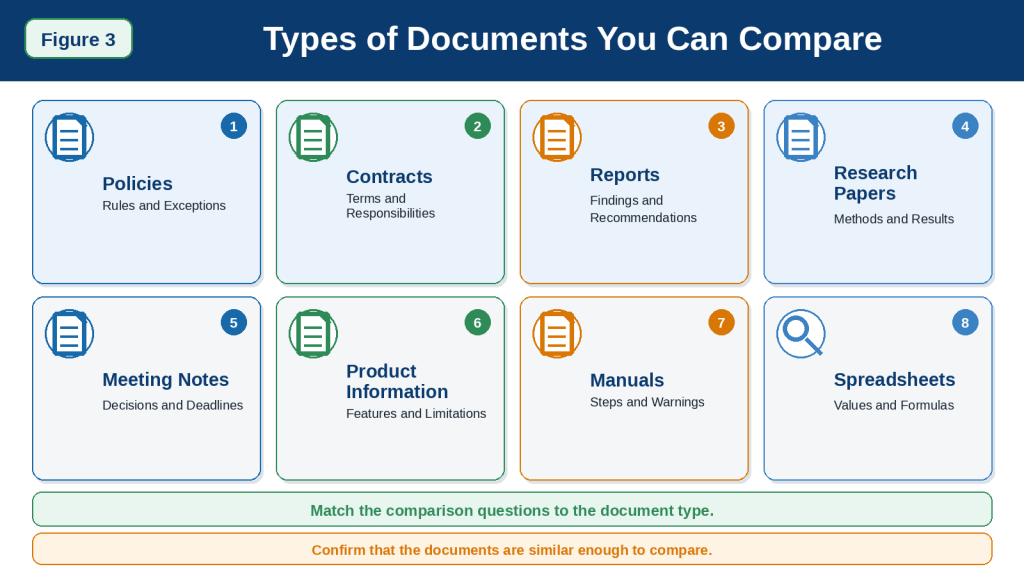
    Example prompt:

    Identify every warning, risk, restriction, condition, exception, penalty, and required action in the attached document. Keep the wording close to the source and include the page or section when available.

    This format is useful for initial review, but it does not replace legal, medical, financial, technical, or professional advice.

    Request More Than One Format

    You can ask ChatGPT to create two versions of the same summary.

    For example:

    First, create a one-paragraph overview. Then create a detailed bullet-point summary under Purpose, Main Points, Dates, Conditions, Warnings, and Action Items.

    This gives you a quick overview and a more complete version.

    Do not request too many formats at once when the document is long or complicated. Create the most important version first, review it, and then request another format.

    Ask ChatGPT to Preserve Missing Information

    When a document does not provide a detail, the summary should not fill the gap automatically.

    Add this instruction:

    Write “Not stated in the document” whenever a name, date, deadline, amount, responsibility, or condition is missing. Do not guess.

    This makes missing information easier to identify and reduces unsupported additions.

    Choose the Format Before Uploading

    Before sending the document, ask yourself:

    · Do I need a quick overview or detailed review?

    · Do I need to follow the original sections?

    · Am I looking for tasks and deadlines?

    · Do I need simple language?

    · Would a table make the information clearer?

    · Do I need exact facts and figures?

    · Am I studying the material?

    · Do I need warnings and conditions separated?

    Choosing the format before writing the prompt usually produces a more useful first summary.

    Figure 8. ChatGPT can organize the same document as a short overview, detailed summary, bullet list, table, timeline, study guide, action list, or question-and-answer summary.

    Figure 8 compares common document-summary formats and the purpose of each one. Beginners should choose a format based on whether they need quick understanding, detailed review, action items, study support, chronological information, or easier comparison.

    Step-by-Step: Summarize Your First Document with ChatGPT

    This beginner exercise uses one short, readable document. Choose a safe file that does not contain confidential, private, medical, financial, legal, customer, employee, or identification information.

    ChatGPT can summarize uploaded documents and answer questions based on their contents. Common supported formats include PDF, DOCX, PPTX, TXT, XLSX, XLS, CSV, and TSV. A native Google Docs .gdoc file must first be exported to a supported format such as PDF or DOCX. [1][2]

    Step 1: Choose a Simple Practice Document

    Start with a short document containing clear headings and ordinary paragraphs.

    Suitable practice documents include:

    · A short article

    · Personal meeting notes

    · A simple instruction guide

    · A public report

    · A document you created yourself

    · A study handout you are permitted to use

    Avoid beginning with a large contract, medical record, financial statement, or complicated scanned document.

    A short practice file makes it easier to compare ChatGPT’s summary with the original.

    Step 2: Create a Safe Upload Copy

    Keep the original file unchanged.

    Create a duplicate and give it a clear filename, such as:

    community-meeting-notes-safe-copy.docx

    Review the copy and remove information ChatGPT does not need, including:

    · Private names

    · Personal email addresses

    · Telephone numbers

    · Home addresses

    · Account numbers

    · Signatures

    · Passwords

    · Identification numbers

    · Confidential comments

    · Hidden tracked changes

    Check the complete document, including headers, footers, tables, comments, and document properties.

    Step 3: Open a New Chat

    Open ChatGPT and start a new conversation.

    Using a separate conversation for the document can make it easier to:

    · Keep the work organized

    · Find the summary later

    · Avoid mixing information from unrelated files

    · Ask follow-up questions about the same document

    Give the conversation a clear name when the option is available.

    For example:

    Practice Document Summary

    Step 4: Attach the Safe Document Copy

    Select the attachment or add button beside the message box.

    Choose the safe copy you prepared.

    Wait until the filename appears in the conversation before sending your request.

    Check that:

    · It is the correct file

    · The filename identifies the safe copy

    · The file is not password-protected

    · The upload appears complete

    · You did not select the confidential original

    Uploaded files may be saved in ChatGPT’s file Library when that feature is available on the account. OpenAI’s current documentation explains that files can also be added later through the composer menu by selecting Add from library. Features and wording may vary by plan, workspace, device, region, and update. [3]

    Step 5: Send a Basic Summary Prompt

    Use this beginner prompt:

    Summarize the attached document for a complete beginner. Explain its purpose and main points using clear headings and bullet points. Include important names, dates, numbers, conditions, warnings, decisions, and action items. Do not add information that is not in the document. Write “Not stated in the document” when important information is missing. Clearly identify anything uncertain or difficult to read.

    This prompt asks ChatGPT to:

    · Use the attached document

    · Write for a beginner

    · Organize the result clearly

    · Preserve important details

    · Avoid inventing information

    · Identify missing or uncertain content

    Select Send and wait for the summary.

    Step 6: Read the Summary Without Editing It

    Read the complete response once before asking ChatGPT to change it.

    Ask yourself:

    · Does the summary explain the document’s purpose?

    · Are the main sections represented?

    · Are important dates and numbers included?

    · Are warnings and conditions preserved?

    · Are action items clearly identified?

    · Did ChatGPT mention anything that does not appear in the source?

    · Did it claim certainty where the document was unclear?

    Do not copy the summary into another document yet.

    The first response should be treated as a draft.

    Step 7: Compare the Summary with the Original

    Open the original document and the ChatGPT summary side by side.

    Check the summary in a logical order:

    1 Document purpose

    2 Main points

    3 Names and roles

    4 Dates and deadlines

    5 Numbers and amounts

    6 Conditions and exceptions

    7 Warnings

    8 Decisions

    9 Action items

    10 Final conclusion

    Mark anything that is:

    · Incorrect

    · Missing

    · Oversimplified

    · Unclear

    · Unsupported

    · Assigned to the wrong person

    · Connected to the wrong date or condition

    ChatGPT can help summarize a document, but important information should still be verified against the source. OpenAI describes summarizing documents and locating information within uploaded files as supported uses of file uploads. [2]

    Step 8: Ask ChatGPT to Check Its Summary

    After performing your own comparison, send this follow-up prompt:

    Review your summary against the attached document. List any important information you may have omitted, simplified too much, or presented without enough context. Pay special attention to names, dates, numbers, conditions, exceptions, warnings, responsibilities, and deadlines. Do not add outside information.

    This asks ChatGPT to inspect its earlier response, but it does not replace your own verification.

    Step 9: Correct Specific Problems

    When you find a problem, describe it clearly.

    For example:

    The original document gives two different deadlines for two different groups. Rewrite that part of the summary and keep the groups and deadlines separate.

    Or:

    You omitted the warning in the section titled “Before You Begin.” Add that warning without changing its meaning.

    Or:

    The document does not name the person responsible for this task. Replace the assigned name with “Not stated in the document.”

    Specific corrections are usually easier to review than asking ChatGPT to rewrite everything.

    Step 10: Request the Final Format

    After checking the content, ask for the format you need.

    For example:

    Create a final beginner-friendly summary using these headings: Purpose, Main Points, Important Dates, Conditions and Warnings, Decisions, Action Items, and Information to Verify. Use only information from the document and the corrections we have confirmed.

    You could also request:

    · A one-paragraph overview

    · A detailed bullet-point summary

    · A table

    · A checklist

    · Study notes

    · A timeline

    · An action-item list

    Choose one format at a time when the document is long or complicated.

    Step 11: Save the Reviewed Summary

    Copy the verified summary into TextMaker or another document program.

    Use a clear filename, such as:

    community-meeting-notes-reviewed-summary.docx

    Save these items together when appropriate:

    · Original document

    · Safe upload copy

    · Original prompt

    · First ChatGPT summary

    · Your correction notes

    · Final reviewed summary

    · Date of review

    This creates a clear record of how the summary was produced and checked.

    Step 12: Delete or Retain the File Appropriately

    Decide whether the conversation and uploaded file should remain in your ChatGPT account.

    OpenAI explains that uploaded-file handling and deletion depend on where the file was used. Deleting a chat or deleting a saved file may begin the deletion process, subject to the service’s stated retention exceptions. Review the current official retention information before uploading sensitive or important material. [3][4]

    Deleting a file later does not correct an upload that should never have been made. Permission and privacy should be checked before uploading.

    Complete Beginner Prompt

    Copy and adapt this prompt:

    Summarize the attached document for a complete beginner.

    Organize the summary under these headings:

    · Purpose

    · Main Points

    · Important Names and Roles

    · Dates and Deadlines

    · Conditions and Exceptions

    · Warnings

    · Decisions

    · Action Items

    · Information That Needs Checking

    Use only information contained in the document. Preserve important names, dates, numbers, conditions, exceptions, and warnings. Write “Not stated in the document” when information is missing. Clearly label anything uncertain or difficult to read. Do not provide outside advice or invent details.

    Figure 9. A reliable first-document workflow includes preparing a safe copy, uploading it, requesting a summary, comparing it with the original, correcting problems, and saving the reviewed result.

    Figure 9 shows the complete beginner workflow for summarizing a document with ChatGPT. Verification is shown as a required stage because the first summary may omit, simplify, or misunderstand important information.

    How to Ask Follow-Up Questions About a Document

    After ChatGPT creates the first summary, you can ask focused questions about the same document.

    Follow-up questions are useful when you need:

    · More detail about one section

    · A simpler explanation

    · A list of dates or deadlines

    · Clarification of technical terms

    · Missing action items

    · Important warnings

    · A comparison between two sections

    · Evidence supporting a conclusion

    · Information from a specific page or heading

    The document must still be available in the conversation for ChatGPT to use it reliably.

    Ask One Clear Question at a Time

    A focused question is usually easier to answer and verify than several unrelated questions combined into one message.

    For example:

    What is the main purpose of the section titled “Project Requirements”?

    This is clearer than:

    Explain everything important, tell me what to do, check the risks, and compare all the sections.

    A useful workflow is:

    1 Ask one specific question.

    2 Review the answer.

    3 Compare it with the source.

    4 Ask the next question.

    This makes it easier to identify mistakes.

    Ask About a Specific Section

    Identify the section, heading, page, table, or paragraph whenever possible.

    For example:

    Explain the section titled “Eligibility Requirements” in simple language. Preserve every condition and exception.

    Or:

    Summarize pages 12–15 only. Do not use information from other pages.

    Or:

    What does the table titled “Project Costs” say about approved and unapproved expenses?

    Specific locations help ChatGPT focus on the correct material.

    Page numbers may not always match the numbers shown in the document viewer, especially when the file includes a cover page or unnumbered introductory pages. Check the heading and surrounding text as well as the page number.

    Ask for Important Dates and Deadlines

    Use a focused prompt such as:

    List every date and deadline in the document. For each one, explain what it applies to and include the source section. Write “Unclear” when the document does not explain the date fully.

    A useful table could include:

    DateWhat It Applies ToRequired ActionSource Location

    Verify every date against the original document.

    Ask for Names and Responsibilities

    For meeting notes, reports, and project documents, ask:

    List every person or role mentioned in the document and explain their responsibilities. Do not assign a responsibility unless the document states it clearly.

    When a responsibility is missing, ChatGPT should write:

    Not stated in the document

    This is safer than guessing.

    Ask for Conditions and Exceptions

    Conditions and exceptions can change the meaning of a rule.

    Use a prompt such as:

    Identify every condition, exception, restriction, and eligibility requirement in the document. Keep related details together and include the source section.

    For example, a document may state that a service is available only:

    · During certain dates

    · In selected locations

    · To eligible groups

    · After approval

    · When specific documents are provided

    A summary that omits one of these conditions may be misleading.

    Ask for Warnings and Risks

    Use a separate follow-up question for warnings:

    List every warning, risk, penalty, restriction, and safety instruction in the document. Preserve the meaning and identify the page or section.

    Do not rely only on a general summary when the document affects:

    · Safety

    · Health

    · Money

    · Legal rights

    · Employment

    · Insurance

    · Eligibility

    · Contracts

    · Technical operation

    Important warnings should be checked directly in the original wording.

    Ask for Definitions of Difficult Terms

    When the document contains technical language, ask:

    Identify the difficult or technical terms in the document. Explain each one in simple language using only the context provided by the document. Clearly state when the document does not define the term.

    This helps prevent ChatGPT from presenting outside knowledge as though it came from the source.

    You may then request a separate explanation using general knowledge, but it should be labelled clearly as additional information.

    Ask for Supporting Evidence

    A summary may state a conclusion without showing how the document supports it.

    Ask:

    For each main conclusion in the summary, identify the sentences, section headings, table entries, or page locations that support it.

    This can help you determine whether the conclusion is:

    · Directly stated

    · Supported by several points

    · Only implied

    · Uncertain

    · Not supported by the document

    ChatGPT may still provide an incorrect source location, so verify it manually.

    Ask What Was Not Included

    Use this follow-up prompt:

    Compare your summary with the complete document and list any important points, conditions, examples, warnings, or limitations that were omitted.

    You can also ask:

    Which sections received little or no coverage in your summary?

    This may reveal sections that were shortened too much.

    Ask About Unclear or Unreadable Information

    When a document contains scanned pages, tables, charts, or poor-quality text, ask:

    Identify any pages, sections, tables, images, or words that you could not read confidently. Do not guess their contents.

    When ChatGPT reports a problem:

    · Upload a clearer page

    · Paste the relevant text

    · Provide a higher-quality scan

    · Ask about one table or image separately

    · Check the original manually

    Ask for a Simpler Explanation

    You may request simpler language without changing the meaning.

    For example:

    Explain this section for a complete beginner. Preserve all dates, numbers, conditions, exceptions, and warnings.

    Avoid saying only:

    Make it simpler.

    That instruction may encourage excessive shortening.

    Ask for a More Detailed Explanation

    When the summary is too brief, ask:

    Expand the section about project requirements. Include the supporting details, examples, conditions, exceptions, and required actions from the document.

    Tell ChatGPT which section needs more detail instead of requesting a complete rewrite.

    Ask ChatGPT to Separate Facts from Interpretation

    Use this prompt:

    Divide your answer into two parts: “Directly Stated in the Document” and “Possible Interpretation.” Do not place an interpretation in the first section.

    This helps distinguish source information from ChatGPT’s reasoning.

    Interpretations should still be treated cautiously.

    Ask for a Comparison Between Sections

    When two sections appear similar or contradictory, ask:

    Compare the sections titled “General Requirements” and “Special Requirements.” Show what is the same, what is different, and which group each rule applies to.

    A comparison table may use:

    TopicGeneral RequirementsSpecial RequirementsImportant Difference

    Check that ChatGPT has not combined different groups or conditions.

    Ask for Unanswered Questions

    A document may leave important information unclear.

    Ask:

    List the important questions that the document does not answer. Do not answer them using outside information.

    This can help identify:

    · Missing deadlines

    · Unassigned responsibilities

    · Unclear costs

    · Undefined terms

    · Missing contact information

    · Conflicting instructions

    · Incomplete procedures

    These questions may need to be directed to the document’s author, organization, teacher, employer, or qualified professional.

    Useful Follow-Up Prompt Set

    You can copy these prompts one at a time:

    What is the main purpose of this document?

    Which information is most important for a complete beginner?

    List all dates, deadlines, names, numbers, and responsibilities.

    Identify every condition, exception, warning, and restriction.

    Which sections were not fully represented in your first summary?

    What information is uncertain, missing, or difficult to read?

    Show the source section or page for every major point.

    Separate information directly stated in the document from your interpretation.

    List questions that the document does not answer.

    Review Every Follow-Up Answer

    A focused question can produce a more useful answer, but it can still contain errors.

    For every important answer:

    1 Locate the source section.

    2 Compare the wording.

    3 Check names, dates, numbers, and conditions.

    4 Confirm that ChatGPT did not use unrelated sections.

    5 Correct the answer when necessary.

    6 Save only the reviewed version.

    Follow-up questions improve understanding, but they do not remove the need to verify the document.

    Figure 10. Focused follow-up questions help beginners examine dates, responsibilities, conditions, warnings, evidence, and missing information.

    Figure 10 shows how a broad document summary can be reviewed through smaller, focused questions. Each answer should be compared with the original source before it is accepted or saved.

    How to Summarize Long Documents with ChatGPT

    Long documents require a more careful workflow than short files.

    Examples include:

    · Books

    · Research reports

    · Policy manuals

    · Training guides

    · Technical documents

    · Long meeting records

    · Government publications

    · Contracts with several sections

    · Collections of reports

    · Documents containing appendices

    A file may upload successfully without every page receiving equal attention in one response. OpenAI explains that very large text documents may be partly included directly and partly accessed through a search system. Its guidance notes that complex tasks such as summarizing very large documents or comparing several large files may be more difficult than answering focused questions. [11]

    For this reason, do not rely on one prompt such as:

    Summarize this entire 500-page document.

    A staged process is easier to review and more likely to preserve important information.

    Understand the Difference Between Upload Limits and Summarization Quality

    OpenAI currently sets a maximum file size of 512 MB for files uploaded to a ChatGPT conversation or GPT. Text and document files are also limited to 2 million tokens per file. A token is a small unit of text used by an AI system. These limits control whether a file can be uploaded, but they do not guarantee that every part of a very long document will be represented equally in one summary. [2][3]

    A document can therefore be:

    · Small enough to upload

    · Large enough to be difficult to summarize completely

    · Structured in a way that makes important information difficult to locate

    · Filled with tables, appendices, images, or repeated sections

    · Too complicated for one broad prompt

    Treat a successful upload as the beginning of the process, not proof that the complete file was summarized accurately.

    Start by Mapping the Document

    Before requesting a complete summary, ask ChatGPT to identify the document’s structure.

    Example prompt:

    Review the attached document and create a document map. List every main heading, subsection, appendix, table, and major topic in the order they appear. Do not summarize the content yet. Clearly identify any section you cannot read.

    The document map helps you check:

    · Whether the complete file was recognized

    · Whether major sections are missing

    · How the document should be divided

    · Which sections need detailed attention

    · Where tables and appendices appear

    · Whether page or heading references are available

    Compare the map with the document’s table of contents and visible headings.

    Divide the Document into Logical Parts

    When the document is very long, divide it according to its existing structure.

    Good divisions may include:

    · Chapters

    · Main headings

    · Parts

    · Date ranges

    · Departments

    · Topics

    · Project stages

    · Appendices

    For example:

    · Part 1 — Introduction and Background

    · Part 2 — Requirements and Procedures

    · Part 3 — Findings and Evidence

    · Part 4 — Recommendations

    · Part 5 — Appendices

    OpenAI’s file-optimization guidance recommends working with fewer, focused documents, summarizing documents one at a time, and dividing documents that contain many hundreds of pages into smaller components. [11]

    Do not divide the document:

    · In the middle of a paragraph

    · In the middle of a table

    · Between a rule and its exception

    · Between a warning and its instructions

    · Between a question and its answer

    · Between a heading and its content

    Keep related information together.

    Request One Section Summary at a Time

    Begin with the first logical section.

    Example prompt:

    Summarize Part 1 only. Use the original heading names. Include its purpose, main points, definitions, dates, numbers, conditions, warnings, examples, and conclusions. Do not use information from other sections. Identify anything uncertain or difficult to read.

    After reviewing Part 1, continue with Part 2.

    Repeat this process until every section has its own checked summary.

    A simple tracking table can help:

    SectionSummary CompletedChecked Against SourceCorrections Saved
    Part 1YesYesYes
    Part 2YesYesYes
    Part 3NoNoNo

    Do not mark a section as complete until you have compared its summary with the source.

    Use the Same Structure for Every Section

    Consistent headings make the section summaries easier to combine.

    For example, request these headings for every part:

    · Purpose

    · Main Points

    · Important Definitions

    · Names and Roles

    · Dates and Deadlines

    · Numbers and Amounts

    · Conditions and Exceptions

    · Warnings and Risks

    · Decisions

    · Action Items

    · Information to Verify

    Using the same structure makes missing information easier to notice.

    Ask for Source Locations

    For each important point, request a page number, section heading, table name, or other source location when available.

    Example prompt:

    Include the page number and section heading for every important fact, warning, deadline, condition, recommendation, and action item. Write “Source location unavailable” when you cannot identify it reliably.

    Source references make manual checking faster, but they must still be verified because page numbering or document extraction may be imperfect.

    Preserve Information That Appears Across Sections

    Some important topics appear in several parts of a long document.

    For example:

    · A requirement may be introduced in one chapter.

    · Its exception may appear in another chapter.

    · A deadline may appear in a table.

    · A penalty may appear in an appendix.

    After completing the section summaries, ask:

    Search the complete document for every reference to eligibility requirements. Group the results by topic, preserve conditions and exceptions, and provide the source location for each reference.
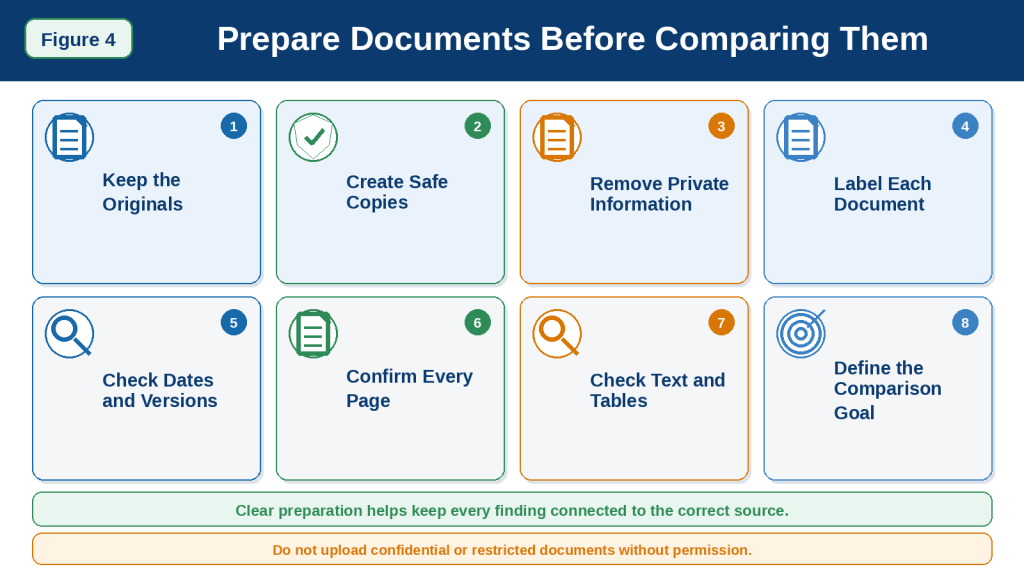
    Repeat this for important topics such as:

    · Deadlines

    · Responsibilities

    · Costs

    · Warnings

    · Restrictions

    · Definitions

    · Cancellation rules

    · Required documents

    · Recommendations

    This targeted review can identify details that a section summary did not connect.

    Create a Summary of Summaries

    After every section summary has been checked, combine them into a final overview.

    OpenAI’s guidance suggests creating a “summary of summaries” from individual summaries rather than asking for one summary from several complete large documents at once. [11]

    Example prompt:

    Using only the reviewed section summaries below, create a complete document overview. Organize it under Purpose, Main Findings, Important Requirements, Dates and Deadlines, Conditions and Exceptions, Warnings, Recommendations, Action Items, and Information to Verify. Do not remove important differences between sections.

    The combined summary should preserve:

    · Separate groups

    · Separate rules

    · Conflicting statements

    · Conditions

    · Exceptions

    · Uncertainty

    · Source references

    Do not allow the final summary to merge different rules simply because they discuss the same topic.

    Check the Beginning, Middle, and End

    A weak summary may represent the beginning of a long document more fully than later sections.

    Check:

    · The introduction

    · Several middle sections

    · The conclusion

    · Appendices

    · Tables

    · Footnotes

    · Final recommendations

    Ask ChatGPT:

    Compare the document map with the completed section summaries. Identify every heading, appendix, table, or major topic that has not yet been summarized.

    Then confirm the result manually.

    Review Appendices Separately

    Appendices may contain important:

    · Forms

    · Definitions

    · Tables

    · Calculations

    · Requirements

    · Contact details

    · Examples

    · Supporting evidence

    Do not assume appendices are optional.

    Use a separate prompt:

    Review each appendix separately. Explain its purpose and identify any requirement, definition, number, deadline, warning, form, or supporting evidence that affects the main document.

    Check whether an appendix changes or clarifies information in the main sections.

    Summarize Several Documents One at a Time

    When working with several long files, do not begin by asking for one combined summary.

    Use this order:

    1 Create a document map for each file.
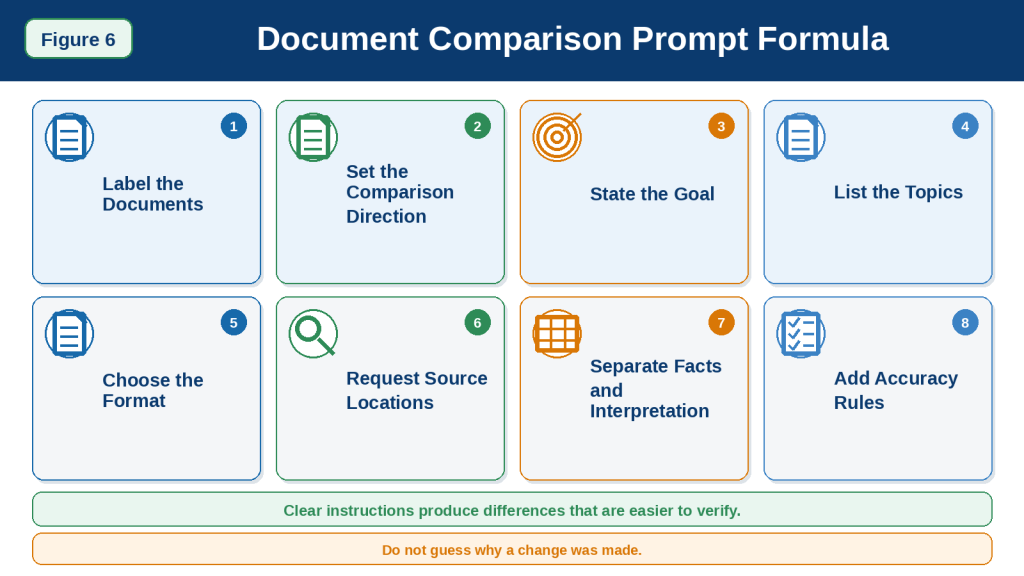
    2 Summarize one file at a time.
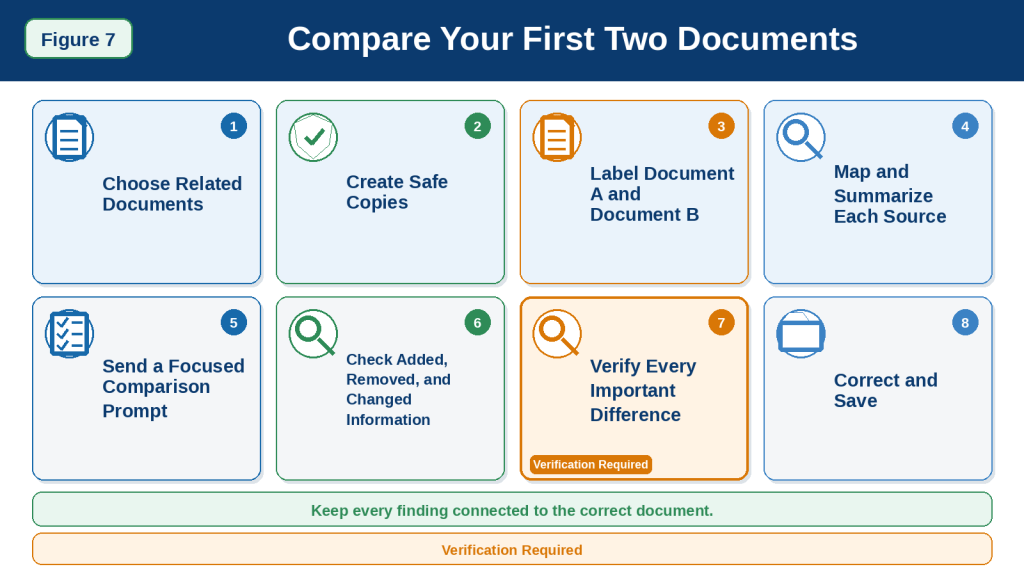
    3 Verify each summary.

    4 Record source locations.

    5 Compare the reviewed summaries.

    6 Create the combined overview.

    OpenAI states that ChatGPT can summarize, extract information from, and compare uploaded documents, but its guidance recommends fewer focused files and one-document-at-a-time summarization when the material is extensive. [2][11]

    Prompt for a Long Document

    Copy and adapt this prompt:

    This is a long document. Do not create a complete summary yet.

    First, create a document map containing every main heading, subsection, appendix, table, and major topic in the order they appear.

    Identify any pages or sections that you cannot read reliably. Do not guess missing content.

    After I review the map, I will ask you to summarize one section at a time.

    After checking the map, use:

    Summarize the section titled “[section name]” only. Include its purpose, main points, definitions, names, dates, numbers, conditions, exceptions, warnings, decisions, recommendations, and action items. Include page numbers or section locations when available. Do not add information from another section or from outside the document.

    Final Long-Document Check

    Before accepting the final summary, confirm:

    · Every major section was included.

    · Appendices and tables were reviewed.

    · Important conditions and exceptions were preserved.

    · Dates, names, numbers, and responsibilities were checked.

    · Conflicting statements remain clearly separated.

    · Missing or unreadable information is labelled.

    · Source locations were verified.

    · The final summary was created from reviewed section summaries.

    · The original document remains available for reference.

    A long-document summary is most reliable when it is built gradually from smaller, verified sections rather than produced through one broad request.

    Figure 11. Long documents are easier to summarize accurately when they are mapped, divided into logical sections, reviewed separately, and combined after verification.

    Figure 11 shows a staged workflow for summarizing a long document. Instead of requesting one immediate summary, the user creates a document map, summarizes each section, checks the results against the source, reviews cross-section topics, and then produces a final summary of summaries.

    How to Summarize Different Types of Documents

    Different documents require different summary instructions. A prompt that works well for meeting notes may not be suitable for a report, study guide, policy, manual, or contract.

    Before writing the prompt, identify:

    · What type of document you have

    · Why you need the summary

    · Which information matters most

    · Whether exact dates, amounts, warnings, or conditions must be preserved

    · Which output format will be easiest to review

    Summarizing a Report

    Reports often contain:

    · A purpose

    · Background information

    · Methods

    · Findings

    · Evidence

    · Recommendations

    · Limitations

    · Conclusions

    A useful report summary should separate findings from recommendations.

    Example prompt:

    Create a section-by-section summary of the attached report. Include the purpose, background, methods, main findings, supporting evidence, recommendations, limitations, and conclusion. Preserve important dates, numbers, and qualifications. Do not add information that is not in the report.

    After receiving the summary, check:

    · Whether the findings are stated accurately

    · Whether recommendations came from the report

    · Whether limitations were preserved

    · Whether statistics match the source

    · Whether conclusions were simplified too much

    Summarizing Meeting Notes

    Meeting notes usually require more attention to decisions, tasks, responsibilities, and deadlines.

    Example prompt:

    Summarize the attached meeting notes. Organize the result under Discussion Topics, Decisions, Action Items, Responsible People, Deadlines, Unresolved Questions, and Next Meeting. Write “Not stated in the document” when a responsibility or deadline is missing. Do not guess.

    A useful action-item table may include:

    TaskResponsible PersonDeadlineStatusSource Section

    Check carefully that ChatGPT did not:

    · Assign a task to the wrong person

    · Combine two separate decisions

    · Invent a deadline

    · Treat a suggestion as an approved decision

    · Omit an unresolved question

    Summarizing an Article

    An article summary should usually identify:

    · The main topic

    · The writer’s central message

    · Important supporting points

    · Examples

    · Conclusions

    · Limitations or opposing views

    Example prompt:

    Summarize the attached article for a complete beginner. Explain the main topic, central message, supporting points, examples, conclusion, and any limitations or opposing views. Do not add outside information.

    When summarizing an opinion article, ask ChatGPT to distinguish between:

    · Facts reported in the article

    · The writer’s opinions

    · Claims that require evidence

    · Conclusions drawn by the writer

    A useful follow-up prompt is:

    Separate the article’s factual statements from the writer’s opinions and interpretations. Do not verify the claims using outside sources unless I ask you to do so.

    Summarizing Study Materials

    Study summaries should help the learner review the material without removing essential explanations.

    They may include:

    · Main concepts

    · Definitions

    · Important facts

    · Examples

    · Processes

    · Formulas

    · Review questions

    · Key terms

    Example prompt:

    Turn the attached study material into beginner-friendly notes. Include the main concepts, definitions, examples, important facts, and step-by-step processes. Add five review questions based only on the document. Mark anything unclear for checking.

    Do not rely on generated study questions alone. Compare the notes with the original material, especially when preparing for:

    · An examination

    · A certification

    · Professional training

    · A school assignment

    · A technical task

    Summarizing Instructions or Manuals

    Instructions and manuals often contain details that should not be shortened carelessly.

    Important information may include:

    · Required tools

    · Preparation steps

    · Numbered procedures

    · Safety warnings

    · Settings

    · Measurements

    · Maintenance instructions

    · Troubleshooting steps

    Example prompt:

    Summarize the attached manual as a beginner-friendly checklist. Preserve the original order of the steps. Include every required tool, preparation step, warning, setting, measurement, and troubleshooting instruction. Do not remove or rewrite warnings in a way that changes their meaning.

    For safety-related instructions, always check the original document before acting.

    A summary should not replace the official manual when operating equipment, handling chemicals, installing electrical items, or performing another potentially dangerous task.

    Summarizing Policies

    Policies may contain:

    · Eligibility rules

    · Responsibilities

    · Restrictions

    · Required documents

    · Deadlines

    · Exceptions

    · Penalties

    · Complaint or appeal procedures

    Example prompt:

    Create a plain-language summary of the attached policy. Organize it under Purpose, Who It Applies To, Requirements, Responsibilities, Restrictions, Exceptions, Deadlines, Penalties, and Contact or Appeal Information. Preserve all conditions and write “Not stated” when information is missing.

    Check the original wording for any rule that affects:

    · Employment

    · Education

    · Benefits

    · Insurance

    · Privacy

    · Eligibility

    · Money

    · Legal rights

    A policy summary is a review aid and should not replace the official policy.

    Summarizing a Contract or Agreement

    Contracts require special care because a short summary can omit a condition that changes the meaning.

    Important areas may include:

    · Names of the parties

    · Services or responsibilities

    · Payment terms

    · Dates

    · Renewal conditions

    · Cancellation terms

    · Warranties

    · Restrictions

    · Penalties

    · Dispute procedures

    · Governing law

    Example prompt:

    Create a plain-language overview of the attached agreement. Separate the parties, responsibilities, payment terms, dates, renewal rules, cancellation terms, restrictions, penalties, and dispute procedures. Preserve important conditions and exceptions. Include the section heading for every major point. Do not provide legal advice or replace the original wording.

    Do not sign, reject, cancel, or change an agreement based only on an AI summary. Review the original and obtain qualified advice when necessary.

    Summarizing a Letter or Notice

    A letter or official notice may require a short action-focused summary.

    Ask ChatGPT to identify:

    · Who sent it

    · Why it was sent

    · What happened

    · What action is required

    · Which documents are needed

    · Important dates

    · Contact information

    · Consequences of not responding

    Example prompt:

    Summarize the attached letter in simple language. Explain who sent it, its purpose, the action required, the deadline, required documents, contact information, and any consequences mentioned. Do not guess missing information.

    Verify the deadline and required action directly from the letter.

    Summarizing a Transcript

    Transcripts may include:

    · Interviews

    · Meetings

    · Lectures

    · Videos

    · Podcasts

    · Customer calls

    · Speeches

    Example prompt:

    Summarize the attached transcript. Organize the result by topic and speaker when the speakers are identified. Include the main ideas, decisions, examples, disagreements, action items, and unanswered questions. Do not assign statements to a speaker unless the transcript identifies them clearly.

    Transcripts may contain:

    · Repeated words

    · Incomplete sentences

    · Speaker-identification errors

    · Misheard names

    · Missing punctuation

    Important quotations and speaker names should be checked against the recording or original transcript.

    Summarizing a Research Paper

    A research-paper summary should usually include:

    · Research question

    · Background

    · Method

    · Participants or data

    · Results

    · Limitations

    · Conclusions

    · Suggested future research

    Example prompt:

    Create a structured summary of the attached research paper. Use the headings Research Question, Background, Method, Data or Participants, Main Results, Limitations, Conclusions, and Future Research. Preserve important measurements, sample sizes, and qualifications. Do not claim that the findings prove more than the paper states.

    Be careful with words such as:

    · Proves

    · Causes

    · Guarantees

    · Always

    · Never

    Many studies identify associations or limited findings rather than universal conclusions.

    Summarizing a Spreadsheet

    Spreadsheets require more than a general text summary.

    Ask ChatGPT to identify:

    · The worksheet used

    · The columns reviewed

    · Date ranges

    · Highest and lowest values

    · Totals

    · Missing values

    · Repeated entries

    · Trends

    · Unusual changes

    Example prompt:

    Review the attached spreadsheet. Identify the worksheet and columns used for each conclusion. Summarize the main trends, highest and lowest values, totals, missing entries, and unusual changes. Show the exact rows or values that support each conclusion. Do not estimate missing numbers.

    Always compare calculated totals and conclusions with the original spreadsheet.

    Summarizing Several Related Documents

    When several documents relate to the same topic, summarize them separately before combining the results.

    Use this workflow:

    1 Summarize Document 1.

    2 Verify its summary.

    3 Summarize Document 2.

    4 Verify its summary.

    5 Repeat for the remaining documents.

    6 Compare the reviewed summaries.

    7 Create a final combined overview.

    Example comparison prompt:

    Compare the reviewed summaries of these documents. Show agreements, differences, conflicting information, missing details, and unique points from each source. Keep each document clearly identified.

    Do not combine sources in a way that hides disagreement.

    Match the Prompt to the Document

    A useful summary prompt changes according to the type of source.

    For example:

    · A report needs findings and limitations.

    · Meeting notes need decisions and action items.

    · Study materials need concepts and definitions.

    · A manual needs ordered steps and warnings.

    · A policy needs conditions and exceptions.

    · A contract needs clauses, dates, responsibilities, and cancellation terms.

    · A spreadsheet needs exact values and source rows.

    Choosing the right summary structure helps ChatGPT focus on the information that matters most.

    Figure 12. Different document types require different summary priorities, formats, and verification checks.

    Figure 12 shows that reports, meeting notes, study materials, manuals, policies, contracts, transcripts, and spreadsheets should not all be summarized in the same way. The prompt should focus on the information that is most important for that particular document.

    How to Check and Correct a ChatGPT Document Summary

    A ChatGPT summary should be treated as a draft until you compare it with the original document.

    Even when the summary looks clear and professional, it may contain:

    · Missing information

    · Incorrect dates

    · Changed numbers

    · Confused names

    · Oversimplified conditions

    · Missing warnings

    · Combined rules that should remain separate

    · Statements that are not supported by the document

    A careful review helps you find these problems before you use, save, share, or publish the summary.

    Start with the Document’s Main Purpose

    Read the original document’s title, introduction, and conclusion.

    Then ask:

    · Does the summary explain why the document exists?

    · Does it identify the correct topic?

    · Does it represent the main conclusion accurately?

    · Did it focus on a minor detail instead of the central message?

    For example, a report may discuss several problems but recommend only one main action. The summary should not present every discussion point as an approved recommendation.

    Check Every Name and Role

    Compare all names, job titles, departments, organizations, and responsibilities with the original.

    Look for problems such as:

    · A task assigned to the wrong person

    · Two people combined into one

    · A job title changed

    · An organization name shortened incorrectly

    · A speaker’s opinion presented as an official decision

    When the document does not identify the responsible person, the summary should say:

    Not stated in the document

    It should not guess.

    Check Dates and Deadlines

    Review every date carefully.

    Important dates may include:

    · Application deadlines

    · Meeting dates

    · Payment dates

    · Renewal dates

    · Start dates

    · Completion dates

    · Cancellation periods

    · Review dates

    · Expiry dates

    Check whether the summary explains what each date applies to.

    For example, two deadlines may apply to different groups. The summary should keep them separate.

    A useful checking table is:

    DateWhat It Applies ToSummary Correct?Correction Needed
    March 15Application deadlineYesNone
    April 1Project start dateNoSummary says April 10

    Check Numbers, Amounts, and Measurements

    A single incorrect digit can change the meaning of a document.

    Review:

    · Prices

    · Fees

    · Percentages

    · Quantities

    · Totals

    · Measurements

    · Reference numbers

    · Page numbers

    · Ages

    · Time periods

    · Limits

    Do not assume a number is correct because it looks reasonable.

    When a document says 15%, a summary should not say 50%.

    When a document says 30 days, a summary should not say one month unless that wording preserves the exact meaning.

    Check Conditions and Exceptions

    Conditions explain when a rule applies.

    Exceptions explain when it does not apply.

    These details are often lost in short summaries.

    For example, the document may say:

    A refund is available within 14 days only when the service has not started.

    An unsafe summary might say:

    A refund is available within 14 days.

    The words only when the service has not started are essential.

    Search the original for words such as:

    · Only

    · Unless

    · Except

    · Provided that

    · Subject to

    · Must

    · May

    · Cannot

    · Before

    · After

    · Within

    · Eligible

    · Required

    Confirm that the summary preserves their meaning.

    Check Warnings and Risks

    Warnings should not be shortened so much that they lose their importance.

    Review any information related to:

    · Safety

    · Health

    · Legal obligations

    · Financial loss

    · Privacy

    · Eligibility

    · Penalties

    · Technical damage

    · Employment consequences

    · Insurance coverage

    When the original warning is important, keep the summary close to the source and refer the reader back to the original section.

    Check Whether Important Sections Were Omitted

    Compare the summary headings with the document’s table of contents or main headings.

    Ask:

    · Did every major section receive attention?

    · Were appendices ignored?

    · Were tables excluded?

    · Was the conclusion included?

    · Were final recommendations included?

    · Were limitations included?

    · Were notes or footnotes important?

    A useful follow-up prompt is:

    Compare this summary with the document’s complete list of headings. Identify any major section, appendix, table, warning, or conclusion that is missing from the summary.

    Then confirm the result manually.

    Check for Unsupported Information

    A summary may contain information that sounds logical but does not appear in the source.

    Look for:

    · New recommendations

    · Explanations not found in the document

    · Assumptions about the writer’s intention

    · Outside facts

    · Estimated values

    · Advice that was not requested

    · Conclusions stronger than the source supports

    Use this follow-up prompt:

    Highlight every statement in your summary that is not directly supported by the attached document. Remove unsupported information and identify the source location for each remaining major point.

    ChatGPT may still make mistakes during this review, so check the answer yourself.

    Check Whether Separate Rules Were Combined

    Similar information may apply to different:

    · Groups

    · Products

    · Plans

    · Locations

    · Departments

    · Time periods

    · Eligibility categories

    · Contract sections

    For example:

    · One fee applies to new customers.

    · Another fee applies to existing customers.

    · One deadline applies to online applications.

    · Another applies to mailed applications.

    The summary should not turn them into one general rule.

    Ask ChatGPT:

    Review the summary and keep separate groups, rules, dates, fees, and conditions clearly separated. State which group or section each point applies to.

    Check the Level of Simplification

    Simple language should improve understanding without changing meaning.

    A summary may be too simple when it removes:

    · Essential context

    · Conditions

    · Exceptions

    · Technical distinctions

    · Uncertainty

    · Limitations

    · Safety information

    Compare the simplified sentence with the original paragraph.

    Ask:

    · Does it still mean the same thing?

    · Is anything important missing?

    · Does it sound more certain than the source?

    · Could a beginner misunderstand it?

    When necessary, use:

    Rewrite this section in simple language, but preserve every condition, exception, warning, limitation, date, and number.

    Mark Corrections Clearly

    Do not correct several different problems without keeping a record.

    A simple correction log may include:

    Summary StatementProblemCorrect InformationSource Location
    Payment is due May 1Incorrect datePayment is due May 15Page 4
    Manager approves all expensesToo broadManager approves expenses over the stated limitSection 3

    This helps you:

    · Track what changed

    · Avoid repeating errors

    · Explain corrections to another reviewer

    · Create a reliable final version

    Ask ChatGPT to Revise Only the Incorrect Part

    A full rewrite may introduce new errors.

    When possible, correct one section at a time.

    For example:

    Replace only the Dates and Deadlines section. Use the corrected dates below and keep every deadline connected to the correct group.

    Or:

    Rewrite only the Warnings section. Preserve the original meaning and include the source location for each warning.

    This is usually easier to check than generating the complete summary again.

    Create a Final Reviewed Version

    After all corrections are complete, request a clean final summary.

    Example prompt:

    Create a final summary using only the information we have verified. Organize it under Purpose, Main Points, Dates and Deadlines, Conditions and Exceptions, Warnings, Responsibilities, Action Items, and Information Still Unclear. Do not reintroduce information that was removed or corrected.

    Compare the final version with your correction log before saving it.

    Label the Summary Appropriately

    Do not present an AI-generated summary as though it were the complete original document.

    A useful note is:

    This summary was created with AI assistance and reviewed against the original document. Readers should consult the original source for complete wording, conditions, and official requirements.

    A disclosure may be especially useful when the summary is:

    · Shared with other people

    · Published online

    · Used in training

    · Included in business records

    · Used to support an important decision

    Save the Review Records

    Keep these files together when appropriate:

    · Original document

    · Safe upload copy

    · Original prompt

    · First summary

    · Correction log

    · Final reviewed summary

    · Date of review

    · Name of the reviewer

    · Source references

    This record helps show how the summary was created and checked.

    Final Verification Checklist

    Before using the summary, confirm:

    · The purpose is correct.

    · Main sections are represented.

    · Names and roles are accurate.

    · Dates and deadlines are correct.

    · Numbers and amounts match the source.

    · Conditions and exceptions are preserved.

    · Warnings remain clear.

    · Separate rules are not combined.

    · Unsupported information was removed.

    · Missing information is labelled.

    · Important source locations were checked.

    · The final version matches the correction log.

    · The original document remains available.

    A summary is ready to use only after important information has been checked against the original document.

    Figure 13. A reliable summary review checks names, dates, numbers, conditions, warnings, missing sections, and unsupported information against the original document.

    Figure 13 shows the main verification checks that beginners should complete before accepting a ChatGPT summary. The final version should be corrected, compared with the original, and saved with a clear record of the review.

    Benefits of Using ChatGPT to Summarize Documents

    ChatGPT can make long or complicated documents easier to review when it is used carefully.

    The benefits depend on:

    · The quality of the original document

    · Whether the file can be read correctly

    · The clarity of the prompt

    · The type of summary requested

    · Whether the result is checked against the source

    ChatGPT should support your review process rather than replace the original document.

    Saves Time During an Initial Review

    A long document may take considerable time to read from beginning to end.

    A summary can help you identify:

    · The document’s purpose

    · Its main topics

    · Important conclusions

    · Sections that require closer reading

    · Whether the document is relevant to your needs

    For example, a short overview of a 40-page report may help you decide which sections to examine first.

    This does not mean you can ignore the complete document. Important conditions, warnings, or exceptions may not appear in a short summary.

    Makes Difficult Information Easier to Understand

    Documents may contain:

    · Technical language

    · Long sentences

    · Unfamiliar terminology

    · Formal wording

    · Repeated explanations

    · Complicated section structures

    ChatGPT can rewrite important ideas in simpler language.

    For example:

    Explain this section for a complete beginner. Define technical terms, but preserve all dates, numbers, conditions, exceptions, and warnings.

    This can make the material more approachable without intentionally changing its meaning.

    However, simplified explanations must still be compared with the source.

    Organizes Information Clearly

    ChatGPT can reorganize document content into:

    · Headings

    · Bullet points

    · Tables

    · Checklists

    · Timelines

    · Action-item lists

    · Study notes

    · Question-and-answer formats

    A clear structure can make important information easier to find.

    For example, meeting notes can be organized under:

    · Decisions

    · Tasks

    · Responsible people

    · Deadlines

    · Unresolved questions

    This may be easier to review than several pages of unstructured notes.

    Helps Identify Key Points

    A document may contain background details, examples, repetition, and supporting information.

    ChatGPT can help identify:

    · Main arguments

    · Central findings

    · Important requirements

    · Recommendations

    · Risks

    · Warnings

    · Deadlines

    · Responsibilities

    You can control which details receive attention through the prompt.

    For example:

    Focus on eligibility requirements, required documents, deadlines, exceptions, and appeal procedures.

    This is more useful than requesting only a general summary when you have a specific purpose.

    Extracts Dates, Names, Numbers, and Action Items

    ChatGPT can help gather repeated information from different sections.

    For example, you may ask it to create:

    · A list of all deadlines

    · A table of names and responsibilities

    · A timeline of events

    · A list of required documents

    · A record of costs and amounts

    · An action-item checklist

    Example prompt:

    List every deadline in the document. For each one, state what it applies to, who is responsible, and where it appears in the document.

    This can make manual review faster.

    Every extracted date, name, number, and responsibility must still be checked against the source.

    Produces Several Summary Formats

    The same document can be summarized in different ways for different readers.

    For example, ChatGPT may create:

    · A one-paragraph overview for quick review

    · A detailed summary for careful reading

    · A plain-language version for beginners

    · An executive summary for a manager

    · Study notes for a learner

    · An action list for a project team

    · A timeline for events and deadlines

    This flexibility allows one source document to support several legitimate needs.

    Each version should remain faithful to the original.

    Supports Follow-Up Questions

    After receiving a summary, you can ask focused questions about the same document.

    For example:

    Which section explains the cancellation rules?

    What conditions apply to the application deadline?

    Which person is responsible for each task?

    What information is missing or unclear?

    Which conclusion is supported by the table on page 12?

    Follow-up questions can help you examine one issue at a time.

    This is often more useful than requesting a much longer summary immediately.

    Helps Compare Related Documents

    ChatGPT can help compare two or more documents after each one has been summarized and checked separately.

    A comparison may identify:

    · Agreements

    · Differences

    · Conflicting information

    · Changes between versions

    · Missing sections

    · Different deadlines

    · Different responsibilities

    · Unique recommendations

    Example prompt:

    Compare the two reviewed summaries. Show what is the same, what is different, and which source supports each point. Keep conflicting information clearly separated.

    This can be useful for:

    · Updated policies

    · Revised contracts

    · Different reports

    · Product guides

    · Meeting records

    · Research documents

    Do not combine documents before verifying each one individually.

    Supports Learning and Study

    ChatGPT can turn educational documents into:

    · Beginner-friendly notes

    · Definitions

    · Concept summaries

    · Review questions

    · Flashcard-style prompts

    · Checklists

    · Topic outlines

    For example:

    Turn this chapter into study notes containing key concepts, definitions, examples, and five review questions. Use only the information in the document.

    This can support revision, but it should not replace the original material when accuracy is important for an examination, certification, or professional task.

    Helps Readers Who Need Simpler Organization

    Some readers may find long, dense, or poorly organized documents difficult to navigate.

    A structured summary may help by:

    · Dividing long paragraphs

    · Explaining technical terms

    · Grouping related information

    · Highlighting action items

    · Presenting events in order

    · Reducing unnecessary repetition

    This may improve accessibility for some readers, including people reading in a second language or people who benefit from shorter sections.

    A generated summary is not automatically accessible to everyone. Check:

    · Heading structure

    · Reading order

    · Table clarity

    · Colour contrast

    · Link wording

    · Alternative text

    · Plain-language quality

    Accessibility needs vary from person to person.

    Creates a Useful Starting Point for Other Tasks

    After verifying the summary, you may use it as a starting point for:

    · A presentation outline

    · Meeting preparation

    · Study notes

    · A project checklist

    · A plain-language explanation

    · An internal report

    · A list of follow-up questions

    · A website draft

    The summary should be checked before it becomes the basis for another document.

    An error in the first summary may be repeated in every later output.

    Supports Better Record Organization

    Saving the original document, prompts, draft summaries, corrections, and final reviewed version creates an organized record.

    This may help you:

    · Find the source later

    · Understand how the summary was produced

    · Identify corrections

    · Share the review process with another person

    · Compare future versions

    · Avoid overwriting the original

    Use clear filenames and keep the files in the same project folder.

    The Benefits Depend on Careful Use

    ChatGPT is most useful when you:

    1 Prepare a safe document copy.

    2 Write a clear prompt.

    3 Request the right summary format.

    4 Review the first response.

    5 Compare important details with the source.

    6 Correct specific errors.

    7 Save only the reviewed version.

    Without these checks, a fast summary may create confusion instead of saving time.

    The main benefit is not simply making a document shorter. It is helping the reader find, organize, and understand important information more efficiently while keeping the original available for verification.

    Figure 14. ChatGPT can support faster review, clearer understanding, better organization, focused extraction, follow-up questions, comparison, and study.

    Figure 14 summarizes the main benefits of using ChatGPT for document review. These benefits are most reliable when the user provides clear instructions, protects private information, checks the summary against the original, and saves a reviewed version.

    Limitations of Using ChatGPT to Summarize Documents

    ChatGPT can help reduce and organize a document, but it cannot guarantee that the summary is complete, accurate, or suitable for every purpose.

    Understanding the limitations helps beginners use document summaries more carefully.

    ChatGPT May Omit Important Details

    A summary is shorter than the original document, so some information must be removed.

    ChatGPT may omit:

    · Conditions

    · Exceptions

    · Examples

    · Definitions

    · Warnings

    · Footnotes

    · Supporting evidence

    · Information in appendices

    · Details that appear only once

    A missing detail may seem minor but could change the meaning of the document.

    For example, a policy may allow an action only under specific conditions. A short summary may mention the permission but leave out the conditions.

    How to Reduce This Limitation: Ask ChatGPT to preserve all conditions, exceptions, warnings, dates, numbers, responsibilities, and deadlines. Compare the summary with the original before using it.

    ChatGPT May Simplify Information Too Much

    Simple language can improve understanding, but excessive simplification may remove important context.

    For example, the original document may say:

    Applications are accepted within 30 days when all required documents have been submitted and eligibility has been confirmed.

    An oversimplified summary might say:

    Applications are accepted within 30 days.

    The shortened version removes two important conditions.

    How to Reduce This Limitation: Use a prompt such as:

    Rewrite this section in simple language, but preserve every condition, exception, warning, limitation, date, and number.

    ChatGPT May Misunderstand the Document

    ChatGPT may misunderstand:

    · The document’s purpose

    · The relationship between two sections

    · Which rule applies to which group

    · Whether a statement is a fact, opinion, or recommendation

    · Whether a decision was approved or only discussed

    · Whether an example is a general rule

    This may happen when the document is long, complicated, poorly organized, or written in unclear language.

    How to Reduce This Limitation: Ask for a section-by-section summary and identify the exact headings, pages, or tables that should be reviewed. Keep separate groups and rules clearly labelled.

    ChatGPT May Combine Separate Information Incorrectly

    Similar information may appear in different sections but apply to different:

    · People

    · Plans

    · Locations

    · Dates

    · Products

    · Departments

    · Eligibility groups

    · Contract clauses

    ChatGPT may incorrectly combine these points into one general statement.

    For example:

    · A 14-day deadline may apply to online applications.

    · A 30-day deadline may apply to mailed applications.

    An incorrect summary might say that every application has a 30-day deadline.

    How to Reduce This Limitation: Ask ChatGPT to keep separate rules, dates, amounts, groups, and conditions clearly separated and to identify which section each point came from.

    ChatGPT May Misread Names, Dates, and Numbers

    ChatGPT may incorrectly reproduce:

    · Names

    · Job titles

    · Dates

    · Prices

    · Percentages

    · Measurements

    · Reference numbers

    · Account identifiers

    · Deadlines

    A single incorrect digit can create a serious problem.

    For example:

    · 15% may become 50%.

    · June 13 may become June 30.

    · 30 days may become 3 days.

    How to Reduce This Limitation: Ask ChatGPT to extract important facts into a table with source locations. Check every name, date, amount, percentage, and deadline against the original.

    ChatGPT May Struggle with Scanned or Image-Based Documents

    A scanned PDF may contain pictures of pages rather than selectable text.

    Problems may include:

    · Blurred words

    · Missing characters

    · Incorrect numbers

    · Unreadable handwriting

    · Cropped pages

    · Shadows

    · Skewed pages

    · Low contrast

    · Confused columns

    ChatGPT cannot summarize text it cannot read correctly.

    How to Reduce This Limitation: Use a clear text-based PDF or DOCX when possible. For scanned pages, improve the scan quality or upload important pages separately as clear images.

    ChatGPT May Miss Information in Tables and Charts

    Tables, charts, diagrams, and other visual elements may contain important information that does not appear in the surrounding text.

    ChatGPT may:

    · Skip a table

    · Read rows in the wrong order

    · Combine columns incorrectly

    · Misread a chart label

    · Miss information shown only by colour

    · Misinterpret a diagram

    How to Reduce This Limitation: Ask ChatGPT to identify every table, chart, and diagram it could not interpret confidently. Upload important visuals separately and compare the explanation with the original.

    ChatGPT May Add Unsupported Information

    ChatGPT may sometimes include information that sounds reasonable but does not appear in the document.

    This may include:

    · Extra explanations

    · Assumptions

    · New recommendations

    · Outside facts

    · Estimated values

    · Advice

    · Stronger conclusions than the source supports

    This is sometimes called a hallucination. In AI, a hallucination is an answer that sounds confident but contains invented or unsupported information.

    How to Reduce This Limitation: Include this instruction:

    Use only information contained in the document. Do not add outside information. Clearly label anything uncertain or missing.

    Then verify every major statement.

    ChatGPT May Sound More Certain Than the Source

    A document may use cautious language such as:

    · May

    · Might

    · Could

    · Appears

    · Suggests

    · Possibly

    · In some cases

    ChatGPT may unintentionally make the statement sound definite.

    For example:

    Original:

    The results suggest that the change may improve performance.

    Unsafe summary:

    The change improves performance.

    The summary changes a cautious finding into a definite claim.

    How to Reduce This Limitation: Ask ChatGPT to preserve uncertainty, qualifications, and limitations exactly as stated in the source.

    ChatGPT May Not Recognize Missing Information

    A document may fail to state:

    · A deadline

    · A responsible person

    · A cost

    · A contact method

    · A required document

    · A next step

    · An exception

    ChatGPT may try to complete the missing information based on context.

    How to Reduce This Limitation: Tell ChatGPT to write Not stated in the document whenever important information is missing.

    Long Documents May Receive Uneven Attention

    In a very long document, some sections may receive more attention than others.

    The summary may describe the introduction clearly but provide less detail about:

    · Middle chapters

    · Appendices

    · Final recommendations

    · Tables

    · Footnotes

    · Supporting documents

    How to Reduce This Limitation: Create a document map, summarize one section at a time, verify each section, and then create a final summary from the reviewed section summaries.

    Different Prompts Can Produce Different Summaries

    The same document may produce different results depending on:

    · The wording of the prompt

    · The requested length

    · The intended audience

    · The selected format

    · The information emphasized

    · The conversation context

    For example, one prompt may focus on deadlines while another focuses on risks.

    Neither summary may be complete by itself.

    How to Reduce This Limitation: Decide your purpose before writing the prompt. Request the most important summary first, review it, and ask for a second format only when needed.

    A Summary Can Lose the Writer’s Tone and Emphasis

    The original document may use:

    · Formal language

    · Cautious wording

    · Strong warnings

    · Emotional emphasis

    · Technical precision

    · Deliberate repetition

    A summary may reduce or change this tone.

    This matters when the wording helps show:

    · Urgency

    · Uncertainty

    · Legal importance

    · Safety importance

    · Professional meaning

    · The writer’s viewpoint

    How to Reduce This Limitation: Ask ChatGPT to preserve the original level of certainty and identify any wording that should be checked directly in the source.

    ChatGPT Cannot Confirm That a Document Is True

    ChatGPT can summarize what a document says, but that does not prove the document is accurate.

    A document may contain:

    · Outdated information

    · Incorrect claims

    · Biased arguments

    · Missing evidence

    · False statistics

    · Misleading conclusions

    · Unverified statements

    A clear summary can still summarize incorrect information accurately.

    How to Reduce This Limitation: Separate summarization from fact-checking. First summarize the document. Then verify important claims using current, reliable, and preferably original sources.

    A Summary Does Not Replace Professional Advice

    An AI summary should not replace qualified advice for documents involving:

    · Legal rights

    · Contracts

    · Medical treatment

    · Financial decisions

    · Taxes

    · Insurance

    · Employment disputes

    · Safety procedures

    · Technical operations

    ChatGPT may help explain the document, but a qualified professional may need to review the original wording and your specific situation.

    How to Reduce This Limitation: Use the summary only for initial understanding. Check the original document and seek appropriate professional advice when the decision could affect health, safety, money, rights, or legal responsibilities.

    Privacy and Permission Risks Remain

    Removing private information reduces risk, but it does not automatically make every document suitable for uploading.

    The document may still be:

    · Confidential

    · Copyright protected

    · Restricted by an employer

    · Covered by a customer agreement

    · Subject to privacy rules

    · Owned by another person or organization

    How to Reduce This Limitation: Confirm that you have permission, remove unnecessary information, check organizational rules, and do not upload a document when confidentiality requirements prohibit it.

    The Summary Still Requires Human Review

    ChatGPT may produce a polished response that appears complete.

    Professional formatting does not prove accuracy.

    A responsible user must still:

    1 Review the summary.

    2 Compare it with the original.

    3 Check important facts.

    4 Correct missing or inaccurate information.

    5 Save only the reviewed version.

    The most important limitation is that ChatGPT cannot take responsibility for deciding whether the summary is safe and accurate enough for your purpose.

    Figure 15. ChatGPT document summaries may omit details, simplify conditions, misread visual information, add unsupported content, or present uncertain information too confidently.

    Figure 15 highlights the main limitations beginners should understand before relying on a document summary. Each limitation can be reduced through clearer prompts, safer document preparation, focused questions, source references, and careful comparison with the original.

    Common Mistakes When Summarizing Documents with ChatGPT

    Beginners often focus on getting a fast summary and forget to check how the document was prepared, what the prompt requested, and whether the result matches the source.

    The following mistakes can reduce accuracy, create privacy risks, or produce a summary that is unsuitable for its intended purpose.

    Mistake 1: Uploading the Original Confidential Document

    Uploading the original file without reviewing it may expose information that ChatGPT does not need.

    The document may contain:

    · Personal names

    · Addresses

    · Account numbers

    · Signatures

    · Customer information

    · Employee records

    · Private comments

    · Tracked changes

    · Hidden metadata

    · Confidential business information

    Deleting visible text is not always enough because private information may remain in comments, headers, footers, properties, hidden rows, or embedded files.

    How to Avoid This Mistake: Keep the original unchanged. Create a separate safe upload copy, remove unnecessary private information, check hidden content, and confirm that you have permission to use the document.

    Mistake 2: Using Only “Summarize This Document”

    A very short prompt gives ChatGPT little direction.

    It does not explain:

    · Why you need the summary

    · Who will read it

    · Which details matter

    · Which format you prefer

    · How long it should be

    · What information must not be omitted

    The result may be too general or focus on the wrong parts.

    How to Avoid This Mistake: Explain the purpose, audience, required details, output format, desired length, and accuracy rules.

    For example:

    Summarize the attached report for a complete beginner. Include its purpose, main findings, dates, numbers, recommendations, limitations, warnings, and action items. Organize the result under clear headings. Do not add information that is not in the document.

    Mistake 3: Asking for an Extremely Short Summary

    A one-sentence or one-paragraph summary may be useful for a quick overview, but it can remove important context.

    An extremely short summary may leave out:

    · Conditions

    · Exceptions

    · Deadlines

    · Warnings

    · Responsibilities

    · Supporting evidence

    · Limitations

    · Required actions

    How to Avoid This Mistake: Match the requested length to the importance and complexity of the document. Use a detailed or section-by-section summary when important conditions must be preserved.

    Mistake 4: Failing to Explain the Intended Audience

    A summary for a complete beginner should not use the same language as a summary for a technical specialist.

    Without an audience, ChatGPT may produce wording that is:

    · Too technical

    · Too simple

    · Too formal

    · Too detailed

    · Missing necessary explanations

    How to Avoid This Mistake: State who will use the summary.

    For example:

    Explain the document for a complete beginner and define technical terms when they first appear.

    Simpler language should not remove important conditions, warnings, dates, or numbers.

    Mistake 5: Trusting the First Summary Immediately

    A polished summary may appear complete even when it contains mistakes.

    It may:

    · Omit a section

    · Change a date

    · Confuse two names

    · Combine separate rules

    · Simplify a warning

    · Add an unsupported explanation

    · Misread a number

    How to Avoid This Mistake: Treat the first response as a draft. Compare it with the original before copying, sharing, publishing, or acting on it.

    Mistake 6: Checking Only the Main Ideas

    A summary may explain the general topic correctly while still getting important details wrong.

    Beginners may check the overall meaning but forget to verify:

    · Names

    · Roles

    · Dates

    · Deadlines

    · Amounts

    · Percentages

    · Measurements

    · Conditions

    · Exceptions

    · Penalties

    · Required documents

    How to Avoid This Mistake: Use a verification checklist and check each important detail separately.

    Mistake 7: Ignoring Tables, Charts, and Images

    Important information may appear only in:

    · Tables

    · Charts

    · Diagrams

    · Scanned forms

    · Captions

    · Photographs

    · Colour-coded sections

    A text summary may not represent these elements accurately.

    How to Avoid This Mistake: Ask ChatGPT to identify any visual material it could not interpret confidently. Upload important tables, charts, or pages separately when necessary and check them manually.

    Mistake 8: Summarizing a Long Document in One Step

    One broad prompt may not give equal attention to every part of a long document.

    The summary may focus on:

    · The introduction

    · Early chapters

    · Repeated topics

    · Easily recognized sections

    It may give less attention to:

    · Middle chapters

    · Appendices

    · Footnotes

    · Tables

    · Final recommendations

    · Exceptions

    How to Avoid This Mistake: Create a document map, divide the file into logical sections, summarize one section at a time, verify each section, and then create a final summary from the reviewed parts.

    Mistake 9: Combining Too Many Tasks in One Prompt

    A prompt may ask ChatGPT to:

    · Summarize

    · Translate

    · Analyze

    · Fact-check

    · Compare documents

    · Write an email

    · Create a presentation

    · Recommend a decision

    When too many tasks are combined, it becomes difficult to know which part caused an error.

    How to Avoid This Mistake: Complete one task at a time:

    1 Summarize the document.

    2 Verify the summary.

    3 Correct missing information.

    4 Request another format.

    5 Analyze or compare it separately.

    6 Create a final output after verification.

    Mistake 10: Allowing ChatGPT to Guess Missing Information

    A document may not state a deadline, responsible person, amount, or next step.

    ChatGPT may produce a likely answer based on the surrounding context.

    A likely answer is not the same as a documented fact.

    How to Avoid This Mistake: Add this instruction:

    Write “Not stated in the document” whenever important information is missing. Do not guess.

    Mistake 11: Using the Summary Instead of the Original

    A summary is designed to be shorter. It cannot contain every sentence, example, condition, and explanation from the source.

    Relying only on the summary may be unsafe when the document concerns:

    · Contracts

    · Legal rights

    · Medical treatment

    · Financial decisions

    · Insurance

    · Employment

    · Safety

    · Eligibility

    · Technical instructions

    How to Avoid This Mistake: Keep the original document available and return to the exact wording whenever accuracy matters.

    Mistake 12: Presenting the Summary as an Official Document

    An AI-generated summary is not automatically an official version of the source.

    Readers may incorrectly assume that it:

    · Was approved by the document’s author

    · Contains every requirement

    · Replaces the original

    · Has been professionally reviewed

    · Can be used as legal or official evidence

    How to Avoid This Mistake: Label the summary clearly.

    For example:

    This AI-assisted summary is provided for initial review. Consult the original document for complete wording, conditions, and official requirements.

    Mistake 13: Failing to Save the Prompt and Corrections

    Saving only the final summary removes the record of how it was created.

    Without the prompt and correction notes, it may be difficult to understand:

    · What ChatGPT was asked to do

    · Which errors were found

    · What information was corrected

    · Which version is final

    · When the summary was reviewed

    How to Avoid This Mistake: Save the original document, safe copy, prompt, first summary, correction log, reviewed summary, and review date in one organized folder.

    Mistake 14: Assuming the Source Document Is Accurate

    ChatGPT can summarize incorrect or outdated information clearly.

    A professional-looking summary does not prove that the original source is trustworthy.

    How to Avoid This Mistake: Treat summarization and fact-checking as separate tasks. Verify important claims using current, reliable sources when accuracy beyond the document is required.

    Mistake 15: Sharing the Summary Without a Final Review

    A summary may be copied into:

    · An email

    · A report

    · A website

    · A presentation

    · Meeting notes

    · Study material

    · Business records

    An error in the summary may then be repeated in several places.

    How to Avoid This Mistake: Complete a final comparison with the original before sharing or repurposing the summary.

    Common-Mistake Checklist

    Before accepting a summary, confirm that you did not:

    · Upload an unsafe original file

    · Use an unclear prompt

    · Request an overly short result

    · Forget to identify the audience

    · Trust the first response immediately

    · Ignore names, dates, numbers, or conditions

    · Overlook tables and images

    · Summarize a long document in one step

    · Combine too many tasks

    · Allow missing information to be guessed

    · Replace the original with the summary

    · Present the result as an official document

    · Lose the prompt and correction record

    · Assume the original source is accurate

    · Share the summary before final verification

    Avoiding these mistakes makes the summarization process safer, clearer, and easier to review.

    Figure 16. Common document-summarization mistakes include uploading unsafe files, using vague prompts, trusting the first response, ignoring visual information, and failing to verify the result.

    Figure 16 shows the mistakes that most often reduce the reliability of a ChatGPT document summary. Beginners can avoid them by preparing a safe copy, giving clear instructions, reviewing the complete source, correcting specific problems, and saving a verified final version.

    Common Myths About Summarizing Documents with ChatGPT

    ChatGPT can make document review faster and easier, but beginners may misunderstand what it can do.

    The following myths can lead to inaccurate summaries, privacy problems, or overconfidence in the result.

    Myth 1: ChatGPT Reads Every Document Perfectly

    Some users assume that a successful upload means ChatGPT understood every page, paragraph, table, image, and footnote correctly.

    Reality: ChatGPT may miss or misread information, especially when the document contains:

    · Scanned pages

    · Small text

    · Complicated tables

    · Charts and diagrams

    · Handwriting

    · Multiple columns

    · Damaged pages

    · Unusual formatting

    · Important information inside images

    A document can upload successfully even when some content is difficult to interpret.

    Always ask ChatGPT to identify anything it could not read confidently and compare important details with the original.

    Myth 2: A Professional-Looking Summary Must Be Accurate

    ChatGPT can produce a polished summary with clear headings, tables, and confident wording.

    Reality: Good presentation does not prove that the information is correct.

    A professional-looking summary may still contain:

    · Incorrect dates

    · Changed numbers

    · Missing conditions

    · Confused responsibilities

    · Unsupported statements

    · Oversimplified warnings

    Accuracy must be checked against the source, regardless of how polished the response appears.

    Myth 3: A Summary Contains Everything Important

    A summary is shorter than the original, so some information must be removed.

    Reality: ChatGPT may not know which details matter most for your purpose.

    For example:

    · A student may need definitions and examples.

    · A manager may need decisions and deadlines.

    · A customer may need costs and cancellation conditions.

    · A technician may need measurements and warnings.

    Tell ChatGPT what information to prioritize, and check that nothing essential was omitted.

    Myth 4: ChatGPT Can Replace Reading the Original Document

    A summary can help you understand the main ideas quickly.

    Reality: A summary should not automatically replace the complete source.

    The original document may contain:

    · Exact wording

    · Important definitions

    · Exceptions

    · Conditions

    · Footnotes

    · Supporting evidence

    · Official instructions

    · Detailed warnings

    Return to the original whenever the document affects health, safety, money, rights, employment, insurance, eligibility, contracts, or technical work.

    Myth 5: ChatGPT Knows Which Information Is Most Important

    ChatGPT can identify topics that appear central, but it does not know your personal purpose unless you explain it.

    Reality: The same document may require several different summaries.

    For example, meeting notes could be summarized as:

    · A general overview

    · A list of decisions

    · An action-item table

    · A deadline timeline

    · A list of unresolved questions

    Explain your purpose and intended audience in the prompt.

    Myth 6: ChatGPT Will Never Invent Missing Details

    Some users expect ChatGPT to leave every missing field blank automatically.

    Reality: ChatGPT may sometimes infer or supply information that seems likely but is not directly stated in the document.

    For example, it might:

    · Assign a task to the person who discussed it

    · Estimate a missing deadline

    · Treat a suggestion as a decision

    · Add a likely explanation

    · Complete an incomplete sequence

    Use this instruction:

    Write “Not stated in the document” whenever important information is missing. Do not guess.

    Then verify the result.

    Myth 7: A Shorter Summary Is Always Better

    A short summary is easier to read.

    Reality: A summary can become misleading when it is shortened too much.

    Excessive shortening may remove:

    · Conditions

    · Exceptions

    · Context

    · Uncertainty

    · Limitations

    · Warnings

    · Supporting evidence

    Choose the length according to the document’s complexity and your purpose.

    A detailed summary may be more suitable than a short overview when important requirements must be preserved.

    Myth 8: Simple Language Cannot Change the Meaning

    Plain language can make a document easier for beginners to understand.

    Reality: Simplification may change the meaning when important technical distinctions or conditions are removed.

    For example:

    Original:

    Applicants may receive assistance after eligibility has been confirmed and all required documents have been approved.

    Oversimplified summary:

    Applicants will receive assistance.

    The simplified version removes important conditions and changes may into will.

    Ask ChatGPT to simplify the language while preserving qualifications, conditions, exceptions, dates, amounts, and warnings.

    Myth 9: ChatGPT Can Confirm That the Document Is True

    ChatGPT may accurately explain what a document says.

    Reality: Summarizing a claim does not verify that the claim is correct.

    The source document itself may contain:

    · Old information

    · Incorrect statistics

    · Unsupported opinions

    · Misleading conclusions

    · Incomplete evidence

    · Outdated procedures

    Summarization and fact-checking are separate tasks.

    First determine what the document says. Then verify important claims using appropriate reliable sources when necessary.

    Myth 10: Uploading a Document Is Safe Because It Is Only Being Summarized

    A document may appear harmless because the task is simple.

    Reality: The file may still contain private, confidential, restricted, copyrighted, or organizational information.

    The type of task does not remove the need to check:

    · Permission

    · Privacy

    · Confidentiality

    · Workplace rules

    · Customer agreements

    · Ownership

    · Hidden metadata

    Create a safe copy and upload only the information required for the task.

    Myth 11: ChatGPT Understands Every Table and Chart Automatically

    Tables and charts may look clear to a human reader.

    Reality: ChatGPT may misunderstand:

    · Row and column relationships

    · Legends

    · Colour coding

    · Units

    · Footnotes

    · Labels

    · Merged cells

    · Chart scales

    Ask ChatGPT to identify the exact values and source locations used in its conclusions.

    Check important figures yourself.

    Myth 12: One Prompt Is Enough for Every Document

    Some users reuse the same general prompt for reports, contracts, meeting notes, study materials, and spreadsheets.

    Reality: Different documents require different priorities.

    For example:

    · Reports need findings and limitations.

    · Meeting notes need decisions and tasks.

    · Contracts need terms, responsibilities, and cancellation rules.

    · Manuals need ordered steps and warnings.

    · Spreadsheets need exact values and supporting rows.

    Match the prompt to the type of document.

    Myth 13: ChatGPT’s Second Review Guarantees That the First Summary Is Correct

    You can ask ChatGPT to review its own summary.

    Reality: A second AI review can still repeat or introduce errors.

    Self-checking may help identify problems, but it is not the same as independent human verification.

    You should still compare:

    · Names

    · Dates

    · Numbers

    · Conditions

    · Warnings

    · Source references

    with the original document.

    Myth 14: Deleting the Chat Corrects an Unsafe Upload

    Deleting a conversation may remove it from your account according to the service’s applicable retention process.

    Reality: Deletion does not change the fact that an unsuitable file was uploaded.

    Privacy and permission checks must happen before uploading.

    Do not rely on later deletion as a substitute for safe preparation.

    Myth 15: An AI Summary Is an Official Version of the Document

    A summary may be clear enough to share with other people.

    Reality: An AI-generated summary is not automatically:

    · Approved by the author

    · Accepted by an organization

    · Legally authoritative

    · Professionally reviewed

    · Complete

    · Suitable as evidence

    Label shared summaries clearly and direct readers to the original document for complete and official wording.

    A Safer Way to Think About Document Summaries

    A ChatGPT summary is best treated as:

    · A reading aid

    · A first review

    · An organizational tool

    · A way to identify questions

    · A draft that requires checking

    It should not be treated automatically as:

    · Proof

    · An official document

    · Professional advice

    · A complete replacement for the source

    · A guarantee of accuracy

    Understanding these myths helps beginners use document summarization more responsibly and with more realistic expectations.

    Figure 17. Common myths about document summarization can create overconfidence in uploads, summaries, simple explanations, tables, and AI self-checking.

    Figure 17 compares common assumptions with the reality of using ChatGPT to summarize documents. The visual reminds beginners that every summary should be prepared safely, checked against the source, and treated as a review aid rather than an official replacement.

    Frequently Asked Questions

    Can ChatGPT summarize an entire document?

    Yes, ChatGPT can summarize many uploaded documents, but the result depends on the document’s length, structure, readability, and file format.

    For a long document, create a document map and summarize one section at a time. This makes it easier to check whether every important section was included.

    Can ChatGPT summarize a PDF?

    ChatGPT can summarize many PDF documents.

    Text-based PDFs usually work better than scanned PDFs because their words can be selected and copied. Scanned pages, charts, tables, handwritten notes, and complicated layouts may require additional checking.

    Can ChatGPT summarize a Word document?

    ChatGPT can work with common Word documents such as DOCX files.

    Before uploading a Word document:

    · Remove private information

    · Review comments and tracked changes

    · Check headers and footers

    · Save a separate safe copy

    · Confirm that you have permission to upload it

    Can ChatGPT summarize a scanned document?

    ChatGPT may be able to read a clear scanned document, but results may be less reliable than with selectable digital text.

    Problems may occur when the scan contains:

    · Blurred text

    · Shadows

    · Cropped edges

    · Small writing

    · Handwriting

    · Skewed pages

    · Complicated tables

    When possible, use a clearer scan or a text-based version.

    Can I paste document text instead of uploading a file?

    Yes. You can copy and paste the relevant text into the message box.

    Pasting may work well for short sections, letters, notes, or individual paragraphs.

    For long documents, divide the text into logical parts and label them clearly, such as:

    · Part 1 of 4

    · Part 2 of 4

    · Part 3 of 4

    · Part 4 of 4

    Do not split the text in the middle of an important paragraph, table, rule, or warning.

    Can ChatGPT summarize only selected pages?

    Yes. Identify the exact pages or section headings in your prompt.

    For example:

    Summarize pages 12–18 only. Preserve all dates, conditions, exceptions, and warnings. Do not use information from the rest of the document.

    Check that the page numbers in your viewer match the numbers printed on the document.

    How long should a document summary be?

    The best length depends on your purpose.

    A short overview may be suitable when you only need the main idea.

    A detailed or section-by-section summary may be better when the document contains:

    · Important conditions

    · Deadlines

    · Warnings

    · Responsibilities

    · Technical information

    · Supporting evidence

    · Exceptions

    Avoid requesting an extremely short summary when important details must be preserved.

    Can ChatGPT summarize a document in simple language?

    Yes. Ask ChatGPT to explain the document for a complete beginner and define technical terms when they first appear.

    For example:

    Explain this document in simple language for a complete beginner. Preserve all important dates, numbers, conditions, exceptions, limitations, and warnings.

    Simple language should improve understanding without changing the meaning.

    Can ChatGPT create study notes from a document?

    Yes. You can ask for:

    · Key concepts

    · Definitions

    · Examples

    · Important facts

    · Review questions

    · Topic outlines

    · Flashcard-style questions

    Example prompt:

    Turn the attached chapter into beginner-friendly study notes. Include key concepts, definitions, examples, important facts, and five review questions. Use only information from the document.

    Compare the study notes with the original material before using them for an examination or professional training.

    Can ChatGPT extract action items from meeting notes?

    Yes. Ask for a structured action-item table.

    For example:

    Create a table with the columns Task, Responsible Person, Deadline, Status, and Source Section. Write “Not stated in the document” when information is missing. Do not guess.

    Check that every task, person, and deadline matches the original meeting notes.

    Can ChatGPT compare two documents?

    Yes. However, summarize and verify each document separately before requesting a comparison.

    Then ask ChatGPT to identify:

    · Agreements

    · Differences

    · Conflicting information

    · Missing sections

    · Changed dates

    · Changed responsibilities

    · Unique points in each document

    Keep the source of every point clearly identified.

    Can ChatGPT fact-check a document while summarizing it?

    Summarization and fact-checking are different tasks.

    A summary explains what the document says. Fact-checking investigates whether the document’s claims are accurate.

    Use this workflow:

    1 Summarize the document.

    2 Verify the summary against the source.

    3 Identify claims that require checking.

    4 Check those claims using current and reliable sources.

    5 Keep the source summary separate from outside research.

    Do not allow outside information to be presented as though it came from the uploaded document.

    Is a ChatGPT summary always accurate?

    No. A summary may contain:

    · Missing information

    · Incorrect dates or numbers

    · Simplified conditions

    · Confused responsibilities

    · Unsupported additions

    · Misread tables

    · Incorrect source locations

    Treat every first summary as a draft and compare it with the original.

    Can a ChatGPT summary replace a contract, policy, manual, or official notice?

    No. A summary can help with initial understanding, but it does not replace the official document.

    Return to the original wording when the document affects:

    · Legal rights

    · Contracts

    · Health

    · Safety

    · Money

    · Insurance

    · Employment

    · Eligibility

    · Technical operation

    Qualified professional advice may also be necessary.

    Is it safe to upload private documents?

    Not every private document is suitable for uploading.

    Before uploading:

    · Confirm that you have permission

    · Create a safe working copy

    · Remove unnecessary personal information

    · Check comments and hidden content

    · Review workplace or organizational rules

    · Upload only the required pages

    · Avoid uploading documents that must remain confidential

    Data controls do not replace permission and privacy checks.

    Should I disclose that AI helped create the summary?

    Disclosure may be appropriate when the summary is:

    · Shared with other people

    · Published online

    · Used in training

    · Included in business records

    · Used to support an important decision

    A useful note is:

    This summary was created with AI assistance and reviewed against the original document. Consult the original source for complete wording and official requirements.

    Should I keep the original document after creating the summary?

    Yes. Keep the original document unchanged and available for reference.

    When appropriate, save:

    · Original document

    · Safe upload copy

    · Prompt

    · First summary

    · Correction log

    · Reviewed summary

    · Review date

    · Source references

    The summary should never become the only remaining copy of important information.

    Key Takeaways

    · ChatGPT can help summarize PDFs, Word documents, presentations, text files, spreadsheets, and document images, but results depend on file quality and structure.

    · Always keep the original document unchanged and create a separate safe copy before uploading.

    · Remove unnecessary private, confidential, financial, medical, customer, employee, or identification information.

    · Confirm that you own the document or have permission to upload and process it.

    · Write a clear prompt that explains the purpose, intended reader, required details, output format, length, and accuracy rules.

    · Match the summary format to the document. Reports, meeting notes, contracts, manuals, study materials, and spreadsheets require different priorities.

    · Ask ChatGPT to write Not stated in the document instead of guessing missing information.

    · Treat the first summary as a draft rather than a final or official document.

    · Compare names, dates, numbers, deadlines, conditions, exceptions, warnings, responsibilities, and action items with the original source.

    · Review tables, charts, diagrams, scanned pages, appendices, captions, and other visual information separately when necessary.

    · For long documents, create a document map and summarize one logical section at a time.

    · Use focused follow-up questions to find missing details, warnings, source locations, responsibilities, and unanswered questions.

    · Keep separate rules, groups, dates, costs, and conditions clearly separated.

    · Simple language should improve understanding without removing important limitations, uncertainty, warnings, or requirements.

    · A summary explains what a document says, but it does not prove that the original document is accurate or current.

    · Document summarization and fact-checking are separate tasks.

    · An AI summary does not replace a contract, policy, manual, medical document, financial document, legal notice, or other official source.

    · Qualified professional advice may be necessary when the document affects health, safety, money, employment, insurance, technical work, or legal rights.

    · Label shared or published AI-assisted summaries clearly when readers could mistake them for complete or official versions.

    · Save the original file, safe upload copy, prompt, first summary, corrections, reviewed summary, source references, and review date when appropriate.

    The safest document-summarization workflow is:

    1. Prepare a safe copy.

    2. Upload only the information you need.

    3. Write a clear and specific prompt.

    4. Review the first summary.

    5. Compare it with the original.

    6. Correct specific errors.

    7. Save and share only the reviewed version.

    Final Tip

    Use ChatGPT to help you find and organize important information, not to replace the original document.

    A reliable routine is:

    1. Keep the original document unchanged.

    2. Create a safe copy for uploading.

    3. Ask for a focused summary.

    4. Check names, dates, numbers, conditions, warnings, and deadlines.

    5. Correct specific problems.

    6. Save only the reviewed version.

    7. Return to the original whenever accuracy matters.

    A summary that takes a few extra minutes to verify is more useful than a fast summary that contains missing or incorrect information.

    Continue Learning

    Continue building your ChatGPT skills with these related AI Mastery guides:

    · ChatGPT Basics for Beginners: Complete Guide (2026) — Review how to use the ChatGPT interface, start conversations, attach files, and write your first prompts.

    · Best ChatGPT Prompts for Beginners (2026) — Learn practical prompt examples that can be adapted for summaries, explanations, lists, tables, and other everyday tasks.

    · Prompt Engineering for Beginners: Complete Guide (2026) — Learn how to make prompts clearer by adding the purpose, audience, format, detail level, and accuracy instructions.

    Sources and References

    ChatGPT features, supported file types, upload limits, privacy controls, storage practices, and plan availability may change. Readers should check current official information when first using document uploads, changing plans, receiving a feature notice, or experiencing an upload problem.

    1. OpenAI Help Center — What Types of Files Are Supported?
    Lists commonly supported document, presentation, spreadsheet, and text formats, including PDF, DOCX, PPTX, TXT, XLSX, XLS, CSV, and TSV. It also explains that native .gdoc files should be exported to a supported format before uploading.

    2. OpenAI Help Center — File Uploads FAQ
    Explains common uses for uploaded files and current upload restrictions. OpenAI currently states a limit of 512 MB per uploaded file and 2 million tokens for text and document files; spreadsheets have different limits.

    3. OpenAI Help Center — File Storage and Library in ChatGPT
    Explains how uploaded and generated files may be saved in ChatGPT’s Library, reused in later conversations, and managed through storage controls. Feature availability and storage allowances may vary.

    4. OpenAI Help Center — Chat and File Retention Policies in ChatGPT
    Describes how chats and files are retained or deleted. It also explains that Temporary Chats are generally deleted automatically from OpenAI’s systems within 30 days, subject to stated exceptions.

    5. OpenAI Help Center — Data Controls FAQ
    Explains how users can manage whether their conversations help improve OpenAI’s models. Turning off Improve the model for everyone keeps new conversations in chat history while preventing them from being used to train ChatGPT.

    6. OpenAI Help Center — How Your Data Is Used to Improve Model Performance
    Explains how content from individual services may be used to improve models according to the user’s settings and describes different default practices for business offerings.

    7. OpenAI Help Center — Are You Able to Handle Images Embedded in Documents and Presentations?
    Explains that images embedded inside ordinary documents and presentations are not currently processed like normal document text. Important screenshots, diagrams, photographs, and charts may need to be uploaded separately.

    8. OpenAI Help Center — Visual Retrieval with PDFs FAQ
    Explains that ChatGPT Enterprise can interpret text and visual elements embedded in uploaded PDFs, including images, diagrams, and graphs. Availability depends on the plan and workspace.

    9. OpenAI Help Center — ChatGPT Image Inputs FAQ
    Explains how to upload images for analysis and lists supported static-image formats, including PNG, JPEG, and non-animated GIF.

    10. OpenAI Help Center — Data Analysis with ChatGPT
    Provides guidance for working with spreadsheets, tables, structured data, PDFs, and text or data files. It also explains that available file types may vary by model, plan, workspace settings, and account features.

    11. OpenAI Help Center — Optimizing File Uploads in ChatGPT Enterprise
    Provides guidance for handling large or complicated files, using focused source materials, dividing lengthy documents into logical sections, and improving results based on file type and structure.

    Accessed: July 28, 2026.

    These references support the article’s technical and platform-related information. They do not replace the original document being summarized or professional legal, medical, financial, safety, or technical advice.