
Estimated reading time: 30–35 minutes
Last updated: August 16, 2026
Introduction
Studying can become difficult when you have several subjects, limited time, upcoming exams, or too much material to review.
AI can help you turn those study goals into a clearer plan.
For example, instead of writing:
“Study math, English, science, and computer skills this week.”
You could ask:
“Create a seven-day study plan for math, English, science, and basic computer skills. I have two hours each evening. Give more time to math because it is my weakest subject. Include short breaks and review sessions.”
AI can help you:
· Break large subjects into smaller study topics
· Decide what to study first
· Create daily or weekly study schedules
· Add review sessions
· Include practice questions
· Divide study time between several subjects
· Adjust the plan when you fall behind
· Create checklists for lessons or chapters
· Suggest simple revision routines
· Turn broad learning goals into smaller steps
For example, a goal such as:
“Improve my English”
is too broad for a useful schedule.
AI can help break it into smaller activities such as:
· Vocabulary practice
· Reading
· Grammar review
· Listening practice
· Writing
· Speaking practice
A study plan can then give each activity a place in the week.
However, an AI-generated study plan is only a suggestion. AI does not automatically know your school requirements, learning difficulties, deadlines, energy level, available materials, or how quickly you learn.
You should review the plan and adjust it to your real schedule and learning needs.
AI should also not replace teachers, tutors, course instructions, textbooks, or official learning materials when those are required.
In this guide, you will learn how to use AI to create a realistic personal study plan, divide subjects into manageable steps, schedule review sessions, track progress, avoid common mistakes, and protect private information while studying.
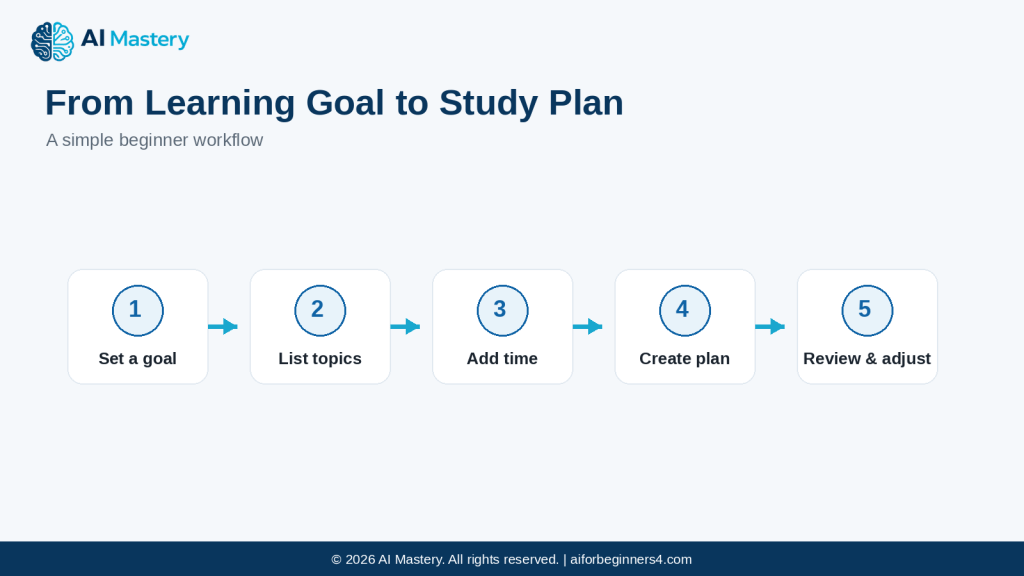
Figure 1. A five-step workflow for turning a learning goal into a personal study plan with AI.
Explanation: Start with a clear goal, list the topics, add the time you have available, create the plan, and then review and adjust it as your progress changes.
Before You Start
You do not need advanced study skills to create a useful study plan with AI. You mainly need a clear idea of what you are learning, how much time you have, and what you want to improve.
Before asking AI to create a plan, prepare:
· The subjects or topics you need to study
· Your available study days and times
· Any exam, assignment, or course deadlines
· The topics you find most difficult
· The materials you are expected to use
· How long you can comfortably study before taking a break
· Any fixed commitments that affect your schedule
Start with a Clear Learning Goal
A broad goal such as:
“Help me study science.”
is less useful than:
“Help me review basic biology for an exam in two weeks. I can study for one hour each evening.”
The second prompt gives AI enough context to create a more realistic plan.
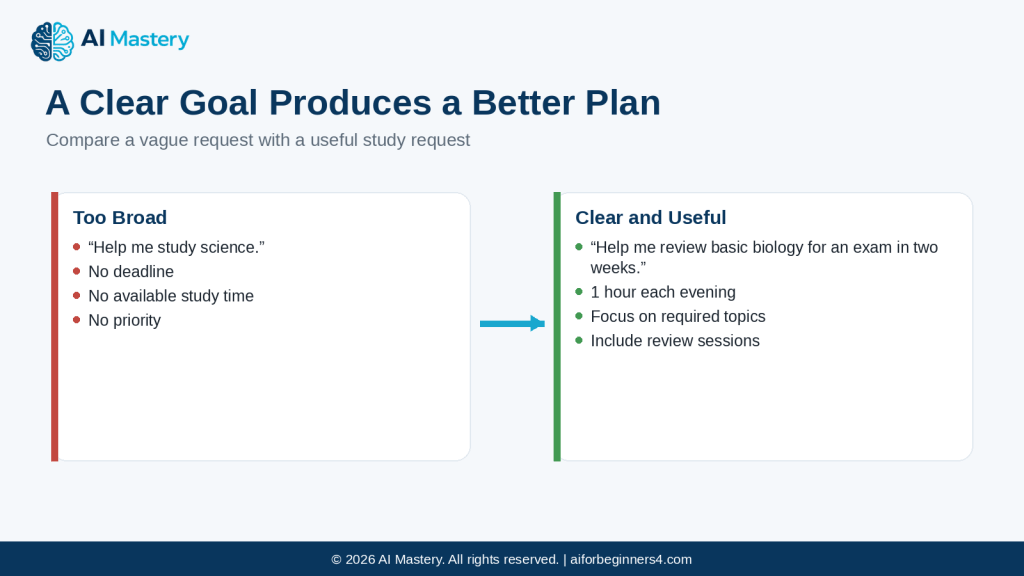
Figure 2. A vague study request compared with a clear study request.
Explanation: A clear request gives AI useful details such as the subject, deadline, available time, priorities, and review needs.
Include Important Deadlines
If you have an exam or assignment due on a specific date, tell AI.
For example:
“My exam is on September 5. Create a study plan from August 20 to September 4 and leave the final two days mainly for review.”
This helps AI work backward from the deadline.
Tell AI Which Subjects Need More Attention
Not every subject needs equal study time.
For example:
“I am comfortable with English but need more help with math. Give math twice as much study time.”
This can make the plan more useful than dividing time equally.
Use Your Official Course Materials
If you are studying for a class, certification, school course, or exam, use the official syllabus, textbook, teacher instructions, or required materials as the main reference.
AI can help organize those materials, but it should not silently replace them with unrelated information.
Protect Personal Information
You usually do not need to provide private information to create a study plan.
Avoid unnecessary details such as:
· Student identification numbers
· Private school records
· Medical information
· Personal addresses
· Account details
· Information about other students
Use general descriptions when possible.
Be Realistic About Your Available Time
A study plan that looks impressive but is too demanding will be difficult to follow.
If you have only one hour per day, tell AI that clearly.
For example:
“Create a study plan that fits into one hour each weekday and two hours on Saturday. Keep Sunday free.”
Reality: AI can help organize your study time, but the plan should fit your real schedule, course requirements, and learning needs.
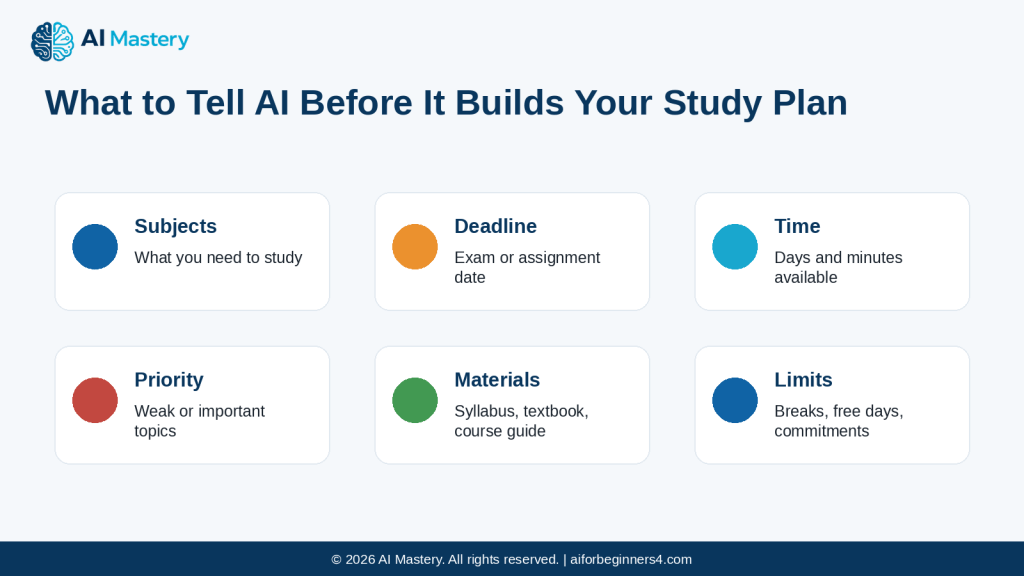
Figure 3. The key information to give AI before asking for a study plan.
Explanation: Providing subjects, deadlines, available time, priorities, course materials, and personal scheduling limits helps AI create a more realistic plan.
What You’ll Learn
By the end of this guide, you will know how to:
· Turn a broad learning goal into a practical study plan.
· Tell AI how much time you have available.
· Give more study time to difficult subjects.
· Work backward from an exam or assignment deadline.
· Break large subjects into smaller study topics.
· Create daily and weekly study schedules.
· Include review sessions instead of only studying new material.
· Add breaks so the plan is easier to follow.
· Adjust the schedule when you fall behind.
· Track what you have completed and what still needs attention.
· Use your official course materials as the main reference.
· Ask AI to create practice questions or revision checklists from material you provide.
· Review AI-generated explanations for mistakes or unsupported information.
· Protect unnecessary personal or educational information when using AI.
You will also learn how to make a study plan flexible enough to change as your progress, deadlines, and available time change.
The goal is not to let AI decide how you must study. The goal is to use AI as an organizing assistant while keeping your teacher’s instructions, official course materials, learning needs, and final decisions under your control.
How AI Can Help You Build a Better Study Plan
AI can support several parts of the study process. It can help you organize subjects, divide your time, create review sessions, and adjust the plan when your schedule changes.
Break Large Subjects into Smaller Topics
A broad subject such as “math” or “biology” can feel difficult to organize.
You can ask AI:
“Break basic algebra into smaller study topics for a beginner.”
AI might suggest areas such as:
· Basic equations
· Fractions
· Percentages
· Ratios
· Graphs
· Word problems
You should compare the list with your actual course or syllabus and keep only the topics you need.
Create a Weekly Study Schedule
AI can take your subjects and available time and suggest a weekly schedule.
For example:
“Create a study schedule for Monday to Saturday. I have 90 minutes each evening. I need to study math, science, and English. Give math the most time and include short review sessions.”
This can help you see how your study time is distributed.
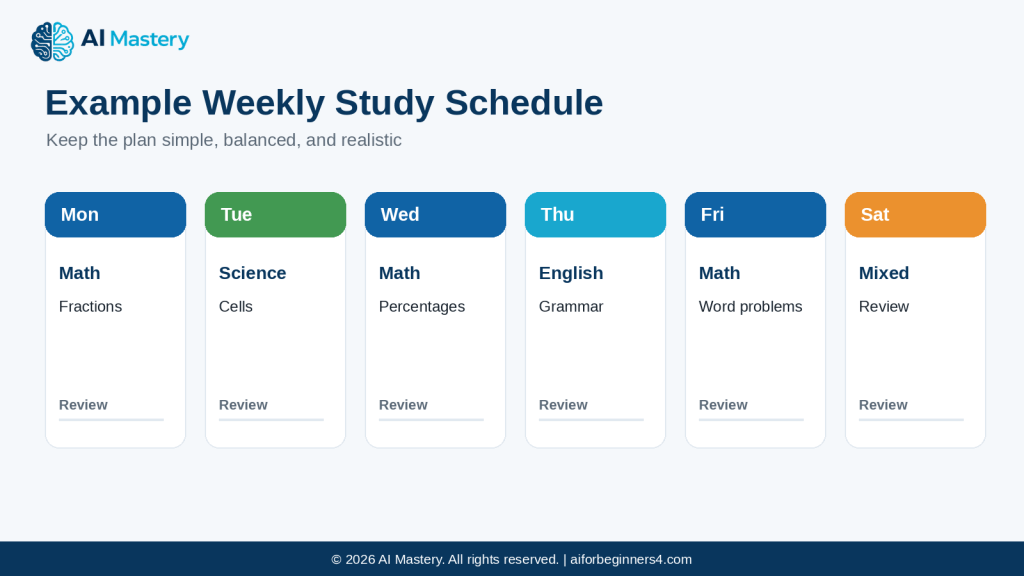
Figure 4. Example weekly study schedule with different subjects and review sessions.
Explanation: A simple weekly layout can show which subject to study each day while leaving room for review instead of filling every session with new material.
Prioritize Difficult Subjects
If one subject needs more attention, tell AI clearly.
For example:
“I understand English well, but I struggle with math. Give math twice as much study time as English.”
AI can then adjust the schedule around that priority.
Add Review Sessions
Studying new material without reviewing older material can make it harder to remember what you learned.
You can ask:
“Add short review sessions for material I studied earlier in the week.”
This creates a plan that includes both new learning and revision.
Create Practice Activities
AI can help create simple practice activities from information you provide.
For example:
“Create five beginner practice questions from these notes. Do not include anything that is not covered in the notes.”
This can help you check your understanding.
Always compare the questions and answers with your official learning materials when accuracy matters.
Create Checklists
A checklist can make a large study goal feel easier to manage.
For example:
“Turn these biology topics into a study checklist with boxes for Learn, Practice, and Review.”
You can then mark your progress as you study.
Adjust the Plan When You Fall Behind
Study plans often need to change.
For example:
“I missed Tuesday and Wednesday. Reorganize the rest of my week without increasing my daily study time above 90 minutes.”
AI can suggest a revised plan rather than forcing all missed work into one day.
Help You Decide What to Review First
If an exam is approaching, AI can help prioritize topics.
For example:
“My exam is in five days. These are the topics I still need to review: [topics]. Help me organize them by importance and difficulty.”
You should adjust the result based on what your teacher, syllabus, or exam guide says is most important.
Turn Notes into a Revision Plan
If you already have class notes, you can ask AI to organize them.
For example:
“Group these notes into main topics, key facts, difficult areas, and questions I should review again.”
This can help you see where more study is needed.
Reality: AI can help organize your study process, but it does not know your actual course requirements unless you provide them. Use your syllabus, teacher instructions, textbooks, and official materials as the main guide.
Step-by-Step: Create a Personal Study Plan with AI
You can create a practical study plan by giving AI clear information about your subjects, deadlines, available time, and learning priorities.
Step 1: List What You Need to Study
Start by writing down the subjects, chapters, lessons, or skills you need to cover.
For example:
· Math — fractions and percentages
· Science — cells and body systems
· English — grammar and reading
· Computer skills — file management
Do not worry about putting them in the correct order yet.
Step 2: Add Your Deadline
If you are preparing for an exam, assignment, or course milestone, include the date.
For example:
“My exam is on September 10.”
This gives AI a clear endpoint for the plan.
Step 3: Add Your Available Study Time
Tell AI when and how long you can study.
For example:
“I can study for one hour Monday to Friday and two hours on Saturday. I want Sunday free.”
Be realistic. A shorter plan you can follow is usually more useful than an ambitious plan you cannot maintain.
Step 4: Identify Your Weakest Areas
Tell AI which topics need more attention.
For example:
“I struggle most with math and science. English needs less review.”
This helps AI avoid dividing your study time equally when your needs are different.
Step 5: Include Breaks
If you study for longer periods, ask AI to include breaks.
For example:
“For study sessions longer than one hour, include a short break.”
You can adjust the break length to match your needs.
Step 6: Ask for Review Sessions
Do not fill the entire schedule with new material.
Ask:
“Include regular review sessions for topics I studied earlier.”
This can help you revisit important information before the exam.
Step 7: Send a Complete Prompt
A beginner-friendly prompt could be:
“Create a two-week study plan for math, science, and English. My exam is on September 10. I can study for one hour Monday to Friday and two hours on Saturday. Keep Sunday free. Math is my weakest subject, so give it the most time. Include short review sessions and do not schedule more study time than I have available.”
Step 8: Compare the Plan with Your Course Requirements
Check the AI-generated schedule against:
· Your syllabus
· Teacher instructions
· Exam guide
· Textbook chapters
· Assignment requirements
If an important topic is missing, add it.
Step 9: Adjust the Schedule
You do not need to accept the first version.
For example:
“Move science to Wednesday, give me more math practice on Saturday, and keep Friday lighter.”
AI can then reorganize the plan.
Step 10: Track Your Progress
As you study, record what you completed.
You could use simple labels such as:
· Not started
· In progress
· Completed
· Needs review
You can then ask AI:
“Reorganize my remaining study plan based on these completed and unfinished topics.”
How to Avoid This Mistake: Do not ask AI to create a schedule without giving it your real deadlines and available time. A plan can look organized while still being impossible to follow.
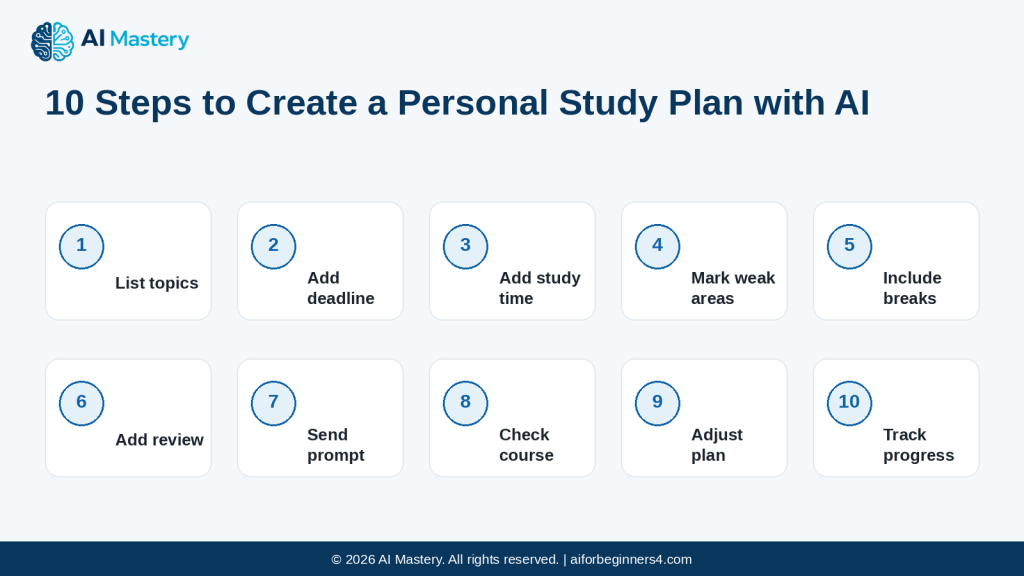
Figure 5. Ten-step process for creating and maintaining a personal study plan with AI.
Explanation: The process begins with the required topics and deadline, then adds available time, priorities, breaks, review, course checks, adjustments, and progress tracking.
Useful AI Prompts for Study Planning
Reusable prompts can make study planning faster and easier. Replace the bracketed information with your own subjects, deadlines, and available time.
Prompt for Creating a Weekly Study Plan
“Create a seven-day study plan for [subjects]. I can study for [time] each day. Give more time to [difficult subject]. Include review sessions and short breaks.”
Prompt for Studying Before an Exam
“My exam is on [date]. These are the topics I need to study: [topics]. Create a realistic study plan from today until the exam. Give more time to the topics I find difficult and leave time for final review.”
Prompt for Breaking Down a Large Subject
“Break [subject or chapter] into smaller beginner-friendly study topics. Put them in a logical learning order.”
Compare the result with your syllabus or course materials before using it.
Prompt for Prioritizing Topics
“These are the topics I need to study: [topics]. Help me organize them into high, medium, and lower priority based on the information I provide. Do not assume which topics are on my exam unless I tell you.”
Prompt for a Short Daily Study Session
“I have only 45 minutes today. Help me create a focused study session for [subject]. Include review, practice, and a short final check.”
Prompt for Catching Up After Missing Study Time
“I missed [number] study sessions. These are the topics I still need to complete: [topics]. Reorganize my remaining plan without increasing my daily study time above [time].”
Prompt for Creating Review Sessions
“Add review sessions to this study plan. Revisit important topics from earlier days without making the schedule too crowded.”
Prompt for Creating a Study Checklist
“Turn these topics into a checklist with three stages: Learn, Practice, and Review.”
Prompt for Practice Questions
“Create [number] beginner practice questions using only the study material I provide. Do not introduce information that is not in the material.”
After answering, compare the results with your official course materials.
Prompt for Explaining a Difficult Topic
“Explain [topic] in simple beginner-friendly language. Use a practical example. If you are unsure about any fact, say so instead of guessing.”
Prompt for Reviewing Your Progress
“These are the topics I have completed: [completed topics]. These still need work: [unfinished topics]. Update my study plan for the remaining days.”
Prompt for Finding Weak Areas
“Based only on these practice results, identify the topics I appear to need more practice with. Do not assume weaknesses that are not shown by the results.”
Prompt for Final Exam Review
“Create a final review checklist from these verified course topics. Include key concepts, practice areas, and anything I marked as difficult. Do not add new topics.”
Prompt for Making the Plan More Realistic
“Review this study schedule and identify days that may be too crowded. Keep my total study time within [time] per day and suggest a more balanced version.”
Final Check Before Using Any Prompt: Make sure the AI is working from the correct course topics, dates, and materials. Review the plan before following it and adjust anything that does not fit your real learning needs.
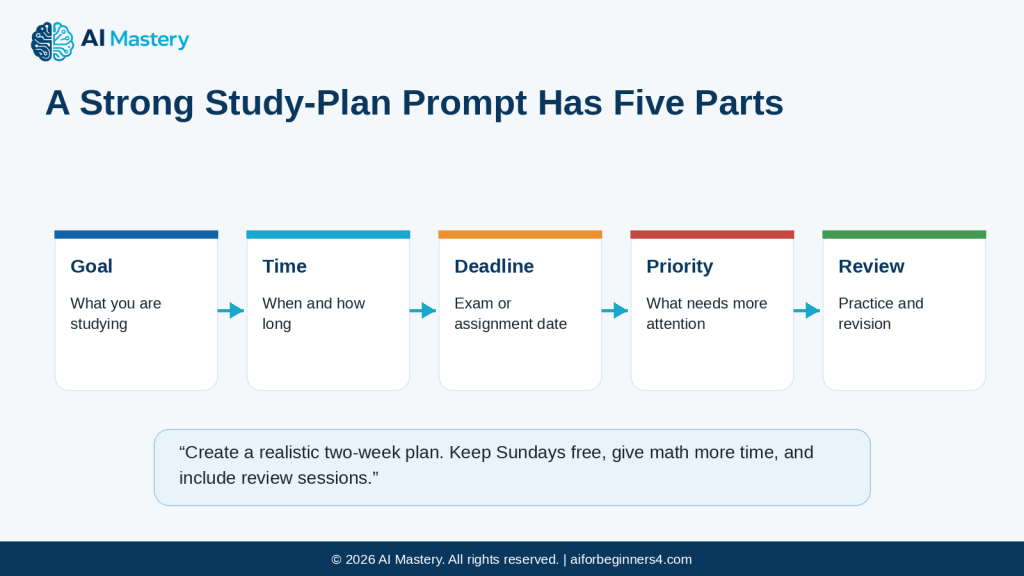
Figure 6. Five parts of a strong study-plan prompt.
Explanation: A useful prompt tells AI the learning goal, available time, deadline, priority areas, and the need for practice or review.
Practical Example: Create a Two-Week Study Plan with AI
Suppose you are preparing for an exam in two weeks.
You need to study:
· Math — fractions, percentages, and word problems
· Science — cells, body systems, and basic chemistry
· English — grammar and reading comprehension
Your available time is:
· Monday to Friday — 1 hour each evening
· Saturday — 2 hours
· Sunday — no study
You also know that math is your weakest subject.
You could ask AI:
“Create a two-week study plan for math, science, and English. I can study for one hour Monday to Friday and two hours on Saturday. Keep Sunday free. Math is my weakest subject, so give it the most study time. Include regular review sessions and leave the final two days mainly for review. Do not schedule more study time than I have available.”
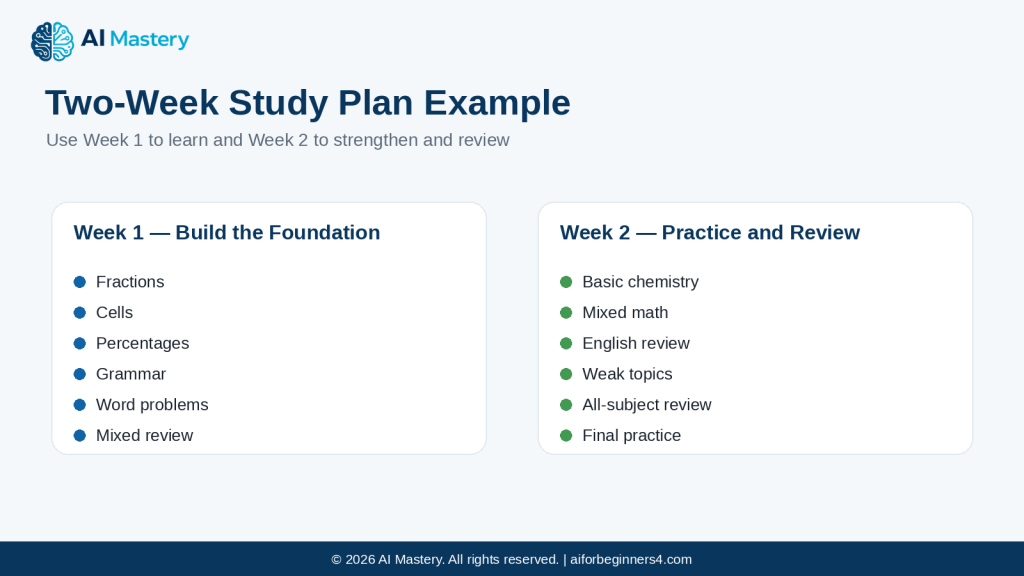
Figure 7. Example two-week study plan showing a learning week followed by practice and review.
Explanation: The first week can build the foundation, while the second week can focus more on practice, weak areas, and final review.
AI might organize the plan like this:
Week 1
Monday
· Math — fractions
· Short review of important rules
Tuesday
· Science — cells
· Five-minute review of Monday’s math
Wednesday
· Math — percentages
· Short practice session
Thursday
· English — grammar
· Brief science review
Friday
· Math — word problems
· Review difficult questions
Saturday
· Science — body systems
· English — reading comprehension
· Math review
Sunday
· Rest
Week 2
The second week could focus more on:
· Remaining topics
· Practice questions
· Difficult areas
· Mixed review
· Final exam preparation
For example:
Monday
· Science — basic chemistry
Tuesday
· Math — mixed practice
Wednesday
· English — grammar and reading review
Thursday
· Math — difficult topics
Friday
· Review all three subjects
Saturday
· Final practice and weak-area review
Sunday
· Rest or follow the actual exam schedule
Check the Plan Against Your Real Course
Before using the schedule, compare it with:
· Your teacher’s instructions
· Your syllabus
· Exam topics
· Required chapters
· Homework or assignments
· Any practice material provided by your school or course
Suppose your teacher says that percentages will be a major part of the exam.
You could then tell AI:
“Percentages are especially important for this exam. Give me an additional percentage review session without increasing my total daily study time.”
AI can reorganize the schedule instead of simply adding more hours.
Update the Plan After the First Week
Imagine that after Week 1:
· Fractions are now easy
· Percentages still need practice
· Science is going well
· English grammar needs more review
You could ask:
“Update Week 2. I no longer need much practice with fractions. Give more time to percentages and English grammar. Keep the same daily study-time limits.”
This makes the plan responsive to your actual progress.
Why This Approach Helps
The study plan is not fixed forever.
It can change when:
· You understand a topic faster than expected
· A topic takes longer than expected
· Your teacher changes the exam coverage
· You miss a study session
· Your available time changes
· Practice results show a weak area
Reality: A useful study plan should change as your progress changes. AI can help reorganize the schedule, but your actual course requirements, deadlines, and learning progress should guide the final plan.
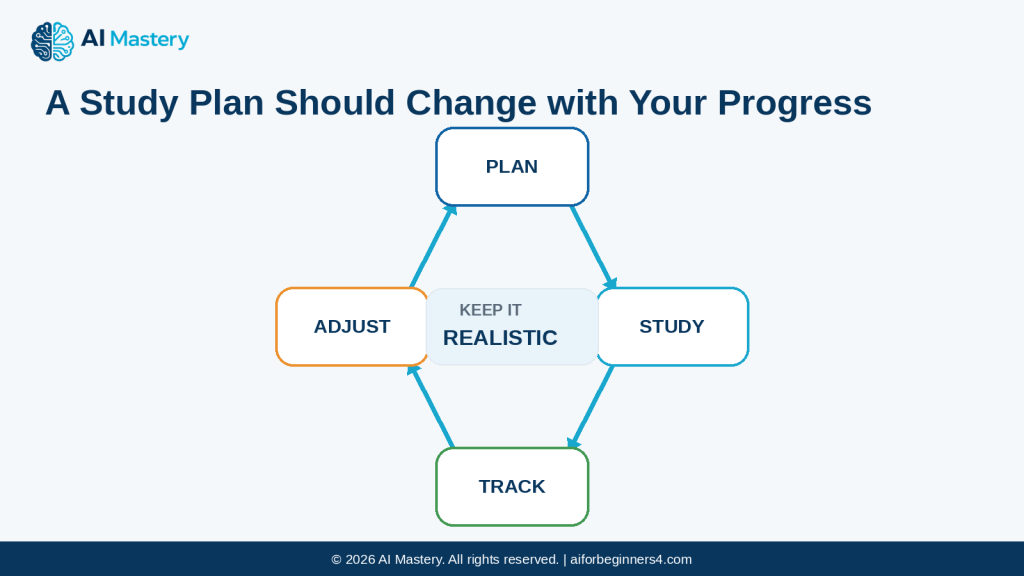
Figure 8. Study-plan adjustment cycle: plan, study, track, and adjust.
Explanation: A study plan is not fixed. After studying, track what happened and adjust the next sessions while keeping the schedule realistic.
Benefits of Using AI for Study Planning
AI can make study planning easier when you already know what you need to learn but need help organizing your time and priorities.
Helps Turn Goals into a Clear Plan
A goal such as:
“Improve my math”
is too broad to guide daily study.
AI can help turn it into smaller actions such as:
· Review fractions
· Practice percentages
· Solve word problems
· Check mistakes
· Repeat difficult topics
This makes it easier to know what to do next.
Helps Divide Study Time
When you have several subjects, AI can help distribute your available time.
For example:
“I have six hours available this week. Divide the time between math, science, and English, but give math the most attention.”
You can then review the schedule and adjust it.
Helps Prioritize Difficult Topics
AI can help give more time to subjects or topics that need extra attention.
This can be useful when:
· One subject is harder than the others
· An exam gives more weight to certain topics
· Practice results show weak areas
· A deadline is approaching
Helps Break Large Projects into Smaller Steps
Preparing for an exam or completing a course can feel overwhelming.
AI can help divide a large goal into smaller stages such as:
· Learn
· Practice
· Review
· Test yourself
· Revisit weak areas
Smaller steps can make progress easier to see.
Helps Create More Consistent Study Routines
AI can help you build a regular schedule.
For example:
· Monday — new topic
· Tuesday — practice
· Wednesday — new topic
· Thursday — review
· Friday — practice
· Saturday — mixed revision
A consistent routine can make it easier to remember what you planned to study.
Helps Adjust the Plan Quickly
Your schedule may change.
You might:
· Miss a study day
· Finish a topic early
· Need more time on one subject
· Receive a new assignment
· Have an exam date changed
Instead of rebuilding the whole plan yourself, you can ask AI to reorganize the remaining schedule.
Helps Create Different Study Formats
AI can turn the same material into:
· Checklists
· Timetables
· Topic lists
· Review schedules
· Practice-question sets
· Progress trackers
· Weekly plans
Different formats can help depending on what you are trying to do.
Helps Identify What Still Needs Attention
If you record your progress, AI can help separate:
· Completed topics
· Topics in progress
· Difficult topics
· Topics needing review
· Topics not yet started
This can make your next study session easier to plan.
Helps Keep Study Plans Realistic
You can tell AI about your limits.
For example:
“Do not schedule more than one hour per weekday.”
or:
“Keep Sunday free.”
This can help prevent the plan from becoming too demanding.
Benefit: AI can reduce the time spent organizing study tasks and help make large learning goals feel more manageable. The plan is most useful when you combine AI organization with your real course requirements, available time, and personal progress.
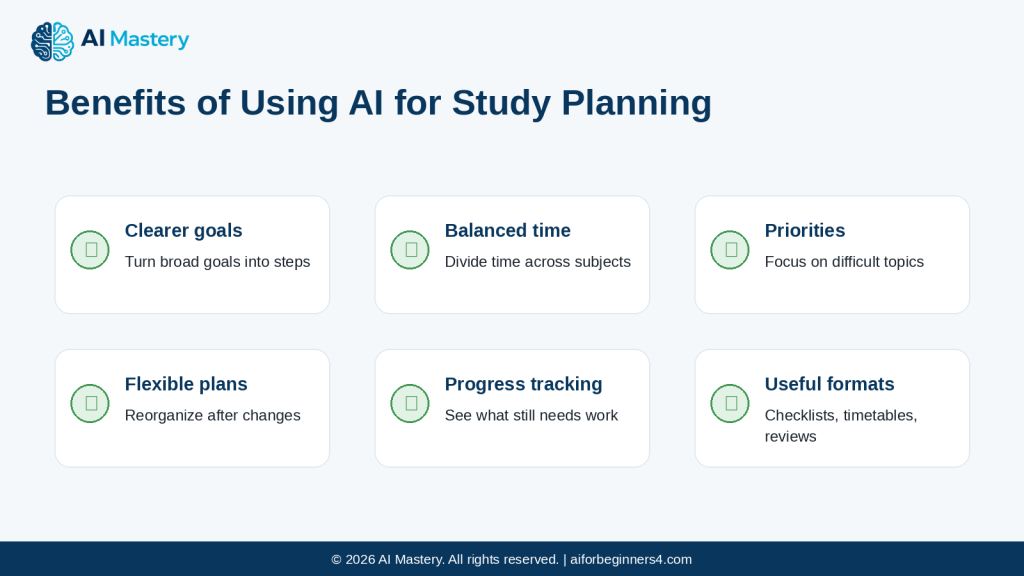
Figure 9. Main benefits of using AI to organize study planning.
Explanation: AI can help clarify goals, balance study time, highlight priorities, update plans, track progress, and turn the same information into useful formats.
Limitations and Common Mistakes
AI can help organize a study plan, but the result may still be unrealistic, incomplete, or unsuitable for your actual course.
Limitation: AI May Create an Unrealistic Schedule
AI may divide your study time into too many activities or expect you to complete difficult topics too quickly.
How to Reduce This Limitation: Give AI clear time limits and review the schedule yourself.
For example:
“Do not schedule more than 60 minutes of study per weekday.”
Limitation: AI Does Not Automatically Know Your Course Requirements
AI may suggest useful topics that are not part of your actual course, or it may miss topics that your teacher considers important.
How to Reduce This Limitation: Compare the plan with:
· Your syllabus
· Teacher instructions
· Exam guide
· Textbook
· Assignment requirements
Use those materials as the main reference.
Limitation: AI May Explain a Topic Incorrectly
An AI explanation can sound clear even when it contains a mistake.
How to Reduce This Limitation: Check important explanations, formulas, dates, definitions, and answers against reliable course materials.
Limitation: AI Cannot Measure Your Understanding Perfectly
AI may assume you understand a topic because you completed it in the schedule.
Completing a study session does not necessarily mean you have mastered the subject.
How to Reduce This Limitation: Use practice questions, quizzes, exercises, teacher feedback, and your own results to decide whether a topic needs more review.
Common Mistake: Creating a Plan That Is Too Ambitious
A schedule with several hours of study every day may look productive but can be difficult to maintain.
How to Avoid This Mistake: Start with the amount of time you can realistically manage.
You can always increase it later if necessary.
Common Mistake: Giving Every Subject Equal Time
Some subjects need more attention than others.
How to Avoid This Mistake: Tell AI which areas are:
· Easy
· Moderate
· Difficult
· High priority
· Close to a deadline
Then adjust the time accordingly.
Common Mistake: Studying Only New Material
A schedule that contains only new topics may leave too little time for revision.
How to Avoid This Mistake: Include regular review sessions throughout the plan.
Common Mistake: Following the First AI Plan Without Reviewing It
AI may produce a polished timetable that still does not fit your real situation.
How to Avoid This Mistake: Check every plan for:
· Correct subjects
· Correct dates
· Realistic study times
· Required topics
· Breaks
· Review sessions
· Important deadlines
Common Mistake: Using AI Instead of Required Learning Materials
AI should not replace the official textbook, syllabus, lesson material, teacher instructions, or course platform when those are required.
How to Avoid This Mistake: Use AI mainly to organize and explain material while keeping the official learning materials as the main reference.
Common Mistake: Asking AI to Guess Exam Content
AI usually cannot know exactly what will appear on your exam unless you provide reliable information.
How to Avoid This Mistake: Use your official exam guide, syllabus, teacher instructions, or provided study list.
A safer prompt is:
“Create a study plan using only these exam topics. Do not add topics that are not listed.”
Common Mistake: Ignoring Your Actual Progress
A study plan created two weeks ago may no longer match what you need.
How to Avoid This Mistake: Update the plan regularly.
For example:
“These topics are completed. These still need work. Reorganize the remaining schedule.”
Common Mistake: Adding Missed Work Without Reducing Other Tasks
If you miss a day, simply adding all the missed work to the next day can make the schedule unrealistic.
How to Avoid This Mistake: Ask AI to redistribute the unfinished work across the remaining days while keeping your normal time limits.
Common Mistake: Sharing Unnecessary Personal Information
A study plan usually does not require detailed personal records.
How to Avoid This Mistake: Share only the information necessary to create the schedule and remove unnecessary private details.
Reality: A well-formatted AI study plan is not automatically a good study plan. It still needs to match your real deadlines, available time, learning progress, and official course requirements.
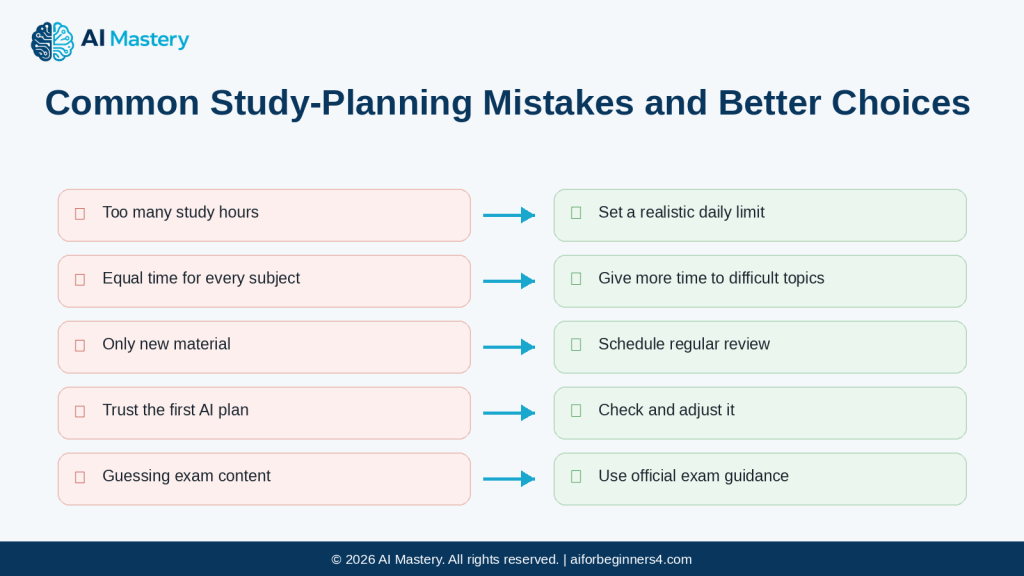
Figure 10. Common study-planning mistakes and better choices.
Explanation: The most useful corrections are to set realistic time limits, prioritize difficult topics, include review, check the AI plan, and use official exam guidance.
Common Myths About Using AI for Study Planning
AI can help organize study time and learning activities, but it is important to understand what it can and cannot do.
Myth 1: AI Can Create the Perfect Study Plan Automatically
A study plan may look well organized but still be too difficult, too easy, or unsuitable for your schedule.
Reality: A useful study plan needs your input about deadlines, available time, difficult subjects, and course requirements.
Myth 2: AI Knows Exactly What Will Be on My Exam
AI cannot reliably know the exact exam content unless you provide official information.
Reality: Use your syllabus, teacher instructions, exam guide, textbook, or official course materials to decide what should be studied.
Myth 3: More Study Hours Always Mean Better Results
A very long schedule may lead to tiredness and may be difficult to maintain.
Reality: A realistic plan with regular study, practice, review, and breaks is usually more useful than an overloaded timetable.
Myth 4: Every Subject Should Receive the Same Amount of Time
Different subjects may require different levels of effort.
Reality: Give more time to difficult or high-priority topics and less time to areas you already understand well.
Myth 5: Once AI Creates the Plan, I Should Follow It Exactly
Your progress and schedule can change.
Reality: Treat the plan as adjustable. Update it when you miss a session, finish something early, or discover that a topic needs more practice.
Myth 6: Completing a Topic Means I Have Learned It
Marking a topic as completed does not prove that you understand or remember it.
Reality: Use exercises, practice questions, quizzes, recall activities, or teacher feedback to check your understanding.
Myth 7: AI Explanations Are Always Correct
AI may provide an incorrect formula, definition, example, date, or explanation.
Reality: Check important learning content against reliable course materials, especially when preparing for an exam or assessment.
Myth 8: AI Can Replace a Teacher or Tutor
AI can explain topics, create examples, and help organize learning, but it does not fully understand your progress or course expectations.
Reality: Teachers, tutors, instructors, and official course materials remain important sources of guidance.
Myth 9: A Complicated Study Plan Is Better
A plan with many categories, timers, tools, and daily activities may look professional but can be difficult to follow.
Reality: A simple plan that clearly shows what to study, when to study it, and when to review it may be more practical.
Myth 10: AI Can Decide the Best Learning Method for Everyone
People learn differently, and one study method may not work equally well for every learner or subject.
Reality: Try different approaches and keep the ones that actually help you understand and remember the material.
Myth 11: If I Fall Behind, the Study Plan Has Failed
Unexpected events can interrupt even a good schedule.
Reality: A study plan should be flexible. Reorganize the remaining work rather than giving up on the entire plan.
Myth 12: AI Makes Official Learning Materials Unnecessary
AI may simplify or reorganize information, but it may omit important details or introduce mistakes.
Reality: Keep your official course materials as the main reference and use AI as additional study assistance.
The most useful approach is to treat AI as a planning and organization tool while keeping your real progress, official course requirements, and human judgment at the centre of the study process.
When AI Can Help and When Human Guidance Matters Most
AI can be useful for many routine study-planning tasks, but some situations need more careful human guidance.
Good Uses for AI Study Assistance
AI can help with:
· Creating a weekly study schedule
· Breaking large subjects into smaller topics
· Prioritizing difficult areas
· Creating revision checklists
· Reorganizing missed study sessions
· Turning notes into review questions
· Building simple progress trackers
· Creating practice activities from material you provide
· Summarizing your own notes
· Suggesting ways to spread study time across several subjects
These tasks mainly involve organization and planning.
Use Human Guidance for Course Requirements
AI should not decide what is officially required for your course.
Check with:
· Your teacher
· Tutor
· Instructor
· School
· Training provider
· Official course platform
· Syllabus
· Exam guide
These sources should determine required topics, assessment rules, deadlines, and grading expectations.
Use Extra Care with Important Assessments
For major exams, professional certifications, entrance tests, or graded assignments, verify the study plan against official materials.
AI may accidentally:
· Leave out required topics
· Add unnecessary material
· Misunderstand the exam structure
· Give an incorrect explanation
· Suggest an unsuitable priority
Do not rely only on an AI-generated plan when the result could affect an important qualification or academic decision.
Ask for Help When You Do Not Understand a Topic
If you repeatedly struggle with the same subject, AI can explain it in a different way, but it may not recognize the real reason you are having difficulty.
A teacher or tutor may be better able to:
· Identify a misunderstanding
· Check your work
· Correct repeated mistakes
· Recommend suitable exercises
· Explain what the course expects
· Give feedback based on your actual performance
Be Careful with Learning or Accessibility Needs
Some students may need adapted study materials, extra time, assistive technology, or other accommodations.
AI can help organize a plan around requirements you provide, but it should not decide what educational accommodation someone needs.
Use guidance from the appropriate teacher, school, accessibility service, qualified professional, or official support program when necessary.
Review AI-Generated Practice Questions
AI can create practice questions, but the questions or answers may contain mistakes.
When possible:
1. Ask AI to use only your provided learning material.
2. Compare the questions with your course content.
3. Check the answers.
4. Remove questions that are unclear or outside the required topic.
Keep Final Decisions Under Your Control
A practical study workflow is:
1. Check the official course requirements.
2. List what you need to study.
3. Decide how much time you have.
4. Use AI to organize the schedule.
5. Review the AI-generated plan.
6. Follow the plan and track your progress.
7. Adjust it based on your actual results.
8. Ask a teacher, tutor, or other appropriate person when you need help beyond planning.
Reality: AI is most useful as a study organizer and assistant. Teachers, official learning materials, your actual results, and appropriate human guidance should still determine what you need to learn and whether you understand it.
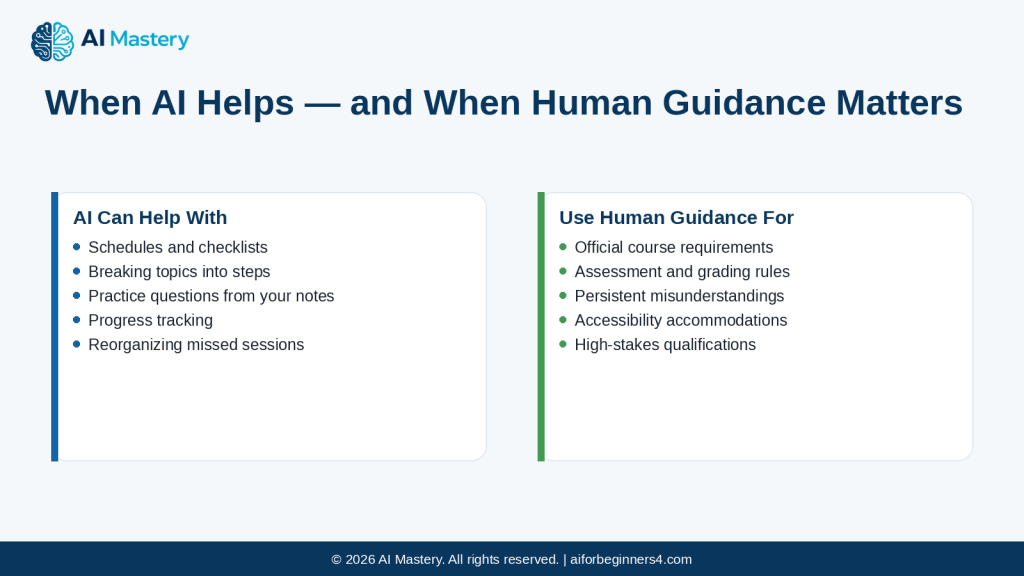
Figure 11. Tasks AI can assist with and situations where human guidance matters.
Explanation: AI is well suited to organization and practice support, while official requirements, grading rules, persistent misunderstandings, accommodations, and high-stakes qualifications need appropriate human guidance.
Privacy, Academic Integrity, and Responsible Study
AI can help organize a study plan, explain topics, and create practice activities, but it should be used in a way that protects your information and follows the rules of your school, course, or training program.
Protect Personal Information
A study plan usually does not require detailed personal information.
Avoid sharing unnecessary information such as:
· Student identification numbers
· Home addresses
· Account passwords
· Private school records
· Financial information
· Medical information
· Private information about other students
If a document contains sensitive information, remove details that are not necessary before sharing it with an AI tool.
You can use placeholders such as:
· [STUDENT NAME]
· [COURSE NAME]
· [SCHOOL NAME]
· [PRIVATE DETAIL]
Check Before Uploading School or Course Materials
Having access to a document does not automatically mean you should upload it to an AI service.
Before uploading:
· Course handouts
· Assignment instructions
· Teacher-created materials
· Paid textbooks
· Practice exams
· Student records
· Group-project documents
Consider whether you have permission to share the material and whether it contains private or copyrighted content.
When possible, provide only the portion that is necessary for the study task.
Follow Your School or Course AI Rules
Different schools, teachers, courses, and examinations may have different rules about AI use.
AI may be allowed for activities such as:
· Planning study time
· Creating personal checklists
· Explaining a concept
· Generating practice questions
· Organizing your own notes
But AI use may be restricted for:
· Graded assignments
· Exams
· Take-home tests
· Coursework that must be completed independently
· Work requiring disclosure of outside assistance
Check the instructions for the specific course or assignment before using AI.
Do Not Submit AI Work as Your Own When It Is Not Allowed
There is an important difference between using AI to help you study and asking AI to complete assessed work for you.
For example, using AI to explain a difficult concept may help you learn.
Asking AI to write an assignment that you are expected to complete yourself may violate your course rules.
A safer study prompt is:
“Explain this concept to me in simple language and then give me three practice questions. Do not write my assignment for me.”
Use AI to Support Learning, Not Avoid It
If AI gives you every answer immediately, you may finish a task without understanding the subject.
Try using AI to:
· Give hints
· Explain mistakes
· Create similar practice problems
· Ask you questions
· Compare your answer with a model answer
· Suggest what to review next
For example:
“Do not give me the answer immediately. Give me one hint at a time so I can try to solve the problem myself.”
This keeps the focus on learning.
Check AI-Generated Information
AI may produce incorrect explanations, calculations, references, or answers.
For important study material:
1. Compare the explanation with your textbook or official course material.
2. Check calculations and formulas.
3. Confirm important dates and definitions.
4. Ask your teacher or tutor when something remains unclear.
Respect Copyright and Licences
Textbooks, diagrams, articles, videos, photographs, course materials, and other learning resources may be protected by copyright or licence conditions.
Do not assume that because AI can summarize or discuss material, you automatically have permission to copy, republish, distribute, or use it commercially.
Keep appropriate source information when you use outside material in research or assignments.
Keep Useful Study Records
For longer courses, it can help to save:
· Your study plan
· Progress records
· Important course links
· Your own notes
· Practice results
· Teacher feedback
· Updated versions of your schedule
These records can help you see how your learning changes over time.
Reality: Responsible AI study use means protecting private information, following course rules, respecting copyright and permissions, checking important information, and using AI to support your learning rather than replace it.
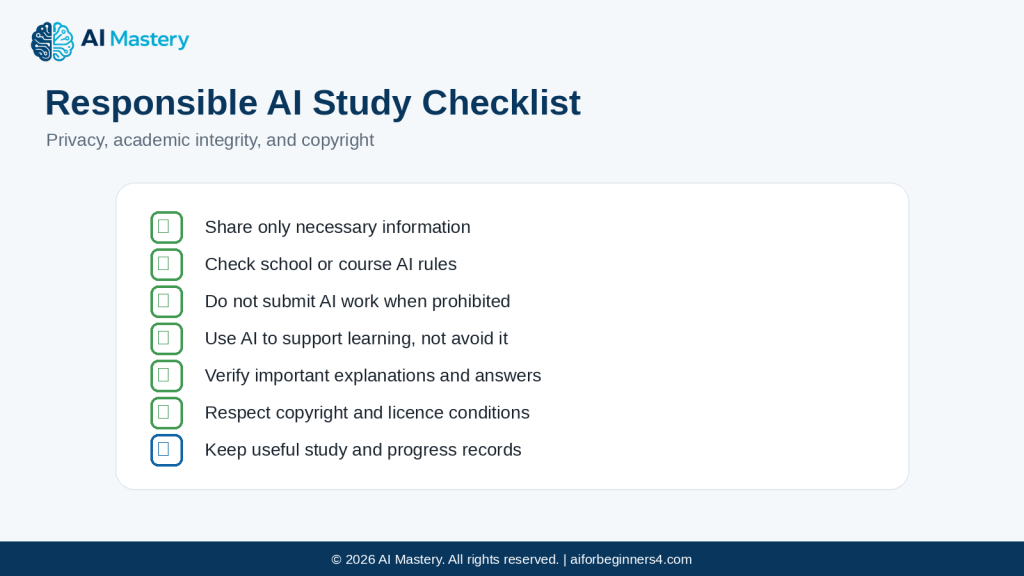
Figure 12. Responsible AI study checklist for privacy, academic integrity, verification, and copyright.
Explanation: Before relying on AI for study, share only necessary information, follow course rules, verify important answers, respect copyright, and keep useful records.
Frequently Asked Questions
Can AI create a complete study plan for me?
Yes. AI can organize your subjects, deadlines, available time, review sessions, and priorities into a study plan.
You should still review the result to make sure it matches your real schedule and official course requirements.
How much information should I give AI?
Give enough information to create a realistic plan, such as:
· Subjects or topics
· Exam or assignment dates
· Available study time
· Difficult subjects
· Required course materials
· Days you want free
Avoid unnecessary private information.
Can AI help me study more than one subject?
Yes.
For example:
“Create a weekly study plan for math, science, and English. I can study for 90 minutes each evening. Give math the most time.”
AI can divide your available time among the subjects.
Can AI help if I fall behind?
Yes.
You can ask:
“I missed two study sessions. Reorganize the remaining plan without increasing my daily study time.”
This can help redistribute unfinished work more realistically.
Can AI create practice questions?
Yes.
For better accuracy, give AI the material you want it to use.
For example:
“Create ten practice questions using only these notes. Do not add information that is not in the notes.”
Check the questions and answers against your course materials.
Can AI explain difficult topics?
Yes. You can ask for a simpler explanation, example, analogy, or step-by-step explanation.
For example:
“Explain percentages to a complete beginner using three everyday examples.”
However, important explanations should still be checked against reliable learning materials.
Should I use AI instead of my textbook?
No.
Your textbook, syllabus, teacher instructions, and official course materials should remain the main reference when they are required for your course.
AI can help explain and organize that material.
Can AI tell me what will be on my exam?
Not reliably unless you provide official exam information.
Use your teacher’s instructions, syllabus, exam guide, or official study list to determine what you need to study.
How often should I update my study plan?
Update it whenever something important changes, such as:
· You miss a study session
· You finish a topic early
· A deadline changes
· A new assignment appears
· Practice results show a weak area
· Your available study time changes
You can also review the plan once a week during longer courses.
Should I schedule every minute of my study time?
Not necessarily.
A plan can become difficult to follow if it is too detailed.
For many beginners, a simple schedule showing the subject, topic, approximate study time, and review session is enough.
Should I include breaks?
Usually, yes, especially during longer study sessions.
The exact timing depends on your concentration, learning needs, and schedule.
The important point is to avoid creating a plan that expects continuous study for long periods without rest.
Can AI help me identify weak areas?
It can help based on information you provide, such as practice results or topics you mark as difficult.
For example:
“Based only on these quiz results, identify the topics that appear to need more practice.”
AI should not be treated as a complete assessment of your learning ability.
Can I use AI for graded assignments?
That depends on the rules of your school, teacher, course, or assessment.
Some courses allow certain types of AI assistance, while others restrict or prohibit it.
Check the specific instructions before using AI for assessed work.
Do I need to disclose that I used AI?
This depends on your school, course, assignment, or publication rules.
If disclosure is required, follow the instructions provided by the institution or instructor.
When unsure, ask the appropriate teacher or course provider.
Is AI-generated study information always correct?
No.
AI can make mistakes, leave out important information, or provide outdated explanations.
Important facts, formulas, definitions, and answers should be checked against reliable learning materials.
Can AI replace a teacher or tutor?
No.
AI can assist with planning, explanations, and practice, but teachers and tutors can provide feedback based on your actual work, course requirements, and learning progress.
Reality: AI can make study planning more organized and flexible, but successful learning still depends on accurate materials, regular practice, realistic scheduling, and your own effort and understanding.
Key Takeaways
AI can make study planning easier, but the plan should still match your real course requirements, available time, deadlines, and learning progress.
Remember these main points:
· Start with a clear learning goal.
· List the subjects or topics you need to study.
· Include important exam and assignment dates.
· Tell AI how much study time you realistically have.
· Give more time to difficult or high-priority subjects.
· Break large topics into smaller study steps.
· Include review sessions, not only new material.
· Add breaks to longer study periods.
· Use your syllabus, teacher instructions, textbooks, and official course materials as the main reference.
· Check AI-generated explanations, practice questions, formulas, and answers.
· Update the study plan when your schedule or progress changes.
· Do not assume AI knows exactly what will appear on an exam.
· Use AI to support learning rather than complete assessed work for you.
· Follow your school, teacher, course, or examination rules about AI use.
· Protect unnecessary personal, educational, or confidential information.
· Respect copyright, permissions, and licence conditions for study materials.
· Ask a teacher, tutor, or other appropriate person when you need guidance beyond planning and organization.
The most useful role for AI in study planning is to help you organize your time, priorities, and review activities while keeping your actual learning needs, official course requirements, and final decisions under your control.
Final Tip
Keep your study plan simple enough to follow.
A complicated schedule with too many tasks, apps, reminders, and categories can become harder to manage than the studying itself.
A practical study workflow is:
1. Check what you actually need to learn.
2. List your subjects and deadlines.
3. Decide how much time you realistically have.
4. Use AI to organize the schedule.
5. Review the plan before following it.
6. Study and record your progress.
7. Update the plan when something changes.
8. Keep time for review before important exams or assessments.
A useful prompt is:
“Create a realistic study plan using only the subjects, deadlines, and available time I provide. Give more time to difficult topics, include review sessions, and do not add extra study hours beyond my limits.”
If the schedule becomes difficult to follow, simplify it rather than abandoning it completely.
The goal is not to create the most detailed study plan. The goal is to create a plan you can understand, adjust, and actually use.
Continue Learning
After you learn how to create a personal study plan with AI, continue with these related AI Mastery guides:
· Article 077 — AI Productivity for Beginners: Complete Guide (2026) — Review the broader ways AI can help with planning, writing, research, organization, and everyday work.
· Article 078 — How to Create a Daily Plan with ChatGPT (2026) — Learn how to turn tasks, appointments, and priorities into a realistic daily schedule.
· Article 079 — How to Write and Improve Emails with AI (2026) — Learn how to draft, rewrite, shorten, and improve everyday emails with AI.
· Article 080 — How to Prepare Meeting Agendas and Notes with AI (2026) — Learn how AI can help prepare meetings, organize notes, identify action items, and create follow-up summaries.
· Article 081 — How to Research and Organize Information with AI (2026) — Learn how to collect, compare, verify, and organize information from different sources.
· Article 083 — How to Organize Files, Tasks, and Projects with AI (2026) — Learn how AI can help structure files, tasks, checklists, priorities, and larger projects. Link after Article 083 is published.
These guides use the same beginner-friendly approach: give AI clear instructions, keep your goals realistic, protect unnecessary private information, verify important information, and keep final decisions under human control.
Sources and References
The following official sources were reviewed for this guide. AI features, education policies, privacy practices, academic-integrity rules, and copyright guidance can change, so readers should check current information when first using a tool, when course or school rules change, after receiving a policy update, and periodically.
· OpenAI Help Center — Using Study Mode in ChatGPT. Explains how Study Mode can guide learners through topics using questions, step-by-step explanations, and interactive learning support rather than simply providing a final answer.
· OpenAI Help Center — Does ChatGPT Tell the Truth? Explains that ChatGPT can produce incorrect or misleading information, including incorrect definitions, dates, or facts. This supports the recommendation to verify important study information against reliable course materials.
· UNESCO — Guidance for Generative AI in Education and Research. Provides international guidance for responsible and human-centred use of generative AI in education, including attention to privacy, appropriate educational use, human agency, and institutional policy. The UNESCO page was last updated in January 2026.
· UNESCO — AI Competency Framework for Students. Provides a framework designed to help students use AI responsibly and meaningfully, with emphasis on a human-centred mindset, ethics, AI knowledge, and responsible application.
· UNESCO — AI Competency Framework for Teachers. Provides guidance for educators on responsible AI use and highlights human agency, ethics, appropriate educational use, and professional judgment.
· Office of the Privacy Commissioner of Canada — Privacy and Artificial Intelligence. Provides Canadian guidance about privacy risks connected with AI and the importance of protecting personal information.
· Office of the Privacy Commissioner of Canada — Privacy Awareness Week 2026. Advises people using AI tools to limit the personal information they share, review privacy settings, and avoid unnecessarily sharing other people’s personal information or photographs.
· Canadian Intellectual Property Office — A Guide to Copyright. Provides introductory Canadian guidance about copyright protection and the rights associated with protected works.
· Canadian Intellectual Property Office — Copyright: Learn the Basics. Provides beginner-oriented information about what copyright protects and why permission, ownership, and proper use of copyrighted material matter.
These sources support the article’s guidance on using AI as a study assistant rather than an unquestioned authority, protecting personal information, respecting course and institutional rules, checking AI-generated learning material, maintaining human involvement in learning, and respecting copyright.
Schools, teachers, universities, training providers, certification bodies, and examination organizations may have their own rules about permitted AI use. Readers should therefore follow the specific instructions that apply to their course or assessment rather than assuming that one general AI rule applies everywhere. UNESCO’s current guidance emphasizes responsible, human-centred AI use in education and the continuing importance of human agency.
AI tools and educational policies continue to change. Verify current tool features and institutional requirements before relying on them for important coursework, examinations, professional certification, or other assessed learning.

