Tag: AI

  • What Is Machine Learning? A Beginner’s Guide (2026)

    What Is Machine Learning? A Beginner’s Guide (2026)

    Estimated Reading Time: 8 minutes

    Last Updated: July 2026

    What You’ll Learn

    By the end of this guide, you’ll be able to:

    • Understand what Machine Learning (ML) is.
    • Learn how Machine Learning works in simple language.
    • Recognize examples of Machine Learning in everyday life.
    • Understand the main types of Machine Learning.
    • Learn the benefits and limitations of Machine Learning.
    • Understand the relationship between Artificial Intelligence, Machine Learning, and Deep Learning.
    • Build a solid foundation for learning more advanced AI topics.

    Introduction

    Machine Learning (ML) is one of the most important technologies behind today’s Artificial Intelligence (AI). Every time you receive a movie recommendation on Netflix, a product suggestion while shopping online, or a spam email is automatically filtered, Machine Learning is likely working behind the scenes.

    Although Machine Learning may sound complicated, the basic idea is surprisingly simple. Instead of following only fixed instructions, a Machine Learning system learns from data, recognizes patterns, and improves its performance over time. The more examples it learns from, the better it becomes at completing specific tasks.

    If you’re new to Machine Learning, this guide is the perfect place to start. It explains the key concepts in simple language, uses real-world examples, and shows how Machine Learning powers many of the AI tools people use every day, including ChatGPT, Google Search, Netflix, YouTube, and voice assistants.

    Before learning about Machine Learning, you may find it helpful to read our What Is Artificial Intelligence? A Beginner’s Guide (2026), which explains the basic concepts of AI and how Machine Learning fits into the broader field of Artificial Intelligence.

    What Is Machine Learning?

    Machine Learning (ML) is a branch of Artificial Intelligence (AI) that enables computers to learn from data and improve their performance without being explicitly programmed for every task. Instead of following only fixed instructions, Machine Learning systems identify patterns in data and use those patterns to make predictions, recognize information, or solve problems.

    The more data a Machine Learning system analyzes, the better it usually becomes at performing the task it was designed to do. This ability allows Machine Learning to improve over time as it processes more examples.

    Machine Learning is used in many everyday applications, including movie recommendations, online shopping suggestions, email spam filters, voice assistants, fraud detection, language translation, and self-driving technology.

    In simple terms, Machine Learning teaches computers to learn from experience, much like people learn by practicing and observing examples. While Machine Learning does not think or understand the world like humans, it can recognize patterns much faster and process enormous amounts of information in a short time.
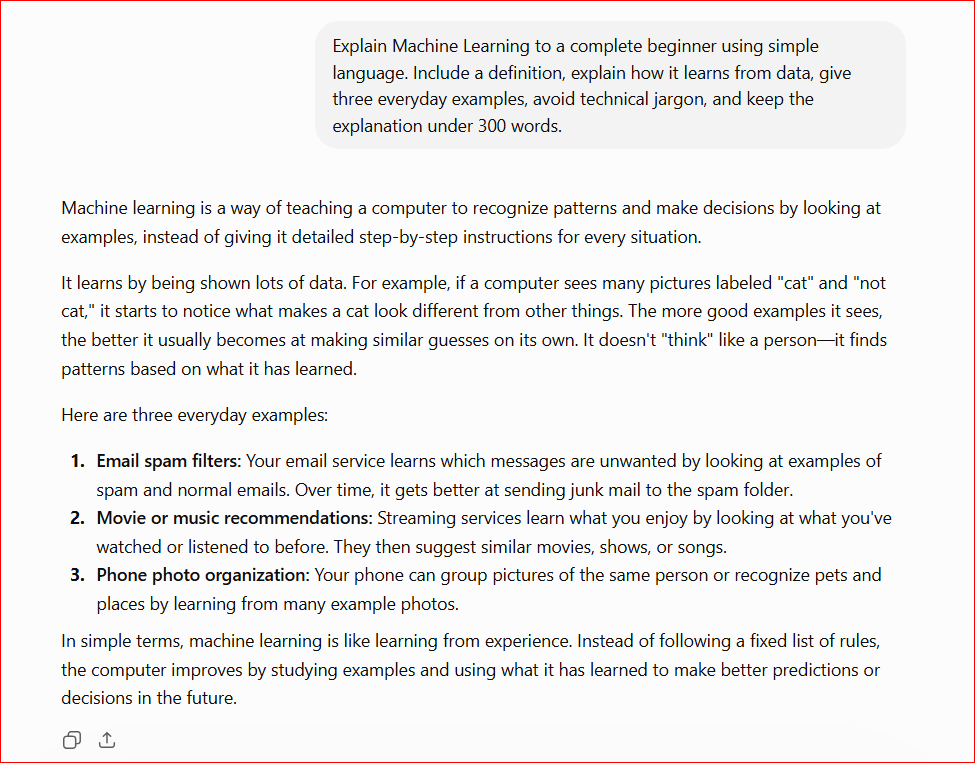
     Figure 1. ChatGPT explaining Machine Learning in simple language.

    This example shows how ChatGPT can explain Machine Learning using simple language and practical examples. By avoiding technical terms and focusing on everyday situations, beginners can quickly understand the basic idea of how Machine Learning works.

    How Does Machine Learning Work?

    Machine Learning works by learning from data instead of relying only on fixed instructions written by a programmer. During training, a Machine Learning system analyzes many examples to identify patterns, relationships, and trends. Once it has learned those patterns, it can apply them to new information and make predictions or decisions.

    For example, imagine teaching a child to recognize cats. Instead of explaining every detail about what a cat looks like, you show hundreds of pictures of cats and non-cats. Over time, the child begins to recognize the common features that identify a cat. Machine Learning works in a similar way by learning from many examples rather than memorizing a list of rules.

    After the training process is complete, the Machine Learning model can analyze new data it has never seen before. For example, it can identify spam emails, recommend movies you may enjoy, recognize faces in photos, or predict tomorrow’s weather based on past data.

    Although Machine Learning can improve its performance over time, it does not think or understand information like a human. It uses mathematical models and patterns learned from data to make predictions and provide useful results.

    One of the easiest ways to understand Machine Learning is to think of it as learning through experience. The more high-quality examples the system analyzes, the better it usually becomes at performing its task.
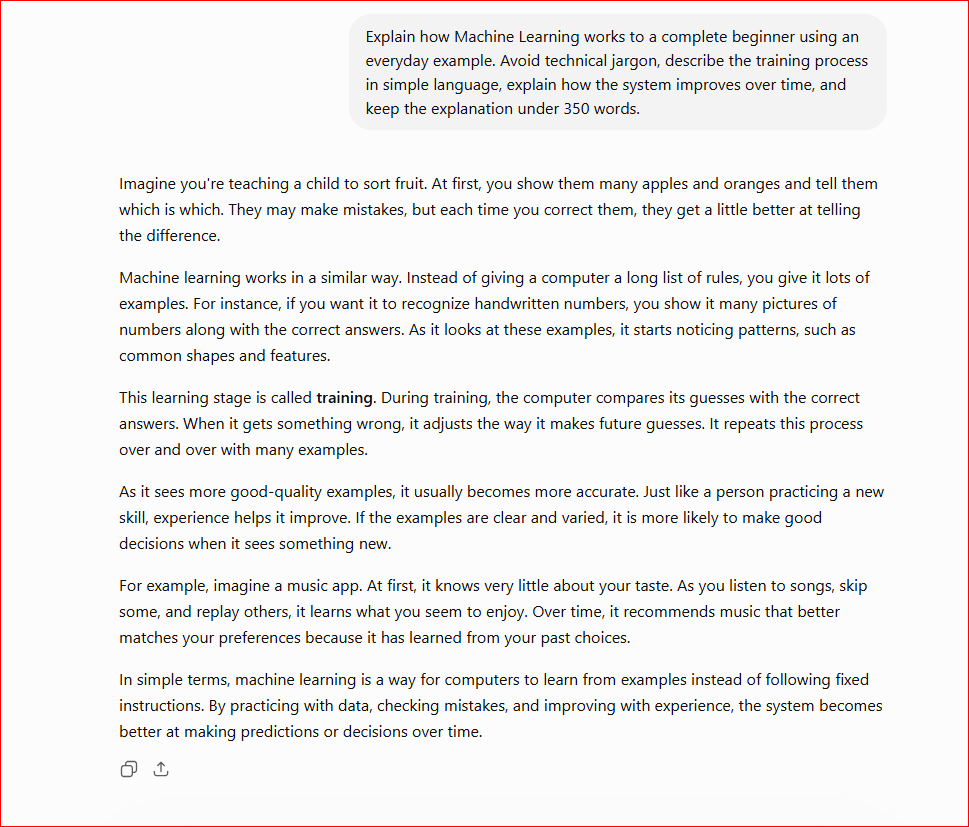
    Figure 2. ChatGPT explaining how Machine Learning works using an everyday example.

    This example shows that Machine Learning improves by learning from many examples rather than following only fixed instructions. Using an everyday comparison makes the learning process easier for beginners to understand.

    Types of Machine Learning

    Machine Learning is usually divided into three main types. Each type learns in a different way depending on the data and the task it needs to perform. Understanding these three types will help you see how Machine Learning is used in many real-world applications.

    Supervised Learning

    Supervised Learning is the most common type of Machine Learning. In this method, the computer learns from examples that already have the correct answers. By studying these examples, it learns how to make predictions when it receives new data.

    For example, if a Machine Learning system is shown thousands of emails labeled as “Spam” or “Not Spam,” it learns how to recognize unwanted messages. Later, when a new email arrives, it can predict whether it is spam.

    Other examples of Supervised Learning include:

    • Email spam detection
    • House price prediction
    • Credit card fraud detection
    • Medical diagnosis assistance

    Unsupervised Learning

    In Unsupervised Learning, the computer receives data without any labels or correct answers. Instead of making predictions, it looks for hidden patterns, similarities, and groups within the data.

    For example, a supermarket may use Unsupervised Learning to group customers with similar shopping habits. This helps the store create personalized promotions and improve customer service.

    Other examples include:

    • Customer segmentation
    • Product recommendations
    • Grouping similar photos
    • Market research

    Reinforcement Learning

    Reinforcement Learning teaches a computer by using rewards and penalties. The system learns through trial and error, receiving positive feedback for good decisions and negative feedback for poor ones. Over time, it learns which actions produce the best results.

    For example, a robot learning to walk may fall many times at first. As it receives feedback and continues practicing, it gradually learns how to balance and walk successfully.

    Other examples include:

    • Self-driving vehicles
    • Video game AI
    • Robot navigation
    • Warehouse automation

    Comparison Table

    TypeHow It LearnsEveryday Example
    Supervised LearningLearns from labeled examples with correct answers.Email spam filter
    Unsupervised LearningFinds hidden patterns and groups in unlabeled data.Customer grouping in online shopping
    Reinforcement LearningLearns through rewards and penalties.Robot learning to walk

    The important thing to remember is that each type of Machine Learning solves different kinds of problems. Supervised Learning predicts outcomes, Unsupervised Learning discovers hidden patterns, and Reinforcement Learning improves through experience. Together, these approaches power many of the intelligent systems we use every day.
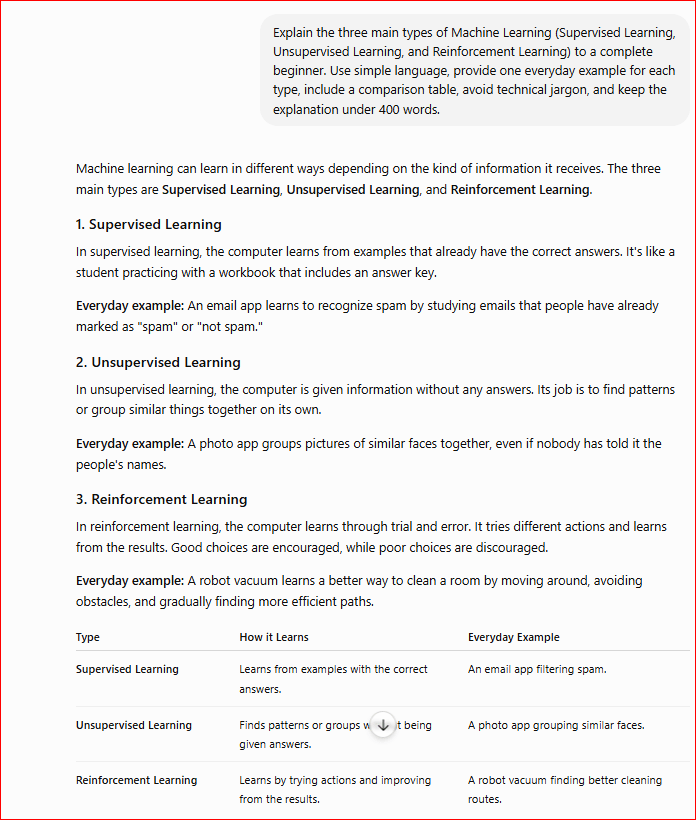
    Figure 3A. ChatGPT explaining the three main types of Machine Learning.
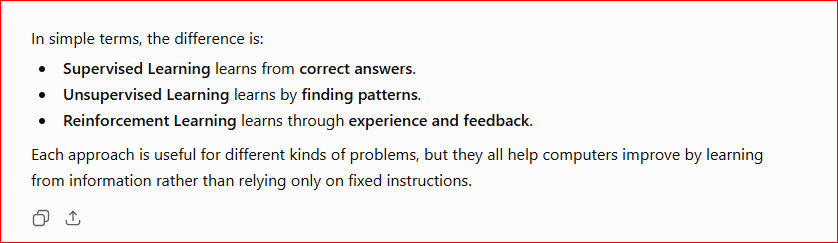
    Figure 3B. ChatGPT explaining the three main types of Machine Learning.

    This example shows how ChatGPT explains the three main types of Machine Learning in simple language. By using everyday examples and a comparison table, beginners can easily understand how each type learns and where it is used.

    Everyday Examples of Machine Learning

    You probably use Machine Learning every day without realizing it. Many of the apps and services you use rely on Machine Learning to improve your experience by learning from data and recognizing patterns.

    Here are some common examples:

    • Netflix – Recommends movies and TV shows based on what you have watched.
    • YouTube – Suggests videos that match your interests and viewing history.
    • Spotify – Creates personalized music playlists based on your listening habits.
    • Google Maps – Predicts traffic conditions and recommends the fastest routes.
    • Email spam filters – Learn to identify unwanted messages and move them to your spam folder.
    • Online shopping websites – Recommend products based on your browsing and purchase history.
    • Banks – Detect unusual transactions that may indicate credit card fraud.
    • Voice assistants such as Siri, Alexa, and Google Assistant – Improve speech recognition by learning from many voice samples.
    • Social media platforms – Recommend posts, videos, and friends based on your activity.
    • Photo apps – Automatically recognize faces, objects, and locations in pictures.

    These examples show that Machine Learning is already part of everyday life. It helps people save time, receive personalized recommendations, improve security, and make better decisions without even noticing it.
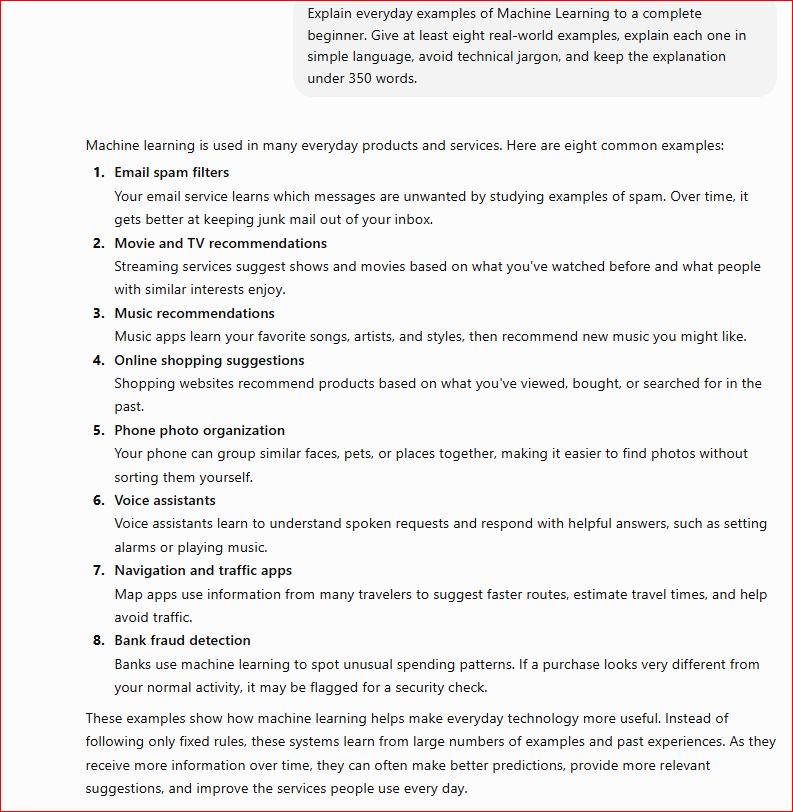
    Figure 4. ChatGPT explaining everyday examples of Machine Learning.

    This example demonstrates how Machine Learning is used in many everyday applications. By recognizing familiar technologies such as Netflix, YouTube, Google Maps, and email spam filters, beginners can better understand how Machine Learning improves the services they use every day.

    Benefits of Machine Learning

    Machine Learning is helping people and businesses work more efficiently by analyzing large amounts of data, identifying patterns, and making accurate predictions. It is used in healthcare, banking, education, transportation, entertainment, online shopping, and many other industries.

    Some of the main benefits of Machine Learning include:

    • Saves time by automating repetitive tasks.
    • Improves accuracy by analyzing large amounts of data quickly.
    • Provides personalized recommendations for movies, music, shopping, and online content.
    • Detects fraud by identifying unusual financial transactions.
    • Helps doctors diagnose diseases and support medical decisions.
    • Predicts future trends using historical data.
    • Improves customer service through intelligent chatbots and virtual assistants.
    • Continuously improves as it learns from new data over time.

    One of the greatest advantages of Machine Learning is its ability to discover patterns that may be difficult or impossible for humans to recognize. This helps organizations make better decisions, improve efficiency, and provide more personalized services.
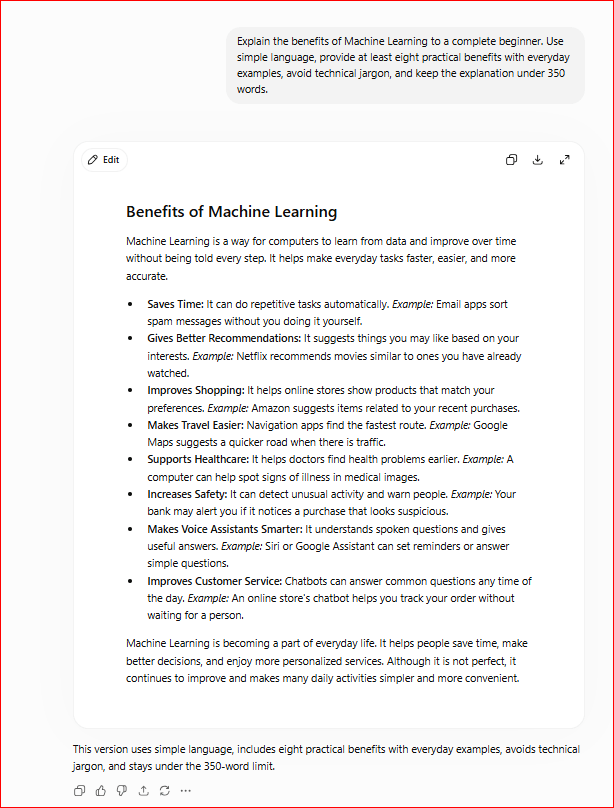
    Figure 5. ChatGPT explaining the benefits of Machine Learning.

    This example shows how Machine Learning benefits people and organizations in everyday life. From personalized recommendations and fraud detection to healthcare and customer service, Machine Learning helps improve efficiency, accuracy, and decision-making in many industries.

    Limitations of Machine Learning

    Although Machine Learning is a powerful technology, it is not perfect. Like all computer systems, it has limitations and can make mistakes. Understanding these limitations helps people use Machine Learning more effectively and make better decisions.

    Some of the main limitations of Machine Learning include:

    • Requires large amounts of data to learn effectively.
    • Can make incorrect predictions if the training data is incomplete or inaccurate.
    • May reflect bias if the data used for training contains unfair or unbalanced information.
    • Does not understand information like humans; it recognizes patterns rather than thinking or reasoning.
    • Requires regular updates to maintain accuracy as new data becomes available.
    • Can be expensive to develop and maintain for complex applications.
    • May be difficult to explain why some Machine Learning models make certain decisions.
    •  

    Although Machine Learning can improve its performance over time, it still depends on the quality of the data and the way it is designed. Human supervision remains essential to verify results, correct mistakes, and ensure that Machine Learning systems are used responsibly.
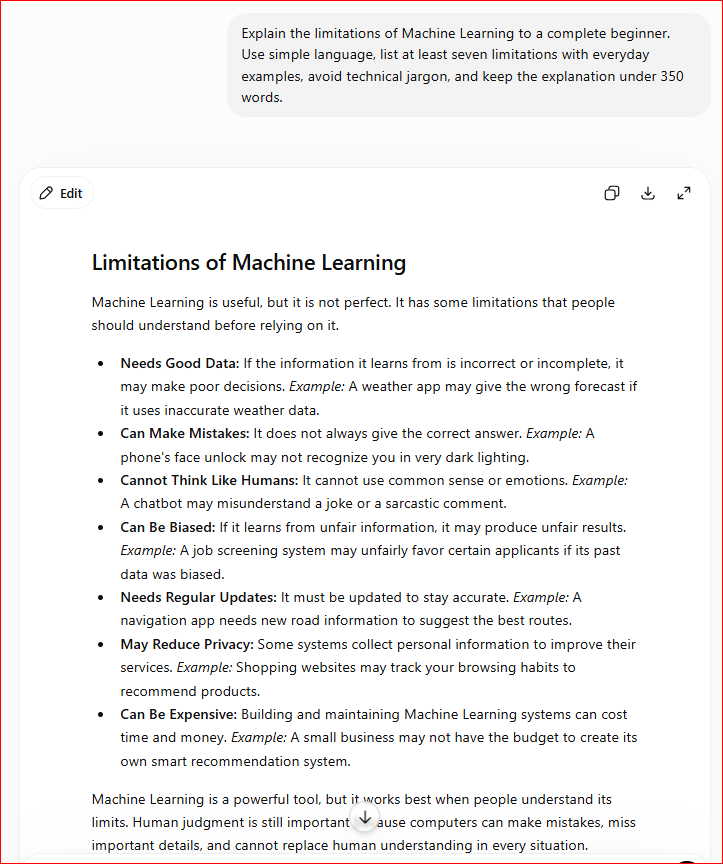
    Figure 6. ChatGPT explaining the limitations of Machine Learning.

    This example shows that while Machine Learning is a valuable technology, it also has important limitations. Understanding these challenges helps beginners use Machine Learning more responsibly and recognize that human judgment is still essential in many situations.

    Machine Learning vs. Artificial Intelligence

    Many people use the terms Artificial Intelligence (AI) and Machine Learning (ML) as if they mean the same thing. Although they are closely related, they are not identical. Machine Learning is one branch of Artificial Intelligence, but Artificial Intelligence includes many other technologies besides Machine Learning.

    Artificial Intelligence is the broad field of creating computer systems that can perform tasks requiring human intelligence, such as understanding language, recognizing images, solving problems, and making decisions. Machine Learning is one technique used to build AI systems by allowing computers to learn from data instead of following only fixed instructions.

    Think of Artificial Intelligence as a large umbrella. Under that umbrella are several technologies, including Machine Learning. In other words, all Machine Learning is Artificial Intelligence, but not all Artificial Intelligence is Machine Learning.

    Comparison Table

    FeatureArtificial Intelligence (AI)Machine Learning (ML)
    DefinitionThe broad field of creating intelligent computer systems.A branch of AI that learns from data.
    GoalPerform tasks that normally require human intelligence.Improve performance by learning from experience.
    Learns from DataSometimesYes
    Uses AlgorithmsYesYes
    Everyday ExamplesChatGPT, Siri, Google AssistantNetflix recommendations, spam filters, fraud detection

    The easiest way to remember the difference is that Artificial Intelligence is the overall concept, while Machine Learning is one of the methods used to create intelligent systems. Many popular AI applications today rely on Machine Learning to improve their performance over time.
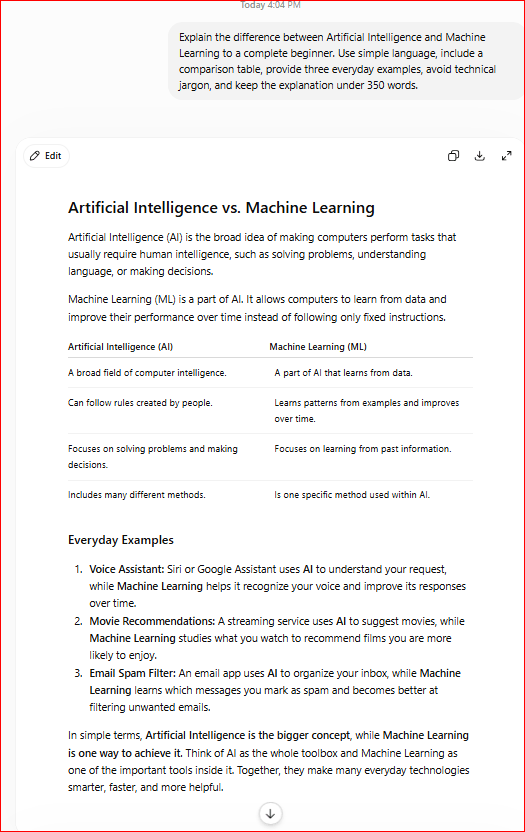
    Figure 7. ChatGPT explaining the difference between Artificial Intelligence and Machine Learning.

    This example shows that Artificial Intelligence and Machine Learning are closely connected but serve different purposes. Artificial Intelligence is the broader field, while Machine Learning is one of the key technologies that enables AI systems to learn from data and improve over time.

    Machine Learning vs. Deep Learning

    Machine Learning (ML) and Deep Learning (DL) are closely related, but they are not the same. Deep Learning is a specialized branch of Machine Learning that uses artificial neural networks to solve more complex problems.

    Machine Learning can learn from data using different algorithms and often requires humans to help select the most useful information, known as features. Deep Learning, on the other hand, can automatically identify important patterns from large amounts of data with much less human intervention.

    Because Deep Learning requires more data and computing power, it is typically used for more advanced tasks such as image recognition, speech recognition, language translation, and AI chatbots like ChatGPT.

    For many everyday business applications, traditional Machine Learning is often sufficient. Deep Learning is generally used when solving highly complex problems involving massive amounts of data.

    Comparison Table

    FeatureMachine Learning (ML)Deep Learning (DL)
    DefinitionA branch of AI that learns from data.A specialized branch of Machine Learning using neural networks.
    Data RequiredModerate amounts of dataLarge amounts of data
    Human InvolvementMore human guidanceLess human guidance
    Speed of TrainingUsually fasterUsually slower
    Computing PowerModerateHigh
    Everyday ExamplesSpam filters, fraud detection, recommendationsChatGPT, image recognition, speech recognition

    The easiest way to remember the difference is that Deep Learning is an advanced form of Machine Learning.

    Understanding the relationship between Machine Learning and Deep Learning makes it easier to understand how many modern AI applications, including image recognition, voice assistants, and AI chatbots, are built.

    While all Deep Learning systems are Machine Learning systems, not all Machine Learning systems use Deep Learning.
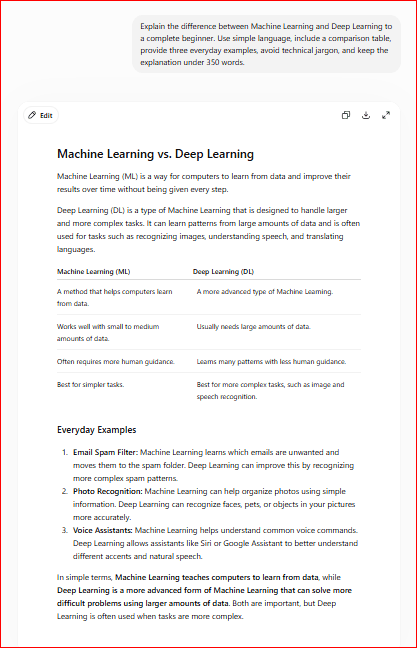
    Figure 8. ChatGPT explaining the difference between Machine Learning and Deep Learning.

    This example shows that Deep Learning is a specialized form of Machine Learning designed to solve more complex problems. By comparing the two side by side, beginners can better understand when each technology is used and why Deep Learning powers many of today’s most advanced AI applications.

    Common Myths About Machine Learning

    Many people have misunderstandings about Machine Learning. The following myths can make the technology seem more complicated or more powerful than it really is.

    Myth 1: Machine Learning thinks like humans.

    Reality: Machine Learning does not think, understand, or have emotions. It learns by recognizing patterns in data and making predictions based on what it has learned.

    Myth 2: Machine Learning always gives the correct answer.

    Reality: Machine Learning can make mistakes. Its accuracy depends on the quality of the data it was trained on and the way it was designed.

    Myth 3: Machine Learning can learn anything by itself.

    Reality: Machine Learning still requires humans to collect data, train models, test results, and monitor performance. It does not learn completely on its own.

    Myth 4: Machine Learning is only for programmers.

    Reality: Many Machine Learning tools are designed for beginners and can be used without programming knowledge. People use Machine Learning every day through apps, websites, and AI assistants.

    Myth 5: Machine Learning and Artificial Intelligence are exactly the same.

    Reality: Machine Learning is one branch of Artificial Intelligence. AI is the broader field, while Machine Learning is one of the technologies used to build intelligent systems.

    Understanding these myths helps beginners develop realistic expectations about Machine Learning. While it is a powerful technology, it still depends on human guidance, quality data, and responsible use.

    Frequently Asked Questions

    What is Machine Learning?

    Machine Learning is a branch of Artificial Intelligence that enables computers to learn from data and improve their performance without being explicitly programmed for every task.

    Is Machine Learning the same as Artificial Intelligence?

    No. Artificial Intelligence is the broader field of creating intelligent computer systems, while Machine Learning is one of the methods used to build AI by learning from data.

    Does Machine Learning think like humans?

    No. Machine Learning does not think, understand, or have emotions. It identifies patterns in data and uses those patterns to make predictions or decisions.

    Where is Machine Learning used?

    Machine Learning is used in many everyday applications, including Netflix recommendations, YouTube suggestions, email spam filters, online shopping, fraud detection, healthcare, voice assistants, and self-driving technology.

    Do I need programming skills to learn Machine Learning?

    No. You can begin by learning the basic concepts and understanding how Machine Learning works before studying programming or more advanced topics.

    Key Takeaways

    Remember these important points:

    • Machine Learning is a branch of Artificial Intelligence.
    • Machine Learning learns from data instead of relying only on fixed instructions.
    • The three main types of Machine Learning are Supervised Learning, Unsupervised Learning, and Reinforcement Learning.
    • Machine Learning is used in many everyday applications, including recommendation systems, fraud detection, and voice assistants.
    • Deep Learning is a specialized branch of Machine Learning.
    • Machine Learning offers many benefits but also has important limitations.
    • Understanding Machine Learning provides a strong foundation for learning more advanced AI technologies.

    What’s Next?

    Congratulations! You have completed this beginner’s guide to Machine Learning.

    You now understand what Machine Learning is, how it works, the different types of Machine Learning, its benefits and limitations, and how it relates to Artificial Intelligence and Deep Learning.

    The next step is to learn about Deep Learning, a specialized branch of Machine Learning that powers many of today’s most advanced AI applications, including image recognition, speech recognition, and AI chatbots like ChatGPT.

    Final Tip for Beginners

    Every expert starts as a beginner. Focus on understanding one concept at a time, practice with real-world examples, and continue exploring how Machine Learning is used in everyday life.

    Focus on understanding the basic ideas before learning the technical details. As you continue practicing and exploring real-world examples, the concepts will become much easier to understand.

    Building a strong foundation today will make learning more advanced AI topics much easier in the future.

    Continue Learning

    Ready to continue your AI journey?

    Explore our beginner-friendly tutorials to learn more about Artificial Intelligence, ChatGPT, Deep Learning, prompt writing, AI image generation, and other practical AI applications.

    Continue Your AI Journey

    Explore these beginner-friendly guides to continue building your AI skills:

    → Explore More AI Tutorials

    New beginner-friendly AI tutorials will be added regularly, so be sure to check back for more guides and practical examples.

    Thank you for reading. Keep exploring, keep practicing, and enjoy your journey into the exciting world of Artificial Intelligence.
  • What Is Artificial Intelligence? A Beginner’s Guide (2026)

    What Is Artificial Intelligence? A Beginner’s Guide (2026)

    Estimated Reading Time: 8 minutes

    Last Updated: July 2026

    What You’ll Learn

    By the end of this guide, you’ll be able to:

    • Understand what Artificial Intelligence (AI) is.
    • Learn how AI works in simple language.
    • Recognize examples of AI in everyday life.
    • Understand the difference between AI, Machine Learning, and Deep Learning.
    • Learn the benefits and limitations of AI.
    • Build a solid foundation for learning more advanced AI topics.

    Introduction

    Artificial Intelligence (AI) is transforming the way we live, work, learn, and communicate. From voice assistants and online shopping recommendations to medical diagnosis and self-driving cars, AI is becoming an important part of everyday life.

    Although AI may seem complex, understanding the basics is easier than many people think. You don’t need a technical background or programming experience to begin learning about artificial intelligence.

    If you’re new to AI, you may also enjoy our Create a ChatGPT Account (Step-by-Step Beginner Guide 2026), ChatGPT Basics for Beginners (Complete Guide 2026), and Best ChatGPT Prompts for Beginners (2026) guides.

    What Is Artificial Intelligence?

    Artificial Intelligence (AI) is a branch of computer science that enables computers and machines to perform tasks that normally require human intelligence. These tasks include learning from information, understanding language, recognizing images, solving problems, making decisions, and generating new content.

    Instead of simply following fixed instructions, many AI systems can analyze data, identify patterns, and improve their performance over time. This ability allows AI to assist people in countless areas, from answering questions and translating languages to helping doctors diagnose diseases and businesses make better decisions.

    In simple terms, AI teaches computers to perform certain tasks in ways that resemble human intelligence. While AI is not human and does not think exactly like people, it can process large amounts of information much faster than humans and produce useful results.

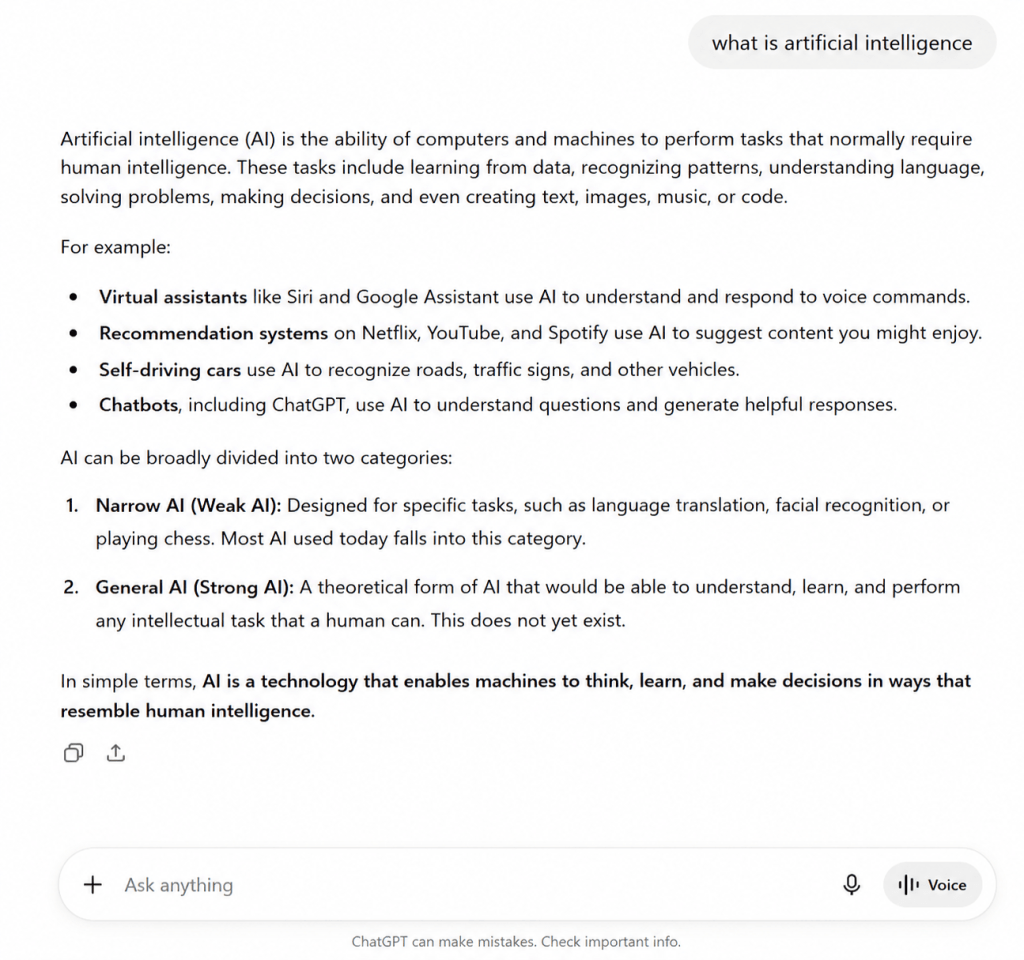
    Figure 1. ChatGPT explaining artificial intelligence in simple language.

    Everyday Examples of Artificial Intelligence

    You probably use artificial intelligence every day without realizing it. Here are some examples you may already use every day:

    ChatGPT – Answers questions, writes content, and helps solve problems.

    Google Search – Suggests answers as you type and helps find information quickly.

    Netflix – Recommends movies and TV shows based on your viewing history.

    YouTube – Suggests videos you may enjoy.

    Spotify – Creates personalized music playlists.

    Google Maps – Finds the fastest driving route.

    Siri, Alexa, and Google Assistant – Respond to voice commands.

    Email spam filters – Detect unwanted messages automatically.

    Banks – Identify unusual credit card activity to help prevent fraud.

    Online shopping websites – Recommend products based on previous purchases.

    These examples show how AI helps people save time, make better decisions, and complete everyday tasks more efficiently.

    How Does Artificial Intelligence Work?

    Artificial Intelligence (AI) works by learning from large amounts of data instead of following a fixed set of instructions. During training, AI analyzes thousands or even millions of examples to recognize patterns and learn relationships. Once it has learned those patterns, it can use them to answer questions, make predictions, generate content, or solve problems.

    Think of AI as a student who has read thousands of books. The more examples it learns from, the better it becomes at recognizing patterns and producing useful responses.

    For example, when you ask ChatGPT a question, it does not search the internet for an answer like a search engine. Instead, it analyzes your prompt, identifies patterns it learned during training, and generates a response based on those patterns.

    Although AI can produce impressive results, it does not think, feel, or understand the world the way humans do. It uses mathematics, algorithms, and patterns learned from data to generate responses that appear intelligent.

    One of the easiest ways to understand AI is to compare it to learning through practice. Just as a child becomes better at reading after seeing many books, AI becomes better at recognizing patterns after learning from large amounts of data.

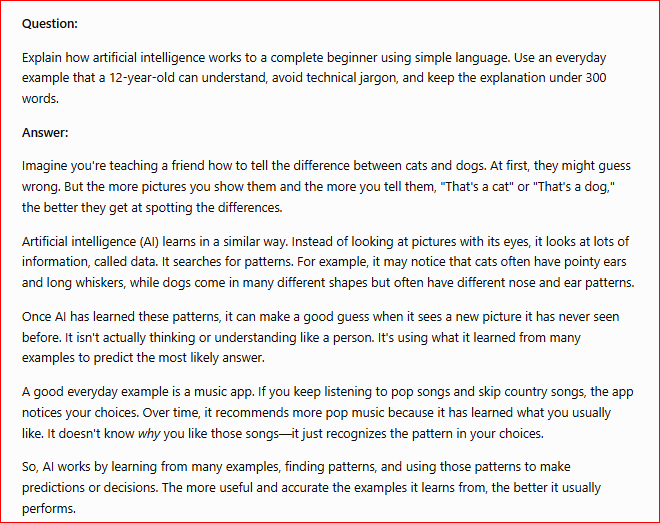
    Figure 2. ChatGPT explaining how artificial intelligence works using an everyday example.

    This example shows that AI learns by recognizing patterns from many examples instead of thinking like a human.

    Types of Artificial Intelligence

    Artificial intelligence is usually divided into three main categories. Although only one type is widely used today, understanding all three helps explain how AI may continue to develop in the future.

    Narrow AI (Today’s AI)

    Narrow AI, also called Weak AI, is designed to perform specific tasks. It cannot think like a human or perform every kind of job, but it can complete the tasks it has been trained for very well.

    Examples of Narrow AI include:

    • ChatGPT

    • Google Translate

    • Siri and Alexa

    • Netflix recommendations

    • Self-driving driver assistance

    Today, nearly every AI tool people use—including ChatGPT, Google Search, Netflix recommendations, voice assistants, and navigation apps—is an example of Narrow AI.

    General AI (Future Goal)

    General Artificial Intelligence (AGI) is a future type of AI that would be able to learn, reason, understand, and perform almost any intellectual task that a human can do. Unlike today’s AI, General AI would be able to transfer knowledge from one task to another without being retrained.

    Researchers around the world continue studying AGI, but it has not yet been achieved.

    Super AI (Hypothetical)

    Super Artificial Intelligence is a theoretical idea describing AI that would become more intelligent than humans in nearly every field, including science, medicine, engineering, creativity, and decision-making.

    At present, Super AI does not exist and remains a topic of research and discussion.

    TypeExists Today?Example
    Narrow AI  YesChatGPT, Siri, Google Maps
    General AI  NoFuture goal
    Super AI  NoHypothetical

    The most important point to remember is that almost every AI application people use today—including ChatGPT—is Narrow AI. General AI and Super AI are ideas for the future and do not yet exist.

    Benefits of Artificial Intelligence

    Artificial Intelligence helps people save time, improve productivity, and solve problems more efficiently. It is used in homes, schools, businesses, hospitals, banks, and many other industries. Rather than replacing people in most situations, AI is designed to assist them by handling repetitive tasks, analyzing large amounts of information, and providing useful suggestions.

    Some of the main benefits of AI include:

    • Saves time by completing tasks quickly.
    • Automates repetitive work.
    • Helps people make better decisions using data.
    • AI systems can operate continuously without becoming physically tired, although they still require electricity, maintenance, and human oversight.
    • Improves accuracy for many routine tasks.
    • Personalizes recommendations for shopping, music, and videos.
    • Assists people with disabilities through voice recognition and accessibility tools.
    • Increases productivity at work and school.

    One of the biggest advantages of AI is that it allows people to focus on more important and creative work while the computer handles repetitive or time-consuming tasks.

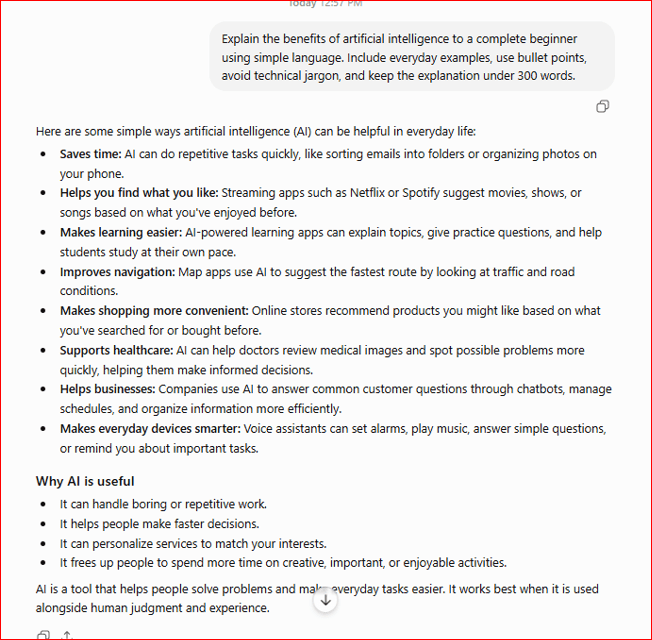
    Figure 3. ChatGPT explaining the benefits of artificial intelligence.

    This example shows how ChatGPT can explain complex topics using simple language and practical examples. Notice how the response uses short bullet points and everyday situations, making the information easy for beginners to understand.

    Why Artificial Intelligence Is Helpful

    AI is becoming part of everyday life. Students use it to learn new subjects, professionals use it to write reports and analyze information, businesses use it to improve customer service, and families use it to organize daily activities. When used responsibly, AI can make many tasks faster, easier, and more accurate.

    Limitations of Artificial Intelligence

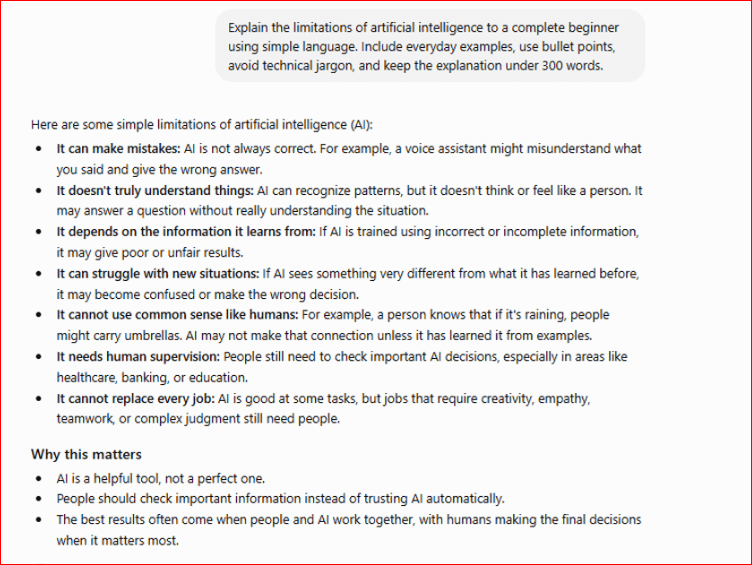
    Although Artificial Intelligence is a powerful technology, it is not perfect. AI can make mistakes, misunderstand questions, or provide incorrect information. It is important to remember that AI should assist people, not replace human judgment. Some of the main limitations of AI include:

    • It can produce incorrect or misleading information.
    • It may not understand questions exactly as humans do.
    • It depends on the quality of the data it was trained on.
    • It cannot think, feel, or use common sense like a person.
    • It may reflect biases that exist in its training data.
    • It cannot predict the future or guarantee that every answer is correct.
    • Some AI systems do not have access to the latest information.

    Because of these limitations, it is always a good idea to verify important information, especially when making financial, medical, or legal decisions.

    Figure 4. ChatGPT explaining the limitations of artificial intelligence.

    This example shows that although AI is very useful, it also has limitations. Understanding these limitations helps people use AI more safely and responsibly.

    Artificial Intelligence vs. Machine Learning vs. Deep Learning

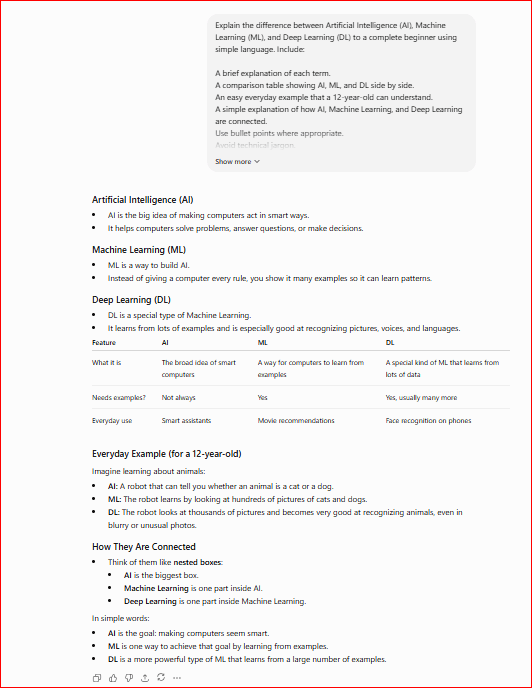
    Many beginners use the terms Artificial Intelligence (AI), Machine Learning (ML), and Deep Learning (DL) as if they mean the same thing. Although they are closely related, they are different technologies. Understanding the difference will help you better understand how modern AI systems such as ChatGPT work.

    Artificial Intelligence (AI)

    Artificial Intelligence is the broad field of creating computer systems that can perform tasks that normally require human intelligence. These tasks include understanding language, recognizing images, solving problems, making decisions, and generating content.

    Think of AI as the largest umbrella that covers many different technologies.

    Machine Learning (ML)

    Machine Learning is a branch of Artificial Intelligence that allows computers to learn from data instead of being programmed with every rule. Rather than following a fixed list of instructions, a machine learning system finds patterns in examples and improves its performance over time.

    For example, a movie recommendation system learns which films you enjoy by analyzing your viewing history instead of someone manually creating recommendations.

    Deep Learning (DL)

    Deep Learning is a specialized type of Machine Learning that uses artificial neural networks inspired by the human brain. These networks can learn very complex patterns from enormous amounts of data.

    Deep Learning is used in applications such as speech recognition, image recognition, language translation, self-driving vehicles, and AI chatbots like ChatGPT.

    Although Artificial Intelligence, Machine Learning, and Deep Learning are closely related, they are not the same. Artificial Intelligence is the broadest field, Machine Learning is one way to build AI systems, and Deep Learning is a more advanced type of Machine Learning. Understanding these differences makes it easier to understand how modern AI applications work.

    Artificial Intelligence is the overall field of creating intelligent computer systems. Machine Learning is one method used to build AI by allowing computers to learn from data. Deep Learning takes this one step further by using layers of artificial neural networks to recognize complex patterns and make highly accurate predictions. Most modern AI tools, including ChatGPT, image generators, speech recognition, and translation services, rely on Deep Learning to deliver powerful results.

    You can think of these technologies as building blocks. Artificial Intelligence is the foundation, Machine Learning is one of its most important techniques, and Deep Learning is the advanced technology that powers many of today’s most capable AI systems. Learning the relationship between them will help you better understand future AI topics.

    Figure 5. ChatGPT explaining the difference between Artificial Intelligence, Machine Learning, and Deep Learning.

    This example shows how ChatGPT can explain related technical concepts in simple language. By comparing Artificial Intelligence, Machine Learning, and Deep Learning side by side, beginners can easily understand how the three technologies are connected and why they are often mentioned together.

    Comparison Table

    TechnologyWhat it doesExample
    Artificial Intelligence (AI)Makes computers perform intelligent tasks.ChatGPT, Siri
    Machine Learning (ML)Learns from data and improves with experience.Netflix recommendations
    Deep Learning (DL)Uses neural networks to solve complex problems.Image recognition, ChatGPT

    An Easy Way to Remember

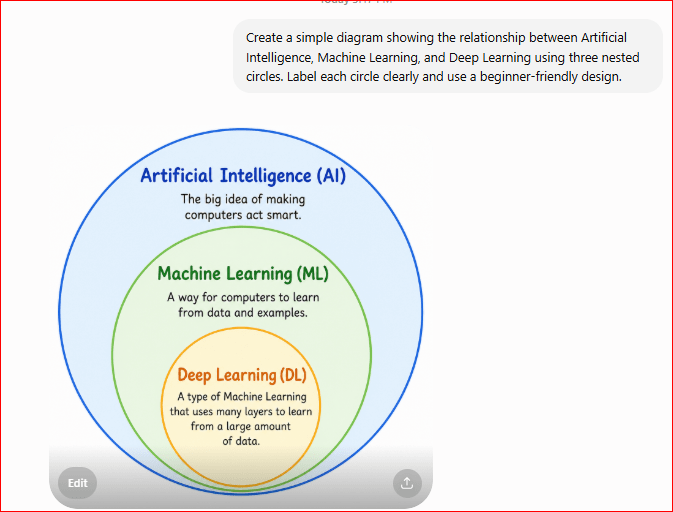
    Think of these three technologies like a set of nested circles.

    • Artificial Intelligence (AI) is the largest circle.
    • Machine Learning (ML) is a smaller circle inside Artificial Intelligence.
    • Deep Learning (DL) is an even smaller circle inside Machine Learning.

    In other words:

    Deep Learning is part of Machine Learning, and Machine Learning is part of Artificial Intelligence.

    Real-World Examples of AI, Machine Learning, and Deep Learning

    Although these technologies are closely connected, they are used in different ways in everyday life. The following examples show how AI, Machine Learning, and Deep Learning work together in many popular applications.

    ApplicationAIMachine LearningDeep Learning
    ChatGPTYesYesYes
    Google TranslateYesYesYes
    Netflix RecommendationsYesYesUsually
    Face RecognitionYesYesYes
    Spam Email FilteringYesYesSometimes
    Self-driving CarsYesYesYes

    In many modern applications, Artificial Intelligence is the overall system, Machine Learning helps the system improve by learning from data, and Deep Learning performs the most complex tasks such as understanding images, speech, and natural language.

    Although these technologies have different roles, they work together to create many of the AI tools people use every day. Understanding this relationship makes learning more advanced AI topics much easier.

    Figure 6. Relationship between Artificial Intelligence, Machine Learning, and Deep Learning.

    This diagram shows that Deep Learning is a specialized part of Machine Learning, which is itself a branch of Artificial Intelligence. Understanding this relationship helps beginners see how these technologies fit together.

    Common Myths About Artificial Intelligence:

    Myth 1: AI thinks like humans.

    Reality: AI recognizes patterns and generates responses, but it does not think or have emotions like people.

    Myth 2: AI knows everything.

    Reality: AI can make mistakes and may provide outdated or incorrect information. Important information should always be verified.

    Myth 3: AI will replace every job.

    Reality: AI will automate some tasks, but many jobs still require human creativity, judgment, and communication.

    Myth 4: AI is only for programmers.

    Reality: Anyone can learn to use AI tools. Many AI applications are designed for beginners with no technical background.

    Frequently Asked Questions

    Is Artificial Intelligence the same as ChatGPT?

    No. ChatGPT is one application powered by Artificial Intelligence. AI is the broader field that includes many different technologies such as virtual assistants, recommendation systems, self-driving technology, image recognition, and language translation.

    Can Artificial Intelligence think like humans?

    No. Today’s AI does not think, feel, or have emotions. Instead, it analyzes patterns in data and generates responses based on what it has learned during training.

    Is Machine Learning the same as Artificial Intelligence?

    No. Machine Learning is a branch of Artificial Intelligence. It allows computers to improve their performance by learning from data instead of following only fixed instructions.

    Can anyone learn Artificial Intelligence?

    Yes. You do not need to be a programmer or computer scientist to understand the basics of AI. Many AI tools, including ChatGPT, are designed for beginners and are easy to use.

    Will Artificial Intelligence replace all jobs?

    No. While AI can automate repetitive tasks and improve productivity, many jobs still require human creativity, judgment, communication, and problem-solving. AI is more likely to assist people than completely replace them.

    Key Takeaways

    Remember these important points:

    • Artificial Intelligence enables computers to perform tasks that normally require human intelligence.

    • Most AI systems used today are examples of Narrow AI.

    • Machine Learning is one branch of Artificial Intelligence.

    • Deep Learning is a specialized branch of Machine Learning.

    • AI learns from data and improves by recognizing patterns.

    • Artificial Intelligence offers many benefits but also has important limitations.

    • Understanding AI helps you use modern AI tools more effectively and responsibly.

    What’s Next?

    Congratulations! You have completed this beginner’s guide to Artificial Intelligence.

    You now understand what AI is, how it works, the different types of AI, its benefits and limitations, and how Machine Learning and Deep Learning fit into the bigger picture.

    The next step is to learn how to use AI tools in real life. Start by practicing with ChatGPT, explore different AI applications, and continue building your skills one topic at a time. As you gain experience, you’ll discover how AI can help you learn faster, work more efficiently, and solve everyday problems.

    Final Tip for Beginners

    If you’re just starting your AI journey, don’t try to learn everything at once. Begin by using ChatGPT for simple everyday tasks such as asking questions, writing emails, summarizing information, planning trips, or generating ideas. As you become more comfortable, gradually explore more advanced AI tools and techniques. The best way to learn Artificial Intelligence is through regular practice.

    Continue Learning

    Ready to continue your AI journey?

    Explore our beginner-friendly tutorials to learn more about ChatGPT, prompt writing, AI image generation, productivity tools, and other practical AI applications.

    Continue Your AI Journey

    Explore these beginner-friendly guides to continue building your AI skills:

    Create a ChatGPT Account (Step-by-Step Beginner Guide 2026)

    ChatGPT Basics for Beginners (Complete Guide 2026)

    • Best ChatGPT Prompts for Beginners (2026)

    AI Image Generation for Beginners


    New beginner-friendly AI tutorials will be added regularly, so be sure to check back for more guides and practical examples.

    Thank you for reading. Keep exploring, keep practicing, and enjoy your journey into the exciting world of Artificial Intelligence.
  • Best ChatGPT Prompts for Beginners (2026)

    Best ChatGPT Prompts for Beginners (2026)

    Estimated Reading Time: 7 minutes

    Last Updated: July 2026

    What You’ll Learn

    By the end of this guide, you’ll be able to:

    • Understand what a ChatGPT prompt is.
    • Write clear and effective prompts.
    • Get more accurate and useful AI responses.
    • Use prompt-writing techniques that save time.
    • Avoid common prompting mistakes.
    • Apply ChatGPT prompts to work, study, and everyday life.

    Introduction

    One of the biggest differences between beginners and experienced ChatGPT users is how they write prompts. A prompt is simply the instruction or question you give ChatGPT. Better prompts produce better answers.

    You don’t need technical knowledge to write effective prompts. By learning a few simple techniques, you can dramatically improve the quality of ChatGPT’s responses and save time on every conversation.

    If you’re completely new to ChatGPT, we recommend starting with our Create a ChatGPT Account (Step-by-Step Beginner Guide 2026) and ChatGPT Basics for Beginners (Complete Guide 2026) before learning how to write better prompts.

    Create a ChatGPT Account (Step-by-Step Beginner Guide 2026)

    ChatGPT Basics for Beginners (Complete Guide 2026)

    What Is a Prompt?

    A prompt is any message you type into ChatGPT asking it to do something.

    Figure 1. Typing a detailed prompt into ChatGPT

    This example shows a clear, detailed prompt. Specific prompts usually produce more accurate and useful responses than short or vague questions.

    Examples include:

    • Answer a question
    • Explain a topic
    • Write an email
    • Create a lesson plan
    • Generate ideas
    • Translate text
    • Write computer code
    • Summarize a document

    Think of a prompt as giving instructions to a very knowledgeable assistant. The clearer your instructions, the better the results.

    Figure 2. ChatGPT generating a response.

    ChatGPT analyzes your prompt and generates a response. Longer or more detailed prompts often produce more comprehensive answers.

    The Anatomy of a Great Prompt

    Most effective prompts include these parts:

    Goal

    Tell ChatGPT exactly what you want.

    Example:

    Write a professional email requesting a meeting.

    Context

    Provide background information.

    Example:

    I am applying for a marketing position.

    Format

    Tell ChatGPT how you want the answer.

    Examples:

    • Bullet points
    • Table
    • Step-by-step guide
    • Short paragraph
    • Professional email

    Audience

    Explain who the answer is for.

    Example:

    Explain this to a 12-year-old student.

    The more specific your prompt is, the more accurate and helpful ChatGPT’s response is likely to be. Including details, context, or your desired format often leads to better results.

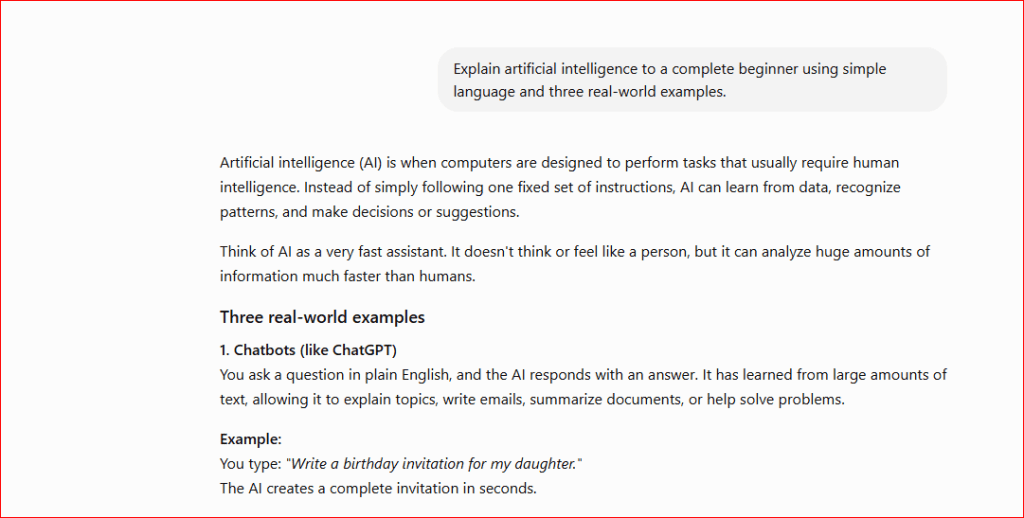
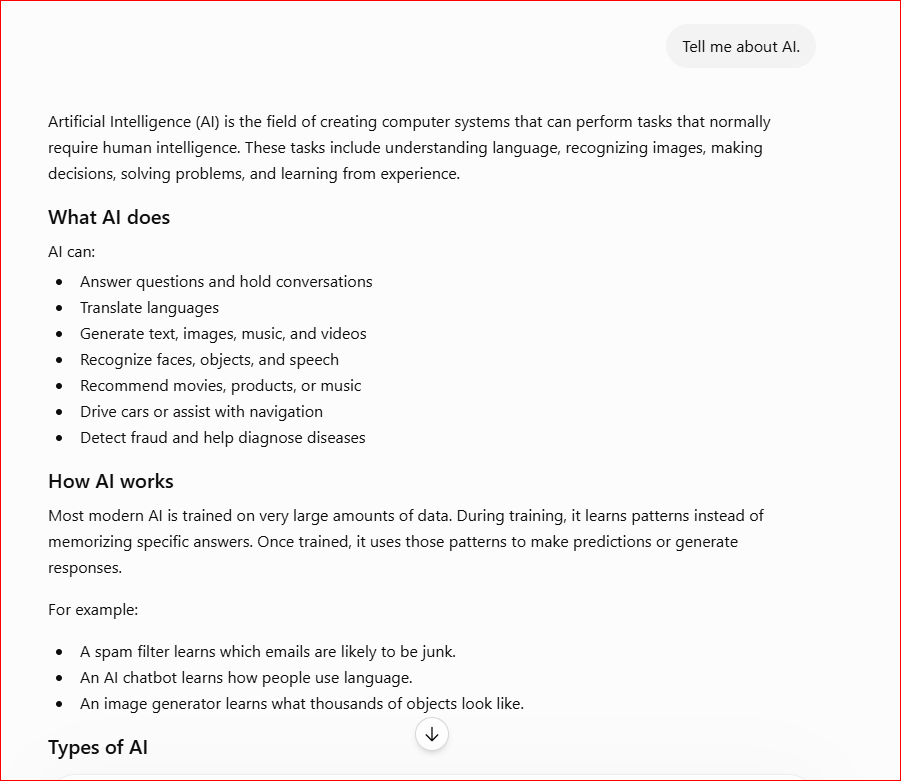
    Figure 3A. Comparing a vague prompt with a detailed prompt. Notice how adding context and specifying the audience produces a much clearer answer.

    A short or vague prompt gives ChatGPT very little information, so the response is usually broad and less useful.

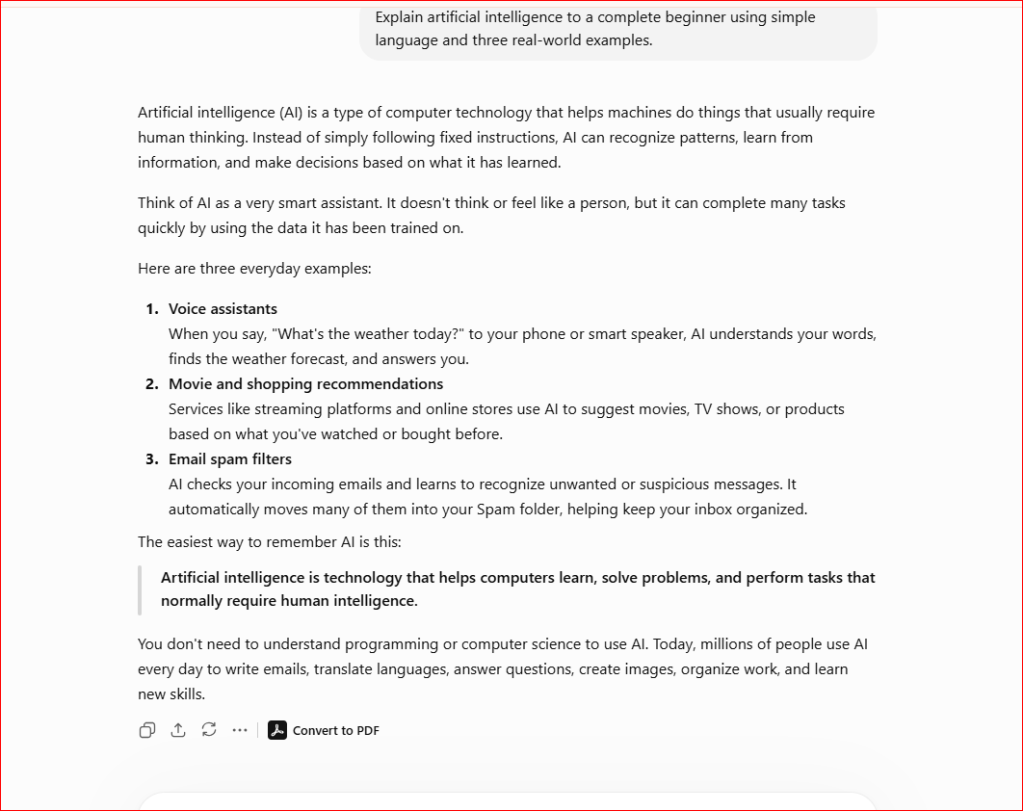
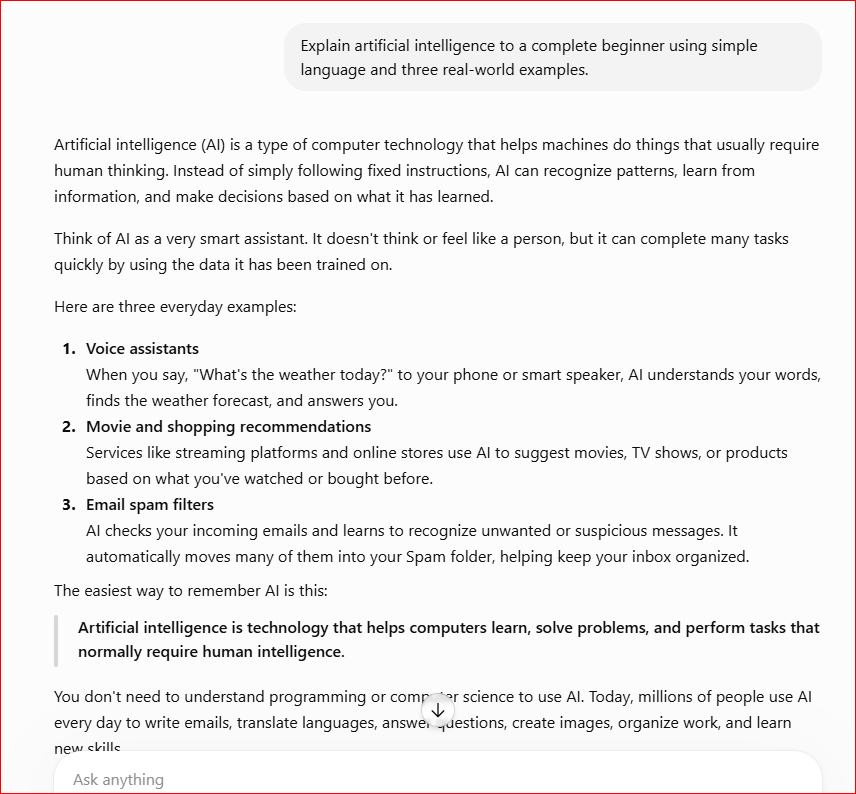
    Figure 3B. A detailed prompt produces a clearer and more useful response.

    Because the prompt identifies the audience, requests simple language, and includes real-world examples, ChatGPT produces a clearer, more detailed, and more useful response.

    Examples of Good Prompts

    1. Explain artificial intelligence in simple language for beginners.
    2. Write a professional email asking for two days of vacation.
    3. Create a weekly meal plan for a family of four.
    4. Summarize this article in five bullet points.
    5. Create a beginner workout plan for someone over 60 years old.

    Figure 4. A detailed prompt produces a practical beginner-friendly response.

    Because the prompt includes specific instructions, ChatGPT generates a clearer explanation with practical examples that are easier for beginners to understand.

    Examples of Vague Prompts vs. Better Prompts

    Vague

    Tell me about AI.

    Better:

    Explain artificial intelligence for complete beginners using simple language and real-world examples.

    Vague

    Help me write.

    Better:

    Write a friendly email thanking a customer after purchasing our product.

    Prompt Tips for Better Results

    Follow these best practices:

    • Be clear and specific.
    • Include enough context.
    • Ask for examples.
    • Specify the desired format.
    • Break large tasks into smaller prompts.
    • Ask follow-up questions.
    • Refine your prompts if needed.

    Figure 5. Using a follow-up prompt to improve ChatGPT’s response.

    You don’t need to start a new conversation. Follow-up prompts help ChatGPT refine and expand its previous answers.

    Common Prompt Mistakes

    Avoid these common errors:

    • Asking vague questions.
    • Giving too little information.
    • Expecting perfect answers on the first try.
    • Forgetting to specify the desired format.
    • Asking multiple unrelated questions in one prompt.

    Frequently Asked Questions

    How long should a prompt be?

    There is no perfect length. Include enough detail to clearly explain what you want.

    Can I ask follow-up questions?

    Yes. ChatGPT remembers the conversation and can build on previous responses.

    Should I rewrite my prompt if the answer isn’t good?

    Yes. Small improvements to your prompt often produce much better results.

    Final Thoughts

    Learning to write better prompts is one of the most valuable ChatGPT skills you can develop. As you practice, you’ll receive more accurate, detailed, and useful responses. Clear communication with AI saves time, improves productivity, and helps you accomplish more with every conversation.

    Key Takeaways

    Remember these key points

    • Better prompts produce better AI responses.
    • Clear instructions help ChatGPT understand your request.
    • Adding context improves accuracy.
    • Follow-up questions refine the conversation.
    • Practice writing prompts regularly to build confidence.

    What’s Next?

    Congratulations! You now know how to write better prompts that produce more accurate and useful ChatGPT responses. The next step is learning advanced prompting techniques that can help you work faster, automate repetitive tasks, and unlock ChatGPT’s full potential.

    Continue Learning

    Ready to take your ChatGPT skills even further?

    Continue exploring our beginner-friendly AI tutorials to learn how to create better prompts, automate everyday tasks, and get more from ChatGPT.


  • ChatGPT Basics for Beginners (Complete Guide 2026)

    ChatGPT Basics for Beginners (Complete Guide 2026)

    Estimated Reading Time: 7 minutes

    Last Updated: July 2026

    What You’ll Learn

    By the end of this guide, you’ll be able to:

    • Understand what ChatGPT is and how it works.
    • Navigate the ChatGPT interface with confidence.
    • Write your first prompt.
    • Learn what ChatGPT can help you with.
    • Avoid common beginner mistakes.
    • Get better results from your conversations.

    Introduction

    ChatGPT is an AI chatbot developed by OpenAI that can understand questions and generate human-like responses. It can help you write content, learn new skills, generate computer code, brainstorm ideas, translate languages, solve problems, and much more.

    Whether you’re a student, professional, business owner, or simply curious about artificial intelligence, ChatGPT can become a valuable everyday assistant. Its simple interface makes it easy for beginners to start using AI without any technical knowledge.

    What Can ChatGPT Do?

    ChatGPT can help you with many everyday tasks, including:

    • Answering questions
    • Writing emails and letters
    • Summarizing long documents
    • Brainstorming ideas
    • Learning new skills
    • Explaining difficult concepts
    • Creating social media content
    • Writing computer code
    • Translating languages
    • Planning trips and schedules

    Understanding the ChatGPT Interface

    The ChatGPT interface is designed to be simple and user-friendly. Once you sign in, you’ll see several important areas that help you interact with ChatGPT efficiently.

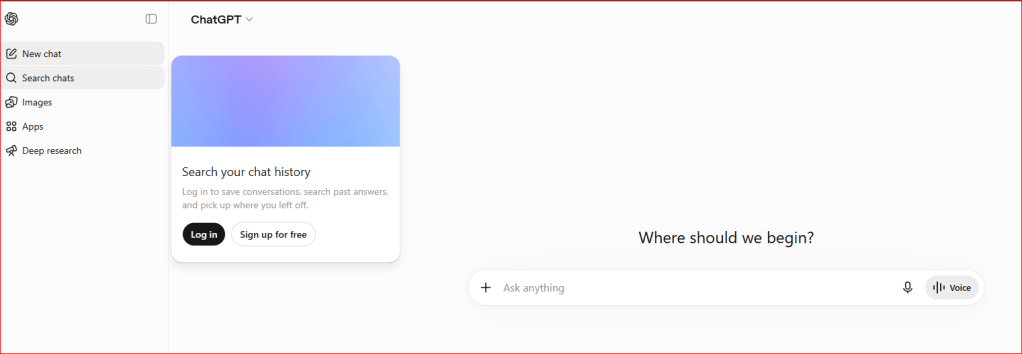
    Chat Box

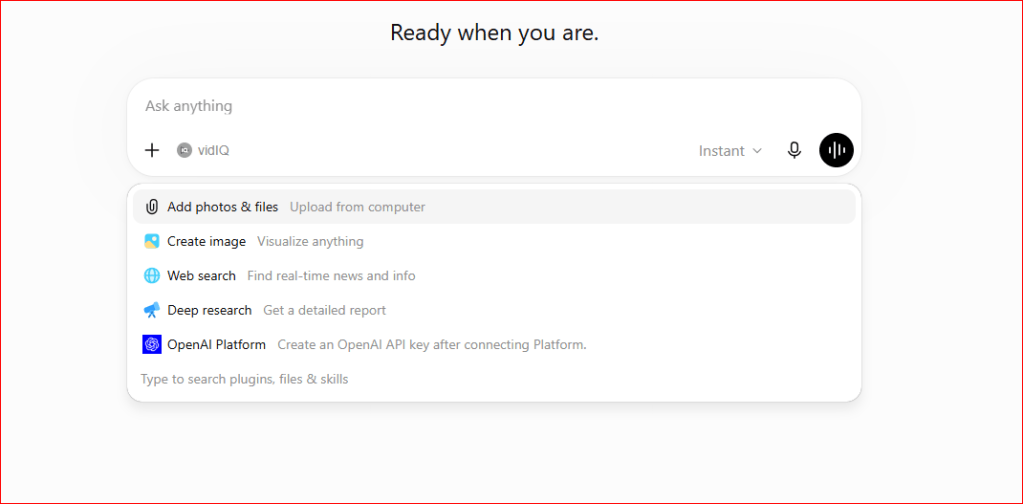
    The Chat Box is where you type your questions, requests, or instructions. Simply enter your prompt and press Enter or click the send button to receive a response.

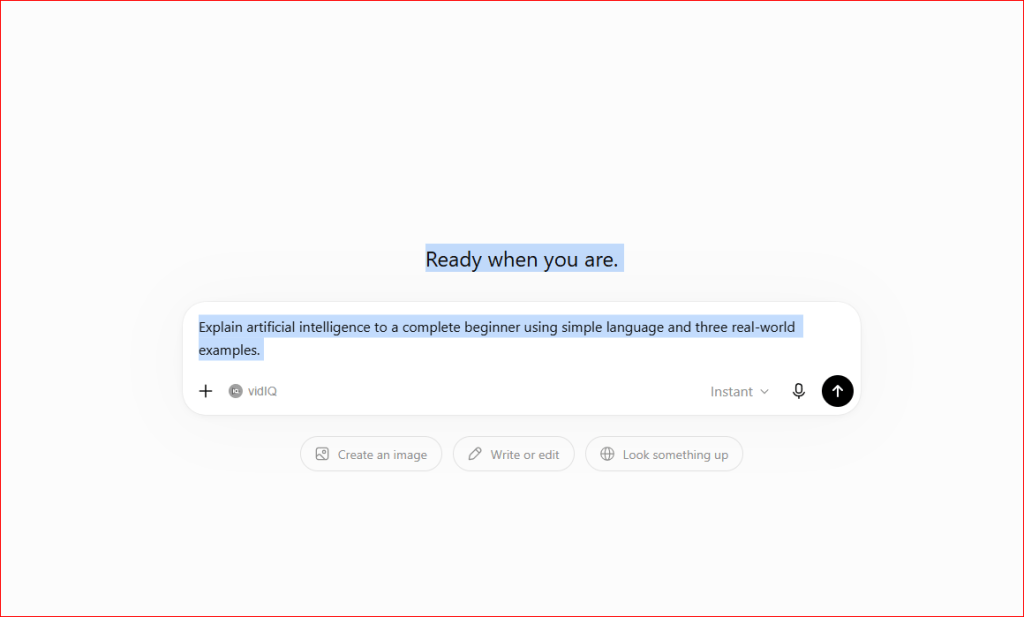
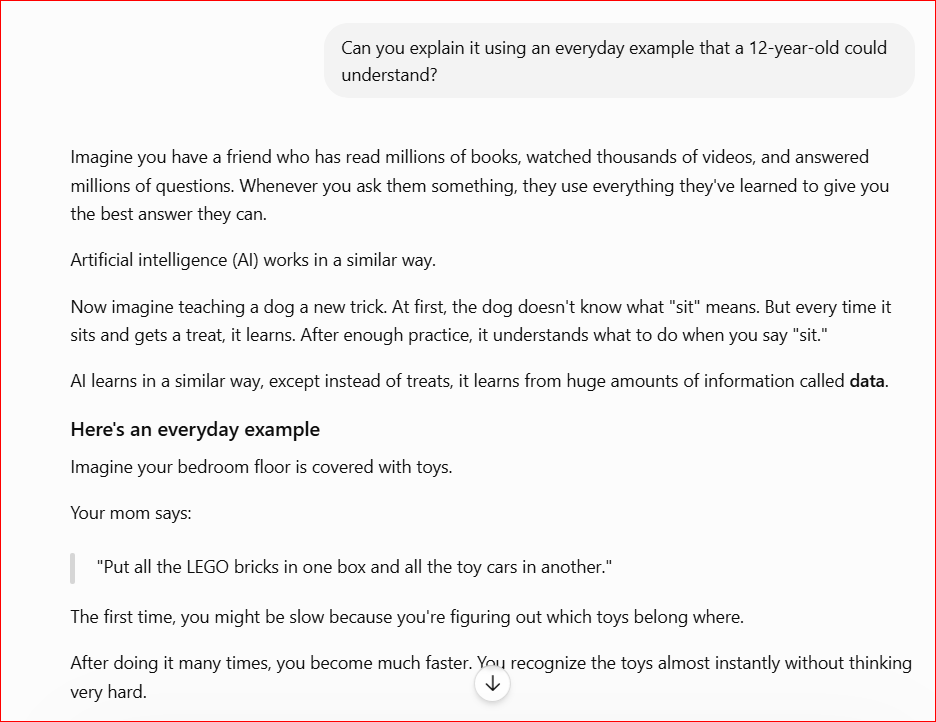
    Figure 1. The ChatGPT message box.

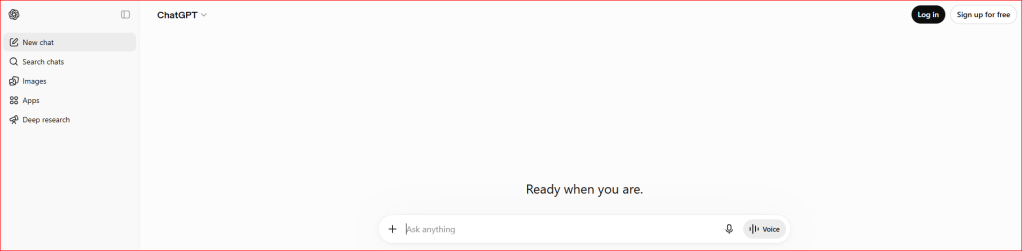
    Conversation History

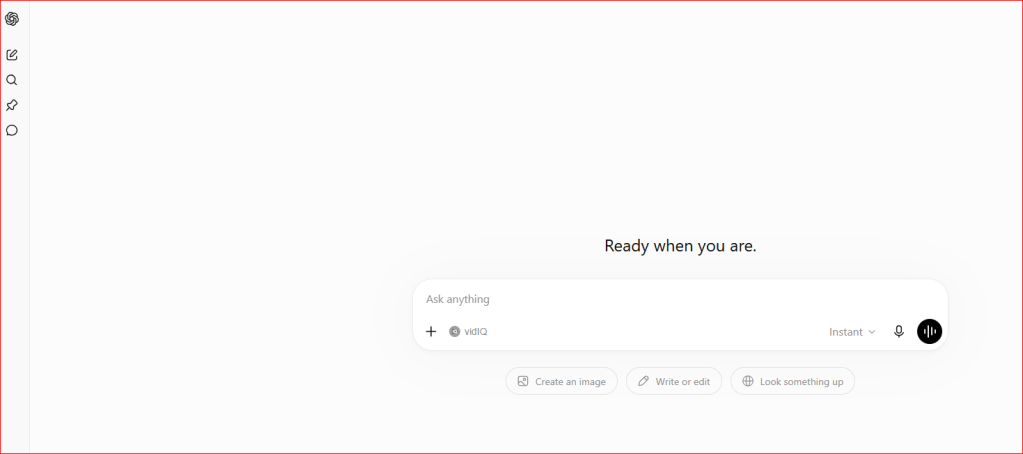
    The Conversation History appears on the left side of the screen. It automatically saves your previous chats, allowing you to return to earlier conversations whenever you need them.

    Figure 2. The ChatGPT conversation history.

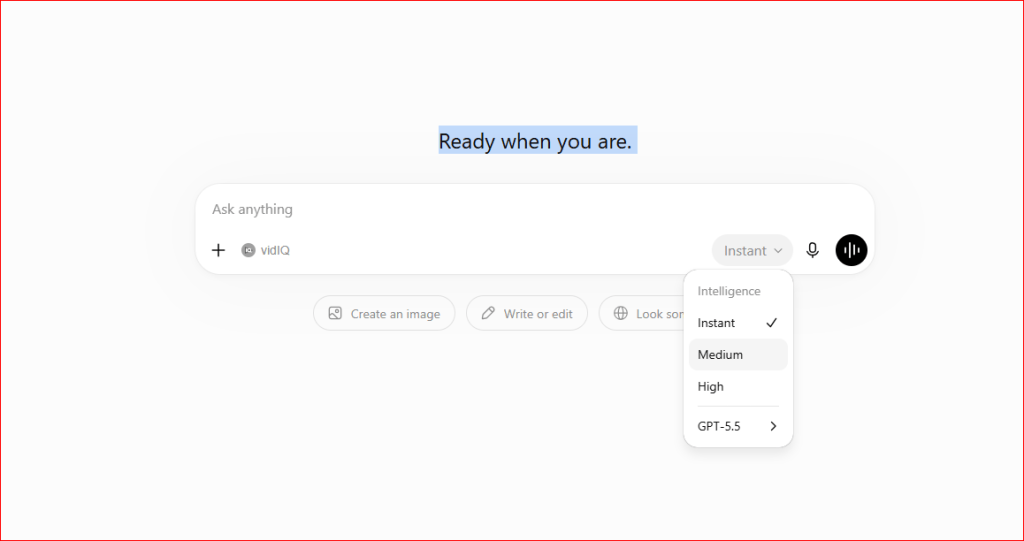
    Model Selector

    Depending on your account, you may be able to choose different AI models. Some models are optimized for speed, while others provide more advanced reasoning or support additional features.

    Figure 3. Selecting a ChatGPT model.

    Attachments

    ChatGPT allows you to upload files and images so it can analyze documents, answer questions about uploaded content, summarize files, or help with editing.

    Figure 4. Uploading a file to ChatGPT.


    Writing Your First Prompt

    A prompt is simply the instruction or question you give ChatGPT. The clearer your prompt, the better the response will usually be.

    The more specific your prompt is, the more accurate and helpful ChatGPT’s response is likely to be. Including details, context, or your desired format often leads to better results.

    Here are a few examples:

    • Explain photosynthesis in simple words.
    • Write a professional email requesting a meeting.
    • Summarize this article.
    • Create a weekly meal plan.
    • Help me learn Microsoft Excel.

    Tips for Better Results

    Follow these simple tips to get more accurate and helpful responses:

    • Be clear and specific.
    • Provide enough context.
    • Ask follow-up questions.
    • Request examples when needed.
    • Ask ChatGPT to simplify complex answers.
    • Experiment with different prompts to see what works best.

    Common Mistakes Beginners Make

    Many new users make the same mistakes when using ChatGPT. Avoiding them will help you get better results.

    • Asking vague or incomplete questions.
    • Expecting perfect answers every time.
    • Sharing sensitive personal information.
    • Copying AI-generated content without reviewing it.
    • Providing very little context.

    Frequently Asked Questions

    Can ChatGPT make mistakes?

    Yes. ChatGPT can occasionally provide incorrect or outdated information. Always verify important facts before relying on them.

    Can ChatGPT browse the internet?

    Some versions of ChatGPT can browse the web, while others rely on previously learned knowledge. Available features depend on your subscription and the model you are using.

    Is ChatGPT safe?

    Yes. ChatGPT is safe to use when you avoid sharing passwords, financial information, or other sensitive personal data.

    Final Thoughts

    Learning the basics of ChatGPT is the first step toward using artificial intelligence effectively. As you become more familiar with the interface and learn how to write better prompts, you’ll be able to communicate more effectively with AI, complete tasks more efficiently, and continue learning with confidence.

    Whether you’re using ChatGPT for work, education, creativity, or everyday tasks, practicing regularly will help you get the best results.


    Next Lesson

    Best ChatGPT Prompts for Beginners (2026)

    Learn how to write prompts that produce more accurate, detailed, and useful responses from ChatGPT.