
Estimated Reading Time: 8 minutes
Last Updated: July 2026
What You’ll Learn
By the end of this guide, you’ll be able to:
- Understand what Machine Learning (ML) is.
- Learn how Machine Learning works in simple language.
- Recognize examples of Machine Learning in everyday life.
- Understand the main types of Machine Learning.
- Learn the benefits and limitations of Machine Learning.
- Understand the relationship between Artificial Intelligence, Machine Learning, and Deep Learning.
- Build a solid foundation for learning more advanced AI topics.
Introduction
Machine Learning (ML) is one of the most important technologies behind today’s Artificial Intelligence (AI). Every time you receive a movie recommendation on Netflix, a product suggestion while shopping online, or a spam email is automatically filtered, Machine Learning is likely working behind the scenes.
Although Machine Learning may sound complicated, the basic idea is surprisingly simple. Instead of following only fixed instructions, a Machine Learning system learns from data, recognizes patterns, and improves its performance over time. The more examples it learns from, the better it becomes at completing specific tasks.
If you’re new to Machine Learning, this guide is the perfect place to start. It explains the key concepts in simple language, uses real-world examples, and shows how Machine Learning powers many of the AI tools people use every day, including ChatGPT, Google Search, Netflix, YouTube, and voice assistants.
Before learning about Machine Learning, you may find it helpful to read our What Is Artificial Intelligence? A Beginner’s Guide (2026), which explains the basic concepts of AI and how Machine Learning fits into the broader field of Artificial Intelligence.
What Is Machine Learning?
Machine Learning (ML) is a branch of Artificial Intelligence (AI) that enables computers to learn from data and improve their performance without being explicitly programmed for every task. Instead of following only fixed instructions, Machine Learning systems identify patterns in data and use those patterns to make predictions, recognize information, or solve problems.
The more data a Machine Learning system analyzes, the better it usually becomes at performing the task it was designed to do. This ability allows Machine Learning to improve over time as it processes more examples.
Machine Learning is used in many everyday applications, including movie recommendations, online shopping suggestions, email spam filters, voice assistants, fraud detection, language translation, and self-driving technology.
In simple terms, Machine Learning teaches computers to learn from experience, much like people learn by practicing and observing examples. While Machine Learning does not think or understand the world like humans, it can recognize patterns much faster and process enormous amounts of information in a short time.
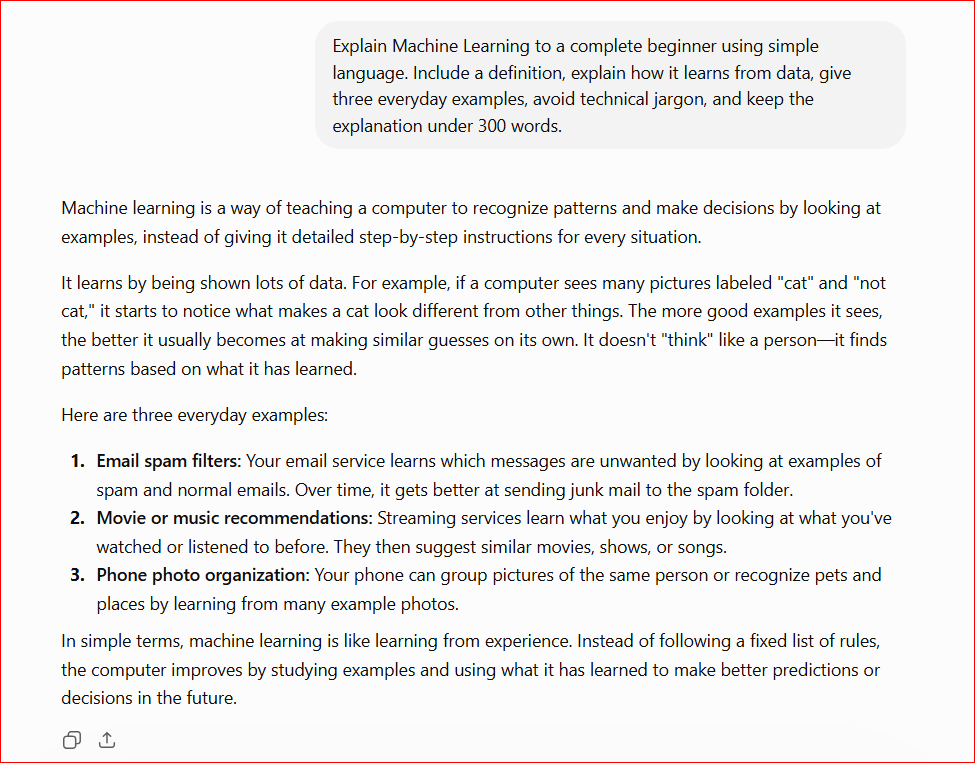
Figure 1. ChatGPT explaining Machine Learning in simple language.
This example shows how ChatGPT can explain Machine Learning using simple language and practical examples. By avoiding technical terms and focusing on everyday situations, beginners can quickly understand the basic idea of how Machine Learning works.
How Does Machine Learning Work?
Machine Learning works by learning from data instead of relying only on fixed instructions written by a programmer. During training, a Machine Learning system analyzes many examples to identify patterns, relationships, and trends. Once it has learned those patterns, it can apply them to new information and make predictions or decisions.
For example, imagine teaching a child to recognize cats. Instead of explaining every detail about what a cat looks like, you show hundreds of pictures of cats and non-cats. Over time, the child begins to recognize the common features that identify a cat. Machine Learning works in a similar way by learning from many examples rather than memorizing a list of rules.
After the training process is complete, the Machine Learning model can analyze new data it has never seen before. For example, it can identify spam emails, recommend movies you may enjoy, recognize faces in photos, or predict tomorrow’s weather based on past data.
Although Machine Learning can improve its performance over time, it does not think or understand information like a human. It uses mathematical models and patterns learned from data to make predictions and provide useful results.
One of the easiest ways to understand Machine Learning is to think of it as learning through experience. The more high-quality examples the system analyzes, the better it usually becomes at performing its task.
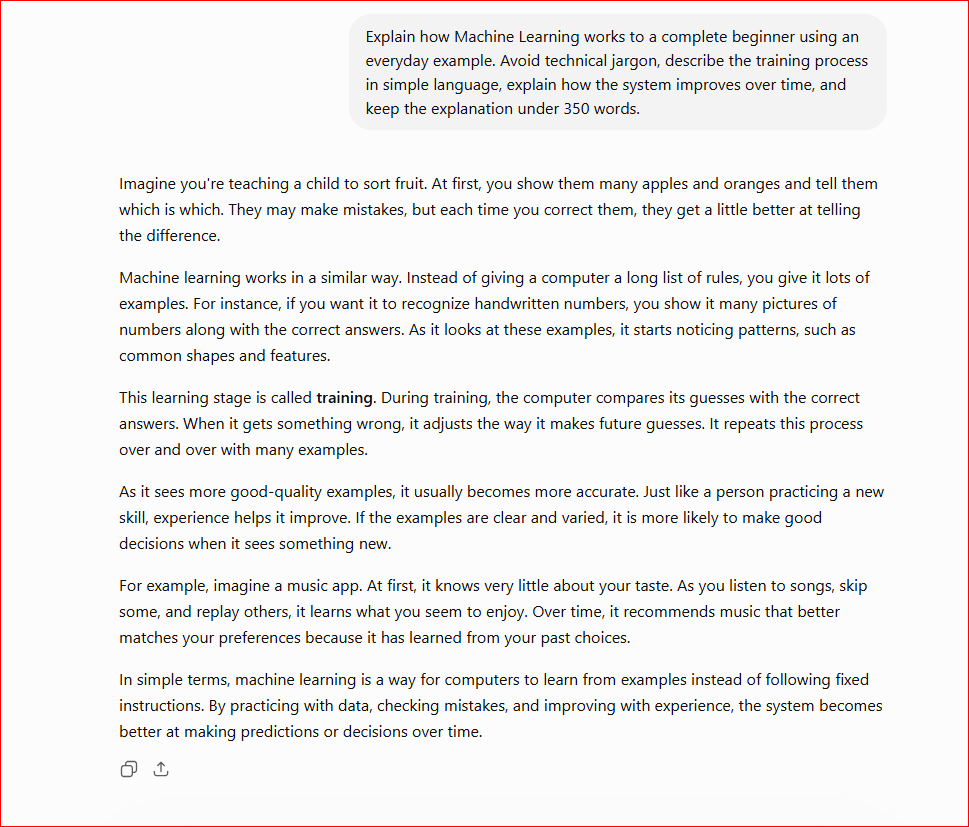
Figure 2. ChatGPT explaining how Machine Learning works using an everyday example.
This example shows that Machine Learning improves by learning from many examples rather than following only fixed instructions. Using an everyday comparison makes the learning process easier for beginners to understand.
Types of Machine Learning
Machine Learning is usually divided into three main types. Each type learns in a different way depending on the data and the task it needs to perform. Understanding these three types will help you see how Machine Learning is used in many real-world applications.
Supervised Learning
Supervised Learning is the most common type of Machine Learning. In this method, the computer learns from examples that already have the correct answers. By studying these examples, it learns how to make predictions when it receives new data.
For example, if a Machine Learning system is shown thousands of emails labeled as “Spam” or “Not Spam,” it learns how to recognize unwanted messages. Later, when a new email arrives, it can predict whether it is spam.
Other examples of Supervised Learning include:
- Email spam detection
- House price prediction
- Credit card fraud detection
- Medical diagnosis assistance
Unsupervised Learning
In Unsupervised Learning, the computer receives data without any labels or correct answers. Instead of making predictions, it looks for hidden patterns, similarities, and groups within the data.
For example, a supermarket may use Unsupervised Learning to group customers with similar shopping habits. This helps the store create personalized promotions and improve customer service.
Other examples include:
- Customer segmentation
- Product recommendations
- Grouping similar photos
- Market research
Reinforcement Learning
Reinforcement Learning teaches a computer by using rewards and penalties. The system learns through trial and error, receiving positive feedback for good decisions and negative feedback for poor ones. Over time, it learns which actions produce the best results.
For example, a robot learning to walk may fall many times at first. As it receives feedback and continues practicing, it gradually learns how to balance and walk successfully.
Other examples include:
- Self-driving vehicles
- Video game AI
- Robot navigation
- Warehouse automation
Comparison Table
| Type | How It Learns | Everyday Example |
| Supervised Learning | Learns from labeled examples with correct answers. | Email spam filter |
| Unsupervised Learning | Finds hidden patterns and groups in unlabeled data. | Customer grouping in online shopping |
| Reinforcement Learning | Learns through rewards and penalties. | Robot learning to walk |
The important thing to remember is that each type of Machine Learning solves different kinds of problems. Supervised Learning predicts outcomes, Unsupervised Learning discovers hidden patterns, and Reinforcement Learning improves through experience. Together, these approaches power many of the intelligent systems we use every day.
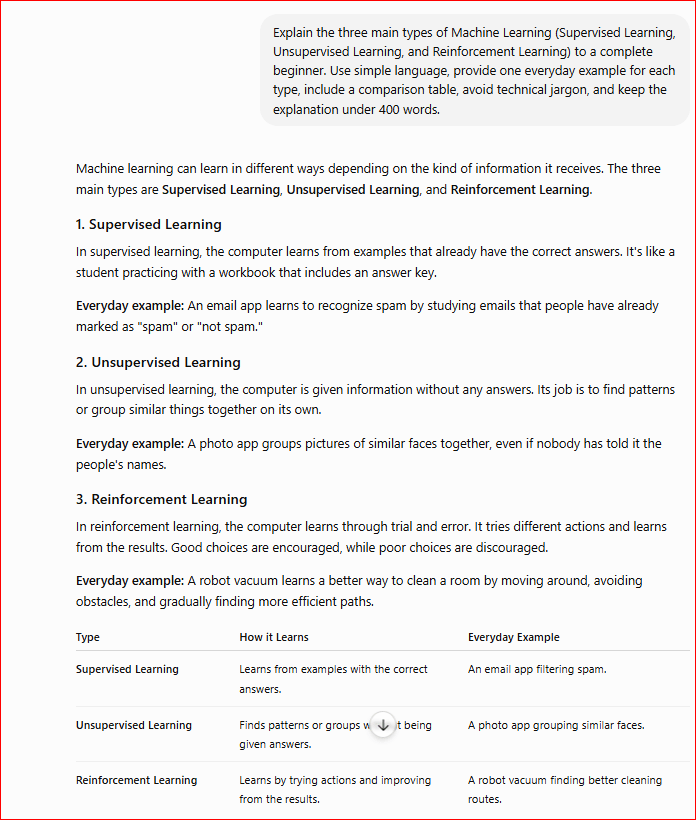
Figure 3A. ChatGPT explaining the three main types of Machine Learning.
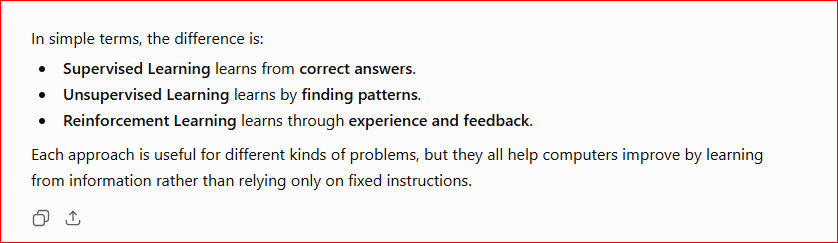
Figure 3B. ChatGPT explaining the three main types of Machine Learning.
This example shows how ChatGPT explains the three main types of Machine Learning in simple language. By using everyday examples and a comparison table, beginners can easily understand how each type learns and where it is used.
Everyday Examples of Machine Learning
You probably use Machine Learning every day without realizing it. Many of the apps and services you use rely on Machine Learning to improve your experience by learning from data and recognizing patterns.
Here are some common examples:
- Netflix – Recommends movies and TV shows based on what you have watched.
- YouTube – Suggests videos that match your interests and viewing history.
- Spotify – Creates personalized music playlists based on your listening habits.
- Google Maps – Predicts traffic conditions and recommends the fastest routes.
- Email spam filters – Learn to identify unwanted messages and move them to your spam folder.
- Online shopping websites – Recommend products based on your browsing and purchase history.
- Banks – Detect unusual transactions that may indicate credit card fraud.
- Voice assistants such as Siri, Alexa, and Google Assistant – Improve speech recognition by learning from many voice samples.
- Social media platforms – Recommend posts, videos, and friends based on your activity.
- Photo apps – Automatically recognize faces, objects, and locations in pictures.
These examples show that Machine Learning is already part of everyday life. It helps people save time, receive personalized recommendations, improve security, and make better decisions without even noticing it.
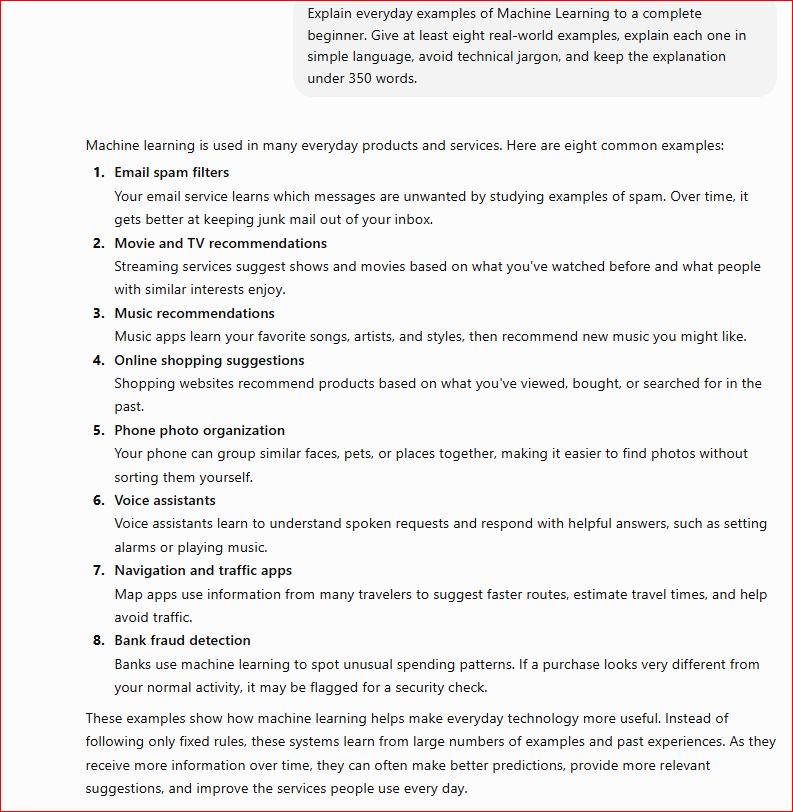
Figure 4. ChatGPT explaining everyday examples of Machine Learning.
This example demonstrates how Machine Learning is used in many everyday applications. By recognizing familiar technologies such as Netflix, YouTube, Google Maps, and email spam filters, beginners can better understand how Machine Learning improves the services they use every day.
Benefits of Machine Learning
Machine Learning is helping people and businesses work more efficiently by analyzing large amounts of data, identifying patterns, and making accurate predictions. It is used in healthcare, banking, education, transportation, entertainment, online shopping, and many other industries.
Some of the main benefits of Machine Learning include:
- Saves time by automating repetitive tasks.
- Improves accuracy by analyzing large amounts of data quickly.
- Provides personalized recommendations for movies, music, shopping, and online content.
- Detects fraud by identifying unusual financial transactions.
- Helps doctors diagnose diseases and support medical decisions.
- Predicts future trends using historical data.
- Improves customer service through intelligent chatbots and virtual assistants.
- Continuously improves as it learns from new data over time.
One of the greatest advantages of Machine Learning is its ability to discover patterns that may be difficult or impossible for humans to recognize. This helps organizations make better decisions, improve efficiency, and provide more personalized services.
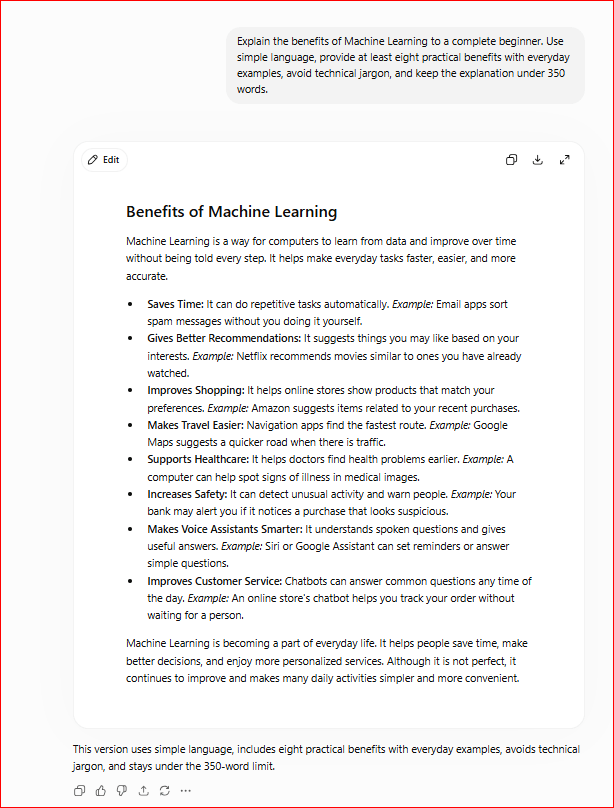
Figure 5. ChatGPT explaining the benefits of Machine Learning.
This example shows how Machine Learning benefits people and organizations in everyday life. From personalized recommendations and fraud detection to healthcare and customer service, Machine Learning helps improve efficiency, accuracy, and decision-making in many industries.
Limitations of Machine Learning
Although Machine Learning is a powerful technology, it is not perfect. Like all computer systems, it has limitations and can make mistakes. Understanding these limitations helps people use Machine Learning more effectively and make better decisions.
Some of the main limitations of Machine Learning include:
- Requires large amounts of data to learn effectively.
- Can make incorrect predictions if the training data is incomplete or inaccurate.
- May reflect bias if the data used for training contains unfair or unbalanced information.
- Does not understand information like humans; it recognizes patterns rather than thinking or reasoning.
- Requires regular updates to maintain accuracy as new data becomes available.
- Can be expensive to develop and maintain for complex applications.
- May be difficult to explain why some Machine Learning models make certain decisions.
Although Machine Learning can improve its performance over time, it still depends on the quality of the data and the way it is designed. Human supervision remains essential to verify results, correct mistakes, and ensure that Machine Learning systems are used responsibly.
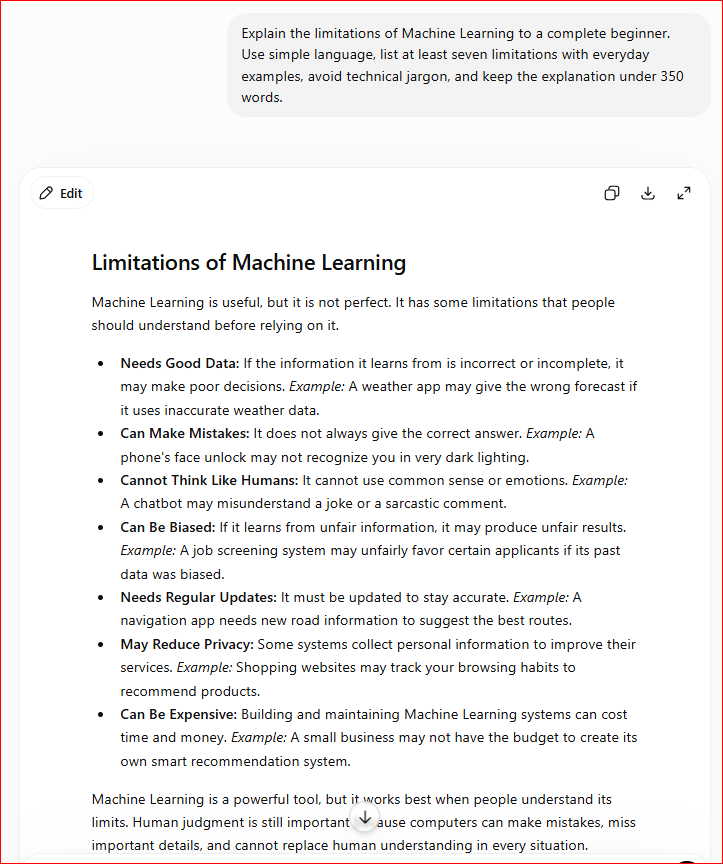
Figure 6. ChatGPT explaining the limitations of Machine Learning.
This example shows that while Machine Learning is a valuable technology, it also has important limitations. Understanding these challenges helps beginners use Machine Learning more responsibly and recognize that human judgment is still essential in many situations.
Machine Learning vs. Artificial Intelligence
Many people use the terms Artificial Intelligence (AI) and Machine Learning (ML) as if they mean the same thing. Although they are closely related, they are not identical. Machine Learning is one branch of Artificial Intelligence, but Artificial Intelligence includes many other technologies besides Machine Learning.
Artificial Intelligence is the broad field of creating computer systems that can perform tasks requiring human intelligence, such as understanding language, recognizing images, solving problems, and making decisions. Machine Learning is one technique used to build AI systems by allowing computers to learn from data instead of following only fixed instructions.
Think of Artificial Intelligence as a large umbrella. Under that umbrella are several technologies, including Machine Learning. In other words, all Machine Learning is Artificial Intelligence, but not all Artificial Intelligence is Machine Learning.
Comparison Table
| Feature | Artificial Intelligence (AI) | Machine Learning (ML) |
| Definition | The broad field of creating intelligent computer systems. | A branch of AI that learns from data. |
| Goal | Perform tasks that normally require human intelligence. | Improve performance by learning from experience. |
| Learns from Data | Sometimes | Yes |
| Uses Algorithms | Yes | Yes |
| Everyday Examples | ChatGPT, Siri, Google Assistant | Netflix recommendations, spam filters, fraud detection |
The easiest way to remember the difference is that Artificial Intelligence is the overall concept, while Machine Learning is one of the methods used to create intelligent systems. Many popular AI applications today rely on Machine Learning to improve their performance over time.
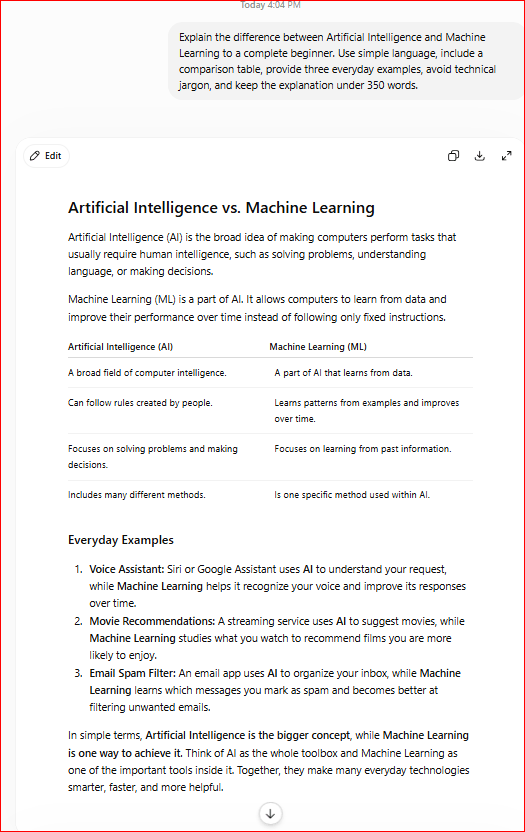
Figure 7. ChatGPT explaining the difference between Artificial Intelligence and Machine Learning.
This example shows that Artificial Intelligence and Machine Learning are closely connected but serve different purposes. Artificial Intelligence is the broader field, while Machine Learning is one of the key technologies that enables AI systems to learn from data and improve over time.
Machine Learning vs. Deep Learning
Machine Learning (ML) and Deep Learning (DL) are closely related, but they are not the same. Deep Learning is a specialized branch of Machine Learning that uses artificial neural networks to solve more complex problems.
Machine Learning can learn from data using different algorithms and often requires humans to help select the most useful information, known as features. Deep Learning, on the other hand, can automatically identify important patterns from large amounts of data with much less human intervention.
Because Deep Learning requires more data and computing power, it is typically used for more advanced tasks such as image recognition, speech recognition, language translation, and AI chatbots like ChatGPT.
For many everyday business applications, traditional Machine Learning is often sufficient. Deep Learning is generally used when solving highly complex problems involving massive amounts of data.
Comparison Table
| Feature | Machine Learning (ML) | Deep Learning (DL) |
| Definition | A branch of AI that learns from data. | A specialized branch of Machine Learning using neural networks. |
| Data Required | Moderate amounts of data | Large amounts of data |
| Human Involvement | More human guidance | Less human guidance |
| Speed of Training | Usually faster | Usually slower |
| Computing Power | Moderate | High |
| Everyday Examples | Spam filters, fraud detection, recommendations | ChatGPT, image recognition, speech recognition |
The easiest way to remember the difference is that Deep Learning is an advanced form of Machine Learning.
Understanding the relationship between Machine Learning and Deep Learning makes it easier to understand how many modern AI applications, including image recognition, voice assistants, and AI chatbots, are built.
While all Deep Learning systems are Machine Learning systems, not all Machine Learning systems use Deep Learning.
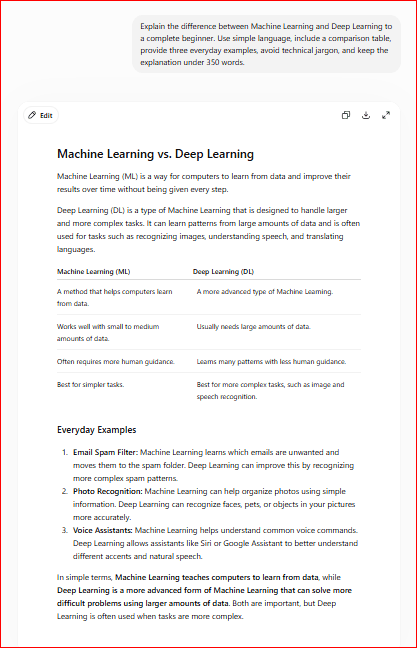
Figure 8. ChatGPT explaining the difference between Machine Learning and Deep Learning.
This example shows that Deep Learning is a specialized form of Machine Learning designed to solve more complex problems. By comparing the two side by side, beginners can better understand when each technology is used and why Deep Learning powers many of today’s most advanced AI applications.
Common Myths About Machine Learning
Many people have misunderstandings about Machine Learning. The following myths can make the technology seem more complicated or more powerful than it really is.
Myth 1: Machine Learning thinks like humans.
Reality: Machine Learning does not think, understand, or have emotions. It learns by recognizing patterns in data and making predictions based on what it has learned.
Myth 2: Machine Learning always gives the correct answer.
Reality: Machine Learning can make mistakes. Its accuracy depends on the quality of the data it was trained on and the way it was designed.
Myth 3: Machine Learning can learn anything by itself.
Reality: Machine Learning still requires humans to collect data, train models, test results, and monitor performance. It does not learn completely on its own.
Myth 4: Machine Learning is only for programmers.
Reality: Many Machine Learning tools are designed for beginners and can be used without programming knowledge. People use Machine Learning every day through apps, websites, and AI assistants.
Myth 5: Machine Learning and Artificial Intelligence are exactly the same.
Reality: Machine Learning is one branch of Artificial Intelligence. AI is the broader field, while Machine Learning is one of the technologies used to build intelligent systems.
Understanding these myths helps beginners develop realistic expectations about Machine Learning. While it is a powerful technology, it still depends on human guidance, quality data, and responsible use.
Frequently Asked Questions
What is Machine Learning?
Machine Learning is a branch of Artificial Intelligence that enables computers to learn from data and improve their performance without being explicitly programmed for every task.
Is Machine Learning the same as Artificial Intelligence?
No. Artificial Intelligence is the broader field of creating intelligent computer systems, while Machine Learning is one of the methods used to build AI by learning from data.
Does Machine Learning think like humans?
No. Machine Learning does not think, understand, or have emotions. It identifies patterns in data and uses those patterns to make predictions or decisions.
Where is Machine Learning used?
Machine Learning is used in many everyday applications, including Netflix recommendations, YouTube suggestions, email spam filters, online shopping, fraud detection, healthcare, voice assistants, and self-driving technology.
Do I need programming skills to learn Machine Learning?
No. You can begin by learning the basic concepts and understanding how Machine Learning works before studying programming or more advanced topics.
Key Takeaways
Remember these important points:
- Machine Learning is a branch of Artificial Intelligence.
- Machine Learning learns from data instead of relying only on fixed instructions.
- The three main types of Machine Learning are Supervised Learning, Unsupervised Learning, and Reinforcement Learning.
- Machine Learning is used in many everyday applications, including recommendation systems, fraud detection, and voice assistants.
- Deep Learning is a specialized branch of Machine Learning.
- Machine Learning offers many benefits but also has important limitations.
- Understanding Machine Learning provides a strong foundation for learning more advanced AI technologies.
What’s Next?
Congratulations! You have completed this beginner’s guide to Machine Learning.
You now understand what Machine Learning is, how it works, the different types of Machine Learning, its benefits and limitations, and how it relates to Artificial Intelligence and Deep Learning.
The next step is to learn about Deep Learning, a specialized branch of Machine Learning that powers many of today’s most advanced AI applications, including image recognition, speech recognition, and AI chatbots like ChatGPT.
Final Tip for Beginners
Every expert starts as a beginner. Focus on understanding one concept at a time, practice with real-world examples, and continue exploring how Machine Learning is used in everyday life.
Focus on understanding the basic ideas before learning the technical details. As you continue practicing and exploring real-world examples, the concepts will become much easier to understand.
Building a strong foundation today will make learning more advanced AI topics much easier in the future.
Continue Learning
Ready to continue your AI journey?
Explore our beginner-friendly tutorials to learn more about Artificial Intelligence, ChatGPT, Deep Learning, prompt writing, AI image generation, and other practical AI applications.
Continue Your AI Journey
Explore these beginner-friendly guides to continue building your AI skills:
- What Is Artificial Intelligence? A Beginner’s Guide (2026)
- Create a ChatGPT Account (Step-by-Step Beginner Guide 2026)
- ChatGPT Basics for Beginners (Complete Guide 2026)
- Best ChatGPT Prompts for Beginners (2026)
- What Is Deep Learning? A Beginner’s Guide (2026)
- AI Image Generation for Beginners
New beginner-friendly AI tutorials will be added regularly, so be sure to check back for more guides and practical examples.
Thank you for reading. Keep exploring, keep practicing, and enjoy your journey into the exciting world of Artificial Intelligence.

