
Estimated Reading Time: 14 minutes
Last Updated: July 2026
What You’ll Learn
By the end of this guide, you’ll be able to:
· Understand what Deep Learning (DL) is.
· Learn how Deep Learning works in simple language.
· Recognize examples of Deep Learning in everyday life.
· Understand artificial neural networks without technical jargon.
· Learn the benefits and limitations of Deep Learning.
· Understand the relationship between Artificial Intelligence, Machine Learning, and Deep Learning.
· Build a solid foundation for learning more advanced AI technologies.
Introduction
Deep Learning (DL) is one of the most advanced branches of Artificial Intelligence (AI). It powers many of the intelligent applications people use every day, including ChatGPT, voice assistants, image recognition, language translation, facial recognition, and self-driving technology.
Although Deep Learning may sound complicated, its basic idea is easier to understand than many people think. Deep Learning allows computers to learn from very large amounts of data by recognizing patterns and improving their performance over time. Unlike traditional computer programs that rely on fixed instructions, Deep Learning systems learn by analyzing many examples.
If you’re new to Deep Learning, this guide is the perfect place to start. It explains the key concepts in simple language, uses everyday examples, and shows how Deep Learning is used in many modern AI applications.
Before learning about Deep Learning, you may find it helpful to read our What Is Artificial Intelligence? A Beginner’s Guide (2026) and What Is Machine Learning? A Beginner’s Guide (2026). These guides explain the basic concepts of AI and Machine Learning and show how Deep Learning fits into the larger field of Artificial Intelligence.
What Is Deep Learning?
Deep Learning (DL) is a specialized branch of Machine Learning (ML) that enables computers to learn from very large amounts of data and solve complex problems. It uses artificial neural networks, which are computer systems inspired by the way the human brain processes information.
Instead of following only fixed instructions, Deep Learning learns by analyzing thousands or even millions of examples. As it processes more data, it becomes better at recognizing patterns, making predictions, understanding language, identifying objects in images, and generating useful responses.
Deep Learning powers many of today’s most advanced AI applications. It is used in image recognition, speech recognition, language translation, medical diagnosis, self-driving vehicles, recommendation systems, and AI chatbots such as ChatGPT.
In simple terms, Deep Learning teaches computers to learn from experience by analyzing large amounts of information. Although it is inspired by the human brain, it does not think, feel, or understand information like a person. Instead, it recognizes patterns and uses those patterns to produce accurate results.
One of the biggest advantages of Deep Learning is that its performance can improve when it is trained or retrained using more high-quality data. This makes it especially useful for solving problems that are difficult for traditional computer programs.
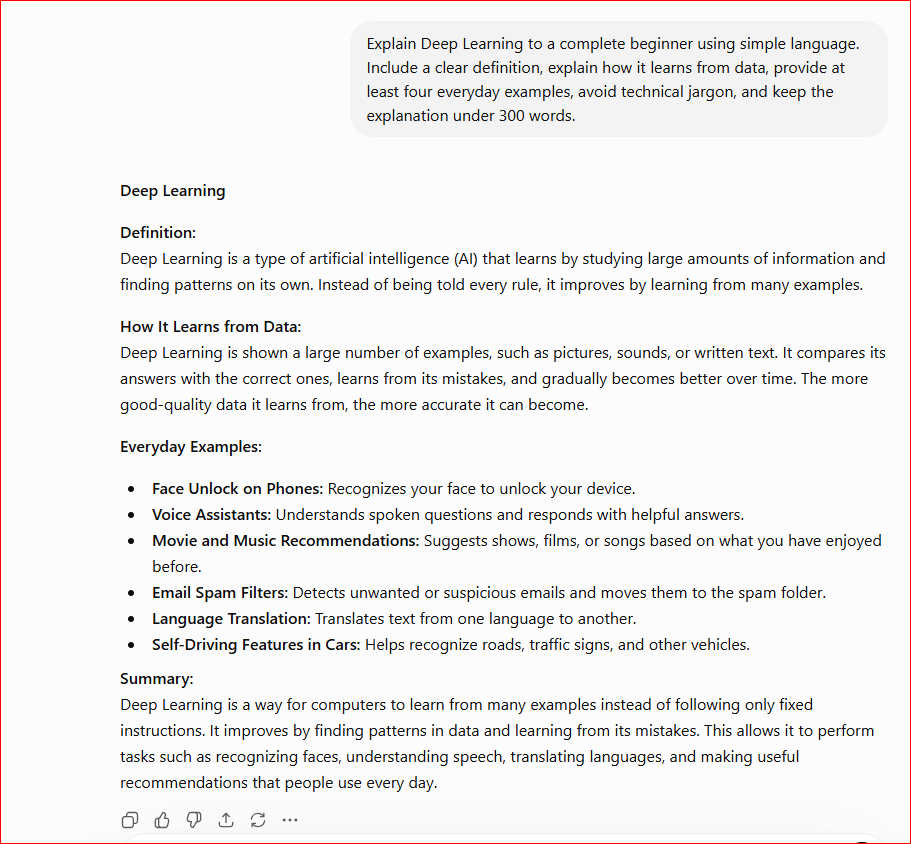
Figure 1. ChatGPT explaining Deep Learning in simple language.
This example shows how ChatGPT explains Deep Learning using simple language and practical examples. By avoiding technical terms and using familiar applications such as voice assistants, image recognition, and ChatGPT, beginners can quickly understand the basic idea of Deep Learning.
How Does Deep Learning Work?
Deep Learning works by learning from enormous amounts of data instead of relying only on fixed instructions. It uses artificial neural networks, which are computer systems inspired by the way the human brain processes information. These networks help the computer recognize patterns, make predictions, and improve its performance over time.
Imagine teaching a child to recognize different kinds of animals. Instead of giving a list of rules for every animal, you show thousands of pictures of cats, dogs, birds, and other animals. After seeing enough examples, the child begins to recognize each animal automatically. Deep Learning works in a similar way by learning from many examples instead of memorizing rules.
During training, a Deep Learning system analyzes large amounts of data, identifies patterns, and gradually improves its accuracy. Once the training is complete, it can apply what it has learned to new information that it has never seen before.
For example, Deep Learning can recognize faces in photos, understand spoken language, translate text between languages, detect diseases in medical images, and generate human-like responses in AI chatbots such as ChatGPT.
Although Deep Learning is inspired by the human brain, it does not think or understand information like people do. Instead, it uses mathematical calculations and learned patterns to produce accurate results.
One of the biggest strengths of Deep Learning is that its performance can improve when it is trained or retrained using larger amounts of high-quality data. This makes it especially useful for solving complex problems that would be difficult for traditional computer programs.
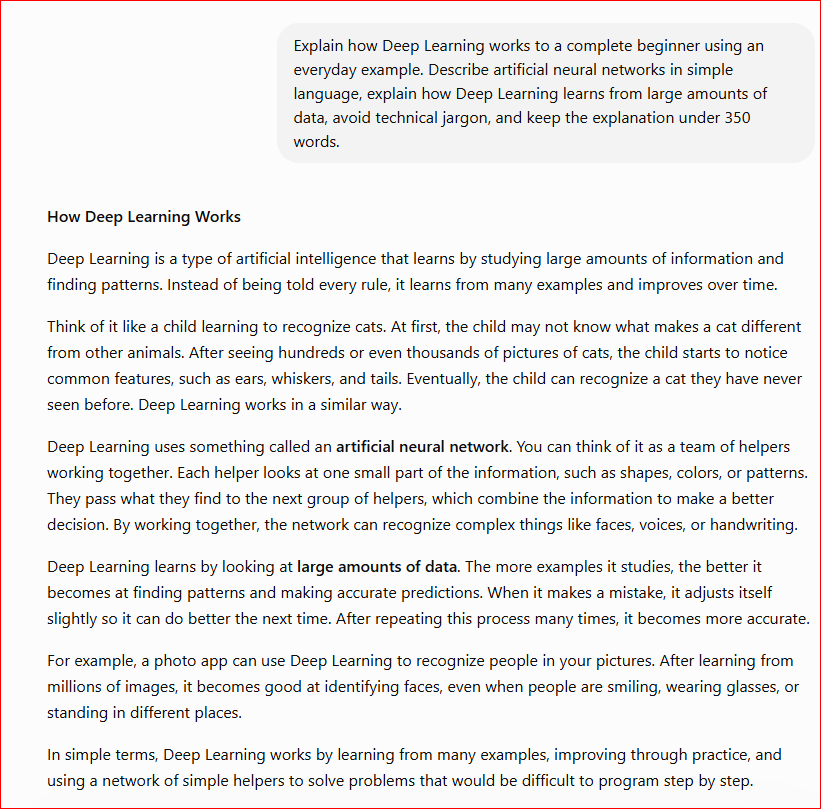
Figure 2. ChatGPT explaining how Deep Learning works using an everyday example.
This example shows that Deep Learning learns by recognizing patterns in large amounts of data rather than following fixed instructions. Using an everyday comparison helps beginners understand how Deep Learning improves its performance through experience without needing advanced technical knowledge.
Artificial Neural Networks Explained Simply
Artificial neural networks are the technology that makes Deep Learning possible. They are called “neural networks” because they were inspired by the way the human brain processes information. However, they are much simpler than the human brain and do not think or have emotions.
A neural network consists of many connected processing units called artificial neurons. These artificial neurons work together to analyze information, recognize patterns, and make decisions. As the network processes more data, it gradually becomes better at identifying patterns and producing accurate results.
Think of a neural network as a team of workers in a factory. Each worker performs one small task and then passes the information to the next worker. By the time the information reaches the final worker, the team has completed a much larger and more complex job. In the same way, each artificial neuron performs a small calculation, and together they solve complicated problems.
For example, imagine a Deep Learning system that recognizes cats in photos. The first layer may detect simple features such as lines and edges. The next layer combines those features to recognize shapes like ears, eyes, and tails. The final layer uses all that information to determine whether the image contains a cat.
This step-by-step process allows Deep Learning to recognize objects, understand speech, translate languages, and generate human-like responses. The more high-quality data the neural network learns from, the more accurate its predictions usually become.
Although neural networks are inspired by the human brain, they do not think like humans. They simply
perform millions of mathematical calculations to recognize patterns and make predictions.
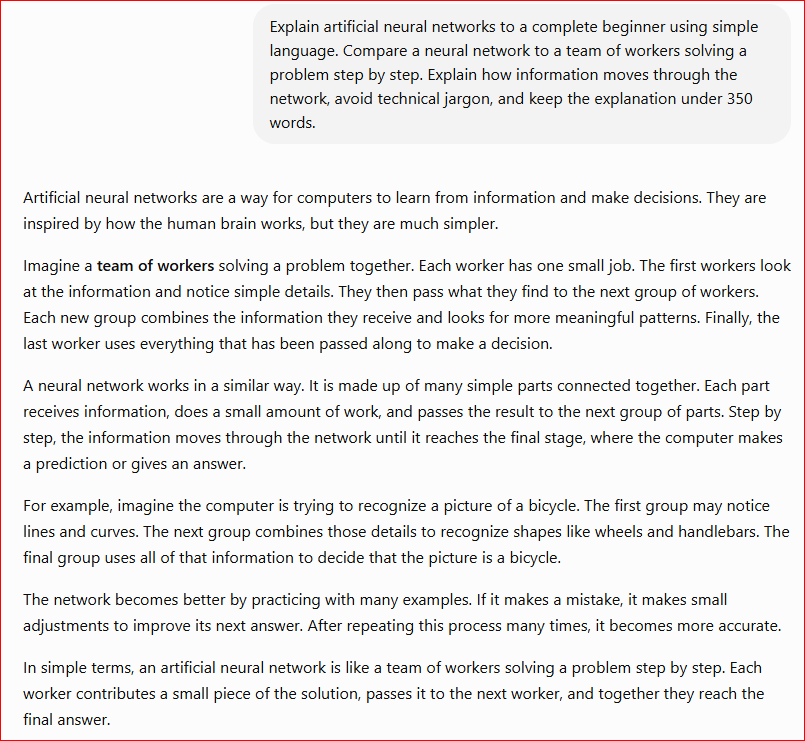
Figure 3. ChatGPT explaining artificial neural networks in simple language.
This example shows that artificial neural networks solve complex problems by breaking them into many smaller steps. Using a simple factory team analogy helps beginners understand how Deep Learning processes information without requiring advanced technical knowledge.
Everyday Examples of Deep Learning
You probably use Deep Learning every day without even realizing it. Many of the apps and services you rely on use Deep Learning to recognize patterns, understand language, identify images, and make intelligent predictions.
Here are some common examples:
· ChatGPT – Understands questions and generates human-like responses.
· Google Photos – Recognizes people, pets, and objects in your pictures.
· Voice assistants such as Siri, Alexa, and Google Assistant – Understand spoken commands and answer questions.
· Google Translate – Translates text and speech between different languages.
· Netflix and YouTube – Recommend movies and videos based on your interests and viewing history.
· Face ID on smartphones – Recognizes your face to unlock your device securely.
· Self-driving vehicles – Identify roads, traffic signs, pedestrians, and other vehicles.
· Medical imaging systems – Help doctors detect diseases by analyzing X-rays, CT scans, and MRI images.
· Online shopping websites – Recommend products based on your browsing and purchase history.
· Speech-to-text applications – Convert spoken words into written text in real time.
These examples show that Deep Learning is already improving many aspects of daily life. From helping people communicate in different languages to making smartphones smarter and healthcare more accurate, Deep Learning is becoming an essential part of modern technology.
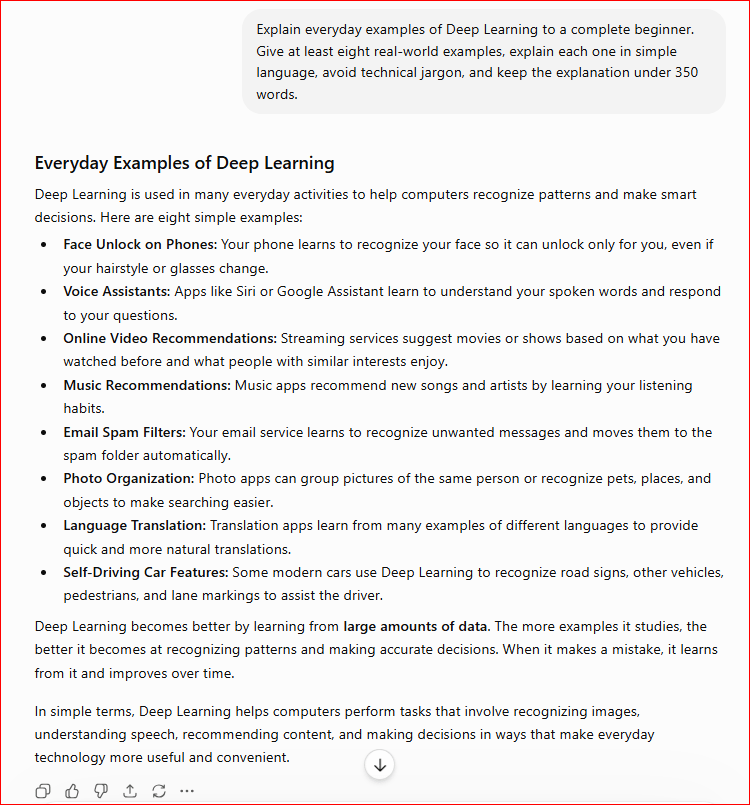
Figure 4. ChatGPT explaining everyday examples of Deep Learning.
This example shows how Deep Learning is used in many technologies that people use every day. By connecting Deep Learning to familiar applications such as ChatGPT, Google Photos, Face ID, and voice assistants, beginners can better understand how this technology works in the real world.
Benefits of Deep Learning
Deep Learning has transformed many industries by enabling computers to solve complex problems with remarkable accuracy. It can analyze enormous amounts of data, recognize detailed patterns, and improve its performance when trained or retrained with more high-quality information.
Some of the main benefits of Deep Learning include:
· Recognizes complex patterns that may be difficult for humans to detect.
· Improves accuracy in tasks such as image recognition, speech recognition, and language translation.
· Learns automatically from large amounts of data without requiring every rule to be programmed manually.
· Powers intelligent applications such as ChatGPT, voice assistants, and recommendation systems.
· Supports healthcare by helping doctors analyze medical images and detect diseases more accurately.
· Enhances security through facial recognition and fraud detection systems.
· Automates repetitive tasks, allowing people to focus on more creative and important work.
· Can improve when it is retrained using more high-quality data.
One of the greatest strengths of Deep Learning is its ability to solve problems that are too complex for traditional computer programs. By learning from millions of examples, Deep Learning systems can produce highly accurate results in areas such as healthcare, transportation, education, finance, and scientific research.
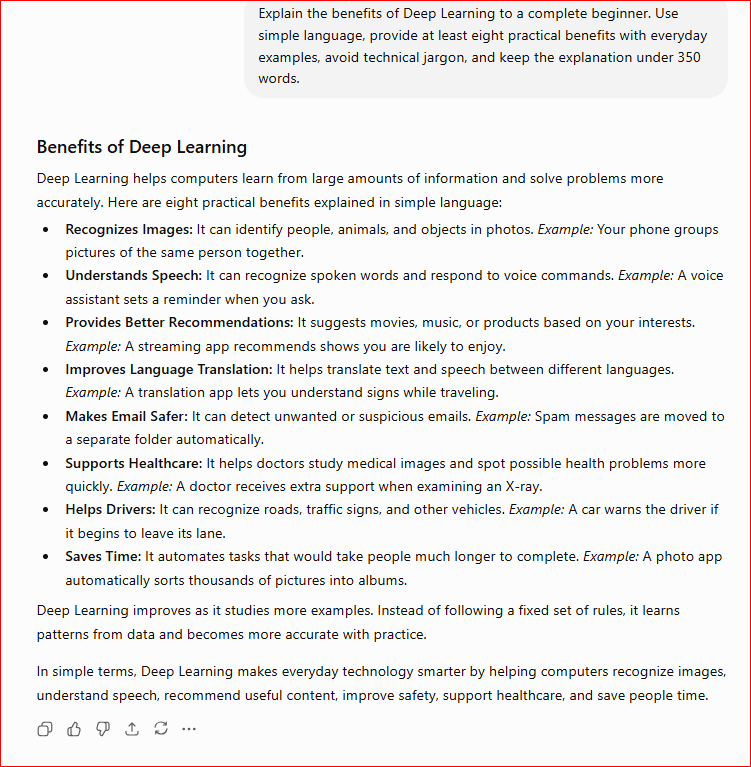
Figure 5. ChatGPT explaining the benefits of Deep Learning.
This example shows how Deep Learning benefits people and organizations by improving accuracy, recognizing complex patterns, and powering many of the intelligent applications we use every day. From healthcare and language translation to voice assistants and AI chatbots, Deep Learning continues to make technology more capable and useful.
Limitations of Deep Learning
Although Deep Learning is one of the most advanced technologies in Artificial Intelligence, it also has important limitations. Understanding these limitations helps people use Deep Learning responsibly and recognize that it cannot solve every problem.
Some of the main limitations of Deep Learning include:
· Requires very large amounts of data to learn effectively.
· Needs powerful computers and specialized hardware to train complex models.
· Can be expensive to develop, train, and maintain.
· May make incorrect predictions if the training data is incomplete, inaccurate, or biased.
· Often works like a “black box,” making it difficult to explain exactly how some decisions are made.
· Requires significant time to train large Deep Learning models.
· Does not think or understand like humans; it relies on learned patterns and may lack human common sense.
· Needs regular updates to remain accurate as new information becomes available.
Although Deep Learning can achieve remarkable results, it still depends on high-quality data, careful design, and human supervision. Experts regularly test and improve Deep Learning systems to ensure they remain accurate, reliable, and fair.
One of the most important things to remember is that Deep Learning is a tool designed to assist people, not replace human judgment. In areas such as healthcare, finance, and law, human experts continue to play an essential role in reviewing important decisions.
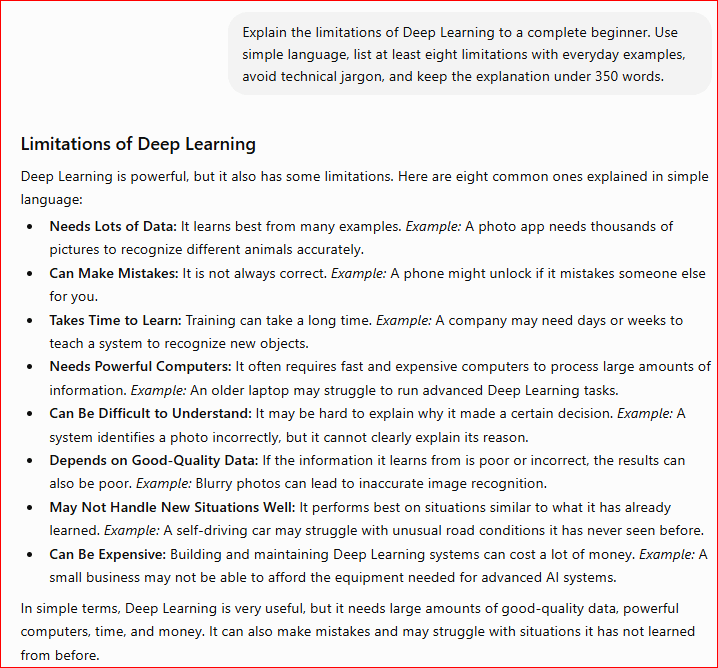
Figure 6. ChatGPT explaining the limitations of Deep Learning.
This example shows that while Deep Learning is an extremely powerful technology, it also has important limitations. Understanding these challenges helps beginners develop realistic expectations and recognize why human supervision remains essential when Deep Learning is used in important real-world applications.
Deep Learning vs. Machine Learning
Many beginners think that Deep Learning and Machine Learning are the same thing. Although they are closely related, they are different. Deep Learning is a specialized branch of Machine Learning that is designed to solve more complex problems using artificial neural networks.
Machine Learning allows computers to learn from data and improve their performance over time. In many cases, it requires humans to help organize the data and identify the most useful information. Deep Learning goes one step further by automatically learning important patterns from very large amounts of data with much less human guidance.
Because Deep Learning can process enormous amounts of information, it is especially effective for tasks such as image recognition, speech recognition, language translation, medical diagnosis, and AI chatbots like ChatGPT.
For many everyday business applications, traditional Machine Learning is often the better choice because it usually requires less data, less computing power, and less time to train. Deep Learning is generally chosen when the problem is much more complex and large amounts of data are available.
Comparison Table
| Feature | Machine Learning (ML) | Deep Learning (DL) |
| Definition | A branch of AI that learns from data. | A specialized branch of Machine Learning using artificial neural networks. |
| Data Required | Moderate amounts of data | Very large amounts of data |
| Human Involvement | More human guidance | Less human guidance |
| Training Time | Usually faster | Usually longer |
| Computing Power | Moderate | High |
| Everyday Examples | Spam filters, fraud detection, recommendations | ChatGPT, facial recognition, language translation, image recognition |
The easiest way to remember the difference is that Deep Learning is an advanced form of Machine Learning.
All Deep Learning systems are Machine Learning systems, but many Machine Learning systems do not use Deep Learning.
Understanding the relationship between Machine Learning and Deep Learning helps explain how many modern AI applications work. As computing power and data continue to grow, Deep Learning is expected to play an even greater role in future AI technologies.
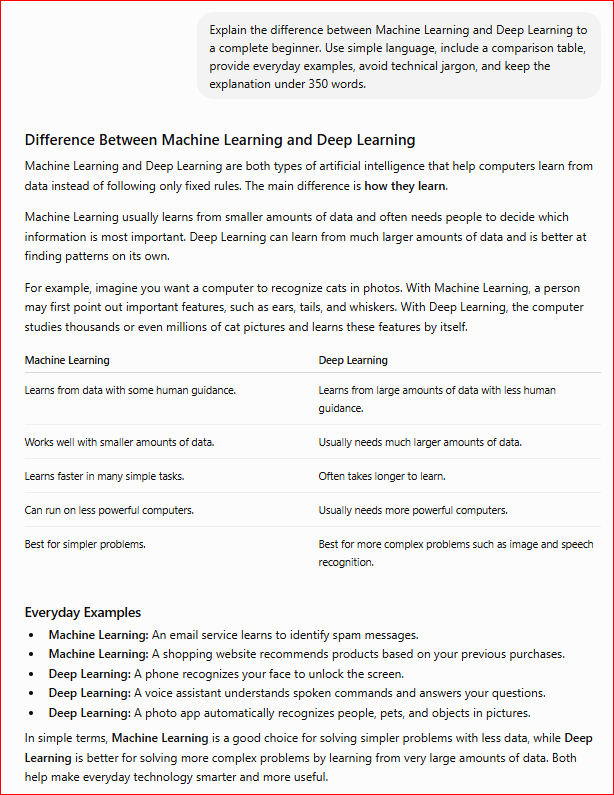
Figure 7. ChatGPT explaining the difference between Machine Learning and Deep Learning.
This example shows that Deep Learning is a specialized branch of Machine Learning designed to solve more complex problems. By comparing the two technologies side by side, beginners can easily understand when each one is used and why Deep Learning powers many of today’s most advanced AI applications.
Common Myths About Deep Learning
Many people misunderstand what Deep Learning can and cannot do. These common myths can make the technology seem either more powerful or more complicated than it really is.
Myth 1: Deep Learning thinks like humans.
Reality: Deep Learning does not think, understand, or have emotions. It learns by recognizing patterns in data and making predictions based on what it has learned.
Myth 2: Deep Learning always gives the correct answer.
Reality: Deep Learning can make mistakes. Its accuracy depends on the quality and quantity of the data it was trained on, as well as how the system was designed.
Myth 3: Deep Learning can learn without any human help.
Reality: Deep Learning requires people to collect data, train models, test results, and monitor performance. Human experts are essential for building, improving, and maintaining Deep Learning systems.
Myth 4: Deep Learning is only used by large technology companies.
Reality: Deep Learning is used in many industries, including healthcare, education, banking, transportation, agriculture, manufacturing, and scientific research.
Myth 5: Deep Learning and Machine Learning are exactly the same.
Reality: Deep Learning is a specialized branch of Machine Learning. While every Deep Learning system is a Machine Learning system, many Machine Learning systems do not use Deep Learning.
Understanding these myths helps beginners develop realistic expectations about Deep Learning. Although it is one of the most powerful technologies in Artificial Intelligence, it still depends on high-quality data, human expertise, and responsible use.
Frequently Asked Questions
What is Deep Learning?
Deep Learning is a specialized branch of Machine Learning that uses artificial neural networks to learn from very large amounts of data and solve complex problems.
Is Deep Learning the same as Machine Learning?
No. Machine Learning is the broader field that enables computers to learn from data, while Deep Learning is a more advanced type of Machine Learning that uses artificial neural networks.
Why is Deep Learning important?
Deep Learning powers many of today’s most advanced AI applications, including ChatGPT, facial recognition, speech recognition, language translation, self-driving technology, and medical image analysis.
Does Deep Learning think like humans?
No. Deep Learning does not think, understand, or have emotions. It recognizes patterns in data and uses those patterns to make predictions or generate responses.
Do I need programming skills to understand Deep Learning?
No. You can begin by learning the basic concepts and understanding how Deep Learning works before studying programming or advanced mathematics.
Key Takeaways
Remember these important points:
· Deep Learning is a specialized branch of Machine Learning.
· It uses artificial neural networks to learn from large amounts of data.
· Deep Learning powers many modern AI applications, including ChatGPT, image recognition, and language translation.
· It is especially effective at solving complex problems involving speech, images, and natural language.
· Deep Learning requires large amounts of data and powerful computers.
· Although highly accurate, Deep Learning still has limitations and requires human supervision.
· Understanding Deep Learning completes the foundation for learning modern Artificial Intelligence.
What’s Next?
Congratulations! You have completed this beginner’s guide to Deep Learning.
You now understand what Deep Learning is, how it works, how artificial neural networks learn from data, its benefits and limitations, and how it relates to Machine Learning and Artificial Intelligence.
With your understanding of Artificial Intelligence, Machine Learning, and Deep Learning, you now have a strong foundation for exploring more advanced AI topics and practical applications.
Final Tip for Beginners
Every expert starts as a beginner. Focus on understanding one concept at a time, practice with real-world examples, and continue exploring how Artificial Intelligence is used in everyday life. As your knowledge grows, you’ll become more confident using AI tools and understanding the technology behind them.
Continue Learning
Ready to continue your AI journey?
Explore our beginner-friendly tutorials to learn more about ChatGPT, prompt writing, AI image generation, Generative AI, and other practical AI applications.
Continue Your AI Journey
Explore these beginner-friendly guides to continue building your AI skills:
· What Is Machine Learning? A Beginner’s Guide (2026)
· What Is Artificial Intelligence? A Beginner’s Guide (2026)
· Create a ChatGPT Account (Step-by-Step Beginner Guide 2026)
· ChatGPT Basics for Beginners (Complete Guide 2026)
· Best ChatGPT Prompts for Beginners (2026)
· What Is Generative AI? A Beginner’s Guide (2026)
· AI Image Generation for Beginners (Coming Soon)
· How ChatGPT Works (Explained Simply)
· What Are Large Language Models (LLMs)? A Beginner’s Guide (2026)
New beginner-friendly AI tutorials will be added regularly, so be sure to check back for more guides and practical examples.
Thank you for reading. Keep exploring, keep practicing, and enjoy your journey into the exciting world of Artificial Intelligence.

