
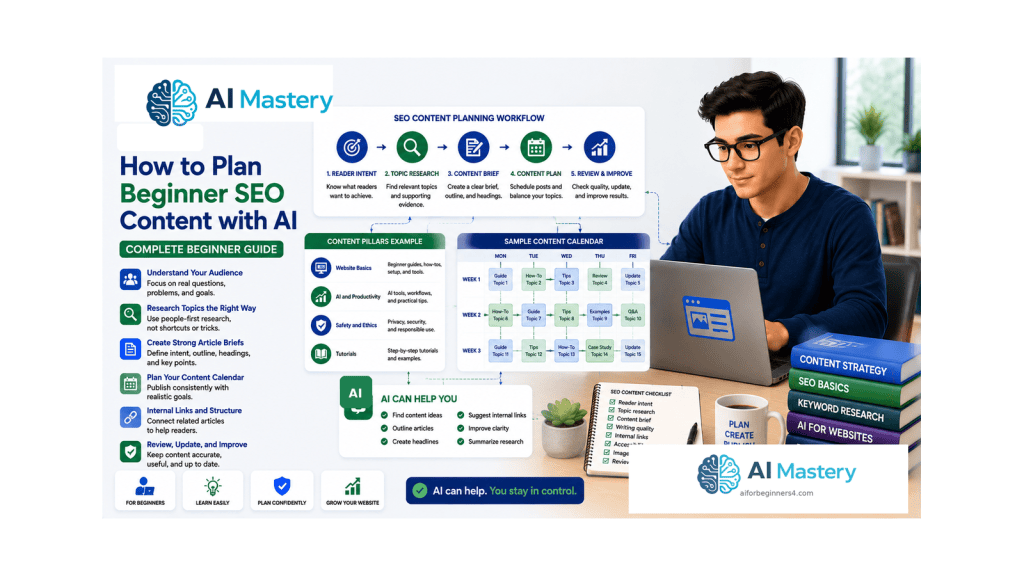
Estimated reading time: 25–30 minutes
Last updated: August 16, 2026
Introduction
Search engine optimization, usually shortened to SEO, is the practice of making web content easier for search engines and people to discover, understand, and use. For a beginner website, SEO content planning means deciding what useful page or article to create, who it is for, what question or task it should address, how it fits the rest of the site, and what information should be checked before publishing.
Good SEO planning is not a promise of rankings. Google states that following its Search Essentials and SEO guidance can help a site become eligible and easier to understand, but it does not guarantee that a page will be crawled, indexed, ranked, or shown for a particular query. That distinction matters because beginners are often exposed to confident claims about “guaranteed traffic” or “easy keywords” that no responsible planner can promise.
AI can help you brainstorm reader questions, compare possible article angles, simplify an outline, identify gaps in a plan, and challenge duplicated ideas. However, AI-generated keyword lists, traffic estimates, “difficulty scores,” or ranking predictions should not be treated as verified facts unless they come from a real measurement source you can inspect.
This guide focuses on a practical beginner workflow: understand the audience, identify search intent, research the topic, create a useful article brief, plan the page elements and internal links, review accessibility and responsible-use issues, and then publish and measure carefully.
What You’ll Learn
You will learn how to:
- understand what SEO content planning means
- distinguish SEO from guaranteed rankings or traffic
- identify a reader question and search intent
- use topic research and Google Trends carefully
- plan topic clusters without creating duplicate articles
- create a beginner SEO article brief
- plan titles, headings, URLs, excerpts, and internal links
- use images and alt text responsibly
- use AI for brainstorming while keeping human review
- understand current Google guidance for generative AI search
- protect privacy and review licensing before publishing
- recognize common SEO myths and mistakes
- prepare a final WordPress SEO publishing plan
Before You Start
This article assumes you already know the website topic, audience, pages, navigation, and general content plan. If those decisions are still unclear, complete the earlier Website Planning lessons first. SEO should support a useful site structure rather than replace it.
Keep a list of your existing article titles and URLs nearby. You will use it to avoid duplicate topics and to plan internal links. You may also use Google Search, Google Trends, WordPress.com, and later Google Search Console as research and measurement tools.
You do not need a paid SEO plugin to understand the principles in this article. WordPress.com includes core search-friendly features, while additional SEO controls depend on the site plan and available features. The exact menu wording may change over time.
What SEO Content Planning Means
SEO content planning starts before the article is written. The purpose is to connect a real reader need with a page that clearly satisfies that need and fits the website. The plan records the intended audience, search or task intent, article outcome, evidence, page structure, internal links, image needs, WordPress metadata, and future review requirements.
Google’s current SEO Starter Guide describes SEO as improvements that can help search engines crawl, index, and understand content. Google also emphasizes that the work should serve people rather than exist mainly to manipulate search rankings.
A beginner content plan should therefore ask two questions at the same time: “Will this page help the intended reader?” and “Will the page be clear enough that search engines can understand what it is about?”
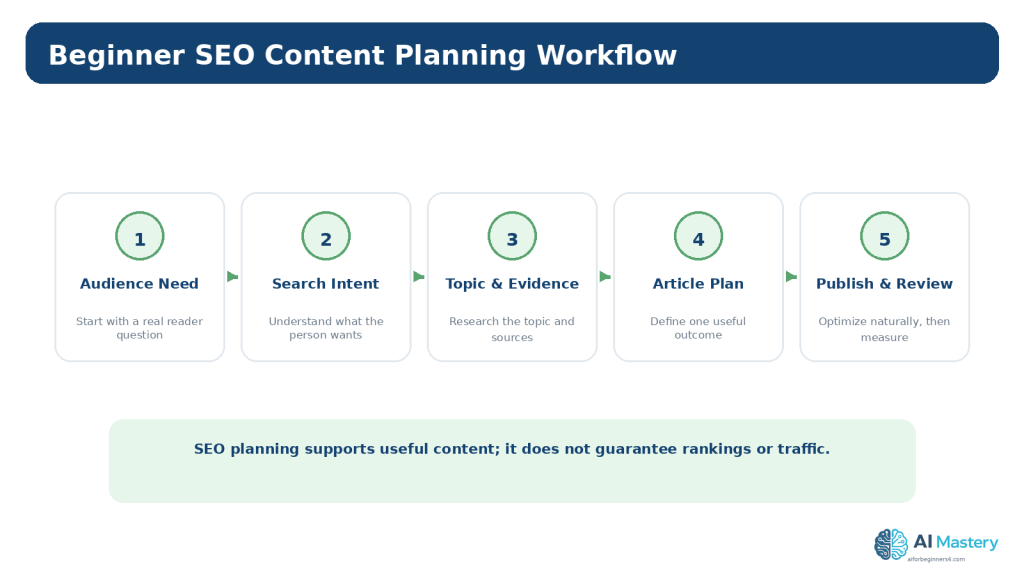
Figure 1. Beginner SEO content planning starts with a real reader need and turns it into a useful, researched, well-structured article that can be reviewed after publication.
Explanation: SEO planning supports discovery and clarity, but it does not guarantee crawling, indexing, rankings, or traffic.
Start with a Real Reader Need
Before looking for keywords, write the question, task, or problem the reader has. A useful beginner topic might be “How do I add alt text to an image in WordPress?” or “What is the difference between a WordPress page and a post?” The wording may later change, but the reader need should remain clear.
If you start with a long list of keywords without understanding the person behind the search, you can end up publishing disconnected pages that repeat the same information. The reader need gives you a reason for the article to exist.
Use AI to Explore the Question
Example prompt: “My audience is complete beginners using WordPress. The reader asks: ‘How do I plan SEO content?’ Suggest five distinct interpretations of what they may be trying to accomplish. Do not invent search volume or difficulty scores.” Review the options and keep the interpretation that best matches your site.
Understand Search Intent
Search intent describes what a person is trying to accomplish with a search. The exact classifications used by SEO tools vary, but a beginner can work with a simple practical model: learn or understand something, complete a task, compare options, or find a known destination.
Intent affects the article format. A person asking “what is SEO?” needs a clear explanation. Someone asking “how to add an internal link in WordPress” needs ordered steps. A person comparing two tools needs a balanced comparison with criteria, limitations, and current source checks.
One page does not need to satisfy every possible intent. A focused article is usually easier to understand than a page that tries to be an explainer, tutorial, product comparison, news update, and buying guide at the same time.
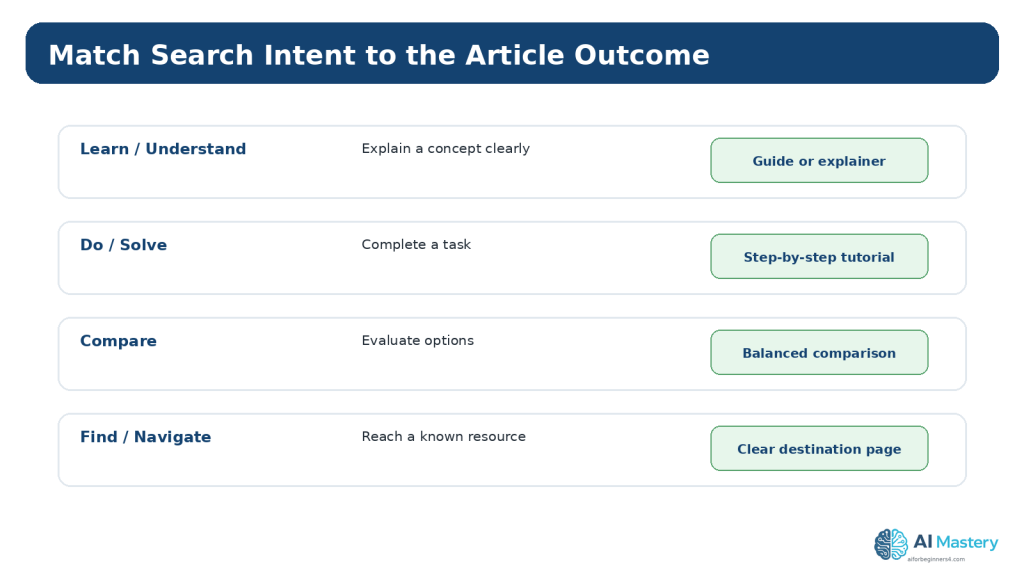
Figure 2. Search intent helps you choose an article format that matches what the reader is trying to accomplish.
Explanation: A focused page usually serves one main intent better than a page that tries to do everything at once.
Research Topics Without Treating Estimates as Facts
Research can include your own audience questions, existing site search data, support forums, current search results, official documentation, Google Trends, and later Search Console data. Each source provides a different signal. None of them alone tells you exactly what article to publish.
Google Trends is especially easy to misunderstand. Google explains that Trends data is normalized to the time and location of the query so terms can be compared. A value in Trends is therefore a relative-interest measure, not the exact number of searches. A term with a lower Trends score can still be useful for your audience.
When AI suggests that one topic has “high volume” or “low difficulty,” ask where the number came from. If no verifiable source is provided, treat the claim as an unverified suggestion rather than data.
Reality: SEO Research Contains Uncertainty
Search behavior changes, tools use different methods, and no planning tool can guarantee that a page will rank. Record what is known, what is estimated, and what is simply an editorial judgement.
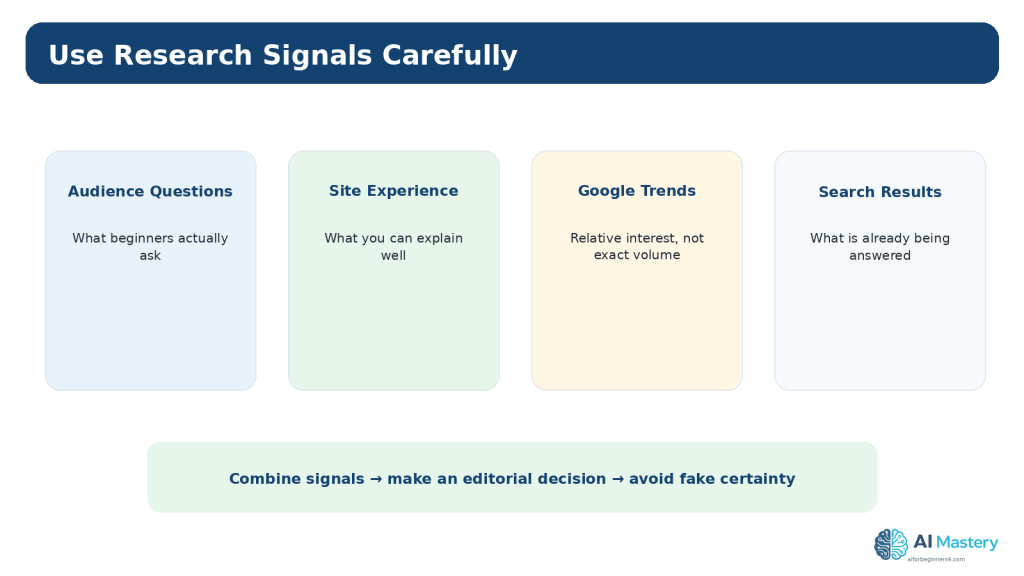
Figure 3. Topic research combines several signals, but the final publishing decision still requires judgement and an understanding of each source’s limitations.
Explanation: Google Trends reports normalized relative interest rather than exact search volume, and AI-generated metrics should not be treated as verified data.
Use Topic Clusters Carefully
A topic cluster is a group of related pages organized around a broader subject. Clusters can help readers move from foundational information to specific tasks and can make the site easier to navigate.
For example, a Beginner SEO pillar could include a foundation guide, keyword and intent planning, on-page basics, internal links, image SEO and accessibility, Search Console basics, and periodic review. The articles should be distinct enough that each has its own useful outcome.
Do not create separate pages for tiny wording variations that would be more useful as one strong article. Planning clusters is partly about deciding what not to publish.
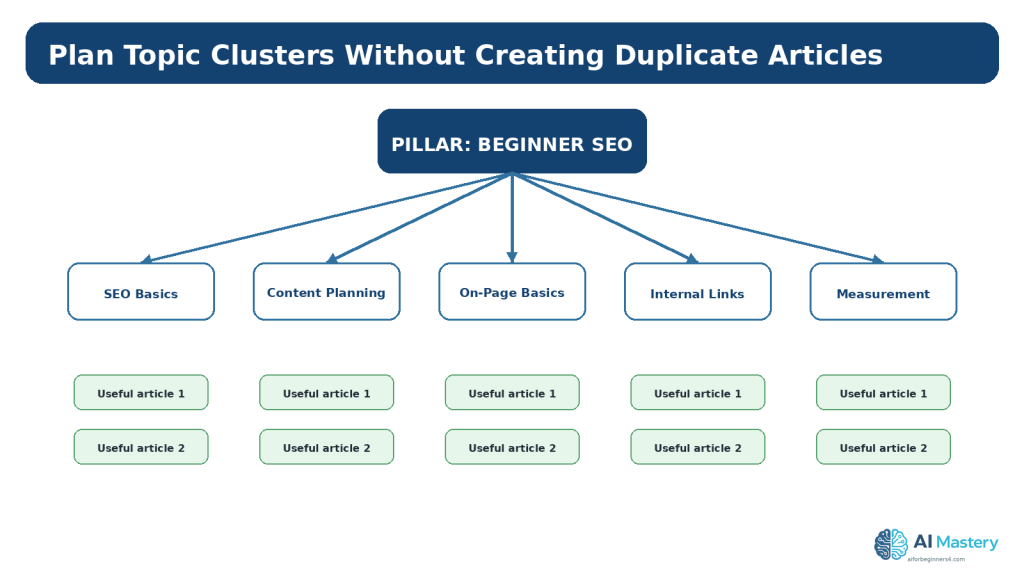
Figure 4. Topic clusters can organize related learning while still keeping each article focused on a distinct reader outcome.
Explanation: The purpose of clustering is not to publish many near-duplicate pages; it is to create a useful structure for related subjects.
Keep SEO People-First
Google’s current guidance for helpful, reliable, people-first content asks site owners to focus on content created primarily to benefit people rather than content created primarily to attract visits from search engines. That means the plan should reward usefulness, clarity, accuracy, originality, and real value instead of publication volume.
Before approving an SEO article idea, ask whether it is genuinely useful to the intended reader, whether it fits the site’s purpose, whether the title accurately describes the content, whether you can support important claims, and whether the article adds something meaningful beyond existing pages.
If you would not want to publish the page unless it was guaranteed to receive search traffic, the idea may need reconsideration.
Reality: “SEO Content” Is Still Content for People
SEO helps discovery and understanding. It does not justify keyword stuffing, thin pages, misleading titles, copied explanations, or publishing large volumes of generic AI text.
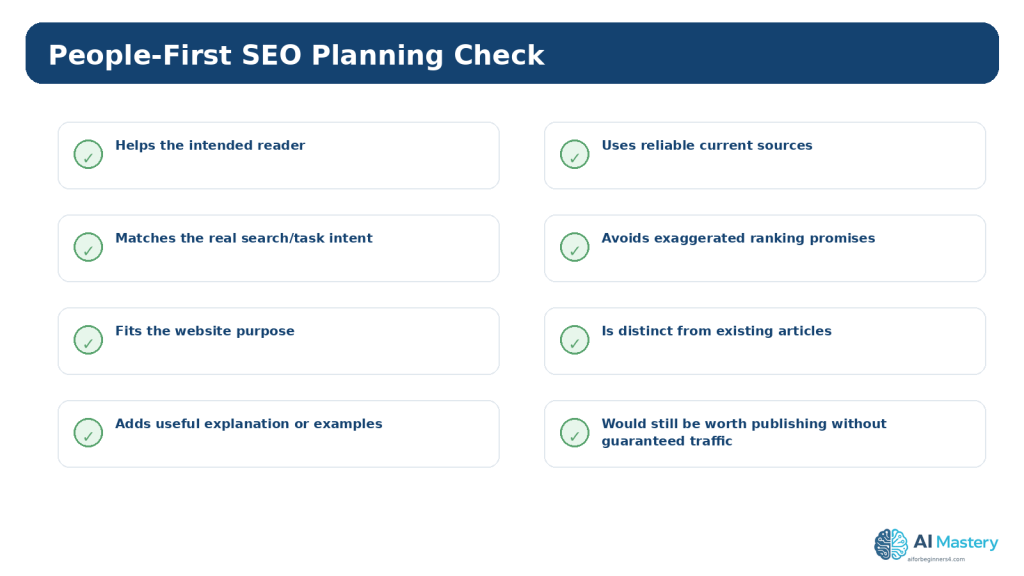
Figure 5. People-first SEO planning asks whether the page genuinely helps its intended reader before considering search visibility.
Explanation: The article should be worth publishing because it is useful, accurate, and distinct—not because a tool predicts traffic.
Create a Beginner SEO Article Brief
A short brief turns the approved topic into a controlled writing assignment. Record the working title, intended reader, search intent, main topic, article promise, outline, sources to verify, internal links, images, WordPress category and tags, excerpt, and update notes.
The brief should also state what the article will not cover. This prevents one tutorial from expanding into several unrelated subjects and makes it easier to plan future articles without duplication.
When the topic depends on software features, pricing, platform rules, laws, standards, or policies, add a “current source required” note. This reminds the writer to verify the information at publication time.
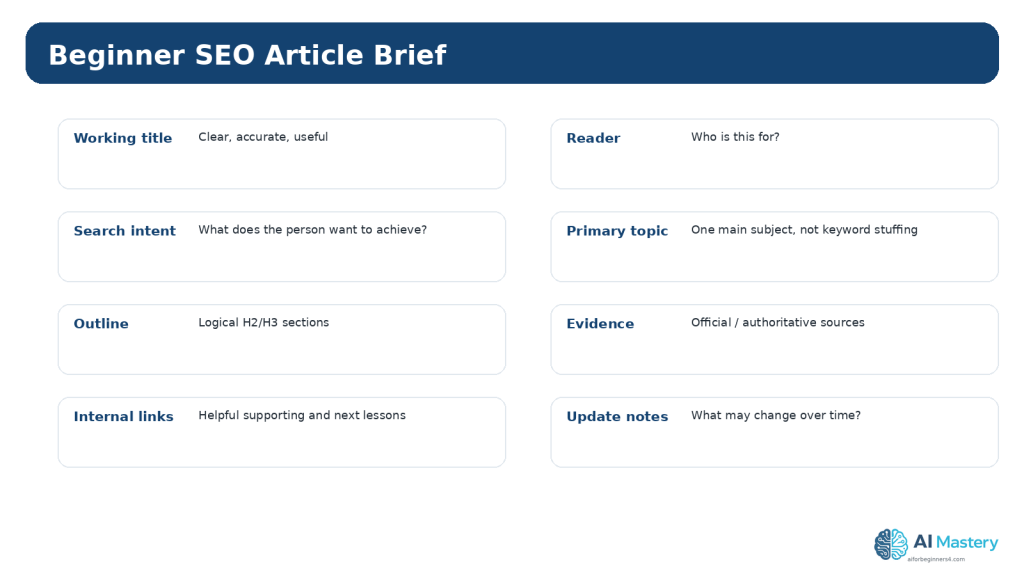
Figure 6. A short SEO article brief records the reader, intent, page purpose, evidence, internal links, and update requirements before drafting.
Explanation: The brief keeps the article focused and gives an AI assistant better context for limited planning tasks.
Plan the Title, Headings, URL, and Excerpt
Plan a title that accurately describes what the reader will learn or do. Avoid exaggerated claims such as “guaranteed ranking,” “instant traffic,” or “secret algorithm hack.” A clear title is easier for people to understand and easier to maintain when the article is updated later.
Use H2 headings for the main sections and H3 headings for subsections. The headings should reflect the logical learning path rather than repeat the same phrase unnecessarily.
Choose a short descriptive WordPress slug. For the excerpt, summarize what the article provides in natural language. Search engines may choose different snippet text based on the query, so do not treat the excerpt as a guaranteed search-result description.
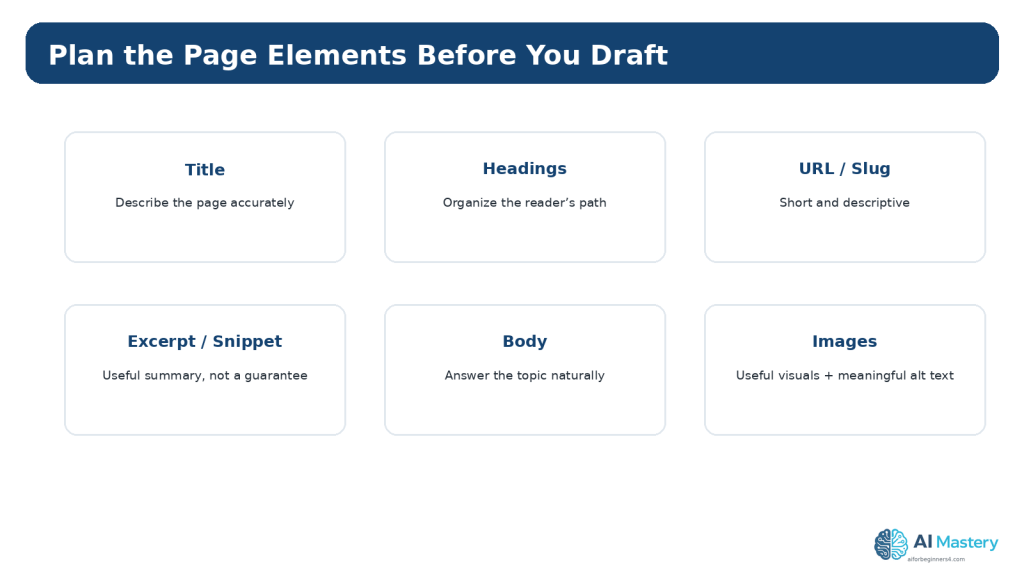
Figure 7. SEO planning includes clear page elements such as the title, headings, URL, excerpt, body structure, and useful images.
Explanation: These elements should describe and organize the content naturally rather than repeat the same keyword mechanically.
Plan Natural Topic Language — Not Keyword Stuffing
A beginner may hear advice to repeat the same keyword many times. That is not a useful planning rule. Write naturally about the topic and use the words that are needed to explain it clearly.
Google Search Essentials identifies keyword stuffing as a spam practice. Repeating phrases unnaturally, creating long lists of city or product names, or forcing the same wording into every heading can make the page worse for readers and does not represent responsible SEO.
Use related terms when they are genuinely part of the explanation. The goal is accurate communication, not a target keyword density.
Plan Internal Links
Internal links can help readers discover supporting lessons and can help search engines find related pages. Plan them before drafting so the links fit the learning path rather than being added randomly at the end.
Use descriptive link text. “Read Article 093 — How to Plan Website Pages and Navigation with AI” is more informative than a vague “click here.” Do not link every occurrence of a keyword or force links to pages that do not help the current reader.
For a series, note the prerequisite article, one or two useful supporting articles, and the next lesson. Add future links only after the destination article is actually published.
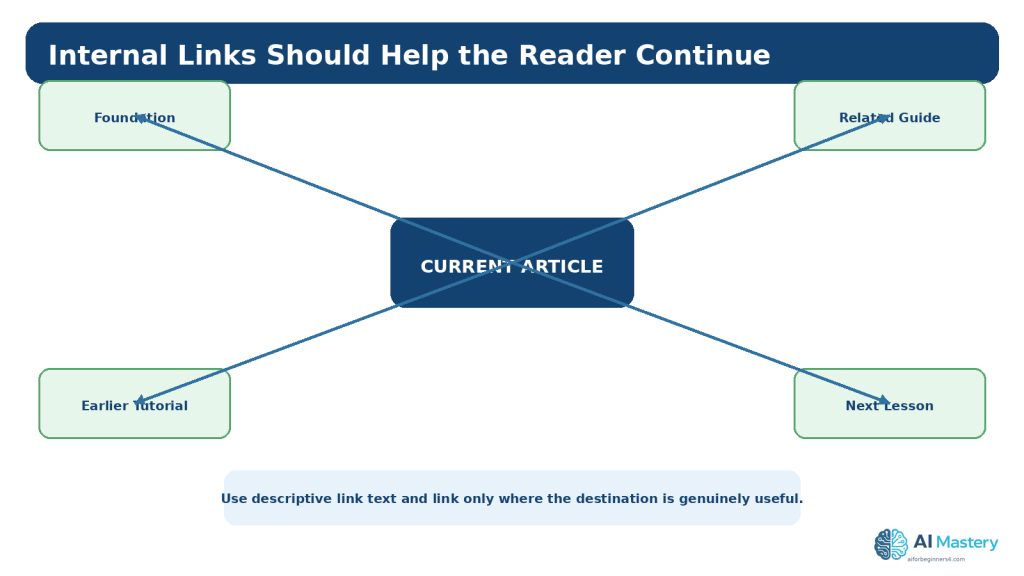
Figure 8. Internal links should help readers move to prerequisites, supporting information, related guides, or the next useful lesson.
Explanation: Plan links around reader value and learning order rather than linking every repeated phrase.
Plan Images, Alt Text, and Accessibility
Images should be included when they genuinely improve understanding. A workflow, comparison, checklist, or interface screenshot can help a beginner when the visual explains something that would otherwise be harder to follow.
Plan meaningful alternative text for informative images. W3C guidance emphasizes that appropriate alt text depends on the image’s purpose and context. Decorative images may need different treatment from instructional diagrams.
Accessibility also includes clear headings, meaningful link text, readable contrast, usable layouts, keyboard access for interactive features, and content that remains understandable when zoomed or viewed on smaller screens. SEO planning should not sacrifice accessibility for visual effects or keyword placement.
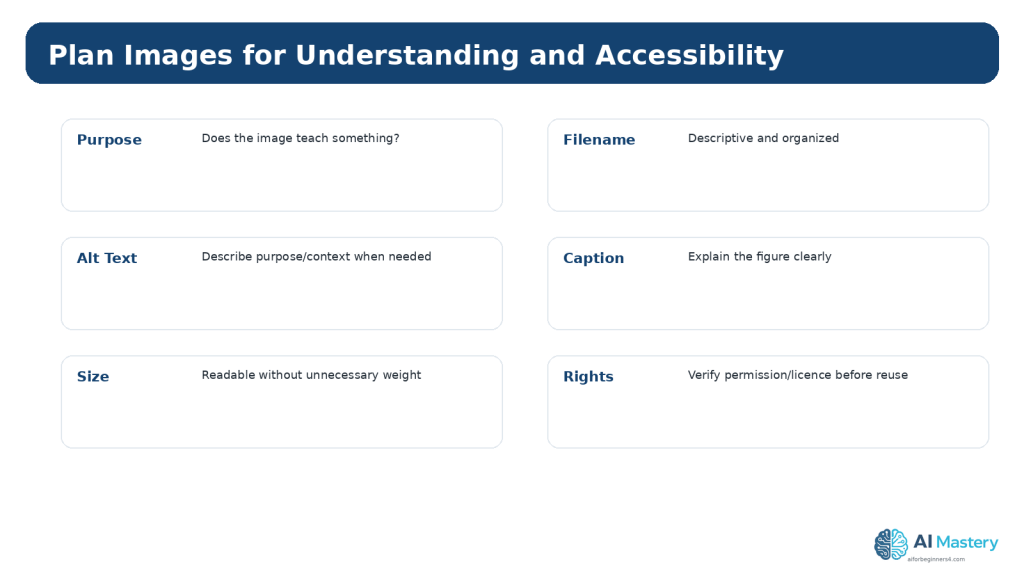
Figure 9. Useful images should be planned for understanding, accessibility, file organization, and lawful reuse.
Explanation: Alt text depends on the image’s purpose and context, and third-party assets require appropriate permission or licensing.
Use AI as a Planning Assistant
AI can be useful for brainstorming article angles, generating questions to investigate, simplifying an outline, comparing two titles, finding possible duplication, or creating a checklist for human review.
Give the AI enough context: the site purpose, audience, current content list, intended outcome, exclusions, and source requirements. Ask for several options and ask the AI to criticize its own suggestions.
Do not ask an AI system to invent search volume, keyword difficulty, conversion rates, or ranking probability. If you need measured data, use a real data source and record what that source actually reports.
Example SEO Planning Prompt
“I run a beginner AI education website. My audience is complete beginners. I want to plan an article about beginner SEO content. My existing Website Planning articles are 091–094. Suggest six distinct reader questions Article 095 could answer. For each, identify likely intent, article outcome, overlap risk, and current official sources I should verify. Do not invent search volume, difficulty, ranking probability, or traffic forecasts.”
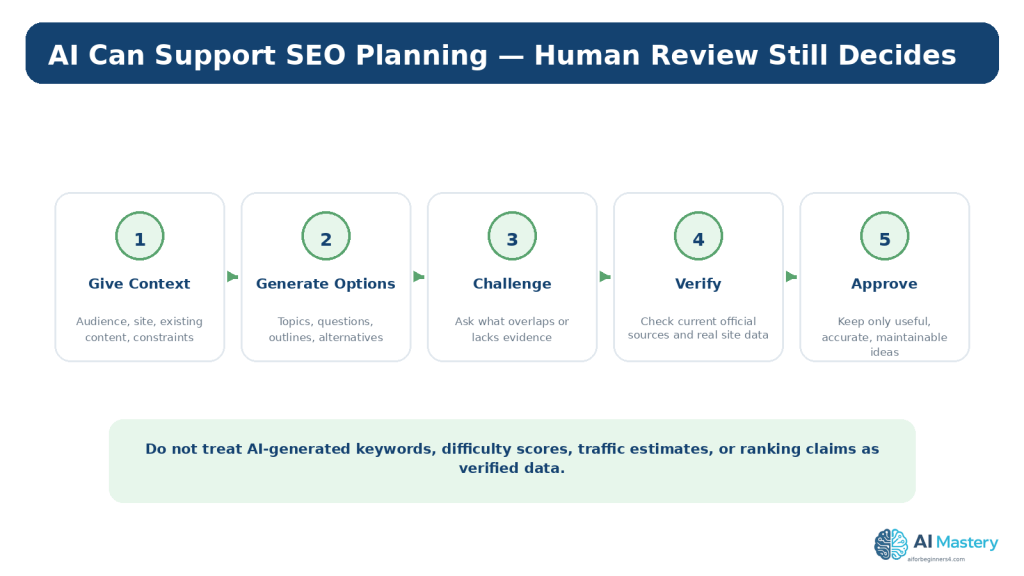
Figure 10. AI can support SEO brainstorming and critique, but human review and verification are required before an idea becomes part of the content plan.
Explanation: Use AI for options and analysis, not as a source of invented search volume, difficulty, or ranking probability.
Plan for Google’s Generative AI Search Without Chasing Hacks
Google published current guidance in 2026 for visibility in generative AI features such as AI Overviews and AI Mode. Google states that foundational SEO best practices still apply because these experiences are rooted in the same broader Search systems and index.
Google’s guidance recommends clear technical structure and unique, valuable, people-first content. It also says that special files such as llms.txt are not required for Google Search and warns against unsupported “AEO” or “GEO” hacks and inauthentic mentions.
The beginner lesson is simple: do not rebuild your content strategy around every new acronym. Continue improving useful content, site structure, crawlable links, accuracy, and measurement.
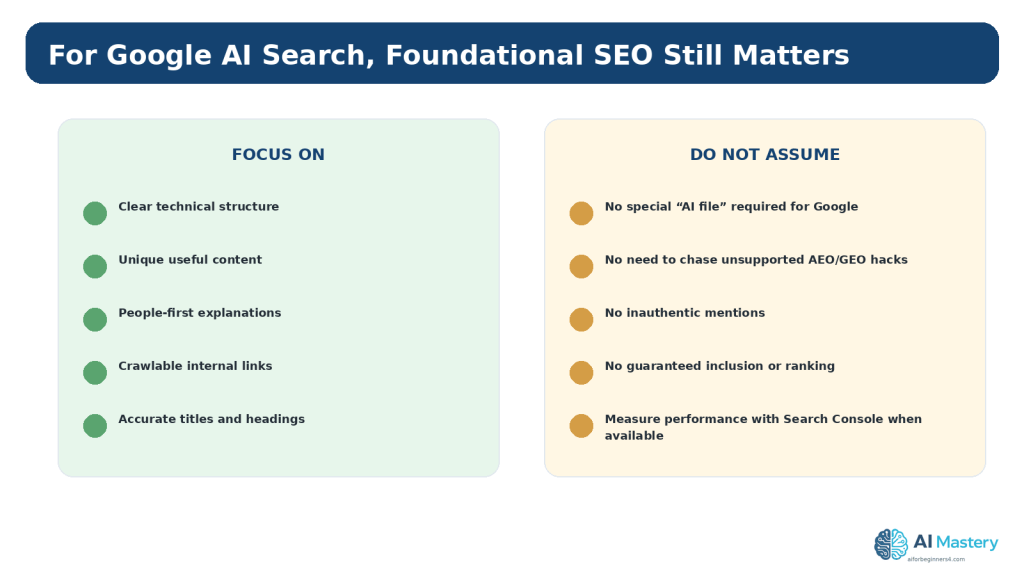
Figure 11. Google’s current guidance for generative AI search continues to emphasize foundational SEO, clear structure, and unique, useful content.
Explanation: Google also says special files such as llms.txt are not required for Google Search and warns against unsupported AI-search hacks.
Plan Measurement and Updates
SEO planning should include what happens after publication. Record the publication date, the topics or claims that may change, and a reasonable review date. For software, policy, plan, or legal information, review sooner than you would for a stable educational concept.
Google Search Console can show information such as search queries, impressions, clicks, indexing, and page performance after the site is connected and data is available. These observations can help you decide which articles need clarification, stronger internal links, updates, or better alignment with the questions people are actually asking.
Do not treat early performance as a final verdict. New pages can take time to be discovered and evaluated, and Google does not guarantee crawling, indexing, or ranking.
Plan Privacy, Licensing, and Responsible AI Use
Before sharing unpublished content, customer examples, analytics screenshots, or research notes with an AI service, remove information that does not need to be shared. This can include private URLs, unpublished credentials, customer details, email addresses, account information, and other confidential material.
For personal ChatGPT accounts, OpenAI provides Data Controls that affect whether new conversations may be used to improve models. OpenAI also states that Temporary Chats are not used to train models, do not appear in normal history or create memories, and are deleted from its systems after 30 days, although they may be reviewed for abuse. These controls do not make it appropriate to share unnecessary secrets.
Also verify rights and licences for third-party images, fonts, templates, charts, code, datasets, and other assets. Material being visible online does not automatically make it free to reuse. Keep source and licence records when appropriate.
If realistic synthetic media could be mistaken for a real person, place, or event, consider clear disclosure and follow the platform rules that apply to the publication.
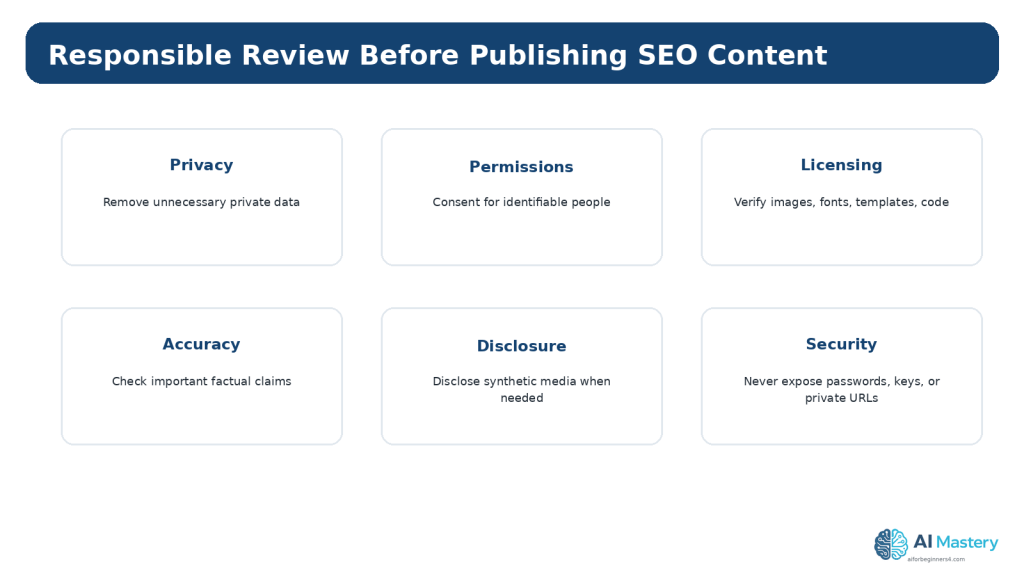
Figure 12. SEO content planning should include privacy, permission, licensing, accuracy, disclosure, and security checks before publication.
Explanation: These checks reduce the risk of exposing private information or publishing material you do not have the right or evidence to use.
Benefits of Planning SEO Content Before Writing
Planning improves focus. The writer knows who the article is for, what outcome it should deliver, and what questions are outside scope. This usually reduces unnecessary rewriting.
Planning also improves consistency across a series. Titles, headings, categories, tags, internal links, figures, sources, and update notes can follow the same editorial standard.
Finally, planning makes review visible. Privacy, accessibility, licensing, source verification, and update requirements become part of the article rather than last-minute checks.
Benefit 1: Less Duplication
Comparing the new idea with the existing article list helps you combine overlapping topics before drafting.
Benefit 2: Better Reader Paths
Internal links and article order can be planned as a learning sequence.
Benefit 3: Easier Updating
Time-sensitive claims and sources are identified before publication, making later maintenance more manageable.
Limitations of AI-Assisted SEO Planning
AI can produce plausible suggestions that are incomplete, outdated, repetitive, or unsupported. It may infer search intent incorrectly, confuse a topic with a keyword, invent metrics, or recommend advice that conflicts with current official search guidance.
AI also does not guarantee access to your latest WordPress structure, Search Console data, published URLs, or editorial decisions unless you provide them. A generic prompt can therefore create a plan that ignores work already completed.
Treat AI output as a draft or analysis aid. Keep your own authoritative article list, verify time-sensitive guidance, and make the final editorial decision yourself.
How to Reduce This Limitation
Provide current context, request alternatives, ask for overlap checks, and verify important recommendations against Google Search Central, WordPress.com documentation, and your own site data.
Common SEO Planning Myths and Mistakes
Myth 1: One “Perfect Keyword” Guarantees a Ranking
Reality: No keyword, tool score, or content plan can guarantee ranking or traffic. Search results depend on many systems and can change.
Myth 2: More Pages Automatically Mean More Traffic
Reality: Thin, duplicated, or unhelpful pages can create maintenance problems. Publish pages because they serve a useful purpose.
Mistake 1: Writing for Search Engines Instead of Readers
How to Avoid This Mistake: Start with the reader need and intent, then use SEO to improve discovery and clarity.
Mistake 2: Treating Google Trends as Exact Search Volume
How to Avoid This Mistake: Remember that Trends reports normalized relative interest, not exact query counts.
Mistake 3: Trusting AI-Generated Metrics
How to Avoid This Mistake: Ask for the source. If the number cannot be verified, label it as unverified or do not use it.
Mistake 4: Keyword Stuffing
How to Avoid This Mistake: Use natural language and explain the topic completely instead of repeating phrases mechanically.
Mistake 5: No Update Plan
How to Avoid This Mistake: Add a review date for time-sensitive software, search, policy, privacy, and platform information.
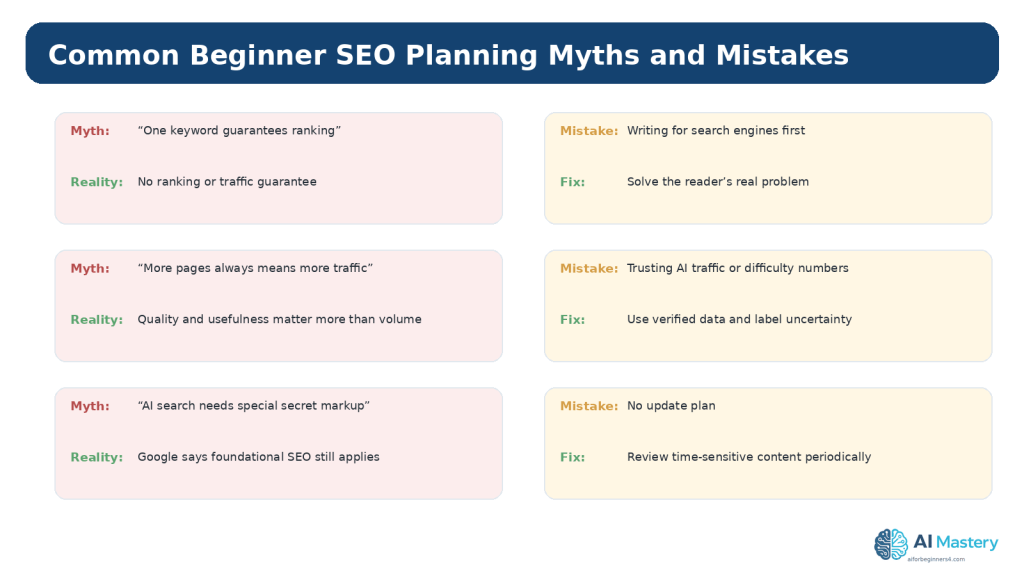
Figure 13. Common beginner SEO mistakes often come from unrealistic guarantees, unverified metrics, keyword-first writing, or failure to maintain published content.
Explanation: Responsible SEO planning accepts uncertainty and focuses on usefulness, evidence, and continuous improvement.
A Practical Beginner SEO Planning Workflow
Use the following process for each new SEO-focused article.
Step-by-Step Workflow
1. Confirm the target audience and page purpose.
2. Write the real reader question or task.
3. Identify the likely search intent.
4. Check your existing articles for overlap.
5. Research the topic using reliable current sources.
6. Use Google Trends only as a relative-interest signal when helpful.
7. Create one clear article promise and outline.
8. Plan the title, headings, slug, excerpt, images, and internal links.
9. Review people-first usefulness and accessibility.
10. Verify privacy, permissions, licensing, and important factual claims.
11. Use AI for focused brainstorming or review, not invented metrics.
12. Publish only after final WordPress preview and source checks.
13. Measure later with real site data when available.
14. Update the article when important information changes.
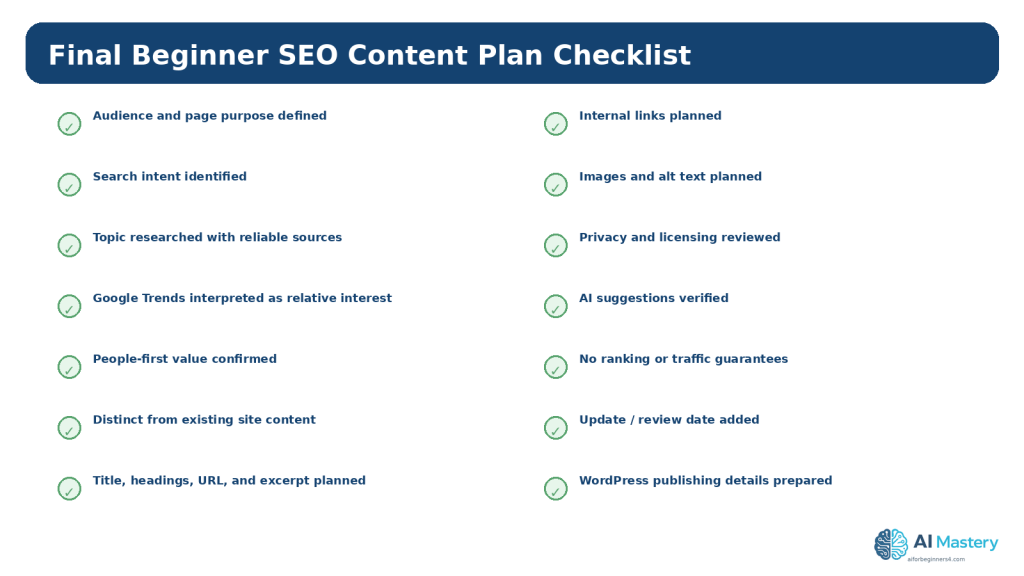
Figure 14. A final checklist helps ensure the SEO content plan is useful, research-based, accessible, responsible, and ready for WordPress.
Explanation: The checklist does not guarantee search performance; it helps make the planning process consistent and reviewable.
Frequently Asked Questions
Do I need an SEO plugin to plan content?
No. You can learn and apply the basic planning principles without a plugin. WordPress.com includes core search-friendly features, while additional SEO tools vary by plan and setup.
How many keywords should one article target?
A beginner should focus on one coherent topic and the reader’s intent rather than a fixed keyword count. Natural related language will usually appear as you explain the topic properly.
Can ChatGPT tell me exact search volume?
Do not assume an AI-generated number is measured data. Use a real data source if exact or estimated metrics are needed, and describe the source and limitations accurately.
Does Google Trends show exact search volume?
No. Google explains that Trends data is normalized to time and location to show relative interest. It is useful for comparisons and patterns, not exact search counts.
Can good SEO guarantee traffic?
No. Google does not guarantee crawling, indexing, ranking, or traffic, even when a page follows best practices.
Should every article be written for search traffic?
No. Some articles are valuable because they support a course sequence, answer an important reader question, document a process, or help existing visitors.
Do I need special AEO or GEO files for Google AI search?
Google’s current 2026 guidance says foundational SEO still applies and specifically says special files such as llms.txt are not required for Google Search.
How often should I update SEO articles?
Review time-sensitive topics when software, platform features, policies, search guidance, or important facts change, and periodically thereafter. Stable educational concepts can usually be reviewed less often.
Key Takeaways
SEO content planning connects a real reader need with a useful, well-structured page. It should help people first while making the topic clear to search engines.
Search intent is more useful than simply collecting keywords. Google Trends can provide normalized relative-interest signals, but it is not exact search volume. AI can support brainstorming and review, but it should not invent or certify SEO metrics.
Plan titles, headings, slugs, excerpts, internal links, images, accessibility, sources, privacy, licensing, and updates before drafting. Do not promise rankings or traffic.
Google’s 2026 guidance for generative AI search continues to emphasize foundational SEO and unique, valuable, people-first content rather than special “AI search” hacks.
Final Tip
Keep one SEO planning record for each article. Save the reader question, intent, outline, current sources, internal links, WordPress details, and review date. When the article is published, add the URL and later add real performance observations instead of relying on predictions.
The strongest beginner SEO habit is not finding a “perfect keyword.” It is learning to create one genuinely useful page, verify it carefully, publish it clearly, and improve it when real evidence shows what readers need.
Continue Learning
Article 095 completes the beginner SEO content-planning step in the Website Planning series.
Review Articles 091–094 whenever you need to reconnect the SEO plan to the website goal, audience, page structure, navigation, or editorial calendar..
Sources and References
The following official and authoritative sources were reviewed for the search, WordPress, accessibility, privacy, copyright, licensing, and responsible-AI guidance in this article. Information was checked on August 16, 2026. Search systems, platform interfaces, policies, and licence conditions can change, so readers should verify current official information when it matters to their project.
1. Google Search Central — SEO Starter Guide. Official beginner SEO guidance for helping search engines crawl, index, and understand useful content. Open official source
2. Google Search Central — Creating Helpful, Reliable, People-First Content. Official guidance emphasizing helpful content created for people rather than primarily for search manipulation. Open official source
3. Google Search Essentials. Core eligibility, technical, spam, and content guidance for Google Search. Open official source
4. Google Search Central — How Google Search Works. Official explanation of crawling, indexing, serving, and the absence of ranking/indexing guarantees. Open official source
5. Google Trends Help — FAQ about Google Trends Data. Explains normalized relative-interest data and why Trends values are not exact search-volume counts. Open official source
6. Google Search Central — Optimizing for Generative AI Features. Current 2026 guidance stating that foundational SEO remains relevant for AI Overviews and AI Mode and that special llms.txt files are not required for Google Search. Open official source
7. WordPress.com — Optimize Your Site for Search Engines. Current WordPress.com SEO guidance, including site visibility, keywords, excerpts, image descriptions, and plan-dependent controls. Open official source
8. WordPress.com — Verify Your Site with Google Search Console. Current WordPress.com guidance for connecting Google Search Console and measuring search performance. Open official source
9. W3C WAI — WCAG 2.2. Accessibility standard referenced for structure, text alternatives, contrast, keyboard access, and other requirements. Open official source
10. W3C WAI — Images Tutorial. Guidance for choosing useful alternative text based on an image’s purpose and context. Open official source
11. OpenAI — Data Controls FAQ. Current guidance for model-improvement settings and Temporary Chat, including the stated 30-day deletion period. Open official source
12. OpenAI — How Your Data Is Used to Improve Model Performance. Additional official explanation of data controls and Temporary Chat behavior. Open official source
13. WIPO — Copyright. General authoritative copyright reference for written, visual, and software-related creative works. Open official source
14. Creative Commons — CC Licenses. Official reference for Creative Commons licence types and conditions. Open official source
Important Note
This article provides general educational information about SEO content planning, WordPress, accessibility, privacy, copyright, licensing, search visibility, and responsible AI use. It is not legal, privacy, cybersecurity, SEO, or other professional advice. Search visibility, crawling, indexing, rankings, traffic, and revenue are not guaranteed.

